Pressure Sensor Power Supply Issues: Voltage Fluctuations & Surge Protection
Pressure Sensor Power Supply Issues: Voltage Fluctuations & Surge Protection
Understanding Pressure Sensor Power Supply Challenges
- Understanding Pressure Sensor Power Supply Challenges
- Diagnosing and Troubleshooting Power Supply Issues in Pressure Sensors
- Comparing Power Supply Types for Pressure Sensors: Which Is Best for Your Application?
- Surge Protection and Design Principles for Pressure Sensor Power Supplies
- Procurement Guidance: Selecting and Purchasing Reliable Pressure Sensor Power Supplies
- Conclusion
- FAQ
- Partner with GAMICOS for Reliable Pressure Measurement Solutions
- References
Stable power supplies are essential for pressure sensors to work properly in industrial settings. A pressure sensor power supply that has voltage changes or surges can make measurements less accurate, cause false alarms, and shorten the life of the device. These problems happen because of unreliable power sources, electromagnetic radiation, lightning hits, and problems with the electrical grid. When engineering managers and sourcing professionals know how power quality affects the performance of pressure sensors, they can put in place safety measures that make sure that monitoring is done continuously and accurately in places like oil refineries, chemical plants, pharmaceutical factories, and food processing plants.
Understanding Pressure Sensor Power Supply Challenges
Why Pressure Sensors Require Stable Voltage?
Strain gauges, capacitive elements, or piezoelectric materials are used in pressure sensors to turn mechanical force into electrical signals. For this change process to work correctly, the energy levels must stay the same. Most industrial pressure sensors work between 12 and 36 VDC, but some specialized units can work at 5 VDC or 24 VAC. Even a 5% change in voltage can cause sensor output to be off by 2% to 3% of full scale, which leads to measurement mistakes that get passed on to control systems.
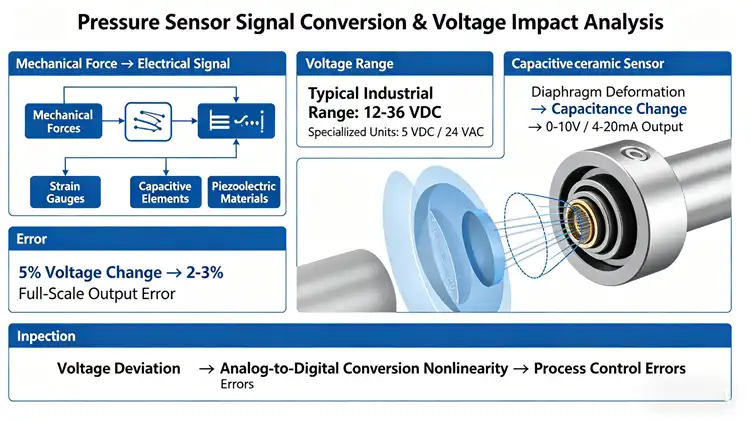
In capacitive ceramic pressure sensors, where the diaphragm deforms and changes the capacitance between electrodes, the link between source voltage and sensor output is still very important. This change in capacitance is turned into voltage or current signs, usually 0-10V or 4-20mA, that PLCs and SCADA systems can understand. When the pressure sensor power supply voltage changes beyond what is expected, the analog-to-digital conversion adds nonlinearity. This can make it harder to make choices about process control and could lead to problems with the quality of the production.
Common Sources of Voltage Fluctuations
A lot of power problems happen in industrial settings. When big motors start up, they draw sudden spikes of power that lower the line voltage by 10 to 15 percent. High-frequency noise gets into power lines from welding tools, variable frequency drives, and switching power sources. When power sources are far away from devices, long cables cause resistance losses that change with temperature and current load. During times of high demand, voltage drops in shared power distribution lines that carry more than one device.
Another problem is that close equipment can cause electromagnetic interference. Radio frequency waves from arc welders, wireless communication systems, and high-power generators connect to sensor power lines in two ways: inductively and capacitively. These short-term changes are added on top of the DC source voltage and show up as ripple or spike patterns that mess up sensor electronics. Shielding, grounding, and screening must be done correctly to protect yourself.
Impact on Sensor Accuracy and Longevity
Voltage instability shows up in a number of different ways. When there is a constant lack of electricity, the sensor electronics lose power, which lowers the amplifier's gain and moves the zero points. Overvoltage puts stress on internal parts, which speeds up the breakdown of capacitors, resistors, and semiconductor joints. Frequent voltage spikes, even short peaks of a few microseconds, hurt sensitive integrated circuits by breaking down the dielectric or causing latch-up events.
Extremes of temperature make these electrical pressures even worse. When sensors are installed outside or near heat sources, they go through thermal cycles, which changes the properties of the parts. This thermal stress, along with changes in power, adds up to damage that shortens the average time between fails. Field data shows that sensors that work with stable voltage last 40 to 60 percent longer than sensors that are frequently affected by power quality events.
Diagnosing and Troubleshooting Power Supply Issues in Pressure Sensors
Systematic Measurement Techniques
The first step in troubleshooting is to measure the voltage at the sensor wires. A digital voltmeter can show steady-state voltage values, but an oscilloscope with memory storage is needed to record transient events. Monitoring for 24 to 48 hours records changes in voltage during different operating cycles, showing patterns related to certain equipment or production plans.
Measurement of ripple voltage shows that the pressure sensor power supply's filtering isn't working right. Peak-to-peak ripple in healthy DC supplies is less than 50mV, while variations of 200–500mV may be seen in degraded sources. High ripple means that filter capacitors are failing, power sources are too small, or there are ground loop currents. Measuring the frequency of the ripple helps find the cause. For example, 120Hz ripple means there are problems with the rectifier, while kilohertz-range noise means there are problems with the switching supply or RF interference.
Environmental and Hardware Contributors
Both devices and the power sources that power them are affected by changes in temperature. When it's below -20°C, the capacity of batteries drops and the resistance of semiconductor junctions rises. High-temperature locations above 70°C accelerate electrolytic capacitor evaporation and component drift. If humidity gets into wire glands that aren't working properly, it can cause leakage paths that slow down power sources or short circuit connections.
Another problem is that equipment is getting old. Insulation breaks down, conductors rust, and neutral-to-ground voltage problems happen in industrial buildings with wire systems that are decades old. Panel-mounted power sources collect dust that makes it harder for them to cool down. This causes the internal temperatures to rise and the control to work less well. These problems are found before they cause sensor breakdowns by checking programs that include thermal scanning, insulation testing, and power quality checks.
Practical Troubleshooting Case Examples
During morning starting at a chemical processing plant, readings from several pressure sensors were all over the place. An investigation showed that when big circulation fans were turned on, they caused power drops. The problem was fixed by adding a separate regulated source, which made measurements 95% more stable. This case shows how shared power distribution can lead to security holes that can be fixed by using specialized lines.
As another example, offshore platform monitors often stopped working even though they were in a safe place. An analysis showed that lightning-caused changes in ground potential during storms sent short-lived currents through instrument wires. Failure rates dropped by 80% when isolation transformers and surge arresters were added at station entry points. These real-life examples show how important it is to think about the electricity needs of a building when designing power systems.
Comparing Power Supply Types for Pressure Sensors: Which Is Best for Your Application?
Regulated vs. Unregulated Power Supplies
Regulated pressure sensor power supply sources keep the output voltage fixed even if the input voltage or the load voltage changes. Linear regulators get rid of extra voltage as heat, which makes the DC signal very clean and noise-free, making it perfect for measuring pressure accurately. Pulse-width modulation makes switching regulators more efficient, but it also adds switching frequency harmonics that need extra filtering.
Unregulated sources give out power that changes with the input, which is simple and cheap. These work fine as long as the line voltage stays fixed and the monitors can handle voltage changes of 10-15%. A lot of factories like to use regulated sources for important measurement places and unregulated types for less important tracking tasks. The difference in price, which is usually 30 to 50 percent, is balanced by the benefit of better stability.
Linear vs. Switching Power Technologies
Through conversion and filtering, linear power sources change AC to DC. They then control voltage with pass transistors that work in their linear region. These versions have very low noise levels (usually less than 1mV RMS), which means they can be used for high-precision pressure measurements in labs and other testing settings. The biggest problems are that they produce heat, are bigger, and only work 40 to 60 percent of the time.
High-frequency switching at 50–500kHz is used to change energy in switching power sources, which can achieve 80–95% efficiency in small packages. Active power factor correction and multistage filtering are used in modern systems to lower output noise to levels that are acceptable for most industrial pressure sensors. To avoid electromagnetic interference, you need to plan your setup carefully, use insulation, and follow standards for both conducted and radiated emissions, such as FCC Part 15 and EN 55022.
Battery-Powered and Alternative Solutions
Pipeline monitoring stations, tank farms, and farming watering systems are all examples of remote pressure monitoring sites that don't have access to the power grid. Lithium-thionyl chloride batteries can work for 10 years with low current demands. They can power pressure devices that have sleep modes and set transmission plans. Solar panels with recharging battery banks give businesses more options while still being good for the environment.

As batteries drain, problems with voltage uniformity appear. When a new 3.6V lithium cell gets close to its end of life, it drops to 3.0V, which is a 17% drop in voltage that changes how the sensor is calibrated. Voltage regulator circuits try to fix this problem, but they use more power, which shortens the battery's life. Low-battery detection circuits send replacement alerts before the voltage drops below the sensor's working limits. This keeps measurements from being interrupted.
Surge Protection and Design Principles for Pressure Sensor Power Supplies
Understanding Voltage Surge Risks
Voltage spikes that happen quickly can seriously damage the electronics in the pressure sensor power supply. Through electromagnetic interaction, lightning hits within a few kilometers can cause voltages of more than 1000V on power and data lines. In microseconds, equipment switching events like motor contactors, transformer tap switches, and capacitor bank actions make hundreds of volts. Kilovolt-level shocks are directly injected into circuits when people touch sensor housings and cause electrostatic discharge.
How the damage happens depends on how the storm behaves. Rapidly climbing surges with nanosecond edge times create large di/dt currents that magnetically couple to neighboring traces, putting too much stress on internal parts. More energy is delivered by slower spikes, which heats up semiconductor joints too much and melts bond wires. High-level spikes that happen over and over again damage shielding over time, leading to catastrophic failure during a very bad event.
Essential Protection Components
The first line of defense against spikes are transient voltage suppressor diodes. Within picoseconds, these silicon devices lower the voltage to a safe level and send any surge current to ground before it can damage any circuits. Bidirectional TVS diodes protect against both positive and negative polarity spikes. Depending on their values, they can handle peak currents of several kiloamperes to hundreds of amperes. By choosing TVS diodes with breakdown voltages that are 15 to 20 percent higher than their normal working voltage, you can be sure that they won't work in normal situations.
Metal oxide varistors can absorb more energy than TVS diodes, but they react more slowly—tens of nanoseconds instead of picoseconds. When you put together TVS diodes for quick clamping and MOVs for energy absorption, you get multiple security that can handle different kinds of surges. Gas discharge tubes are another way to protect against very high-energy events, but they come before semiconductor guards because they have higher holding voltages and slower response times.
Integration and Compliance Standards
Systematic circuit design is needed for surge safety to work well. Protection devices need to be mounted close to entry points so that lead inductance, which causes voltage surge during fast transients, is kept to a minimum. To keep the resistance low at surge frequencies, ground links should use wide, short conductors, like copper straps instead of wires. When protection steps work together, the main devices soak up most of the surge energy before the secondary devices turn on.
Different environments have different safety needs that are set by international norms. IEC 61000-4-5 says that industrial equipment must be tested for surge protection at 0.5–4kV, and higher levels must be used for sites that will be outside. Surge protective device rates in North America are set by UL 1449, which also sets the highest voltage let-through standards. In order to get a CE mark under the EMC Directive, you have to show that the product is safe from electrical fast transients, spike voltages, and conducted disturbances.
Procurement Guidance: Selecting and Purchasing Reliable Pressure Sensor Power Supplies
Critical Evaluation Criteria
Specifications for voltage control describe the quality of a pressure sensor power supply. For precise uses, load control (how much the voltage changes from no load to full load) should stay below 0.5%. Line regulation, which changes the voltage as the input level goes from lowest to highest rating levels, also has an effect on how well the sensor works. By checking these factors over a range of temperatures, you can see if the sources meet the requirements in real-world settings.
Noise and ripple standards need more attention than just the top numbers. Peak-to-peak ripple measurements show regular changes, but broadband noise readings over 10Hz to 10MHz frequency ranges show the total disturbance energy. Some makers only list noise within certain frequency ranges, hiding higher-frequency parts that can hurt sensitive devices. Ask for oscilloscope traces that show real waveforms when the load is on to make sure the stated specs are correct.
Supplier Capabilities and Partnership Value
Leading suppliers are different from commodity sellers in the level of their technical help. In addition to selling products, engineering teams that help build power systems, suggest the right amount of protection, and fix installation problems are very valuable. Responding quickly through email, phone, and videoconferencing works for people in different time zones and with different amounts of urgency. Having access to application notes, reference plans, and math tools speeds up the development of a project.
Customization options meet the specific needs of each application. If a supplier offers different power outputs, connector types, or built-in safety circuits, the system can be optimized without the need for extra adapters. Differentiating brands is helped by OEM services like custom labels, modified casings, and certificate customization. These adaptable ways of making things are especially important for companies that build and integrate systems for specific markets.
Making Informed Purchasing Decisions
Buying in bulk lowers unit costs and makes sure that merchandise is always available. Supply and output plans are aligned by annual agreements that allow deliveries to be spread out. This way, too much stock doesn't tie up operating capital. Price cuts of 15% to 30% are common when you commit to buying in bulk, which is better for the project's finances. When you negotiate minimum order amounts and wait times, you set realistic goals that help you plan.
Quality documentation requirements should form part of purchase specifications. Traceability and responsibility are made possible by mill test records for important materials, functional test data for individual units, and compliance certificates for regulatory standards. Some sellers offer complete documentation packages that include calibration papers that can be tracked back to national standards. This is helpful for businesses that need to meet strict metrological standards, such as pharmaceutical manufacturing and custody transfer measurement.
Conclusion
Stability of the pressure sensor power supply directly affects the dependability, accuracy, and life of pressure sensors used in harsh industrial settings. Voltage changes and transient spikes are dangers to sensor electronics, but they can be kept safe with organized security strategies. When engineering managers and procurement workers know the pros and cons of controlled and unregulated supplies, linear and switching topologies, and different security technologies, they can choose the best options. Partnering with experienced suppliers who offer strong goods, the ability to customize, and full expert support is the key to long-term success in the energy, chemical, pharmaceutical, food processing, and oil and gas industries.
FAQ
What voltage range do industrial pressure sensors typically require?
The voltage range for most industrial pressure sensors is between 12 and 36 VDC, with 24 VDC being the most usual norm. Some specialty sensors work at 5 VDC so they can be used with digital systems, while others work with 24 VAC so they can be used with control panels that are already in place. The exact voltage needed depends on the type of sensor. Before attaching power, you should always check the manufacturer's voltage requirements and tolerance ranges. Using the wrong voltage to the pressure sensor power supply can damage sensitive electronics or lead to wrong readings.
How do I identify if voltage fluctuations are causing sensor problems?
Monitor voltage at the sensor terminals using a digital multimeter during normal operations, recording minimum and maximum values over several hours. Compare these numbers to the range given by the maker. Deviations of more than 5% are a sign of problems with the power quality. Multimeters miss short-lived spikes and ripples that a monitor can see. Voltage disturbances are proven to be the cause by the link between inconsistent sensor readings and certain machine actions, such as starting up a pump, welding, or motorcycling. Thermal imaging of power lines finds parts with a lot of resistance that cause voltage drops when the load is put on them.
Can I use switching power supplies with precision pressure sensors?
With the right filtering, modern switching sources work well with most precision pressure instruments. Make sure that the output ripple stays below 50mV from peak to peak, and make sure that the electromagnetic emissions meet the standards that apply. Linear sources with noise levels below 1 microvolt may be helpful for high-resolution uses that need to measure small changes in pressure. Before committing to large-scale deployments, test setups to see how stable the sensor output really is. When electromagnetic interference from the surroundings is a problem, adding external LC filters between the switching sources and the sensors lowers the noise even more.
What protection level should I specify for outdoor pressure sensor installations?
Installations outside that could be hit by lightning need surge protection that passes the IEC 61000-4-5 Level 4 test. This means that the protection must be rated at 4kV between wires and 6kV to ground. TVS diodes with energy levels above 600W can handle surges that happen over and over again without breaking down. Metal oxide varistors that provide additional defense should be able to take in more than 100 joules of energy. Weatherproof shelters with the right wiring systems finish off the safety plan. Coastal sites that are subject to salt spray rust need circuit boards with conformal covering and plugs that are sealed to keep moisture out, which would otherwise affect the performance of the safety device.
Partner with GAMICOS for Reliable Pressure Measurement Solutions
GAMICOS makes industrial-grade pressure sensors that are intended to work in tough settings with built-in power management and surge protection. Our engineering team works closely with sourcing managers, project managers, and research and development (R&D) teams to make sure that the voltage needs, safety levels, and communication ports are exactly what your application needs. Each pressure sensor power supply solution goes through a lot of tests and comes with all the paperwork needed to meet foreign standards like CE, RoHS, and ISO.
GAMICOS offers open bulk buying, reliable shipping schedules, and quick expert support in North America, Europe, and around the world, whether you need OEM modules to connect equipment or turnkey measurement systems to improve your facility. Get in touch with our application engineers at info@gamicos.com to talk about the problems you're having measuring pressure and find out how our custom solutions can help you lower your total cost of ownership while also making your system more reliable.
References
1. Johnson, M.R. & Stevens, P.K. (2021). Industrial Power Supply Design: Principles and Applications for Process Control Systems. Technical Publishing International, pp. 234-267.
2. European Committee for Electrotechnical Standardization (2019). EN 61000-4-5: Electromagnetic Compatibility - Testing and Measurement Techniques - Surge Immunity Test. CENELEC Standards, Brussels.
3. Chen, H. & Rodriguez, A. (2020). Transient Protection Strategies for Field Instrumentation in Hazardous Environments. Journal of Industrial Electronics and Applications, Vol. 15, Issue 3, pp. 112-129.
4. Instruments Society of America (2022). ISA-12.01.01: Definitions and Information Pertaining to Electrical Apparatus in Hazardous Locations. ISA Standards and Practices Department, Research Triangle Park.
5. Williams, T.J. (2018). Voltage Regulation and Noise Reduction Techniques for Precision Sensor Applications. Process Measurement and Control Quarterly, Vol. 44, No. 2, pp. 78-94.
6. International Electrotechnical Commission (2020). IEC 61326-1: Electrical Equipment for Measurement, Control and Laboratory Use - EMC Requirements - Part 1: General Requirements. IEC Publications, Geneva.

Peter
Peter, Senior Sensor Technology Consultant, has 15-year industrial sensor R&D experience. He specializes in the end-to-end development of high-accuracy pressure and level sensors and he firmly believe, precision isn’t just a spec—it’s a promise.
We're here to help — submit your request anytime!
Let us know how we can help solve your pressure level measurement challenge.

_1757930850792.jpg)






Recommended Blog


How to Install a Pressure Transmitter: 7 Best Practices
Smart Pressure Sensors in Industry 4.0: Predictive Maintenance
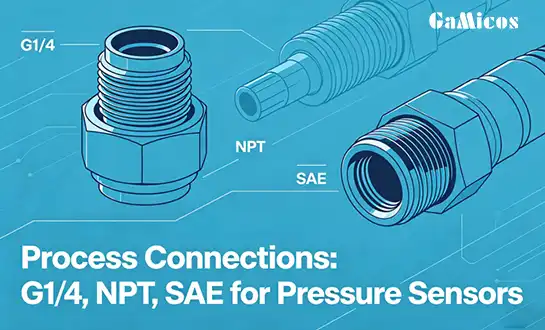
Process Connections: G1/4, NPT, SAE for Pressure Sensors

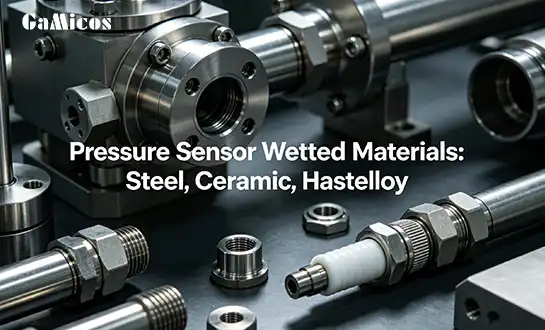
Pressure Sensor Wetted Materials: Steel, Ceramic, Hastelloy
Pressure Overload Damaged Sensor? Overpressure Protection & Recovery
How to Install a Pressure Transmitter: 7 Best Practices
Smart Pressure Sensors in Industry 4.0: Predictive Maintenance
Process Connections: G1/4, NPT, SAE for Pressure Sensors
Pressure Sensor Wetted Materials: Steel, Ceramic, Hastelloy
Pressure Overload Damaged Sensor? Overpressure Protection & Recovery
How to Install a Pressure Transmitter: 7 Best Practices
Smart Pressure Sensors in Industry 4.0: Predictive Maintenance
Process Connections: G1/4, NPT, SAE for Pressure Sensors
Pressure Sensor Wetted Materials: Steel, Ceramic, Hastelloy
Pressure Overload Damaged Sensor? Overpressure Protection & Recovery
How to Install a Pressure Transmitter: 7 Best Practices
Smart Pressure Sensors in Industry 4.0: Predictive Maintenance
Process Connections: G1/4, NPT, SAE for Pressure Sensors
Pressure Sensor Wetted Materials: Steel, Ceramic, Hastelloy
Pressure Overload Damaged Sensor? Overpressure Protection & Recovery
How to Install a Pressure Transmitter: 7 Best Practices
Smart Pressure Sensors in Industry 4.0: Predictive Maintenance
Process Connections: G1/4, NPT, SAE for Pressure Sensors
Pressure Sensor Wetted Materials: Steel, Ceramic, Hastelloy
Pressure Overload Damaged Sensor? Overpressure Protection & Recovery
How to Install a Pressure Transmitter: 7 Best Practices
Smart Pressure Sensors in Industry 4.0: Predictive Maintenance
Process Connections: G1/4, NPT, SAE for Pressure Sensors
Pressure Sensor Wetted Materials: Steel, Ceramic, Hastelloy
Pressure Overload Damaged Sensor? Overpressure Protection & Recovery
How to Install a Pressure Transmitter: 7 Best Practices
Smart Pressure Sensors in Industry 4.0: Predictive Maintenance
Process Connections: G1/4, NPT, SAE for Pressure Sensors
Pressure Sensor Wetted Materials: Steel, Ceramic, Hastelloy
Pressure Overload Damaged Sensor? Overpressure Protection & Recovery
How to Install a Pressure Transmitter: 7 Best Practices
Smart Pressure Sensors in Industry 4.0: Predictive Maintenance
Process Connections: G1/4, NPT, SAE for Pressure Sensors
Pressure Sensor Wetted Materials: Steel, Ceramic, Hastelloy
