Smart Pressure Sensors in Industry 4.0: Predictive Maintenance
Comprehending Smart Pressure Sensors in Industry 4.0
- Comprehending Smart Pressure Sensors in Industry 4.0
- Advantages of Smart Pressure Sensors for Predictive Maintenance
- Choosing the Best Smart Pressure Sensor for Industrial Use
- Integration of Smart Pressure Sensors in Predictive Maintenance Systems
- Future Trends and Innovations in Smart Pressure Sensors for Industry 4.0
- Conclusion
- FAQ
- Partner with GAMICOS for Advanced Pressure Sensing Solutions
- References
In Industry 4.0 settings, smart pressure sensors are changing predictive maintenance because they offer real-time tracking, wireless connectivity, and IoT integration that regular pressure measuring devices can't. With great accuracy, these smart tools turn changes in physical pressure into electrical signals. This lets repair teams find problems with equipment before they become major problems. Smart pressure sensor technology enables industrial facilities to switch from reactive repair methods to proactive maintenance methods that significantly lower downtime and operational costs by utilizing advanced digital calibration, on-board diagnostics, and seamless data transmission to centralized maintenance management systems.
Comprehending Smart Pressure Sensors in Industry 4.0
What Makes Pressure Sensors "Smart"?
Normal pressure gauges only turn changes in mechanical deformation into electrical signs. But newer, smarter versions have microprocessors, digital communication methods, and more complex compensation routines built in. These sensors have technology built in that allow them to automatically diagnose problems, adjust for temperature, and calibrate multiple points. They are smart because they can process raw measurement data locally, apply correction factors, and send useful data using standard industrial communication protocols like HART, Profibus, or wireless networks. With this change, sensors can stop being inactive measurement tools and start being active members of industrial networks.
Core Technologies Enabling Smart Functionality
Modern smart pressure sensors use a number of different technologies that work together. Capacitive ceramic diaphragms change their capacitance values as the pressure changes. This makes them very accurate from 1 bar to over 1,000 bar. Micro-machined structures with piezoresistive silicon elements inside them offer very high sensitivity and uniformity. Different types of strain gauges can measure changes in material deformation with accuracy up to ±0.1% of full-scale output. These physical sense parts are linked to circuits that boost signal strength and block out noise. Next, analog-to-digital converters turn signals into digital forms that can be sent over networks and used for more advanced processing.
The Role of IoT Connectivity in Industrial Applications
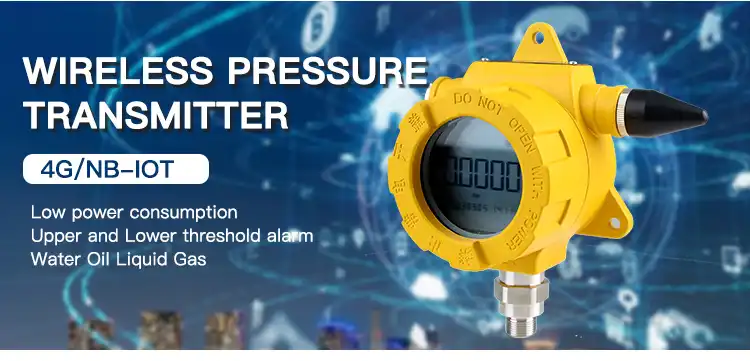
Industry 4.0 works best when all the parts of a system are linked together and send data to central hubs. Smart pressure sensors with wireless communication units send data to CMMS platforms, SCADA systems, and cloud-based analytics engines all the time. This connection gets rid of the need to collect data by hand, lets assets in different places be monitored from afar, and makes full digital twins of physical processes. Using LoRa, NB-IoT, or 4G sensors, pipeline pressure can be tracked over kilometers of infrastructure. If data become too different from what is expected, reports will be sent. When sensors are accurate and they can connect to a network, they can make decisions automatically in predictive maintenance processes.
Advantages of Smart Pressure Sensors for Predictive Maintenance
Superior Measurement Accuracy and Reliability
To reach the goals of predictive maintenance, measurements must be very accurate so that small changes in performance can be found before they become major problems. The smart pressure sensors use advanced digital calibration methods to fix problems like non-linearity, hysteresis, and temperature-induced drift, giving accuracy claims of 0.1% to 0.25% of full-scale output.
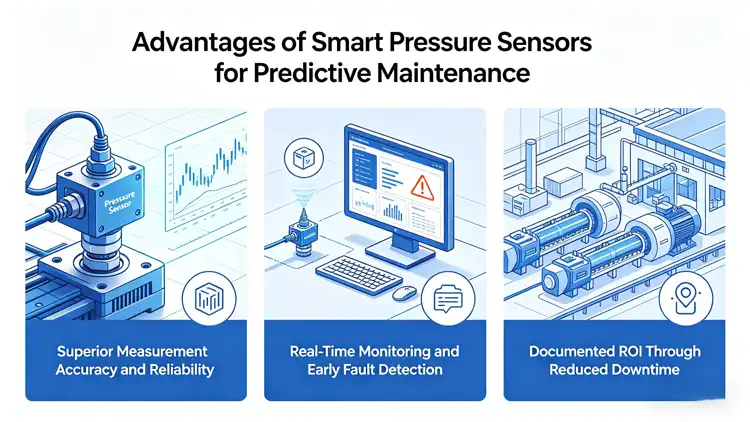
This amount of accuracy is much higher than traditional calibration methods. Temperature compensation methods change outputs on the fly based on built-in thermal sensors. This cuts temperature-related mistakes from the usual 10–20% range to less than 0.25%. This level of dependability makes sure that maintenance choices are based on accurate data, not readings that could be wrong and cause fake alarms or miss real problems.
Real-Time Monitoring and Early Fault Detection
Smart pressure sensors change the way upkeep is done by always showing what's wrong with equipment. Strain gauge sensors pick up changes in pressure and turn deformations in the real world into voltage signals that are updated at frequencies that let readings be made in milliseconds. When sensor numbers are sent to CMMS platforms in real time, maintenance teams are notified right away when pressure levels go above or below what is considered safe.
Too much pressure means that there is a chance of a break or that the equipment is under a lot of stress. Pressure losses mean that there is a leak in a tank or in the distribution system. This instant knowledge lets people step in early on, when fixes are still easy and cheap, to stop failures from spreading and shutting down whole production lines.
Documented ROI Through Reduced Downtime
After putting in place smart sensor networks, many industry sites have seen big returns on their investments. Within 18 months of installing smart pressure tracking on all of its key process equipment, a pharmaceutical manufacturing plant cut unexpected downtime by 43%. A chemical processing plant cut its maintenance costs by 31% by switching from reactive repair methods to condition-based maintenance, which was made possible by constant pressure tracking. These financial benefits come from avoiding catastrophic failures that need emergency fixes, avoiding lost production during unplanned shutdowns, and making the most of maintenance plans so that problems are fixed during planned downtime windows instead of interrupting operations without warning.
Choosing the Best Smart Pressure Sensor for Industrial Use
Critical Selection Parameters for Engineering Managers
To match smart pressure sensors with application needs, sourcing managers and engineering teams have to look at a lot of different technology specs. How well sensors can pick up on small changes in pressure that could mean problems are starting to happen depends on how accurate their measurements are.
Response time standards show how quickly sensors can pick up changes in pressure, which is important for situations where the process is changing quickly. Power usage affects whether a sensor can be used in battery-powered wireless setups or places that want to save energy. Operating temperature ranges and chemical compatibility make sure that sensors can work in tough industrial settings like those found in pharmaceutical, chemical, and oil and gas industries.
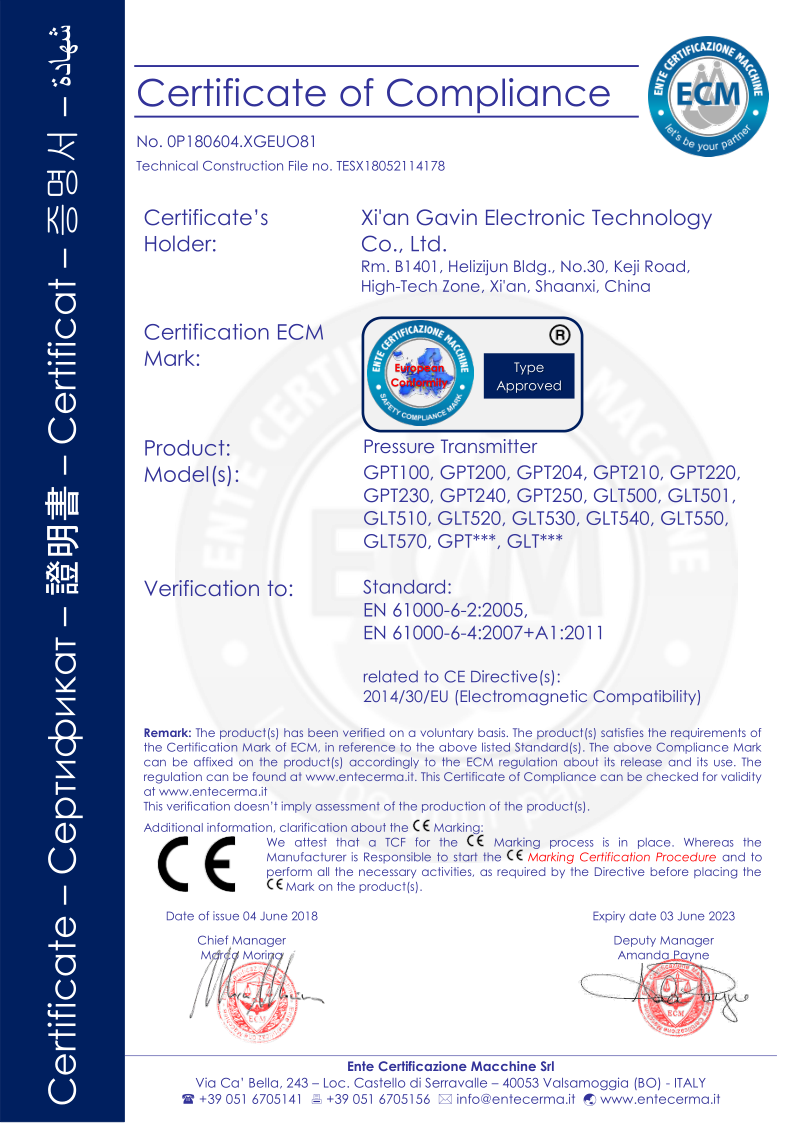
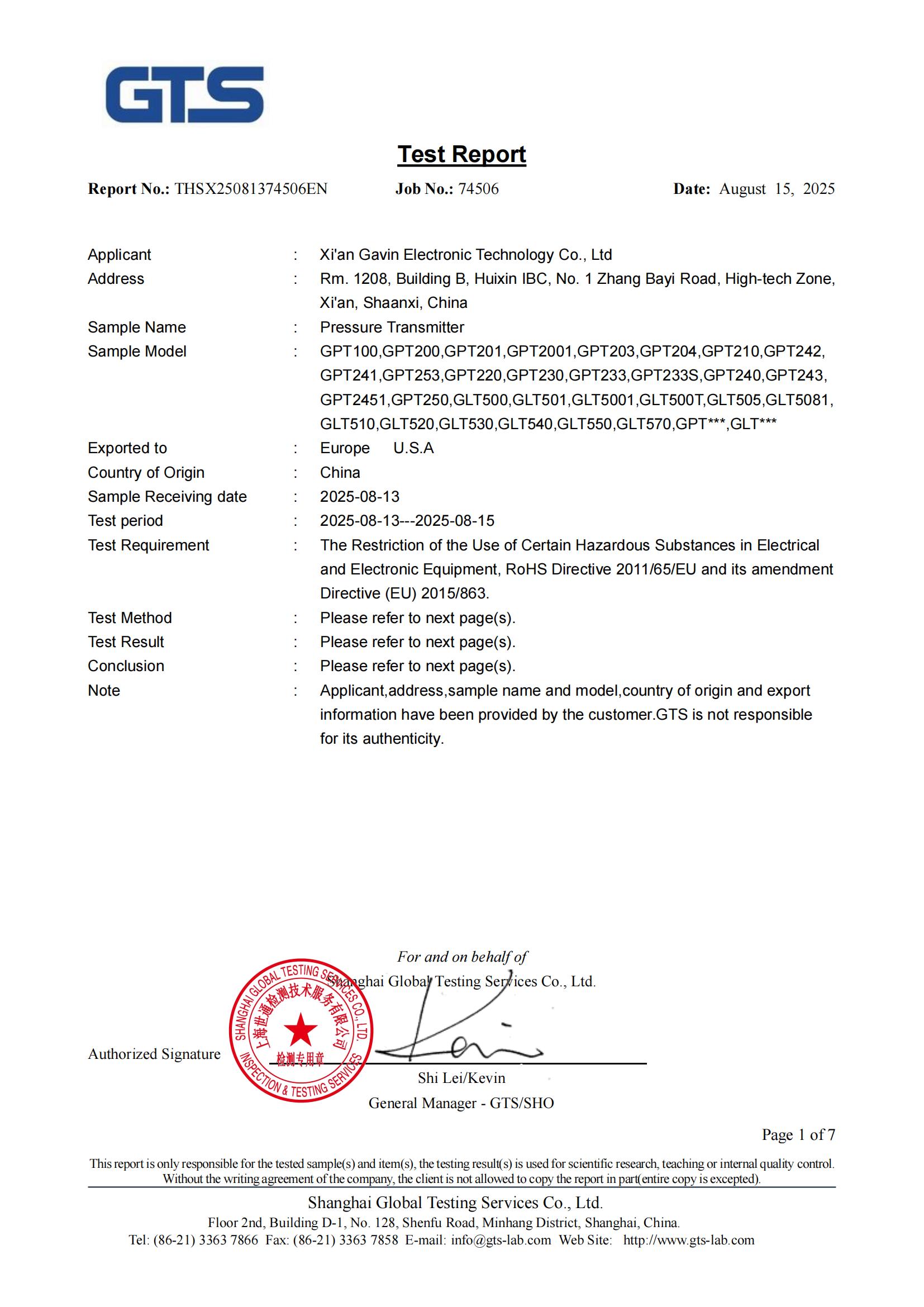
In addition to technical specs, procurement choices must also take into account what the provider can do. Manufacturing scalability tells providers if they can handle big orders for robotic projects. Certification that meets CE, RoHS, ISO, and industry-specific standards makes sure that the product will be accepted by regulators in target markets. Total cost of ownership over the lifecycle of a sensor is affected by the warranty terms and the provision of after-sales assistance. When projects need special mounting arrangements, electrical interfaces, communication protocols, or pressure port designs that normal catalog goods can't provide, customization features become important.
Comparing Leading Technology Approaches
Based on their performance and cost, different sensing systems are better for different business uses. Because ceramic is naturally resistant to chemicals, capacitive ceramic sensors work well in acidic settings. This makes them perfect for chemical processing and making medicines. These sensors measure a wide range of pressures with high accuracy, and they stay small enough to fit in places with limited room. Piezoresistive silicon sensors have very good accuracy and very little hysteresis, which makes them ideal for precise tasks that need measurements to stay stable for long periods of time. Strain gauge setups are a cheap way to keep an eye on things in factories where accuracy isn't as important as tough building and reliable operation.
Evaluating Supplier Partnerships for Long-Term Success
During the decision process, the abilities of the sensors should be matched with the needs of the application. Miniaturized silicon sensors with fast response times are useful for automotive OEM uses. Monitoring pipelines in the energy industry needs long-term security and the ability to talk wirelessly over long distances. When preparing food and drinks, clean designs with clean connections and materials that are allowed for food contact are required. When engineering teams understand these application-specific needs, they can find the best sensor technologies that meet both performance and cost standards.
Integration of Smart Pressure Sensors in Predictive Maintenance Systems
Establishing Data Flow Architectures
For predictive maintenance to work, information systems must be well-thought-out so that sensor data can be quickly sent from field equipment to people who make decisions. Smart pressure sensors are used to feed data into system designs with multiple layers. While sensors are out in the field, they can talk to programmable logic controls or edge computing devices through industrial networks or wireless protocols. These middle-level systems collect data from many sensors, do some basic analysis, and then send the important data to mainframe systems.
Integration with CMMS systems makes maintenance planning hubs that are centrally located. CMMS systems compare current values to previous baselines and preset threshold limits when pressure sensors send readings all the time. The repair platform gets electrical signals that show readings of pressure in common engineering units, like Pascals or pounds per square inch. Trend analysis tools in more advanced CMMS setups can spot slow changes in pressure that mean problems are starting to form, even when readings stay within acceptable levels. This multi-layered method turns raw pressure data into maintenance information that can be used.
Automated Alert Generation and Response Workflows
Today's predictive repair systems use connected sensors to handle the steps needed to respond. By sending alerts to maintenance staff through mobile apps, emails, or dashboards, CMMS platforms let you know when pressure readings go above certain limits. Alert settings include severity levels that tell the difference between important situations that need to be dealt with right away and small changes that need to be looked at at a later time. The automation goes beyond just sending alerts; it also creates maintenance jobs, assigns workers, and makes sure there are enough spare parts on hand automatically when sensor readings show that action is needed.
Calibration and Accuracy Maintenance Practices
The full connection changes upkeep work from responding to problems to managing them before they happen. Maintenance teams are told ahead of time when equipment starts to malfunction, so they can fix it during regular maintenance windows instead of having to make emergency repairs during production shifts. This coordination cuts down on upkeep costs, keeps production running smoothly, and improves the life of tools by fixing problems before they get worse.
To keep the accuracy of predictions over the life of a sensor, it needs to be calibrated in a way that follows industry norms. smart pressure sensors have digital tuning features that make the testing process easier. A lot of modern sensors have built-in tests that check the health of each sensor element all the time, looking for open circuits, short circuits, or degradation of the sensing element. Monitoring the supply voltage makes sure that the sensors work within certain power ranges. Integrated temperature sensors let complex temperature correction methods work.
Calibration plans should take into account how important the application is and what the rules say. Applications that are very important for safety, like making medicines or energy, may need to be checked every three months against tracked standards. For less important tracking tasks, calibration plans could be pushed back to once a year. Setting up written calibration processes, keeping calibration records for quality checks, and quickly fixing any sensors that show drift beyond acceptable limits are the most important things that need to be done. This methodical technique makes sure that choices about preventative maintenance are based on measurement data that can be tracked back to its source.
Future Trends and Innovations in Smart Pressure Sensors for Industry 4.0
Artificial Intelligence Integration for Predictive Analytics
The next big step forward in predictive maintenance is when smart pressure sensors technology and artificial intelligence work together. Machine learning systems look at trends in past pressure data to create behavioral models that are specific to each piece of equipment. These AI systems find strange things that simple threshold comparisons might miss. They do this by finding small signature patterns that come before certain failure modes. Deep learning models that have been taught on millions of sensor data from similar pieces of equipment get better at predicting how much longer something will work. This lets maintenance schedules be optimized in a way that balances the risk of failure with the allocation of maintenance resources.
Moving information from centralized computers to edge computing devices brings the ability to analyze data closer to the sensors that are collecting it. Intelligent sensors with built-in machine learning processors do basic anomaly identification locally. This cuts down on the need for network data and speeds up reaction times. This design for distributed intelligence allows for large amounts of sensors while keeping the system responsive, which is important for making maintenance decisions quickly.
Low-Power Wireless Technologies Enabling Expanded Deployment
New low-power wireless transmission methods and energy harvesting technologies have made it easier to put sensors in place. LoRa or NB-IoT wireless sensors with batteries can now work for years without needing to be replaced. This makes it possible to keep an eye on things in places where getting to a power source isn't realistic. Using methods that catch vibration energy or thermal gradients could one day make sensors that don't need to be charged or have their batteries replaced.
Market Evolution and Strategic Procurement Implications
These technologies use less power and cover more equipment that wasn't being watched before with predicted maintenance. Retrofitting sensors can be done to rotating machinery in rural areas, temporary equipment installs, or old assets that don't have built-in instruments. As a result, the facility is easier to see, more operating data is collected for analysis, and the benefits of predictive maintenance are spread across the whole industrial operation instead of just covering important equipment.
The use of Industry 4.0 is growing quickly in energy, chemical processes, production, and other industries. Because of this rise, sensor technology is always getting better, and there is more competition in the market between sensor makers. Adding more product choices, lowering prices, and making application-specific sensor versions easier to find are all good for procurement teams. But market diversity also makes it harder to evaluate suppliers, choose technologies, and make sure that products will be supported for a long time.
Strategic buying methods stress working together with well-known makers who can show they have the right technology, can make a lot of products, and will be in the market for a long time. Companies with wide ranges of products make the supply chain simpler by getting different kinds of sensors from the same source. When standard goods can't meet certain needs, manufacturers who offer customization services can make custom options. These connections with suppliers are especially helpful as facilities add more predictive maintenance programs, update older systems, or make sure that all of their instruments work the same way across multiple sites.
Conclusion
Smart pressure sensors are now an important part of Industry 4.0 predictive maintenance plans because they offer more accurate measurements, real-time connection, and smart diagnostics than traditional instruments. When they are integrated into full maintenance management systems, they help find problems early, make the best maintenance schedules, and show clear returns on investment through less downtime and lower operating costs.
To make execution work, you need to carefully choose sensors that meet the needs of the application, carefully integrate the system so that it works with the data flow and testing procedures, and carefully build partnerships with suppliers that offer technical support and customization options. As low-power wireless technologies and artificial intelligence continue to improve, intelligent pressure sensors will play bigger roles in industrial processes. This will lead to higher equipment reliability and better operations across the manufacturing and process industries around the world.
FAQ
How do smart pressure sensors improve predictive maintenance accuracy?
There are several ways that smart pressure sensors improve forecast maintenance. Because they are so accurate, they can pick up on small changes in pressure that mean equipment is wearing out before they break. With digital calibration and temperature correction, accuracy is maintained no matter what the working conditions are. This means that maintenance choices can be based on accurate data. Continuous tracking picks up on short-lived changes in pressure that would be missed by human checks done only every so often. Integration with CMMS platforms lets you look at trends and see how performance has been slowly getting worse over time.
What considerations matter most for bulk sensor purchasing?
When purchasing managers look at big sales of sensors, they should put more than just unit price at the top of their list of priorities. The supplier's production potential shows how well they can meet project deadlines for big orders. Certification that meets the necessary standards makes sure that the regulations are accepted right away. Customization options let you meet the unique mounting, interface, or transmission protocol needs of a project. Total cost of ownership is affected by warranty terms and the availability of assistance after the sale. Technical support quality helps with choosing sensors, setting them up, and fixing problems.
Can smart pressure sensors integrate with existing automation systems?
Modern smart pressure sensors can connect to a variety of automation platforms using standard methods for communication. A lot of sensors have more than one way to send information. These can be analog voltage signals, current loops, digital systems like HART or Modbus, or wireless connections through LoRa or cellular networks. This adaptability lets you connect to older systems with analog inputs while also allowing for improved digital interaction with newer platforms.
Partner with GAMICOS for Advanced Pressure Sensing Solutions
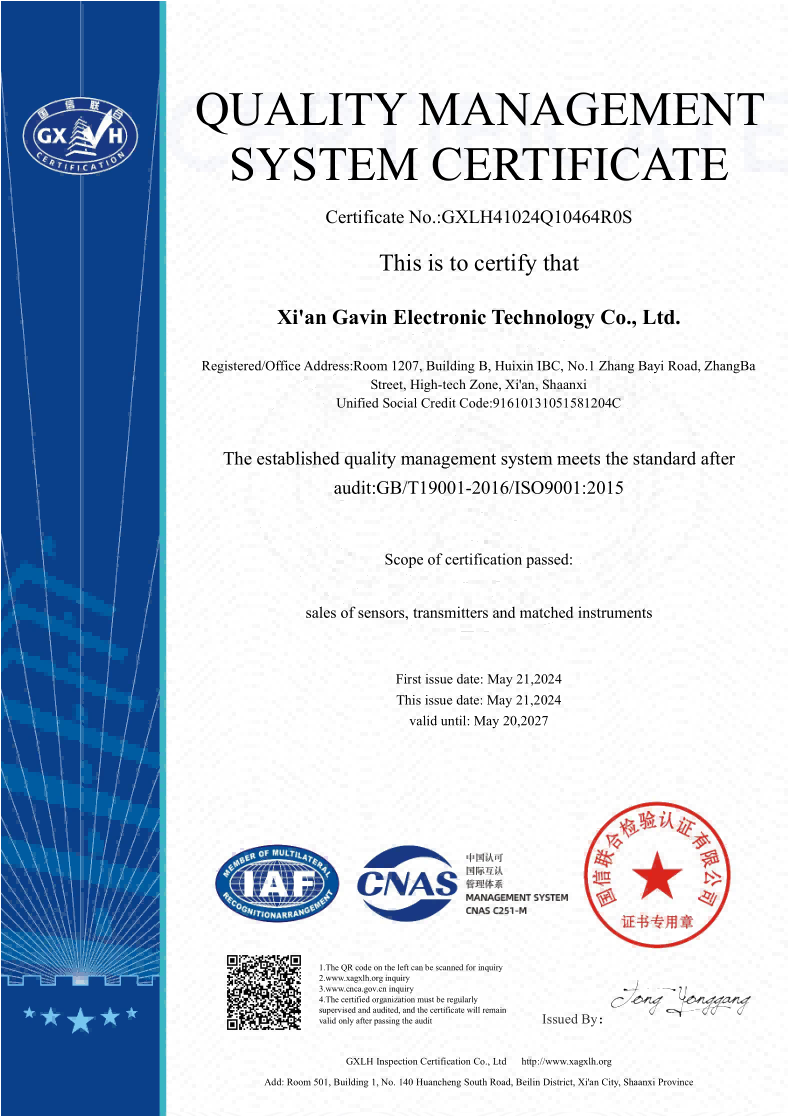
GAMICOS offers complete pressure measurement options created just for predictive maintenance uses in Industry 4.0. Our wide range of products includes smart pressure sensors that use capacitive ceramic, piezoresistive silicon, and strain gauge technologies. Each is specially designed for working in certain conditions and needing high accuracy. We have industrial experience in more than 100 countries and work with thousands of customers every year. Our production can be scaled up or down for projects ranging from making prototypes to installing instruments in big facilities.
Partnering with a trustworthy smart pressure sensor maker provides long-term value through consistent product quality, quick technical help, and the ability to make changes as needed. Get in touch with our knowledgeable staff at info@gamicos.com to talk about your needs for predictive maintenance, get full technical specs, or ask for sensor quotes that are specifically made for your needs.
References
1. Johnson, M. & Williams, R. (2022). Industrial Pressure Measurement: Technologies and Applications for Industry 4.0. Engineering Press International.
2. Anderson, P., Chen, L., & Kumar, S. (2023). Predictive Maintenance Strategies Using Smart Sensor Networks. Journal of Manufacturing Systems, 68, 245-267.
3. Martinez, E. (2021). Advanced Sensor Integration in Industrial Automation. Industrial Technology Publishing.
4. Thompson, K. & Roberts, J. (2023). IoT-Enabled Sensors for Process Industries: Implementation and ROI Analysis. Process Engineering Quarterly, 41(3), 112-134.
5. Wilson, D., Lee, H., & Patel, A. (2022). Digital Calibration Methods for High-Precision Industrial Sensors. Measurement Science and Technology, 33(8), 085101-085118.
6. Brown, S. & Garcia, M. (2023). Wireless Sensor Technologies for Remote Industrial Monitoring. Automation and Control Systems Review, 29(2), 78-96.

Peter
Peter, Senior Sensor Technology Consultant, has 15-year industrial sensor R&D experience. He specializes in the end-to-end development of high-accuracy pressure and level sensors and he firmly believe, precision isn’t just a spec—it’s a promise.
We're here to help — submit your request anytime!
Let us know how we can help solve your pressure level measurement challenge.
_1757930850792.jpg)


Recommended Blog

Troubleshooting Wireless Level Transmitters Connectivity Issues
Troubleshooting Wireless Level Transmitters Connectivity Issues
Troubleshooting Wireless Level Transmitters Connectivity Issues