Pressure Sensor Life Expectancy & Replacement Cycle
Introducing Pressure Sensor Lifespan and Key Influencing Factors
- Introducing Pressure Sensor Lifespan and Key Influencing Factors
- Comparison of Pressure Sensors Based on Lifespan and Durability
- Best Practices to Extend Pressure Sensor Life and Optimize Replacement Cycles
- Procurement Guide for Long-Lasting Pressure Sensors
- Conclusion
- FAQ
- Partner with GAMICOS for Long-Lasting Pressure Measurement Solutions
- References
When managing factory control systems and making purchasing decisions, knowing the pressure sensor lifespan is crucial. In ideal conditions, most industrial-grade pressure sensors work effectively for 10 to 15 years. However, the real service life depends a lot on the type of sensor used, its exposure to the environment, and how well it is maintained. The replacement cycle is based on the needs of the application, the need for accurate measurements, and the total cost of ownership, which is something that procurement managers think about every day. Lifecycle planning helps keep repair costs low and unplanned downtime to a minimum across many industries.

Introducing Pressure Sensor Lifespan and Key Influencing Factors
Several basic technologies are used to measure industrial pressure. Each has its own durability features that have a direct effect on business planning and purchasing choices.
Typical Lifespan Ranges for Different Sensor Technologies
In challenging situations, ceramic capacitive pressure sensors regularly last 10 to 15 years, which is an incredibly long time. These sensors are useful in places like pharmacy and food processing plants where cleaning is very important because they don't corrode easily when exposed to chemicals. Similar standards exist for the longevity of piezoresistive ceramic pressure sensors, which should last between 10 and 15 years if they are properly kept.
Silicon-based strain gauge sensors are often used in industrial settings. They usually work well for 7 to 12 years, but rough conditions can shorten this time frame. Digital pressure sensors with microprocessor technology tend to last longer than analog ones because they can diagnose themselves better and have better drift compensation methods.
Environmental Stresses Affecting Sensor Durability
Extremes of temperature put a lot of stress on sensor parts, making materials expand and shrink and age faster. Over time, humidity can damage electrical connections and make shielding less resistant. Different businesses have very different levels of chemical exposure. For example, sensors in oil factories are exposed to hydrocarbon vapors, while equipment in chemical plants is exposed to acids or bases that break down metals.
These harsh chemicals can damage diaphragm materials and housing seals, which could make them last 30 to 50 percent less long than in normal conditions. Vibrations from pumps, compressors, and other moving tools cause fatigue cycles that weaken structural parts over time. Pressure cycling creates repeated mechanical stress, especially in situations where processes start and stop often or where flow conditions pulse.
Common Failure Modes and Warning Signs
Pressure sensor lifespan is directly impacted by factors such as drift, leakage, and mechanical or electrical failures. Sensor drift is when the output values slowly move away from what was set. This is usually due to materials wearing down over time or leftover mechanical stress. When drift goes outside of normal ranges, measurement accuracy goes down, which could affect process control and the quality of the product.
Leakage through broken seals or diaphragms lets process media get in, which usually leads to catastrophic sensor failure. Sensing elements can be quickly broken by mechanical damage like overpressure, water hammer, or direct impact. Electrical problems like link degradation, insulation breakdown, or electrical component malfunction show up as erratic signs or loss of output altogether. When maintenance teams know about these failure modes, they can use condition-based replacement methods instead of reactive crisis management.
Comparison of Pressure Sensors Based on Lifespan and Durability
To choose the right sensor technology, you need to know how the long-term dependability and total cost of ownership are affected by different makers and design methods.
Performance Data from Leading Manufacturers
Major manufacturers have long histories that show differences in how reliable their products are. Honeywell sensors have two sets of seals and temperature adjustment methods that keep them accurate over long periods of time. Siemens focuses on strong housing designs with ingress protection grades of IP67 or IP68, which are good for outdoor setups and places that get wet.
Bosch uses quality systems made for cars to make sensors that have very low failure rates, which can be seen in a lot of field data. TE Connectivity is an expert in making sensors for tough environments that are made of welded stainless steel and hermetic closing technologies. Based on what customers have said, these companies regularly make sensors that work as long as they are supposed to in a wide range of industrial settings.
Technology Trade-offs: Digital Versus Analog Sensors
Digital pressure sensors are better for managing their lives because they have built-in diagnostics, temperature adjustments, and communication methods that let you know how healthy the sensor is. These features allow for predictive repair plans that let workers know when something is breaking down before it completely stops working.
Analog sensors have simpler designs with fewer electrical parts, which could make them less likely to fail in some situations, but they can't check themselves. Which technology to use relies on how the system is built, how it will be maintained, and whether the extra money spent on digital tools for remote monitoring is worth it.
Specialized Sensors for Harsh Environments
Specially designed sensors are needed for situations with high vibrations, harsh temperatures, or media that corrodes. High-temperature versions use ceramic or crystal diaphragms that stay mechanically stable above 200°C, which is much higher than what most sensors can do. Chemical-resistant designs use PTFE separation diaphragms or materials that are wetted with tantalum and can handle strong acids, alkalis, and solvents.
Intrinsically safe sensors that are approved for use in dangerous areas have built-in features that stop sources of fire in explosive environments. Although these specialty sensors are more expensive, they last a lot longer in harsh conditions, which means their pressure sensor lifespan is significantly extended, reducing the need for frequent replacements and lowering the total cost of ownership.
Best Practices to Extend Pressure Sensor Life and Optimize Replacement Cycles
To make sensors last as long as possible, they need to be installed carefully, maintained regularly, and replaced at the right time based on data.
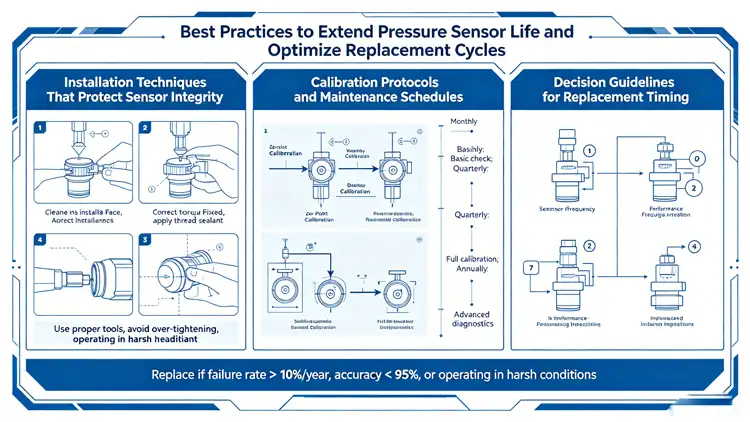
Installation Techniques That Protect Sensor Integrity
In gas line uses, the right mounting angle keeps sediment from building up and makes it easier for condensate to drain. By adding isolation diaphragm plugs, you can protect the detecting element from harsh process media. This is especially helpful in slurry, viscous, or corrosive situations. Impulse lines should have the right damping built in to lower pressure spikes caused by pump pulses or valve opening and closing. Protective housings keep sensors safe from harm, the environment, and electromagnetic interference. Vibration isolation posts separate sensors from sources of equipment vibration, which greatly lowers the buildup of wear stress.
Calibration Protocols and Maintenance Schedules
Calibration checks the correctness of measurements and finds drift before it affects process control. Pharmaceuticals, aircraft, and medical devices are just a few examples of industries with strict quality standards that usually require calibration processes every year or every other year. Based on past stability data, calibration times may be pushed back to 18 or 24 months for less important uses. Regular checks should look at the soundness of the connections, the state of the housing, and the mounting's safety. Cleaning methods that are right for the process medium stop buildup that could stop the diaphragm from moving or make insulation paths that let electricity leak.
Decision Guidelines for Replacement Timing
When making a choice about replacement, you have to weigh a lot of different things, such as the likelihood of failure, the cost of upkeep, the age of the technology, and the drift in the calibration. If sensors show gradual drift getting close to their tolerance limits, they should be replaced before they fail during planned shutdowns instead of letting that happen in service.
When equipment is getting close to its manufacturer-specified design life, it needs to be closely watched and backup plans should be made. If the cost of maintaining old sensors is more than 40% of the cost of replacing them, economic research usually suggests that they should be replaced. It's also important to think about compatibility when handling old communication methods or finding extra parts becomes hard.
Procurement Guide for Long-Lasting Pressure Sensors
Lifecycle costs, operational reliability, and supply chain resilience are all greatly affected by strategic buying choices.
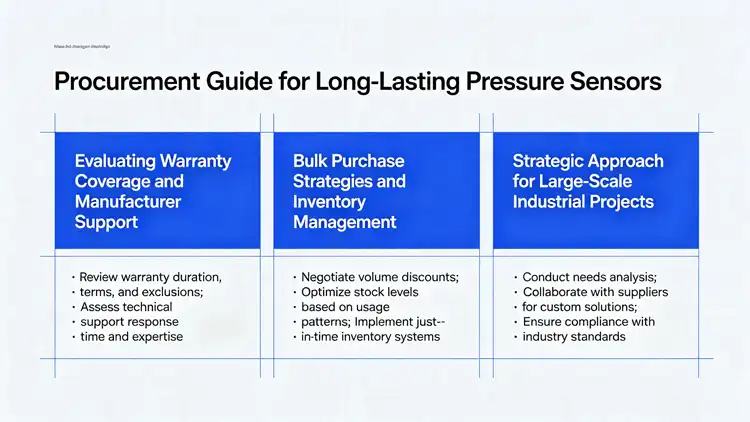
Evaluating Warranty Coverage and Manufacturer Support
Comprehensive guarantee terms show that the maker is sure the product will last. Most standard guarantees last between 12 and 24 months. However, expensive industrial sensors may come with warranties that last 36 months or longer. The terms of the warranty should make it clear what it doesn't cover, especially when it comes to chemical compatibility, overpressure exposure, and damage to the installation.
Technical datasheets give important information like the predicted drift rates, temperature effect factors, and the pressure sensor lifespan, as well as the mean time between failures (MTBF). When manufacturers release detailed data on reliability, they show openness, which helps buyers make smart choices.
Bulk Purchase Strategies and Inventory Management
Buying in bulk can save you money on prices, and for agreements over certain amounts, discounts of up to 25 percent are possible. We need to carefully weigh these saves against the costs of keeping goods and the risk of items becoming obsolete. Standardizing on fewer sensor types makes it easier to keep track of supplies, cuts down on training needs, and takes advantage of volume discounts for many uses. Setting up framework deals with qualified providers guarantees consistent prices, availability, and top-notch expert support. When choosing a supplier, you should look at their manufacturing standards (ISO 9001, ISO/TS 16949), their financial security, and their after-sales service infrastructure to make sure they can support global operations.
Strategic Approach for Large-Scale Industrial Projects
Using a smart sensor selection method, a global chemical business recently updated the instruments in twelve production sites. The team in charge of buying things came up with standard requirements for pressure ranges, accuracy classes, output signals, and types of process connections. Based on technical skills, global support infrastructure, and total cost of ownership models, they chose three main providers.
Commitments to buy in large amounts got better prices while keeping the competition high. Standardization cut the number of extra parts needed by 40%, made training for repair workers easier, and made predictive analytics possible across all sites. Lifecycle cost analysis showed saves of 22% compared to the old ad hoc purchasing methods. This proved that the strategic investment in planning ahead and building relationships with suppliers was worth it.
Conclusion
Industrial companies can see clear practical and financial gains from managing the pressure sensor lifespan in a strategic way. Procurement teams can make smart choices by weighing the original cost against the total cost of ownership when they know how sensor technology, environmental factors, and upkeep methods affect longevity. Structured installation methods, disciplined calibration routines, and condition-based replacement strategies can help increase working life and reduce the number of unexpected breakdowns. Working with trustworthy makers that offer full technical support and a history of dependability builds supply chain stability that helps businesses reach their long-term goals.
FAQ
How frequently should industrial pressure sensors undergo calibration?
How often you calibrate depends on how important the application is, what the rules say, and how stable the device has been in the past. For high-stakes uses like making medicines or measuring property transfers, calibration processes need to happen once a year. In general commercial settings, times may be pushed back to 18 or 24 months if past data shows that performance has been stable. Sensors that are used in tough settings need to be checked more often because they wear out faster.
Which environmental factors most significantly impact sensor durability?
The most harmful external pressures are high and low temperatures, chemical exposure, and mechanical vibration. Changing temperatures quickly wears down materials, and acidic media damage diaphragm materials and sealing compounds. Over time, fatigue cracks spread because of the mechanical stress that builds up from constant shaking. For sensors to last a long time in situations with various stresses, they need to be specially designed.
Can manufacturer lifespan estimates reliably guide maintenance planning?
Specifications from the manufacturer give you a good idea of what to expect under certain working situations. Performance in the field depends on how well it was installed, how harsh the climate is, and how well it is maintained. By keeping an eye on performance trends across all of your sites, you can get site-specific data that makes replacement predictions more accurate than using general specs alone.
Partner with GAMICOS for Long-Lasting Pressure Measurement Solutions
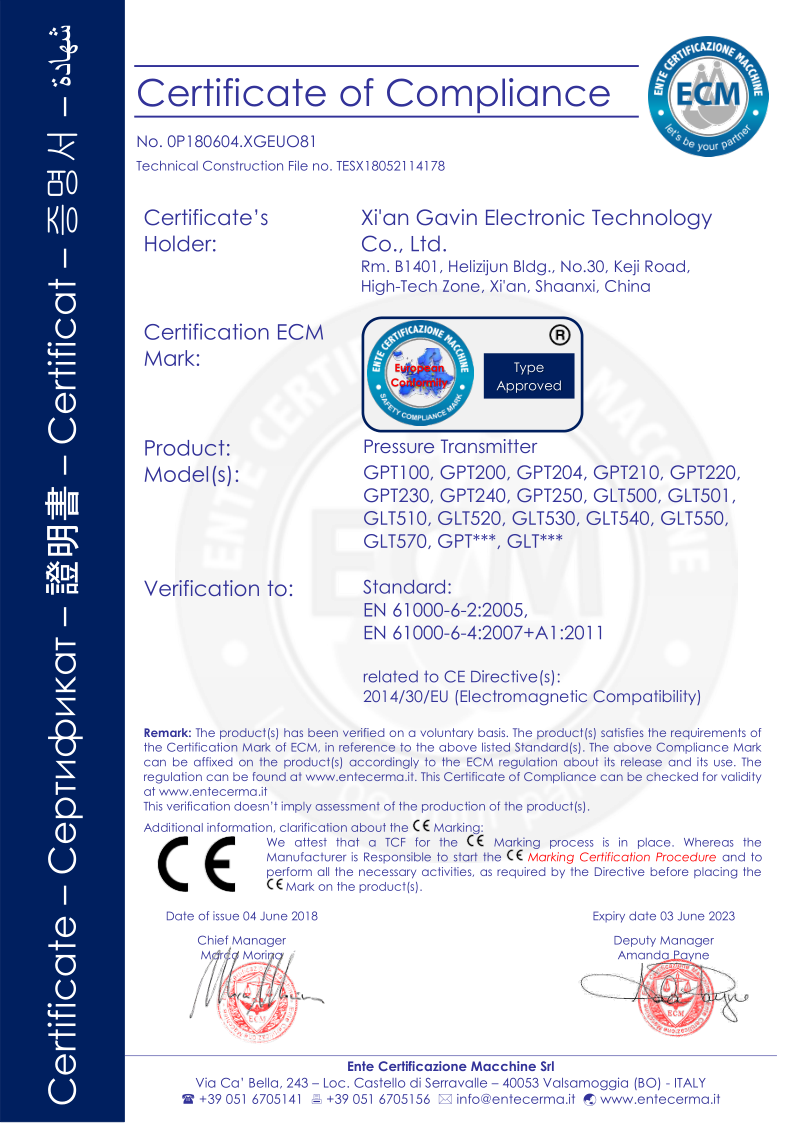
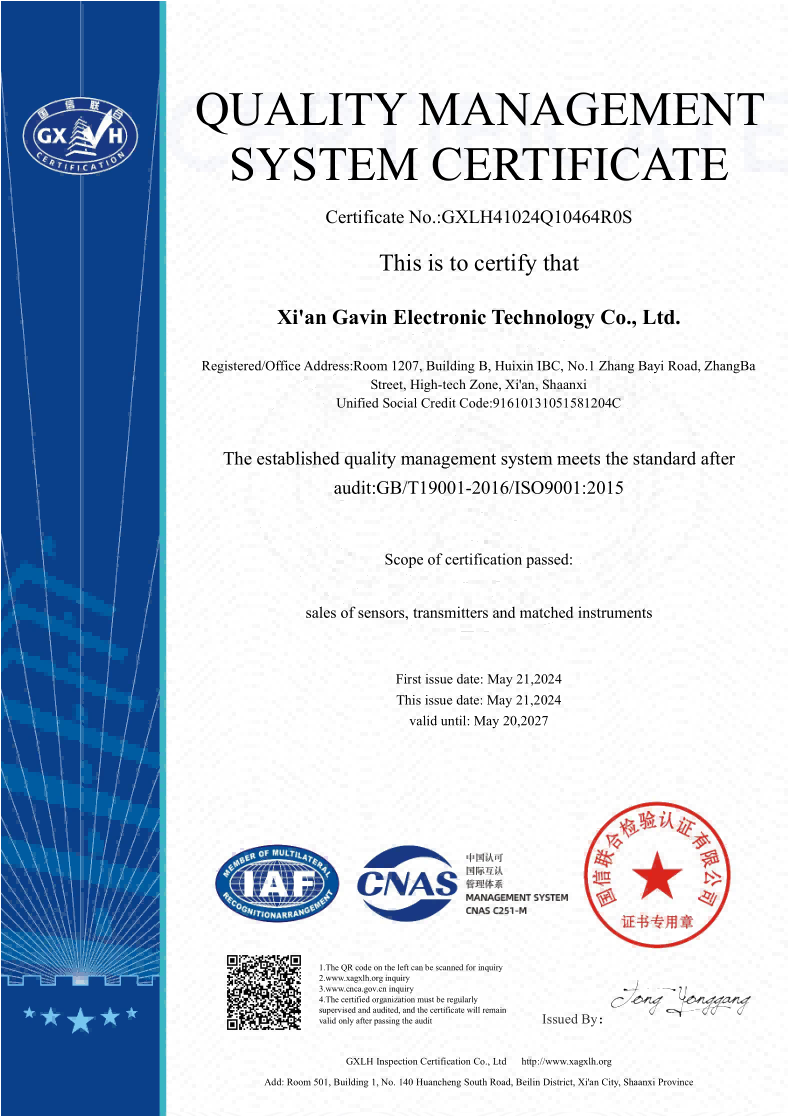
GAMICOS has more than ten years of experience making advanced, long-lasting pressure sensors for tough industrial uses all over the world. Our engineering team works with sourcing managers, engineering contractors, and OEM partners to find the best sensor technologies for each setting and to make sure they last as long as possible. Ceramic capacitive and piezoresistive pressure sensors that we make are guaranteed to work for 10 to 15 years thanks to strict quality control systems and foreign approvals such as CE, RoHS, and ISO.
As a pressure sensor lifespan maker with 98 countries in North America, Europe, and Asia under our belt, we know how hard it is for B2B clients to find the right balance between starting cost and lifecycle performance. Our OEM and ODM customization options cover a wide range of measurement needs, and our helpful technical support team helps with sensor selection, installation, and problem-solving throughout the duration of the product. Contact our experts at info@gamicos.com to talk about your unique application needs and to ask for technical datasheets that list the expected lifespan, upkeep suggestions, and warranty coverage for all of our products.
References
1. Anderson, J.M., "Industrial Pressure Sensor Reliability Analysis: Environmental Effects on Long-Term Stability," Journal of Process Instrumentation Engineering, Vol. 34, 2021.
2. Chen, W. & Liu, H., "Comparative Study of Ceramic and Silicon Pressure Sensor Durability in Chemical Processing Applications," International Conference on Industrial Automation Technology Proceedings, 2022.
3. European Industrial Instrumentation Association, "Best Practices for Pressure Sensor Installation and Maintenance in Process Industries," Technical Guidelines Publication Series, 2020.
4. Martinez, R., "Total Cost of Ownership Modeling for Industrial Pressure Measurement Systems," Industrial Maintenance and Plant Operations Quarterly, Vol. 18, 2023.
5. Thompson, K.L., "Failure Mode Analysis of Pressure Sensors in Petroleum Refining Applications," Reliability Engineering and Asset Management Journal, Vol. 29, 2022.
6. Zhang, Y., "Long-Term Stability Characteristics of Capacitive Pressure Transducers: A Ten-Year Field Study," Sensors and Actuators Technical Review, Vol. 42, 2021.

Spring
Spring, With 5 years of experience in sensor technology and product development, Mark specializes in helping clients identify the optimal pressure and level sensor solutions for demanding industrial environments。
We're here to help — submit your request anytime!
Let us know how we can help solve your pressure level measurement challenge.
_1757930850792.jpg)
Recommended Blog
Wireless Pressure Sensor vs Wired: Which Is Better for Industry?
Best Wireless Pressure Transmitter for Remote Industrial Sites
Differential Pressure Sensor vs Gauge: Which Is Better for Pipelines?
Why Choose a Wireless Pressure Sensor for Oil & Gas Applications
Ceramic Pressure Sensor Uses in Corrosive Media Across Europe
Why Ceramic Pressure Sensors Are Ideal for Americas Chemical Plants
Top Sanitary Pressure Transmitters for Asia Food & Beverage Plants
Wireless Pressure Sensor vs Wired: Which Is Better for Industry?
Best Wireless Pressure Transmitter for Remote Industrial Sites
Differential Pressure Sensor vs Gauge: Which Is Better for Pipelines?
Why Choose a Wireless Pressure Sensor for Oil & Gas Applications
Ceramic Pressure Sensor Uses in Corrosive Media Across Europe
Why Ceramic Pressure Sensors Are Ideal for Americas Chemical Plants
Top Sanitary Pressure Transmitters for Asia Food & Beverage Plants
Wireless Pressure Sensor vs Wired: Which Is Better for Industry?
Best Wireless Pressure Transmitter for Remote Industrial Sites
Differential Pressure Sensor vs Gauge: Which Is Better for Pipelines?
Why Choose a Wireless Pressure Sensor for Oil & Gas Applications
Ceramic Pressure Sensor Uses in Corrosive Media Across Europe
Why Ceramic Pressure Sensors Are Ideal for Americas Chemical Plants