Aerospace Pressure Sensors in Aircraft Hydraulic Systems
Understanding Aerospace Pressure Sensors in Hydraulic Systems
- Understanding Aerospace Pressure Sensors in Hydraulic Systems
- Types and Technologies of Aerospace Pressure Sensors for Hydraulic Systems
- How to Select the Best Aerospace Pressure Sensor for Hydraulic Systems — A Procurement Guide
- Installation, Calibration, and Maintenance of Aerospace Pressure Sensors in Hydraulic Systems
- Future Trends and Innovations in Aerospace Pressure Sensors for Hydraulic Systems
- Conclusion
- FAQ
- Partner With GAMICOS for Reliable Aerospace Pressure Sensor Solutions
- References
Aerospace pressure sensors are the brains of aircraft hydraulic systems. They constantly check the pressure of fluids to make sure the flight is safe and the system works well. These precise tools pick up changes in pressure in real time and turn mechanical force into electrical signs that pilots and automatic control systems can use to keep hydraulics working at their best. These sensors make sure that the data is correct for mission-critical aircraft uses where failure is never an option. They do this by handling the release of landing gear, moving flight control surfaces, and running stop systems.
Understanding Aerospace Pressure Sensors in Hydraulic Systems
Extreme conditions are common for aircraft hydraulic systems. In business planes, pressures can hit 3,000 to 5,000 psi, and in military uses, they can go even higher. Aerospace pressure sensors built into these systems constantly check the pressure of the hydraulic fluid at key places. This lets teams know about possible leaks, pump failures, or other problems with the system before they become safety risks.
Core Functions and Working Principles
In aircraft hydraulics, aerospace pressure sensors turn real-world pressure into electrical data that can be measured. When hydraulic fluid presses on the sensor's diaphragm or sensing element, it changes shape mechanically. This changes shape creates a proportional electrical output, usually in millivolts or digital format, which computers and dashboard displays can understand.
In aircraft uses, the level of accuracy needed is much higher than in most industry settings. Modern flight systems need sensors that are accurate to within ±0.25% of full scale and very stable over long periods of time at temperatures ranging from -55°C to +125°C. This level of accuracy makes sure that hydraulic tools get the exact amount of force they need to move important flight surfaces smoothly and safely.
Primary Sensor Technologies
There are three main methods used to measure hydraulic pressure in aircraft. Strain gauge sensors use a Wheatstone bridge design where metal foil or semiconductors bound to a bendable plate change resistance when pressure causes it to bend. They are the workhorses of commercial flight because they are strong and have a clean record.
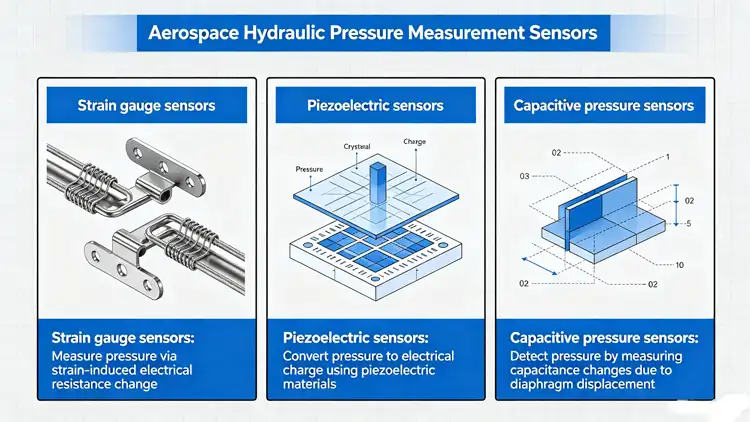
Piezoelectric sensors directly create an electrical charge when pressure is applied. They have a very fast dynamic reaction, which makes them perfect for tracking fast changes in pressure in hydraulic shock dampers and other uses that are sensitive to shaking. Because they produce their own power, they don't need to be plugged into a wall for some tracking tasks.
Capacitive pressure sensors are able to tell when the capacitance between a moving cushion and a set wire changes. This technology has great stability and clarity, which makes it especially useful for finding small changes in pressure that could mean the system is breaking down.
Integration With Aircraft Systems
Standardized transmission standards, such as ARINC 429 and MIL-STD-1553, make it easy for these sensors to work with other parts of an aircraft's electronics. This digital connection lets hydraulic pressure data run into centralized health tracking systems. This lets predictive maintenance programs figure out when a part will break days or weeks before it does. The combination also works with redundant designs, in which data from multiple sensors are checked against each other to make sure that the system keeps running even if one sensor fails.
Types and Technologies of Aerospace Pressure Sensors for Hydraulic Systems
To choose the right sensor technology, you need to know how each type works in certain aircraft fluid situations. Different levels of pressure, needs for fluid interaction, and external factors decide which technology works best.
Piezoelectric Pressure Sensors
Piezoelectric technology is very good at tracking dynamic pressure events, such as quick changes in pressure, pulsations, and vibration-induced pressure spikes that happen when a hydraulic pump is running or an actuator cycles. These sensors react in microseconds, picking up pressure changes that technologies that work more slowly might miss. Manufacturers of airplanes often put piezoelectric sensors near hydraulic pumps. Pressure ripple analysis can then be used to find bearing wear or cavitation before they cause a catastrophic failure.
The problem with piezoelectric technology is that it can't measure static pressure. Because their electrical charge slowly fades over time, they can't be used for tasks that need to continuously measure exact pressure. Because of this, they can only be used for dynamic monitoring and not for steady-state tracking of hydraulic pressure.
Strain Gauge Pressure Sensors
Strain gauge sensors are the most common way to measure hydraulic pressure in aircraft because they can work with both steady and moving pressures. Their solid or semiconductor sensor elements let them take stable, repeated readings from almost no pressure to over 10,000 psi. Piezoresistive silicon strain gauge sensors are often used in aircraft hydraulic systems because they are small, have a high output signal, and can adjust well to changes in temperature.
These days' strain gauge sensors have temperature adjustment networks and digital signal processing that keep them accurate even when temperatures change a lot, like when they're in flight. This feature is very important when the temperature of hydraulic systems changes by 100°C or more between working on the ground and cruising at high altitude.
Capacitive Pressure Sensors
Capacitive sensors are very good at picking up small changes in pressure, which is important for some uses. They don't use much power, which makes them good for emergency hydraulic systems that are powered by batteries. Also, their all-welded design keeps moisture out, which is important because hydraulic fluids and mist can be very toxic.
In flight hydraulics, capacitive sensors are mostly used for low-pressure tracking (usually below 500 psi), where their high sensitivity finds early signs of filter blockages, tank depletion, or suction-side limits in hydraulic pumps.
Certification and Compliance Standards
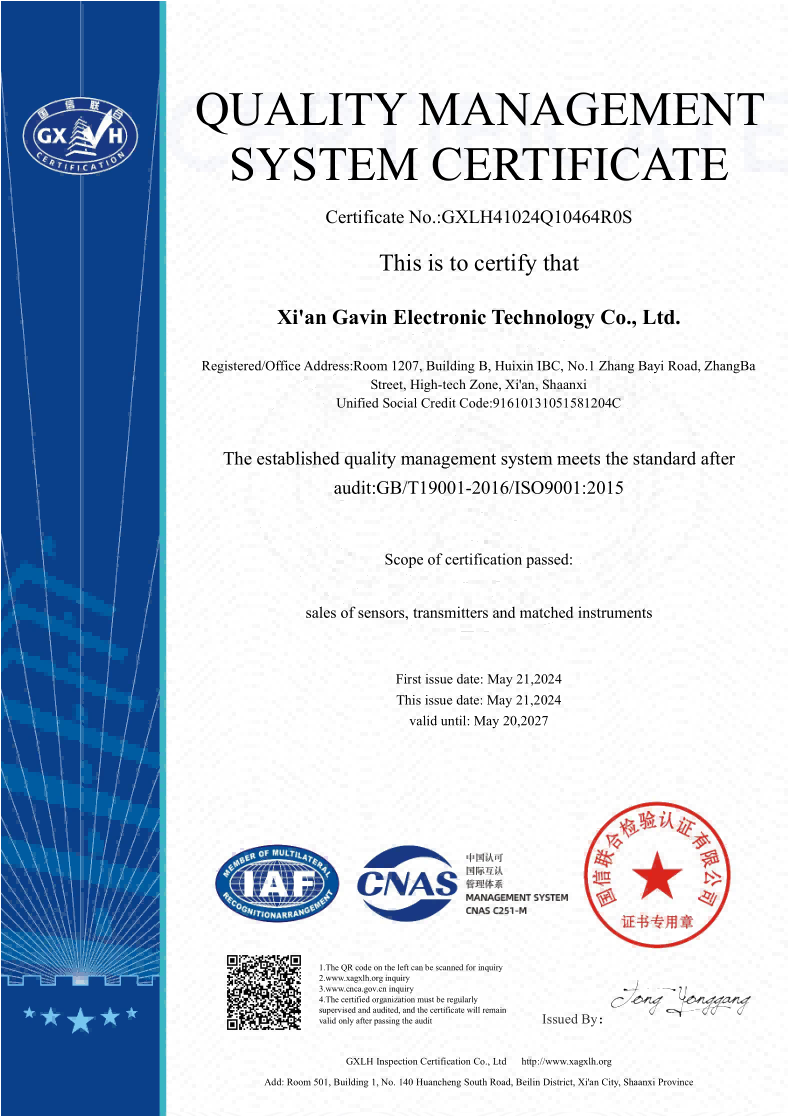
Aerospace pressure sensors have to meet strict approval standards that are much higher than those needed in the private industrial sector. MIL-STD-810 weather testing puts sensors through high temperature cycling, humidity exposure, salt fog, shaking, and mechanical shock that mimic years of aircraft working stress. Certification in AS9100 quality management makes sure that industrial processes stay consistent and can be tracked to aerospace-grade standards.
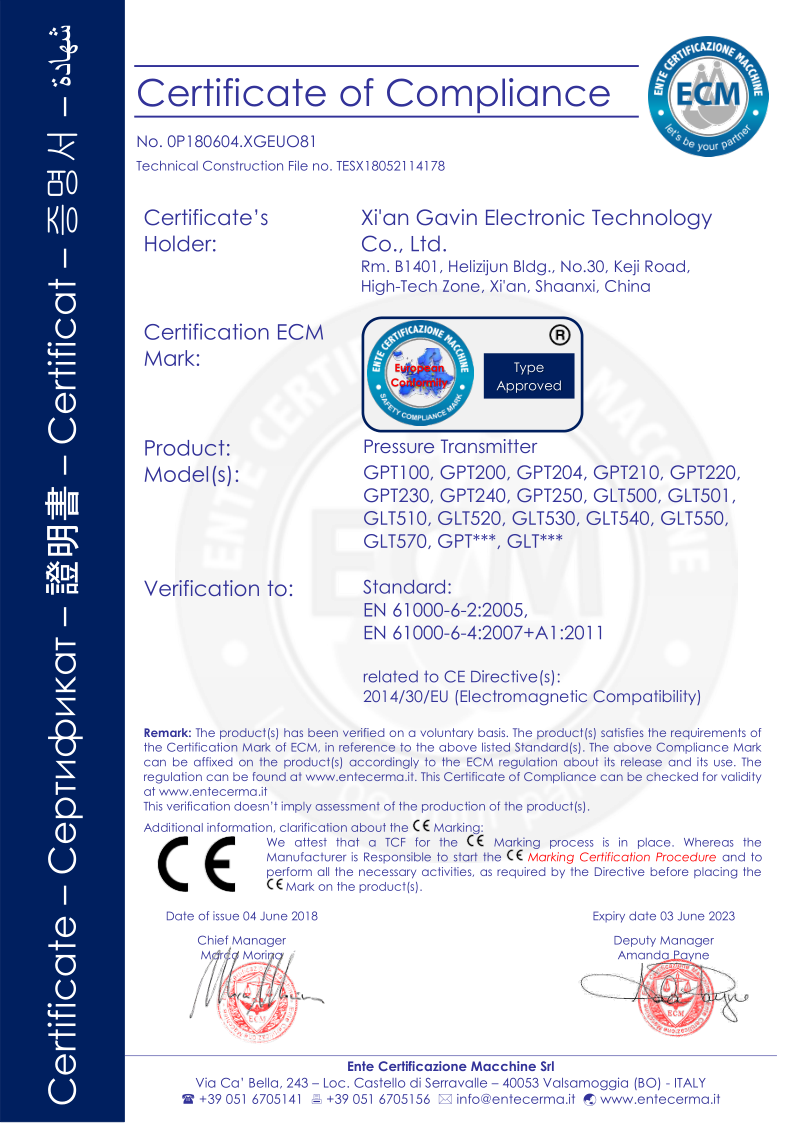
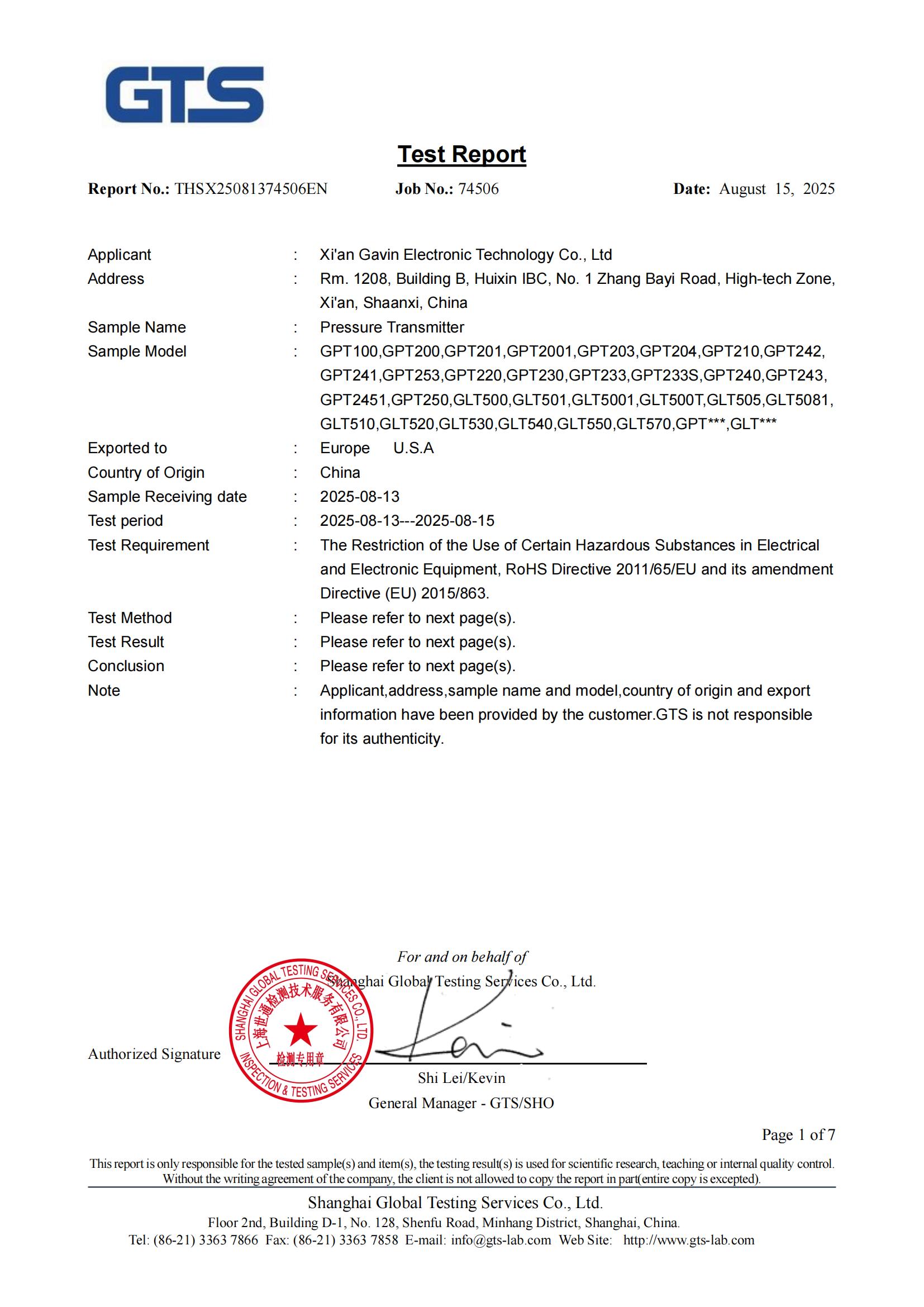
As environmental rules have been extended to aircraft parts, RoHS compliance has become more and more important. Manufacturers of modern sensors now offer lead-free wiring and restricted-substance paperwork that meets environmental requirements and ensures long-term material compatibility with hydraulic systems in airplanes. These approvals give buying teams faith that sensors will work well for as long as they are supposed to, which for commercial airplanes is usually 20 to 30 years.
How to Select the Best Aerospace Pressure Sensor for Hydraulic Systems — A Procurement Guide
When buying aerospace pressure sensors, you have to weigh a lot of technical, business, and strategy aspects. In general industry uses, cost is what drives selection. But in aircraft buying, stability, certification compliance, and long-term source viability are more important.
Critical Technical Specifications
When choosing a sensor, accuracy is very important, but for flight uses, you need to know how to use accurate specs in the right way. If a sensor is estimated to be accurate within ±0.5% across its entire temperature range, it may work much better in normal situations. Instead of depending only on full-range specifications that include high outlier conditions, procurement engineers should ask for accuracy standards at operating temperature ranges.
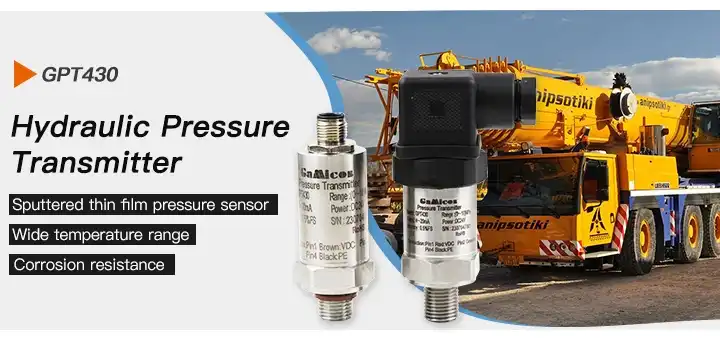
| Parameters of GPT430 | |
| Range(Mpa) | 0MPa~1MPa …150MPa |
| Pressure type | Gauge, absolute pressure |
| Output signal | 4~20mA, 0~5V, 0.5-4.5V, 0-10V, RS485, I²C |
| Accuracy(FS%) | 0.1(OEM), 0.25(OEM),0.5 |
| Operating voltage(VDC) | +12~+30(Calibration value: +24) |
| Medium temperature | -40℃~+150℃ |
| Response time | ≤3ms(10%~90%) |
| Medium | Liquids compatible with 17-4PH |
| Diaphragm material | 17-4PH stainless steel |
| Protection grade | IP65(OEM) |
| Housing material | 304、316L |
Picking the right pressure level should be done with care. When sensors are in the middle third of their stated range, linearity and hysteresis effects are at their weakest. For the best accuracy and safety against overloading during pressure changes, choose sensors with maximum values that are about three times the normal working pressure. In the business world, on the other hand, tighter range matching is usual.
Response time and frequency response are very important when tracking fast changes in a hydraulic system. For tracking pump health or actuator control loops, sensors need to be able to react at frequencies higher than 1 kHz. However, sensors that can respond at 10 Hz or less are fine for steady-state pressure monitoring. When you match the reaction traits of a sensor to the needs of an application, you avoid both over-specification and poor performance.
Comparing Aerospace-Grade Versus Industrial Sensors
Labels on the product don't really show the difference between aerospace and industrial pressure sensors. Aerospace pressure sensors go through a lot of qualification tests that record how well they work in harsh environments, how well they fight electromagnetic interference, and how they behave over time. This testing information gives the technical reason that officials in charge of certifying airplanes need.
Another important difference is material suitability. Aerospace hydraulic fluids, which are usually phosphate ester-based, can damage elastomers and sealing materials that work with industry hydraulics that are based on oil. Aerospace pressure sensors use special wetted materials, especially in diaphragm and seal designs, that stay strong even after decades of being exposed to these harsh fluids.
Evaluating Supplier Capabilities
Beyond product requirements, seller selection should evaluate manufacturing skills, quality systems, and long-term business security. Suppliers with AS9100 approval have quality management systems that are built to meet the tracking and process control needs of aircraft manufacturing.
When evaluating suppliers, it's important to pay close attention to how well they can provide technical help. A lot of the time, aerospace pressure sensor apps need help with signal filtering, installation, and connecting to airplane data lines. Suppliers who offer support for applications engineering, testing services, and quick technical response lower project risk during both the original merger phase and the years of operational support that follow.
OEM and customization options are becoming more and more important as airplane makers look for better sensor solutions instead of ready-made parts. It's easier to integrate with hydraulic system designs when you can change the mounting arrangements, electrical links, pressure ports, or add customer-specific calibrations. Teams in charge of buying things should look for sellers that can handle special requests without charging too much for longer wait times or needing large minimum orders that go beyond what the program requires.
Installation, Calibration, and Maintenance of Aerospace Pressure Sensors in Hydraulic Systems
The accuracy, dependability, and service life of an aerospace pressure sensor are directly affected by how well it is installed and maintained over time. Aerospace repair groups follow very specific steps to make sure that sensors keep meeting performance standards for as long as they are used.
Installation Best Practices
Where you mount the sensor has a big effect on how well it works and how long it lasts. Place sensors so that they record the average pressure of the system and stay away from places where there is a lot of shaking, extreme temperature changes, or pressure spikes. Putting sensors at least ten pipe diameters downstream of orifices, valves, or bends lets turbulent flow settle down, which stops wrong pressure readings.
When making hydraulic connections, you need to be extra careful not to create leaking lines or stress peaks. It is very important to follow the torque specs for pressure port fits exactly. If you don't, fluid could leak, and if you use too much torque, the sensor body could flex, which could cause a measurement mistake or mechanical failure. When it comes to electrical connections, you need to pay attention to the right pin entry depth, backshell strain relief, and socket closing to keep moisture out.
Calibration Protocols and Intervals
Maintenance plans for airplanes usually say how often sensors need to be calibrated based on flight hours, calendar time, or working cycles. Aerospace pressure sensors on commercial airplanes are usually calibrated every 5,000 flight hours or five years, whichever comes first. When military airplanes are working in harsher situations, they may need to be calibrated and validated more often.
Calibration processes follow rules that can be traced back to national measurement institutes. The reference standards used are accurate to at least four times the accuracy of the sensor. Linearity, hysteresis, and zero offset are checked to make sure they stay within acceptable limits using multi-point calibration across the sensor's working range. Recording calibration results gives you trend information that can help you spot sensors that are getting close to the end of their useful life, so you can replace them before they become out of range.
Troubleshooting Common Issues
In aircraft hydraulic systems, sensor problems show up in a few different ways. Gradual movement usually means that the diaphragm is wearing out, the seal is breaking down, or a computer component is getting old. Readings that change quickly or output that isn't stable are usually signs that moisture is getting into the electronics inside or that something is contaminating the pressure reference hole.
Maintenance teams use organized ways to find problems by comparing sensor outputs and taking readings of standard pressures from tested equipment that has been measured. Portable accuracy gauges can be used to check the pressure in a hydraulic system on their own. This lets techs tell the difference between changes in the real system pressure and mistakes in the sensor measurements.
Preventive repair makes sensors last a lot longer. Checking electrical connectors for damage or rust on a regular basis, making sure the fitting torque is correct, and keeping an eye out for hydraulic fluid leaks around pressure ports can find problems early on, before they lead to sensor failure or system contamination. Recording these checks makes past records that can be used to look at the stability of the whole fleet and give makers feedback on sensor design.
Future Trends and Innovations in Aerospace Pressure Sensors for Hydraulic Systems
As digital technologies, improved materials, and connections change sensor capabilities, the rate of change for aerospace pressure sensors continues to speed up. These new ideas offer better dependability, less work for repair staff, and more information about how healthy a hydraulic system is.
Smart Sensors and IoT Integration
When microprocessors are built right into pressure sensors, they become "smart" devices that can diagnose themselves, handle signals more efficiently, and communicate digitally. These smart sensors constantly check their own performance factors, like the internal temperature, supply voltage stability, and signal-to-noise ratio. If they notice anything that could mean problems are starting to happen, they let repair systems know.
While wireless communication is still new in safety-critical aircraft uses, it looks like it could be useful for non-critical tracking tasks and troubleshooting tools on the ground. Wireless sensors get rid of complicated wire systems, make planes lighter, and make placement easier in places where running lines would be hard. In the next few years, more wireless sensors will be used because aerospace-approved wireless protocols and energy gathering technologies that power sensors from vibrations or changes in temperature will become more mature.
Advanced Materials and Miniaturization
Silicon carbide and other wide-bandgap semiconductors make it possible for sensors to work at temperatures above 300°C. This means that pressure can be measured in high-temperature hydraulic system areas that couldn't be reached before. These unusual materials are also better at blocking radiation, which is important for space and high-altitude flights.
Micro-Electro-Mechanical Systems (MEMS) technology keeps making sensors smaller without lowering their efficiency. Sensors that are smaller than a fingernail can now match the accuracy and dependability of devices that are ten times bigger. Because of this downsizing, multiple duplicate sensors can be embedded in places where equipment was previously limited by lack of room.
Evolving Regulatory Landscape
Regulatory bodies are always changing the standards for getting certified to reflect changes in operations and new technologies. Recent changes to the MIL-STD rules put more emphasis on cybersecurity issues for digitally connected sensors. This is because networked airplane systems need to be protected against people getting in without permission or changing data maliciously.
Environmental compliance rules cover more than just making. They also cover how to get rid of old sensors and how to recycle materials. Lifecycle environmental effect is becoming a bigger part of procurement requirements. Manufacturers who plan for removal and material return will be rewarded.
Strategic Procurement Recommendations
Companies should work with approved providers that show they are dedicated to aircraft quality standards and constant growth. Long-term relationships let sellers learn about the specific needs of each application and spend in customization tools that are in line with customer roadmaps.
Data-driven seller evaluation, which keeps track of measures like on-time delivery performance, quality escape rates, and how quickly technical help responds, gives decision-makers objective proof to back up their choices. These measures help find suppliers who can meet the needs of difficult aerospace projects for many decades of airplane service lives.
Cost efficiency and risk management should be balanced in procurement strategies, since flight sensor failures can cause planes to be grounded for thousands of times the cost of the sensor itself. Qualifying more than one source for important types of sensors gives you more options for where to get them while keeping prices and delivery times under pressure from competitors.
Conclusion
It is impossible for aircraft hydraulic systems to work without aerospace pressure sensors. Their accurate readings make flight operations safe and reliable. This complete guide has covered all the important things that engineering and procurement workers need to think about, from knowing basic sensor technologies to putting in place good procurement strategies and repair procedures.
Digitalization, new materials, and strict government rules are all pushing sensor technology to keep changing. This means that suppliers' skills and strategic partnerships need to be constantly looked at. Companies that put quality, regulatory compliance, and long-term connections with suppliers at the top of their list of priorities will be able to take advantage of these new technologies, which will improve the stability of airplane hydraulic systems over their entire operating lives.
FAQ
What factors most significantly influence aerospace pressure sensor accuracy?
Changes in temperature have the most impact on the accuracy of an aerospace pressure sensor because they affect both the sensing elements and the mechanical structures. Good flight sensors have temperature adjustment networks or digital correction techniques that make these effects less noticeable. Long-term mechanical wear, electromagnetic interference, and vibration exposure are some of the other things that can make accuracy worse. However, these effects can be greatly reduced with proper installation and environmental safety.
How frequently should aircraft hydraulic pressure sensors undergo calibration?
The amount of time between calibrations depends on how the airplane is used, the rules that apply, and what the maker suggests. It is required by commercial aircraft to calibrate every 5,000 flight hours, or five years. Depending on the task, military and specialized airplanes may need to be serviced more often. If sensors show signs of declining performance, they may need to be re-calibrated sooner, even if that's not what the plan says.
Can hydraulic system pressure sensors serve other aircraft subsystems?
Even though aerospace pressure sensors are best for their own setting, the technology behind them can be used in many other parts of an airplane to measure gas pressure, fuel system pressure, and environmental control system pressure. For each use, sensors must be set up for the right levels of pressure, fluid compatibility, and weather conditions. Direct swapping between different systems usually needs an engineering review to make sure it works with the specifications and follows the rules.
Partner With GAMICOS for Reliable Aerospace Pressure Sensor Solutions
Measurement accuracy is very important for aviation hydraulic systems and can't be compromised. GAMICOS is an expert at making very accurate aerospace pressure sensors that are built to withstand the tough conditions of hydraulic uses in aircraft and industry. Our cutting-edge pressure measuring technologies are very stable even at very high and very low temperatures, giving your important systems the measurements they need.
GAMICOS is trusted by engineering teams all over the world to provide custom sensor solutions that solve specific application problems. Our OEM and ODM services go beyond standard products; they let you change the pressure ranges, electrical connections, mounting arrangements, and communication methods so that they perfectly fit your system needs. Whether you need a few prototypes for a new plane or a lot of products for installations across a whole fleet, our manufacturing capacity and quality systems make sure that you always get approved products that meet international aerospace standards.
GAMICOS provides full expert help throughout the whole buying process. Our systems engineers help you choose the right sensors, give you advice on how to integrate them, and provide testing services to make sure they work well for a long time. We provide fast service to procurement managers, engineering teams, and system developers in North America, Europe, and around the world, drawing on our deep knowledge of the aircraft business.
Find out how GAMICOS can make your hydraulic system more reliable. Get in touch with our expert team at info@gamicos.com to talk about your needs for an aerospace pressure sensor. As a reliable aerospace pressure sensor maker with a track record of providing accurate measurement solutions, we are ready to support your mission-critical applications with products that combine cutting-edge technology, strict quality control, and low prices for large purchases.
References
1. Johnson, M. R., & Stevens, P. K. (2021). Aerospace Hydraulic Systems: Design, Analysis and Maintenance. Aviation Press International.
2. Williams, T. C. (2020). Pressure Measurement Technologies for Aircraft Applications. Journal of Aerospace Engineering, 34(3), 142-158.
3. SAE International. (2019). Aerospace Pressure Sensor Performance Standards and Testing Protocols (SAE AS8024C). Society of Automotive Engineers.
4. Martinez, L. F., & Chen, W. H. (2022). Advanced Materials in Aerospace Sensor Technology. International Journal of Aviation Technology, 15(2), 89-107.
5. Department of Defense. (2021). Environmental Engineering Considerations and Laboratory Tests (MIL-STD-810H). United States Military Standard.
6. Thompson, R. J., Garcia, A. M., & Liu, X. (2023). Predictive Maintenance in Aircraft Hydraulic Systems Using Smart Sensor Networks. Aerospace Maintenance Quarterly, 28(1), 34-52.

Spring
Spring, With 5 years of experience in sensor technology and product development, Mark specializes in helping clients identify the optimal pressure and level sensor solutions for demanding industrial environments。
We're here to help — submit your request anytime!
Let us know how we can help solve your pressure level measurement challenge.
_1757930850792.jpg)
Recommended Blog
Pressure Transmitter Zero Drift: Diagnosis & Calibration Guide
Process Connection Installation: Thread, Flange & Clamp
IP Ratings Guide: IP65, IP67, IP68 for Pressure Sensors
Pressure Transmitter Zero Drift: Diagnosis & Calibration Guide
Process Connection Installation: Thread, Flange & Clamp
IP Ratings Guide: IP65, IP67, IP68 for Pressure Sensors