Pressure Sensor Datasheet Interpretation Guide
Pressure Sensor Datasheet Overview: Key Sections Explained
- Pressure Sensor Datasheet Overview: Key Sections Explained
- Core Performance Metrics in Pressure Sensor Datasheets
- Understanding Pressure Sensor Types through Datasheet Parameters
- How to Evaluate Calibration, Certification, and Quality Indicators?
- Conclusion
- FAQ
- Partner with GAMICOS for Your Pressure Measurement Solutions
- References
The document is the most important technical resource for buying managers and engineering teams when they are looking at pressure measurement devices for industrial use. A pressure sensor datasheet has important details that spell out performance limits, compatibility requirements, and working limits. However, many professionals still find it hard to correctly understand this information. If you don't read the accuracy specs or environmental ratings carefully, you could make expensive mistakes when buying something, have tools break down, or cause a project to be delayed. This guide shows you the most important parts of pressure sensor datasheets so you can easily understand the scientific terms and choose the right ones for your needs.
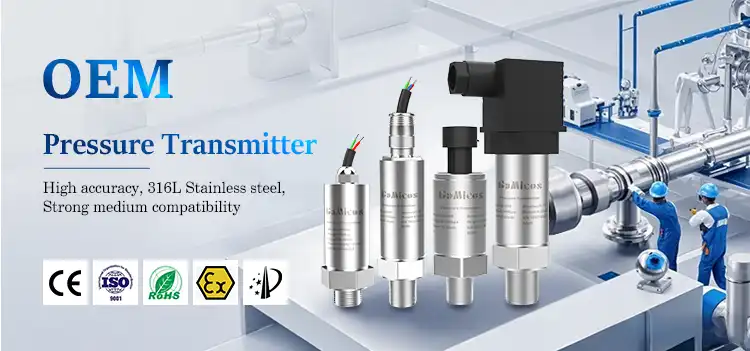
Pressure Sensor Datasheet Overview: Key Sections Explained
There is an organized style for every pressure sensor datasheet that is meant to show the technical specs and physical features. Figuring out how these parts fit into your buying needs speeds up the evaluation process and lowers the chance of making a bad choice.
Decoding Part Numbers and Manufacturer Codes
Part names tell you important things about sensor groups and how they are built. A common part number could tell you if the gadget works with piezoresistive technology, MEMS manufacturing, or capacitive sensors. The GPT200 general pressure transmitter, which has a diffused silicon pressure sensor as its sensitive part, shows how companies directly put technology types into product identities.
When you look at the datasheets, keep in mind that piezoresistive sensors usually work well across a wide range of temperatures, while MEMS devices come in small packages that are good for setups with limited room. Manufacturer numbers also show how quality is checked and what the area standards are for compliance. Products from well-known brands usually list certification bodies and testing methods in the first part. This gives purchasing teams early faith in the supply chain's dependability.
Electrical Specifications That Matter
How pressure transducers work with current control systems is based on their electrical specs. The type of output data (voltage, current, or digital protocols) must match the needs of your device. The GPT200 emitter has outlets for both voltage and current after its built-in processing circuit changes millivolt signals. This lets it connect directly to computers, control instruments, and display devices without the need for extra signal conditioning.
Supply voltage bands show how well the power system works with each other. Standard industrial control systems work with sensors that need 24V DC power, while 5V devices work well in embedded systems. Interface types, like I2C, SPI, or audio outputs, change how hard it is to install and how much info you can get. When looking at electronic specs, make sure that the sensor's reaction time fits your control loop needs. Sensors that are too slow won't be able to give you good feedback for quick process changes.
Mechanical and Environmental Parameters
Physical measurements and environmental scores determine whether an installation is possible and how reliably it will work. The specs for the pressure range must meet your measurement needs with enough room for error. As a full-range device, the GPT200 can measure absolute, gauge, and sealed gauge pressures, making it useful in a wide range of situations.
Temperature limits need to be carefully thought out because thermal drift changes the accuracy over time. IP grades show how well a sensor keeps out dust and water, which is very important for sensors used in chemical processing, food production, or outdoor settings. Devices like the GPT200 are made with a 316L stainless steel isolation diaphragm that makes sure they are chemically compatible and won't rust in harsh settings. This part also talks about mounting orientations and process connection types (threaded, flanged, or sanitary fittings), which have a direct effect on how to plan an installation and how easy it is to do upkeep.
Core Performance Metrics in Pressure Sensor Datasheets
Performance specs tell you how accurate a measurement is and if a pressure sensor meets your needs for accuracy. These measures have a direct effect on how well process control works and how much it costs to run.
Accuracy Parameters: Total Error Band, Linearity, and Hysteresis
The total error band shows the biggest difference between the measured pressure and the real one across the whole working range. It includes the effects of nonlinearity, hysteresis, repetition, and thermal errors. For buying choices, this one specification gives the most accurate picture of how accurate something is. Linearity is a measure of how closely the sensor output follows a straight line when pressure is applied. Higher linearity makes testing easier and boosts the performance of the control system.
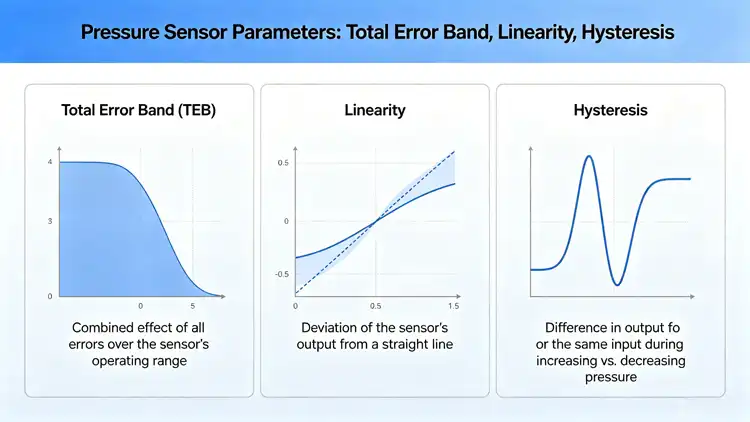
Hysteresis measures the changes in output that happen when pressure goes up and down. In situations where forces change, high hysteresis makes measurements less accurate. Total error bands for industrial-grade sensors are usually less than ±0.25% of full scale, which is good enough for most process control situations. The GPT200's piezoresistive sensor and specialized circuitry give it high stability and low drift, so readings stay accurate for long periods of time.
Sensitivity and Resolution for Precision Control
Usually given as mV/psi or mV/bar, sensitivity tells you how much the output changes when the pressure changes. Signal-to-noise ratios get better with higher sensitivity, which is especially important in low-pressure situations. Resolution tells you the smallest change in pressure that the sensor can pick up. This is very important for situations where you need to make small pressure adjustments or find leaks.
Resolution in digital sensors is given in bits (10-bit, 12-bit, or 16-bit), and better bit counts allow for smaller measurement steps. Devices like the GPT200 have a tiny amplifier design that improves signal quality. This lets them send accurate signals over long distances without losing quality. When judging sensitivity specs, you should look at the whole signal chain, from the sensor to the display or driver, making sure that there is enough sharpness all the way through.
Response Time and Long-Term Stability
Response time, which is usually given as the time it takes to hit 90% of the end number, shows how quickly sensors respond to changes in pressure. Slower sensors are enough for steady-state tracking, while faster ones let you direct dynamic processes in real time. Measurement drift over time is shown by stability parameters. This is typically given as a percentage change per year.
A lot of tests are done on the GPT200, such as design validation, workpiece screening, process verification and curing, cycle loads and aging, and outdoor modeling. This strict approval method makes sure that the product is stable and reliable throughout its entire lifecycle. Long-term instability issues mean that sensors need to be re-calibrated more often, which increases upkeep costs and downtime. When looking at stability data, make sure the test settings are similar to what you'll be using. The performance of stability changes a lot when it is exposed to temperature and pressure changes.
Understanding Pressure Sensor Types through Datasheet Parameters
Choices of technology used in pressure sensor design affect how well they work, how much they cost, and what kinds of uses they can be used for. Specification patterns and building details on datasheets show these differences.
Distinguishing Piezoresistive, Capacitive, and MEMS Technologies
Piezoresistive sensors pick up on changes in resistance in silicon or metal strain gauges that are attached to diaphragms. With good temperature adjustment, these devices work reliably over a wide range of pressures. The GPT200 uses piezoresistive sensing elements that are very stable, so it can be used in harsh industrial settings where dependability can't be compromised.
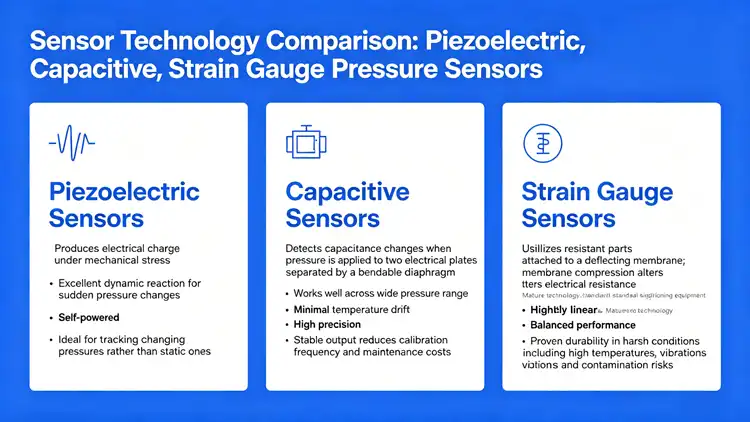
Changes in capacitance between a cushion that bends and a fixed wire are used to measure pressure by capacitive sensors. When pressure is put on a ceramic diaphragm, it changes shape, which changes the gap distance and, in turn, the capacitance value. These sensors work great in low-pressure situations that need high sharpness, but they may be sensitive to temperature, so they need to be carefully adjusted. Applications in clean rooms and precision lab tools often use capacitive systems.
Micro-Electro-Mechanical Systems (MEMS) sensors put electronics and detecting parts on silicon chips by making semiconductors. These small devices use little power and have small sizes, making them perfect for portable tools and OEM uses that need a lot of them. Piezoelectric sensors can measure dynamic pressures but not static pressures because they produce electrical charges that are related to the mechanical force that is applied.
Absolute, Gauge, and Differential Pressure Measurements
Different types of pressure references have big effects on how measurements are understood and what kinds of uses they are best for. Absolute pressure sensors take data in a perfect vacuum, so they are not affected by changes in the air pressure. This is important for uses that need to know the pressure at different elevations or for tracking sealed systems. Gauge pressure sensors measure overpressure or underpressure compared to the surrounding air pressure and show zero when the pressure is normal.
Differential pressure sensors find the difference in pressure between two ports. They are often used to check on filters, measure flow through opening plates, or check the level of fluids in pressurized vessels. The GPT200 can measure absolute, gauge, and sealed gauge pressures, which lets it be used in a variety of situations without having to buy extra equipment. Most of the time, datasheets use nomenclature to show the reference type, and mechanical sketches show the reference port layout.
Environmental and Electrical Constraints
Deployment settings are limited by the temperature ranges that can be used. Temperature ranges from -40°C to 125°C are good for outdoor setups and harsh industrial processes. Temperature ranges from 0°C to 80°C are better for controlled indoor settings. Specifications for media compatibility tell you which fluids are suitable. Parts made of 316L stainless steel that are wet can handle most industrial chemicals, and protective coatings or isolators keep harsh media out.
Electrical safety features like overvoltage protection, reverse polarity protection, and EMI/RFI insulation can be found in datasheets as design features or as test standards compliance. The GPT200 has a strong anti-interference design that makes it work reliably in noisy industrial settings like those with motor drives and cutting tools. Explosion-proof approvals and intrinsic safety scores make it possible to use in ATEX or IECEx-classified dangerous areas.
How to Evaluate Calibration, Certification, and Quality Indicators?
In addition to technical details, pressure sensor datasheets explain how to ensure quality and follow regulations, which protects buying investments and keeps the supply chain honest.
Calibration Traceability and Standards
Using reference standards, calibration figures out how the output of the sensor changes when pressure is applied. Measurements can be compared to national or foreign standards through traceable calibration chains that are written down. The National Institute of Standards and Technology (NIST) or a similar foreign body should be mentioned in datasheets as sources for calibration standards.
Calibration intervals show how often the device needs to be re-calibrated to keep its accuracy. Most designs need to be recalibrated once a year, but stable designs may be able to go up to twice a year. The GPT200 is factory-calibrated using precise reference equipment, and you can get a proof of calibration that shows tracking and test conditions if you ask for one.
Essential Industry Certifications
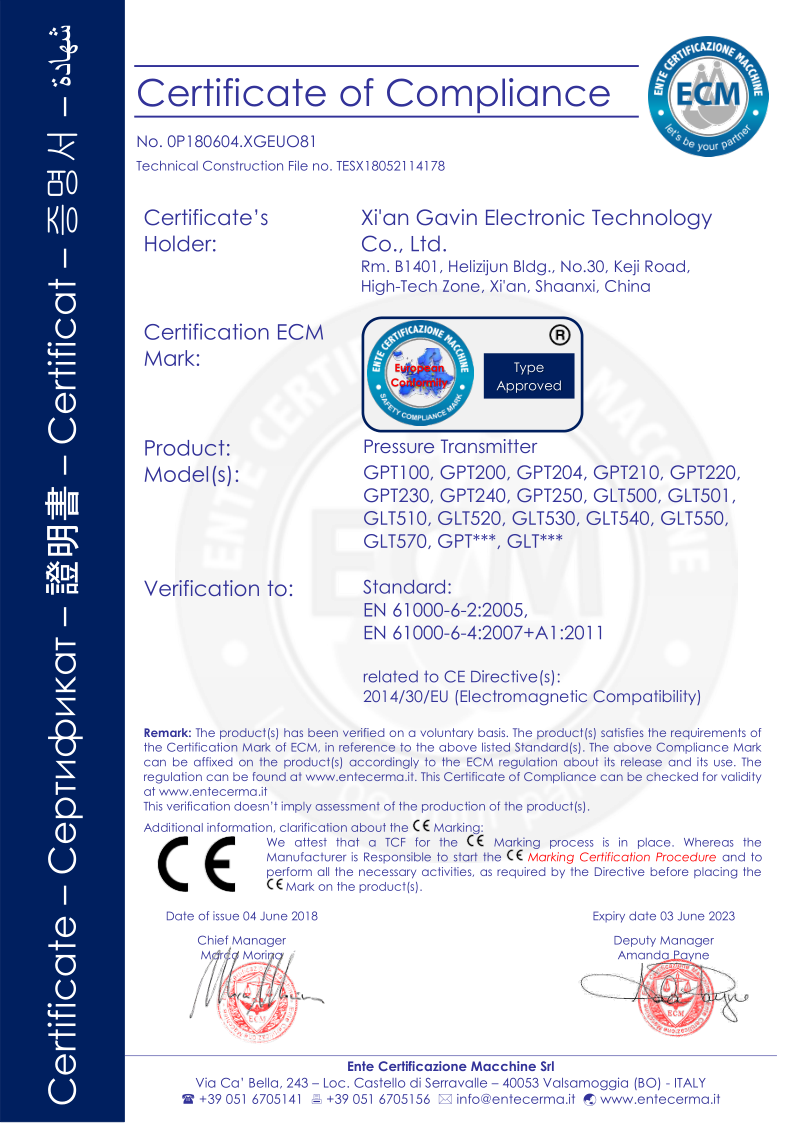
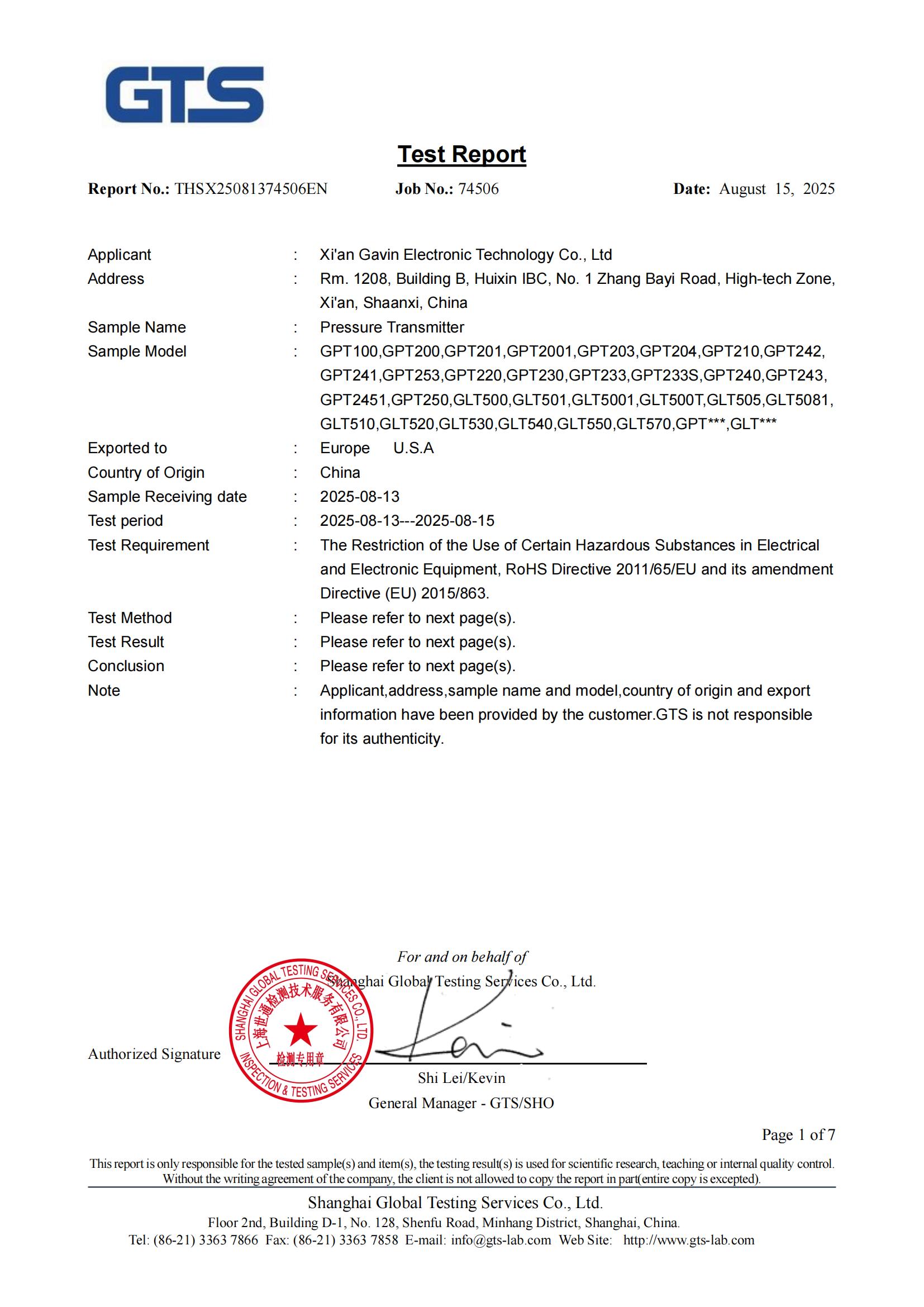
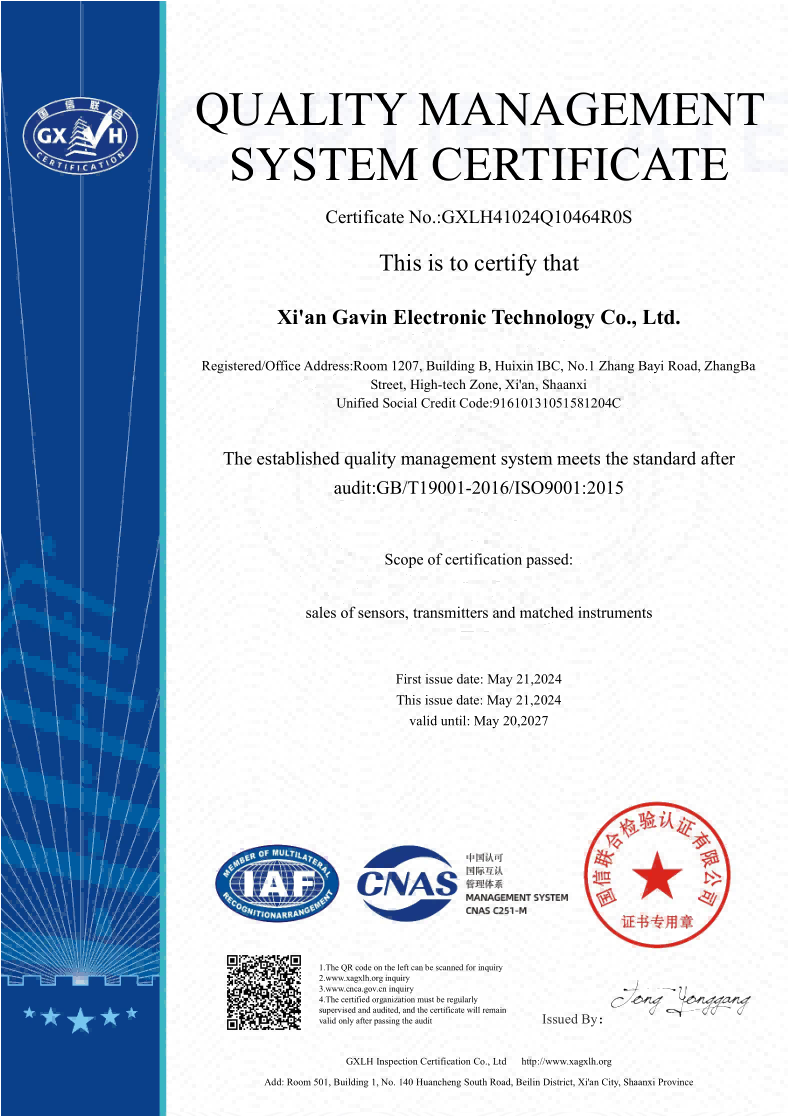
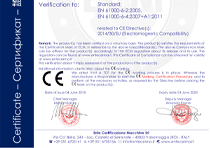
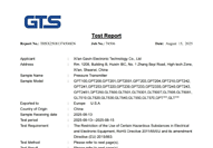
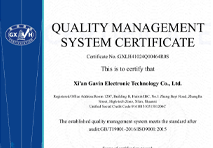
RoHS (Restriction of Hazardous Substances) compliance makes sure that goods follow European rules that limit the use of dangerous materials and heavy metals. When something has a CE mark on it, it means it meets European standards for health, safety, and the environment. This makes it easier for people from all EU member states to buy it. Getting ISO 9001 approval shows that you have implemented a quality management system, which gives you trust in the consistency of your manufacturing processes.
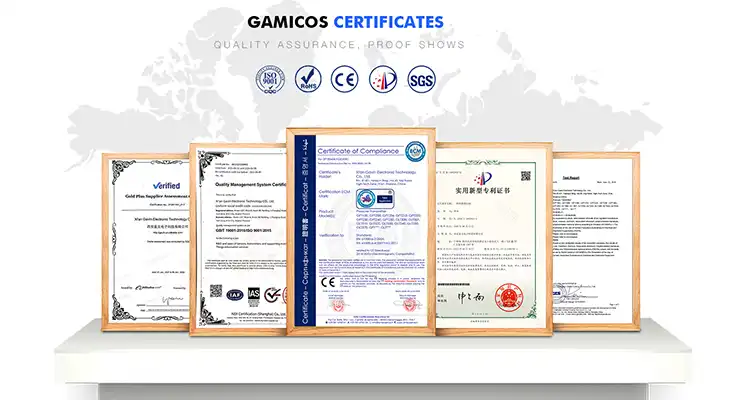
When they are needed, certificates specific to an industry show up, such as 3A sanitary standards for food preparation equipment or FDA compliance for pharmaceutical uses. These licenses lower the risk of buying something by proving that the quality of the design and production was checked by a third party. Products that are shipped around the world, like those from GAMICOS, which serve more than 100 countries, usually have more than one approval to meet the legal needs of each country.
Reliability Indicators and Warranty Terms
Mean Time Between Failures, or MTBF, is a measure of how reliable something is, and it is usually given in hours. Higher MTBF numbers mean that the design is more stable and doesn't need to be replaced as often. Warranty terms of one to five years show that the company that made the product is sure it will last. The GPT200 was put through a lot of tests, such as cyclic loading, aging, and weather simulations, which back up promises of reliability and support giving longer warranties.
Look for guarantee terms that cover both production flaws and normal wear and tear. Even if sensors are very reliable, they may not last as long if they are used in tough settings. The total cost of ownership is lower for suppliers who offer expert help, new parts, and calibration services than for the cheapest options that don't have these features.
Conclusion
When you know how to read pressure sensor datasheets, you can stop guessing and make smart decisions about buying. If you know how part numbers represent different types of technology, which accuracy factors are most important for your application, and how to look at certifications and reliability signs, you can confidently choose measuring tools that will work well for a long time. This organized method of reviewing electrical specs, mechanical parameters, performance measures, and quality indicators in a planned way lowers the risk of procurement while increasing the total cost of ownership. By using these skills to read datasheets, you can make sure that measurement solutions are exactly what you need and don't go over your budget, whether you're updating current setups, building new automation systems, or finding OEM modules.
FAQ
How do I verify a pressure sensor's temperature range suitability for my application?
How do I make sure that the temperature range of a pressure sensor works for my purpose? The datasheet should have both the working temperature range and the adjusted temperature range as parts of it. The operating temperature sets the boundaries for life, and the compensated temperature shows where the accuracy standards are. Sensors can work outside of compensated limits, but their precision will be lower.
What does "total error band" actually mean?
Total error band takes into account all types of errors, including nonlinearity, hysteresis, repetition, and temperature effects, to give a single worst-case accuracy standard. This all-encompassing measure gives more accurate predictions than linearity alone, which makes it easier to decide which applications are best.
When should I request physical samples instead of relying solely on datasheet specifications?
For uses with unusual working conditions, such as high or low temperatures, settings with a lot of vibration, or worries about compatibility with certain media, you should ask for samples. Sample testing shows increasing sensitivity, an openness to electromagnetic interference, and real-world performance traits that aren't fully reflected in standard datasheets.
Partner with GAMICOS for Your Pressure Measurement Solutions
When choosing industrial-grade pressure sensors, you have to find a balance between technical specs and the supplier's dependability and ability to make changes. GAMICOS specializes in making devices like the GPT200 that measure pressure and level. These devices use piezoresistive sensing technology and are built to last in tough environments. Our goods have been used reliably in more than 100 countries by the energy, food and drink, chemical, pharmaceutical, oil and gas, and chemical businesses.
Our engineering team helps you choose the right parts and make sure they work together properly, whether you need standard configurations or personalized ones with things like different pressure ranges, special electrical connections, or OEM branding. The GPT200's 316L stainless steel build, multiple input choices, and ability to measure over a wide range show our dedication to making flexible, dependable instruments. Email our expert team at info@gamicos.com to talk about your particular needs, get full datasheets, or set up a sample evaluation. As a pressure sensor maker with a lot of experience, we can give your projects the accurate measuring tools and quick help they need.
References
1. Webster, J.G. (2019). The Measurement, Instrumentation, and Sensors Handbook: Spatial, Mechanical, Thermal, and Radiation Measurement. CRC Press.
2. Bao, M. (2021). Analysis and Design Principles of MEMS Devices. Elsevier Science.
3. Wilson, J.S. (2018). Sensor Technology Handbook. Newnes Publications.
4. Fraden, J. (2020). Handbook of Modern Sensors: Physics, Designs, and Applications. Springer International.
5. Liptak, B.G. (2018). Instrument Engineers' Handbook: Process Measurement and Analysis. CRC Press.
6. Pallas-Areny, R. & Webster, J.G. (2019). Sensors and Signal Conditioning. Wiley-Interscience.

Peter
Peter, Senior Sensor Technology Consultant, has 15-year industrial sensor R&D experience. He specializes in the end-to-end development of high-accuracy pressure and level sensors and he firmly believe, precision isn’t just a spec—it’s a promise.
We're here to help — submit your request anytime!
Let us know how we can help solve your pressure level measurement challenge.
_1757930850792.jpg)
Recommended Blog
Waterproof vs Standard Pressure Transducers: Key Differences
Best Waterproof Pressure Transducers for Harsh Environments
Waterproof vs Standard Pressure Transducers: Key Differences
Best Waterproof Pressure Transducers for Harsh Environments
Waterproof vs Standard Pressure Transducers: Key Differences
Best Waterproof Pressure Transducers for Harsh Environments