Automotive Pressure Sensors in Air Suspension Systems
Understanding Automotive Pressure Sensors in Air Suspension Systems
- Understanding Automotive Pressure Sensors in Air Suspension Systems
- Key Applications and Benefits of Pressure Sensors in Air Suspension
- Identifying and Troubleshooting Faulty Automotive Pressure Sensors
- Comparing Automotive Pressure Sensors to Related Technologies
- A B2B Procurement Guide for Automotive Pressure Sensors in Air Suspension Systems
- Conclusion
- FAQ
- Partner with GAMICOS for Your Air Suspension Sensor Needs
- References
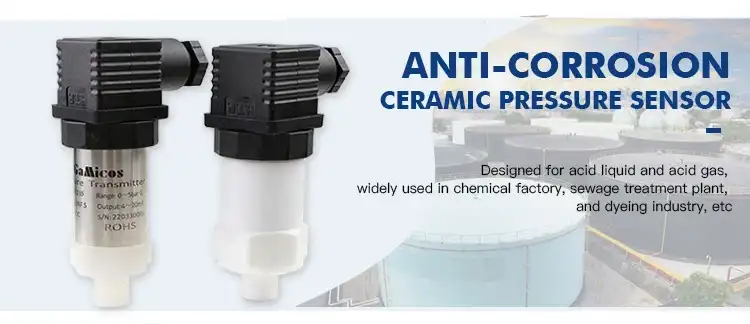
Automotive pressure sensors are the precise tools that make modern air suspension systems work. They turn information about physical pressure into electrical messages that can be used, which let vehicles adapt automatically to different driving conditions and loads. These gadgets constantly check the pressure in the air springs and send important data to computer control units that change the stiffness, ride height, and compression of the suspension. By keeping exact air pressure levels within suspension chambers, automotive pressure sensors, whether put in high-performance vehicles, commercial trucks, or luxury sedans, ensure the best comfort, stability, and safety. Their dependability and accuracy have a direct effect on how the vehicle handles, how long parts last, and how passengers feel in a variety of working conditions.
Understanding Automotive Pressure Sensors in Air Suspension Systems
What Are Automotive Pressure Sensors?
Specialized automotive pressure sensor technology is needed for air suspension systems to keep the car running well in a variety of loads and road conditions. Automotive pressure sensors are specially designed devices that measure and record the gas force in air springs. They then turn this mechanical input into an electrical output that vehicle control systems can understand. Modern sensors, unlike old-fashioned mechanical gauges, give very accurate digital input in real time, letting suspension settings be changed at the microsecond level.
There are two main types of these sensors: analog ones that send out constant voltage signals based on changes in pressure, and digital ones that talk to each other using standard protocols like CAN bus or LIN interfaces. OEM sensors are set to meet the exacting standards of the car maker, so they work seamlessly with factory control systems. Aftermarket options give you more options for adding to or improving current suspension systems, but compatibility testing is still needed to make sure the system works right.
Operating Principles and Feedback Mechanisms
A pressure-sensitive element, usually a diaphragm or piezoresistive membrane, that changes shape when compressed air is introduced is at the heart of the basic process. This movement changes the electrical properties inside the sensor, creating a signal that can be measured and is directly related to the pressure level. This information is interpreted by the suspension control module, which compares it to preset settings to see if changes need to be made to the height or the damping.
When a truck is loaded with goods, the weight goes up, and so does the air spring pressure. Within milliseconds, the sensor picks up on this change, which tells the control system to let air out or turn on fans to bring the ride back to its original height. This closed-loop feedback system works all the time while the vehicle is moving, adjusting for the dynamic forces that happen when the vehicle speeds up, slows down, or turns.
Sensor Technology Comparison
Knowing the differences between the different types of sensor technology is important for choosing the right one. When put under mechanical stress, piezoelectric sensors produce an electrical charge. They have a great dynamic reaction for uses that need to notice sudden changes in pressure. Their ability to generate power on their own means they don't need any outside power, but they work best when tracking changing pressures instead of static ones.
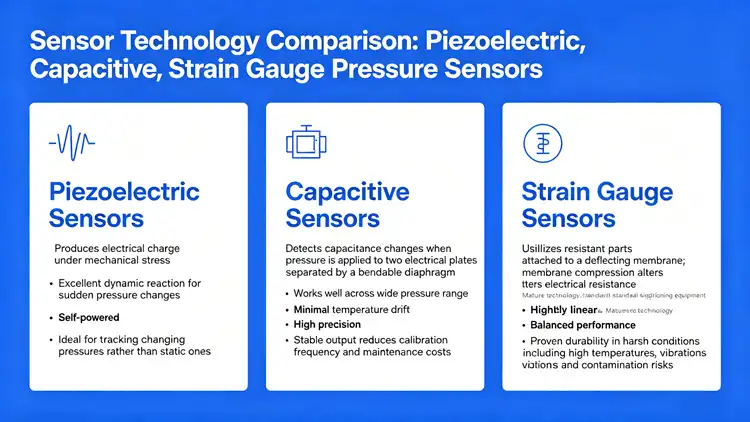
Capacitive sensors check how the capacitance changes when there is pressure on two electrical plates that are divided by a bendable diaphragm. This technology works very well across a wide range of pressures and doesn't change much with temperature, which makes it perfect for uses that need to be very precise. The stable output features lower the frequency of calibration needed, which lowers the cost of upkeep for fleet owners.
Strain gauge sensors use resistant parts that are attached to a deflecting membrane. When the membrane is compressed, it changes the electrical resistance. This technology has been around for a while and works well with normal signal conditioning equipment and is very linear. Many automakers choose strain gauge designs because they have a balanced performance profile and have been shown to last in harsh working conditions with high temperatures, vibrations, and contamination risks.
Key Applications and Benefits of Pressure Sensors in Air Suspension
Real-Time Suspension Adaptation
Modern air suspension systems change how a car moves by constantly checking and adjusting the pressure. Automotive pressure sensors can instantly pick up changes in how the load is distributed, which lets the control system change the forces of each air spring separately. This specific change keeps the vehicle's stance level no matter where the passengers are sitting or where the goods is placed. This stops the pitching and sagging that happens with regular spring systems.
Lowering the suspension height while driving on the highway lowers air drag, which can save up to 8% on gas compared to setting the ride height to its highest level. When the vehicle hits rough terrain, the technology raises it automatically to create more ground clearance and protect the underside. These changes happen automatically, without the driver having to do anything. However, the driver can still choose the height manually for certain cases, like when they are moving something or going off-road.
Performance and Safety Enhancement
Through better integration with stability control, automotive pressure sensors directly improve the safety of a car. Sensors help traction control and stability systems account for suspension compression states during emergency maneuvers by giving exact data on air spring pressure. This extra layer of data lets you figure out wheel slip more accurately and make sure that the stop force is spread evenly across all four wheels.
Compared to standard stabilization systems, this technology makes parts last a lot longer. Keeping the right air pressure in the tires stops the springs from deflecting too much, which speeds up the wear and tear on the bushings and shock absorbers. Fleet owners say that repair costs are over 30% lower than with traditional systems. This is because the suspension mounting points and nearby frame components are under less mechanical stress, which means that service times are longer.
Case Study: Bosch Air Suspension Integration
When it comes to demanding OEM uses, Bosch automotive pressure sensors are the best example of industrial-grade dependability. Leading European luxury carmakers use Bosch sensor technology in their most popular air suspension platforms. These devices can work reliably in temperatures ranging from -40°C to 125°C and keep their accuracy within ±1% of full-scale output. The sensors are completely sealed, which keeps the electronics inside safe from water and chemicals that are common in underbody mounting sites.
Field data from business vehicles shows that Bosch sensors can last more than 500,000 kilometers before they break down in heavy-duty work. This amazing longevity comes from strong signal conditioning hardware that blocks out electrical noise and special membrane materials that don't break down when exposed to ozone. OEM validation testing shows that the sensor will work reliably for 10 million pressure cycles, which is about 15 years of normal car use before it needs to be replaced.
Identifying and Troubleshooting Faulty Automotive Pressure Sensors
Common Failure Indicators
Early detection of automotive pressure sensor degradation stops system breakdowns that lead to more problems and expensive fixes. On the panel, warning lights for suspension problems should be lit up, and the ride quality or handling should change in a way that can be noticed. One part of a vehicle may sit lower than the others, which could mean that the automotive pressure sensors aren't working right or that the air springs are leaking and the sensors aren't picking it up.
Intermittent spinning of the compressor is another sign that something is wrong. When sensors give inconsistent readings, the control module may order the compressor to run longer than necessary in an effort to hit goal pressures that have already been reached. This situation speeds up the wear on the compressor and adds to the load on the electrical system, which could drain the battery during long times of driving. Drivers sometimes notice that the suspension responds slowly to directions to change the height. This could mean that sensor signals are getting weak and need quick attention.
Diagnostic Procedures and Calibration
Professional troubleshooting tools link to a car's OBD-II ports and get data streams from the suspension control module that show sensor readings in real time. Technicians look for differences between the numbers shown on the screen and the readings taken by a mechanical gauge to see if there are any signs of sensor drift or failure. Most of the time, an acceptable limit is within ±0.2 bar of the real pressure. Deviations above this point mean that the sensor needs to be replaced.
Calibration methods fix the accuracy of sensors after they have been replaced or when they start to move during their useful life. For this process, the suspension system's full working range is controlled while the sensor output is compared to known pressure references. Modern control modules store calibration factors that account for differences in manufacturing. This makes sure that performance is the same across all sensor production runs. For proper calibration, the temperature outside must stay stable and the car must be parked on a flat surface so that outside factors don't affect the pressure readings during the learning cycle.
Replacement Recommendations
When diagnostic testing shows output values that are higher than what the maker recommends, or when actual damage happens from road debris hitting it or corrosion, the sensor needs to be replaced. We suggest replacing sensors in pairs on the same axle to keep the reaction characteristics that match. However, changing sensors one at a time is fine if money is tight. To avoid problems with compatibility, always make sure that the specs of a new sensor match those of the original equipment. This includes the pressure range, the shape of the electrical connector, and the size of the mounting thread.
Comparing Automotive Pressure Sensors to Related Technologies
Sensor Type Differentiation
Knowing the differences between automotive pressure sensors and other similar car sensing technologies helps you avoid making mistakes when you're buying things. MAP (Manifold Absolute Pressure) sensors check the gas and pressure in the engine's intake, which helps the computer decide when and how much fuel to pump. MAP sensors work at much lower pressure ranges than air suspension sensors, which measure between 2 and 15 bar gauge pressure based on the weight class of the car. MAP sensors usually work at 0 to 1.5 bar absolute pressure.
Sensors in tire pressure tracking systems play a special role in safety by warning drivers when their tires are underinflated, which can affect how well they handle and how much gas they burn. Hard-wired suspension sensors get their power from the car's electrical systems, while TPMS sensors are built into the tires and have battery power sources and radio receivers built in. Also, the pressure levels are very different. TPMS devices are set for normal tire pressures between 1.5 and 4 bars.
Analog Versus Digital Technology
Analog sensors send out constant voltage signals that are related to the pressure they measure. These signals usually range from 0.5V to 4.5V over the whole range of their working range. This ease of use saves money and makes it easy to connect to older control systems that don't have modern communication methods. Because the data is continuous, the only thing that limits the sharpness is the accuracy of the analog-to-digital converter in the receiver.
Digital sensors talk to each other using standard data buses. They send pressure values as separate numerical packets along with diagnostic data like the temperature of the sensor, the state of the source voltage, and internal trouble codes. This built-in diagnostics feature makes troubleshooting easier by giving workers a full picture of how the system is working without the need for extra test tools. Digital interfaces keep signals accurate over longer cable runs that are needed for business car installations because they don't suffer from electrical noise or wiring resistance.
OEM Versus Aftermarket Considerations
Original equipment sensors go through a lot of validation tests to make sure they work with certain car control methods and meet the standards for environmental longevity. Manufacturers offer warranties to protect against early failures, but repair costs are usually 40–60% higher than resale options. The guaranteed compatibility and support resources justify premium pricing for fleet operators prioritizing uptime and standardized maintenance procedures.
When bought from reliable companies that keep their quality certifications up to date, aftermarket sensors can be a cheaper option. Electrical characteristics must meet OEM factors like output voltage ranges, reaction times, and temperature coefficients. This is done by carefully checking the specifications. Some aftermarket providers offer extras like better resistance to contamination or higher temperature rates, which are useful in more ways than just comparing prices. When comparing choices, procurement teams should look at the total cost of ownership, which should include how much time digital interfaces might save on diagnostics.
Industry Brand Benchmarking
Bosch stays ahead of the competition in the market by offering a wide range of products for use in everything from private cars to heavy industrial vehicles. Their sensors have improved signal processing that makes them less vulnerable to electromagnetic interference, which is very important for electric car platforms. Denso has affordable alternatives that work especially well in Asian OEM uses. These options have been shown to be reliable in tropical areas with high humidity by using better technologies to seal out moisture.
Continental focuses on combined system solutions that include sensors, control modules, and air supply parts. This makes it easier for automakers to handle their suppliers. People know that Delphi sensors work well and don't cost a lot of money. They meet basic requirements without any extra features, making them good for price-conscious markets and secondary uses. Honeywell uses its background in aircraft to make sensors that are very accurate and stable, making them the best choice for specialty cars where accuracy is worth the extra cost. By knowing these competitive places, procurement professionals can make sure that the suppliers they choose are in line with the organization's goals and meet performance standards while staying within budget.
A B2B Procurement Guide for Automotive Pressure Sensors in Air Suspension Systems
Pricing Structures and Volume Considerations
The price of automotive pressure sensors depends a lot on how advanced the technology is, how many are ordered, and what certifications are needed. For 1,000 pieces, basic analog strain gauge sensors cost about $15 to $25 each. More advanced digital devices with built-in diagnostics cost $40 to $80 each, based on how complicated the transmission system is. Volume prices usually work in a tiered way, with 10-15% off for every 5,000 pieces and 20-30% off for every 50,000 annual units.
The terms of the warranty are an important part of evaluating a product beyond its original price. Standard coverage lasts from 12 to 24 months and protects against production flaws. For an extra fee, you can get plans that last up to 60 months. To avoid covering issues, make sure that the warranty's terms are clear about limits on environmental exposure and the right way to install the product. Some providers offer performance guarantees that include minimum mean time before failure measures. This lowers the risk even more for mission-critical apps.
Supplier Evaluation Framework
To build trusting supply partnerships, possible makers need to be carefully evaluated in a number of areas. Quality standards like ISO 9001 and IATF 16949 show that the company has the process control skills needed to make sure that automotive-grade products are always made correctly. Ask for proof that you've met the environmental standards set by RoHS and a CE mark that shows you've passed the electromagnetic compatibility tests.
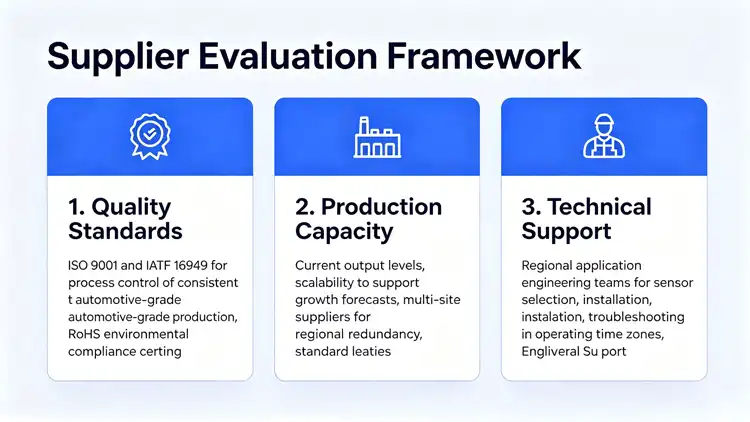
When you evaluate production capacity, you should look at both current output levels and the ability to grow to support your growth forecasts. Suppliers with more than one production site offer regional redundancy, which lowers the risk of supply disruptions caused by events in one area. Check the wait times for regular situations and the availability of surge capacity to handle pressing orders or seasonal changes in demand that are common in the car market.
The total ownership experience is greatly affected by the technical help system. Check to see if the providers you're considering have regional application tech teams that can help you choose the right sensors, install them correctly, and fix problems in the time zones where you do business. Technical paperwork in English and quick ways to communicate help keep integration delays to a minimum during the creation of new products.
Strategic Procurement Recommendations
Align the choice of sensor with specific performance goals instead of using high-end specs that aren't needed for the job. Over-specification raises costs without providing the same amount of value, and under-specification increases the chance of early failures and guarantee claims that hurt relationships with customers. Work closely with engineering teams to set the lowest standards for accuracy, temperature range, pressure range, and reaction time based on how the system is actually used.
For production projects that need to make a lot of things, use dual-sourcing methods. Qualified secondary suppliers can help with both cost and capability. Keep the lines of communication open about expected amounts so that providers can plan their inventory and production schedules to work best. Think about consignment inventory plans for things that are used a lot. This can help your cash flow and make sure that you can get parts right away, which is important for just-in-time manufacturing.
Conclusion
Automotive pressure sensors are an important part of current air suspension systems because they provide the accurate feedback needed for adaptive ride control and improving the steadiness of the vehicle. Knowing how sensors work, the different technologies that can be used, and what the application needs can help procurement workers make smart choices about where to buy things while combining performance needs with cost limits. Companies can build trusting relationships with suppliers that lead to long-term manufacturing success by carefully evaluating suppliers based on their quality certifications, production capabilities, and technical support infrastructure.
These parts are very important for making sure vehicles are safe and customers are happy, so they need to be carefully specified and managed in a responsible way. As more types of vehicles use air suspension, sensor technology keeps getting better, making systems last longer, make diagnosis easier, and make integration easier. All of these improvements raise the overall value of the system.
FAQ
How often should air suspension pressure sensors be calibrated?
How often you need to calibrate automotive pressure sensors depends on how the sensors are used and how they are working. Digital sensors that can diagnose themselves usually only need to be calibrated when they are first installed or when they are replaced. It might be a good idea to check analog sensors once a year, especially in heavy-duty business settings where they are exposed to extreme temperature changes or vibrations.
Can aftermarket sensors match OEM performance standards?
If you choose the right ones, quality aftermarket sensors from authorized manufacturers can meet or beat OEM requirements. Make sure that the new sensors match important details like the pressure range, output features, temperature values, and the way the electrical connectors are set up. Reliable aftermarket providers give full specification sheets that let you compare their products directly to the original equipment.
What causes typical sensor failures in air suspension applications?
Moisture getting into electronics and breaking them down, hitting something on the road and damaging the body, and electrical link rust breaking down signals are all common ways that things break. Extreme temperature changes can damage sensor housings or covering materials over time. Vibration-induced wear can sometimes break internal wire bonds in sensors that don't have strong mechanical design.
Partner with GAMICOS for Your Air Suspension Sensor Needs
In the car sensing market, GAMICOS brings 20 years of experience measuring pressure, specializing in high-precision automotive pressure sensors made for tough air suspension uses. Our line of automotive pressure sensors uses cutting-edge strain gauge and capacitive technologies to provide accuracy within ±0.5% from -40°C to 125°C and go above and beyond industry standards for sturdiness and dependability. We keep a lot of quality standards, like ISO 9001, CE, and RoHS compliance, to make sure that our goods meet the rules for the North American and European markets.
As a reliable provider of automotive pressure sensors, we offer full OEM and ODM customization services that include changing the sensor's specs, electrical interfaces, mounting options, and communication methods to fit your exact needs. Our factory can make more than 500,000 units a year, and we can easily adjust our production to meet the needs of both prototype research and high-volume manufacturing projects. Technical support teams help with application engineering throughout the whole lifetime of a product, from choosing the first sensor to installing it and fixing problems in the field. Get in touch with our experts at info@gamicos.com to talk about your air suspension sensing needs and get full specifications, samples, and cheap quotes that will help you meet your procurement goals.
References
1. Anderson, M. & Thompson, R. (2021). Advanced Automotive Sensor Technologies: Design, Integration, and Performance Analysis. SAE International Press.
2. Chen, Y., Rodriguez, P., & Kim, S. (2022). "Pressure Sensing Systems for Active Suspension Control: A Comprehensive Review." Journal of Automotive Engineering, 236(4), 892-911.
3. European Automotive Manufacturers Association. (2023). Technical Standards for Air Suspension Components in Commercial Vehicles. Brussels: EAMA Publications.
4. Hoffmann, K. & Weber, J. (2020). Sensor Technology in Modern Vehicle Dynamics Systems. Springer International Publishing.
5. Liu, H., Patel, V., & Nakamura, T. (2023). "Reliability Assessment of Pressure Transducers in Pneumatic Suspension Applications." International Journal of Vehicle Systems Engineering, 15(2), 145-167.
6. Society of Automotive Engineers. (2022). SAE J2945: Performance Requirements for Automotive Pressure Sensors. Warrendale, PA: SAE Technical Standards Board.

Halen
With over 12 years of experience in fluid sensing technology, Halen specializes in helping clients select and optimize oil level sensors for a wide range of industries—including automotive, marine, heavy machinery, and energy.
We're here to help — submit your request anytime!
Let us know how we can help solve your pressure level measurement challenge.
_1757930850792.jpg)


Recommended Blog
Wireless Pressure Sensor vs Wired: Which Is Better for Industry?
Best Wireless Pressure Transmitter for Remote Industrial Sites
Why Choose a Wireless Pressure Sensor for Oil & Gas Applications

Top Sanitary Pressure Transmitters for Asia Food & Beverage Plants
Wireless Pressure Sensor vs Wired: Which Is Better for Industry?
Best Wireless Pressure Transmitter for Remote Industrial Sites
Why Choose a Wireless Pressure Sensor for Oil & Gas Applications
Top Sanitary Pressure Transmitters for Asia Food & Beverage Plants
Wireless Pressure Sensor vs Wired: Which Is Better for Industry?
Best Wireless Pressure Transmitter for Remote Industrial Sites
Why Choose a Wireless Pressure Sensor for Oil & Gas Applications
Top Sanitary Pressure Transmitters for Asia Food & Beverage Plants
Wireless Pressure Sensor vs Wired: Which Is Better for Industry?
Best Wireless Pressure Transmitter for Remote Industrial Sites
Why Choose a Wireless Pressure Sensor for Oil & Gas Applications
Top Sanitary Pressure Transmitters for Asia Food & Beverage Plants
Wireless Pressure Sensor vs Wired: Which Is Better for Industry?
Best Wireless Pressure Transmitter for Remote Industrial Sites
Why Choose a Wireless Pressure Sensor for Oil & Gas Applications
Top Sanitary Pressure Transmitters for Asia Food & Beverage Plants
Wireless Pressure Sensor vs Wired: Which Is Better for Industry?
Best Wireless Pressure Transmitter for Remote Industrial Sites
Why Choose a Wireless Pressure Sensor for Oil & Gas Applications