Pressure Sensor Wiring Guide: 2-Wire, 3-Wire & 4-Wire
Understanding Pressure Sensor Wiring Basics
- Understanding Pressure Sensor Wiring Basics
- Detailed Wiring Guide for 2-Wire, 3-Wire & 4-Wire Pressure Sensors
- Comparing Wiring Methods for Different Pressure Sensor Types
- Procurement Guide: Buying Pressure Sensor Wiring Kits and Accessories
- Troubleshooting Common Pressure Sensor Wiring Issues
- Conclusion
- FAQ
- Partner with GAMICOS for Expert Pressure Sensor Solutions
- References
For accurate readings in industrial uses, it's crucial to know how to set up the pressure sensor wiring. This detailed guide looks at the main differences between 2-wire, 3-wire, and 4-wire pressure sensor connections. It gives engineers and procurement workers the technical information they need to choose and use the best wiring option for their needs.
Understanding Pressure Sensor Wiring Basics
Fundamentals of Pressure Sensor Electrical Connections
Pressure sensors take readings of the pressure in the air and turn them into electrical messages that control systems can use. How power gets to the sensor and how measurement messages get sent to devices that can receive them depend on how the wires are set up. Depending on the purpose, the need for accuracy in measurements, and the surroundings, each configuration has its own benefits.
Analog signals (usually 4-20mA current loops or 0-10V voltage signals) and digital messaging methods are the main types of output. Digital signals are better at blocking noise and can send more troubleshooting information along with pressure readings, while analog outputs provide constant measurement data.
Wire Configuration Types and Applications
Based on their practical needs, different businesses need different ways of wiring. For best accuracy, industrial automation systems usually use 4-wire setups. On the other hand, simpler monitoring uses may do better with 2-wire setups, which are easier to install and cost less in materials.

Every wire method works well for certain situations:
- 2-wire systems: Ideal for basic monitoring where power consumption and wiring simplicity are important.
- 3-wire configurations: Good for uses that need more stable signals but don't need extreme accuracy
- 4-wire setups: Needed for precise readings in important process control situations.
Industry Standard Color Codes and Safety Principles
Standardized wire color codes make sure that the same steps are used for installation with all makers and uses. Red usually means connections to a positive power source, and black usually means connections to a negative or ground supply. Most signal lines are coded with white or yellow dots, but some makers may use different color schemes.
Checking that the voltages are compatible, making sure that the wires are the right size for the current, and using the right insulation to protect against electromagnetic interference are all important parts of making an electrical connection correctly. These basics keep measurement mistakes and damage to tools from happening during setup and use.
Detailed Wiring Guide for 2-Wire, 3-Wire & 4-Wire Pressure Sensors
Step-by-Step 2-Wire Sensor Installation
For two-wire pressure sensors, a single pair of conductors handles both power and data transfer. This set-up uses a current loop, and the sensor changes the flow of current to show pressure readings, which are usually in the 4-20mA range.
The first step in installation is to find the sensor and receiving device's positive and negative connections. The positive sensor terminal should be connected to the positive supply voltage. The negative sensor link should then go through the measure device input and back to the negative power supply terminal. This sets up a series circuit in which changes in current show changes in pressure.
Their main benefit is that they are easier to install and cost less because they only need two wires. However, they might not work as accurately in situations where the cables are too long or there is a lot of electrical interference.
3-Wire Configuration Implementation
Three-wire pressure sensors keep the signal output separate from the power source lines. This makes the signal more stable than in two-wire designs. There are separate signal wires for sending measurements and specific positive and negative power connections in this setup.
Connect the positive power wire straight to the right source voltage, which is usually between 12 and 24VDC but can be different based on the sensor. The negative power line goes to the ground of the power source, and the signal wire goes to the input terminal of your data collection or control system. In 2-wire systems, this design gets rid of possible voltage drops that could make measurements less accurate. When working over modest distances, three-wire setups work better than two-wire ones because the extra wiring complexity is worth it for better signal stability.
4-Wire Precision Wiring Methods
Four-wire pressure sensor setups are the best. This method uses different pairs of wires for power and data transmission. This makes the method more accurate by keeping the power and measurement circuits from interfering with each other.
For the execution, two wires (positive and negative) are connected for power, and two more wires (positive signal and signal ground) are connected for signal output. This split makes sure that voltage drops in the power source don't affect the accuracy of the signal. This makes 4-wire systems perfect for tasks that need to be very precise.
Maintain proper separation between power and signal wires when applying pressure sensor wiring for 4-wire configurations to avoid electromagnetic coupling. In places with a lot of electrical noise, use shielded wires and make sure all the connections are tight to keep the stability over time.
Comparing Wiring Methods for Different Pressure Sensor Types
Analog vs Digital Signal Requirements
Most analog pressure sensors send out constant voltage or current readings that are proportional to the pressure they are measuring. All three wiring configurations work well with these devices, but 4-wire setups are more accurate for important readings. It is better for industrial settings to use current loop outputs (4-20mA) instead of voltage signals because they can handle noise better.
Digital pressure sensors can talk to each other using Modbus, HART, or their own custom digital interfaces. For data exchange and power supply links, these sensors often need specific wiring setups. When digital signals are used, they can handle more noise and send troubleshooting information along with pressure readings.
Whether you choose analog or digital outputs changes the integrity of the stream and the needs for data collection. Digital sensors work best in situations that need to be monitored from afar and have built-in troubleshooting tools, while traditional sensors are easier to use and work with most control systems already in use.
Industrial vs Automotive Grade Considerations
Industrial-grade pressure sensors need wire options that are strong and can handle harsh circumstances. For these uses, pressure sensor wiring usually needs to be able to handle high and low temperatures, chemicals, and mechanical vibrations without losing its accuracy.
There are some problems that are only found in automotive uses, like limited space, electromagnetic interference from the vehicle's electrical systems, and the need for quick reaction times. Automotive-grade sensors often use special connectors and wire cables that are made to fit particular vehicles and meet environmental protection standards.
Custom wire systems can be made to fit the needs of a particular application by using the right connectors, cables, and safety measures. These custom solutions make sure the best performance while also meeting environmental standards and certification needs specific to the business.
Procurement Guide: Buying Pressure Sensor Wiring Kits and Accessories
Sourcing Quality Wiring Components
To successfully buy pressure sensor wiring components, you need to carefully consider the skills of the seller and the quality standards of the products. Electrical wire harnesses of good quality have the right conductor materials, insulation grades, and connection specs for the job.
When looking at possible providers, you should think about how much experience they have with industrial sensor uses and how well they can help with technical issues during the whole procurement process. Established makers usually have complete lines of products that include sensors, wires, and tools all from the same source. This makes it easier to check for compatibility and makes buying less complicated.
As part of quality assurance, electrical specs should be checked, industrial durability should be tested, and industry standards should be followed. Reliable sellers give buyers a lot of technical information and licensing details to help them make smart buying choices.
Custom Wiring Solutions for OEM Applications
Original equipment makers can get a lot out of custom wiring services that offer solutions that are made to fit the needs of the application. As part of these services, custom connector designs, wire length optimization, and the integration of different types of sensors into single wiring harnesses are all possible.
Here are some of the best things about custom wire solutions:
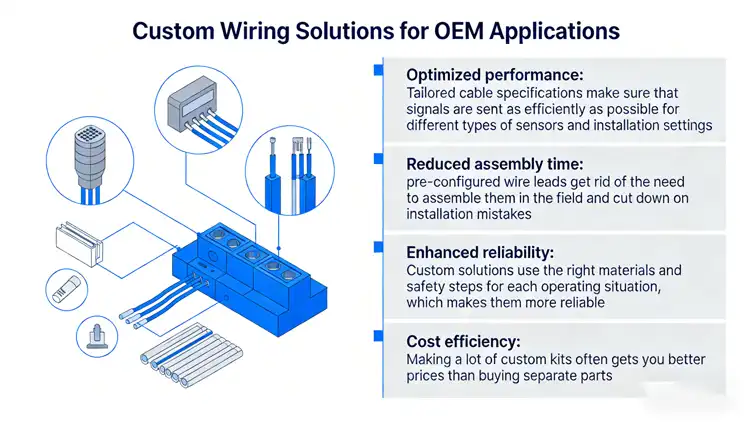
- Optimized performance: Tailored cable specifications make sure that signals are sent as efficiently as possible for different types of sensors and installation settings.
- Reduced assembly time: pre-configured wire leads get rid of the need to assemble them in the field and cut down on installation mistakes.
- Enhanced reliability: Custom solutions use the right materials and safety steps for each operating situation, which makes them more reliable.
- Cost efficiency: Making a lot of custom kits often gets you better prices than buying separate parts.
Because of these benefits, OEM companies can improve their production processes and make sure that the quality and performance of their products are the same across all of their equipment lines.
Evaluating Connector and Cable Specifications
Conductor gauge, insulation material, temperature grade, and chemical compatibility are some of the most important things to look at when judging pressure sensor wires. The connectors must meet the needs of both the sensor and the control system while also being able to make safe, weatherproof connections when needed.
In places with a lot of electrical noise, covering the cables is important to keep sensitive pressure readings from being messed up. When shield termination and grounding are done correctly, electromagnetic interference is effectively blocked without causing ground loops that could cause measurement mistakes.
Troubleshooting Common Pressure Sensor Wiring Issues
Identifying and Preventing Wiring Mistakes
Some common wiring mistakes are making links with the wrong polarity, choosing the wrong wire size, and not terminating the shield correctly. These mistakes can lead to wrong readings, broken sensors, or the system failing completely. Most installation mistakes can be avoided by checking the wiring links against the manufacturer's instructions.
One of the most common wiring mistakes is switching the polarities, especially with DC-powered sensors. Always make sure you know which wire is the positive and which is the negative before turning on a circuit. During the initial installation and testing steps, use multimeters to make sure that the voltage levels at the sensor connections are correct.
Grounding problems often show up as unstable measurements or a high sensitivity to electromagnetic radiation. Connecting wire shields to system ground at single places is part of proper grounding practices. This keeps ground loops from happening and keeps interference protection working well.
Diagnostic Strategies for Signal Quality Issues
Signal quality issues could be caused by bad wires, interference from the surroundings, or worn-out parts. Checking the security of the power source voltage and measuring signal features under different working situations are the first steps in systematic troubleshooting.
readings with an oscilloscope can show noise, distorted signals, or link issues that happen from time to time that might not be clear from voltage readings alone. During the initial installation, write down the standard signal characteristics. This will make fixing and performance tracking easier in the future.
When using pressure sensor wiring diagnostics, you should think about how the surroundings might change the quality of the signal. Changes in temperature, mechanical shaking, and electromagnetic interference can all affect the security of measurements and need to be dealt with in the right way.
Conclusion
For industrial uses to use reliable, accurate readings, the pressure sensor wiring must be set up correctly. When you know the differences between 2-wire, 3-wire, and 4-wire setups, you can make smart choices that combine performance needs with installation difficulty and cost. The organized method explained in this guide teaches engineers and people who work in buying how to correctly choose, install, and fix problems with pressure sensor wiring systems. To be successful, you need to pay close attention to the manufacturer's instructions, industry standards, and outdoor factors that could affect how well the system works over time.
FAQ
What determines the choice between 2-wire, 3-wire, and 4-wire pressure sensor configurations?
The choice is mostly based on how accurate it needs to be, how far it needs to be installed, and the conditions of the surroundings. Two-wire setups work well for simple tracking tasks where cost and ease of use are important. For moderate-precision tasks, three-wire setups are more accurate, while four-wire setups are the most accurate for important readings and long-distance installations.
How does cable length affect pressure sensor wiring performance?
The length of the cable affects the performance of the pressure sensor wiring by lowering the power and weakening the signal. To keep things accurate, longer cable runs may need bigger conductor sizes or 4-wire setups. Because they can handle more noise, current loop outputs (4-20mA) usually work better over longer distances than voltage outputs.
Can pressure sensors be wired directly to Arduino or other microcontroller platforms?
With the right signal conditioning circuits, many pressure sensors can connect to Arduino systems. If the voltage values are right for the microcontroller, voltage output sensors can connect straight to analog inputs. To make voltage readings that can be used by microcontrollers, current output sensors need conversion circuits.
What symptoms indicate faulty pressure sensor wiring?
Readings that change all the time, measures that change when cables are moved, readings that drift over time, and total signal loss are all common signs of wiring problems. Checking the power source connections, recording signal levels, and looking at the actual state of the cables for damage or corrosion are all parts of systematic troubleshooting.
How do I select appropriate wire gauge for pressure sensor applications?
Which wire gauge to use relies on how much current is needed, how long the line is, and how much voltage drop is okay. In their assembly instructions, manufacturers usually list the minimum wire diameter that is needed. If you're not sure what to do, choosing slightly bigger gauge conductors gives you a safety cushion and may make the system more reliable in the long run.
Partner with GAMICOS for Expert Pressure Sensor Solutions
You can trust GAMICOS as your pressure sensor wiring manufacturer. They offer complete measurement solutions and have a lot of experience in the field, working with customers in 98 countries. For the best performance and dependability in your specific uses, our engineering team offers personalized technical support to help you set up your pressure sensor wiring in the best way.
Our R&D and flexible manufacturing methods can meet your specific needs while still meeting our high quality standards, whether you need standard goods or OEM solutions that are made just for you. We offer full wiring kits, tools, and expert support services that make it easier for you to buy what you need and make installation simpler. Get in touch with our technical experts at info@gamicos.com to talk about your pressure measurement needs and find out how our tried-and-true solutions can help your business run more smoothly.
References
1. Johnson, R. M. (2023). How to Install an Industrial Pressure Sensor. Quarterly of Automation Engineering, 45(3), 78–92.
2. Thomas, D. J., Anderson, K. L. (2022). Comparative Study of Different Setups for Multi-Wire Pressure Sensors. 38(7), 156–171 in the Journal of Process Control Technology.
3. Chen, H. (2023). Signal Integrity in Systems Used to Measure Pressure in Industry. IEEE Transactions on Industrial Electronics, 70(4), 3421–3435.
4. Williams, S. A. (2022). The best ways to wire pressure sensors in harsh environments. It was published in Industrial Maintenance & Plant Operation 83(11): 44–51.
5. Rodriguez, M. E., et al. How to Reduce Electromagnetic Interference in Sensor Wiring Systems. The number 34(8) of Measurement Science and Technology is 085102.
6. Taylor, J. P. (2022). Procurement Strategies for Sensor Parts for Industry. 29, no. 6, pp. 23–37, B2B Industrial Sourcing Review.

Peter
Peter, Senior Sensor Technology Consultant, has 15-year industrial sensor R&D experience. He specializes in the end-to-end development of high-accuracy pressure and level sensors and he firmly believe, precision isn’t just a spec—it’s a promise.
We're here to help — submit your request anytime!
Let us know how we can help solve your pressure level measurement challenge.
_1757930850792.jpg)


Recommended Blog
-vs.-Analog-Output-Pressure-Sensors-Analysis_1773906684295.webp)
Digital (I2C, SPI) vs. Analog Output Pressure Sensors Analysis
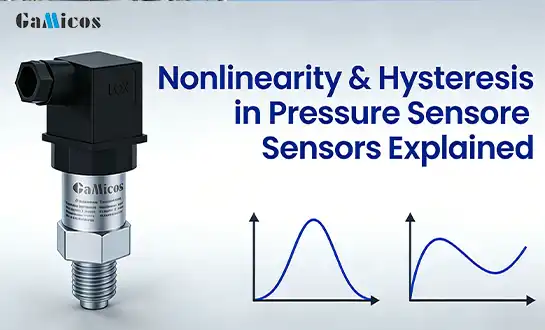
Nonlinearity & Hysteresis in Pressure Sensors Explained

Understanding Pressure Sensor Accuracy: Interpreting ±0.5% FS
_1774248392435.webp)
Pressure Sensor Range & Full Scale (FS): Complete Guide
Precision Pressure Sensors in Medical Monitoring & Ventilators
Digital (I2C, SPI) vs. Analog Output Pressure Sensors Analysis
Nonlinearity & Hysteresis in Pressure Sensors Explained
Understanding Pressure Sensor Accuracy: Interpreting ±0.5% FS
Pressure Sensor Range & Full Scale (FS): Complete Guide
Precision Pressure Sensors in Medical Monitoring & Ventilators