Long-Term Drift Compensation: 10-Year Stability Technologies
Understanding Long-Term Stability Pressure Sensors
- Understanding Long-Term Stability Pressure Sensors
- Core Technologies Behind 10-Year Drift Compensation
- Comparing Long-Term Stability Pressure Sensors for Industrial Procurement
- Procurement Guide: Buying Long-Term Stability Pressure Sensors
- Future Trends and Innovations in Long-Term Drift Compensation
- Conclusion
- FAQ
- Partner with GAMICOS for Reliable Pressure Measurement Solutions
- References
Long-term stability pressure sensors represent a breakthrough in industrial measurement technology, maintaining precise accuracy over extended periods—often exceeding ten years—without frequent recalibration. These advanced devices incorporate drift compensation technologies such as sophisticated algorithms, temperature stabilization circuits, and premium-grade materials that resist environmental degradation.
By minimizing measurement drift caused by temperature fluctuations, mechanical stress, and material aging, these sensors reduce maintenance costs while ensuring operational safety across petroleum refineries, pharmaceutical manufacturing, and energy generation facilities where measurement precision directly impacts production quality and regulatory compliance.
Understanding Long-Term Stability Pressure Sensors
Operational Principles and Design Architecture
The built-in adjustment methods in these sensors make them very different from other measurement tools. A long-term stability pressure sensor checks internal reference conditions all the time, comparing current readings to baselines that were set at the factory. Changes in temperature or humidity in the air can affect how well a sensor works. When this happens, onboard microprocessors use adjustment methods to counteract these effects. The detecting element, which could be piezoresistive silicon, ceramic capacitive, or a thin-film strain gauge, is paired with temperature correction circuits that change the output signals based on characteristic curves that were set up ahead of time during manufacturing.
Key Technological Features Enabling Decade-Long Accuracy
To get precision that lasts for a decade, several technical advances must work together. Housings that are hermetically sealed keep wetness and other contaminants from getting into the internal parts. High-quality stainless steel diaphragms don't rust and keep their elasticity over millions of pressure cycles. Digital signal processing chips constantly check for problems and fix them before they affect the accuracy of measurements. These features work together to make measurement systems that stay accurate within ±0.25% of the full scale for ten years, even in tough industrial settings where temperatures can change from -40°C to 125°C.
Benefits Across Industrial Operations
The most obvious cost benefit comes from extending the time between maintenance tasks. Traditional sensors need to be re-calibrated once a year or twice a year, which means that production has to stop and costs money for workers and calibration tools. Stable pressure measuring tools make it possible to extend calibration rounds to five years or more, which lowers the total cost of ownership by 40 to 60 percent over the course of their useful life. Better accuracy stops changes in product quality when pharmaceuticals are batch-produced, stops false alarms in petrochemical applications that need to be safe, and gets rid of measurement uncertainty in custody transfer systems, where even a 0.1% error can cause big financial problems.
Industry Applications Demonstrating Critical Value
Stable measurements are important for batch stability and following the rules in the process control businesses. Pharmaceutical companies make sure that the reactor pressures are always exact during API synthesis. If the pressures change because of drift, it could ruin whole production runs. Sensors that stay accurate through thousands of heat cycles are used in food and drink preparation plants to keep an eye on pasteurization pressures. In the energy industry, wellhead pressure tracking is used on remote offshore platforms where it is too expensive for technicians to get to the platforms to re-calibrate. Chemical companies use these sensors in harsh settings where measurement accuracy has a direct effect on the safety of workers and the environment.
Core Technologies Behind 10-Year Drift Compensation
Engineering Challenges in Achieving Long-Term Stability
Measurement drift is caused by many things that are connected and get worse over time. As metal structures relax from the stresses of making, material creep in sensing diaphragms causes zero-point changes. Thermal cycling changes the microstructure of silicon sensor elements, which changes their piezoresistive coefficients. The bonding surfaces between sensing elements and their substrates are slowly changed by mechanical shaking. To solve these problems, we need to make progress in materials science, use precise manufacturing methods, and come up with smart adjustment strategies that can adapt to how sensing properties change over time.
Advanced Sensor Materials and Construction Methods
Silicon-on-insulator surfaces are very stable over long periods of time because their solid structure doesn't change when heated. Long-term stability pressure sensor designs benefit from this inherent stability. Ceramic capacitive designs use alumina dielectric materials that don't absorb much water, so humidity-related shift doesn't happen.
Thin-film sensors use vacuum-deposited metal layers on glass surfaces to make sensing elements that don't change much in size when the temperature changes. Welded seal construction gets rid of organic O-rings that break down over time and replaces them with laser-welded metal seals that stay sealed for decades. These choices of materials put intrinsic stability ahead of original cost because they know that reliability offers more long-term value than lowering the cost of purchase.
Sophisticated Onboard Compensation Algorithms
Modern stable pressure monitors have microprocessors built in that run their own correction processes. These methods keep multidimensional calibration matrices that describe how sensors behave in different temperature, pressure, and time conditions. During operation, the processor constantly checks the pressure and internal temperature, using adjustment factors from the calibration grid. In more advanced versions, prediction drift models based on thermal history analysis can predict changes in performance before they show up as measurement mistakes. New machine learning methods are being developed that let devices look at their own past data to improve the compensation settings on the fly.
Calibration Approaches for Sustained Accuracy
Factory calibration sets the sensor's standard performance by testing it at multiple points across its working range. During this process, each unit goes through thermal cycling, and readings are taken at both high and low temperatures to figure out the thermal coefficients. You can use portable pressure standards to check the accuracy of inline calibration choices on a regular basis without having to remove sensors from their process links. Self-diagnostic features let sensors find problems inside the machine, like diaphragm damage or computer component wear, and send an alert to support staff before the accuracy falls too far below acceptable levels. These stacked testing methods make sure that measurements are accurate for as long as the sensor is working.
Comparing Long-Term Stability Pressure Sensors for Industrial Procurement
Performance Advantages Over Standard Sensors
Standard industrial sensors usually say that their accuracy is ±0.5% of the full scale, and they need to be re-calibrated once a year. Stability-optimized options keep their accuracy within ±0.25% for five years, which doubles precision and makes maintenance processes five times longer. When there are hundreds of data points, this difference in performance becomes important from a business point of view. When normal devices are used, a refinery with 500 pressure sensors spends about $150,000 a year on work and downtime for recalibration. This drops to $30,000 over five years when stable sensors are used instead. This is a 90% cost savings while also improving the accuracy of measurements and the quality of process control.
Technology Comparison Across Leading Suppliers
Ceramic capacitive sensors work very well in situations that need to be very stable and have very little drift—usually less than 0.1% over ten years. Because ceramic dielectric properties stay fixed over a wide temperature range, their capacitance-based testing method doesn't depend on temperature changes. Because they can respond more quickly and record a wider range of pressures, silicon piezoresistive sensors can be used for dynamic measurement tasks. Instead of marketing claims, procurement teams should look at providers' written stability standards backed up by long-term test data when deciding which ones to work with. Validation studies done by a third party that is not involved in the project are the most reliable proof of long-term success.
Material Selection Matching Application Requirements
When exposed to corrosive media, wetted materials made of Hastelloy or tantalum are needed, even though they are more expensive, because these metals keep their structure when stainless steel does. For high-purity medicinal uses, wet electropolished surfaces with Ra values below 0.4 microns are needed to keep germs from growing on them. Instead of gauge sensors, absolute pressure sensors with empty reference tanks are needed for vacuum measurements. Extreme temperatures above 150°C need ceramic sensor elements because silicon features break down at high temperatures. Professionals in procurement get the most value by making sure that sensor specs are exactly right for the conditions of the application, rather than over-specifying in every way.
Procurement Guide: Buying Long-Term Stability Pressure Sensors
Evaluating Supplier Capabilities and Support Infrastructure
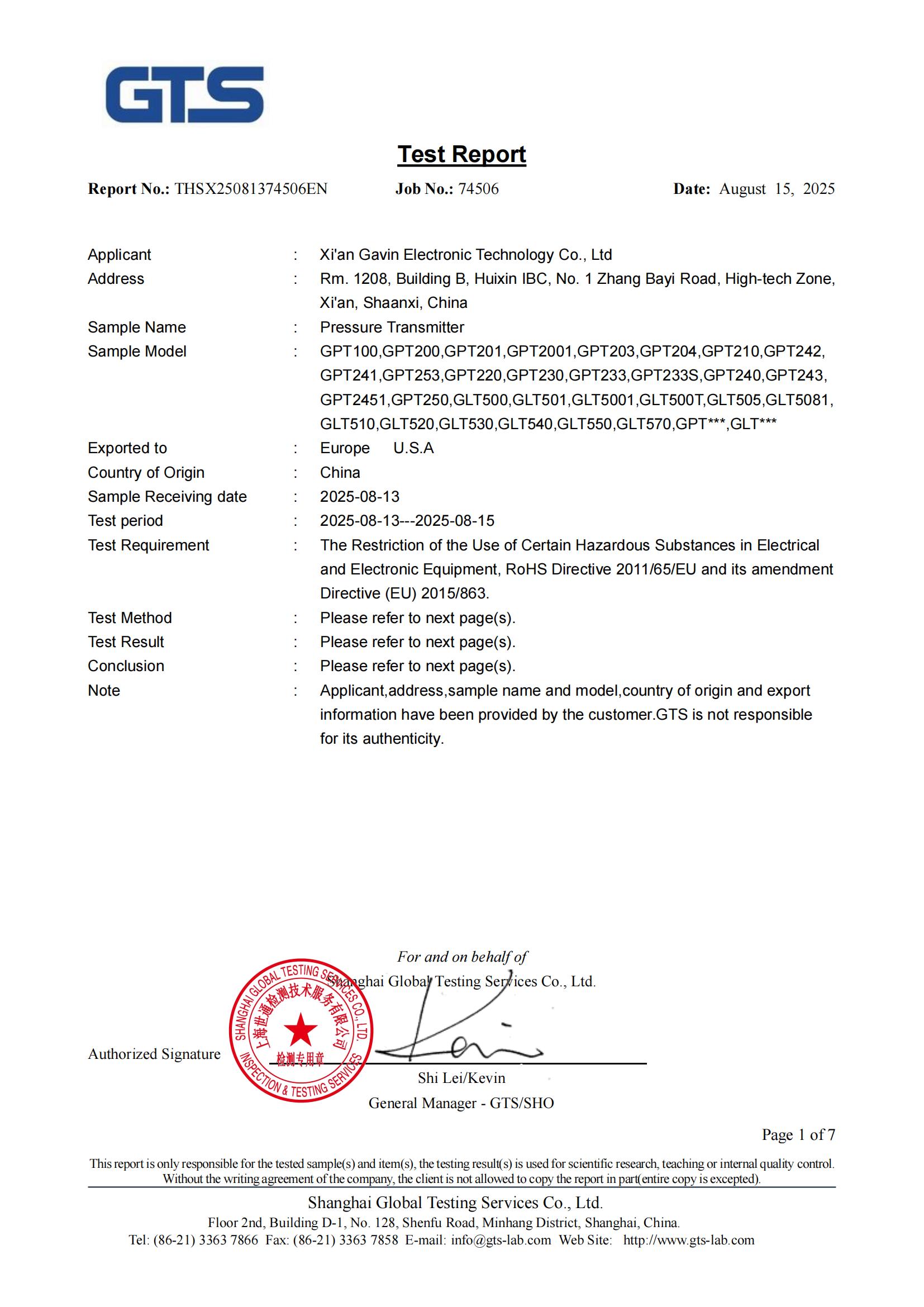
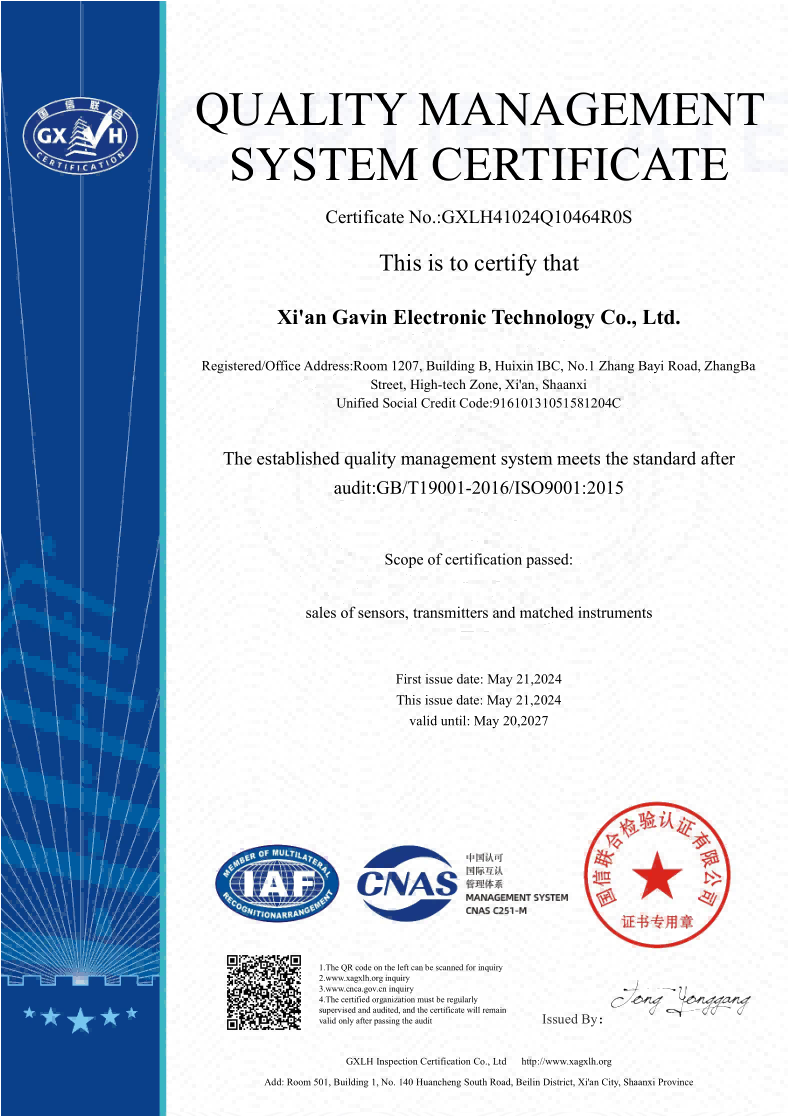
Manufacturers you can trust have quality management systems that are written down and approved to ISO 9001 standards. The calibration data for each long-term stability pressure sensor is linked to national standards labs so that you can track it. When installing something or figuring out what sensor readings mean, quick technical help is very important. Ask companies that work in similar businesses and application conditions for recommendations on possible suppliers.
The terms of the warranty show how confident the maker is in the product. For example, most premium sensors come with a five-year warranty that covers both manufacturing flaws and performance specs. Application tech help should be part of after-sales support, not just order handling and logistics.
It is very helpful to know what customization options a seller offers when dealing with specific application needs. GAMICOS has helped customers in 98 different countries by changing the arrangement of sensors to fit their needs. Our engineering team works directly with project managers to figure out the best sensing ranges, types of process connections, electrical outputs, and grades for the enclosures. This way of working together makes sure that bought sensors work well with current control systems without needing expensive changes to the system. Customization goes beyond technical specs and includes private labeling for OEM partners and changing paperwork to support compliance with foreign rules.
Bulk Purchasing and Supply Chain Considerations
Setting up framework deals that lock in prices while still allowing for flexible delivery is helpful for buying things for big projects. Procurement managers should discuss blanket purchase orders with scheduled releases that are aligned with building goals when planning automation projects that will last for more than one year. This method guarantees a stable budget while avoiding high costs related to keeping supplies. Lead times for stability-optimized sensors are usually between four and eight weeks, based on how they need to be customized. This is a lot longer than the lead times for standard sensors. Critical path delays during project completion phases can be avoided by planning buying timelines in the right way.
When you do a total cost of ownership study, you should include the costs of recalibration, production downtime, and any quality loses that might happen because of inaccurate measurements. A sensor that costs 50% more than normal options but only needs to be calibrated half as often has better term value. Procurement pros make their business cases stronger by putting a number on these running costs. This shows that premium sensors are worth the initial investment because they lower ongoing costs. Instead of just comparing buy prices, financial research should look at how long sensors are expected to last, which is usually ten years for industrial installations.
Future Trends and Innovations in Long-Term Drift Compensation
Emerging Materials and Nanotechnology Applications
Scientists are working on nanostructured sense materials that are very stable in ways that have never been seen before. Carbon nanotube strain gauges have very little drift because their chemical structure doesn't change easily when heated, which happens to most materials.
Graphene-based sensors have similar benefits, but they are more sensitive, which means they can measure over a wider range. A long-term stability pressure sensor built from such nanomaterials is still mostly in the study stages, but it should be used in businesses within three to five years. When procurement managers keep an eye on these changes, they prepare their companies to use next-generation technologies as they become more stable.
AI-Driven Predictive Compensation and Self-Optimization
The way devices handle their own performance is changing because of programs that use artificial intelligence. Machine learning models that have been taught on past sensor data can very accurately predict drift paths and make corrections before measurements go off track. Cloud-connected sensor networks let you compare setups that are similar and find strange drift patterns that could be signs of growing process problems instead of sensor problems. These smart systems make it hard to tell the difference between measuring tools and analysis tools. They turn sensors from idle data sources into active diagnostic assets.
Industry 4.0 Integration and IoT Connectivity
Modern industrial pressure monitors use wireless communication methods more and more, which lets them be monitored from afar without a lot of cables. LoRa, NB-IoT, and 4G cellular connection make it possible for sensors placed in remote areas to send data straight to cloud platforms where it can be analyzed. This connection makes it easier to use predictive maintenance methods, in which analytical tools find patterns of performance degradation before they get too bad. When making purchases, companies should look for sensors that can connect to a variety of IoT designs, both current and future ones. This way, the devices that are bought will be able to work seamlessly with the growing ecosystems of smart manufacturing.
Strategic Recommendations for Forward-Looking Procurement
Finding the right balance between using cutting-edge technology and tested stability takes careful consideration. Adopting new technologies before they're fully tested comes with risks, but waiting too long can put businesses behind the competition. As a practical matter, tactics can include testing new technologies in non-essential areas first, so they can be used more widely later. Partnering up with creative sellers who know the problems your industry faces lets you work together to create solutions that work best for your needs. When procurement managers build these strategic partnerships, their companies can benefit from new technologies while still using tried-and-true technologies to keep operations stable.
Conclusion
Choosing the right technology for measuring pressure has a huge effect on many types of industry work, including making medicines, energy, chemicals, and everything else. A long-term stability pressure sensor with 10-year drift correction provides accurate measurements, which directly leads to higher working efficiency, compliance with regulations, and lower costs. Professionals in procurement make smart choices that help their companies reach their long-term business goals by learning about core stability technologies, systematically comparing available options, and working with reliable providers.
When smart compensation algorithms, advanced materials, and IoT connectivity come together, they open up measurement system optimization possibilities that have never been seen before. Forward-thinking companies are already taking advantage of these chances to get a competitive edge in their own industries.
FAQ
How often do stability-optimized sensors require calibration?
Manufacturers usually say that expensive sensors need to be calibrated every three to five years, while regular devices only need to be calibrated once a year. The actual times rely on how harsh the application is. For example, sensors in a stable lab environment may last longer than five years, while sensors in harsh environments may need to be checked every two to three years. A lot of companies use risk-based calibration methods, which make sure that important measurement points are checked more often than less important ones. This makes the best use of resources while still ensuring the accuracy of measurements.
Can existing installations retrofit with stable sensors?
Most sensors that improve stability use normal process links and electrical ports, so they can be used instead of regular devices. When it comes to process link types and direction needs, procurement teams should make sure that the parts are mechanically compatible. To be electrically compatible, the output signal types (voltage, current, or digital protocols) must match the inputs of the present control system. The investment in the upgrade usually pays for itself in two years, thanks to lower costs for recalibration and better quality process control.
What factors most significantly impact sensor lifespan?
Changing temperatures, being exposed to toxic media, and mechanical shaking are the main things that can shorten a product's life. Extreme temperature changes make sensors age faster than those that are in fixed temperatures. Corrosion problems can be avoided by matching the process media and materials correctly. Internal parts are kept safe from damage caused by fatigue by vibration separation systems like flexible mounts or damping systems. If you choose the right sensors and place them correctly, they can last for more than fifteen years in industrial settings.
Partner with GAMICOS for Reliable Pressure Measurement Solutions
In industrial settings where precise measurements need to be kept for long periods of time, sensors need to be designed to be stable over time. GAMICOS makes pressure monitors with advanced drift compensation technologies and serves thousands of users every year in the energy, chemical, pharmaceutical, food processing, and oil and gas industries. Our engineering team provides full technical support from the initial application study to the completion of the installation, making sure that the best sensors are chosen and set up.
As a long-term stability pressure sensor maker with a lot of experience, we can do a lot of customization for you, such as choosing the type of sensor, adapting the process link, integrating the communication protocol, and even private labeling for OEM partners. Our quality control systems keep strict testing standards and have been certified by international metrology organizations. This makes sure that the quality of our products always meets CE, RoHS, and ISO standards. Get in touch with our team at info@gamicos.com to talk about your unique measurement problems, get technical specs, or set up sample tests that show how our sensors work better in your real-world settings.
References
1. Webster, John G., and Halit Eren. Measurement, Instrumentation, and Sensors Handbook: Spatial, Mechanical, Thermal, and Radiation Measurement. CRC Press, 2017.
2. Bao, Martin H. Analysis and Design Principles of MEMS Devices. Elsevier Science, 2005.
3. Wilson, Jon S. Sensor Technology Handbook. Newnes, 2005.
4. Kress, Hans-Jürgen, and Roland Schmid. Industrial Pressure, Level and Density Measurement. Endress+Hauser Group, 2014.
5. Frank, Richard. Understanding Smart Sensors: Principles and Applications. Artech House Publishers, 2013.
6. Liptak, Béla G. Instrument Engineers' Handbook: Process Measurement and Analysis Volume I. CRC Press, 2003.

Eva
Eva specializes in bridging the gap between cutting-edge sensor technology and market needs. With 8 years of experience in industrial product marketing, she has successfully launched multiple sensor product lines—from pressure transmitters to fuel level sensor—into global markets.
We're here to help — submit your request anytime!
Let us know how we can help solve your pressure level measurement challenge.
_1757930850792.jpg)
Recommended Blog

Hygienic Pressure Transmitters for Food & Pharma Industries
_1774248392435.webp)
Pressure Sensor Range & Full Scale (FS): Complete Guide
Precision Pressure Sensors in Medical Monitoring & Ventilators