Pressure Sensor Resolution vs Accuracy Explained
Understanding Pressure Sensor Resolution and Accuracy
- Understanding Pressure Sensor Resolution and Accuracy
- Factors Affecting Pressure Sensor Resolution and Accuracy
- Selecting the Right Pressure Sensor Resolution for Your Application
- Improving Pressure Sensor Resolution in Practical Settings
- Conclusion
- FAQ
- Partner with GAMICOS for High-Performance Pressure Measurement Solutions
- References
Understanding the difference between pressure sensor resolution and accuracy is very important when choosing pressure measuring devices for industrial automation projects. Resolution is the smallest change in pressure that a sensor can pick up. It is usually given in bits or pressure units like psi. How accurate the sensor is is based on how closely its results match the real pressure being recorded. These factors work on their own, so a device could have great sharpness but average accuracy, or the other way around. Finding the right mix for long-term buying strategies relies on the needs of your application, the way your business works, and your budget.
Understanding Pressure Sensor Resolution and Accuracy
What Resolution Really Means in Pressure Measurement?
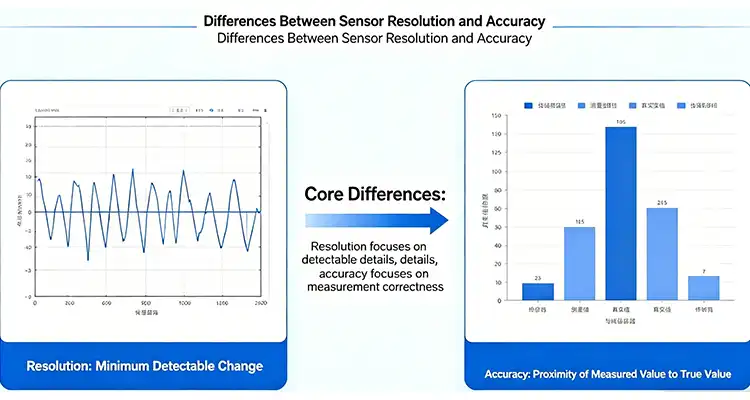
Resolution is the smallest change that your pressure monitor can tell the difference between. It's like the sensor's level of detail in its measurements. A 12-bit analog-to-digital converter can handle 4,096 separate measurement steps across its range, while a 16-bit machine can handle 65,536 steps. A higher bit depth means more accurate measurements, which can pick up on small changes in pressure that a lower-resolution device might miss.
Defining Accuracy and Its Practical Implications
The level of accuracy, which is usually given as a percentage of full-scale output, shows how close sensor readings are to the real pressure values. A monitor with an FSO range of ±0.5% over a range of 0 to 100 psi could be off by up to 0.5 psi from the real pressure. This standard covers a lot of different types of errors, such as linearity, hysteresis, consistency, and temperature effects. Sourcing managers can figure out if a device meets project requirements before placing large orders if they know about these factors.
Why High Resolution Doesn't Guarantee High Accuracy?
A lot of buying teams think wrongly that high resolution usually means accurate measures. But a monitor could pick up changes in pressure as small as 0.01 psi while consistently reading 2% above or below the real number. Resolution changes the level of information in a measurement, while precision shows how true the measurement is. Both factors need to be optimized for manufacturing projects that need to keep a close eye on the process. However, monitoring applications may choose to focus on one over the other based on whether finding trends or absolute numbers is more important.
Real-World Application Scenarios
To stay in line with regulations, pharmaceutical cleanroom pressure tracking has to be very accurate. This is because even small changes from the stated differentials could make the product less sterile. You can trust the exact pressure readings. On the other hand, high precision helps with diagnosing HVAC systems because it lets them find small drops in pressure that mean filters are clogged, even if the absolute numbers are slightly off. Chemical processing companies usually need specifications that are well-balanced because they need exact control and change detection to keep dangerous situations from happening during batch operations.
Factors Affecting Pressure Sensor Resolution and Accuracy
Sensor Design and Construction Methods
Design architecture has a big impact on how well something works. Micromachined silicon diaphragms in MEMS devices bend when they are under pressure. These devices are small and have good resolution, making them ideal for setups with limited room. Metal diaphragms with connected resistive elements are used in traditional strain gauge devices. This makes them strong enough to be used in harsh settings. Capacitive designs use changes in capacitance to measure diaphragm movement, which gives them great clarity for low-pressure uses. The choice of material affects both factors. For example, ceramic diaphragms don't corrode and stay the same size, while stainless steel diaphragms can handle high temperatures.
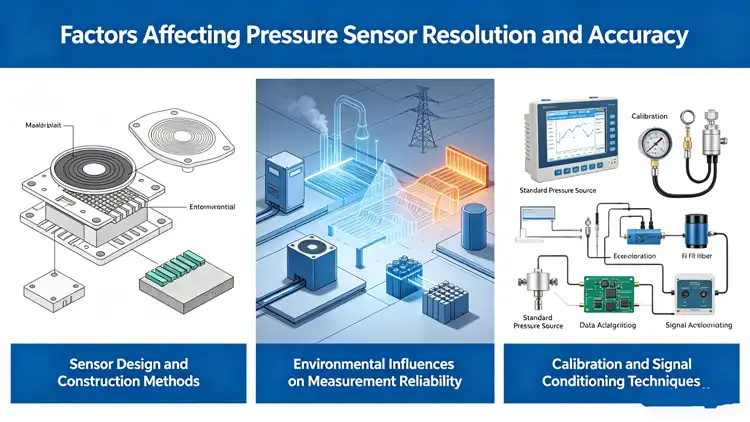
With today's industrial methods, margins can be made smaller, which directly improves accuracy requirements. Advanced electrode orientation in capacitive sensors lowers measurement drift, and precisely cut strain gauge mounting surfaces lower mistakes caused by temperature. When making special pressure sensor resolution for tough industrial uses, our engineering team at GAMICOS looks at these design factors.
Environmental Influences on Measurement Reliability
Changes in temperature affect the performance of sensors by making sensing elements expand and contract and by changing the qualities of the materials used. Good devices have temperature compensation circuits, but engineering managers should make sure that the ranges of compensation match the conditions of use. For pharmaceutical uses that stay between 20°C and 25°C, thermal drift isn't a big deal, but tracking an engine that runs from -40°C to 150°C needs a lot of compensation.
Measurement noise is caused by vibration and mechanical shock, which lowers the useful sharpness. When mounted close to pumps, compressors, or process equipment, the sensor housings need to be strong and able to isolate vibrations. Variable frequency drives and switching power sources cause electromagnetic interference that messes up analog signals, especially in sites that aren't protected. When project managers choose sensors for automation retrofits, they need to look at how much EMI the devices will be exposed to and make sure they have the right insulation and filters.
Calibration and Signal Conditioning Techniques
Calibration makes sure that the output of the sensor is in line with measurable pressure standards across the whole range of operation. Multi-point testing at 0%, 25%, 50%, 75%, and 100% of span shows linearity and sets up adjustment factors that make the reading more accurate. Automation system managers should set regular recalibration schedules based on what the maker suggests and what the government requires. Once a year is fine for most industrial uses, but every three months might be needed for important pharmaceutical processes.
There are several ways that signal filtering can improve both precision and effective resolution. When set up correctly, low-pass filtering gets rid of high-frequency noise without slowing down reaction time. Oversampling methods take the average of several readings to boost sharpness past the limits of the ADC bit depth. Digital filtering methods that run in microcontrollers or PLCs can take messages that are useful out of noisy environments. These methods work especially well when adding sensors to control systems that are already in place without having to change the hardware.
Selecting the Right Pressure Sensor Resolution for Your Application
Industry-Specific Resolution Requirements
Depending on how important the process is and the operational conditions, different areas need different levels of success. Manufacturers of medical devices that need to control ventilator pressure need resolution below 0.1 cmH₂O to make sure that patients are safe while they are receiving delicate breathing support. Monitoring tank levels in food and beverage processing might work fine with a scale of 0.5 psi over a range of 0 to 50 psi. Wireless sensors with a modest resolution and excellent long-term stability help the energy sector keep an eye on pipelines that span hundreds of miles, lowering the cost of upkeep.
When level and pressure input are added to PLC control loops for manufacturing automation, the resolution of the sensors should match the powers of the control valves. Setting a resolution that is lower than the trigger precision loses money and doesn't improve the process results. When testing samples of new equipment, R&D managers often choose higher resolutions to pick up on subtle effects. They then improve the specifications for production versions by weighing performance against the cost of the parts.
Comparing Commercial Options and Custom Solutions
Well-known companies like Honeywell, TE Connectivity, and Bosch have large catalogs of pressure sensor resolutions with clear specs that can be used in typical situations. Their basic items work reliably and have short wait times that are good for distributors who need to keep stock on hand. But OEM integration projects often run into mechanical, electrical, or environmental problems that standard devices can't solve.
Custom sensor creation lets you make sensors that work better for certain needs that standard sensors can't meet. GAMICOS specializes in custom systems that have specific pressure ranges, port configurations, temperature compensation built in, and communication methods that are made just for the customer. The first step in our engineering collaboration method is to analyze the application to find the most important parameters. Next, we make prototypes based on client comments and then finalize the production specs. This method makes sure that the final device has the best clarity and accuracy while still staying within the budget for mass production.
Interpreting Datasheets and Procurement Metrics
Sourcing managers who are looking at sensor specs should look closely at a number of important factors besides the sharpness and accuracy numbers that are usually given. Total error band adds up all the sources of error under certain conditions, giving you a true idea of how well the system will work. Temperature coefficients show how much readings change for every degree, which is very important for uses that go through temperature cycling. Response time affects the security of the control loop. Faster response allows for better regulation, but in places with a lot of electrical noise, it may need more filtering.
Long-term stable standards say that measurements will change over months or years of running nonstop. Facilities that work with chemicals and oil that do important work around the clock need to make sure that their devices stay calibrated between planned repair windows. When span drift rates are zero or less than 0.1% per year, unplanned downtime for recalibration is kept to a minimum. Specifications for noise that are given in RMS pressure units or as a percentage of full scale show the useful resolution under real-world working conditions, not the theoretical ADC limits.
Improving Pressure Sensor Resolution in Practical Settings
Hardware Enhancement Strategies
By getting rid of switching noise that gets into sensitive analog circuits, low-noise power sources make measurement quality much better. For sensors that deal with millivolt-level data, linear regulators give cleaner power than switching systems. External disturbances can't mess up signals being sent to control systems when wires are shielded and properly grounded. Instead of fixing noise problems after the system is up and running, engineering companies who install new automation systems should set the right wiring standards from the start of the project.
Advanced signal filtering circuits close to the sensing element boost signals before they get muddled by noise during wire runs. The performance of strain gauge sensors is improved by bridge completion networks and precise instrumentation amps. Some methods, like high-frequency carrier excitation and synchronous demodulation, can help capacitive devices get better clarity. These tech upgrades cost more at first, but they work better in the long run than cheap gadgets that need to be replaced more often.
Software and Algorithmic Improvements
Digital filtering in programmable logic processors or specialized microcontrollers improves pressure sensor resolution without changing the hardware. When window sizes are right for the way the process works, moving average filters can smooth out noisy readings while keeping response times that are good. Kalman filtering algorithms use system models to guess what the pressure should be and then find the best way to combine those guesses with real data to get rid of any errors. These complex methods work best when the behavior of the process can be predicted.
Adaptive algorithms change the filtering settings based on the working conditions. During steady-state operation, the filters are tightened to get the best resolution, and during transients, the filters are loosened to keep the response time fast. Machine learning methods that have been taught on old data can find small patterns of sensor drift and fix them, which makes calibration gaps longer. These techniques can be used to get the most out of current sensor installations by automation system integrators who are good at programming.
Calibration Best Practices and Maintenance Protocols
Setting up thorough calibration processes guarantees that sensors will stay accurate for their entire working life. The paperwork should list calibration tools that are at least four times more accurate than the sensors being tested. Metrology labs keep track of traceable pressure standards that are used as measuring standards. By keeping track of calibration data, you can use trend analysis to find sensors that are losing their quality before they affect production.
Regular checking the sensor ports for blockages, making sure the electrical connections are correct, and trying the temperature adjustment circuits should all be part of preventative maintenance plans. GMP rules say that places that make medicines or process food must have very detailed paperwork showing that their measurement systems are true. At GAMICOS, our expert support team helps clients come up with calibration methods that meet legal requirements and industry standards, such as ISO, CE, and RoHS certifications.
Case Studies Demonstrating Measurable Improvements
An industrial automation company that makes chemical reactors used our suggestions to make their batch control systems' pressure sensor resolution better. Standard 12-bit sensors with basic analog filtering were used in the original installation. This led to 0.2% process difference that sometimes went beyond what was specified for the product. When 16-bit sensors with advanced digital filtering were added, variation dropped to 0.08%. This got rid of batch rejects and increased output by 3.2% per year.
A medical device company that was making movable ventilators had trouble finding out how hard a patient was breathing. Working with our research and development team, they asked for custom capacitive sensors with diaphragm designs that work best in low-pressure areas. With the help of special signal processing methods, the solution was able to reach 0.05 cmH₂O precision while keeping accuracy within ±2%. This performance made patient-synchronized breathing settings more comfortable, which gave the device a competitive edge in a crowded market.
Conclusion
Understanding the distinct roles of resolution and accuracy in pressure measurement is essential, as pressure sensor resolution determines the smallest detectable change, while accuracy defines how close readings are to the true value. This distinction helps procurement teams select devices that meet application requirements without overspending on unnecessary performance. Accuracy makes sure that control setpoints and safety limits match real conditions, while resolution lets you see small changes in pressure that are useful for process optimization and preventative maintenance. In real-world applications, environmental factors, calibration methods, and signal conditioning have a big effect on both values.
By carefully comparing these factors to the needs of the industry, engineering managers can choose the best sensors, whether they are looking for standard goods or making their own. This body of knowledge helps people make sure they're making decisions that are good for everyone by balancing technical performance, following the rules, and long-term running costs.
FAQ
What resolution range do typical MEMS pressure sensors offer?
MEMS pressure monitors usually have a precision of 12 to 16 bits, which means they can measure between 4,096 and 65,536 times. More expensive models have 24-bit converters that can handle more than 16 million discrete values. However, the actual precision relies on electrical noise and mechanical stability. These advanced specs help applications that need a lot of detail, like medical tracking of breathing or precise hydraulic control.
How does resolution influence measurement sensitivity?
Higher precision makes it possible to see smaller changes in pressure, which makes the system more sensitive to small changes in the process. A monitor with a resolution of 0.01 psi can find trends that devices with a resolution of 0.1 psi can't. This lets predictive maintenance plans find problems before they break down. But sensitivity and noise immunity need to be managed. For example, too much resolution without enough filtering can lead to unstable results that make control methods harder to use.
Can high accuracy compensate for low resolution?
Resolution and accuracy are two different things that can't be used in place of each other. At measured places, accurate sensors give correct readings, but they can't pick up changes that are smaller than their resolution increase. Applications that need both accurate control and the ability to spot changes need to have enough information for both factors. Instead of thinking that one trait makes up for flaws in the other, procurement managers should figure out which trait is most important for each application.
Partner with GAMICOS for High-Performance Pressure Measurement Solutions
GAMICOS makes high-precision pressure monitors for demanding industrial uses that have a very high sensitivity and have been proven to be accurate. We offer a wide range of products, such as capacitive ceramic sensors, strain gauge actuators, and wireless tracking systems that can join via Lora, NB-IoT, or 4G. We provide sourcing managers and engineering teams in the energy, food processing, pharmaceutical, chemical, and oil industries with unique solutions that meet their exact needs.
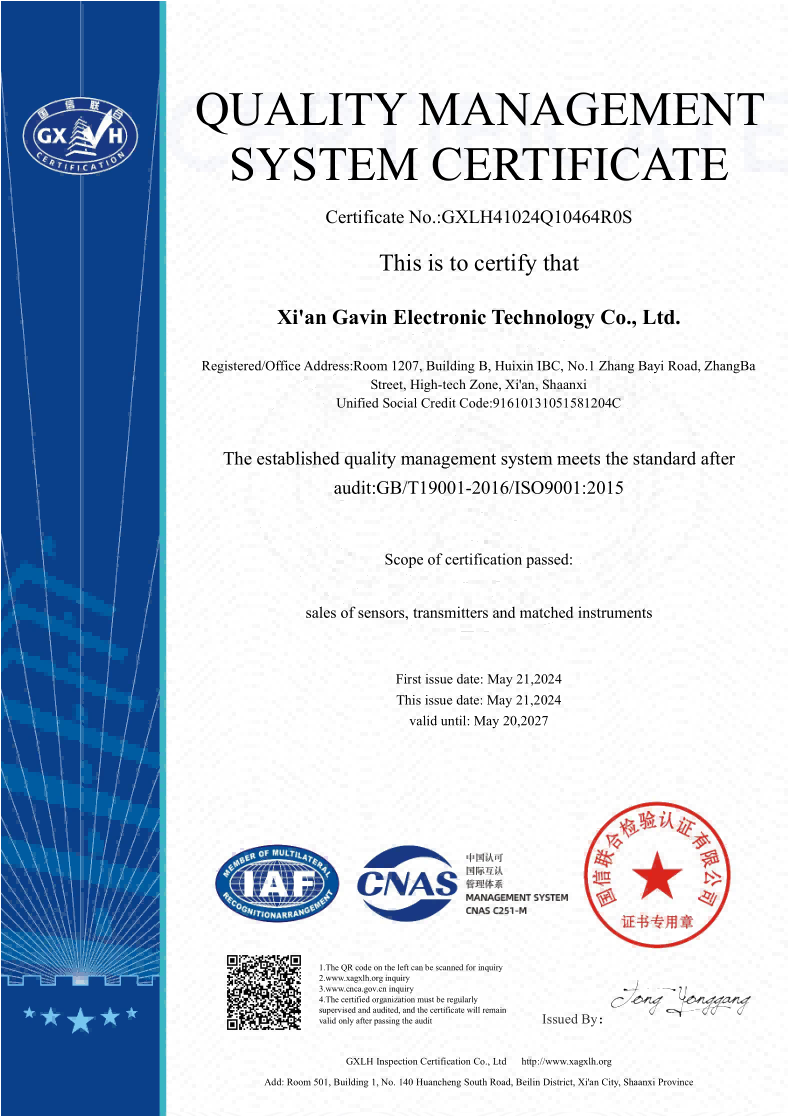
Our technical knowledge goes beyond the products in our store; we also offer full OEM and ODM services that are suited to your specific needs. During research and production, our R&D department works with your team to make sure that you get the pressure ranges, output signals, and mechanical connections that you need. As a pressure sensor resolution maker with a lot of experience that works with 98 countries, we have strict quality control and hold international approvals such as CE, RoHS, and ISO.
Email our application engineers at info@gamicos.com to talk about the data problems you're having. We give you full datasheets, application notes, and comparison tips for sensors to help you choose the best devices for your projects. Get a quote right now to find out how our on-time shipping, low prices, and quick technical support can help your supply chain relationships.
References
1. Webster, J.G., "The Measurement, Instrumentation, and Sensors Handbook," CRC Press, 2014.
2. Pallas-Areny, R. and Webster, J.G., "Sensors and Signal Conditioning," Wiley-Interscience, 2001.
3. Wilson, J.S., "Sensor Technology Handbook," Elsevier, 2005.
4. Bentley, J.P., "Principles of Measurement Systems," Pearson Education, 2005.
5. Figliola, R.S. and Beasley, D.E., "Theory and Design for Mechanical Measurements," John Wiley & Sons, 2015.
6. Fraden, J., "Handbook of Modern Sensors: Physics, Designs, and Applications," Springer, 2016.

Peter
Peter, Senior Sensor Technology Consultant, has 15-year industrial sensor R&D experience. He specializes in the end-to-end development of high-accuracy pressure and level sensors and he firmly believe, precision isn’t just a spec—it’s a promise.
We're here to help — submit your request anytime!
Let us know how we can help solve your pressure level measurement challenge.
_1757930850792.jpg)
Recommended Blog

Mitigating Pulsation, Water Hammer & Overpressure in Pumps
Mitigating Pulsation, Water Hammer & Overpressure in Pumps