Voltage Output Pressure Sensors: 0-5V vs 0-10V
Introduction
- Introduction
- Understanding Voltage Output Pressure Sensors
- 0-5V vs 0-10V Voltage Output: Technical and Practical Comparison
- How to Choose the Right Voltage Output Pressure Sensor for Industrial Use?
- Troubleshooting and Maintaining Voltage Output Pressure Sensors
- Future Trends and Innovations in Voltage Output Pressure Sensors
- Conclusion
- FAQ
- Partner with GAMICOS for Reliable Voltage Output Pressure Sensor Solutions
- References
It is very important to understand the basic differences between voltage output pressure sensor configurations when choosing pressure sensing options for business uses. Choosing between 0-5V and 0-10V output bands has a big effect on how well systems work together, how accurate measurements are, and how well signals are kept. This is true in a wide range of factory settings. These voltage requirements say how pressure data is turned into electrical signals. This has effects on many things, ranging from how well the electrical signals work with control systems to how well they block out noise in tough industrial settings.

Introduction
This complete guide gives you important information about voltage output pressure sensors, with a focus on the two most common output bands (0-5V and 0-10V). The process of choosing the right output voltage has a direct effect on the accuracy of measurements, the compatibility of systems, and the general success of integration within industrial automation frameworks. To make smart purchasing choices that meet practical needs, engineering managers, buying professionals, and project planners need to have a deep understanding of these technical specs.
Global B2B buying professionals are under more and more pressure to find accurate measurement tools that meet strict performance standards while still being cost-effective. There are more differences between voltage output ranges than just numbers. Important things like signal transfer features, environmental tolerance, and compatibility with existing control systems are also taken into account. This study talks about important things that procurement teams need to think about when choosing sensors. This will help them meet technical standards and make sure the best performance in tough industrial settings.
Understanding Voltage Output Pressure Sensors
Voltage output pressure sensor technology turns changes in mechanical pressure into proportional electrical signs that stay within certain voltage bands. An important part of the basic working concept is that pressure-sensitive elements change the voltage in response to changes in force or pressure. Different types of feedback processes are used in these sensors, such as strain gauges, piezoelectric elements, and capacitive sensing technologies. Each has its own benefits for different types of applications.
Basic Operation and Sensor Types
In industrial settings, strain gauge pressure sensors are the most common type of voltage output device. These gadgets use resistant parts that alter their electrical features when they are mechanically deformed by changes in pressure. By using bridge circuits, the changes in resistance are turned into voltage signals that produce straight output reactions over certain pressure ranges.
When pressure is put on piezoelectric pressure sensors, the crystals change shape, which creates voltage signs. These sensors are great for measuring dynamic pressure because they respond quickly and have great frequency properties. However, they need signal filtering circuits to keep the output voltage levels stable enough for industrial control systems.
Capacitive pressure sensors measure changes in capacitance between sensitive elements that are caused by pressure. Specialized electronic circuits in these devices turn changes in capacitance into voltage signs. They are very sensitive and stable in controlled settings, especially when using a voltage output pressure sensor for precise voltage readings.
Industrial Applications and Integration Benefits
Programmable logic controls, data gathering systems, and industrial automation networks can all work with voltage output sensors without any problems. The direct voltage signal style gets rid of the need to convert complicated signals, which makes the system simpler and less likely to break down. This simple way of integrating works well in the process industries, especially for tasks that need to watch and adjust pressure in real time.
Voltage output sensors are used in many different ways in manufacturing facilities. They are used to watch hydraulic systems, handle pneumatic circuits, and keep an eye on the pressure in process vessels. The voltage output format lets you connect directly to analog input modules, which makes installation easier and cuts down on the time it takes to set up compared to other sensor technologies.
0-5V vs 0-10V Voltage Output: Technical and Practical Comparison
Depending on the needs of the product and the surroundings, the different electrical properties of 0V and 0-10V output configurations offer different benefits. By knowing these differences, procurement experts can choose the best sensor setups that improve system performance while reducing the number of problems that come up during integration.
Signal Characteristics and Performance Differences
In low-voltage control settings, zero-to-five-volt sensors usually work better at blocking noise. The smaller voltage range focuses signal sharpness into a smaller electrical span. This could make measurements more accurate when used with the right analog-to-digital converters. Because these sensors use less power, they can be used in battery-powered or remote tracking systems where saving power is still important.
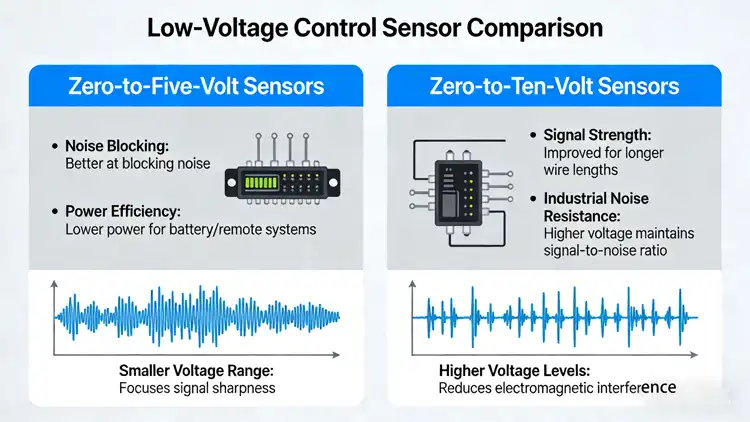
Zero-to-ten-volt output sensors improve the signal strength so it can be sent over longer wire lengths. Higher voltage levels keep signal-to-noise ratios higher in electrically noisy industrial settings, making it less likely that electromagnetic interference from nearby equipment will mess with the signal. This better signal integrity is helpful for industrial sites that have long wire runs between sensors and control systems.
Application Scenarios and Environmental Considerations
In chemical processing settings, 0-10V sensors are often preferred because they can send signals through barriers in dangerous areas and have naturally safe interfaces. The higher voltage values meet the needs for signal conditioning while keeping the accuracy of measurements as they pass through various interface stages.
In clean environments, like those used in food and drink production, 0-5V sensors are often used because lower voltage levels meet safety requirements and legal requirements. These sensors work well with clean control systems that are made for areas that need to be cleaned and for changing temperatures.
Controlling the pressure very precisely is needed during the whole process of making pharmaceuticals. The voltage output pressure sensor that is chosen depends on the validation needs. 0-5V setups are usually best for validated systems that need a lot of paperwork and governmental approval processes.
Integration Compatibility and System Requirements
Different voltage output ranges are not all compatible with programmable logic controllers. Many industrial PLCs have input units that are specifically designed to work with certain voltage levels. Knowing the specs of the controller makes sure that it can be integrated without the need for extra signal filtering hardware that makes the system more complicated and increases the number of possible failure modes.
Through customizable input units, most distributed control systems can handle both voltage ranges. Standardizing on a single output type across all installations in a building, on the other hand, makes it easier to keep track of spare parts and train technicians, which lowers long-term operating costs.
How to Choose the Right Voltage Output Pressure Sensor for Industrial Use?
To choose the right pressure measuring options, you need to carefully consider a lot of technical and business factors that affect how well they work and how much they cost. Professionals in procurement have to find a balance between technical requirements and budget limits, while also making sure that the new equipment will work with current systems and with plans for future growth.
Key Decision Metrics and Evaluation Criteria
Specifications for accuracy have a direct affect on how well process control works and how well the product turns out. Knowing the accurate needs for different temperature ranges, pressure cycles, and environmental factors helps find sensors that can keep up performance standards for as long as they are used. Long-term stable data from makers shows how accuracy is likely to drop over time.
Cost efficiency includes the starting cost of the product, the cost of installation, and the cost of ongoing upkeep. Even though better sensors may cost more, their higher stability and longer service life often make them cheaper to own overall than cheaper options that need to be replaced or calibrated more often.
When thinking about durability, you should think about how well it can handle vibrations, changes in temperature, contact to toxic media, and mechanical shock. The hard conditions that sensors are exposed to in industrial settings can have a big effect on their performance and dependability. Comparing environmental specs to real application conditions keeps things from breaking down too soon and makes sure they always work the same way.
Manufacturer Analysis and Supplier Selection
The best companies that make pressure sensors have a wide range of products with different power outputs and pressure ranges. Honeywell makes strong industrial sensors that have been shown to work reliably in tough situations, and Siemens provides combined solutions that are designed to work well with automation systems. Amphenol is an expert in making sensors for harsh environments that are made to work in the worst circumstances.
GAMICOS stands out because it can be customized and has quick technical help that is suited to each application's needs. Our engineers work closely with customers to come up with the best sensor options for their specific needs, all while keeping prices low and delivery times consistent.
Custom sensor development makes it possible to precisely match specs to application needs, which could get rid of the trade-offs that come with choosing standard products. OEM partnerships give you access to custom setups that aren't available in standard catalogs. This helps you use unique strategies for differentiating your products.
Procurement Strategies and Sample Evaluation
By asking for examples of sensors, you can test their performance in real-world usage situations. Before making large purchases, trying samples makes sure that the theoretical specs are correct and shows any possible integration problems. This method lowers the risk of buying and makes sure that new systems will work with old ones.
When negotiating price tactics, buyers should think about the promises they make about volume, delivery times, and the level of technical help they need. When you build long-term ties with your suppliers, you can often get better prices and faster help when you need it most. Long-term contracts can keep costs stable and ensure the supply chain works well.
Troubleshooting and Maintaining Voltage Output Pressure Sensors
Effective repair programs make sure that sensors always work right and that they don't break down when they're not supposed to, which can stop production. Understanding typical failure causes and using preventative maintenance methods can make sensors last longer and keep their measurement accuracy over their entire working lifecycle, especially when using a voltage output pressure sensor to ensure consistent performance.
Common Issues and Diagnostic Approaches
Signal problems are often caused by faulty wires, contaminated connectors, or sensor shift. Systematic fixing steps help find the root causes of problems while reducing downtime. Measurements of voltage at sensor ports, intermediate connection points, and control system inputs help find the source of the problem and plan how to fix it.
Most sensor function problems are caused by problems with the wiring. Over time, environmental factors like water getting in, chemical contact, and mechanical damage weaken electrical links. Many wiring-related problems can be avoided with regular inspections and safety steps. Calibration drift happens slowly as sensors get older or are stressed by their surroundings. Setting up regular plans for calibration and verification helps keep measurements accurate and finds sensors that need to be adjusted or replaced before their accuracy drops too far.
Preventive Maintenance and Environmental Monitoring
Environmental factors, usage intensity, and how important measurement accuracy are should all be taken into account in routine repair plans. Applications with a lot of vibration may need to be inspected more often, while surroundings that are corrosive need to have repair plans sped up to keep things reliable.
Monitoring the environment helps find situations that make sensor failure happen faster. Changing temperatures, being exposed to humidity, and chemical contamination patterns can help you figure out the best upkeep times and safety steps to make sensors last longer.
Documentation systems that keep track of sensor performance, maintenance tasks, and failure trends let you make choices based on data about when to change sensors and how well a supplier is doing. This knowledge helps with provider relationship management and efforts to make things better all the time.
Future Trends and Innovations in Voltage Output Pressure Sensors
Industrial sensors are always changing as new technologies make them more accurate, smaller, and easier to connect to other devices. These changes could lead to better process control, but they might also mean that buying strategies and technical specs need to be updated, especially when considering devices like the voltage output pressure sensor for more precise measurements.
Enhanced Accuracy and Miniaturization
Modern methods of making things allow pressure sensors to be more accurate than ever before while also getting smaller. With micro-electromechanical systems technology, sensors can be used in places with limited area without losing any function. These miniaturized voltage output pressure sensor devices open new application possibilities in compact equipment designs.
Temperature compensation methods and better materials for sensing elements cut down on measurement mistakes over a wider range of temperatures. Digital signal processing methods improve accuracy and provide monitoring tools that can predict when maintenance is needed and spot signs of failure before they happen.
Digital Integration and IoT Connectivity
Smart sensor technologies combine traditional voltage outputs with digital communication features, which lets them be monitored and set up from afar through industrial networks. These mixed devices keep working with traditional control systems that are already in place while adding more features to modern automation platforms.
Adding the Internet of Things lets you use cloud-based data analysis and predictive maintenance tools to get the most out of your sensors and cut down on your running costs. Wireless connection options get rid of the need for cables in upgrade situations and give installers more choices for how to set up their systems. Machine learning systems look at trends in sensor data to predict breakdowns, find the best times for calibration, and find ways to improve the process. With these smart systems, pressure sensors go from being simple measuring tools to full-fledged platforms for process intelligence.
Conclusion
When choosing between 0-5V and 0-10V voltage output pressure sensors, you need to carefully think about the technical specs, the surroundings, and how the sensors will fit into your system. Knowing about signal traits, noise immunity factors, and compatibility issues helps you make smart purchasing choices that improve performance while lowering costs. For long-term practical success in industrial uses, it is helpful to carefully look at the accuracy needs, durability standards, and supplier capabilities.
GAMICOS has a wide range of voltage output pressure sensor options that are made to meet the needs of different industries. Our technical knowledge and ability to customize help you choose the best sensors for your needs while also ensuring reliable performance in tough uses around the world.
FAQ
Q1: What are the main differences between 0-5V and 0-10V pressure sensors?
A: The primary differences lie in signal strength, noise immunity, and power consumption. Zero-to-ten-volt sensors provide stronger signals suitable for long cable runs and electrically noisy environments, while 0-5V sensors offer improved power efficiency and precision in controlled conditions. Both ranges integrate with standard industrial control systems, though specific compatibility varies by manufacturer and model.
Q2: How often should voltage output pressure sensors be calibrated?
A: Calibration intervals depend on application criticality, environmental conditions, and accuracy requirements. Standard industrial applications typically require annual calibration verification, while critical process control systems may need quarterly or semi-annual checks. Harsh environments with temperature cycling or corrosive exposure may necessitate more frequent calibration to maintain accuracy standards.
Q3: Are voltage output pressure sensors compatible with modern PLCs and microcontrollers?
A: Most modern programmable logic devices and microcontroller systems have analog input units that can connect to voltage output sensors. The 0V and 10V values are standard and meet common input specs. However, signal conditioning may be needed to get the best resolution and noise avoidance. More and more digital contact choices are becoming available for uses that need more features.
Partner with GAMICOS for Reliable Voltage Output Pressure Sensor Solutions
GAMICOS makes precision-engineered voltage output pressure sensor solutions tailored to demanding industrial applications across petroleum, chemical, pharmaceutical, and automation fields. Our wide range of products comes in both 0-5V and 0-10V versions, and we can make them fit your needs based on pressure levels, weather conditions, and connection requirements. As a reputable company that makes voltage output pressure sensors, we use cutting-edge technology and quick response times to customer service to make sure that your important apps work perfectly.
Our engineering team can help you choose the right sensors, help you integrate them into your system, and give you ongoing technical support throughout the span of your project. We know how to deal with different regulatory standards and application problems because we have served customers in more than 100 countries. Get in touch with our experts at info@gamicos.com to talk about your pressure sensing needs, ask for samples, or get detailed quotes for bulk purchases that fit your budget and working plan.
References
1. Industrial Automation Society. "Voltage Output Pressure Sensor Applications in Process Control Systems." Journal of Industrial Measurement Technology, 2023.
2. Peterson, Mark R. "Comparative Analysis of Analog Pressure Sensor Output Configurations." Sensors and Transducers Engineering Review, 2022.
3. European Committee for Standardization. "Industrial Pressure Measurement Devices: Voltage Output Specifications and Testing Methods." Technical Standard EN-4428, 2023.
4. Zhang, Wei, and Sarah Thompson. "Signal Integrity Considerations for Industrial Pressure Sensing Systems." IEEE Transactions on Industrial Electronics, 2022.
5. Global Industrial Sensors Market Research Institute. "Voltage Output Pressure Sensors: Technology Trends and Market Analysis 2020-2025." Industrial Technology Reports, 2023.
6. Rodriguez, Carlos M. "Maintenance Strategies for Analog Pressure Sensing Systems in Chemical Processing." Process Safety and Environmental Protection Journal, 2022.

Peter
Peter, Senior Sensor Technology Consultant, has 15-year industrial sensor R&D experience. He specializes in the end-to-end development of high-accuracy pressure and level sensors and he firmly believe, precision isn’t just a spec—it’s a promise.
We're here to help — submit your request anytime!
Let us know how we can help solve your pressure level measurement challenge.
_1757930850792.jpg)
Recommended Blog