What Is the Common Unit for Measuring Gas Pressure?
Understanding Gas Pressure Units: Definitions and Basics
- Understanding Gas Pressure Units: Definitions and Basics
- Comparing Gas Pressure Units: Which Unit Suits Your Industry Needs?
- How to Measure Gas Pressure Accurately in Industrial Settings?
- Purchasing Gas Pressure Measurement Units: What Procurement Managers Need to Know?
- Conclusion
- FAQ
- Partner with GAMICOS for Superior Gas Pressure Measurement Solutions
- References
In the US, pounds per square inch (PSI) is the most common way to measure gas pressure. In other countries, bar and Pascal (Pa) are more popular. Which gas pressure measurement unit you choose will depend on the standards of your business, where you live, and the needs of your individual application. It is very important for procurement managers to know about these units and how to convert them when choosing the right instruments for industrial uses like natural gas systems and HVAC operations.
Understanding Gas Pressure Units: Definitions and Basics
In its simplest form, gas pressure is the force that gas molecules apply to the sides of a structure or system per unit area. Explosions of this kind happen when gas molecules hit objects, making a force that engineers can measure using standard units. In workplace settings, where changes in pressure can affect product quality, safety rules, and the speed of operations, measuring this force becomes very important.
Common Pressure Units and Their Applications
There are a few standard numbers used in industry to measure pressure, and each one is best for a certain area or type of use. One newton per square meter is what the Pascal (Pa) measure stands for. It was named after the French scientist Blaise Pascal. While Pascal is very accurate for scientific purposes, higher multiples like kilopascal (kPa) or megapascal (MPa) are often needed for useful readings in industry.

The most common industrial unit in the United States is pounds per square inch (PSI), which is also used in the oil and gas, automobile, and manufacturing industries in North America. This unit is easy for workers who are used to working with imperial measurements to understand, and it has useful numerical ranges for common industrial pressure uses. A lot of instruments made in the United States show PSI as the main unit and other units as choices.
Bar is a metric measure that is about the same as atmospheric pressure at sea level. This makes it very useful for tasks that need to use atmospheric reference points. Bar readings are often spelled out in European and foreign standards, especially when it comes to hydraulic systems, compressed air systems, and industrial automation equipment. For most commercial pressure levels, the bar unit gives easy-to-remember numbers.
Unit Conversion Principles for Global Procurement
To be good at global buying, you need to know how to convert units correctly so that you can translate specifications between the metric and English systems correctly. When purchasing workers know that 1 bar is equal to about 14.5 PSI or 100,000 Pa, they can check the specs on different supplier documents. When putting together systems that use tools from different foreign sources, these conversions become even more important.
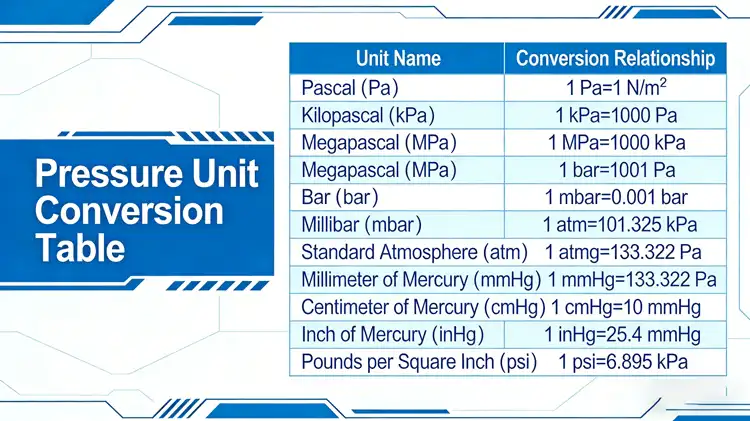
The pressure in the atmosphere (atm), which is equal to 101,325 Pa or 14.696 PSI, is used as a standard for measuring gauge pressure. This unit is very important for knowing system needs because many industrial uses use atmospheric pressure to set working ranges. The link between absolute pressure and gauge pressure is often used to choose instruments and figure out how to calibrate them.
Comparing Gas Pressure Units: Which Unit Suits Your Industry Needs?
When choosing the right gas pressure measurement unit, you should think about industry standards, personal tastes, and the individual needs of your work setting. Based on past practices, safety rules, and worldwide norms that govern their activities, different industries have developed their own preferences. Knowing these sector-specific choices helps buying teams follow standard procedures and make sure that new systems will work with the ones that are already in place.
PSI Versus Bar: Regional and Industrial Preferences
PSI measurements are most common in North American industrial settings, especially in the production of oil, processing of chemicals, and manufacturing sectors, where imperial units are still used. PSI's number ranges are often very close to the normal working pressures in these fields, so it's easy to get readings without having to use decimal points or science writing. A lot of American engineers and technicians know what PSI numbers mean without even thinking about them. This makes it easier to make quick decisions during operations and repair.
Bar measurements are widely used in international trade and European industry standards. They are compatible with the metric system, which makes calculations and unit changes easier. Bar measures are often used in industries where people from different countries work together to keep things clear and make sure that all of the paperwork is the same. When pressures are between 1 and 100 bar, like in hydraulic systems, pneumatic applications, and automobile tests, the bar unit makes readings very easy.
Pascal for Precision Applications
Pascal units are the best choice for science and high-precision tasks when exact measures and standard international units are needed. To make sure they follow international standards and scientific methods, Pascal readings are often needed in research and development, making medicines, and calibrating precise instruments. Even though Pascal may need bigger numbers for everyday industry forces, its scientific basis gives us clear ways to measure things.
In many industrial settings, the kilopascal (kPa) is a good balance between Pascal accuracy and easy-to-read numbers. Processing food and drinks, making medical devices, and environmental tracking systems often use kPa measurements to find the right mix between accuracy needs and ease of use. This machine works best in situations that need both scientific accuracy and ease of use.
Legacy Standards and International Documentation
Atmospheric pressure (atm) is still useful in established international technical documents and heritage systems, especially in chemical engineering and process design. A lot of well-known industry processes were created using atm specs. This machine is important for repairs, upgrades, and getting new parts. Knowing how ATMs are connected to each other helps buying teams use existing documents and system specs from the past.
International groups that set standards continue to use more than one pressure measure, based on the situation and the needs of the area. Different standards are important for procurement teams to understand so they can make sure they follow local laws and work with foreign providers and equipment makers.
How to Measure Gas Pressure Accurately in Industrial Settings?
For accurate gas pressure measurement, you need to carefully choose the right instruments and follow best practices for your application setting. Because modern industrial systems are so complicated, when picking pressure measurement options, you need to think about a lot of things, such as the measurement range, the environment, and the needs for integration. Knowing the different kinds of instruments and what they can do lets you make smart choices that will protect the accuracy and dependability of your measurements over time.
Types of Pressure Measurement Instruments
Mechanical pressure gauges are a safe and cost-effective choice for situations where you need to see the pressure without using electricity. These instruments use Bourdon tubes, diaphragms, or bellows systems to turn changes in pressure into mechanical movement that can be seen on scales that have been measured. Their strong build makes them perfect for tough industrial settings where power outages or electrical interference can be a problem.
Digital pressure sensors are more accurate, can show pressure in more than one number, and can send electronic signals that work well with current automation systems. The gas pressure measurement unit on these devices is usually flexible, allowing users to choose between PSI, bar, kPa, and other units as needed. Advanced digital monitors have features like logging data, alarms, and the ability to be monitored from afar that make operations safer and more efficient.
Pressure transmitters are very important in process control because they take measurements of pressure and turn them into standard electrical signs that can be sent to control systems. These tools let you keep an eye on things from afar, have automated answers to control commands, and connect to large plant automation networks. Diagnostic tools and communication methods built into modern transmitters often help with predictive repair plans.
Multi-Unit Display Advantages for Global Operations
Multi-unit display devices are very useful for international businesses because they can meet the needs of different regions and regions' tastes within a single instrument. These devices keep data consistent across global operations so there is no confusion when people from different countries work together. They do this by letting workers see readings in units they are familiar with. The freedom cuts down on the need for training and on mistakes that can happen when shifts change or employees move between sites.
Modern multi-unit instruments usually have customizable unit choices, custom scaling options, and automatic conversion features that make operations easier in a wide range of places. This feature is especially helpful for businesses with factories or supply lines that are spread out around the world or for foreign project teams that need to use the same measurement standards.
Calibration and Environmental Considerations
Environmental conditions have a big effect on how accurate measurements are and how well instruments work, so they need to be carefully thought through when choosing instruments and planning their installation. Long-term measurement dependability is affected by changes in temperature, humidity, shaking exposure, and chemical compatibility. Knowing about these things helps buying teams choose the right environmental grades and instrument protections.
Calibration requirements depend on industry standards, the need for accuracy, and how important pressure readings are for operations. Pharmaceuticals, food processing, and energy production are just a few of the industries that often need to follow regular testing plans with standards that can be tracked. When making a purchase choice, people should think about how often the calibration needs to be done, how easy it is to get help, and how much it will cost.
Purchasing Gas Pressure Measurement Units: What Procurement Managers Need to Know?
When purchasing gas pressure measuring instruments, procurement managers have to make tough choices. They have to balance technical needs with budget limitations while also making sure that the instruments will work reliably for a long time. The evaluation process looks at many things, such as the name of the seller, the performance requirements of the product, and the full range of support services that come with it. All of these things affect the total cost of ownership. Knowing these important selection factors lets you make smart buying decisions that get the best value for industrial measurement uses.

Leading Global Suppliers and Product Capabilities
Established international suppliers like Ashcroft, WIKA, and Honeywell have built strong names by providing high-quality engineering services and a wide range of products. These companies make a lot of different pressure measuring tools that have been used successfully in a wide range of tough industrial settings. Their goods usually come with a lot of different unit choices, output formats, and customization options to meet a wide range of operating needs.
Specialized manufacturers focus on certain groups of people or new technologies, and they often come up with creative solutions for unusual uses or tough environmental circumstances. Companies like GAMICOS specialize in pressure and level measurement solutions with comprehensive customization services including OEM and ODM capabilities. These suppliers often provide more flexible customization options, better deals for large orders, and individualized technical help that bigger companies might not provide.
Essential Selection Criteria for Industrial Applications
Unit compatibility is one of the most important things to think about when choosing tools to make sure they show the right measurement units for your operations and the staff's knowledge. Instruments that allow more than one gas pressure measurement unit choice give you practical freedom and the ability to change with changing needs in the future. Think about whether your programs need the ability to switch between units, custom scaling, or certain display styles that make them easier to use.
Sensor accuracy specifications must match the needs of your process control and industry standards to ensure reliable operation and regulatory compliance. Different uses need different levels of accuracy, from simple process monitoring to high-precision control systems that need very stable measurements. Knowing what the accuracy needs are helps you match performance needs with cost concerns while making sure you can measure correctly.
Reliability factors include environmental ratings, construction materials, and past performance records in similar applications in your business area. For instruments to work well for a long time, they need to be protected properly, be able to handle chemicals, and stay at a stable temperature. When judging dependability, you have to look at both the quality at the start and how long it will last in real-world circumstances.
Procurement Channels and Support Services
Direct manufacturer relationships often provide optimal pricing, expert help, and customization services for large orders or unique uses. Working directly with manufacturers like GAMICOS gives you access to technical knowledge, choices for unique configuration, and full help after the sale for the whole lifecycle of the instrument. These connections are especially helpful for projects that need a lot of tailoring or ongoing professional work together.
Authorized distributors offer local help, faster shipping, and established ties with multiple makers that make it easier to get a wide range of instruments. Regional dealers know the rules in each area, can help with technical issues right away, and keep new parts in stock. When it comes to upkeep work and unexpected replacements, their services become very useful.
After-sales service quality has a big effect on total ownership costs because it includes testing services, expert support, and warranties that cover problems that happen before they should. Full support includes help with installation, setup, training for operators, and ongoing maintenance support to make sure the instruments work at their best. By looking at assistance capabilities, you can find suppliers that can help your business succeed in the long run.
Conclusion
For industrial buying and system integration to work well in a wide range of situations, you need to know how to use standard gas pressure measurement units. Whether you use PSI, bar, Pascal, or atmospheric pressure units depends on the standards of your business, your location, and the practical needs that make up your measurement setting. Procurement strategies that work well combine technical requirements with costs, making sure that the new systems will work with the ones that are already in place and with plans for future growth.
More and more, modern industrial applications need measurement solutions that are flexible enough to work with a variety of unit standards and reliably perform in tough working conditions. As we move toward digital instruments and automated systems, it's even more important to choose providers who offer full support, the ability to customize, and a history of trustworthiness. To make smart purchasing choices, you need to know both the technical needs and the supplier's skills that will provide long-term value and operating excellence.
FAQ
Q1: What is the most accurate unit for industrial gas pressure measurement?
A: Pascal represents the most scientifically accurate unit due to its international standard definition and precise mathematical relationships. However, practical accuracy depends more on instrument quality and calibration than unit selection. Most industrial applications achieve excellent results using PSI, bar, or kPa units with properly calibrated instruments.
Q2: How do I convert between different gas pressure units?
A: Common conversions include: 1 bar = 14.5 PSI = 100 kPa = 0.987 atm. Most modern digital tools can convert automatically, but understanding basic relationships between things helps you make sure that readings and specs are correct when you are buying and using them.
Q3: Should I choose digital sensors or traditional mechanical gauges?
A: Digital sensors offer superior accuracy, multiple unit displays, and integration capabilities for automated systems. Mechanical gauges provide reliable operation without electrical power requirements and suit applications where visual indication suffices. Consider your automation needs, power access, and accuracy requirements when deciding.
Q4: What environmental factors affect gas pressure measurement accuracy?
A: Temperature variations, vibration, humidity, and chemical contact can all have a big effect on how accurate measurements are. Choose tools that are rated for the climate they will be used in and think about temperature compensation features for important tasks. Installing things correctly and calibrating them on a daily basis help keep accuracy even in tough situations.
Q5: How often should gas pressure instruments be calibrated?
A: Calibration frequency depends on industry regulations, accuracy requirements, and operating conditions. Critical applications may require monthly calibration, while less demanding uses might need annual service. Consult industry standards and instrument manufacturers for specific recommendations based on your application.
Partner with GAMICOS for Superior Gas Pressure Measurement Solutions
GAMICOS provides state-of-the-art pressure measuring options made just for tough industrial uses that need accuracy, dependability, and the ability to be fully customized. Our wide range of products includes digital pressure monitors, transmitters, and multi-unit display devices that work with all popular gas pressure measurement unit standards, such as PSI, bar, Pascal, and atmospheric pressure. We understand the different needs of global business operations because we serve customers in over 100 countries and have thousands of happy customers every year.
Our expert engineering team offers full OEM and ODM services, which lets us create custom sensor setups, communication protocols, and packing solutions that work with your current systems without any problems. GAMICOS has customized solutions and full technical support for all of its customers, whether they need wireless pressure tracking for remote pipeline uses or hygienic sensors for food processing environments. Get in touch with our knowledgeable staff at info@gamicos.com to talk about your specific needs and find out how our gas pressure measurement unit solutions can help you run your business more efficiently and get more accurate readings.
References
1. American Society of Mechanical Engineers. "Pressure Measurement Standards and Practices in Industrial Applications." ASME Press, 2023.
2. International Organization for Standardization. "ISO 5167: Measurement of Fluid Flow by Means of Pressure Differential Devices." ISO Standards Publication, 2022.
3. National Institute of Standards and Technology. "Guidelines for Pressure Measurement and Calibration in Industrial Systems." NIST Technical Publication, 2023.
4. European Committee for Standardization. "EN 837: Pressure Gauges - Part 1: Bourdon Tube Pressure Gauges." CEN Standards, 2022.
5. American Petroleum Institute. "API 551: Process Measurement and Control Systems." API Publishing Services, 2023.
6. Instrument Society of America. "ISA-51.1: Process Instrumentation Terminology." ISA Standards and Practices, 2022.

Ivy
Ivy, product consultant, has focused on sensor consultation for ten years, is proficient in providing pressure and level measurement solutions for customers.
We're here to help — submit your request anytime!
Let us know how we can help solve your pressure level measurement challenge.
_1757930850792.jpg)


Recommended Blog
-vs.-Analog-Output-Pressure-Sensors-Analysis_1773906684295.webp)
Digital (I2C, SPI) vs. Analog Output Pressure Sensors Analysis
Nonlinearity & Hysteresis in Pressure Sensors Explained
_1774248392435.webp)
Pressure Sensor Range & Full Scale (FS): Complete Guide
Digital (I2C, SPI) vs. Analog Output Pressure Sensors Analysis
Nonlinearity & Hysteresis in Pressure Sensors Explained
Pressure Sensor Range & Full Scale (FS): Complete Guide
Digital (I2C, SPI) vs. Analog Output Pressure Sensors Analysis
Nonlinearity & Hysteresis in Pressure Sensors Explained
Pressure Sensor Range & Full Scale (FS): Complete Guide