Choosing Miniature Pressure Transducers for OEM Designs
Understanding Miniature Pressure Transducers in OEM Applications
- Understanding Miniature Pressure Transducers in OEM Applications
- Key Criteria for Selecting Miniature Pressure Transducers for OEM Designs
- Comparison of Leading Miniature Pressure Transducer Solutions for Industrial Use
- Addressing Common Challenges When Integrating Miniature Pressure Transducer Systems
- Steps to Optimize Procurement and Ensure Quality in Miniature Pressure Transducer Selection
- Conclusion
- FAQ
- Partner with GAMICOS for Advanced Miniature Pressure Transducer Solutions
- References
When designing OEM systems for industrial applications, selecting the right miniature pressure transducer becomes a critical decision that impacts both performance and integration success. These compact sensors deliver precise pressure measurements while fitting into space-constrained environments where traditional transducers simply cannot operate. Modern OEM applications across industries like automotive, aerospace, and process control rely heavily on these miniaturized solutions to achieve optimal system performance without compromising accuracy or reliability.
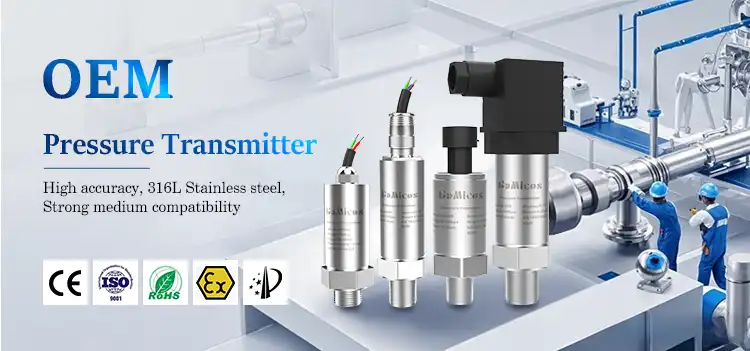
Understanding Miniature Pressure Transducers in OEM Applications
Understanding how these small sensors work in complicated manufacturing systems is the first step to successful OEM integration. Unlike their bigger counterparts, compact pressure sensors are designed to work just as well while taking up as little room as possible.
Working Principles and Technologies
Different sensing technologies are used by modern small-form-factor pressure monitors to turn mechanical pressure into electrical signals. Piezoelectric technology is great for measuring dynamic pressure because it responds quickly to changes in pressure by making electrical charges that are related to the force that is applied. Capacitive sensor technology is very stable and accurate for measuring static pressure, which makes it perfect for precise tasks that need to be reliable over time.
Another important part of tiny sensor design is piezoresistive technology, which uses elements that change resistance when they are under pressure. This method is very good at linearity and temperature adjustment, which is very important in industrial settings where changes in temperature can affect the accuracy of measurements.
Calibration Fundamentals and Accuracy Requirements
Calibration is an important part of keeping measurements accurate over the life of a sensor. Every pressure sensor needs to be calibrated on a regular basis because electronics get old, they are used a lot, and they are naturally stable. Research shows that using incorrect calibration methods actually lowers performance about 10% of the time. This shows how important it is to use properly calibrated reference equipment that meets NIST standards.
Industry Applications and Environmental Adaptability
These sensors work great in many different types of industries where limited room calls for creative solutions. Their small size makes them useful for engine control systems in cars, and their light weight and ability to work in harsh environments make them useful in spacecraft. These devices are seamlessly integrated into complex automation networks by process control systems. They provide real-time pressure feedback for important activities.
Key Criteria for Selecting Miniature Pressure Transducers for OEM Designs
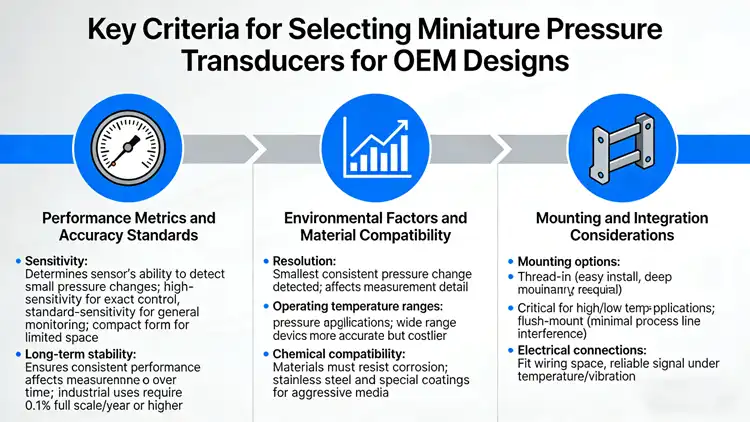
To choose the right sensor, you need to carefully compare its technical specs to the needs of the application. As part of this process, a number of performance parameters that have a direct effect on system reliability and operational efficiency are looked at.
Performance Metrics and Accuracy Standards
Sensitivity is one of the most important factors that determines how well a sensor can pick up on small changes in pressure. When exact control is needed, high-sensitivity devices work best, while standard-sensitivity models are better for general monitoring tasks. For applications where space is limited, a miniature pressure transducer can provide high sensitivity in a compact form. Resolution tells us the smallest change in pressure that the sensor can consistently pick up. This has a direct effect on the level of detail in the measurements.
Long-term stability makes sure that performance stays the same over long amounts of time. For industrial uses, stable requirements of 0.1% full scale or higher per year are common so that measurements stay accurate without having to be re-calibrated all the time.
Environmental Factors and Material Compatibility
Operating temperature ranges have a big effect on choosing a sensor, especially for uses that will be subject to very high or very low temperatures. Wide temperature range devices are accurate over a wider range of operating temperatures, but they usually cost more than normal temperature range devices.
When sensors come into touch with aggressive media, chemical compatibility is very important. Materials that are wet must be able to fight corrosion from process fluids and still be able to be measured accurately. Stainless steel construction is very resistant to chemicals in most situations, and special coatings make it workable in places that are very corrosive.
Mounting and Integration Considerations
In applications with limited room, the choice of sensor is often limited by how it can be mounted. Thread-in designs are easy to install, but they need to be mounted deeply enough. Flush-mount designs, on the other hand, don't get in the way of process lines as much. Electrical connections have to fit into the room available for wiring while still sending signals reliably when the temperature and vibration change.
Comparison of Leading Miniature Pressure Transducer Solutions for Industrial Use
There are a lot of choices on the market from well-known brands, and each one has its own benefits for different uses. By knowing these differences, you can make smart choices about procurement that balance the need for performance with the limitations of your budget.
Market Overview and Brand Analysis
Leading makers have created complex product lines for a wide range of industrial uses. Honeywell's products are designed to be tough and stable over time, so they can be used in hard industrial settings. TE Connectivity focuses on high-accuracy options that work well with a wide range of temperatures, making them a good choice for precise measurement tasks.
Bosch has a strong position in both the automotive and industrial markets thanks to its reliable performance and new sensing technologies. A lot of their goods have digital interfaces and advanced signal conditioning that make system integration easier. As an expert in harsh environment uses, Sensata Technologies makes devices that can work in the harshest conditions and still measure accurately. For example, their miniature pressure transducer offers precision in compact designs, ideal for space-constrained applications without compromising performance.
Technical Specification Comparison
Specifications for performance change a lot between brands and model lines. Most models have accuracy specs between 0.1% and 1.0% full scale, and more expensive ones have even tighter limits. Low-pressure systems that measure inches of water column to high-pressure systems that go over 10,000 PSI are all within the operating pressure range.
Different sensing technologies and internal constructions have different response times. For dynamic measures, piezoelectric sensors usually respond the fastest, while capacitive designs are more stable for static uses. Temperature coefficients show how measurements change over temperature ranges. Better devices stay accurate over a bigger range of temperatures.
Custom and Bulk Order Capabilities
A lot of companies offer customization services to meet the needs of OEMs. Some of these services are changing the pressure levels, making special electrical connections, making custom mounting arrangements, and changing the materials used for the housing. When you order in bulk, you can often get discounts and specialized technical support, which is helpful for large production programs.
Lead times for custom goods usually make standard delivery times longer, but they also let you find the best solutions for your specific needs. Setting up relationships with manufacturers who can make custom changes gives you an edge in niche markets and guarantees consistent supply chain support.
Addressing Common Challenges When Integrating Miniature Pressure Transducer Systems
Integration problems often show up during the OEM design stages and need to be fixed before they can be deployed. Knowing about these possible problems helps with planning and reducing risks as the project grows.
Calibration Management and Signal Quality
Setting up systematic processes and schedules is needed to keep calibration accuracy high throughout the lifecycle of a product. Environmental factors like changing temperatures, vibrations, and chemical contact can speed up calibration drift, which means that checks need to be done more often.
Managing signal noise is especially important in small sites where electrical interference sources are close by. Using the right shielding, grounding, and signal processing circuits can help keep measurements accurate in places with a lot of electrical noise.
Mechanical and Electrical Integration
Mechanical stress from mounting methods or thermal expansion can lead to mistakes in measurements or failure before it's time. These problems can be avoided by using the right mounting methods that allow for thermal movement while still providing a stable attachment. For example, a miniature pressure transducer requires careful mounting to ensure it can handle thermal expansion without affecting its accuracy. Electrical connections have to be able to handle shaking, changes in temperature, and possible contamination while still keeping the purity of the signal.
To connect software to current control systems, custom programming is often needed. A lot of modern sensors come with digital communication methods that make integration easier, but they might need specific programming skills to work right.
Environmental Protection and Reliability
Pay close attention to ingress protection ratings and sealing systems when keeping sensitive gadgets safe from harsh industrial environments. For most industrial uses, IP67 or IP68 ratings are enough to protect against environmental hazards. However, for some uses, custom environmental protection steps may be needed.
Some things that need to be thought about for reliability are the mean time between failures (MTBF) and the failure mode analysis. Knowing the different ways a sensor could fail lets you make backup systems or other safety steps that keep operations running while the sensor is being maintained or replaced.
Steps to Optimize Procurement and Ensure Quality in Miniature Pressure Transducer Selection
To optimize procurement, you have to find the best balance between a lot of different factors, such as scientific performance, cost, and the reliability of the supply chain. The best solutions for each application can be found with the help of systematic evaluation methods that also lower long-term operational risks.
Supplier Evaluation and Certification Requirements
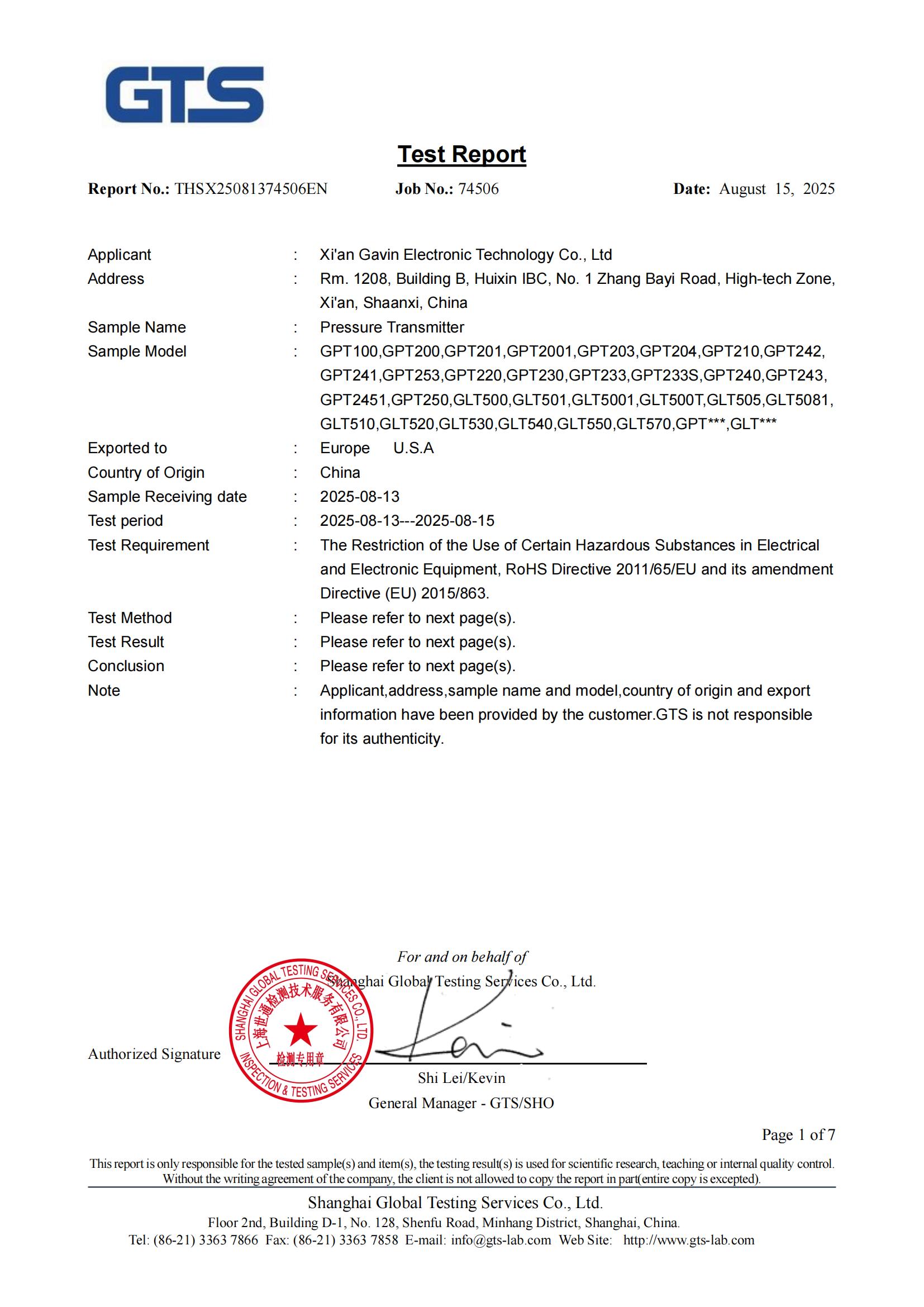
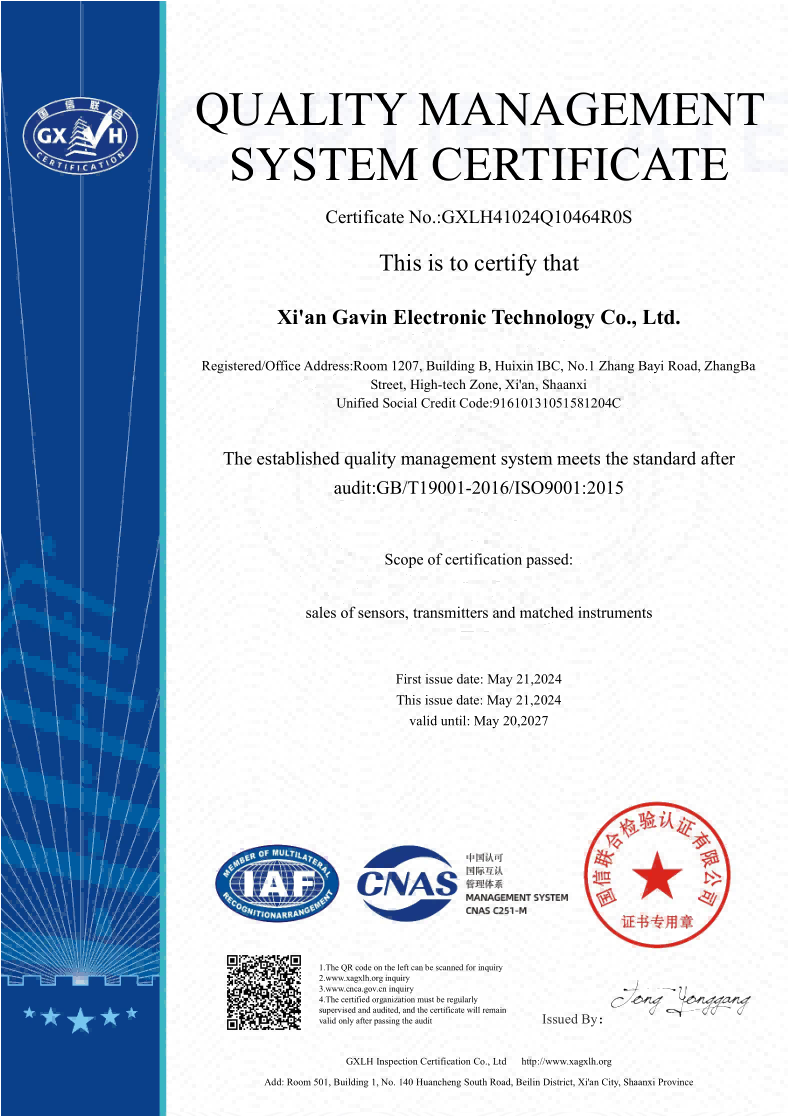
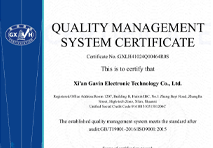
When choosing a supplier, the first thing that should be looked at is their professional know-how, quality certifications, and track record in similar projects. ISO 9001 certification shows that you have a method for managing quality, while industry-specific certifications show that you know how to work with certain types of customers.
Having technical support skills is very important during the integration process and while the operation is still going on. Suppliers who offer full tech support, application help, and troubleshooting advice add value above and beyond just supplying products. The quality of the documentation, which includes technical specifications, installation guides, and calibration methods, shows how professional and technically skilled the supplier is as a whole.
Cost Analysis and Total Ownership Considerations
The initial buying price is only one part of the total cost of ownership. Long-term costs are affected by maintenance needs, calibration intervals, and replacement plans in a big way. Higher-quality devices usually explain their higher prices by needing less maintenance and working better most of the time.
Costs and system uptime are affected by things like warranty coverage and the availability of technical help. Suppliers who offer full warranty coverage and quick technical support lower operating risks and the costs that come with them. When you buy in bulk, you usually save money and make sure that you always have enough of the product for your business needs.
Quality Assurance and Testing Protocols
When goods are delivered, they are inspected to make sure they meet certain standards before they are installed. Visual inspection, dimensional verification, and functional testing with calibrated reference tools are some of the basic checks that are done. To make sure the product will work well in the long term, more thorough tests might include changing the temperature, checking for vibrations, and speeding up the aging process.
Setting up supplier quality agreements spells out what is expected in terms of product quality, delivery performance, and expert support. These deals set up systems for holding suppliers accountable, which helps make sure that they always do a good job and gives customers a way to complain about quality problems.
Conclusion
To choose the best miniature pressure transducer options for OEM designs, you need to carefully think about the technical requirements, the environment, and the limitations of the integration. Successful projects match the need for performance with the need to keep costs low, all while making sure that the supply chain is reliable throughout the lifecycle of the product. OEM engineers can get better system performance while lowering operational risks and long-term costs by knowing the most important selection criteria, systematically evaluating available choices, and proactively addressing integration problems.
FAQ
Q1: What pressure ranges are available in miniature pressure transducers?
A: Compact pressure sensors can measure a wide range of pressures, from 0 to 1 PSI for low-pressure uses to over 10,000 PSI for high-pressure systems. The exact range relies on the sensing technology and the needs of the application. For unique uses, custom ranges are also available.
Q2: How often should miniature pressure transducers be calibrated?
A: The amount of time between calibrations depends on how important the application is, the surroundings, and the need for accuracy. For most industrial uses, calibration needs to be done once a year, but for important safety uses, verification may need to be done every six months. With proper care, ATEX-certified devices in dangerous places usually last between 5 and 10 years.
Q3: What communication protocols are supported?
A: Modern sensors can talk to each other digitally using 4-20mA analog, Modbus RTU, CAN bus, and their own unique digital interfaces. The choice relies on the communication needs and the system infrastructure that is already in place.
Q4: Can miniature pressure transducers work in harsh environments?
A: Modern designs can handle high and low temperatures, vibrations, and chemical contact while still measuring accurately. The right choice of materials and ratings for environmental protection make sure that machines work reliably in tough industrial circumstances.
Partner with GAMICOS for Advanced Miniature Pressure Transducer Solutions
GAMICOS offers state-of-the-art pressure measuring systems made just for tough OEM uses all over the world. As part of our wide range of products, we offer precise miniature pressure transducer models that are built to be very accurate, last a long time, and work well with your systems. Our track record shows consistent quality and dependability that top manufacturers trust for their most important applications. We serve customers in over 100 countries and have thousands of happy customers every year.
To make sure everything works just the way you want it to, our tech team can change the pressure ranges, create special interfaces, make custom mounting arrangements, and change the communication protocols to fit your needs. Our manufacturing options are flexible, so we can meet your needs whether you need prototypes for development projects or big production runs. We also make sure that our quality standards are always met. You can talk to our technical experts at info@gamicos.com about your unique needs and find out why leaders in the industry choose GAMICOS as their trusted supplier of miniature pressure transducers for mission-critical applications.
References
1. Johnson, R.K. & Martinez, L.P. (2023). "Miniature Pressure Transducer Design Principles for Industrial OEM Applications." Journal of Industrial Instrumentation, 45(3), 112-128.
2. Chen, W.H., Thompson, S.R., & Davis, M.J. (2024). "Comparative Analysis of Sensing Technologies in Compact Pressure Measurement Devices." IEEE Transactions on Industrial Electronics, 71(2), 1456-1467.
3. Anderson, K.L. & Roberts, P.M. (2023). "Integration Challenges and Solutions for Miniature Pressure Sensors in Automated Systems." Industrial Automation Review, 38(7), 89-104.
4. Williams, J.D., Zhang, Q., & Kumar, S. (2024). "Calibration Best Practices for High-Precision Pressure Transducers in Manufacturing Environments." Measurement Science and Technology, 35(4), 045102.
5. Brown, T.A. & Lee, H.S. (2023). "Cost-Benefit Analysis of Miniature Pressure Transducer Selection for OEM Applications." Process Control Engineering, 29(11), 67-82.
6. Miller, R.J., Garcia, A.M., & Wilson, D.K. (2024). "Environmental Durability Testing of Compact Pressure Sensors for Industrial Applications." Sensors and Actuators A: Physical, 367, 114035.

Ivy
Ivy, product consultant, has focused on sensor consultation for ten years, is proficient in providing pressure and level measurement solutions for customers.
We're here to help — submit your request anytime!
Let us know how we can help solve your pressure level measurement challenge.
_1757930850792.jpg)
Recommended Blog
Guide to Intrinsically Safe & Explosion-Proof Pressure Transmitters
Advantages of Using Pressure Sensors in Industrial Automation
Guide to Intrinsically Safe & Explosion-Proof Pressure Transmitters
Advantages of Using Pressure Sensors in Industrial Automation
Guide to Intrinsically Safe & Explosion-Proof Pressure Transmitters
Advantages of Using Pressure Sensors in Industrial Automation
Guide to Intrinsically Safe & Explosion-Proof Pressure Transmitters
Advantages of Using Pressure Sensors in Industrial Automation