Guide to Intrinsically Safe & Explosion-Proof Pressure Transmitters
Guide to Intrinsically Safe & Explosion-Proof Pressure Transmitters
Understanding Explosion-Proof & Intrinsically Safe Pressure Transmitters
- Understanding Explosion-Proof & Intrinsically Safe Pressure Transmitters
- Key Applications and Benefits in Hazardous Environments
- Comparing Explosion-Proof vs. Intrinsically Safe Pressure Transmitters
- How to Choose the Best Explosion-Proof Pressure Transmitter: A B2B Buying Guide
- Procurement Process and Best Practices for B2B Buyers
- Conclusion
- FAQ
- Partner with GAMICOS for Superior Explosion-Proof Pressure Solutions
- References
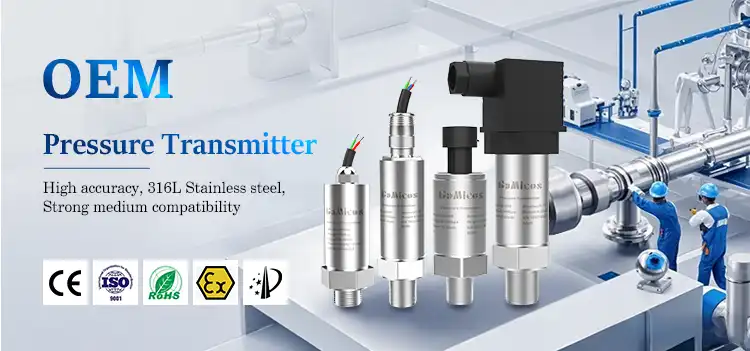
Deciding on the right pressure measuring tools is very important for people who work in dangerous industrial settings where harmful gases, vapors, or dust can cause serious injuries. One of the two main types of defense intended to keep operations safe in these risky places is an explosion proof pressure transmitter. Either explosion-proof housings with internal combustion engines or fundamentally safe circuits that stop ignition altogether are used in these specialized devices. When procurement professionals know the differences between these technologies, how they can be used, and how to choose one over another, they can make decisions that protect people, equipment, and facility operations while still allowing for accurate measurements that are needed for industrial automation and process control systems.
Understanding Explosion-Proof & Intrinsically Safe Pressure Transmitters
Core Principles and Protection Methods
Explosion-proof and intrinsically safe pressure transmitters work on very different safety principles. They each deal with the risks of working in a dangerous environment in their own unique ways. Explosion-proof devices have strong enclosures that are meant to keep blasts inside and stop flames from spreading to other areas. These transmitters have housings with thick walls and carefully designed flame paths that keep gases from leaving before they can catch fire.
Intrinsically safe transmitters stop dangerous substances from starting by reducing the amount of electricity that can be used. These gadgets have energy barriers, current limiters, and voltage regulators that make sure electrical connections can't make enough heat or sparks to start a fire, whether everything is working normally or something is wrong.
Technical Specifications and Compliance Standards
Modern pressure transmitters for dangerous areas have to meet strict international approval rules, such as ATEX (European Union), IECEx (International), and FM/CSA (North America) standards. These certificates show that the devices can work in certain dangerous areas, like Zone 1/2 gas environments and Zone 21/22 dust environments.
Specifications for key performance include measuring precision of ±0.075% to ±0.25% of full scale, working temperatures from -40°C to +85°C, and pressure ranges of vacuum to 10,000 PSI or higher. For connecting to current control systems, more advanced models have digital communication protocols like HART, Foundation Fieldbus, or Profibus built in.
Key Applications and Benefits in Hazardous Environments
Industrial Sector Applications
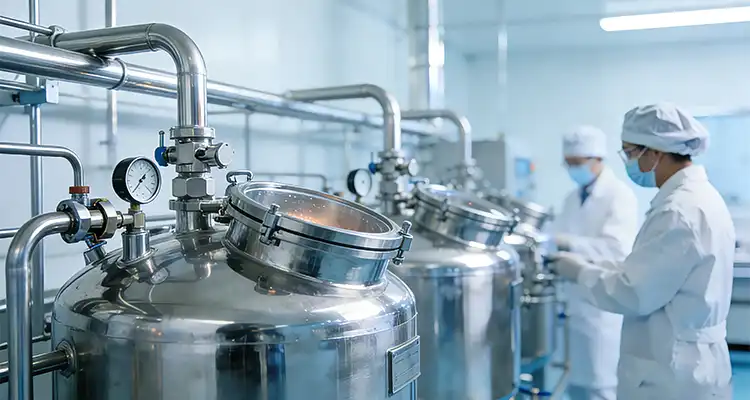
In many fields where safety and dependability are very important, hazardous area pressure transmitters play very important roles. These gadgets are used in oil and gas operations to keep an eye on wellheads, measure pipeline pressure, and keep refinery processes under control in places where hydrocarbon vapors can cause explosive atmospheres. For these applications, an explosion proof pressure transmitter is essential for maintaining safety. Chemical processing plants use these transmitters to keep an eye on the reactor vessel, run the distillation column, and check the level of storage tanks.
In the pharmaceutical industry, these devices are used in systems that collect solvents and keep an eye on reaction vessels where organic vapors could catch fire. Underground ventilation monitoring and methane gas detection systems need to be made with tools that can't explode. These transmitters are used in the food and drink industries in places where flammable dust or ethanol vapors are present, like in places that make booze and move grains.
These special transmitters are most useful in dangerous places because they do the following:
• Enhanced Safety Protection: stops sources of ignition that could cause huge explosions, keeping people and buildings safe while allowing safe operations to continue in risky environments.
• Regulatory Compliance: Makes sure that international safety standards and local laws are followed, which keeps businesses from having to shut down and causes legal problems while still meeting insurance requirements.
• Operational Continuity: Keeps vital pressure monitoring going in case of an emergency, so you can quickly fix problems with the process and avoid damage to equipment or lost production.
• Long-term Reliability: Can withstand harsh weather conditions like high and low temperatures, chemical exposure, and mechanical vibrations while maintaining accuracy over long periods of time.
These benefits directly address the operational problems that engineering managers and project managers face when they have to balance the need for safety with the need for production speed in dangerous industrial settings.
Comparing Explosion-Proof vs. Intrinsically Safe Pressure Transmitters
Protection Method Differences
There is a big difference between explosion-proof and intrinsically safe safety in how they deal with risks. Explosion proof pressure transmitter designs allow for an explosion to happen inside the device, but strong containment engineering stops the flame from spreading. The heavy-duty housings of these units can handle the pressure inside from the burning while still letting hot gases flow through flame paths that cool them.
Intrinsically safe systems stop burning completely by keeping energy levels below the lowest levels needed to start an ignition for certain types of gases. To keep safety in the measurement circuit, this method needs careful system design that includes choosing the right cables, putting up safety obstacles, and figuring out the total system energy.
Performance and Cost Considerations
Because their circuits aren't limited as much, explosion-proof transmitters usually have better measurement performance, with higher accuracy standards and faster reaction times. Standard electrical parts can fit inside these devices' protected housings, which lets them have advanced features like local displays, configuration buttons, and more than one output signal.
Though intrinsically safe transmitters may not work as well because they don't have as much power, they are better for installation flexibility and easy upkeep. In certain situations, these devices often let you do hot work and live repair in dangerous areas, which keeps operations running smoothly.
According to a cost analysis, explosion-proof systems usually need a bigger initial investment for the transmitter itself. However, they may have lower total system costs because they don't need the expensive safety barriers that are needed for intrinsically safe installations. Intrinsically safe systems spread the cost of safety across many parts of the system, like barriers, cables, and installation work.
How to Choose the Best Explosion-Proof Pressure Transmitter: A B2B Buying Guide
Essential Selection Criteria
When choosing hazardous area pressure transmitters, people who work in procurement have to look at a lot of technical and business factors. Device selection is based on measurement needs, such as the range of pressures, the level of accuracy needed, and the type of process link needed. Environmental factors like working temperature, humidity levels, and chemical compatibility have a direct effect on how long a transmitter lasts and how well it works.
The classification of a hazardous place determines the best ways to protect people and the credentials that are needed. Devices that are explosion-proof or intrinsically safe are usually required for Zone 1 applications. Zone 2 installations may be able to handle other types of protection, such as improved safety or encapsulation methods.
Communication protocol compatibility makes sure that new systems can work with old ones without any problems. For improved diagnostics, remote configuration, and predictive maintenance programs that make operations more efficient, modern facilities often need to be able to communicate digitally.
Supplier Evaluation and Procurement Strategy
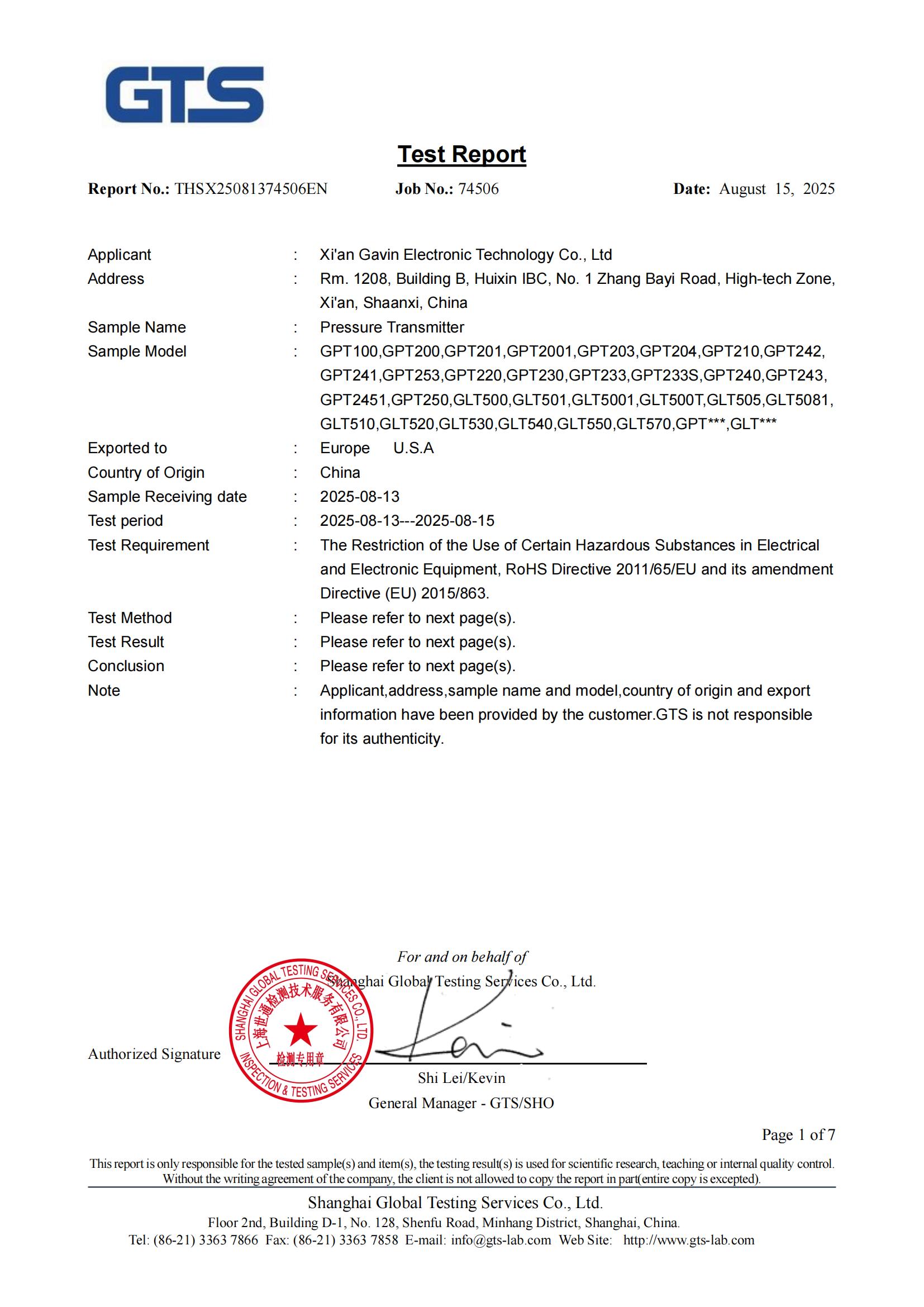
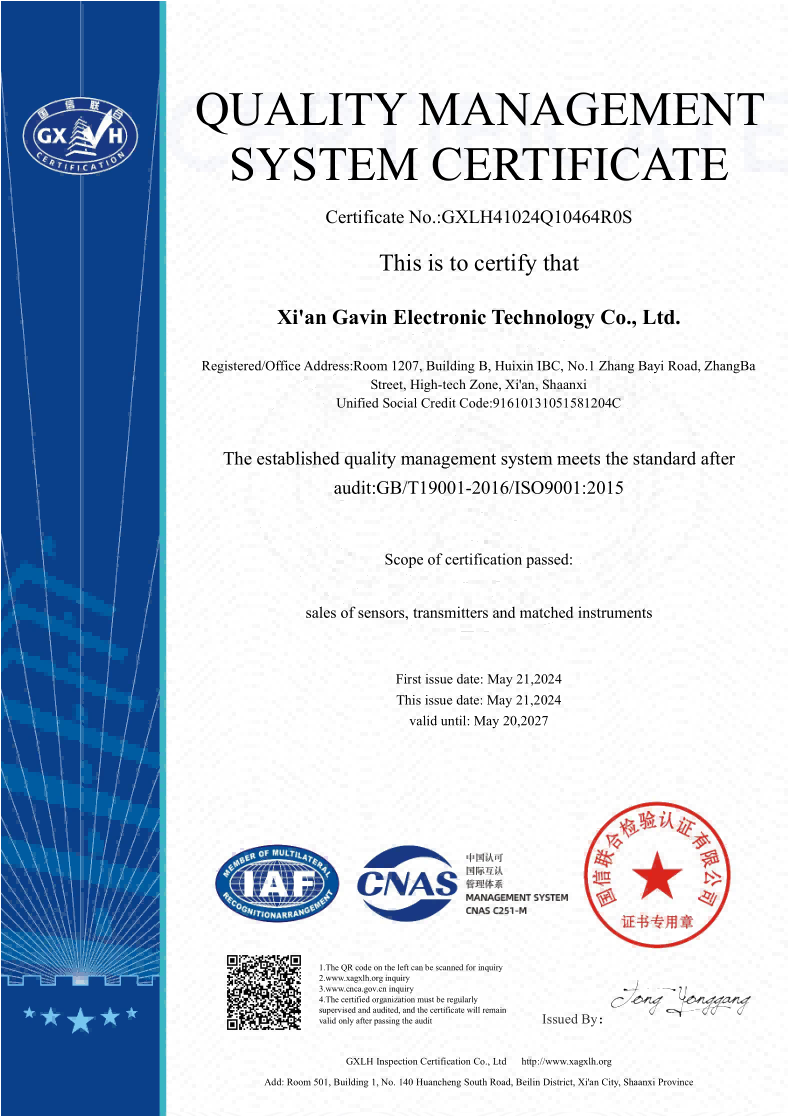
To judge a manufacturer's credibility, you have to look at their list of certifications, their quality control systems, and their technical support. Established suppliers show that they follow ISO 9001 quality standards, keep their safety certifications up to date, and offer a lot of technical information, such as installation guides and upkeep instructions.
When there are set dates for commissioning, supply chain stability becomes very important for industrial automation projects. Preferred suppliers keep enough stock on hand, offer fast delivery options, and give clear lead time promises for both standard and custom goods.
Long-term operational success is ensured by after-sales service options such as technical help, calibration services, and the availability of spare parts. Suppliers should have local support resources or approved service partners that can handle urgent maintenance needs in a reasonable amount of time.
Procurement Process and Best Practices for B2B Buyers
Sourcing Strategies and Supplier Selection
Doing extensive market research to find qualified sellers with experience working in dangerous areas is the first step in developing an effective procurement strategy for explosion proof pressure transmitter devices. Purchasing managers should give more weight to suppliers that offer a wide range of products, have professional knowledge, and a well-established system for helping customers.
When you ask for quotes, you should include full technical details, delivery needs, and service standards so that you can compare suppliers accurately. When judging a product, the criteria must take into account both its initial cost and its total cost of ownership, which includes costs for setup, commissioning, maintenance, and assistance throughout its lifecycle.
Installation and Maintenance Considerations
Professional installation services make sure that the equipment is set up correctly, following safety rules and maker instructions. For long-term compliance, it's important that qualified technicians know how to properly ground equipment, what the standards are for hazardous areas, and how to keep their certifications up to date.
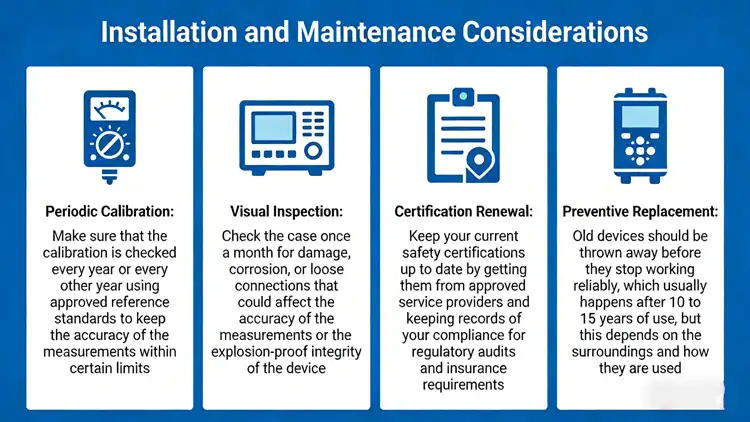
During the lifecycle of the transmitter, regular repair programs keep the measurements accurate and the safety integrity intact. Some suggested care methods are:
• Periodic Calibration: Make sure that the calibration is checked every year or every other year using approved reference standards to keep the accuracy of the measurements within certain limits.
• Visual Inspection: Check the case once a month for damage, corrosion, or loose connections that could affect the accuracy of the measurements or the explosion-proof integrity of the device.
• Certification Renewal: Keep your current safety certifications up to date by getting them from approved service providers and keeping records of your compliance for regulatory audits and insurance requirements.
• Preventive Replacement: Old devices should be thrown away before they stop working reliably, which usually happens after 10 to 15 years of use, but this depends on the surroundings and how they are used.
These maintenance practices help keep things running safely all the time while also getting the most out of your investment by making tools last longer and reducing unplanned downtime.
Conclusion
When choosing the right explosion-proof or intrinsically safe pressure transmitters, you need to think carefully about the needs of the application, the classification of the hazardous area, and your operational goals. Explosion proof pressure transmitters provide strong safety through containment engineering, while naturally safe systems stop ignition by limiting energy. In dangerous industries like oil and gas, chemical processing, pharmaceutical manufacturing, and mining, both technologies are important for keeping workers safe. A successful procurement relies on carefully evaluating suppliers, creating detailed technical specifications, and putting in place an ongoing maintenance program. Investing in good hazardous area pressure measurement tools protects workers' safety, makes sure that rules are followed, and keeps important industrial processes running smoothly.
FAQ
Q1: What safety certifications are required for hazardous area pressure transmitters?
A: Hazardous area pressure transmitters need to have the right approvals for the places where they will be installed. ATEX certification is needed for installations in the European Union, and IECEx approval is recognized around the world. For use in North America, projects need to be approved by either Factory Mutual (FM) or the Canadian Standards Association (CSA). These certifications show that the gadget meets certain standards for protecting against certain types of gases and temperatures.
Q2: Can explosion-proof and intrinsically safe transmitters be used interchangeably?
A: These protection methods are not directly interchangeable due to different installation requirements and system design considerations. Explosion proof pressure transmitter devices require specific conduit sealing and enclosure mounting procedures, while intrinsically safe systems need certified safety barriers and energy calculations. Each way has to work with the facility's current safety measures and classification as a hazardous area.
Q3: What are typical delivery lead times for specialized hazardous area transmitters?
A: Standard hazardous area pressure transmitters usually ship between two and four weeks for standard certifications and specifications. Custom configurations that use unique materials, communication methods, or mechanical connections might need a lead time of 6 to 8 weeks. Most of the time, rush orders can be filled with extra fees, but availability relies on how much inventory the supplier has and how much they can make.
Partner with GAMICOS for Superior Explosion-Proof Pressure Solutions
In order to provide dependable solutions for dangerous industrial environments, GAMICOS is your go-to manufacturer of explosion proof pressure transmitter solutions. They combine advanced technical knowledge with extensive certification portfolios. Our specialized research and development team creates cutting-edge technologies for measuring pressure that go beyond international safety standards and are very accurate and long-lasting. We make sure that every device we sell meets your unique application needs and regulatory compliance needs by using strict quality control processes and having a lot of experience working with customers in over 100 countries.
Our professional technical support team helps you choose the right product, install it correctly, and keep it running smoothly so that you get the most out of your investment. Get in touch with info@gamicos.com right away to talk about your pressure measurement needs for a dangerous area and find out how our unique solutions can improve the safety and performance of your operations.
References
1. Smith, J.A. & Johnson, R.K. (2023). Hazardous Area Instrumentation: Design Principles and Safety Standards. Industrial Safety Press.
2. Anderson, M.L. (2022). Explosion-Proof Equipment Certification and Compliance Guide. Process Engineering Journal, 45(3), 78-92.
3. Williams, D.P., et al. (2023). Comparative Analysis of Protection Methods for Hazardous Area Pressure Transmitters. International Journal of Industrial Safety, 12(4), 156-171.
4. Brown, C.E. & Davis, S.M. (2022). ATEX and IECEx Certification Requirements for Process Instrumentation. European Standards Publications.
5. Thompson, K.R. (2023). Maintenance Best Practices for Hazardous Area Pressure Measurement Equipment. Industrial Maintenance Quarterly, 28(2), 34-48.
6. Garcia, A.F. & Liu, H.W. (2022). Intrinsically Safe vs. Explosion-Proof: Technology Selection for Chemical Processing Applications. Chemical Engineering Safety Review, 19(1), 112-127.

Peter
Peter, Senior Sensor Technology Consultant, has 15-year industrial sensor R&D experience. He specializes in the end-to-end development of high-accuracy pressure and level sensors and he firmly believe, precision isn’t just a spec—it’s a promise.
We're here to help — submit your request anytime!
Let us know how we can help solve your pressure level measurement challenge.
_1757930850792.jpg)

Recommended Blog
Why 4-20mA Output Is the Gold Standard for Pressure Transmitters
-vs.-Analog-Output-Pressure-Sensors-Analysis_1773906684295.webp)
Digital (I2C, SPI) vs. Analog Output Pressure Sensors Analysis
Nonlinearity & Hysteresis in Pressure Sensors Explained

Understanding Pressure Sensor Accuracy: Interpreting ±0.5% FS
Why 4-20mA Output Is the Gold Standard for Pressure Transmitters
Digital (I2C, SPI) vs. Analog Output Pressure Sensors Analysis
Nonlinearity & Hysteresis in Pressure Sensors Explained
Understanding Pressure Sensor Accuracy: Interpreting ±0.5% FS
Why 4-20mA Output Is the Gold Standard for Pressure Transmitters
Digital (I2C, SPI) vs. Analog Output Pressure Sensors Analysis
Nonlinearity & Hysteresis in Pressure Sensors Explained
Understanding Pressure Sensor Accuracy: Interpreting ±0.5% FS
Why 4-20mA Output Is the Gold Standard for Pressure Transmitters
Digital (I2C, SPI) vs. Analog Output Pressure Sensors Analysis
Nonlinearity & Hysteresis in Pressure Sensors Explained
Understanding Pressure Sensor Accuracy: Interpreting ±0.5% FS
Why 4-20mA Output Is the Gold Standard for Pressure Transmitters
Digital (I2C, SPI) vs. Analog Output Pressure Sensors Analysis
Nonlinearity & Hysteresis in Pressure Sensors Explained
Understanding Pressure Sensor Accuracy: Interpreting ±0.5% FS
Why 4-20mA Output Is the Gold Standard for Pressure Transmitters
Digital (I2C, SPI) vs. Analog Output Pressure Sensors Analysis
Nonlinearity & Hysteresis in Pressure Sensors Explained
Understanding Pressure Sensor Accuracy: Interpreting ±0.5% FS
Why 4-20mA Output Is the Gold Standard for Pressure Transmitters
Digital (I2C, SPI) vs. Analog Output Pressure Sensors Analysis
Nonlinearity & Hysteresis in Pressure Sensors Explained
Understanding Pressure Sensor Accuracy: Interpreting ±0.5% FS
Why 4-20mA Output Is the Gold Standard for Pressure Transmitters
Digital (I2C, SPI) vs. Analog Output Pressure Sensors Analysis
Nonlinearity & Hysteresis in Pressure Sensors Explained