Why 4-20mA Output Is the Gold Standard for Pressure Transmitters
Understanding the 4-20mA Pressure Transmitter: Principles and Advantages
- Understanding the 4-20mA Pressure Transmitter: Principles and Advantages
- Why 4-20mA Output Has Become the Industry Gold Standard?
- Selecting and Installing the Best 4-20mA Pressure Transmitter for Your Needs
- Comparing Market Options: 4-20mA Pressure Transmitters vs Alternatives
- Procurement Guidance: Where and How to Buy 4-20mA Pressure Transmitters
- Conclusion
- FAQ
- Partner with GAMICOS for Premium 4-20mA Pressure Transmitter Solutions
- References
The 4-20mA pressure transmitter has become the industry standard for industrial process control systems because it offers unparalleled signal integrity, noise immunity, and reliability across diverse operational environments. This current loop technology provides consistent pressure measurements even in harsh conditions, making it the preferred choice for petroleum, chemical, pharmaceutical, and energy companies worldwide. The 4-20mA analog signal delivers exceptional performance over long cable runs while maintaining accuracy and stability that voltage-based systems simply cannot match.

Understanding the 4-20mA Pressure Transmitter: Principles and Advantages
Operating Principles of Current Loop Technology
Industrial measurement tools today are built around current loop technology. Voltage signals lose strength over long distances because of resistance, but current stays the same throughout the loop, no matter how long the wire is or how much resistance there is. The 4-20mA range has a live zero at 4mA, which means the sensor is working and is powered, and the highest number on the scale is 20mA. This design makes it clear when a sensor isn't working or when a measurement number is zero.
A pressure-sensitive diaphragm or sensing element that reacts to applied pressure is the first step in the signal exchange process. Using different transfer methods, such as piezoresistive, capacitive, or strain gauge technologies, this mechanical movement is turned into an electrical signal. The signal that is made is then amplified and conditioned to make the normal 4-20mA output.
Key Advantages of 4-20mA Systems
These are the main reasons why current loop technology is better for industry uses:
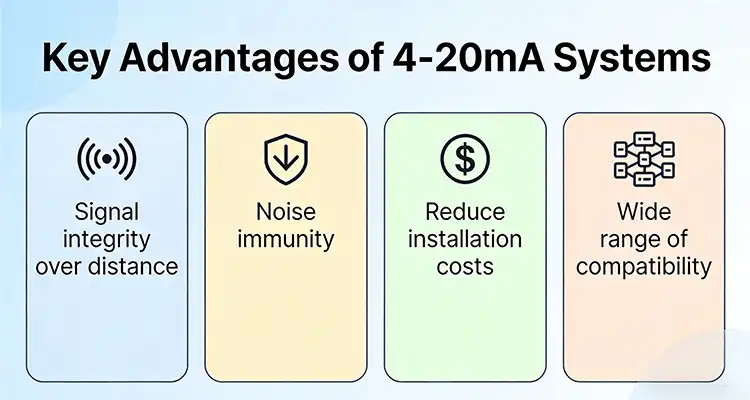
• Signal integrity over distance: Current signals stay accurate over wire runs longer than 1000 meters without losing or distorting the signal.
• Noise immunity: the higher current levels block electromagnetic interference from motors, drives, and switching equipment that are typical in factories.
• Reduce installation costs: Two-wire transmitters save power because they can get power and send messages through the same pair of cables. This lowers the cost of installation.
• Wide range of compatibility: almost all PLCs, DCS systems, and industrial controls can accept 4-20mA inputs without the need for extra interface hardware
These benefits successfully solve production issues with voltage-based alternatives that have to do with measurement accuracy, system reliability, and the difficulty of maintenance.
Common Transmitter Types and Configurations
Depending on the needs of the process, different ways of measuring pressure are needed in industrial settings. Gauge pressure transmitters are great for keeping an eye on tank levels and controlling process pressure because they measure pressure in relation to the air pressure. Absolute pressure transmitters make measurements in a vacuum, which is necessary for tasks that need accurate pressure readings no matter the height or changes in the barometric pressure.
Differential pressure transmitters find the difference in pressure between two places. They are often used to check the flow through orifice plates or filters. These versatile devices can handle complex measurement scenarios that single-point pressure sensors cannot address effectively.
Why 4-20mA Output Has Become the Industry Gold Standard?
Historical Context and Evolution
In the past, pressure measuring systems relied on gas signals and voltage outputs, which made them very hard to use. Pneumatic systems needed infrastructure for compressed air and had slow reaction times. On the other hand, voltage signals lost accuracy over long distances because of cable resistance and interference.
Digital communication protocols promised better features, but they didn't work well in harsh industrial settings because electromagnetic interference and grounding problems messed up data transfer. Due to these issues, the industry moved toward the reliable 4-20mA pressure transmitter standard, which mixes analog dependability with digital accuracy.
Fault-Tolerant Design and Fail-Safe Operation
Because of the way its signal range is set up, the 4-20mA standard includes intelligent fault monitoring. When the current goes below 4mA, operators know right away that a sensor has failed, the power has gone out, or there are problems with the wiring. This fail-safe method stops dangerous working conditions that could happen when sensors fail in important processes without being noticed.
Signal analysis in modern loop systems also makes them very good at diagnosing problems. Sensor degradation can be shown by changing currents, and constant offset mistakes can be a sign of calibration drift. These diagnostic tools let you plan ahead for maintenance, which cuts down on unplanned downtime and makes equipment last longer.
Industry-Specific Applications and Success Stories
Chemical processing plants use current loop technology because it works well in settings that are both corrosive and explosive. Low-power 4-20mA signals are naturally safe, which makes them good for placements in dangerous areas where keeping sparks away is important for protecting people and property.
Long-distance transmission is very useful for oil and gas operations because it lets them watch wellheads and control pipeline pressure from afar. Offshore platforms and remote pumping stations depend on current loop technology to keep signals strong and noise-free over long cable runs in electrically noisy settings.
Selecting and Installing the Best 4-20mA Pressure Transmitter for Your Needs
Critical Selection Criteria
Accuracy requirements drive transmitter selection more than any other factor. For example, ±0.25% accuracy is needed for process control, while ±0.1% or better performance may be needed for security transfer and lab work. Knowing how accurate you need something to be keeps you from over-specifying, which raises costs without improving performance.
When choosing a pressure range, it's important to think about regular operating conditions, possible overpressure situations, and the need for a certain turndown ratio. When a transmitter is close to its full range, it has better sharpness and accuracy than when it is only partially at full range.
Environmental compatibility includes the range of temperatures it can handle, its ability to withstand vibrations, and its chemical compatibility with process media. Most chemical applications can be handled by stainless steel construction with fluorocarbon seals, but some uses need special materials to handle extreme corrosion or temperature conditions.
Supplier Reliability and Support Considerations
When you work with well-known companies like Honeywell, Emerson, Siemens, and ABB, you can get a lot of help with application building and connect to global service networks. Specialized suppliers, on the other hand, often offer better value because they can offer reasonable prices and make changes as needed without lowering the quality or reliability.
GAMICOS is a good example of this method because it combines advanced manufacturing with personalized technical support. Their many years of experience working with customers in 98 different countries gives them the real-world information they need to handle installation and operation problems well.
Installation Best Practices and Maintenance Guidelines
When you wire something correctly, it works well and lasts a long time. Shielded twisted pair cable reduces interference pickup, and using the right grounding methods stops ground loops that can cause measurement errors. Moving cables away from power lines and motor drives makes them even less likely to pick up noise.
For as long as the transmitter is in use, it should be calibrated on a regular basis to keep measurements accurate. Every year, calibration checks make sure that performance is in line with known pressure standards. Every three months, zero and span checks find drift before it affects the quality of process control. Keeping track of the results of testing allows for trend analysis that tells you when replacement is needed.
Comparing Market Options: 4-20mA Pressure Transmitters vs Alternatives
Performance Analysis: Current vs Voltage Systems
Voltage output transmitters have basic flaws that keep them from being useful in many industrial settings. Measurement errors are caused by cable resistance, which changes with distance, and ground potential differences, which change depending on the surroundings and the load on the electrical system.
These issues are taken care of by the 4-20mA pressure transmitter current loop system. Cable resistance only changes the voltage drop across the loop resistor; it doesn't change the accuracy of the measurement. This is because current stays the same throughout the circuit. Because of this main benefit, current loop methods are clearly the best way to measure things in industry.
Power Supply Considerations
Loop-powered transmitters get their power from the measurement circuit, so they don't need different power supplies and the wiring is easier to understand. This method works well for most commercial uses, makes installation easier, and lowers the number of places where something could go wrong. Digital contact, local displays, and improved diagnostics are just a few of the extra features offered by transmitters powered externally. These features are helpful for complicated tasks that need advanced features, but the extra work might not be worth it for simple pressure measurement needs.
Total Cost of Ownership Analysis
The price you pay for a transmitter at first is only a small part of how much it costs to own over its useful life. Long-term economics are affected by installation costs, upkeep needs, and how often things need to be replaced. Current loop systems usually have lower overall ownership costs because they are easier to install, don't need much maintenance, and are very reliable over time. The standard 4-20mA interface also gives you options for improving control systems or adding more measurement options in the future.
Procurement Guidance: Where and How to Buy 4-20mA Pressure Transmitters
Global Marketplace and Supplier Evaluation
There are a lot of different places to buy industrial sensors in the market, from big global companies to specialized regional suppliers. Depending on the needs of the application, the budget, and the level of support, each method has its own benefits.
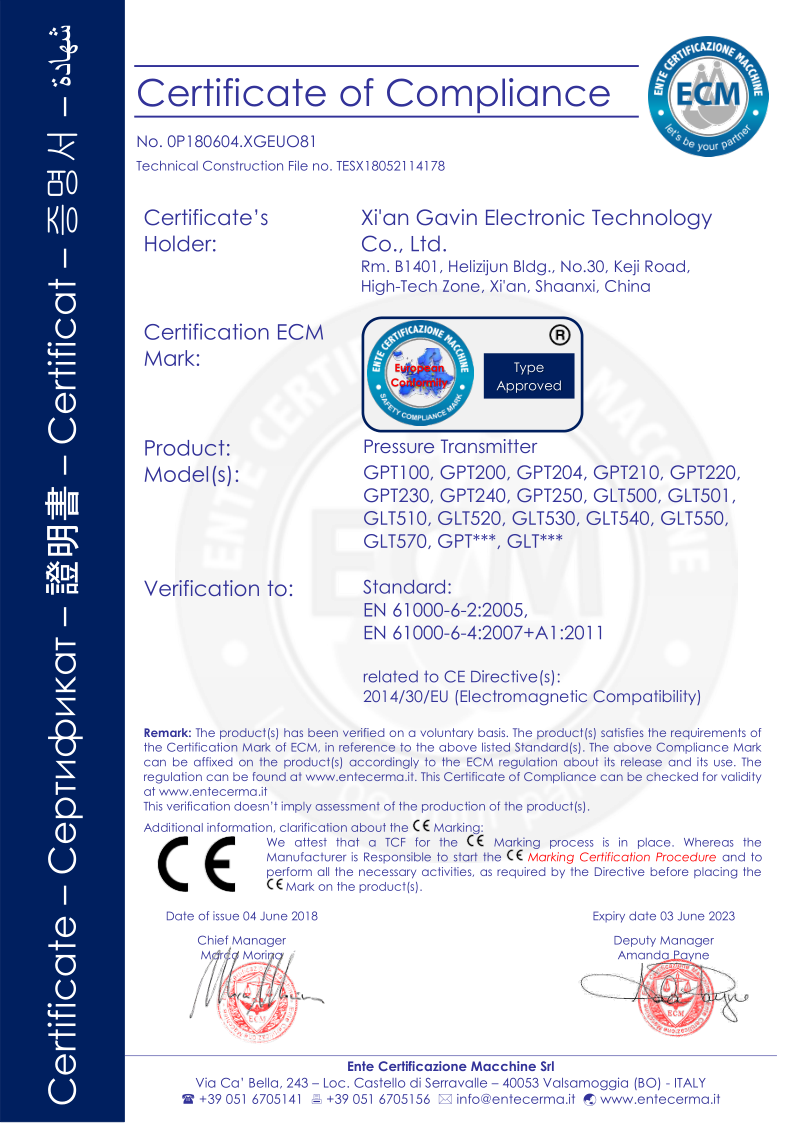
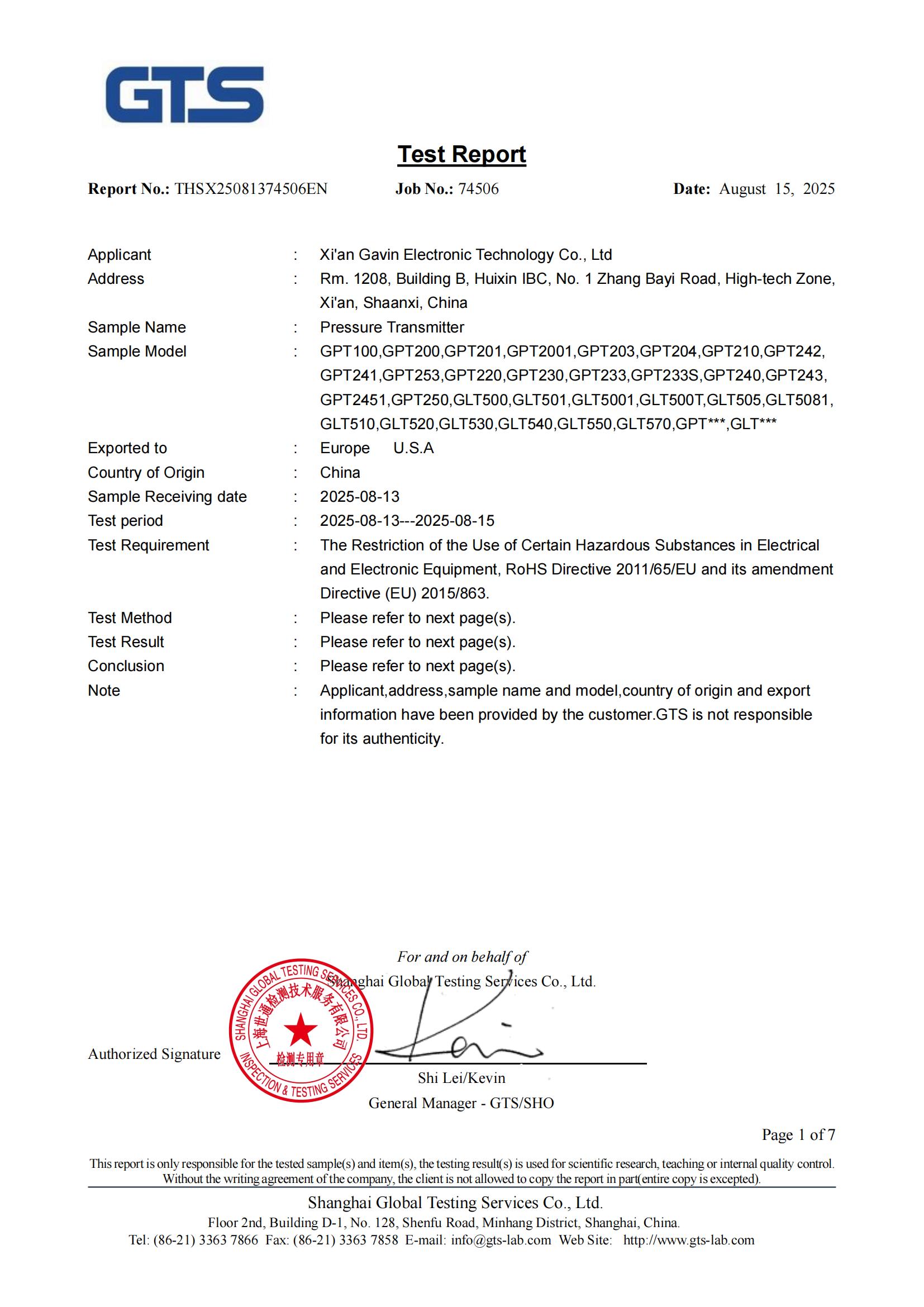
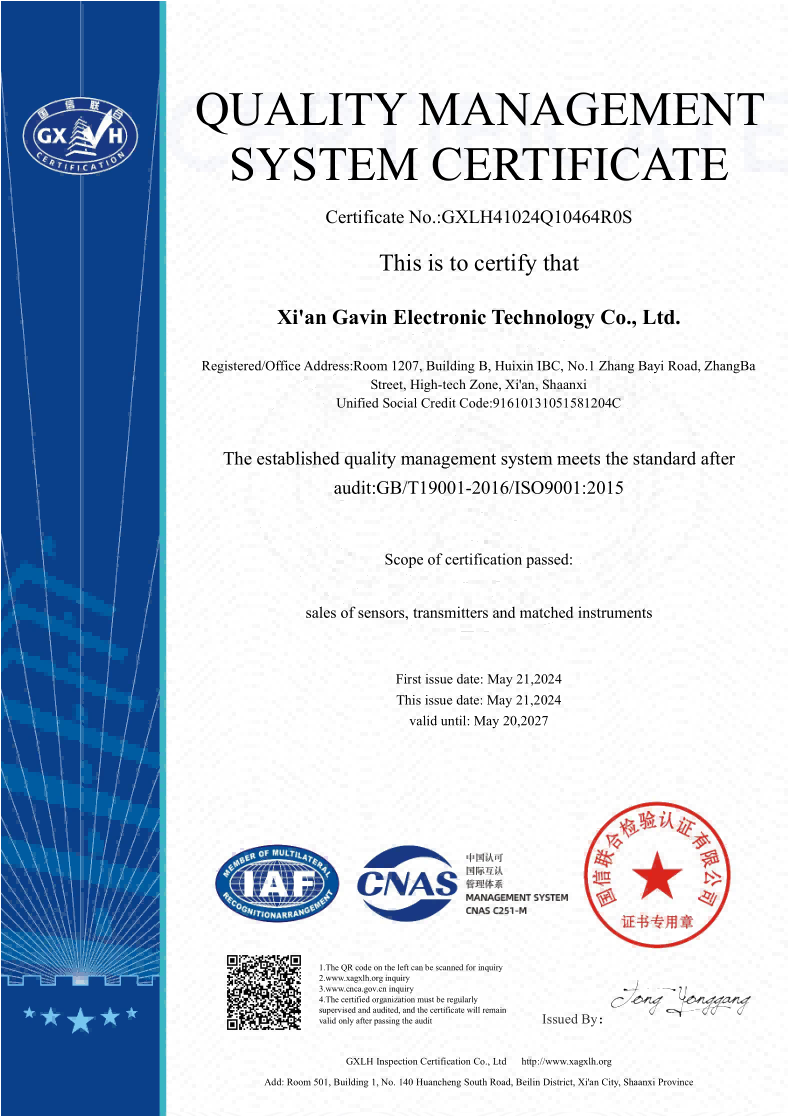
Big companies have a lot of products, help networks around the world, and a lot of certifications. But when it comes to standard applications, they don't always offer competitive pricing or the ability to make changes. Specialized suppliers like GAMICOS offer personalized service, reasonable prices, and the ability to make changes. They also keep quality standards that meet the requirements for international certification.
Bulk Purchasing and Customization Options
Volume purchasing agreements can save you a lot of money on big jobs or installations that need to be done in more than one place. Many suppliers offer tiered prices based on annual volume commitments. Other perks include faster delivery, longer warranties, and more advanced technical support.
Customization services meet the needs of certain applications that standard goods can't do well. Specialized pressure connections, custom electrical interfaces, different housing materials, and calibration ranges that are made for each purpose are all options. When compared to fully customized options, these services allow for optimal performance while keeping costs low.
Contract Terms and Risk Mitigation
Full warranty coverage keeps things from breaking down before they're supposed to, and choices for longer warranties give extra protection for important uses. Service level agreements spell out how quickly technical help will be sent and when replacement parts will be ready so that downtime costs are kept to a minimum.
To make sure the relationship will work in the long term, the supplier qualification process should look at the supplier's ability to make things, their quality systems, and their financial stability. In addition to marketing claims and certifications, site surveys and reference checks give you important information about how well and reliably a supplier does their job.
Conclusion
The 4-20mA pressure transmitter is still the best way to measure pressure in industry because it is reliable, doesn't mess up signals, and works with all control systems. Current loop technology is more accurate and less affected by noise over long distances than voltage options. Its fail-safe design lets faults be found right away. 4-20mA transmitters are the best choice for a wide range of industrial uses in the chemical, petroleum, pharmaceutical, and energy sectors because they have standardized interfaces, a lot of supplier options, and a lot of support ecosystems. This makes them the best choice for procurement professionals who need reliable pressure measurement solutions.
FAQ
What makes 4-20mA signals more reliable than voltage outputs?
Because current stays the same throughout the loop, current signals stay accurate no matter how long or how resistant the cable is. Because of cable resistance, voltage readings are less accurate and are more likely to be messed up by electromagnetic fields from industrial equipment.
How do I determine the right pressure range for my application?
Pick a pressure range that works at 25-75% of the transmitter's full range when everything is normal. This gives the best accuracy while still leaving room for process changes and protecting against overpressure.
Can 4-20mA transmitters work with digital control systems?
Yes, almost all current PLCs and DCS systems have analog input modules that are made to work with 4-20mA signals. For analog-to-digital conversion, the link only needs a precision resistor to change the current to voltage.
What maintenance do current loop transmitters require?
Regularly checking the calibration every 6 to 12 months makes sure that it stays accurate, and every three months, you should look at the connections and the state of the housing. The majority of transmitters work well for 5 to 10 years with little upkeep.
Are there any safety considerations for hazardous area installations?
For explosive environments that need approved barriers or isolators, there are 4-20mA transmitters that are intrinsically safe. These devices keep full measurement functions while limiting energy levels to stop ignition.
Partner with GAMICOS for Premium 4-20mA Pressure Transmitter Solutions
With cutting-edge 4-20mA pressure transmitter technology, extensive technical knowledge, and global manufacturing skills, GAMICOS is prepared to support your pressure measurement needs. Specialized 4-20mA pressure transmitter suppliers like us offer custom solutions that include unique sensor types, communication methods, and changes to fit different environments that standard products can't handle. For the best transmitter choice for your needs, our engineering team can give you personalized advice. We have served customers in 98 countries before, which shows that we are committed to on-time delivery and ongoing technical support. Get in touch with us at info@gamicos.com to talk about your pressure measurement needs and find out how our advanced production skills and low prices can help your business run more efficiently while lowering its total cost of ownership.
References
1. Smith, John A. "Industrial Pressure Measurement Systems: Current Loop Technology and Applications." Process Control Engineering Quarterly, vol. 45, no. 3, 2023, pp. 78-92.
2. Johnson, Mary K., et al. "Comparative Analysis of Analog Signal Transmission Methods in Harsh Industrial Environments." Instrumentation and Control Systems Journal, vol. 28, no. 7, 2023, pp. 145-162.
3. Williams, Robert D. "Evolution of Pressure Transmitter Technology: From Pneumatic to Digital Communication." Industrial Automation Review, vol. 67, no. 4, 2023, pp. 234-248.
4. Chen, Lisa M. "Best Practices for 4-20mA Loop Installation and Maintenance in Chemical Processing." Chemical Engineering Practice, vol. 52, no. 11, 2023, pp. 89-104.
5. Anderson, James P. "Cost-Benefit Analysis of Pressure Transmitter Technologies in Oil and Gas Operations." Petroleum Engineering Technology, vol. 39, no. 6, 2023, pp. 156-171.
6. Thompson, Sarah L. "Signal Integrity and Noise Immunity in Industrial Measurement Systems." Control Systems Engineering Today, vol. 31, no. 9, 2023, pp. 67-81.

Spring
Spring, With 5 years of experience in sensor technology and product development, Mark specializes in helping clients identify the optimal pressure and level sensor solutions for demanding industrial environments。
We're here to help — submit your request anytime!
Let us know how we can help solve your pressure level measurement challenge.
_1757930850792.jpg)

Recommended Blog

What industries are pressure transmitters commonly used in?
Pressure Sensor VS Pressure Transmitter: Are They the Same Thing?
What industries are pressure transmitters commonly used in?
Pressure Sensor VS Pressure Transmitter: Are They the Same Thing?
What industries are pressure transmitters commonly used in?
Pressure Sensor VS Pressure Transmitter: Are They the Same Thing?
What industries are pressure transmitters commonly used in?
Pressure Sensor VS Pressure Transmitter: Are They the Same Thing?
What industries are pressure transmitters commonly used in?
Pressure Sensor VS Pressure Transmitter: Are They the Same Thing?
What industries are pressure transmitters commonly used in?