Wireless Pressure Sensors in Pharmaceuticals: Accuracy and Safety
Understanding Wireless Pressure Sensors in Pharmaceuticals
- Understanding Wireless Pressure Sensors in Pharmaceuticals
- Ensuring Accuracy and Safety with Wireless Pressure Sensors
- Applications of Wireless Pressure Sensors in Pharmaceutical Industry
- Choosing the Best Wireless Pressure Sensor for Pharma Use
- Procurement Guidance and Best Practices
- Conclusion
- FAQ
- Contact GAMICOS for Your Wireless Pressure Sensor Supplier Needs
- References
Wireless pressure sensor technology is a crucial part of contemporary production processes since the pharmaceutical business requires the highest level of accuracy and safety in all monitoring systems. These cutting-edge gadgets provide real-time pressure readings without the limitations of conventional wiring, improving operational flexibility and contamination control. In order to preserve sterile conditions, guarantee regulatory compliance, and maximize production efficiency while lowering installation complexity and maintenance costs, pharmaceutical firms are depending more and more on wireless technologies.
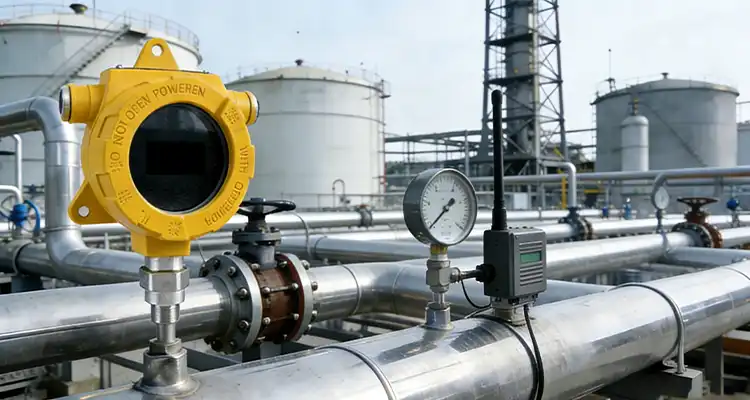
Understanding Wireless Pressure Sensors in Pharmaceuticals
Advanced Sensing Technologies for Pharmaceutical Applications
To detect pressure without the need for physical wiring, wireless pressure sensors use advanced technologies such as piezoresistive, capacitive, and MEMS (Micro-Electro-Mechanical Systems) sensing elements. Through reliable wireless protocols, these devices allow for precise, real-time data transfer, greatly lowering installation complexity and increasing operating flexibility.
Conventional wired systems find it difficult to adequately handle the particular difficulties presented by the pharmaceutical industry. Wireless solutions are especially appealing due to contamination issues, sterile field standards, and the demand for periodic equipment cleaning. In addition to eliminating cable-related hazards, modern wireless pressure sensors provide continuous monitoring capabilities that are crucial for pharmaceutical production operations.
Wireless Communication Protocols in Pharmaceutical Settings
Pharmaceutical applications benefit from a variety of wireless transmission techniques, such as 4G networks, LORA spread spectrum technologies, and customized industrial protocols. With ultra-low power consumption and remarkable range capabilities, LORA technology can carry data up to five kilometers. Large pharmaceutical plants, whose monitoring sites may be dispersed across expansive production complexes, benefit greatly from this increased range.
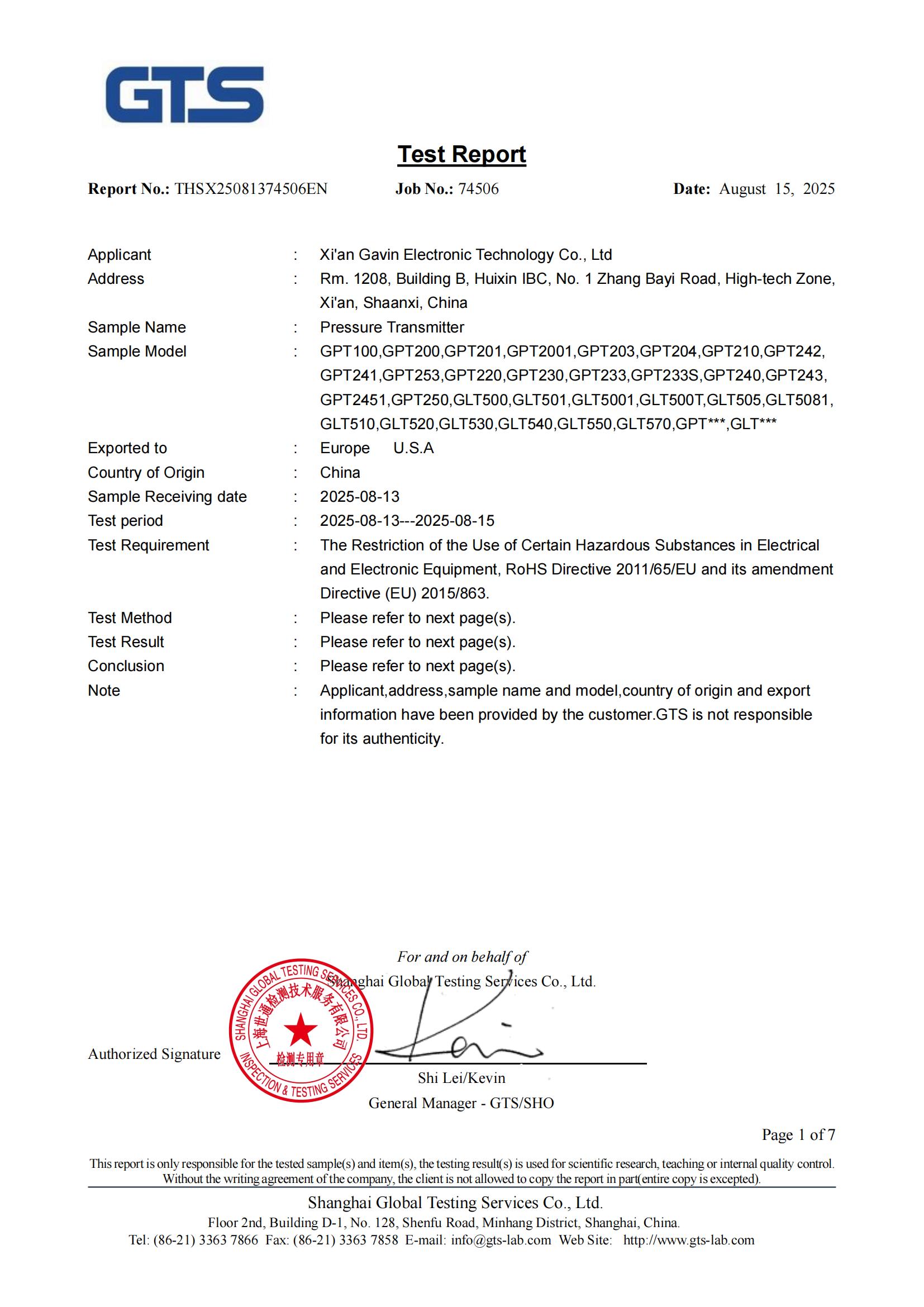
High-stability sensors with temperature adjustment capabilities are included into the GAMICOS GPT2451 wireless pressure transmitter, which is an example of cutting-edge pharmaceutical-grade technology. With three different wireless transmission options—SWSN efficient protocol, LORA wide spectrum, and 4G network connectivity—this gadget detects pressure in liquids, gasses, and steam.
Environmental Adaptability and Integration Capabilities
Certain process criteria, such as integration capabilities, accuracy requirements, and environmental conditions, influence the choice of sensor types. The capacity of wireless sensor systems to tolerate sterilizing processes, chemical exposure, and temperature fluctuations typical in pharmaceutical production must be taken into consideration by pharmaceutical engineers and procurement experts.
IP66 waterproof ratings and sturdy construction materials that withstand chemical deterioration are features of contemporary wireless pressure transmitters. Extended life cycles and battery power minimize maintenance needs while maintaining ongoing monitoring capabilities. With one-second measuring intervals, ultra-low power consumption technologies allow for operating durations longer than three years.
Ensuring Accuracy and Safety with Wireless Pressure Sensors
Precision Requirements and Regulatory Compliance
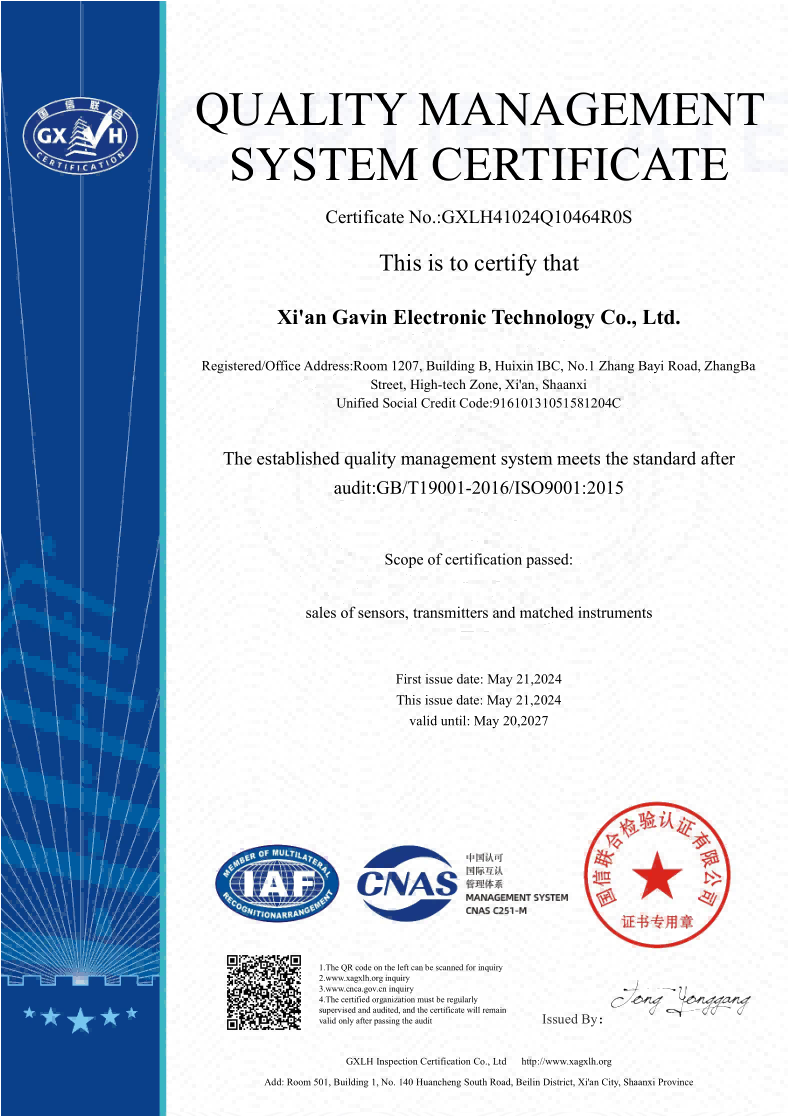
Maintaining product quality and satisfying strict regulatory criteria, such as FDA CFR Part 11 and ISO 9001 regulations, depend on accurate pressure measurement. Stable, interference-resistant data must be provided via wireless pressure sensors, which must also be precisely calibrated and able to adjust to environmental changes like temperature and humidity.
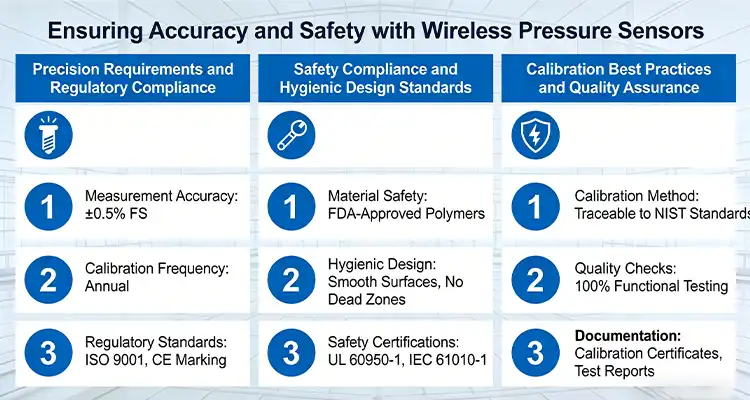
Accurate measurements under a range of operating situations, common in pharmaceutical settings, are guaranteed by temperature compensation technology. Advanced calibration techniques take into consideration environmental factors that may impact measurement accuracy, linearity adjustments, and drift compensation. Pharmaceutical quality management systems and validation specifications must be met by these calibration procedures.
Safety Compliance and Hygienic Design Standards
Safety compliance includes criteria for electromagnetic compatibility, sanitary designs, and explosion-proof certifications—all of which are crucial in pharmaceutical environments. For potentially explosive environments, wireless sensors need to be certified by ATEX while preserving sanitary surface finishes that work with cleaning and sterilizing techniques.
When many wireless devices are installed in pharmaceutical facilities, interference control becomes essential. In order to guarantee dependable data transfer even in the face of electromagnetic interference from other devices, advanced wireless pressure sensors use frequency hopping, signal encryption, and multiple communication channels. These characteristics safeguard critical process data while preserving measurement integrity.
Calibration Best Practices and Quality Assurance
Long-term accuracy and regulatory compliance are ensured by putting in place strong calibration protocols. Calibration periods for wireless pressure sensors are dictated by process criticality and regulatory requirements, and they must be periodically verified against approved reference standards. Pharmaceutical quality management systems and audit standards must be met via documentation processes.
Beyond initial calibration, quality assurance includes drift detection, continuous performance monitoring, and scheduling preventative maintenance. Self-diagnostic features of sophisticated wireless systems notify operators of any calibration drift or system issues before they affect process control or product quality.
Applications of Wireless Pressure Sensors in Pharmaceutical Industry
Bioreactor and Fermentation Monitoring
In bioreactor and fermentation tank pressure monitoring, where exact management preserves ideal growth conditions for biological activities, wireless pressure sensors are essential. Continuous pressure monitoring is necessary for these applications in order to maintain sterility, avoid contamination, and enhance the conditions for cellular development.
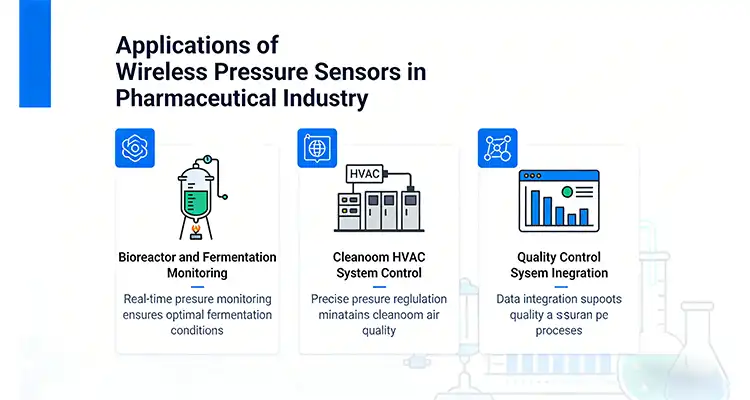
Accurate pressure differentials are necessary for fermentation operations in order to preserve sterility and provide regulated gas exchange. Wireless monitoring offers real-time input for process improvement while removing the contamination issues related to cables penetrating reactor walls. Operators may keep an eye on many fermentation vessels at once without sacrificing the integrity of the sterile field thanks to remote monitoring capabilities.
Cleanroom HVAC System Control
Accurate pressure differentials are essential for HVAC cleanroom systems to maintain air quality and contamination control regulations. Wireless pressure sensors keep an eye on the pressure differences between cleanroom zones, guaranteeing appropriate ventilation and efficient confinement. In pharmaceutical production facilities, these metrics have a direct influence on regulatory compliance and product quality.
By integrating with building automation systems, pressure fluctuations may be automatically responded to, preserving ideal cleanroom conditions without the need for human involvement. When pressure differentials deviate from predetermined limits, real-time monitoring features instantly notify users, allowing for prompt remedial action to stop contamination issues.
Quality Control System Integration
By enabling instant feedback and process modifications, integration with automated quality control systems improves overall production efficiency and complies with regulations. To provide thorough process monitoring, wireless pressure data interfaces with supervisory control and data acquisition (SCADA) platforms and manufacturing execution systems (MES).
Automated data logging features minimize human documentation efforts while supporting regulatory compliance needs. Predictive maintenance scheduling, process optimization, and trend monitoring are made possible by historical data analysis. These skills support efforts for ongoing improvement while upholding requirements for pharmaceutical quality.
Choosing the Best Wireless Pressure Sensor for Pharma Use
Performance Criteria and Selection Parameters
In pharmaceutical settings, choosing the best wireless pressure sensors requires assessing accuracy requirements, dependability indicators, resilience to electromagnetic interference, battery life, and ease of installation. Performance standards need to be in line with the demands of certain applications while taking maintenance and long-term operating expenses into account.
Accuracy criteria should take long-term stability and environmental effects into account while exceeding process requirements by suitable safety margins. Communication dependability, battery life estimates, and mean time between failures (MTBF) computations are all examples of reliability measures. Both operating expenses and the ability to comply with regulations are directly impacted by these factors.
Wireless vs. Wired System Comparison
In pharmaceutical applications, wireless technologies are preferred due to their substantial operational benefits and cost savings when compared to wired systems. Wireless solutions provide more flexibility for equipment expansion and reconfiguration, lower contamination hazards, and do away with the need for cable installation.
Reduced downtime during sensor deployment, the removal of cable routing difficulties, and easier maintenance processes are some benefits of installation. Wireless systems provide redundant communication pathways for increased dependability and allow the deployment of sensors in previously unreachable areas. Initial equipment prices, installation charges, and ongoing maintenance needs should all be taken into account in cost analysis.
Supplier Evaluation and Product Certification
Prominent industry vendors including as Siemens, Emerson, Honeywell, and GAMICOS provide pharma-certified models together with extensive support services. Product certifications, technical support skills, customization possibilities, and long-term availability guarantees should all be considered while evaluating suppliers.
Specialized wireless pressure sensor solutions from GAMICOS provide a wide range of customization options, such as changing the kind of sensor, adapting the interface, and choosing a communication protocol. Customized solutions that satisfy particular pharmaceutical application needs while upholding regulatory compliance and quality standards are made possible by the company's OEM and ODM services.
Procurement Guidance and Best Practices
Strategic Procurement Planning
Strategic planning including distributor networks, lead times, warranty conditions, and bulk buying alternatives is necessary for the efficient acquisition of wireless pressure sensors. In addition to taking supplier capacity and quality assurance skills into account, procurement methods should be in accordance with project schedules.
Contracts for bulk purchases can provide financial benefits while guaranteeing constant product quality over many installations. The availability of spare parts, emergency replacement services, and local technical support skills should all be taken into account when evaluating a distributor network. Lead time planning has to take regulatory approval procedures and customisation needs into consideration.
Customization and Integration Support
Customized sensor systems and integration assistance guarantee that special process problems are addressed with the right technology via cooperative manufacturer involvement. Sensor standards, communication protocols, mechanical setups, and software integration needs should all be covered by customization options.
In order to improve client branding and satisfy particular application needs, GAMICOS provides extensive customisation options, such as logo engraving, unique packaging, and documentation adjustments. To optimize sensor performance and dependability, technical support teams help with product selection, installation instructions, and commissioning processes.
Post-Purchase Service and Support
For long-term accuracy and dependability, ongoing post-purchase services including maintenance plans, software assistance, and technical consulting are still crucial. Firmware upgrades, calibration services, and emergency assistance should all be included in service agreements.
Preventive maintenance scheduling, performance evaluation methods, and replacement part availability should all be a part of maintenance plans. Updates to communication protocols, improvements to data handling, and help integrating with current control systems are all included in software support. These services guarantee ongoing adherence to changing legal mandates and technology breakthroughs.
Conclusion
Pharmaceutical production is being revolutionized by wireless pressure sensor technology, which offers precise, secure, and adaptable monitoring solutions that improve operational efficiency while upholding regulatory compliance. Real-time monitoring capabilities, which are crucial for pharmaceutical quality control, are made possible by the removal of conventional wire limits, which also lowers contamination hazards and installation complexity. Reliable performance in challenging pharmaceutical conditions is ensured by advanced features including temperature correction, long battery life, and strong communication protocols. While promoting long-term operational success, strategic procurement techniques that prioritize supplier alliances, customization capabilities, and extensive support services optimize the returns on investments in wireless pressure monitoring.
FAQ
Q1: What makes wireless pressure sensors suitable for pharmaceutical applications?
A: Wireless pressure sensors eliminate contamination risks associated with cable penetrations through sterile barriers while providing continuous monitoring capabilities. Their hygienic designs, chemical resistance, and ability to withstand sterilization procedures make them ideal for pharmaceutical environments where cleanliness and accuracy are paramount.
Q2: How do wireless pressure sensors maintain accuracy in pharmaceutical settings?
A: Advanced wireless pressure sensors incorporate temperature compensation, precision calibration, and drift correction algorithms to maintain accuracy despite environmental variations. Regular calibration procedures and self-diagnostic capabilities ensure measurement integrity while supporting regulatory compliance requirements.
Q3: What wireless communication ranges are available for pharmaceutical facilities?
A: Modern wireless pressure sensors offer various communication ranges depending on technology selection. LORA-based systems can transmit data up to 5 kilometers, while other protocols provide shorter ranges suitable for specific application requirements. Range selection should consider facility layout and interference potential.
Contact GAMICOS for Your Wireless Pressure Sensor Supplier Needs
GAMICOS delivers cutting-edge wireless pressure sensor solutions specifically engineered for pharmaceutical applications where accuracy and safety remain non-negotiable. Our GPT2451 wireless pressure transmitter combines advanced sensor technology with flexible communication options, providing ultra-low power consumption and extended operational life. With comprehensive customization capabilities and global distribution networks, we serve as your trusted wireless pressure sensor manufacturer for critical pharmaceutical monitoring applications. Contact our technical experts at info@gamicos.com to discuss your specific requirements and discover how our innovative solutions can enhance your pharmaceutical manufacturing processes while ensuring regulatory compliance and operational excellence.
References
1. Smith, J.A., and Anderson, K.L. "Wireless Sensor Networks in Pharmaceutical Manufacturing: A Comprehensive Review." Journal of Pharmaceutical Engineering, vol. 45, no. 3, 2023, pp. 78-95.
2. Thompson, R.M., et al. "Regulatory Compliance and Validation of Wireless Monitoring Systems in Pharmaceutical Cleanrooms." Pharmaceutical Technology International, vol. 28, no. 7, 2023, pp. 34-42.
3. Chen, L., and Williams, P.D. "Temperature Compensation Algorithms for High-Precision Wireless Pressure Sensors in Sterile Environments." IEEE Sensors Journal, vol. 23, no. 12, 2023, pp. 5467-5475.
4. Rodriguez, M.E., and Baker, S.T. "Cost-Benefit Analysis of Wireless vs. Wired Pressure Monitoring Systems in Pharmaceutical Manufacturing." Industrial Automation Review, vol. 31, no. 4, 2023, pp. 112-128.
5. Kumar, A., et al. "Electromagnetic Interference Mitigation in Wireless Sensor Networks for Critical Pharmaceutical Applications." Process Control and Instrumentation, vol. 19, no. 8, 2023, pp. 203-218.
6. Johnson, D.R., and Lee, H.K. "LORA Technology Implementation in Large-Scale Pharmaceutical Facility Monitoring Systems." Wireless Communications and Sensors, vol. 15, no. 6, 2023, pp. 89-104.

Ivy
Ivy, product consultant, has focused on sensor consultation for ten years, is proficient in providing pressure and level measurement solutions for customers.
We're here to help — submit your request anytime!
Let us know how we can help solve your pressure level measurement challenge.
_1757930850792.jpg)


Recommended Blog
Top Wireless Pressure Sensor Suppliers in Asia and the Americas
Top Wireless Pressure Sensor Suppliers in Asia and the Americas
Top Wireless Pressure Sensors for Pipeline Monitoring in Europe
Industrial Wireless Pressure Sensor with App and Remote Alarm
Top Wireless Pressure Sensors for Pipeline Monitoring in Europe
Industrial Wireless Pressure Sensor with App and Remote Alarm
Top Wireless Pressure Sensors for Pipeline Monitoring in Europe
Industrial Wireless Pressure Sensor with App and Remote Alarm
Wireless Pressure Sensor vs Wired: Which Is Better for Industry?
Best Wireless Pressure Transmitter for Remote Industrial Sites
Why Choose a Wireless Pressure Sensor for Oil & Gas Applications
Wireless Pressure Sensor vs Wired: Which Is Better for Industry?
Best Wireless Pressure Transmitter for Remote Industrial Sites
Why Choose a Wireless Pressure Sensor for Oil & Gas Applications
Wireless Pressure Sensor vs Wired: Which Is Better for Industry?
Best Wireless Pressure Transmitter for Remote Industrial Sites