Pressure Sensors in Excavator Hydraulic Systems
Understanding Hydraulic Pressure Sensors in Excavators
- Understanding Hydraulic Pressure Sensors in Excavators
- Comparing Hydraulic Pressure Sensor Technologies for Excavators
- Choosing the Right Hydraulic Pressure Sensor for Your Excavator – A Buyer's Guide
- Installation, Calibration, and Troubleshooting of Hydraulic Pressure Sensors
- Future Trends and Innovations in Hydraulic Pressure Sensing for Excavators
- Conclusion
- FAQ
- Partner with GAMICOS for Reliable Hydraulic Pressure Sensor Solutions
- References
Hydraulic pressure sensors are important parts of excavators' hydraulic systems that keep an eye on the fluid pressure levels across important parts all the time. These sensors turn mechanical pressure into electrical signs. This lets workers and control systems check performance in real time, find problems, and avoid costly breakdowns. Accurate pressure reading is a must for excavators because hydraulic pressure sensor technology controls the movement of the booms, arms, buckets, and tracks. Modern sensors use strain gauge, piezoelectric, or capacitive transduction to send accurate data even in harsh settings like building and mining, where vibrations, temperature changes, and contamination are common.

Understanding Hydraulic Pressure Sensors in Excavators
What is a Hydraulic Pressure Sensor?
A hydraulic pressure sensor is an electronic device that measures the pressure of hydraulic fluid in a system and turns that mechanical force into an electrical signal that can be understood. The sensor assembly usually has a sensing element, like a diaphragm or bourdon tube, a transduction device that changes mechanical displacement into changes in resistance or capacitance, and signal processing circuitry that filters, boosts, and normalizes the output.
Then, programmable logic controllers, digital displays, or IoT tracking tools get this data and use it to make choices about how to run the business. These monitors are placed in excavators at key places in the hydraulic circuits, like at the pump outlets, cylinder ports, and valve manifolds, to make sure that that the pressure stays in safe and effective working ranges.
How Does a Hydraulic Pressure Sensor Work?
The basic idea behind how a hydraulic pressure sensor works is both simple and complex. The diaphragm or detecting part of the sensor is forced by hydraulic fluid, which results in measured deformation. This stretching changes the physical features of sensors that are attached, like the capacitance between electrodes or the resistance in strain gauges. These changes are turned into electrical messages that are related to the pressure that is being applied by the transduction system.
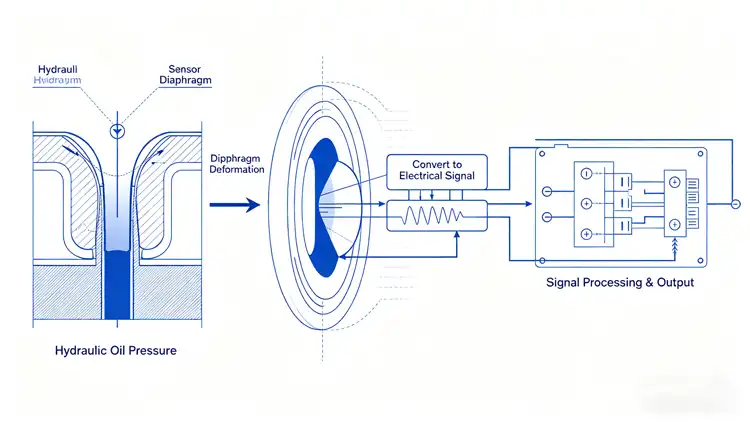
The raw signal is then processed by signal processing electronics, which get rid of noise and turn it into common outputs like 0-5 VDC voltage signals or 4-20 mA current loops. This information is used by controllers to change the flow of hydraulics, set off alarms, or keep track of performance measures. When you calibrate a sensor correctly, you can be sure that the result will always accurately reflect the real fluid pressure.
Popular Types of Hydraulic Pressure Sensors for Excavators
For use in excavators, sensors need to be able to handle shock, pressure, water, and a wide range of temperatures. Because they are so accurate and reliable, strain gauge sensors are some of the most common ones used. These devices connect resistive strain gauges to a diaphragm. When pressure changes the diaphragm, the resistance changes in the same way, making a voltage difference that can be measured. When mechanical stress is applied to piezoelectric sensors, they produce an electrical charge.
These sensors have a very fast reaction time and are best for tracking high-frequency pressure during sudden hydraulic events. Capacitive sensors are very sensitive and stable over time because they measure changes in capacitance between a diaphragm and a set electrode. Because piezoresistive sensors use both strain gauge technology and semiconductor materials, they can be very small and very accurate. This makes them a good choice for OEM integration into hydraulic modules for excavators.
Key Technical Specifications and Calibration
Several technical factors must be taken into account when choosing the right monitor. The pressure range needs to match the working and burst pressures of the hydraulic system. In backhoe circuits, this range is usually between 0 and 400 bar. Response time, in milliseconds, shows how quickly the sensor can keep up with sudden changes in pressure, like when the load changes or the valves are opened and closed. Ingress protection grades (IP67 or IP69K for harsh settings) and resistance to hydraulic oil, coolant, and contaminants are both parts of durability.
Temperature correction makes sure that measurements are accurate over the recommended temperature range of the sensor, which in heavy equipment is usually -40°C to +125°C. To keep measurements accurate, they need to be calibrated correctly. Calibration includes matching sensor output to traceable pressure standards and changing offset and span to get rid of mistakes. Sensor drift can be stopped and safety rules must be followed by recalibration times that are usually once a year or after a system overhaul.
Practical Applications in Boom, Arm, and Bucket Cylinders
A lot of hydraulic pistons are needed for excavators to move in complicated ways. Installed at the boom cylinders, pressure sensors keep an eye on the lifting force and alert the operator if there is an overload that could harm structure parts or put people in danger. Arm cylinder sensors measure how hard you dig and how hard the ground is, giving workers feedback that helps them make the most of the bucket fill and cycle efficiency. Measurement of pressure in a bucket cylinder allows precise control of jobs like grading, trenching, and moving materials.
Adding sensor data to machine control systems makes it easier to handle tasks like auto-leveling, anti-spill logic, and shaking the box. Continuous pressure tracking helps with forecast maintenance plans by finding problems like worn seals, leaking valves, and declining pumps before they become major problems. This cuts down on downtime and repair costs.
Comparing Hydraulic Pressure Sensor Technologies for Excavators
Operational Differences Among Sensor Technologies
Learning about the different ways that hydraulic pressure sensor technologies work helps buying teams match the right product to the right application. Strain gauge sensors work by changing resistance when mechanical stress is applied. They are very predictable and repeatable. Piezoelectric devices use the piezoelectric effect to build up charge when the pressure changes quickly. This makes them great for finding sudden events but not so good for measuring static pressure.
Load cell monitors are usually used to measure weight, but they can also be used in hydraulics where it's important that force and pressure are related. Capacitive sensors pick up changes in the dielectric between electrodes, giving them a high level of detail while being very sensitive to changes in temperature. Each technology has its own pros and cons when it comes to cost, accuracy, durability in harsh environments, and how easy it is to integrate.
Strengths and Limitations for Heavy Machinery
When excavators work, they have to deal with harsh conditions like shock loads, dust, moisture, and temperature swings. Strain gauge sensors work well in these situations because they are well-made and have been shown to be reliable. However, they need to be carefully installed so that there is no mounting stress that can cause measurement mistakes. Piezoelectric sensors have the fastest dynamic reaction of any sensor type, but they are sensitive to changes in temperature and need charge boosters, which makes the system more complicated.
Capacitive sensors are more stable over time and don't move much, but they can get wet if the sealing isn't good enough. Piezoresistive sensors are small and very accurate, but they might need extra electronics to adjust for changes in temperature. When these pros and cons are compared to how an excavator is used, it's possible to choose sensor technology that combines speed, reliability, and total cost of ownership.
Durability and Accuracy Comparisons Among Leading Brands
Omega, Honeywell, Siemens, and Parker are just a few of the well-known sensor companies that are known for making high-performance solutions for industrial and mobile hydraulic uses. Omega sensors are known for having a wide range of products that can be used for a wide range of pressure levels, outputs, and approvals. Honeywell makes sensors that have improved signal filtering and housings that are strong enough to handle a lot of shock and vibration.
Siemens sensors work perfectly with industrial automation protocols, letting you communicate digitally and do diagnostics. Parker specializes in small, high-pressure monitors that work best on mobile equipment that has limited space for installation. Comparative tests show that the accuracy of sensors is usually between ±0.25% and ±1% of the full scale, with better sensors being able to achieve tighter limits. Different brands and types have different durability measures, such as ingress protection, working temperature, and fatigue life. This shows how important it is to carefully evaluate suppliers.
Impact on Excavator Maintenance Cycles
Schedules for excavator repair and working uptime are directly affected by how well sensors work. Condition-based maintenance strategies use high-precision sensors to make sure that hydraulic system interventions are only made when real wear signs are present, not at set times. Reliable pressure reading cuts down on replacing parts that don't need to be replaced and on unexpected downtime. On the other hand, sensors that tend to drift or fail bring diagnostic uncertainty, which can cause maintenance to be done too soon or important problems to not be found until much later.
The starting cost of the sensor must be weighed against the savings in dependability and upkeep over time by the procurement team. When you buy high-quality sensors from well-known names, you can usually expect longer periods between repair visits, less need for spare parts, and lower lifetime costs. This is especially true in fleets that are used a lot and need to have their equipment available at all times.
Choosing the Right Hydraulic Pressure Sensor for Your Excavator – A Buyer's Guide
Core Selection Criteria for Excavator Systems
Before choosing the right hydraulic pressure sensor, you need to know what the application needs. The pressure rating has to include both the regular working pressure and any possible pressure spikes that may happen because of changes in load or valve operation. Environmental protection grades, like IP67 for dust-tightness and brief immersion resistance or IP69K for high-pressure, high-temperature washdown, make sure that sensors will last on a building site.
The type of output signal should match the current control design. This could be an analog voltage loop, a current loop, or a digital standard like CANbus or Modbus. The thread size, mounting position, and type of electrical link must all be able to work with the hydraulic manifolds and pipes of a digger. When materials are compatible with hydraulic fluids like mineral oils, organic fluids, and water-glycol mixes, sensors and seals don't break down.
Procurement Considerations and Supplier Reliability
Technical requirements are only one part of effective buying. Metrics for measuring supplier success are also important. Pricing plans should find a balance between unit cost, bulk savings, and long-term supply deals that keep costs stable and make sure there is enough capacity. Lead times vary a lot between makers and wholesalers. For important uses, paying more for faster delivery or consignment inventory may be worth it. Quality assurance methods, certifications like ISO 9001, and the ability to track testing standards are all parts of a supplier's dependability.
OEM customization options let you make solutions that fit the needs of a particular project. These options include changing the pressure ranges, making custom housings, private labeling, and providing paperwork in more than one language. Building long-term relationships with providers who offer professional support, application engineering, and quick service after the sale lowers the risk of buying something and increases the chances of a project's success.
Top-Rated Sensors and Emerging Technologies in 2024
In 2024, the market for hydraulic sensors has a number of standout goods that combine tried-and-true dependability with new features. OEM developers who want to make designs that take up little room will like sensors that use MEMS piezoresistive technology because they have small footprints without losing accuracy. Wireless sensors don't need complicated wiring because they send pressure data to central tracking systems via Bluetooth Low Energy or their own RF protocols.
Sensors with built-in monitoring can find internal problems, changes in calibration, and strange things happening in the surroundings. This lets repair teams know about problems before they happen. Digital output sensors with customizable alarms and limits make it easier to integrate systems and reduce the need for extra hardware. When buying teams compare these new technologies to practical needs, they can choose forward-looking solutions that make excavators smarter and more connected while still working with older systems.
Benefits of Bulk Orders and OEM Customizations
Large-scale buying has many benefits besides lowering unit costs. Bulk buys take advantage of economies of scale to get better payment terms and lower prices per unit. Customers who buy a lot from a supplier often get special treatment, like specialized account management, faster technical help, and first choice when supplies are low. OEM customization programs let brands stand out, which lets equipment makers and distributors give their own sensor solutions that boost perceived value and customer trust.
Customizations can include changed electrical plugs, engraved identification codes, unique pressure port arrangements, and calibration ranges that are perfectly matched to certain digger models. Working closely with sensor makers during the development stages of a product guarantees smooth integration, improved performance, and a faster time to market for new digger platforms.
Installation, Calibration, and Troubleshooting of Hydraulic Pressure Sensors
Step-by-Step Calibration Guide for Optimal Performance
For a hydraulic pressure sensor to measure pressure accurately over its entire life, it must be calibrated correctly. To calibrate the sensor, you need to connect it to a precise pressure source that meets national or foreign standards. This could be a deadweight tester or a digital pressure calibrator. The sensor's output is recorded at several pressure points across the measurement range. These points are usually zero, 25%, 50%, 75%, and full scale. It is written down how far off the sensor output is from the applied reference pressure, and changes are made using electronic trimming or mechanical processes to cut down on offset and span mistakes.
Zero offset calibration fixes the output when the pressure is equal to air pressure, and span calibration makes sure that the output is straight across the whole range. To make sure the sensor works well across its stated temperature range, temperature compensation testing can be done at more than one temperature. Documenting the results of calibration with the date, the name of the expert, the serial number of the equipment, and tracking certificates makes sure that quality management systems and government rules are followed.
Common Troubleshooting Challenges and Solutions
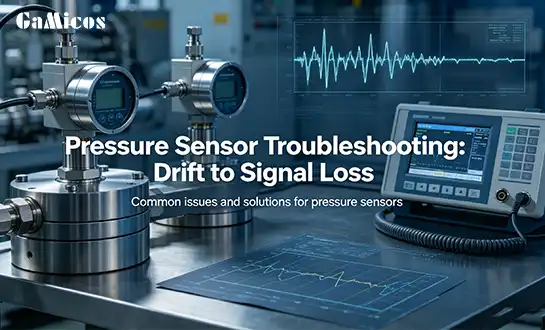
Excavators' hydraulic pressure monitors can fail in a number of ways that need to be systematically fixed. Sensor drift, which is a slow change from measured readings, is usually caused by diaphragm wear, seal degradation, or old electronic parts. Accuracy is restored by periodically recalibration or replacing sensors. Signal unreliability, shown by irregular output or noise, could mean that electrical connections are loose, there is electromagnetic interference, or the sensing ports are contaminated.
Most signal quality problems can be fixed by checking the stability of the cables, how they are grounded, and how clean the hydraulic fluid is. If a sensor fails completely and gives no output or fixed numbers, it could mean that the diaphragm has ruptured, there are internal short circuits, or the power source is broken. To figure out the failure modes, you need to use a voltmeter to check the source voltage, make sure the output signal stays connected, and measure the resistance. Keeping a supply of extra sensors on hand and setting up quick replacement processes cuts down on downtime when sensors fail.
Best Practices for Preventative Maintenance
Strategies for proactive care make sensors last longer and keep their reading accuracy. Regular checks should make sure the mounting is stable, the wiring isn't broken, and the pressure ports are clean and free of dirt or hydraulic fluid contamination. Protective measures like pressure snubbers or pulse dampeners lower the impact of shock loads that make sensor wear happen faster. Environmental controls, such as putting sealing solution around electrical sockets and safety caps on equipment while it's being cleaned, keep water out.
By comparing sensor output to movable reference standards on a regular basis, scheduled calibration verification finds drift before it threatens operational safety. Regular oil analysis for monitoring hydraulic fluid condition finds contaminants that wear down sensor seals and diaphragms. Keeping records of maintenance tasks like inspection results, calibration results, and part replacements helps with predicted maintenance analytics and warranty claims.
Future Trends and Innovations in Hydraulic Pressure Sensing for Excavators
IoT-Enabled Sensors and Real-Time Data Analytics
Adding Internet of Things connection to hydraulic pressure sensor technology is changing the way that excavator fleet management is done. IoT-enabled monitors send pressure data directly to cloud-based platforms, which lets anyone, anywhere in the world, check on the health of equipment at any time. Machine learning algorithms look at past pressure trends to find outliers that could mean that a failure is about to happen, like a seal slowly leaking or the pump wearing out.
Real-time dashboards give fleet managers a unified view of excavator performance measures, which helps them make choices based on data about when to schedule repairs, train operators, and move equipment around. Edge computing features built into advanced sensors process data locally, lowering the need for speed and letting systems respond right away to critical pressure changes. By using IoT-enabled sensors, excavator operators can take advantage of possibilities in Industry 4.0. This can increase efficiency, lower the total cost of ownership, and set service offers apart in competitive markets.
Predictive Maintenance Algorithms
Predictive maintenance uses data from sensors, statistical models, and AI to figure out when parts will break down before they do. Hydraulic pressure monitors constantly send information to predictive algorithms that connect changes in pressure with wear processes like seal breakdown, valve erosion, and pump cavitation. Predictive models send maintenance alerts weeks or months ahead of time by finding small changes from the baseline performance. This lets planned actions happen during scheduled downtime instead of emergency fixes.
This method reduces secondary damage, increases the life of parts, and makes the best use of extra parts inventory. To use predictive maintenance, sensor data needs to be combined with corporate asset management systems. Maintenance staff also needs to be taught how to read the data, and predictive models need to be improved over time based on experience in the field. The return on investment is seen in less unexpected downtime, cheaper repair costs, and more tools being available.
Strategic Recommendations for B2B Procurement Professionals
When dealing with the changing world of hydraulic pressure sensors, procurement teams should use long-term plans that consider both current working needs and the direction of future technology. Long-term digitalization plans will be met if sellers are judged on more than just the specs of their products. They should also be judged on their plans for developing smart sensors. Testing new technologies, like wireless monitors or diagnostic tools that are built in, in controlled settings creates real-world data that can be used to make decisions about wider usage.
Working with sensor makers early on in the planning process of excavator platforms makes it easier to come up with the best solutions that use the newest technologies while still keeping costs low. Putting together cross-functional teams with people from engineering, operations, and IT makes sure that decisions about buying sensors support the company's overall goals, such as improving safety, making operations more efficient, and standing out from the competition. Procurement pros can take advantage of innovations that offer measurable value by keeping an eye on industry trends, going to trade shows, and working with research institutions.
Conclusion
Excavator hydraulic systems can't work without hydraulic pressure sensor monitors, which give accurate readings and real-time feedback that are needed for safe, effective operation. Knowing about different types of sensors, like strain gauges, piezoelectric designs, and capacitive ones, lets you make smart choices that meet the needs of your application and the challenges of the environment. To do good procurement, you need to find a balance between technical requirements, source trustworthiness, and lifecycle costs. You should also know how valuable OEM customization and bulk procurement strategies are.
When sensors are installed correctly, calibrated carefully, and maintained regularly, they stay accurate and last longer, which cuts down on downtime and repair costs. New developments in IoT connectivity, predictive analytics, and smart diagnostics are changing hydraulic sensing from an inactive measurement method to an active asset management method. This gives workers the power to improve performance and avoid breakdowns before they happen. By using these new technologies, digger companies can gain a competitive edge in tough industrial settings.
FAQ
How Do I Specify the Correct Sensor Parameters for My Excavator Application?
Finding the hydraulic system's highest working pressure, including any possible transient spikes, and choosing a hydraulic pressure sensor with enough overpressure capacity—usually 150% to 200% of maximum—are the first steps in choosing the right sensor settings. Find out what kind of accuracy you need in the measurements, what kind of output signal works with your control system, and what kind of environmental protection rate is right for the situations where the device will be used. Check the fitting measurements, thread standards, and types of electrical connections to make sure they will fit in the right places.
What Are the Advantages of OEM Sensors Over Generic Alternatives?
Large amounts of application testing, improved pressure ranges, and confirmed compatibility with hydraulic fluids and system dynamics are all benefits of OEM sensors made just for excavator platforms. Manufacturers offer full technical support, testing records, and warranties that are suited to the lifecycles of big equipment. Generic sensors may be cheaper at first, but they can be hard to integrate, have unreliable results, and come from a small number of suppliers. This means that the savings may be lost in the form of more upkeep and downtime.
How Often Should Hydraulic Pressure Sensors Be Calibrated or Replaced?
How often you need to calibrate depends on the seriousness of the application, any regulations, and the specifics of the monitor. For important safety systems, calibration checks are usually done once a year. For less demanding systems, the checks may be done every 18 or 24 months. If sensors move outside of normal limits, get physically damaged, or are exposed to overpressure events, they need to be re-calibrated or replaced right away. Setting condition-based replacement criteria based on predictive analytics improves the control of sensors over their entire lifetime.
Partner with GAMICOS for Reliable Hydraulic Pressure Sensor Solutions
We know how hard it is for procurement managers and engineering teams to find reliable testing methods for hydraulic systems in heavy-duty excavators. GAMICOS is an expert at making high-precision hydraulic pressure sensor solutions that are built to last in harsh industrial settings. These sensors use cutting-edge transducer technologies and strong construction to make sure they work for a long time. We have a wide range of products, such as capacitive, piezoresistive, and strain gauge sensors that are all made to work with different pressure ranges, output types, and weather conditions.
As a reliable hydraulic pressure sensor maker, we offer flexible OEM and ODM customization services that let you get solutions that fit perfectly into the designs of your equipment. These services include unique branding, changed parameters, and detailed paperwork. Our dedicated technical support team helps you choose the right product, install it correctly, and make sure it's calibrated correctly so that it works at its best for the whole time it's working.
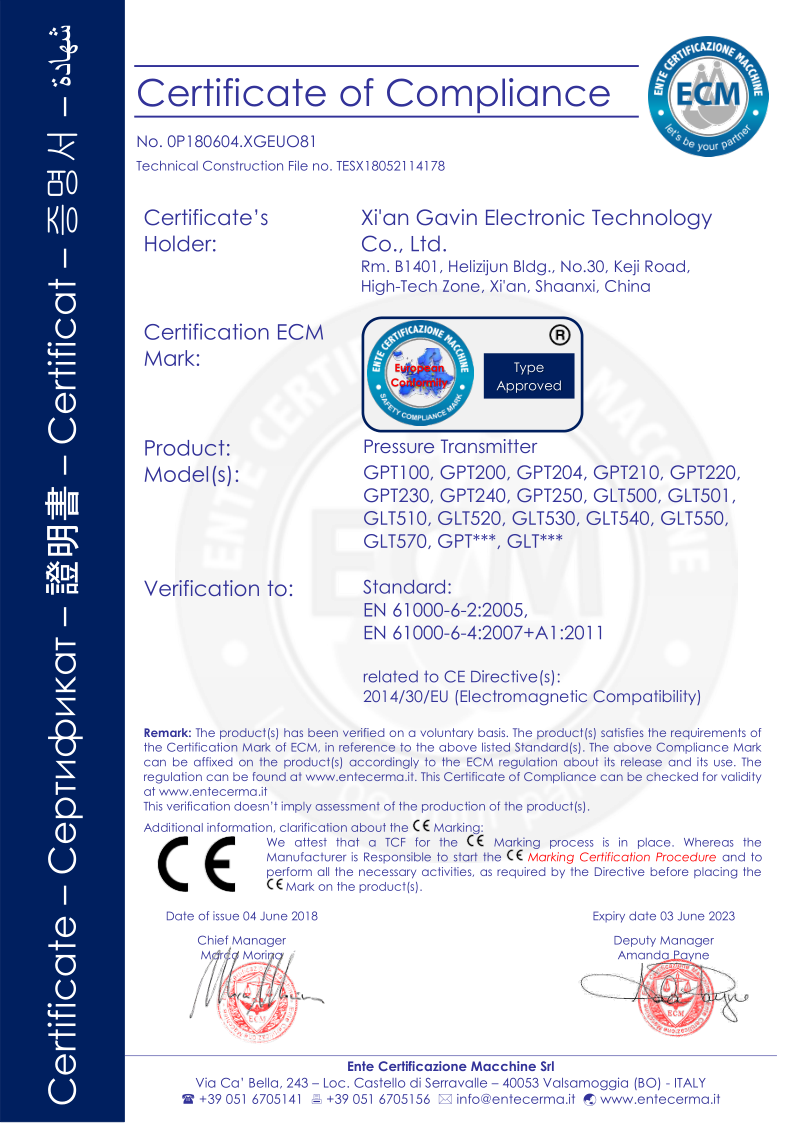
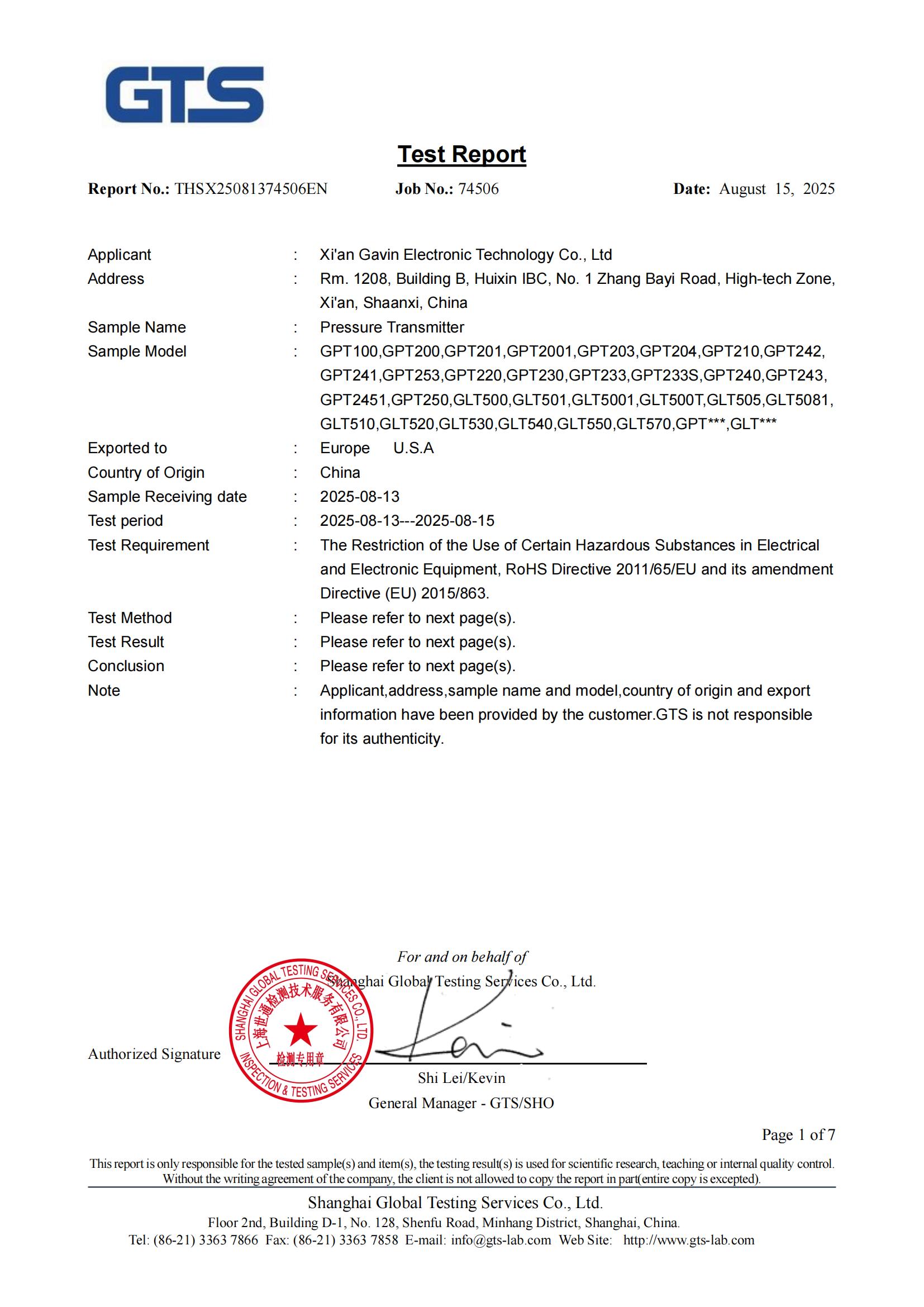
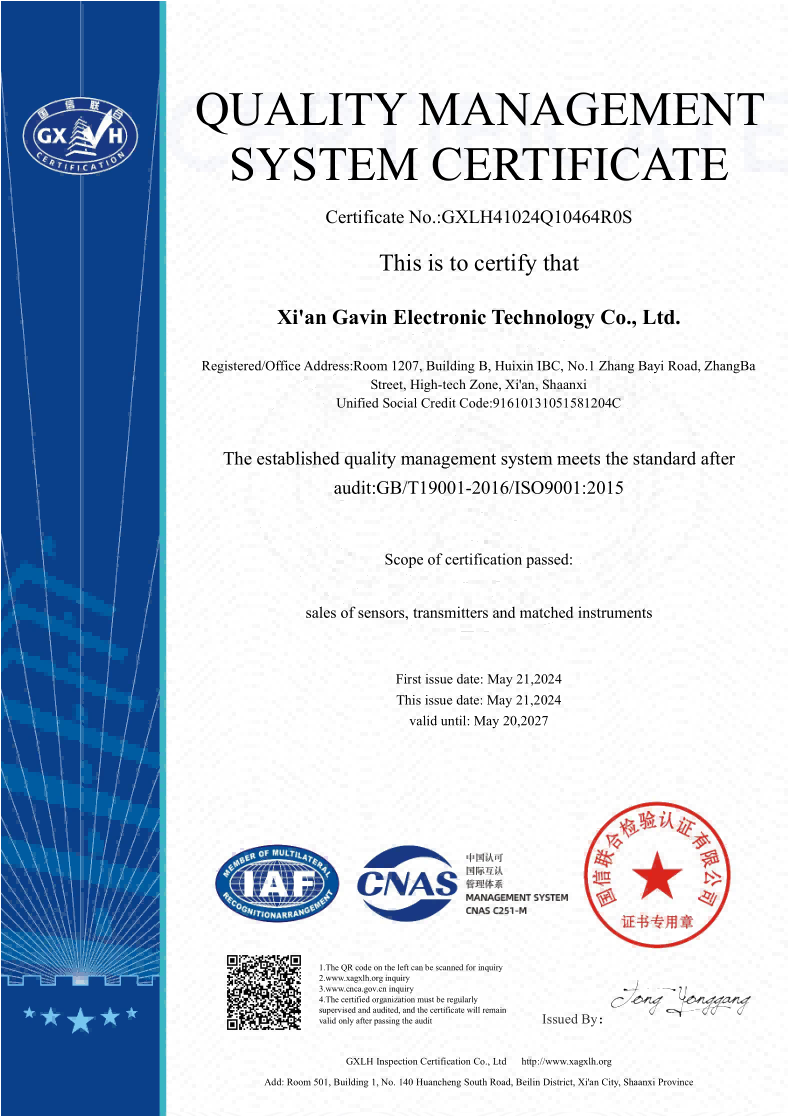
GAMICOS has strict quality control systems and certificates from recognized measurement organizations, which gives your projects the peace of mind they need. We have a lot of experience working with clients in North America, Europe, and other areas around the world. We offer stable bulk supply, competitive prices, and reliable wait times. Get in touch with us at info@gamicos.com right away to talk about your hydraulic pressure sensor needs and find out how our knowledge and focus on customer satisfaction can make your digger systems safer and more efficient.
References
1. Smith, J. & Thompson, R. (2023). Advanced Hydraulic Systems in Heavy Equipment: Principles and Applications. Industrial Press.
2. Chen, L., Martinez, A., & O'Brien, K. (2022). "Performance Evaluation of Strain Gauge and Piezoelectric Pressure Sensors in Mobile Hydraulic Systems." Journal of Fluid Power Technology, 44(3), 112-128.
3. International Organization for Standardization (2021). ISO 4406: Hydraulic Fluid Power—Fluids—Method for Coding the Level of Contamination by Solid Particles. Geneva: ISO.
4. Anderson, P. (2024). IoT Integration in Construction Equipment: Transforming Fleet Management. Construction Technology Publishers.
5. Williams, D. & Zhang, H. (2023). "Predictive Maintenance Strategies for Hydraulic Systems Using Pressure Sensor Data Analytics." International Journal of Prognostics and Health Management, 14(2), 87-103.
6. Parker Hannifin Corporation (2022). Hydraulic Pressure Transducers: Selection Guide and Technical Specifications. Cleveland: Parker Hannifin.

Ivy
Ivy, product consultant, has focused on sensor consultation for ten years, is proficient in providing pressure and level measurement solutions for customers.
We're here to help — submit your request anytime!
Let us know how we can help solve your pressure level measurement challenge.
_1757930850792.jpg)


Recommended Blog
Are Low-Cost Pressure Sensors Reliable? Price vs Performance