Are Low-Cost Pressure Sensors Reliable? Price vs Performance
Understanding Low-Cost Pressure Sensors: Basics and Working Principles
- Understanding Low-Cost Pressure Sensors: Basics and Working Principles
- Price vs Performance: Comparing Low-Cost and High-End Pressure Sensors
- Procurement Insights for B2B Clients: Buying Low-Cost Pressure Sensors Smartly
- Advancements and Future Trends in Low-Cost Pressure Sensor Technology
- How to Choose the Right Pressure Sensor: A Decision-Making Framework for Procurement Managers
- Conclusion
- FAQ
- Partner with GAMICOS for Dependable Pressure Measurement Solutions
- References
The answer to the question of whether a low cost pressure sensor can produce accurate results depends on how well the device's specs match the needs of the business. Sensors that are easy on the wallet use tried-and-true technologies like piezoresistive elements and ceramic capacitive designs that work well enough for many commercial uses. Price isn't the only thing that affects reliability. You should also choose devices that are made with the right materials, calibration procedures, and quality standards for your measurement setting and performance needs.
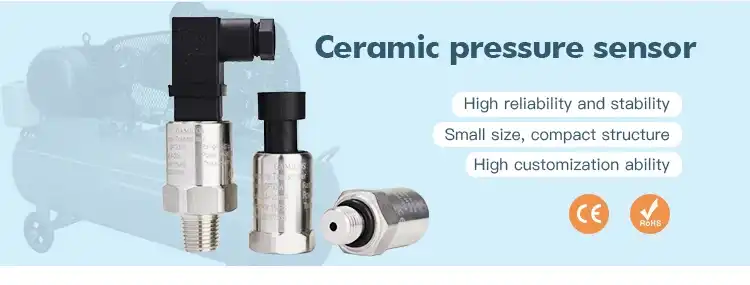
Understanding Low-Cost Pressure Sensors: Basics and Working Principles
Pressure measuring tools that are easy on the wallet are now necessary for many industrial automation, process control, and equipment tracking tasks. Using a number of well-known sensing methods, these low cost pressure sensor tools turn physical pressure into electrical signs that can be understood.
Core Sensing Technologies
Strain gauges attached to a diaphragm let piezoresistive devices measure pressure. When pressure bends the diaphragm, the gauge's resistance changes in a way that is related to the force that is being applied. This method works well in rough conditions and can be used over a wide range of measurement ranges.
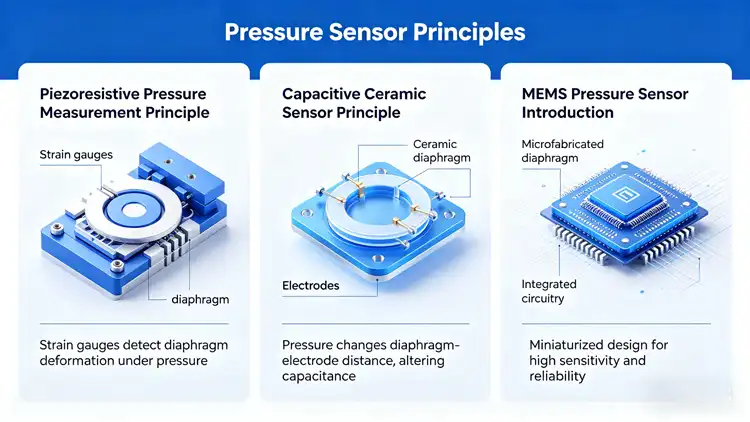
A ceramic diaphragm acts as one input in capacitive ceramic sensors, which are placed across from a fixed plate. The capacitance changes when the gap between the sensors changes because of changes in pressure. This capacitance change is measured by the sensor electronics, which then turns it into standardized output signals. Ceramics are resistant to chemicals and don't change much when heated or cooled. This means that these sensors can be used in tough chemical processing and food-grade uses.
Micro-Electro-Mechanical Systems (MEMS) pressure monitors use tiny sensing parts made using methods used in semiconductor manufacturing. These small devices have become popular in household and car settings where space is limited because they are accurate and don't take up much room.
Signal Conversion and Output
When a sensitive or strain gauge element senses pressure, built-in electronics boost and shape the signal. Most modern sensors send out standard signals, like 0-5V/0-10V voltage bands or 4-20mA current loops. Digital sensors can talk to each other using standards like I2C, SPI, or Modbus. This lets programmable logic controls and supervisory systems directly connect to them.
These electrical signs are picked up in real time by a computerized repair management system. When readings go above certain limits, repair teams get tips about possible problems with the equipment. Too much pressure could mean that there are blocks or broken valves, while falling pressure usually means that there are leaks or damage to the diaphragm.
Material Considerations and Calibration
Depending on the needs for media compatibility, sensor housings and wetted parts are made of stainless steel, special metals, or other materials. Designs that are trying to stay within a budget may use coated metal or industrial plastics that can be used in places that don't corrode. During production, manufacturers set reference standards for sensors and write correction factors into the memory of the gadget. Periodic recalibration, with times that depend on the intensity of the application, keeps accuracy over the course of an operating lifetime.
Price vs Performance: Comparing Low-Cost and High-End Pressure Sensors
Knowing the difference in performance between low cost pressure sensor and expensive sensors helps buying teams make smart trade-offs that meet practical needs and stay within budget.
Accuracy and Resolution Differences
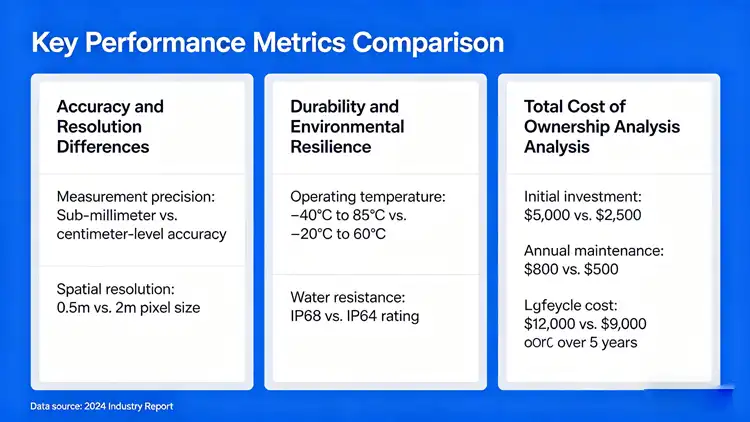
Most of the time, high-end pressure sensors are accurate to within 0.1% of full scale or better, and their precision is fine enough to pick up on small changes in pressure. Precision-matched parts, improved temperature compensation, and multi-point calibration methods are used in these devices.
For cheaper options, the accuracy is usually between ±0.5% and ±1.0% full scale, which is good enough for tasks like tracking hydraulic systems, showing tank levels, and controlling HVAC systems where small changes don't affect the end result. The wider tolerance isn't due to basic design mistakes, but to easier testing processes and less strict component selection.
Durability and Environmental Resilience
Premium sensors have housings that are tough, airtight seals, and can work in temperatures ranging from -40°C to +125°C or higher. They don't break down when they're hit by vibrations, electromagnetic interference, or sudden changes in pressure.
Most of the time, budget models work well in settings with narrower temperature ranges and mild vibrations. By knowing how your system will actually work, you can avoid naming too many expensive features that you will never use. A sensor protecting equipment in a climate-controlled building doesn't need to be hardened against the elements in the same way that one on a remote platform does.
Total Cost of Ownership Analysis
In lifetime economics, the price of the initial buy is only one factor. Premium sensors may require fewer repair visits because they last longer between fails and need to be calibrated more often. Because they are more accurate, they can cut down on product waste in pharmaceutical mixing or keep expensive process upsets from happening in chemical manufacturing.
On the other hand, apps that don't need perfect accuracy often get better overall value with low cost pressure sensor options, even if they may not last as long. Buying standardized units in bulk makes managing supplies easier and lowers the cost of unexpected purchases. When considering rival choices, figure ownership costs including calibration frequency, expected replacement intervals, downtime impacts, and spare parts inventory needs.
Procurement Insights for B2B Clients: Buying Low-Cost Pressure Sensors Smartly
Structured procurement methods that balance cost goals with operating reliability requirements help industrial buyers find affordable low cost pressure sensor tools.
Supplier Evaluation Criteria
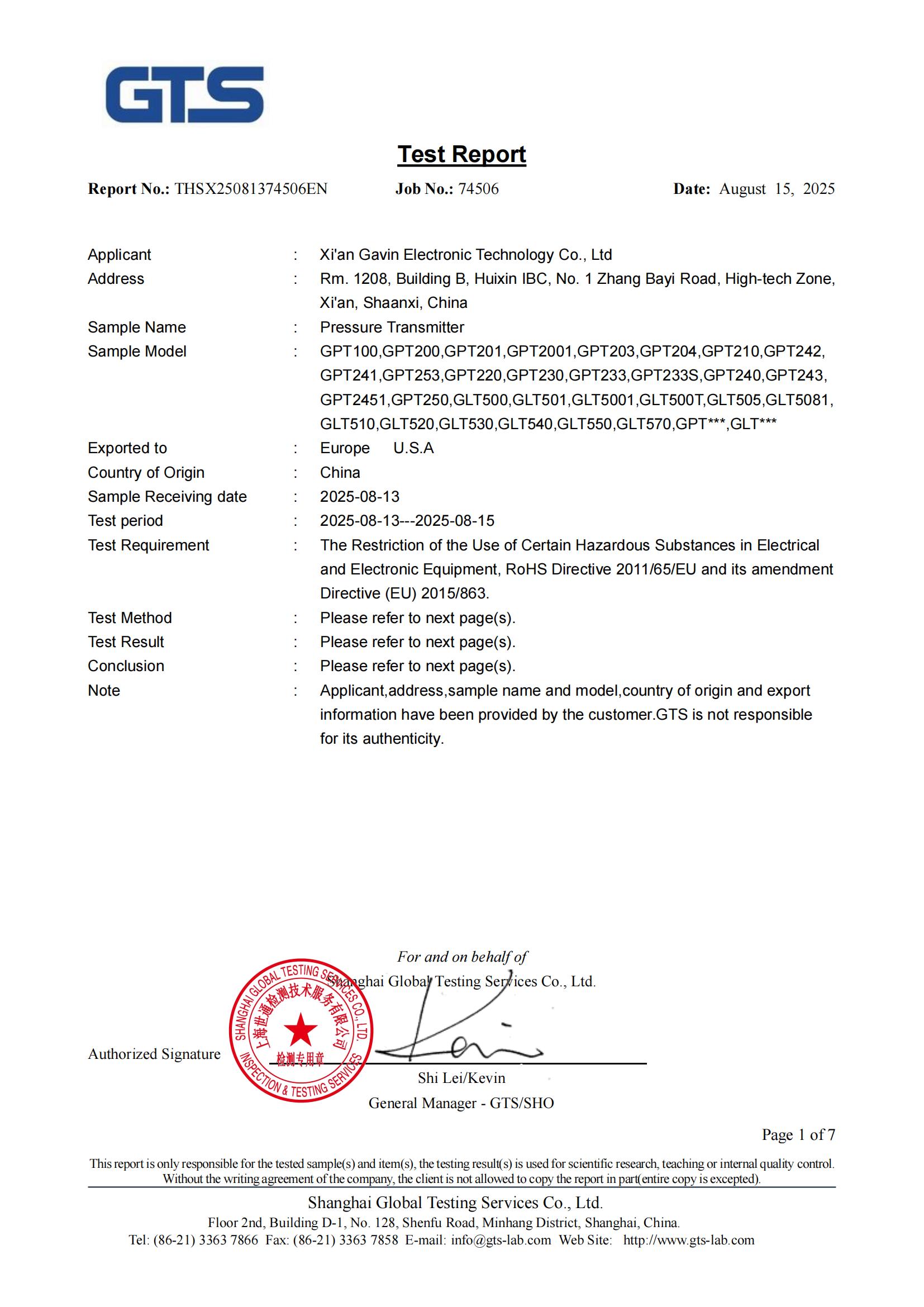
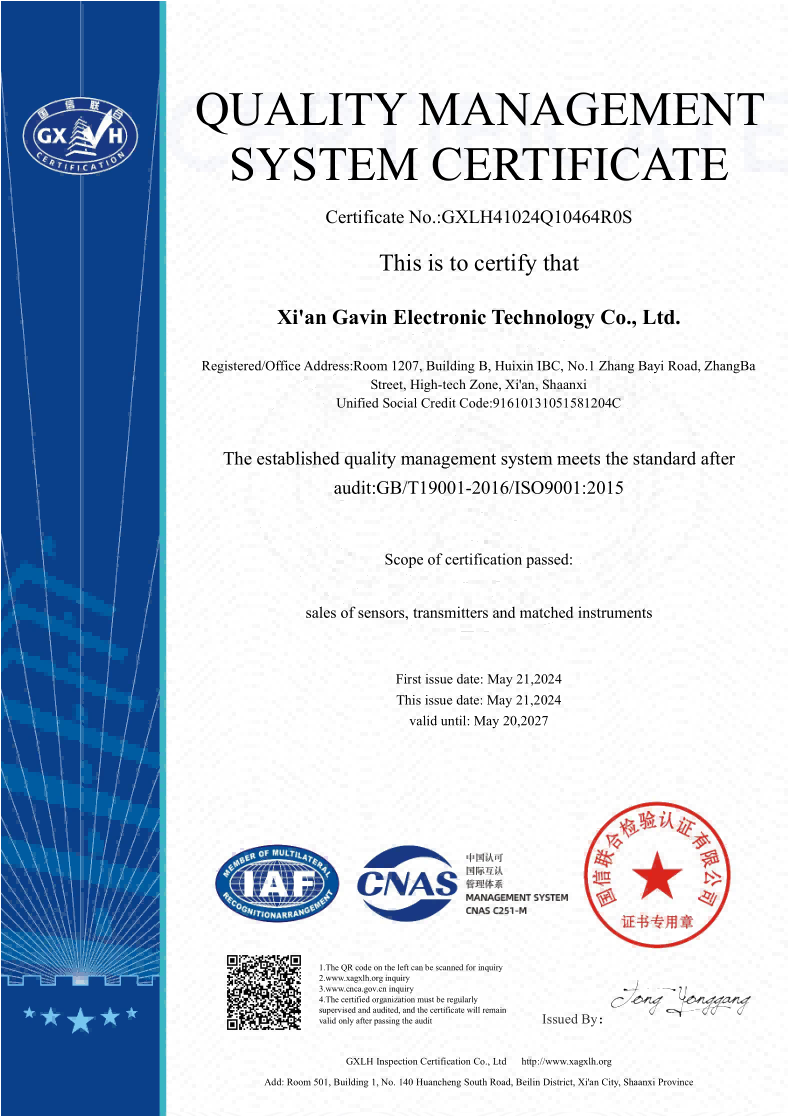
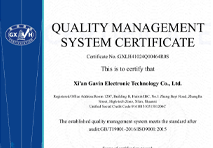
Checking the manufacturer's skills makes sure that the standard of the products is always high and that they can provide quick help. Some important signs are ISO 9001 certification, which shows that the company has a quality management system; product-specific certifications, such as CE marking for European markets or UL listing for installations in North America; and written technical specs with clear test conditions.
Established providers keep records of all the steps that were taken to make each batch of goods, which lets quality checks be done if problems happen in the field. Ask for proof of the steps used for accuracy and quality control tests. Manufacturers who have their own testing sites with reference standards show that they care about how accurate their measurements are.
Bulk Purchasing Strategies
With volume agreements, you can get better prices and make sure you always have a stock of goods. Talk about yearly framework deals that include expected quantities, shipping times, and price levels that depend on the number of orders. This method makes the budget more stable and gives sellers a reason to keep stock on hand so that orders can be filled quickly.
Depending on how busy the factory is, lead times for normal setups are usually between two and six weeks. Custom specs that need different pressure levels, electrical links, or process fittings add four to eight weeks to the lead time. Early on, share project dates and make sure that plans for delivering tools include enough time to buy things.
Customization and Technical Support
OEM and ODM services let you meet specific connectivity needs without having to start from scratch when building sensors. Within their platform designs, suppliers can change the pressure ranges, thread types, electrical connections, and housing materials. Some offer unique labels and paperwork that use your brand's image.
The level of technical help has a big effect on the success of a project. When choosing a product, responsive providers offer application engineering help that helps match sensor specs to measurement needs. They give advice on installation, help with setup, and fixing when problems happen in the field. Before committing to a supplier, look at their help methods, such as how quickly they answer the phone, how quickly they respond to emails, and how easy it is to get expert documentation.
Warranty and After-Sales Considerations
Standard guarantees usually cover problems with the way the product was made for 12 to 24 months after delivery. Make it clear what kind of damage is covered by the contract and what kind of damage is caused by misuse, overpressure, or bad fitting. Some providers offer longer warranty plans or service contracts that include regular repair and calibration.
Make it clear how to return faulty units and how long it will take to get a new one. Keeping a smart stockpile of spare parts lowers the effects of downtime, especially in cases where sensor failures stop production. Figure out the best amount of stock to keep based on the past of failures and the costs of downtime compared to the costs of keeping inventory.
Advancements and Future Trends in Low-Cost Pressure Sensor Technology
New developments keep reducing the difference in performance between low-cost pressure sensors and high-end pressure measuring tools, making more uses possible for instruments that aren't broke.
Improvements in Materials Science
Newer ceramic formulations make them more resistant to chemicals and stable at high temperatures while keeping the cost low. Ceramics made of silicon carbide and alumina can stand up to harsh chemicals, such as strong acids, caustics, and solvents that break down metal sensor elements. These materials make it possible for inexpensive sensors to be used in pharmaceutical and chemical processing uses that used to need expensive metals from far away.
Thin-film lamination methods make piezoresistive elements that are stable over time and have better temperature properties. Nanometer-thick protective layers are used by manufacturers to keep sensitive parts safe from water and other contaminants without making production costs go up by a lot.
Better ways to do calibration
Multiple reference pressures and temperature points are used in automated calibration systems to improve precision across all working ranges. Digital sensors keep bigger adjustment tables that account for non-linearities and temperature changes. These changes to the manufacturing process make the standards better without raising the costs by the same amount.
The sensor software has built-in self-diagnostic features that can find common failure causes, such as membrane damage, electrical connection problems, and calibration drift. Predictive maintenance algorithms look at trends in measurements to see when problems will happen so that they don't stop the process.
Putting Industry 4.0 and IoT together
Wireless pressure devices that use LoRa, NB-IoT, or 4G connection get rid of the costs of installing signal cables. Units that are driven by batteries and have low-power electronics can keep an eye on things like pipeline parts, storage tanks, and distributed equipment for years. Cloud-based data systems collect data from many sensors and store it in one place, making tracking and analysis easier.
Digital communication methods give doctors more diagnostic information than just blood pressure numbers. The internal temperature, power source voltage, measurement confidence levels, and number of operating hours are all reported by sensors. This information helps condition-based repair plans work and gives procurement teams a better idea of how reliable sensors will be over time across all sites.
Intelligent devices with edge computing skills do local processing, such as statistical analysis, trigger recognition, and data filtering. This lowers the amount of network data needed and lets local control respond quickly without relying on the cloud.
How to Choose the Right Pressure Sensor: A Decision-Making Framework for Procurement Managers
Structured selection processes make sure that the specs of the low cost pressure sensor match the needs of the application while also making the best use of the budget across all buying groups.
Define the needs of the application
Measurement factors set the basic conditions for choosing a sensor. Find the needed pressure range and make sure there is enough room for error above the maximum working pressure. Give the process temperature, which should include both the atmospheric temperature and the material temperature. Corrosion and pollution can't happen if the materials that are wet on the sensor are chemically compatible with the media that is being measured.
Needs for process control affect the level of accuracy that is needed. For precision batching and custody transfer, the limits need to be tighter than for general machine tracking. To keep things clear between full-scale and reading-based requirements, set error ranges in engineering units instead of percentages.
Environmental factors like vibration levels, electromagnetic interference sources, and how easy it is to put affect the design of the building and the types of connections that can be used. Designs that are confirmed to be fundamentally safe or explosion-proof are needed for areas that are classified as hazardous.
Look at the available technology
Piezoresistive sensors work great in situations that need a wide range of pressures, small size, middling accuracy, and low costs. They can be used for measuring things in industrial settings where toughness is more important than accuracy, like in hydraulic systems or when tracking compressed air.
Capacitive clay sensors are very stable and resistant to chemicals, which makes them good for use in clean-in-place systems for pharmaceuticals, food preparation, and harsh chemical service. Their longer service life in corrosive conditions makes up for their higher starting cost. MEMS devices have small sizes and are accurate over a wide range of pressures. They work well with OEM equipment and spread tracking systems that need to keep prices as low as possible per unit because they have a lot of measurement points.
Figure out the total investment
Compare the costs of buying something with the costs of running it over the expected service life. Include how often and how much to calibrate, how long you think it will last between replacements based on similar uses, how many extra parts you will need, and how much the installation will cost. Standardizing on fewer models is helpful for applications with a lot of sensors because it makes teaching repair staff and keeping parts on hand easier.
The costs of reducing risk, such as having extra measurement spots, an emergency spare inventory, and qualified backup suppliers, depend on how important the process is. Higher-reliability tools cost more, but they are worth it for safety-critical uses.
Use testing to confirm
Before agreeing to large purchases, ask for sample units to be tested in real-world situations. Field trials show problems with integration, limitations on installation, and performance under real-life situations. Keep track of baseline data, results from checking the devices' accuracy, and user feedback from the techs who set them up and keep them running. By using pilot runs on non-critical equipment, you can get practical experience without putting production at risk. Gradually use good sensor models in more similar situations, but keep some room for error in case something goes wrong.
Conclusion
To find the best balance between price and performance when buying low cost pressure sensor, you need to make sure that the device's features meet the needs of the application, instead of just choosing the most expensive or high-tech options. When properly designed and installed, inexpensive sensors that use tried-and-true technologies like piezoresistive and capacitive ceramic designs can accurately measure a wide range of industrial tasks. The success of procurement relies on looking at the total costs of ownership, making sure the supplier can do what they say they can do, and keeping performance standards reasonable and in line with operational needs. Modern improvements in manufacturing and digital integration keep making more uses possible for pressure measurement options that are easy on the wallet.
FAQ
Can budget sensors provide adequate accuracy for industrial applications?
With an accuracy range of ±0.5% to 1.0%, which is normal for a low cost pressure sensor, many industrial processes work well. Applications like checking the level of a tank, showing the pressure of a hydraulic system, and controlling the HVAC system can handle these changes without affecting the process. Premium tools are needed for measurements that need to be accurate to within ±0.1% for regulatory compliance or precise control, but these measurements only make up a small part of all industry measurement points.
How often do affordable pressure sensors require calibration?
How often you need to calibrate depends on the seriousness of the application, not just the cost of the sensor. In stable settings with mild temps and pressures, intervals can be extended to 24 to 36 months. However, in demanding conditions, they need to be checked every year. A lot of people use condition-based calibration, which means they test sensors when drift signs show up instead of on random dates. Keeping records of calibrations helps with quality standards and following the rules.
What distinguishes reliable low-cost suppliers from questionable sources?
Manufacturers you can trust write down their specifications and test conditions, keep quality certifications like ISO 9001, and offer expert help after the sale. They put out instructions for calibration, provide proof of traceability, and back up their goods with real promises. Established sellers work with a wide range of businesses in many countries, which shows that the market continues to accept them.
Partner with GAMICOS for Dependable Pressure Measurement Solutions
GAMICOS has a lot of experience making pressure sensors and offers customer-focused technical support. This helps buying teams all over the world set up reliable measurement solutions that don't cost a lot of money. Our factories make piezoresistive and capacitive ceramic sensors that are used in fields like chemical processing and fuel management. These sensors are sent to over 100 countries in North America, Europe, and the Asia-Pacific region.
We know that corporate buyers are under a lot of pressure to keep costs down while still running their businesses properly. Our expert team helps you choose the right sensor by matching the device's specs to your measurement needs and the conditions of the surroundings. Whether you need standard stock items that can be sent out quickly or OEM configurations that are made to fit your exact needs, our manufacturing skills are flexible enough to handle anything from small prototypes to large production runs.
Get in touch with our engineering experts at info@gamicos.com to talk about how you need to measure pressure. For both standard and custom sensor setups, we offer in-depth technical talks, suggestions based on specific applications, and competitive quotes. We provide high-quality tools and quick support as a seasoned low cost pressure sensor manufacturer, enabling you to meet your measurement goals while staying within your budget.
References
1. Johnson, M. & Williams, R. "Industrial Pressure Sensor Selection Guide: Matching Technology to Application Requirements," Journal of Process Instrumentation, Vol. 34, 2022, pp. 112-128.
2. Chen, L. "Advances in Ceramic Capacitive Sensor Technology for Harsh Environment Applications," IEEE Sensors Conference Proceedings, 2023, pp. 445-452.
3. Anderson, P. "Total Cost of Ownership Analysis for Industrial Instrumentation Procurement," Automation World Technical Report, 2023, pp. 67-84.
4. Thompson, K. & Garcia, S. "MEMS Pressure Sensor Development: Bridging Performance and Affordability," Sensors and Actuators Journal, Vol. 28, 2023, pp. 201-215.
5. Mitchell, D. "Quality Management Systems in Sensor Manufacturing: ISO Compliance and Reliability Outcomes," International Journal of Quality Engineering, Vol. 19, 2022, pp. 334-349.
6. Roberts, J. "IoT Integration Strategies for Industrial Pressure Measurement Systems," Industrial Connectivity Review, Vol. 12, 2024, pp. 78-93.

Ivy
Ivy, product consultant, has focused on sensor consultation for ten years, is proficient in providing pressure and level measurement solutions for customers.
We're here to help — submit your request anytime!
Let us know how we can help solve your pressure level measurement challenge.
_1757930850792.jpg)
Recommended Blog