Pressure Sensor Troubleshooting: Drift to Signal Loss
Understanding Pressure Sensor Problems: Symptoms and Causes
- Understanding Pressure Sensor Problems: Symptoms and Causes
- Systematic Troubleshooting Approach for Pressure Sensors
- Comparing Troubleshooting vs Replacement: Cost-Effective Decision-Making
- Essential Tools and Solutions for Pressure Sensor Troubleshooting
- Brand-Specific Troubleshooting Guidelines and Support Resources
- Conclusion
- FAQ
- Partner with GAMICOS for Reliable Pressure Sensor Solutions and Expert Support
- References
When industrial operations experience signal drift or total signal loss, which affects process control and measurement accuracy, they need to fix their pressure sensor troubleshooting. Most of the time, these problems are caused by things in the surroundings, like changes in temperature, humidity, and shaking, as well as wiring damage, dirt buildup, or parts that are getting old. Engineering teams can take action before problems get worse by spotting early signs like readings that change, outputs that stop and start, or calibration mistakes. Systematic tests, such as looking at things visually, checking with a voltmeter, and analyzing error codes, help quickly find the root causes. Dealing with drift and signal loss quickly cuts down on expensive downtime, protects product quality, and extends the life of sensors. This is why effective fixing is so important for industrial automation that works.
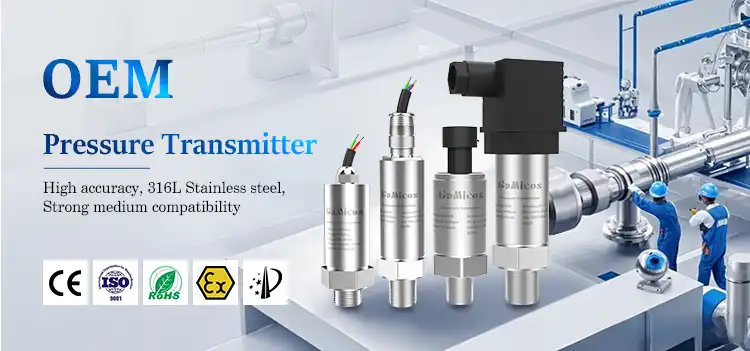
Understanding Pressure Sensor Problems: Symptoms and Causes
Pressure monitors are an important part of many industrial processes, but they can still break down and make the system less reliable. When sensors start to act in strange ways, quickly figuring out what's wrong turns into the difference between small fixes and big system problems.
Recognizing Common Symptoms of Sensor Malfunction
Pressure levels that change without any changes to the process are something that operators often notice. The numbers shown could jump around randomly, or the monitor could send signals that disappear and then show up again at random times. Gradual changes in baseline readings, where zero-point or span values are not the same as they were when the calibration was first set, are a sign of calibration drift. Complete signal loss shows up as blank screens or output that doesn't change, even though the pressure is changing. These signs point to deeper problems that need to be looked into right away.
Environmental Stresses Affecting Sensor Performance
Extreme temperatures make it very hard for sensors to stay stable. The qualities of the material used in strain gauge devices change when it gets hot, which causes changes in resistance that have nothing to do with real pressure. Corrosion of electrical connections and circuit boards happens faster in places with a lot of humidity, like outside or with strong chemicals. Machines or pumps nearby can cause vibrations that put mechanical stress on sensor parts. Over time, this can break connections and wear down materials. We've seen that environmental problems happen less often in pharmaceutical plants with strict temperature control than in outdoor petrochemical sites.
Wiring and Electrical Faults
One of the most common reasons for signal trouble is wires that are broken. Insulation can become damaged by heat, chemicals, or wear and tear, which can cause short circuits or ground problems. Electrical resistance goes up when connection points have corrosiond ends. This weakens messages before they reach control systems. When wires don't have enough insulation or run parallel to power lines, electromagnetic interference from high-power equipment can cause noise in sensor wiring. During site inspections, we often find that many electrical problems can be avoided by making sure cables are routed correctly and doing regular eye checks.
Mechanical Damage and Component Aging
Impacts during operation or repair can break sensor housings, letting dirt and other things get into sensitive electronics. Pressure ports get stopped up with process media, especially when using slurry or systems with fluids that are full of particles. Pressure cycle causes tiny cracks to form in diaphragms, especially in systems that start up and shut down a lot. Over time, all sensors will be affected by component age, which happens when materials wear out and computer circuits break down. Capacitive sensors are more likely to lose their charge sensitivity after long times of use, while piezoelectric types may lose their charge sensitivity over time.
Systematic Troubleshooting Approach for Pressure Sensors
Methodically dealing with sensor problems saves time and resources and keeps people from making the wrong diagnosis. A structured process makes it easier for technicians to quickly move from observing to trying to solving the problem.
Defining the Malfunction Type
To tell the difference between drift, signal loss, and calibration mistakes, you need to know how they work. Drift is when values slowly and steadily move away from their true values over time. Signal loss means that there is no output at all or that the monitor and control system can't talk to each other. Errors in calibration show up as offset numbers that stay the same or span errors that aren't accurate across the measurement range. Writing down when problems happen—during starting, ongoing operation, or certain process conditions—helps with the diagnosis.
Stepwise Diagnostic Procedures
Visual inspection is the best way to find problems before doing more in-depth testing. Check the housings for cracks, the wires for damage, and the joints for rust. Make sure the fixing is still solid to make sure the sensors haven't moved or become loose. Check the power source voltage at the sensor terminals with a multimeter. Drops in voltage can mean that there is a problem with the wires or the power supply. Check the sensor output directly at its terminals and see if the numbers match the screens on the control system. If they don't, it means there are problems with the transmission, not with the sensor itself.
As part of environmental review, the temperature, humidity, and shaking levels must be recorded while the system is running. Testing with temporary protection helps find sources of electromagnetic radiation. When you disconnect and rejoin cords while watching the output, you can see that connection problems happen from time to time. When you compare readings from two or more sensors in the same process stream, you can tell if the problems are with the sensors or with the process itself.
Following Manufacturer Guidelines
Major makers offer detailed repair guides that are made to fit their products. Honeywell's instructions stress the importance of making sure that strain gauge sensors have stable activation voltage and that they are properly grounded. Siemens' communication diagnostics for their digital pressure sensors are spelled out in their standards.
These procedures include fieldbus network checks, which are an essential part of pressure sensor troubleshooting. By following systematic diagnostic steps, operators can ensure warranty conditions are met while minimizing the risk of accidental damage during testing and commissioning.
Real-World Case Study: Pharmaceutical Batch Reactor
A pharmaceutical company had trouble with a vital batch reactor that showed changing pressure readings, which put production plans at risk. The first look didn't show any clear damage, but voltage readings showed that the sensor's power source was changing. When the wires were traced back, a loose connection was found in a junction box fifty feet from where the sensor was. Stable operation was restored right away by tightening connections and using dielectric grease. This case showed that careful, organized checking from the sensor to the control panel can find hidden problems that quick checks miss.
Comparing Troubleshooting vs Replacement: Cost-Effective Decision-Making
To find the right balance between fix and replacing costs, you need to look at more than just prices.
Evaluating Sensor Condition and Service Life
When sensors are getting close to the end of their projected useful life—usually five to ten years, based on how hard the application is—they should be replaced instead of being extensively troubleshooted. New installs that fail early may mean that the wrong product was chosen or that there were problems with the installation that need to be fixed before the product is replaced. It depends on how bad the symptoms are; if something is completely broken, it needs to be replaced, but drift can usually be fixed by recalibrating. Figuring out how much downtime costs helps you make choices; if fixing takes a long time, replacing the part speeds up the return to production.
Technology-Specific Troubleshooting Considerations
Differential pressure monitors with two sensing elements need to be checked on both sides separately, and the membrane integrity between the sections needs to be checked. Absolute pressure monitors need to be carefully checked for a zero point because they use vacuum as their reference instead of air pressure. If you try to use piezoelectric sensors to measure static forces, they will fail. Using strain gauge or capacitive sensors instead will fix these problems for good.
Cleaning and recalibrating capacitive sensors works well when dirt causes them to move. Digital sensors need protocol analyzers and special tools to test data paths, but analog sensors with 4-20mA outputs are easy to test. Digital pressure sensors can self-diagnose and find broken internal parts, which makes it easier to decide what to repair.
Optimizing Inventory and Maintenance Planning
Tracking breakdown trends across groups of sensors is helpful for procurement managers. High failure rates on certain models point to problems with the surroundings that need new technologies. Keeping calibration tools and common spare parts like wires, connectors, and mounting hardware on hand lets you fix things quickly in the field without having to wait for vendor orders. Setting up preventive maintenance plans based on real performance data instead of making them up on the spot cuts down on both replacements that happen too soon and failures that were not expected.
A lifecycle cost study should look at things like how much energy older analog sensors and newer digital sensors use, how often they need to be calibrated, and how well they work with planned updates to the control system. Upgrading to newer versions of sensors during planned repair windows can save you money compared to keeping old equipment that isn't working well.
Essential Tools and Solutions for Pressure Sensor Troubleshooting
Having the right testing tools on hand is essential for accurate results.
Fundamental Diagnostic Equipment
To measure voltage, current, and resistance during diagnostics, a reliable digital voltmeter remains essential in pressure sensor troubleshooting, enabling technicians to verify electrical signals, detect wiring faults, and confirm proper sensor operation.
For most industry uses, models with an accuracy of 0.1% are fine, but for calibration work in the lab, better accuracy is needed. Loop calibrators make fake 4-20mA signals to check the accuracy of receivers and give accurate current readings to check sensor outputs. Signal monitors show patterns that help find noise, oscillations, or drops in the signal that simple meters can't see.
Portable calibrators put known pressures on sensors while recording their output at the same time. This lets testing happen in the field without taking sensors out of service. For testing work in the lab or for important tasks, deadweight testers offer accuracy levels that are comparable to a standard. With pressure comparators, techs can compare sensors that might not be working right to reference standards that are being used in the same way.
Advanced Integrated Solutions
Modern diagnostic tools are portable devices that can read electrical signals, create pressure, and store data. These devices show technicians how to do tests in a way that is specific to the maker and record the results instantly for quality records. Some have wireless capabilities that let them send results to systems for repair control in real time.
New IoT-enabled pressure monitors have built-in self-diagnostics that check signal quality, temperature correction accuracy, and component drift all the time. With these smart monitors, maintenance teams can be warned before problems happen, which means that instead of fixing problems after they happen, they can do preventative maintenance. Cloud-connected systems collect data from many monitors and find problems in the system that can't be seen by looking at individual devices.
Purchasing Considerations for Diagnostic Tools
When choosing suppliers, you need to look at how much expert help they offer after the sale. Companies that offer application engineering help make sure that tools are compatible with certain monitor technologies and work settings. The length of the warranty is important. Good makers back professional-grade gear with warranties that last three to five years and offer testing services to keep the accuracy over time.
Training is available to make sure that repair teams get the most out of their tools. Some sellers offer lessons online, while others offer training on-site while the system is being set up. If your building already has sensors from different brands, you won't have to buy extra tool sets for each one.
Brand-Specific Troubleshooting Guidelines and Support Resources
Using maker knowledge to speed up problem-solving while keeping equipment contracts in effect is recommended.
Accessing Official Technical Resources
Honeywell keeps large online reference libraries that can be searched by model number and include wiring diagrams, solving flowcharts, and common fixes for problems. Their technical help hotline puts people in touch with application engineers who know a lot about certain businesses and sensor types. Through their Industry Online Support site, Siemens also provides similar tools, such as firmware changes and documents for transmission protocols for digital transmitters.
Bosch gives detailed installation and upkeep guides that stress the right way to put things and protect the environment. In their troubleshooting parts, symptoms are put into groups with matching diagnostic steps and fixes. Using these brand-specific tools makes sure that the steps that are suggested are in line with the real designs of the sensors, not just general advice.
Authorized Service Centers and Certified Parts
When you use an approved service shop, pressure sensor troubleshooting and repairs are more likely to meet manufacturer standards, ensuring proper performance while keeping warranty coverage valid.
These places keep calibrations that can be tracked back to national standards, which is important for controlled fields like food processing and medicines. Certified replacement parts are guaranteed to work with your car and be reliable. On the other hand, aftermarket parts may cause new problems, even if they are cheaper at first.
A lot of companies have swap programs where customers can send in broken sensors and get repaired ones instead, which are cheaper than buying new ones. This method allows for quick settlement while makers check returned units to find ways to improve the design.
Training and Documentation Resources
Manufacturer-sponsored training programs help people learn more about how sensors work, how to put them correctly, and how to do advanced troubleshooting. These classes include everything from half-day workshops to certifications that cover whole product lines over several days. When you spend money on training, you get faster troubleshooting, fewer wrong diagnoses, and better contact with technical help staff.
Installation papers, operation guides, troubleshooting steps, lists of spare parts, and dimensional sketches should all be in complete reference files. Keeping this information in a well-organized way, especially for sensors used in important situations, lets you act quickly when problems happen.
Conclusion
Effective pressure sensor troubleshooting keeps industrial processes from experiencing expensive downtime and increases the life of the equipment. Maintenance teams can quickly fix problems if they notice signs early, use organized diagnostic methods, and keep the right tools on hand. To know when it's still cheaper to fix a problem than to buy a new one, you have to look at the state of the monitor, how often it fails, and the economics of the whole lifecycle. Using the manufacturer's tools and approved support methods makes sure that solutions meet quality standards and keep guarantees valid. As sensor technology moves toward predictive diagnostics and IoT integration, keeping up with new features changes upkeep from responding to problems after they happen to being proactive about making things better.
FAQ
How can I quickly test if my pressure sensor has failed?
First, look for obvious damage. Then, use a multimeter to check the power source voltage at the sensor connections. Check the output signal at the monitor and see if it matches the numbers from the control system. Use a portable calibrator or reference gauge to apply a known pressure while watching the output of the sensor. If there is no response at all or the number stays the same even though the pressure changes, the sensor is broken. Outputs that come and go suggest wire or link issues rather than a broken sensor element.
What causes pressure sensor drift over time?
The physical features of detecting surfaces are changed when they are contaminated, especially capacitive and piezoelectric types. Material wears out in diaphragms and sensor elements when the temperature changes. When electronic parts get old, they change the basic features of signal conditioning circuits. Materials slowly break down when they are exposed to acidic process media. Micro-damage builds up over months or years of service due to mechanical stress from pressure cycling or shaking.
Are troubleshooting kits worth the investment for industrial maintenance?
Yes, especially for buildings that use a lot of monitors for different tasks. Diagnostic kits let you check things in the field without bringing monitors to a lab, which cuts down on downtime by a large amount. They keep track of the past of calibrations so that the pharmaceutical and food businesses can follow the rules. Good kits pay for themselves because they keep you from having to replace sensors that only need to be recalibrated or fixed slightly. These benefits spread throughout your whole business when you teach your repair staff how to use diagnostic tools correctly.
Partner with GAMICOS for Reliable Pressure Sensor Solutions and Expert Support
In industrial settings, pressure sensors need to be accurate all the time and come with quick expert help. GAMICOS makes high-precision pressure monitors, liquid level sensors, and wireless tracking systems that are sent to more than 100 countries around the world. To help you keep downtime to a minimum and make the most of your maintenance plans, our engineering team offers thorough pressure sensor troubleshooting advice that is specifically suited to your uses.
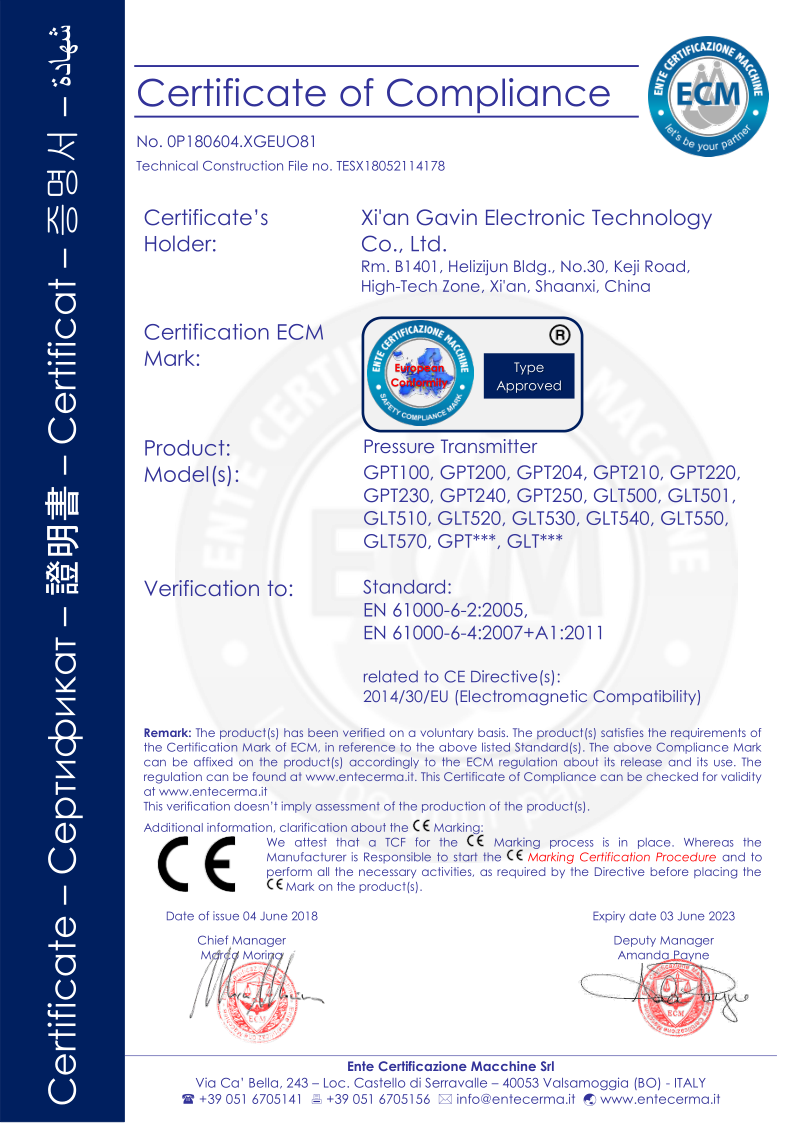
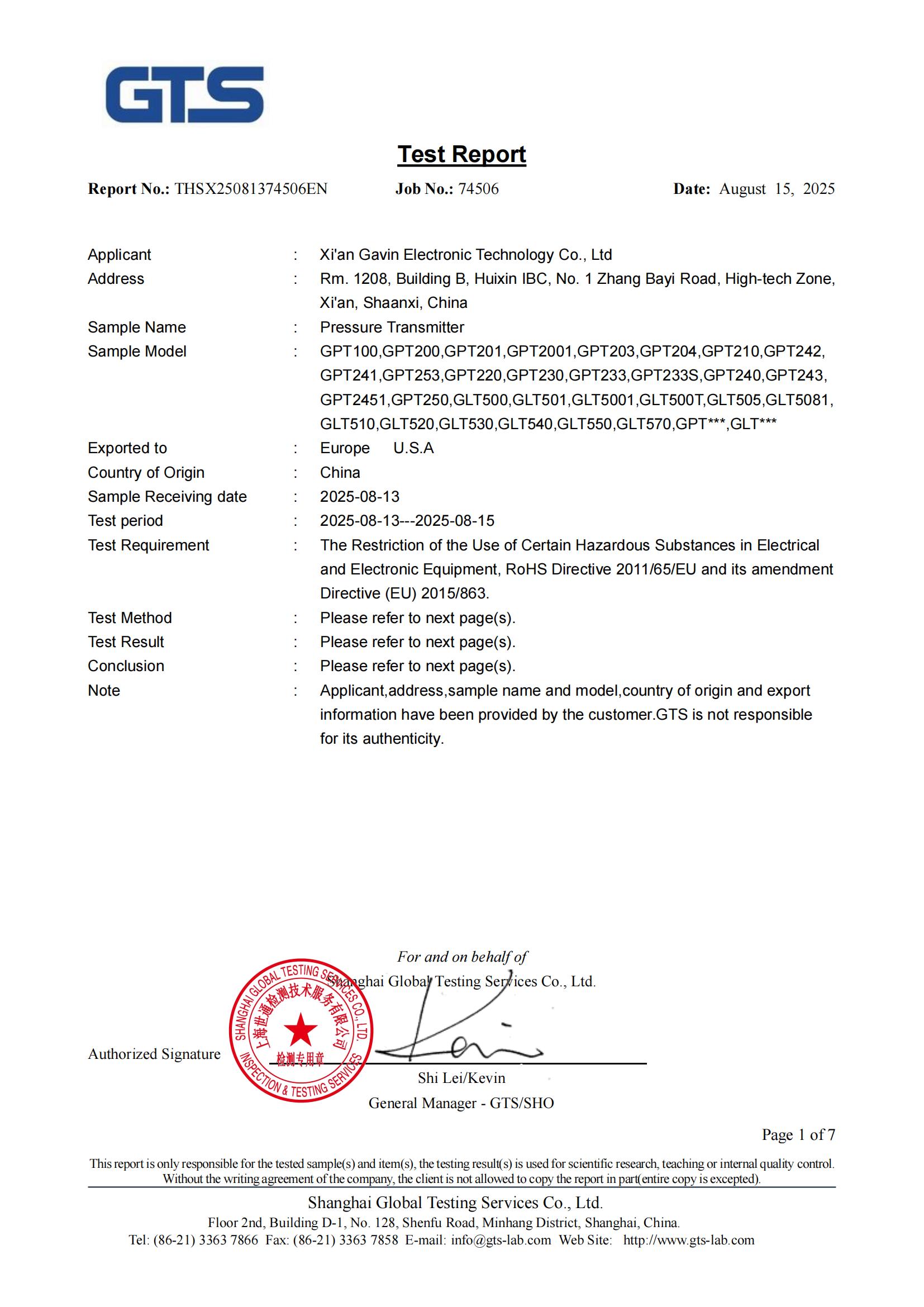
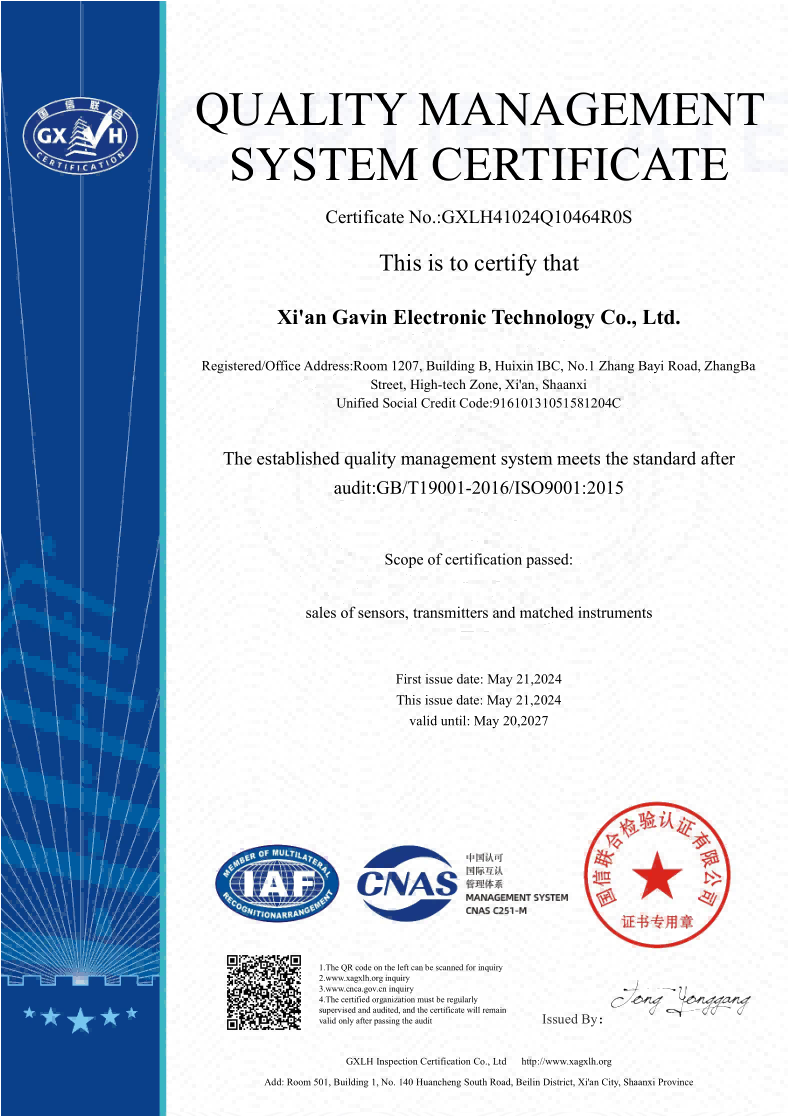
We can fully customize OEM and ODM products for you, changing the specs of the sensors, the transmission protocols, and the mounting arrangements to fit your needs. Each item goes through a strict quality check and has foreign certificates like CE, RoHS, and ISO standards. In addition to delivering products, we also help with installation, setup, and ongoing tests to make sure that the products work reliably for a long time.
Whether you're sourcing pressure sensor troubleshooting tools, replacement sensors, or IoT-enabled tracking solutions, GAMICOS delivers professional-grade equipment with dependable after-sales service. Get in touch with our team at info@gamicos.com to talk about your measurement problems and find out how our skills as a pressure sensor maker can help you improve your operations.
References
1. Webster, J. G., & Eren, H. (2018). Measurement, Instrumentation, and Sensors Handbook: Spatial, Mechanical, Thermal, and Radiation Measurement (2nd ed.). CRC Press.
2. Johnson, C. D. (2016). Process Control Instrumentation Technology (8th ed.). Pearson Education.
3. Lipták, B. G. (Ed.). (2018). Instrument Engineers' Handbook, Volume One: Process Measurement and Analysis (5th ed.). CRC Press.
4. Bentley, J. P. (2020). Principles of Measurement Systems (4th ed.). Pearson Education Limited.
5. Morris, A. S., & Langari, R. (2021). Measurement and Instrumentation: Theory and Application (3rd ed.). Academic Press.
6. Dunn, W. C. (2019). Introduction to Instrumentation, Sensors, and Process Control. Artech House Publishers.

Ivy
Ivy, product consultant, has focused on sensor consultation for ten years, is proficient in providing pressure and level measurement solutions for customers.
We're here to help — submit your request anytime!
Let us know how we can help solve your pressure level measurement challenge.
_1757930850792.jpg)

Recommended Blog

Can a pressure transducer measure liquid level in firefighting tanks?

What industries are pressure transmitters commonly used in?
Pressure Sensor VS Pressure Transmitter: Are They the Same Thing?