GLT530 vs Traditional Water Level Meters: Key Differences
Understanding Water Level Measurement Technologies
Industrial buying teams have to make important choices about whether to use modern well level transducers or traditional water level meters. These choices affect how accurately measurements are made, how much they cost, and how well the two systems can work together. The GLT530 is a big step forward in submersible sensing technology. It has a small 16-19mm probe diameter, accuracy of up to ±0.1%FS, and digital output compatibility. These are all benefits that make the GLT530 better than mechanical float systems and the old-fashioned steel-tape methods that are usually used for groundwater monitoring. Knowing these important differences helps buying and tech managers make smart choices for deep well applications.
Understanding Water Level Measurement Technologies
For decades, traditional water level meters have been used regularly in commercial settings. Before digital technology changed the field, groundwater tracking was mostly done with mechanical floats, steel-tape gauges, and air systems. These traditional methods are based on physical laws. For example, floats rise with the water level, steel tapes are used to measure depth by hand, and air tubes are used to measure differences in pressure.
Mechanical and Analog Measurement Methods
In traditional float-based systems, mechanical signs are linked to devices that float. Even though they are simple to build, these systems have problems like sediment buildup, limited measurement ranges, and motor wear. Steel-tape water level meters are easy to use and portable, but they require users to lower a probe by hand until it touches water and sets off an alert. This method only takes measurements at certain times instead of continuously tracking, so there are breaks in the data collection that are needed for real-time process control.

Pneumatic level meters put squirted air into tubes that are buried in wells and measure the back-pressure needed to make bubbles pop at the end of the tube. Even though these systems are more advanced than float systems, they still need regular upkeep to keep the tubes from getting clogged and a way to keep air flowing.
Digital Sensing and Submersible Technology
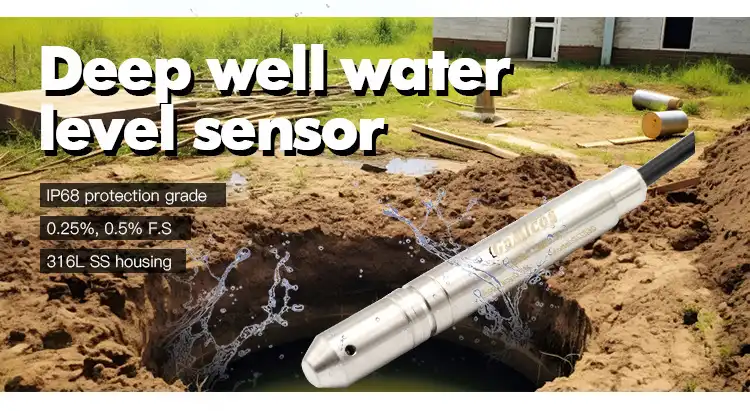
Piezoresistive pressure sensors are used in modern well level transducers like the GLT530. The sensors are housed in fully welded stainless steel housings. By directly measuring hydrostatic pressure and turning it into normal electrical data, the gadget does its job. The GLT530's built-in signal processing circuit handles changes in temperature and external factors so that data stay stable from 0 to 1 meter up to 500 meters of water column.
The submersible design lets you stay submerged for a long time without losing performance. With a probe diameter of only 16mm or 19mm, the GLT530 can work in tight areas and small monitoring wells that other tools can't. The fully welded design gets rid of the leak paths that can damage regular sensors, so they can keep working even in harsh underground conditions.
Advantages of Modern Transducer Technology
Modern level measurement based on pressure has clear benefits for business-to-business (B2B) uses. Non-polar two-wire current output lets real-time data flow, making it easy to connect to SCADA systems, PLCs, and remote tracking platforms. Engineering managers can always see how much water is in the ground, which helps with planned repair and setting off automatic alarms.
When mechanical parts that move are taken out, reliability goes up. Modern transducers have much shorter repair times because they don't have floats, wires, or pneumatic parts that can get clogged. The GLT530's high-performance sensor stays calibrated for long periods of time, so there's less need for regular field adjustments that slow down processes and use up technical resources.
Comparative Analysis: GLT530 vs Traditional Water Level Meters
To make buying choices, you need to be able to compare performance objectively across a number of factors that have a direct effect on business efficiency and total cost of ownership. The GLT530 is compared to standard meters using factors that are useful for industrial automation projects in the next section.
Accuracy and Measurement Range
The GLT530 is accurate to within ±0.1%FS, ±0.25%FS, or ±0.5%FS, based on the setup. This is much better than most traditional meters, which are only accurate to within ±1-2%FS at best. This exact edge means better groundwater management in situations where small changes in level are important for operations, like tracking reservoirs, dewatering work, and reporting environmental compliance.
Modern sensors are different because they can measure a wide range of things. Using the same basic technology base, the GLT530 can be used for everything from shallow monitoring wells at 1 m depth to deep commercial boreholes at 500 m depth. Traditional float systems can only work at depths of 30 to 50 meters before they become too complicated to use, and steel-tape ways become less useful above 100 meters because they are hard to handle.
| Prarameters of GLT530 Well Level Sensor | |
| Range | 0~1……200m H2O(can OEM) |
| Accuracy | ±0.25%F.S、±0.5%F.S、±0.1%F.S |
| Operating temperature | -40℃~85℃ |
| Media compatibility | All corrosive media compatible with 316L stainless steel |
| Output signal | 4~20mA, 0/1~5V, 0~10V |
| Power supply | 10~30V, 8~30V, 12~30V |
| Pressure interface | Submersible type |
| Response time | 10ms |
Installation and Maintenance Requirements
Installation ease has a direct effect on how long a job takes and how much it costs to hire. The GLT530 only needs an electricity link and a suspension wire. It doesn't need any complicated mechanical parts, pneumatic lines, or float tanks. The small profile makes it possible to retrofit into existing wells without making the boreholes bigger, which is a big plus when updating tracking equipment.
Here are the benefits of upkeep that have an effect on operating costs:
- Reduced Service Frequency: The GLT530's solid-state sensor gets rid of mechanical wear points, so instead of checking every month like most float systems do, it only needs to be checked every three or six months.
- Simplified Calibration: Digital output lets you calibrate on a bench using standard pressure sources, so you don't have to make the time-consuming field changes that analog signs need.
- Contamination Resistance: The fully welded case keeps silt out, which would otherwise clog the float mechanisms and air tubes and make the readings less accurate in murky groundwater.
These maintenance benefits lead to lower lifetime costs and less downtime, which are very important for big monitoring networks that cover multiple sites and remote installs.
Data Integration and Automation Capability
Modern industrial processes need digital connections that can't be provided by old-fashioned meters. The GLT530's current output (usually 4–20mA) connects directly to automation systems, which lets well networks that are spread out be monitored from one place. Data keeps flowing to control rooms so that decisions can be made in real time without having to go out and collect data by hand.
When groundwater tracking is connected to SCADA systems, it changes from taking snapshots every so often to continuously watching process variables. Engineers set warning levels, analyze trends, and set up automatic reactions to changes in level—things that can't be done with steel-tape readings or local mechanical indicators. Because the GLT530 has CE, RoHS, and ATEX certifications, it is compatible with foreign automation standards. This makes buying things easier for projects that involve people from different countries.
Selecting the Right Water Level Meter for Your Project
When choosing level measurement tools, procurement workers have to think about a lot of technical and business issues. The framework for making decisions should find a mix between the need for success and the limited budget, while also taking into account the long-term operational needs.
Evaluating Precision and Environmental Requirements
The precision needs of different applications are very different. For compliance reporting, environmental tracking might need ±0.25%FS accuracy to record small seasonal changes, but industrial dewatering processes can handle wider accuracy bands. The GLT530 has different levels of accuracy that let you match specifications without over-engineering, which improves the cost-performance ratio.
The environment has a big effect on the choice of sensors. Extreme temperatures, toxic groundwater chemistry, and mechanical shock from well pumps are all things that put a lot of stress on technologies and make them useless. The GLT530 is made of stainless steel and has temperature-compensated electronics that can handle rough conditions that wear out mechanical links and gas systems. Geothermal wells, mine dewatering, and coastal tracking are all places where submersible devices are very useful because standard equipment doesn't work well in saltwater.
Comparing Sensor Types and Applications
Submersible pressure sensors, such as the GLT530, record absolute or gauge pressure at the installation depth and use hydrostatics to figure out the height of the liquid. This direct method of measuring is more accurate than indirect methods like ultrasonic or radar monitors that figure out distance by reflecting sound waves off of a wet surface. Submersible designs work best in wells with a small width, rough conditions, and situations where foam or air layers make surface-detection technologies less effective.
Non-submersible sensors are used in places where it's not possible to submerge probes, like open tanks, channels, and lakes with a lot of surface area. Usually, these devices use ultrasound or radar to measure things and are mounted above the liquid's surface. They work well in clean water and easy-to-reach places, but submersible well level transducers are more compact and offer more placement options for deep underground uses.
Real-World Performance Evidence
Industrial approval gives more trust than just reading the specs. The GLT530 is used in oil production facilities to keep an eye on injection wells, in pharmaceutical plants to keep an eye on process water sources, and by local utilities to keep an eye on aquifer levels. The sensor works reliably in a desalination plant in the Middle East. It was used for 18 months straight in high-salinity groundwater wells that supplied reverse osmosis systems, and it kept its calibration within ±0.15%FS the whole time.
Procurement Considerations and Vendor Insights
Both technical specs and business factors play a big role in buying choices. When partnering with a vendor, sourcing managers look at the total cost of ownership, how reliable the seller is, and how much customization the supplier can do.
Cost Analysis and Bulk Purchasing
The GLT530 usually costs more at first than simple float switches or manual steel-tape gauges. This is because it uses more modern sensor technology and is made with more precision. Lifecycle cost estimates, on the other hand, show benefits like lower upkeep costs, longer service intervals, and no need for manual data collection. Bulk buying programs offer savings for projects that need a lot of sensors, like monitoring networks, well fields that are spread out, and installations that need to be done in more than one place in manufacturing buildings.
Vendor Reliability and Supply Chain Factors
Custom setup choices let you change the specifications without having to make completely custom designs. GAMICOS provides OEM services that include changing wire lengths, electrical connections, and pressure ranges. These services let procurement teams use tried-and-true sensor systems while still adapting to differences at each site. This method strikes a mix between the benefits of customization and the higher costs of fully custom building.
In addition to product requirements, operational skills that affect project plans are also looked at when evaluating suppliers. Lead times for normal GLT530 configurations are usually between 2 and 4 weeks. For custom designs, the time needed varies from 4 to 6 weeks, based on how complicated the changes are. GAMICOS keeps extra parts in stock for popular setups so that they can be delivered faster in case of urgent replacements or project acceleration.
Competitive Landscape Context
Procurement teams can lower their risks by making sure warranties are covered and expert help is available. Standard guarantees cover flaws in the way the product was made and fails that happen before they should. For harsh environments, there are choices for longer warranties that cover damage from the environment. Technical support teams help choose the right sensors, guide installation, and fix problems, which makes it easier on internal engineering resources during setup and operation.
Instrumentation companies around the world, like ABB, Siemens, and Honeywell, make level measuring systems that use a variety of technologies. The GLT530 well level transducer competes by specializing in small submersible designs that work best in deep wells. It offers performance that is comparable to major brands at a price that is affordable, showing that the company has worked on making these products. GAMICOS is dedicated to measuring pressure and level, which gives them deep scientific knowledge and the ability to quickly make changes that other industrial companies can't match.
Maintenance Tips and Troubleshooting Common Issues
To keep measurements accurate over time, you need to do preventative maintenance that is specific to the sensor technology and working conditions. Regular maintenance plans keep both the GLT530 and regular meters in good shape and stop problems from happening before they happen.
Routine Maintenance Checklist
The frequency of regular inspections depends on how bad the application is. The plan below shows how submersible sensors are usually used in mild groundwater environments:
- Quarterly: Every three months, the wire must be visually checked for wear or damage, the electrical link must be confirmed, and the zero-offset must be checked against a known reference level.
- Semi-Annual: Every six months, the sensor body is physically removed so that it can be inspected, any sediment that has built up on the diaphragm is cleaned off, and the stability of the wire is tested.
- Annual: Every year, the full calibration is checked against approved pressure standards, the cable insulation resistance is tested, and the paperwork is looked over to find drift trends.
More regular inspections are needed in harsh settings with lots of sediment, chemicals that eat away at metal, or mechanical shaking. On the other hand, clean groundwater tracking in stable geological layers lets longer periods of time pass, which means less downtime for operations.
Addressing Common Operational Issues
The most common performance issue with pressure sensors is signal shift. Gradual calibration changes usually stem from temperature cycling, mechanical stress, or sensor aging. Temperature compensation in the GLT530 reduces the effects of temperature, but extreme situations may be too much for the correction methods to handle. Scheduled recalibration brings back accuracy, and drift rates show when a part is about to break, which means the sensor needs to be replaced.
Output signals that are noisy or don't work right are a sign of electrical interference. Most electromagnetic interference problems can be avoided by putting cables away from motor drives and high-voltage power lines. In factory settings with a lot of electrical noise, interference problems can be fixed by using grounding techniques and shielded wire standards.
Maximizing Sensor Lifespan
Environmental factors have a big effect on how long sensors last. Groundwater chemistry that is aggressive—low pH, high chloride content, or dissolved gases—wears down sensing materials over time. The GLT530 is made of stainless steel, which is chemically inert. However, in harsh situations, you may need to use different materials or protective coatings, which can be added through custom setups. Mechanical safety stops physical damage from well repair activities, pump setups, and geological shifting. Tension loads that put stress on internal links are taken care of by cable strain relief at the wellhead. A sufficient depth of submersion to protect sensors from usual level changes prevents temperature shock and pressure changes that speed up component aging.
Conclusion
Digital sensing technology, small submersible designs, and easy automation integration make modern well level transducers like the GLT530 much better than standard mechanical meters in terms of performance and ease of use. Even though it costs more at first, the switch to a new technology is worth it because of the accuracy, dependability, and data connectivity needed for modern industrial groundwater management. Lifecycle cost benefits for procurement teams include less upkeep, longer service intervals, and better process control skills that help the energy, food processing, pharmaceutical, and oil industries use water resources more efficiently around the world.
FAQ
Q1: In what ways does the GLT530 make tracking more accurate than other instruments?
A: The GLT530 is much more accurate than most mechanical float systems, which are only ±1% to ±0.5%FS. It does this by using piezoresistive sensor technology and temperature adjustment that is built in. Digital signal processing gets rid of the reading mistakes that come with analog signs and measuring with steel tape by hand.
Q2: Can the GLT530 work with factory control tools that are already in place?
A: The sensor's two-wire current output is non-polar, so it works with all PLCs, SCADA systems, and data loggers that accept standard 4-20mA signals. This interface is used by most companies, so it can be added to current automation systems without the need for special input units or signal conditioning gear.
Q3: What are the differences between the GLT530 and other meters when it comes to maintenance?
A: Because the GLT530 is solid-state, it doesn't have any of the mechanical wear points that float systems do. This means that instead of checking the system every month, it only needs to be checked every three or six months. Because there are no moving parts, much less upkeep work and spare parts inventory is needed than with standard equipment.

Halen
With over 12 years of experience in fluid sensing technology, Halen specializes in helping clients select and optimize oil level sensors for a wide range of industries—including automotive, marine, heavy machinery, and energy.
We're here to help — submit your request anytime!
Let us know how we can help solve your pressure level measurement challenge.

_1757930850792.jpg)






Recommended Blog
Guide to Installing a Submersible Water Level Sensor Probe
Guide to Installing a Submersible Water Level Sensor Probe
Water Level Sensor Probe Maintenance Tips for Longer Service Life
Water Level Transducer Buying Guide for Global Importers
Top Benefits of Using a Submersible Water Level Transducer
How a Water Depth Sensor Improves River Monitoring Accuracy
Water Level Sensor Probe Maintenance Tips for Longer Service Life
Water Level Transducer Buying Guide for Global Importers
Top Benefits of Using a Submersible Water Level Transducer
How a Water Depth Sensor Improves River Monitoring Accuracy
Water Level Sensor Probe Maintenance Tips for Longer Service Life
Water Level Transducer Buying Guide for Global Importers
Top Benefits of Using a Submersible Water Level Transducer
How a Water Depth Sensor Improves River Monitoring Accuracy
Water Level Sensor Probe Maintenance Tips for Longer Service Life
Water Level Transducer Buying Guide for Global Importers
Top Benefits of Using a Submersible Water Level Transducer
How a Water Depth Sensor Improves River Monitoring Accuracy
Water Level Sensor Probe Maintenance Tips for Longer Service Life
Water Level Transducer Buying Guide for Global Importers
Top Benefits of Using a Submersible Water Level Transducer
How a Water Depth Sensor Improves River Monitoring Accuracy
Water Level Sensor Probe Maintenance Tips for Longer Service Life
Water Level Transducer Buying Guide for Global Importers
Top Benefits of Using a Submersible Water Level Transducer
How a Water Depth Sensor Improves River Monitoring Accuracy
