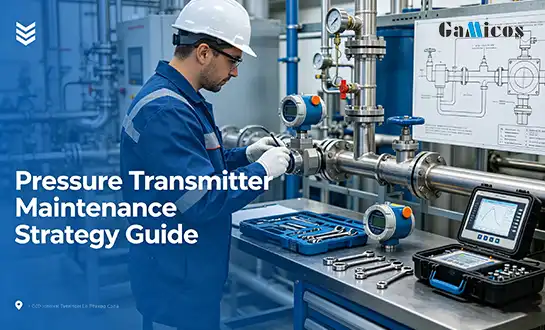
Accuracy Degradation Over Time? Preventive Maintenance Planning
Understanding Accuracy Degradation in Pressure Sensors
- Understanding Accuracy Degradation in Pressure Sensors
- Best Practices for Pressure Sensor Preventive Maintenance
- Maintenance Strategies: Manual vs. Automated Approaches
- Procurement Considerations for Pressure Sensor Maintenance
- Case Studies and Real-World Applications in Preventive Maintenance
- Conclusion
- FAQ
- Partner with GAMICOS for Reliable Pressure Sensor Maintenance Solutions
- References
Pressure monitors will lose accuracy over time, but this can be avoided with careful planning. Environmental stresses, mechanical wear, and chemical exposure all erode measuring accuracy over time. Structured pressure sensor maintenance plans protect business continuity, cut down on downtime, and keep the standard of production high. Understanding how things break down and following preventative maintenance rules has a direct effect on the dependability, compliance, and cost-effectiveness of industrial automation systems for B2B procurement managers and engineering teams that oversee operations in the oil, chemical, pharmaceutical, and energy sectors.

Understanding Accuracy Degradation in Pressure Sensors
Industrial pressure monitors have to deal with a lot of work that wears them down over time. Figuring out what causes these drops in production helps us spot problems before they become major production problems.
Primary Causes of Sensor Accuracy Loss
Changes in temperature are one of the most common causes of accurate shift. When sensors work in places that are very hot or very cold, their internal parts expand and contract, which changes the calibration baselines. Humidity adds another level of complexity; moisture entry breaks down electrical connections and sensing elements, especially in units that aren't protected properly or weren't designed correctly.
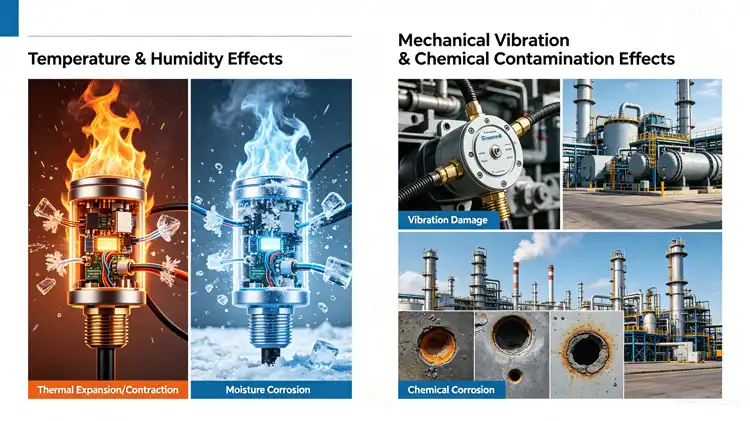
Mechanical shaking, which happens a lot in places like pump stations, compressor factories, and places that install heavy machinery, harms delicate diaphragms and slowly loosens up mounting hardware. Chemical pollution is one of the most sneaky problems to solve. In petroleum plants, rough media hits sensor surfaces, creating pits, coating growth, or material degradation that changes the way the sensors respond to pressure in a basic way.
Recognizing Early Warning Signs
Readings that don't match up are the most obvious red flag. When process conditions stay the same but sensor outputs change in unpredictable ways, it's possible that accuracy has started to drop. A lot of the time, engineering managers notice that alarms go off a lot without any changes being made to the process. This is a clear sign that sensor uptime has dropped below acceptable levels.
When output drifts outside of set tolerance bands, it needs quick attention. Sensors that used to be accurate to within ±0.25% may slowly lose their accuracy until they are only accurate to within ±1% or worse. This can mess up quality assurance and process control loops. In industries like pharmaceuticals or food processing, where following the rules about measurements is important, this kind of drift can lead to expensive production stops and extra attention from the government.
Business Impact of Inaccurate Measurements
The effects on operations go far beyond simple mistakes in measuring. When pressure control systems get bad inputs, it lowers the quality of the production, which causes batches that don't meet specifications, lost raw materials, and customer complains. Maintenance teams are getting more calls for emergencies, which throws off plans and drives up the cost of labor.
When pressure tracking systems don't give correct data, safety risks go up by a huge amount. Conditions of overpressure may not be noticed, which puts people and tools at risk. It becomes harder to follow the rules, especially in fields with strict quality control systems. When procurement managers are trying to balance operational budgets, the costs of less accurate sensors over time—including downtime, quality problems, and safety incidents—far outweigh the money spent on preventative maintenance.
Best Practices for Pressure Sensor Preventive Maintenance
Systematic repair procedures keep measurements accurate and stretch the life of sensors. Trustworthy business processes are built on these habits.
Routine Inspection and Cleaning Protocols
Setting up regular review times based on the seriousness of the application stops small problems from getting worse. In harsh places like chemical processes, offshore platforms, and sites with a lot of shaking, checks every three months are necessary. Applications that aren't as demanding might only need to be reviewed every six months.
Technicians should check the physical state, electrical connections, and the stability of the mounting during inspections. Pressure sensor maintenance requires watching out for process residue building because it changes pressure readings when it forms around sense ports. When cleaning, you must carefully follow the manufacturer's instructions. To get rid of deposits without hurting sense surfaces, we suggest using approved liquids and soft brushes. Abrasive materials or chemicals that don't work well together can damage sensor elements forever.
During repair, you can't forget about safety rules. Maintenance workers are safe when they keep sensors away from pressurized systems, follow lockout-tagout processes, and wear the right personal safety equipment. Keeping good records of what was found during inspections makes useful trend data that shows patterns that help improve upkeep.
Calibration Frequency and Methods
Calibration needs are very different depending on how important the product is and how it is being used. In nuclear power plants or pharmaceutical clean rooms, important safety systems may need to be checked every month. In stable settings, tracking apps work well with yearly calibration cycles.
There are pros and cons to both on-site and laboratory testing. Using movable reference standards for on-site calibration cuts down on downtime and keeps sensors working while checking is done. This method works well in situations where stopping a process would cost a lot of money. Laboratory calibration is more accurate because it uses climate-controlled rooms and main standard tools, but sensors have to be taken off and put back on temporarily.
When testing shows drift that is too high, you have to decide whether to fix the problem or replace it. If sensors keep needing big correction factors, it means they are fundamentally broken, which means replacing them is a better long-term option than trying to calibrate them over and over again.
Troubleshooting Common Issues
Effective fixing tells the difference between problems that can be fixed and ones that need to be replaced. Zero drift usually goes away after recalibrating, but span drift along with nonlinearity means the detecting element is worn out and needs to be replaced. If the electrical output isn't stable, it could be because of rusted connections, which can be fixed by cleaning and replacing the connectors, or an internal component failure that needs a new sensor.
Diagnostic work is guided by knowing how certain sensor systems fail. The diaphragm and temperature can wear down piezoresistive sensors. Designs for capacitors are subject to dielectric contamination. When temperatures change, the bonds between strain gauge configurations get weaker. By noticing these trends, maintenance teams can quickly find answers, cutting down on the time needed for diagnosis and stopping failures from happening again and again.
Maintenance Strategies: Manual vs. Automated Approaches
Choosing between old-fashioned manual care and newer automatic tracking has a big impact on how well an operation works and how much it costs.
Comparing Traditional and IoT-Enabled Solutions
Technician visits are needed for manual inspection programs because they allow people to directly look at sensors, record numbers, and run tests. This hands-on method lets skilled techs find small problems by observing and measuring them directly. However, human methods have their own problems. For example, checks happen at set times, so they might miss intermittent failures or problems that get worse quickly in the time between visits.
IoT-enabled sensor networks that can do automated tracking are changing the way maintenance is done. Real-time drift identification is possible with continuous data streaming. When readings start to deviate from expected trends, tech teams are quickly notified. Algorithms for predictive analytics look at patterns to predict mistakes before they happen. This makes condition-based maintenance possible, which fixes problems at the best time instead of following arbitrary plans.
When handling a lot of sensors in a lot of different sites, the return on investment for automated systems becomes very strong. A petroleum business that checks hundreds of pressure points across pipeline networks can save a lot of money by centrally monitoring them from afar instead of sending field workers to do regular checks. Cutting down on trip costs, making the best use of repair schedules, and stopping problems early on all add up to real financial benefits that usually pay for themselves within 18 to 36 months.
Low-Maintenance Sensor Technologies
Choosing the right technology has a huge effect on how much upkeep is needed. When the temperature stays the same, piezoelectric pressure sensors work great for dynamic measurement tasks because they have great frequency response and little drift. Their charge output needs special circuits, but when set up correctly, it lasts a very long time with little maintenance.
Capacitive devices are very stable when measuring both steady and slowly changing pressure. They don't use much power and can send digital signals, so they work well with current control systems. Pressure sensor maintenance is also simplified because ceramic capacitive designs are better at resisting chemical attack than metallic ones, which means they need less upkeep in acidic service.
Total cost of ownership research is very important when deciding whether to repair or replace something. Compare the total cost of repair (including work, calibration, parts, and downtime) to the cost of replacing and the improvement in performance. When sensors need to be tampered with more than twice a year, they should probably be replaced with ones that use more durable technologies or better-designed models that work better in real-world situations.
Procurement Considerations for Pressure Sensor Maintenance
Long-term maintenance success and operational efficiency are directly affected by strategic choices about what to buy.
Selecting Service Providers and Contracts
When judging repair service companies, you need to look at their professional skills, reaction times, and experience in your business. Providers who work with medicine, food processing, or hazardous area applications should show that they have the right licenses and know how to follow the rules. References from similar businesses are a more reliable way to confirm claimed skills than marketing materials.
There are different types of maintenance contracts, ranging from time-and-materials deals to all-inclusive service agreements that charge a set amount each year for all fixes, checks, and calibrations. Comprehensive contracts make budgeting easier and encourage service providers to keep tools as reliable as possible. Uptime measures and performance-based clauses that link payment are a good way to match vendor goals with operational goals.
When looking for calibration tools and repair kits, it's important to pay attention to the accuracy and tracking requirements. Reference standards must have valid calibration certificates that can be tracked back to national metrology centers. This makes sure that readings are accurate and meet government standards. Genuine replacement parts recommended by sensor makers should be included in maintenance kits. Using aftermarket parts may hurt performance or cancel warranties.
Leveraging Supplier Technical Support
Different companies have very different levels of quality in their technical documents. Leading makers give detailed instructions on how to put their products, how to keep them in good shape, how to fix problems, and how to use their products, along with application notes that address common problems. This paperwork is the basis for internal maintenance programs that work well, so engineering teams can fix common problems without help from outside sources.
When strange problems happen, how quickly the supplier's expert help responds is very important. When procurement managers choose tools, they should look at the infrastructure that backs it up, like specific application engineers, regional service centers, and the ability to do diagnostics remotely. When problems arise out of the blue, suppliers who offer quick responses and deep technical knowledge help keep production running as smoothly as possible.
Authorized service programs make sure that techs have the right training and can get original parts. Even though independent service providers might have cheaper prices, only approved service providers can protect your warranty and make sure that fixes are done according to the manufacturer's instructions. Authorized service is worth the extra cost for important uses where measurement accuracy has a direct effect on product quality or safety.
Case Studies and Real-World Applications in Preventive Maintenance
Implementations in the real world show that organized maintenance plans can bring about real benefits.
Successful Preventive Maintenance Programs
A pharmaceutical company in the Midwest had a lot of trouble with pressure sensors breaking down all the time, which stopped clean processing activities. Pressure sensor maintenance became a priority, and after quarterly inspection procedures and yearly laboratory calibration were put in place, sixty-seven percent less unexpected downtime happened over three years. The program found setups that were constantly being damaged by vibrations. This led to changes to the fixing that stopped the failures from happening again and again.
An foreign OEM that makes hydraulic control systems had to deal with guarantee claims about pressure sensors that were built in. Working together with their sensor provider, they set up arriving inspection processes to make sure the accuracy of the calibration before putting the sensor into the assembly. This simple improvement raised customer trust in the product's dependability and cut field failures by 42%.
These examples show important success factors: collecting data in a planned way to find patterns of failure, working together with suppliers to get technical information, and being willing to spend money on process changes that get to the root causes of problems instead of just fixing the symptoms.
Practical Maintenance Planning Tools
Structured tools that help with regular performance are key to making maintenance plans work. Our suggested execution list has the following items:
• Setting baseline performance data during initial setup gives you a way to find signs of deterioration. Writing down the sensor's specs, how it was installed, and the first results of its calibration makes useful history records that can be used to analyze trends.
• Setting inspection standards that are special to each application makes sure that technicians know what to look at and what conditions need to be fixed. Clear documentation processes record results consistently, so it's possible to compare them between inspection rounds in a useful way.
• Scheduling maintenance tasks based on a risk estimate helps put resources on the tasks that will have the biggest effect. Safety-critical sensors need to be checked more often than non-essential tracking points. This makes servicing more efficient without lowering reliability where it counts most.
• Training programs that make sure maintenance workers know about certain sensor technologies and how they should be used keep damage from happening from bad handling and improve the accuracy of diagnostics. Cross-training provides redundancy, which makes sure that upkeep skills stay the same even when staff changes.
Conclusion
In industrial pressure measurement, accuracy loss is an unavoidable problem. However, careful repair planning turns this threat into a manageable practice. Pressure sensor maintenance is a key part of this approach, as costs are kept low while measurement accuracy is maintained through strategic inspection routines, accurate calibration plans, and smart technology choices.
Automated tracking solutions are becoming more and more clear to be superior to human methods, especially when handling a large number of monitors across a large area. Long-term success depends on purchasing choices that go beyond the initial purchase price and include things like lifetime support, seller technical skills, and the availability of real parts. When engineering and procurement teams use thorough routine maintenance plans, they protect working continuity, compliance with regulations, and the bottom line.
FAQ
How often should industrial pressure sensors be calibrated?
How often calibrations are done depends on how important the application is and how bad the surroundings is. In pharmaceutical or nuclear uses, safety-critical systems usually need to be checked every month or three months. When used in stable settings, standard process control systems usually work well with once-a-year calibration rounds. Extreme temps, corrosive media, and loud vibrations may make plans every six months necessary. Certain businesses may have rules that say certain times have to be met, even if the sensor seems to be stable.
What cleaning methods are safe for pressure sensors?
Before cleaning any sensor, you should always look at the instructions that came with it. Most process leftovers can be easily removed with soft cloths or brushes and light detergents or isopropyl alcohol. Do not use rough materials, high-pressure cleaners, or solvents that are not compatible with sensing materials. Before cleaning, turn off all power and pressure to devices. Check that the sense holes are still clear and that the diaphragms are still in good shape after cleaning.
When should sensors be replaced rather than repaired?
Replace sensors that keep breaking down even after being properly maintained, that have calibration drift that is much worse than what the maker recommends, that have physical damage to the sensing elements or housings, or that are so old that replacement parts are no longer available. A cost study that shows the total cost of upkeep is higher than the cost of replacement also supports renewal. Upgrades to technology that make it more accurate, better able to handle chemicals, or better at diagnosing problems often make replacement more than just a failure reaction.
Partner with GAMICOS for Reliable Pressure Sensor Maintenance Solutions
GAMICOS has been a leader in pressure and level measurement technologies for more than ten years, providing high-precision tools that are reliable in industrial settings to customers in more than 100 countries. Our engineering team provides full technical support for the entire lifetime of your sensor, from the initial specification to ongoing pressure sensor maintenance plans that are suited to your practical requirements. We make a full range of pressure monitors that can be used in energy, food processing, pharmaceuticals, chemicals, and the oil and gas industry.
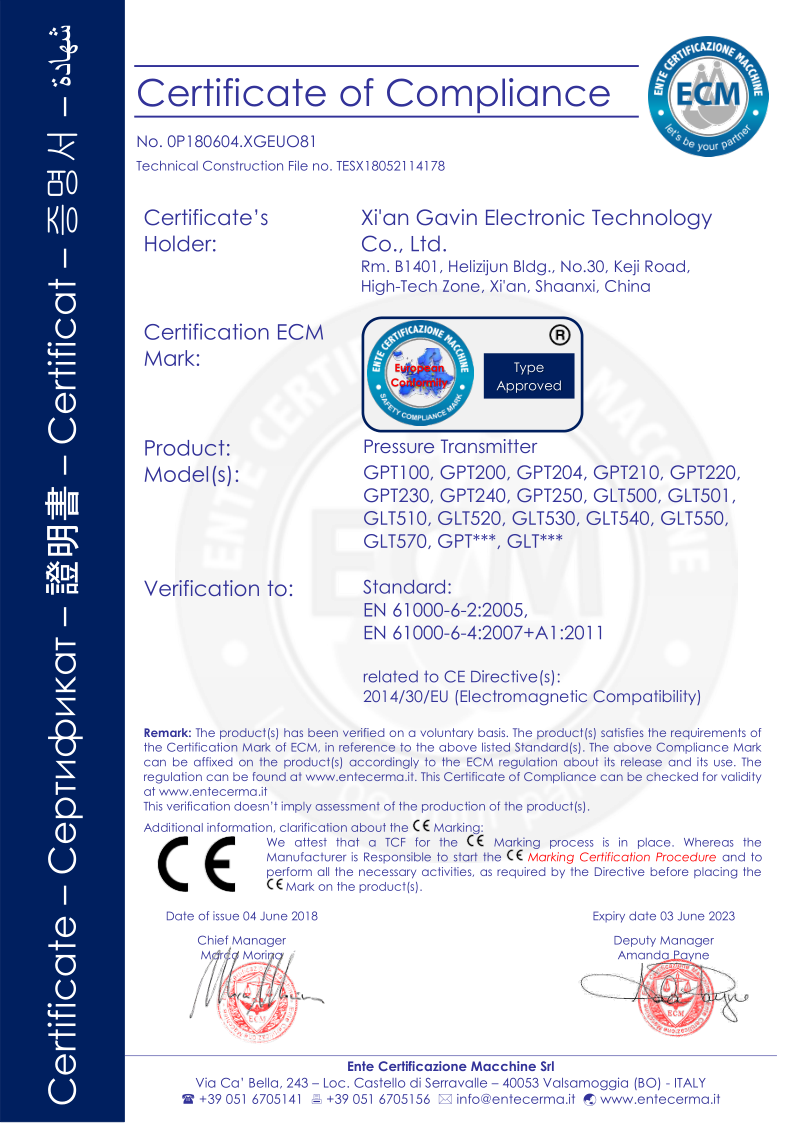
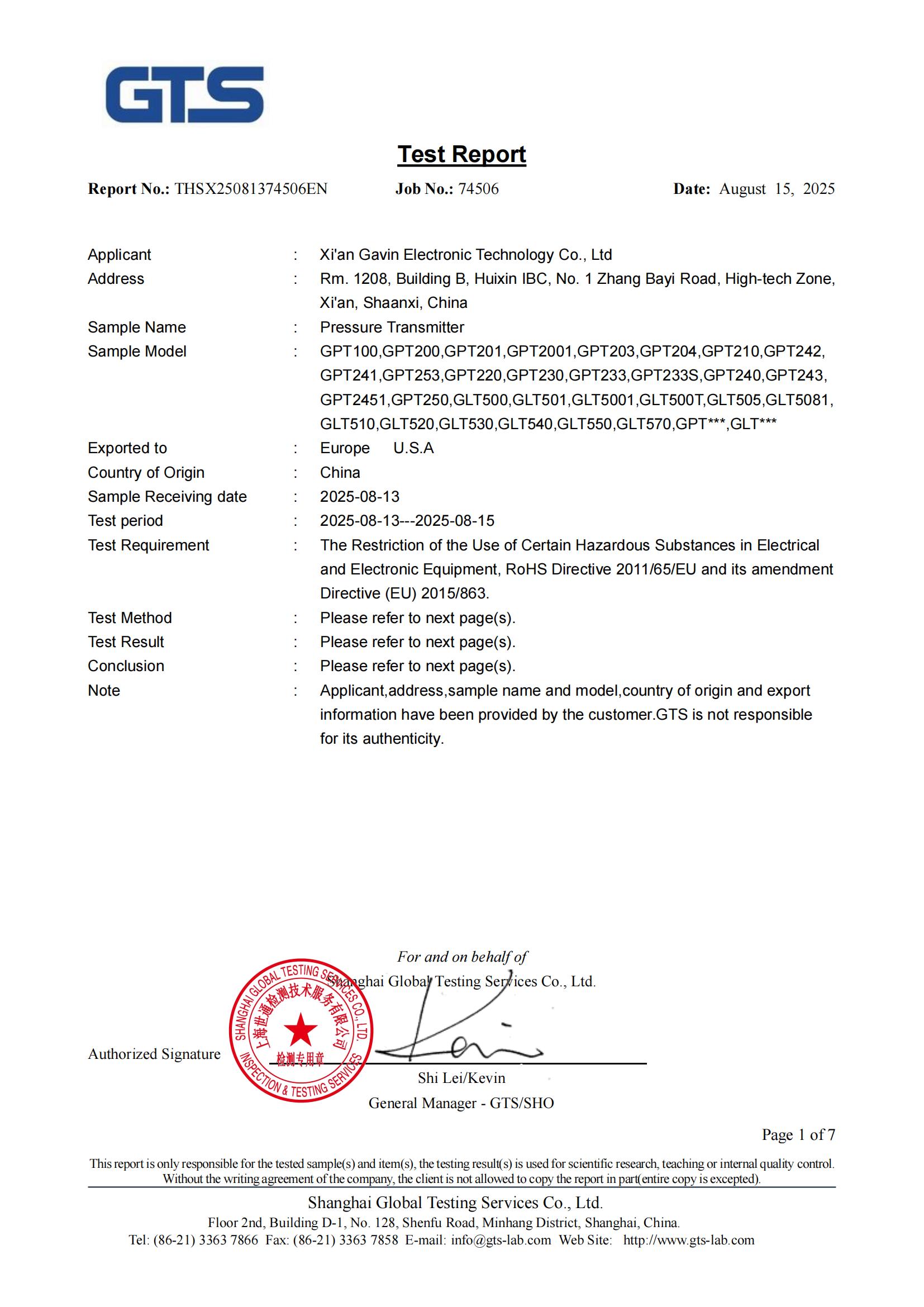
Our products are subject to strict quality control and have earned foreign certifications such as CE and RoHS compliance. Whether you need OEM customization, new sensors, or expert advice on how to improve maintenance, our experts can help you reach your production goals. To talk about your unique needs and find out why top pressure sensor maintenance providers trust GAMICOS for measurement integrity, email our team at info@gamicos.com.
References
1. Anderson, J.M., & Thompson, R.K. (2021). Industrial Pressure Measurement Systems: Design, Installation, and Maintenance. Technical Publishing International.
2. Chen, W., Martinez, L., & O'Brien, S. (2022). Preventive Maintenance Strategies for Process Instrumentation in Chemical Plants. Journal of Industrial Automation and Control, 45(3), 178-194.
3. European Industrial Sensors Association. (2020). Best Practices for Calibration and Maintenance of Pressure Transmitters. EISA Technical Report TR-2020-08.
4. Harrison, D.P. (2023). IoT-Enabled Predictive Maintenance for Industrial Sensors: Implementation and ROI Analysis. Automation Technology Review, 38(2), 56-71.
5. International Society of Automation. (2019). Pressure Sensor Accuracy and Drift: Causes, Detection, and Mitigation (ISA-TR37.25.01). ISA Standards and Practices Department.
6. Yamamoto, K., & Singh, R. (2022). Lifecycle Cost Analysis of Industrial Pressure Sensors Across Process Industries. Proceedings of the International Conference on Industrial Instrumentation, Munich, Germany, 234-248.

Eva
Eva specializes in bridging the gap between cutting-edge sensor technology and market needs. With 8 years of experience in industrial product marketing, she has successfully launched multiple sensor product lines—from pressure transmitters to fuel level sensor—into global markets.
We're here to help — submit your request anytime!
Let us know how we can help solve your pressure level measurement challenge.
_1757930850792.jpg)
Recommended Blog
Pressure Sensor Wetted Materials: Steel, Ceramic, Hastelloy
Pressure Overload Damaged Sensor? Overpressure Protection & Recovery
Pressure Sensor Power Supply Issues: Voltage Fluctuations & Surge Protection
Response Time Too Slow for Application? Dynamic Pressure Selection Guide