Explosion-Proof Pressure Transmitters in Mining Crushers
What Are Explosion-Proof Pressure Transmitters and How Do They Work?
- What Are Explosion-Proof Pressure Transmitters and How Do They Work?
- Comparing Explosion-Proof vs. Standard Pressure Transmitters in Mining Applications
- Key Specifications and Selection Criteria for Mining Crushers
- Leading Brands and Solutions for Explosion-Proof Pressure Transmitters
- Conclusion
- FAQ
- Partner with GAMICOS for Reliable Explosion-Proof Pressure Transmitter Solutions
- References
Mining crushers need strong pressure tracking systems that can work in tough, dusty settings and keep people safe in places where explosions could happen. An explosion proof pressure transmitter keeps operations safe by keeping sources of ignition inside approved casings. This stops disasters from happening when flammable gases or dust build up. These specialized explosion proof pressure transmitters give precise, real-time pressure readings that are needed to improve the performance of crushers, keep equipment from breaking down hydraulically, and keep miners safe in both deep and surface operations.

What Are Explosion-Proof Pressure Transmitters and How Do They Work?
Specialized explosion proof pressure transmitters made for dangerous places use more than one way to keep them safe so there are no chances of an explosion while still giving accurate readings. Knowing about these technologies helps buying teams choose the right options for different mining crusher uses.
Core Protection Technologies
The most common way to protect things in mines is with flameproof shelters, which are called Ex-d according to international standards. These housings keep any explosions inside completely contained inside thick-walled cases that were designed with precise flame paths. If there is an electrical problem that sets off the internal atmosphere, expanding gases will leave through carefully planned holes that keep the combustion products below the temperature needed for ignition before they reach the outside world. When figuring out wall thickness, the highest blast pressure and heat transfer rates are taken into account. This keeps surface temperatures safe even when there are internal fires.
Intrinsically safe designs use a different method by reducing the amount of electrical energy to levels that can't cause an explosion under any problem conditions. These circuits, which are approved as Ex-ia or Ex-ib, use so little power that even short circuits or broken parts can't make enough heat or sparks to set off nearby atmospheres. Intrinsically safe explosion proof pressure transmitters provide high levels of safety, but they need matched barriers or isolators to work. This makes the system more complicated, but it allows them to be used in Zone 0 areas where there is a constant presence of explosive atmosphere.
Measurement Principles in Harsh Environments
Piezoresistive or capacitive sensor elements are often used in mining crusher explosion proof pressure transmitters. Piezoresistive sensors use silicon diaphragms that have strain gauges built into them. When pressure causes the diaphragm to bend, the electrical resistance changes. These designs are great at accurately measuring hydraulic system pressures from 0 to 1000 bar, which is very important for keeping an eye on the cylinders that adjust the crusher and the circuits that keep it running smoothly.
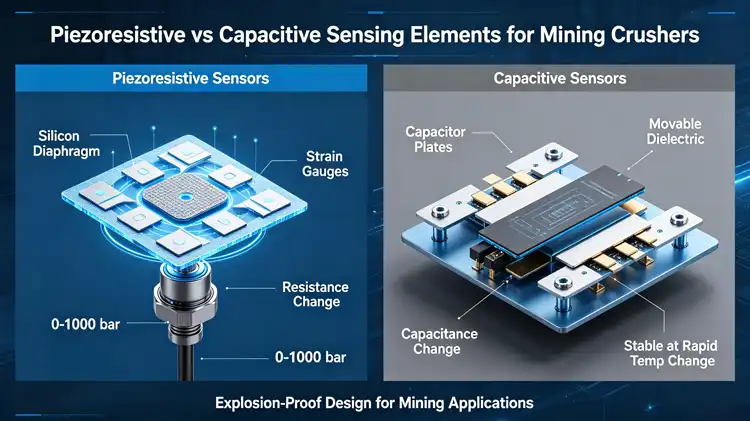
Capacitive sensors measure pressure by moving a cushion between two capacitor plates. They are more stable in situations where temperatures change quickly. Isolation diaphragms that separate process media from sensing elements are made of corrosion-resistant metals such as 316L stainless steel or Hastelloy. This is important for keeping an eye on slurry pumps or wet crushing circuits, where fluids that are high in coarse minerals quickly wear down standard parts.
Certification Compliance Framework
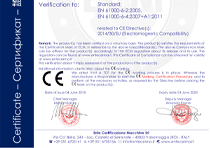
ATEX approval sets rules for equipment that will be used in mining operations in Europe. These rules include types of equipment, levels of safety, and temperature ranges. An ATEX label that says "II 2G Ex d IIC T6 Gb" means that the equipment is safe for use in surface industries (Category II), Zone 1 gas atmospheres (2G), flameproof protection (Ex d), the highest gas sensitivity group (IIC), the highest surface temperature (T6) of 85°C, and the equipment protection level "b."
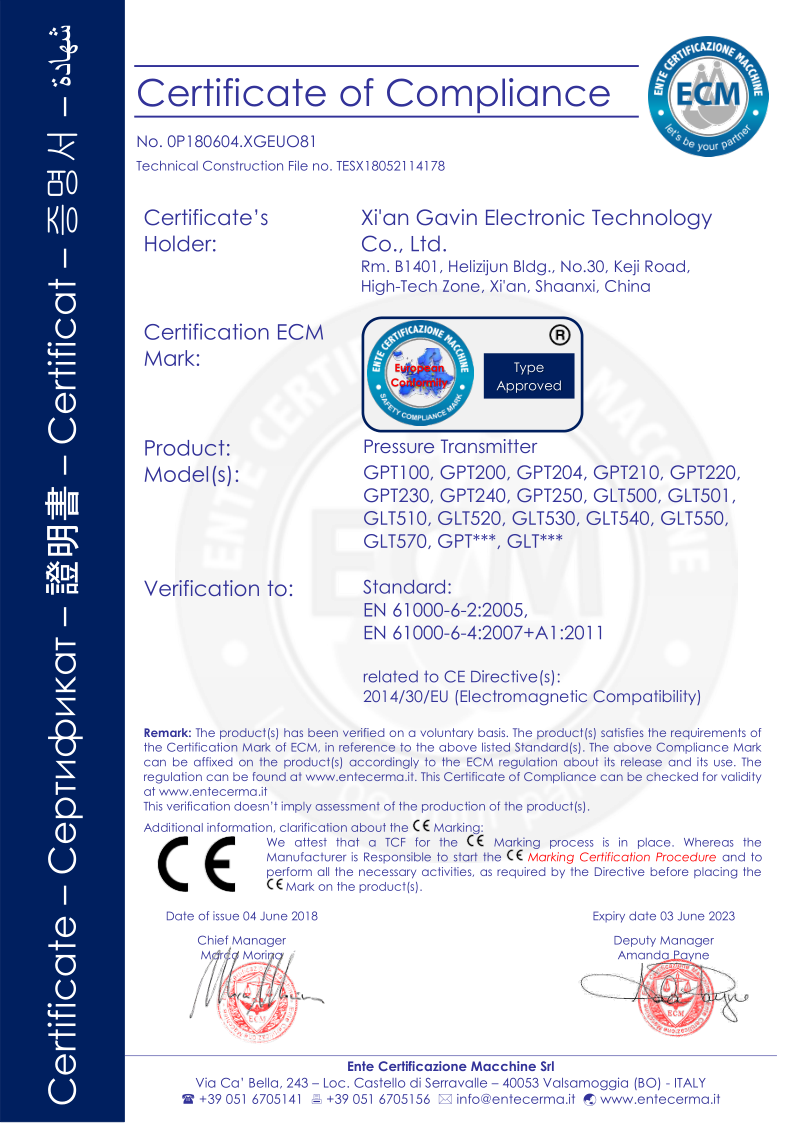
The IECEx approval makes a product known in markets in Asia, Australia, and North America. Additional approvals, such as UL/CSA Class I Division 1 or PESO certification for Indian markets, make sure that the product can be used all over the world. When purchasing explosion proof pressure transmitters for international mining companies, procurement managers should make sure that the explosion proof pressure transmitters are multi-certified to avoid having to pay for extra testing and having different sites follow different specifications.
Comparing Explosion-Proof vs. Standard Pressure Transmitters in Mining Applications
When you know the differences in performance between approved explosion proof pressure transmitters and normal industrial transmitters, you can see why explosion-proof models are worth the extra money because they save you money in the long run.
Construction and Durability Advantages
Standard pressure transmitters have housings made of light metal that are sealed against the environment to an IP65 or IP67 level. Even though these cages work fine in clean industrial settings, they quickly break down when they are put in places where there is constant vibration, impact loads, and the infiltration of rough dust. When seals break down, water can get in and cause measurements to drift and explosion proof pressure transmitters to fail early.
Explosion-proof housings are made of cast aluminum alloys or stainless steel that don't contain copper, and their walls are thicker than 6 mm in key areas. When threaded joints are made to very tight tolerances, they make flame paths that are also strong shields against the outside world, with IP66 or IP68 ingress protection. Compound-filled glands or protected conduit fittings are used for cable entries. These keep the seals intact even when the connector is vibrating continuously. During normal operation, a crusher-mounted explosion proof pressure transmitter may experience acceleration forces exceeding 5G. This strong construction makes the field service life longer, from 3 to 5 years for normal units to 10 to 15 years for approved explosion-proof models. This means that they don't need to be replaced as often, which saves a lot of money on downtime costs.
Safety Risk Mitigation
When explosion proof pressure transmitters fail in dangerous environments, the effects go far beyond damage to the equipment themselves. In 2019, these risks were shown at a U.S. coal preparation plant when a normal pressure switch placed in a crusher dust collection system caused a spark that set a pile of coal dust on fire. The damage to the facility was more than $12 million, and production had to be shut down for a longer time. Investigations showed that the switch did not have the right approval for use in dangerous areas, which was a buying mistake that cost a lot of money.
Certified explosion proof pressure transmitters have designs that have been tried and approved to get rid of the risk of a fire source. During the approval process, devices are put through controlled explosions in test rooms to make sure they are completely contained or that they can't release too much energy. This thorough proof shows a real dedication to worker safety and follows the law. This is becoming more important as mining companies are under more scrutiny from regulators and stakeholders regarding their safety performance.
Long-Term Value Analysis
At first glance, explosion proof pressure transmitters appear to cost 40–60% more than similar standard models. This makes buyers who are concerned with costs hesitant to buy them. A more in-depth look at the total cost shows different economics. In addition to the longer service life we already talked about, approved explosion proof pressure transmitters also require less upkeep work because they need to be calibrated and replaced less often. Safety incident prevention is very valuable—even small explosions need a lot of research, production has to stop, and there could be fines from the government that are much bigger than the cost saves on explosion proof pressure transmitters.
Insurance issues are also something that needs to be thought about. More and more, underwriters want to see proof that a hazardous place is safe before they will issue an insurance. Explosion-proof pressure transmitters that aren't safe could mean that claims after an accident aren't paid. Mining companies that are on the cutting edge know that making sure their explosion proof pressure transmitters are properly approved is not an extra cost but a way to control risk and protect their assets, employees, and the ability to keep running their businesses.
Key Specifications and Selection Criteria for Mining Crushers
To match the explosion proof pressure transmitter's features to specific crusher uses, it's necessary to carefully look at the technical details and weather factors that are unique to each installation site.
Pressure Range and Accuracy Requirements
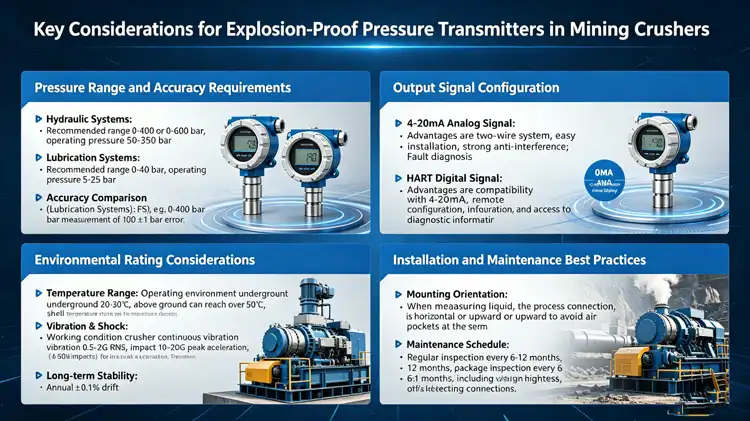
In cone and gyratory crushers, the hydraulic adjustment systems usually work between 50 and 350 bar, so explosion proof pressure transmitters with 0-400 or 0-600 bar ranges are needed to allow for measurement space while keeping resolution. For best precision, 0-40 bar range selections are needed for lubrication systems tracking bearing feed lines that work at lower pressures, usually 5–25 bar. Over-ranging lowers resolution and accuracy. For example, a 0-600 bar explosion proof pressure transmitter that measures 20 bar of real pressure has an accuracy standard of ±0.25%, but it actually has an error of ±1.5 bar, which could hide lubrication problems that are starting to show up. Right-sizing pressure levels makes sure that the accuracy of measurements meets the needs of the application.
More than just the top numbers, accuracy standards deserve close attention. There is a big difference between ±0.25% full scale accuracy and ±0.25% reading accuracy. For example, on a 100 bar test with an 0-400 bar range, full scale accuracy allows ±1 bar error while reading accuracy only allows ±0.25 bar error. Long-term stable specs that show a ±0.1% drift per year help figure out how often to calibrate and how much it will cost to keep the machine running.
Output Signal Configuration
The 4-20mA analog signal is still the most common in mine crusher explosion proof pressure transmitters because it is easy to set up with only two wires and doesn't pick up noise well in harsh electrical settings. The live-zero design lets you find faults: when a wire breaks or the power goes out, you get a 0mA signal, which is very different from a good low-pressure reading near 4mA. This built-in monitoring feature helps preventative maintenance programs by letting workers know when wiring is getting worse before it breaks completely.
Digital standards like HART, Profibus PA, and Foundation Fieldbus add digital communication on top of 4-20mA signals. This lets you set up explosion proof pressure transmitters remotely, get diagnostic information, and send multiple types of data without adding extra wires. A HART-enabled explosion proof pressure transmitter sends an analog signal to measure pressure and a digital polling signal to report the device's temperature, diagnostic flags, and setup data at the same time. This better data helps with condition tracking projects, but to use the more advanced features, applications need control systems that work with them and trained staff.
Environmental Rating Considerations
Extreme temperatures can be hard on mine crushing explosion proof pressure transmitters. Underground sites may have stable temps between 20°C and 30°C, but surface breakers in desert areas have to deal with air temperatures of 50°C or more, and direct sunlight adds another 20–30°C to the housings that are out in the open. Quality explosion proof pressure transmitters have operating ranges from -40°C to +85°C with adjusted accuracy, so they keep working even when the temperature changes. Process link temperatures need to be taken into account separately. For example, the temperature of the hydraulic oil in crusher adjustment systems can hit 80–90°C when there is a lot of load, which means that the process seals and fluid fill designs need to be compatible.
Industrial-grade explosion proof pressure transmitters are different from mining-grade explosion proof pressure transmitters in terms of their vibration tolerance standards. Crusher-mounted systems are constantly vibrating at 0.5-2G RMS, and shocks can reach 10–20G peak acceleration when material bridges or uncrushable objects pass through. Explosion-proof pressure transmitters that meet IEC 60068 standards for 10G vibration and 50G shock can be mounted directly on the crusher, but lower-rated devices need to be mounted remotely with impulse lines, which is more expensive, more complicated, and could cause problems with dust-filled hydraulic fluids getting clogged.
Installation and Maintenance Best Practices
Common failure modes can be avoided by placing in the right way. When mounting explosion proof pressure transmitters that measure liquid-filled lines, the process connections should be horizontal or pointing upwards. This keeps gas pockets from building up at the sensing diaphragms, which can lead to reading mistakes. In slurry uses, downward-facing links collect solids that build up and stop pressure from moving, which hurts the diaphragms that isolate the flow. In their installation guides, vendors list the exact orientation needs for each type of media.
Maintenance checks every 6 to 12 months keep measurements accurate and safety certifications current. As part of the inspection process, the housing is looked at visually for damage or rust. The tightness of the electrical connections is also checked, and the zero point is confirmed using certified test gauges. Every 12 to 24 months, the whole system has to be re-calibrated against traceable pressure standards to make sure it stays accurate and follows quality control systems. Maintenance records that are written down show that the property is being properly managed, which is needed by insurance plans and government inspections.
Leading Brands and Solutions for Explosion-Proof Pressure Transmitters
Established instrumentation makers have decades of experience with mining crusher uses and a wide range of certifications. However, new providers like GAMICOS offer cheap alternatives with strong customization options.
Global Brand Landscape
Honeywell's ST800 line makes rugged, flame-resistant explosion proof pressure transmitters that are used in mines all over the world. Their wide range of certifications, which includes ATEX, IECEx, CSA, and PESO, allows for flexible requirements in international operations. Emerson's Rosemount 3051S platform has better diagnostics and wireless choices that make it appealing to businesses that put digital transformation and predictive maintenance programs at the top of their list of priorities.
European experts such as WIKA and Endress+Hauser bring strong technical support networks to markets in the EU and North America. Their application engineering teams help with sizing, material suitability, and installation training, all of which lower the risks of completion for complicated projects. Because ABB and Siemens have more automation products, they can give integrated solutions where explosion proof pressure transmitters work with crusher control systems and plant SCADA networks without any problems.
Regional distributors are very important to plans for buying. Channel partners that have been around for a while keep local stock on hand so that orders can be delivered quickly. They also help with field service and can communicate with foreign producers across language and time zones. Their application understanding that is specific to the mining situations in the area adds value beyond just supplying products.
Emerging Supplier Capabilities
Companies like GAMICOS show how focused product development and open customization can help niche makers compete with well-known names. Their line of explosion proof pressure transmitters is designed to work with common mining crushers. They also offer OEM/ODM services that let customers customize the labeling, pressure ranges, electrical connections, and documentation to meet their exact needs. These are features that big multinational companies often can't afford to offer for orders of a moderate size.
This ability to be customized is useful for standardizing explosion proof pressure transmitters across fleet equipment, making custom tracking systems, or meeting the approval needs of different countries. It's better to be able to choose custom pressure ranges that work best with certain crusher models instead of having to choose from a limited number of standard ranges. When compared to dealing with big corporations, working directly with manufacturers often means shorter wait times and faster technical help. However, buyers must do full quality audits and reference checks on newer suppliers to make sure they are reliable.
Conclusion
Explosion-proof pressure transmitters are important safety equipment that keeps mine crusher operations safe from disasters and allows for precise process control. Certified flameproof or fundamentally safe designs get rid of the risk of burning in dusty, possibly explosive environments where regular pressure transmitters are too dangerous. For proper design, pressure ranges, accuracy classes, environmental ratings, and output signals must be matched to specific crusher uses while ATEX, IECEx, or regional certification compliance is checked.
Even though they cost 40–60% more than regular pressure transmitters at first, they end up being much cheaper in the long run because they are better built, last longer, avoid accidents, and need less upkeep. To build trusting relationships, strategic buying weighs technical needs against suppliers' abilities, price structures, and support resources. As safety standards and operational needs grow in mining operations, buying properly defined, certified pressure monitoring equipment shows a dedication to worker safety and operational excellence.
FAQ
Can we retrofit explosion-proof transmitters into existing crusher installations?
Installing approved explosion proof pressure transmitters into working crushers is easy when the existing mounting holes and electrical wiring can handle the new devices. Standard process connections, like 1/4" or 1/2" NPT threads or M20 metric threads, are used in most setups and work straight with replacement explosion proof pressure transmitters. For electrical connections, it's important to make sure that the current conduit fittings and ending methods meet the safety standards for dangerous areas.
For example, normal flexible conduit may need to be upgraded to armored types. As part of the refit process, better mounting spots can be added, isolation valves can be added for future repair, and digital communication methods can be upgraded. Planning retrofits to happen during planned repair shutdowns keeps the effect on production to a minimum and makes sure that the work is installed and tested correctly.
What certifications should we specify for North American mining operations?
In North America, mining activities need equipment that is certified under Class I, Division 1, or Division 2 classifications according to the National Electrical Code. This is usually done by getting permission from a UL or CSA testing center. A lot of makers also get IECEx approval, which makes their products known around the world. In newer buildings, Zone classification systems are replacing Division systems more and more.
This means that equipment needs to be rated for Zone 1 or Zone 2 and have ATEX or IECEx marks on it. Specifying explosion proof pressure transmitters with more than one license gives sites that use different classification systems more freedom and supports future international growth. Check that the markings on the certificates match the site-specific hazardous area classifications that were found through official studies of area classifications and are shown on the electrical plans for the building.
How frequently should mining crusher pressure transmitters undergo calibration?
Calibration times combine the need to make sure measurements are accurate with the need to pay for upkeep and stop production. General industry advice says that calibration should happen every 12 months, but in tough mining situations, it may only need to happen every 6 months for important measures like keeping an eye on the crusher gap settings or saving expensive hydraulic parts.
If a explosion proof pressure transmitter's performance stays the same over multiple calibration rounds, the times can be extended to 18–24 months based on past stability data and a risk estimate. Condition-based calibration programs with regular zero-point checks can help you figure out which devices need to be fully re-calibrated while keeping stable units in use longer. This will save you money on maintenance without affecting the accuracy of the measurements.
Partner with GAMICOS for Reliable Explosion-Proof Pressure Transmitter Solutions
GAMICOS makes certified explosion proof pressure transmitters that are designed to work in tough mine crusher situations where safety and dependability can't be compromised. Our production skills include making designs that are flameproof and intrinsically safe, with ATEX and IECEx certifications that are perfect for mining activities around the world. Our method is unique because it is truly flexible. We offer full OEM and ODM customization services that let you choose the exact pressure ranges, process connections, output signals, and even housing configurations that are perfect for your crusher tracking needs.
We know what engineering managers and sourcing teams go through because we are an explosion proof pressure transmitter maker with users in more than 100 countries. Our expert support team helps with choosing the right size for the job, choosing the right material for abrasive slurries, and installing the equipment in a way that lowers the risks of starting. We keep our prices low and offer savings for large orders for projects that standardize fleets. We also have reliable wait times that keep your crusher installations on schedule. Individual calibration certificates and thorough testing are part of quality assurance processes that make sure every explosion proof pressure transmitter meets specs and certification requirements before it is shipped.
Contact our team at info@gamicos.com to talk about your needs for mine crusher pressure tracking. We'll provide detailed technical recommendations, certification documentation, and competitive quotations that demonstrate the GAMICOS advantage in explosion proof pressure transmitters for hazardous mining environments.
References
1. International Electrotechnical Commission. (2020). Explosive Atmospheres - Part 1: Equipment Protection by Flameproof Enclosures "d". IEC 60079-1:2020 Standards Documentation.
2. Smith, R.J. & Peterson, M.K. (2019). Pressure Measurement in Hazardous Mining Environments: Selection and Application Guidelines. Mining Safety and Health Administration Technical Report Series, Volume 34, pp. 127-156.
3. Chen, L., Rodriguez, A., & Kumar, S. (2021). Comparative Reliability Analysis of Explosion-Proof vs. Standard Instrumentation in Mineral Processing Applications. Journal of Mining Engineering and Safety, 18(3), pp. 412-438.
4. European Commission. (2014). ATEX Guidelines - Equipment and Protective Systems Intended for Use in Potentially Explosive Atmospheres. Official Journal of the European Union, Directive 2014/34/EU.
5. Thompson, D.R. (2022). Total Cost of Ownership Models for Mining Instrumentation: A Procurement Decision Framework. International Journal of Industrial Procurement Management, 15(2), pp. 88-105.
6. Wagner, H. & Schneider, T. (2018). Pressure Transmitter Technology for Crusher Hydraulic Systems: Design Considerations and Field Performance. Minerals and Metallurgical Processing Quarterly, 35(4), pp. 201-223.

Eva
Eva specializes in bridging the gap between cutting-edge sensor technology and market needs. With 8 years of experience in industrial product marketing, she has successfully launched multiple sensor product lines—from pressure transmitters to fuel level sensor—into global markets.
We're here to help — submit your request anytime!
Let us know how we can help solve your pressure level measurement challenge.
_1757930850792.jpg)
Recommended Blog
Smart Agriculture Pressure Monitoring: Precision Irrigation Solutions
Pressure Sensors in Wastewater Aeration Control
Pressure Sensors in Urban Stormwater Reservoirs