4-20mA Signal Jumping or Unstable? Complete Diagnostic Flowchart
Understanding the 4-20mA Signal and Its Role in Pressure Transmitters
- Understanding the 4-20mA Signal and Its Role in Pressure Transmitters
- Diagnosing 4-20mA Signal Jumping or Unstable: Step-by-Step Flowchart
- Best Practices for Installation and Wiring
- Comparing Solutions: Choosing Reliable Pressure Transmitters for Industrial Use
- Procurement Guide: Where and How to Buy Quality Transmitters?
- Conclusion
- FAQ
- Partner with GAMICOS for Reliable Pressure Measurement Solutions
- References
Your production lines slow down, quality control gets worse, and your upkeep costs go up when your 4-20mA pressure transmitter starts giving you random readings. Signal instability shows up as spikes, drops, or changes that can't be explained. These can affect the accuracy of the process. This diagnostic guide shows you how to use a structured flowchart to fix problems with current loop signals. It was made for engineers, procurement managers, and repair workers who are having trouble with these signals. By using this organized method, you can quickly find the underlying problems, put in place specific fixes, and make all of your industrial automation systems' measurements more reliable again.

Understanding the 4-20mA Signal and Its Role in Pressure Transmitters
The current loop standard is very important for industrial automation. The lower measurement range is 4 milliamps, and the higher range is 20 milliamps. For decades, this analog signal format has been the standard for process control because it is very resistant to noise and keeps the signal's integrity over lengths of more than 1,000 feet.
Why Current Loops Outperform Voltage Signals?
Current-based communication is naturally better than voltage-based options. Resistance losses make voltage messages weaker over long cable runs, but current stays the same throughout the loop no matter how long the wires are. Electrical noise from motors, drives, and switching equipment has a big effect on voltage readings, but current loops are very good at blocking electromagnetic interference. The live zero at 4mA also makes fault finding possible—readings below 4mA right away show broken wires or 4-20mA pressure transmitter problems instead of real low-pressure situations.
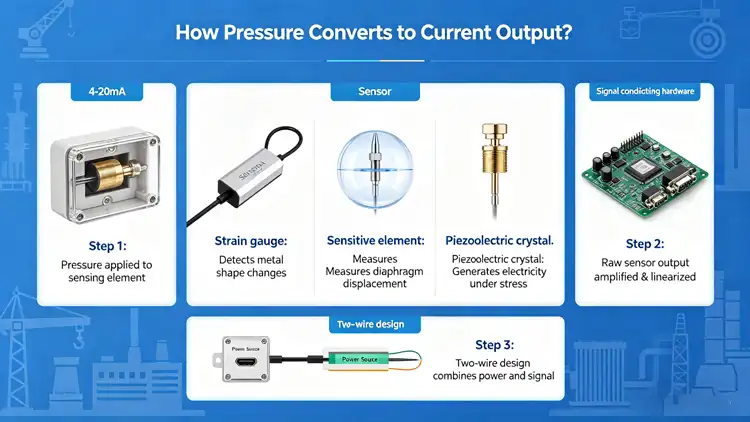
How Pressure Converts to Current Output?
When pressure is put on a sensing element inside the 4-20mA pressure transmitter case, it sends out a proportional electrical signal. Strain gauge sensors find changes in the shape of the metal, sensitive elements find out how far the diaphragm moves, and piezoelectric crystals make electricity when they are stressed. This raw sensor output is amplified by signal conditioning hardware, which then linearizes the response curve and turns it into an exact current output. The two-wire design cleverly puts power source and signal transmission on the same pair of conductors. This makes installation easier and keeps measurement accuracy even in harsh industrial settings.
Diagnosing 4-20mA Signal Jumping or Unstable: Step-by-Step Flowchart
Systematic analysis keeps you from wasting time fixing and replacing parts that don't need to be replaced. Start by writing down specific symptoms. For example, does the signal change randomly, spike every so often, drift slowly, or go away completely? By keeping track of trends of symptoms, you can figure out whether the problems are caused by electrical interference, technical issues, or environmental factors.
Initial Signal Verification Steps
Take the 4-20mA pressure transmitter away from the control system to start fixing. Take the device out of the loop and use an accurate milliamp meter to measure its output directly. Using a pressure calibrator or deadweight tester, put in known amounts of pressure. If the device gives stable, correct data when tested by itself, the issue is probably with the wires, grounding, or the receiving device, not the sensor itself.
Investigating Wiring and Connection Integrity
One of the most common reasons for signal instability is damage to the cables. Check the whole cable run for physical damage, such as cuts in the insulation, places where the wires have been crushed, and places where chemicals or too much heat have been applied. Check the resistance of the loop from the 4-20mA pressure transmitter's connections to the power source. For normal 24VDC systems, the total resistance should stay below 600 ohms. Check to see if the main links are corroded, loose, or oxidized. Even a small amount of contact resistance at the connections can add noise or make the signal go out sometimes.
Examining Power Supply Quality
Signal quality is directly affected by power that is too low or unstable. Check the source voltage at the 4-20mA pressure transmitter's terminals while it's working. It should stay within the range given by the maker, which is usually 12 to 36VDC. When other equipment turns on, power sources that are getting close to their limit may experience voltage drop. Periodic changes are caused by too much ripple energy from sources that aren't properly filtered. When multiple devices share power sources, ground loop problems can happen, which show up as unstable signals.
Identifying Environmental Interference Sources
Measurement circuits can be affected by electromagnetic interference from things like variable frequency drives, welding tools, radio emitters, and high-current switching devices. Keep a minimum space of 12 inches between signal wires and power conductors when routing them. It's important to make sure that shield links only stop properly at one end to avoid ground loops. In places with a lot of electrical noise, conduit adds extra security. Extreme temperatures can hurt both the performance of sensors and the security of electronics. When 4-20mA pressure transmitters are used outside of their recommended temperature range, they behave in a way that isn't straight or consistent.
Evaluating Sensor and Electronic Degradation
Over time, sensing elements break down, especially when they are subject to rough media, changing pressures, or vibrations. There are cracks in diaphragms that form over time, leaks of fill fluids from separate seal systems, and strain gauges that separate from their bases. The steadiness and accuracy of an amplifier are affected by the age of its electronic parts. Compare the present readings to records from the past or measures that have already been taken. When there are big differences, it means that the sensor is worn out and needs to be calibrated or replaced.
Recently, a chemical processing plant had trouble with reactor pressure tracking signals going out and on. Technicians changed the 4-20mA pressure transmitter twice, but it didn't work better either time. Systematic analysis showed what the real issue was: terminating the wire shield at both ends made a ground loop that picked up noise from VFD panels nearby. Fixing the shield link stopped the signal interference right away, which saved thousands of dollars in repair costs that were not needed.
Best Practices for Installation and Wiring
A signal will stay stable for a long time if it is installed correctly. Most signal quality problems can be avoided by paying close attention to the details during the original setup.
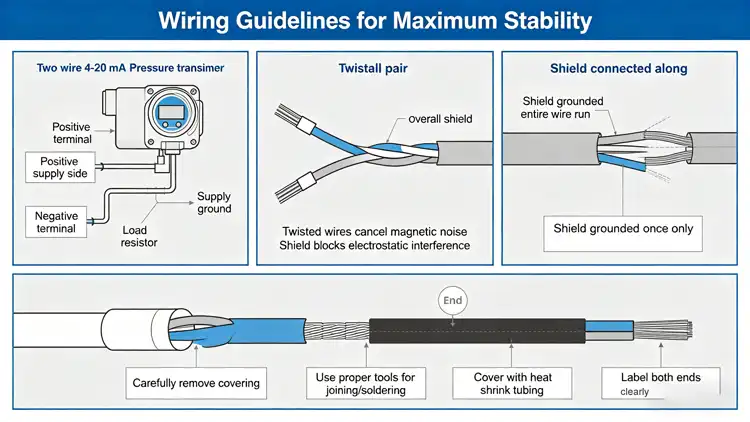
Wiring Guidelines for Maximum Stability
When connecting two-wire 4-20mA pressure transmitters, make sure you use the right polarity. Connect the positive terminal to the positive supply side through the load resistor, and connect the negative terminal to supply ground. All data runs should be done with twisted pair wire that has an overall shield. Magnetically generated noise can be cancelled out by twisted wires, and interference that is caused by electrostatics can be blocked by shields. Keep the shield connected along the whole wire run, but only connect the shields to ground once to avoid ground loops. Pay close attention to the ends of the cables. Carefully remove the covering so as not to damage the wires. If you need to join or solder the link, use the right tools and then cover it with heat shrink tubing. Label both ends clearly to make fixing easier in the future.
Strategic Sensor Placement
Put 4-20mA pressure transmitters in places where they will cause the least amount of process and electrical interference. Place sensors away from things that cause shaking, like pumps, fans, and equipment that moves back and forth. Control the temperature of the area well. Too much heat speeds up the age of electronics, and too little cold can make sensors less accurate. For some types of devices, orientation is important. The position of the mounting changes how the internal fill fluid behaves and can cause measurement mistakes. Check the manufacturer's instructions to see what positions and directions are allowed.
Calibration and Preventive Maintenance Schedules
Even 4-20mA pressure transmitters that are properly placed need to be checked from time to time. Set the time between calibrations based on how important the application is, how bad the process is, and past performance data. Important safety data may need to be checked every three months, while less important ones can be checked once a year. Technicians should check the machine's physical state, make sure the zero and span settings are correct, check the damping settings, and keep track of performance trends while it's being calibrated. Preventive maintenance finds problems as they start to happen before they stop the process.
Comparing Solutions: Choosing Reliable Pressure Transmitters for Industrial Use
Choosing the right measurement technology has a direct effect on how stable the signal will be over time and how much upkeep will be needed. Knowing the different sense principles makes it easier to match the 4-20mA pressure transmitter's features to the needs of the application.
Sensor Technology Comparison
Strain gauge monitors are the most common way to measure pressure in industry because they are reliable and stable over time. These tools connect resistance parts to a bendable cushion that changes shape when pressure is applied. When resistance changes, an electrical signal is sent that is equal to the force being applied. Capacitive sensors find changes in capacitance between plates that stay in place and plates that move by measuring diaphragm movement. For low-pressure uses, they have great clarity, but they may be more sensitive to changes in temperature. When mechanical force is applied to piezoelectric sensors, an electrical charge is directly generated. These sensors have a great dynamic reaction for pressures that change quickly, but they need external power for static measurements.
The sensor technology has a big effect on the signal noise properties. Most of the time, strain gauge designs send clear messages with little computer noise. High-frequency stimulation circuits may cause capacitive sensors to pick up a little signal noise. Knowing these traits helps you set reasonable goals for success and figure out what's wrong with the 4-20mA pressure transmitter when it does happen.
Evaluating Established Brands
Quality control, testing infrastructure, and expert support are areas that reputable makers put a lot of money into. Honeywell has a wide range of 4-20mA pressure transmitters, including types that are made to work in harsh industrial settings and come with a lot of application tech support. Siemens provides complete measurement solutions that are deeply integrated into their automated platforms. This makes system connectivity easy. Companies like Rosemount, Yokogawa, and Endress+Hauser have built their names by doing good work in the field for many years.
When comparing names, you should look at the guarantee terms, the availability of calibration certificates, the ease of access to spare parts, and how quickly technical help responds. Well-known companies keep detailed records, offer advice that is special to each case, and offer support for older products for a long time.
Procurement Guide: Where and How to Buy Quality Transmitters?
Sourcing decisions have a big effect on the success of a project that goes beyond the initial purchase price. Pricing that is smart takes into account quality, support, cost, and the dependability of the supply chain.
Selecting Trusted Manufacturers and Suppliers
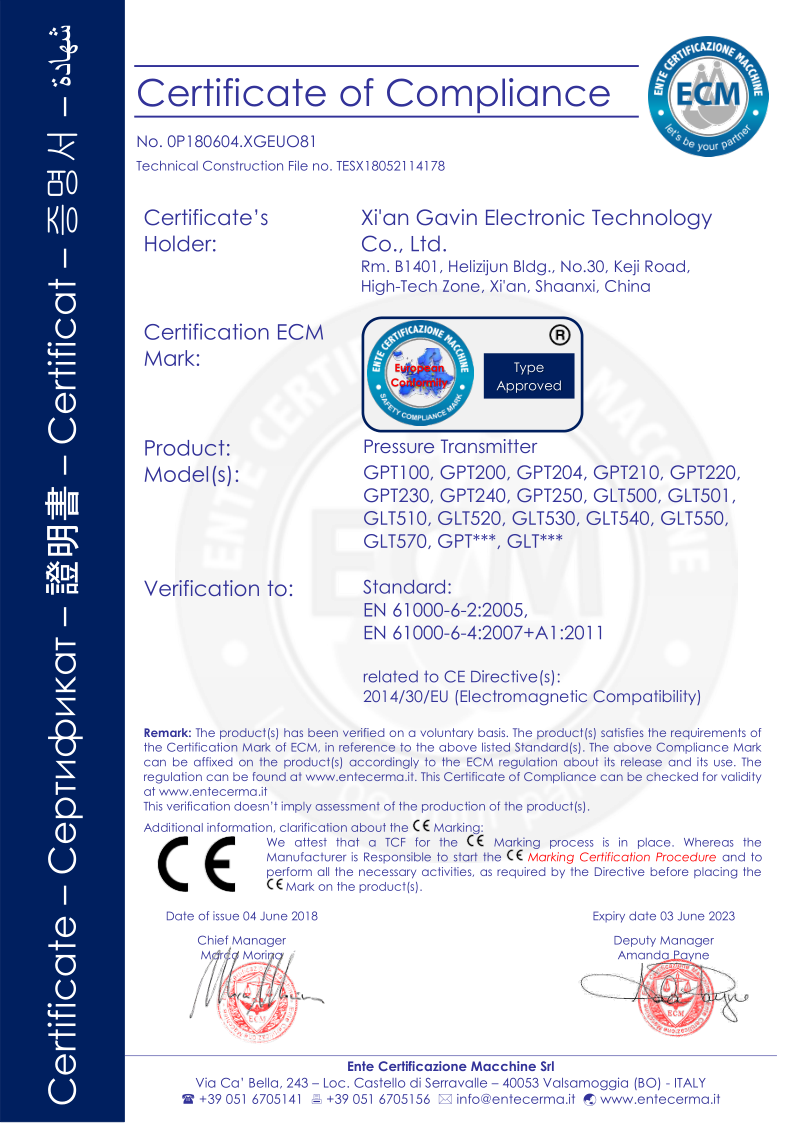
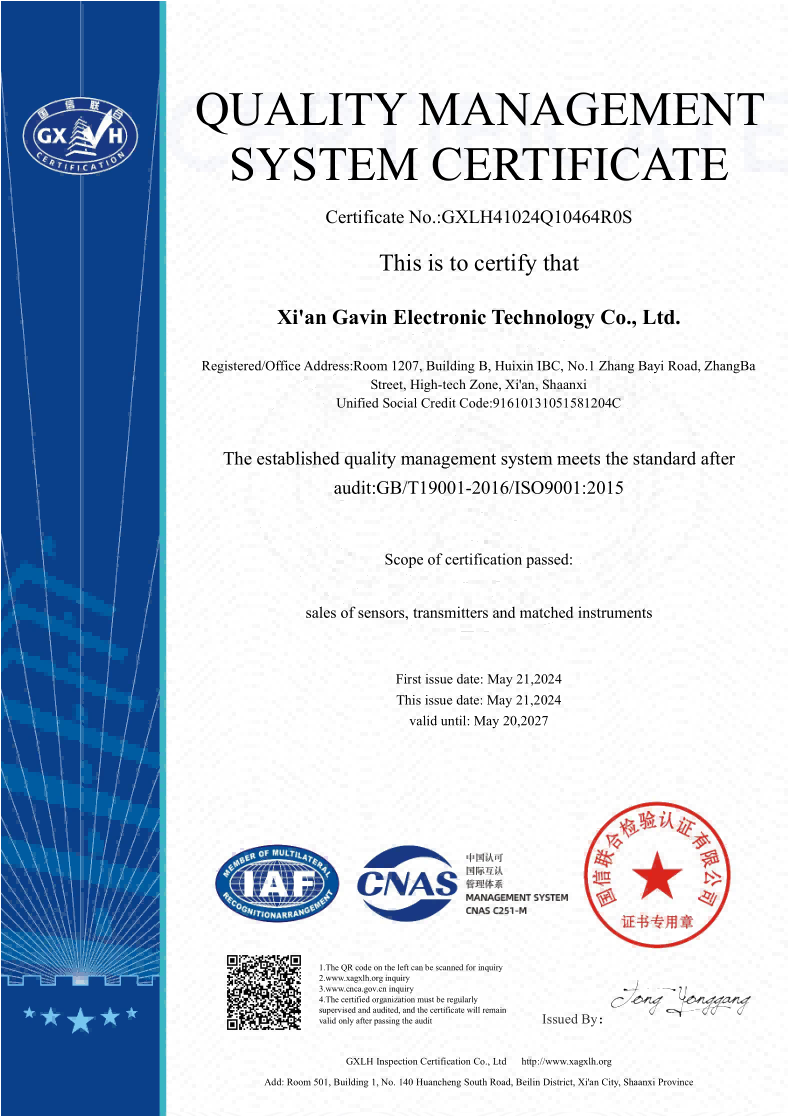
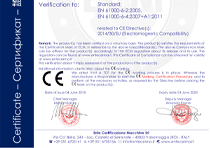
Give more weight to suppliers who actually have professional knowledge and aren't just selling goods. Manufacturers of good products have the right licenses, like ISO 9001 for quality management, CE marking for European markets, and approvals specific to their business for use in dangerous places. Carefully read the technical specs and make sure that the measurement range, accuracy class, temperature adjustment, and output features meet the needs of your application.
GAMICOS is a great example of a modern company that makes industrial sensors because it combines advanced research and development with adaptable production systems. Our tech team knows what problems robotics engineers and procurement managers face in the real world. We have strict quality control throughout the whole manufacturing process, and before shipping, every 4-20mA pressure transmitter goes through multipoint calibration proof. Products come with full certification paperwork and records of where they came from, which meet audit standards in businesses that are controlled.

Understanding Pricing and Customization Options
The price of a 4-20mA pressure transmitter depends on its detecting technology, accuracy class, housing material, approvals, and any other features it may have. Standard stock items have the cheapest prices per unit and the fastest shipping times. Customizations like choosing specific electrical connections, mounting arrangements, or output ranges usually add 15 to 25 percent to the base price and cause shortenings in the wait time. For OEM customizations that include private communication methods, custom packing, or one-of-a-kind sensing elements, engineers need to work together more closely and the development process takes longer.
When you buy in bulk, you can get big savings on costs. For orders of 100 or more units, bulk order discounts can reach 20 to 30 percent, and long-term supply deals can save you even more. As part of full purchase packages, you should negotiate payment terms, consignment stocking programs, and technology support terms.
Logistics and Delivery Considerations
When buying from other countries, you need to pay attention to how to ship the goods, deal with taxes, and keep track of your inventory. Air freight costs more than ground freight but can bring supplies quickly when they are needed. Ocean freight cuts the cost of shipping each unit by a huge amount, making planned stockpile restocking much more affordable. When planning order amounts and delivery times, you should think about safety stock levels, the possibility of longer wait times, and how often you use something. Reliable providers give accurate estimates of wait times, let customers know about possible delays, and are flexible when needs change.
Conclusion
Signal instability in current loop pressure measurement devices makes it hard to do work, lowers the quality, and raises the cost of upkeep. Using the diagram method described here for systematic analysis makes it easy to find the root causes of problems ranging from wiring problems to sensor wear. Long-term dependability is built on using the right sensor technology, installing it correctly, and calibrating it on a regular basis. When looking for 4-20mA pressure transmitters, it's best to go with providers who can show they have technical knowledge, keep strict quality standards, and offer quick help throughout the lifecycle of the product. If you pay close attention to these things, your measurement tools will give you the accuracy and steadiness you need for perfect process control.
FAQ
What causes 4-20mA signals to fluctuate randomly?
Random changes in the signal are usually caused by electrical interference, bad links, or not enough insulation. Check how the cables are routed in relation to the power lines, make sure the shielding is properly grounded, and make sure the terminals are tight. Unreliable results can also be caused by problems with the power source, such as too much ripple or unstable voltage.
How often should industrial pressure transmitters undergo calibration?
How often you calibrate depends on how important the program is and how it is being used. In regulated businesses, data that are important for safety usually need to be checked every three months. Standard applications for tracking processes usually plan calibration once a year. When working in harsh situations like high temperatures, corrosive media, or high vibrations, proof may need to be done more often.
Can electromagnetic interference affect current loop signals?
Compared to voltage signals, current loops are very good at blocking noise. However, electromagnetic fields that are strong enough can cause confusion. Susceptibility is kept to a minimum by using twisted pair cable, constant shielding, and enough space between the cable and the power wires during installation. Heavy sources of interference might need extra steps, like metal tubing or power supplies with filters.
Partner with GAMICOS for Reliable Pressure Measurement Solutions
Problems with signal stability need more than just good products; they also need a professional relationship with a lot of knowledge. GAMICOS offers complete solutions for measuring pressure and level, backed by deep application knowledge and quick support. Our 4-20mA pressure transmitter suppliers can do more than just give standard catalog items. They can also fully create OEM solutions to meet your exact needs.
Our engineering team works together to make sure that you get the best performance and value, whether you need strain gauge sensors for harsh chemical environments, small units for integrating OEM equipment, or wireless monitoring systems for faraway installations. Email us at info@gamicos.com to talk about your measurement problems, get full specs, or get quotes on your project. Our world transportation network makes sure that customers in North America and other places get their orders on time.
References
1. Liptak, B.G. (2018). Instrument Engineers' Handbook: Process Measurement and Analysis, Fifth Edition. CRC Press.
2. Johnson, C.D. (2016). Process Control Instrumentation Technology, Eighth Edition. Pearson Education.
3. Hughes, T.A. (2015). Measurement and Control Basics, Fourth Edition. International Society of Automation.
4. Dunn, W.C. (2019). Fundamentals of Industrial Instrumentation and Process Control, Second Edition. McGraw-Hill Education.
5. Bela, L. (2017). Pressure Sensors: Selection and Application. Marcel Dekker Publishers.
6. Morris, A.S. & Langari, R. (2020). Measurement and Instrumentation: Theory and Application, Third Edition. Academic Press.

Eva
Eva specializes in bridging the gap between cutting-edge sensor technology and market needs. With 8 years of experience in industrial product marketing, she has successfully launched multiple sensor product lines—from pressure transmitters to fuel level sensor—into global markets.
We're here to help — submit your request anytime!
Let us know how we can help solve your pressure level measurement challenge.
_1757930850792.jpg)

Recommended Blog

Are Low-Cost Pressure Sensors Reliable? Price vs Performance
Are Low-Cost Pressure Sensors Reliable? Price vs Performance
Are Low-Cost Pressure Sensors Reliable? Price vs Performance