Pressure Sensor Seal Failure & Leak Detection Guide
Understanding Pressure Sensor Seal Failures
- Understanding Pressure Sensor Seal Failures
- Leak Detection Techniques for Pressure Sensor Seals
- Selecting the Right Pressure Sensor Seal for Your Application
- Maintenance Best Practices to Prolong Seal Life and Prevent Failures
- Procurement and Supply Chain Considerations for Pressure Sensor Seals
- Conclusion
- FAQ
- Partner with GAMICOS for Reliable Pressure Measurement Solutions
- References
In industrial pressure monitoring systems, pressure sensor seals are very important because they keep readings correct and stop leaks. A pressure sensor seal keeps the measuring element from coming into contact with the outside world. This keeps the internal parts clean and the accuracy of the measurements. If these seals fail, it could lead to anything from small errors in measurements to major damage to equipment and safety risks. It is possible to make systems much more reliable and lower costs in the oil, chemical, pharmaceutical, and food processing industries by learning how seals fail, using good leak detection methods, and choosing the right sealing solutions.
Understanding Pressure Sensor Seal Failures
Common Causes of Seal Degradation
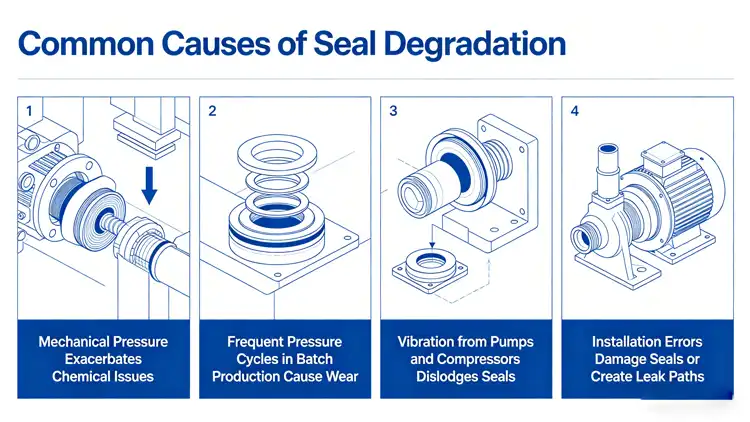
Failures of seals almost never happen without any signs. The most common cause is material breakdown, which is sped up by temperature changes that make elastomers thicken or soften beyond their useful range. From our work with chemical processing plants, we know that acids, solvents, and high-concentration cleaning agents can damage seal materials at the molecular level, making tiny holes that leaks can enter.
These chemistry problems are made worse by mechanical stress. Too much pressure cycle, which happens a lot in batch processes, wears down seal materials by compressing and relaxing them over and over again. Pumps and compressors vibrate, which slowly pulls seals out of their grooves. Installing them incorrectly, on the other hand, breaks seals or leaves holes that let leaks happen.
How Pressure Sensor Seals Function?
Controlled deformation is what makes the closing device work. When placed correctly, an O-ring or gasket that is squeezed between two surfaces that fit together makes close contact that stops fluid from moving. The cover material needs to be soft enough to fit over tiny surface flaws but strong enough to keep the pressure up when it's being used.
The limits of efficiency are set by the materials used. Silicone rubber can withstand temperatures as low as -60°C and as high as 230°C, which makes it perfect for use in steam and cryogenics. At normal temperatures, Nitrile rubber (NBR) is better at resisting oil-based goods and hydraulic fluids. Fluorocarbon (Viton) covers can handle harsh poisons and temperatures up to 200°C, but they cost more to buy.
We have seen that the shape of a pressure sensor seal has a big effect on how reliable it is. For example, dynamic seals that are open to media flow need different designs than static seals that are in threaded connections. Face seals used in sanitary applications need surface finishes below 0.8 micrometers Ra to keep germs from sticking around. This is a very important requirement for places that make drugs and food.
Real-World Failure Case Studies
A chemical plant we talked to had problems with their reactor tracking system's pressure sensors happening over and over again. An investigation showed that temperature jumps during exothermic reactions were 40°C higher than the NBR seal rate, which led to fast degradation. Failures stopped happening when higher temperature fluorocarbon seals were used, and repair times were increased from three months to over two years.
In another case, chlorine damage happened to normal rubber seals at a water treatment plant, which caused measurements to drift and eventually sensors to flood. This shows that media compatibility is more important than price—the cost of one unexpected stop was much higher than the extra cost of chemical-resistant seals.
Leak Detection Techniques for Pressure Sensor Seals
Traditional Detection Methods and Limitations
Visual inspection is still the easiest way to do things. Maintenance teams look for clear signs like fluid buildup, rust stains, or crystallized layers around the housings of sensors. This method works well for finding active leaks, but it can't find failures in the making or slow seepage that turns into big problems.
To do a pressure decline test, you have to separate a part of the system, pressurize it, and watch for pressure drops over time. This method is reliable for proving the presence of a leak, but it needs the system to be shut down and doesn't give much information about where the leak is or how bad it is. The method also has trouble with slow leaks that don't change the pressure much during real-world tests.
For easy-to-reach joints at low pressures, bubble testing with soapy liquids works well for a pressure sensor seal. However, this method doesn't work for high-temperature situations, sites that are far away, or monitors that are watching over toxic or flammable media because using solutions there adds to the dangers.
Advanced Leak Detection Technologies
New technologies for finding leaks are being used more and more in modern factories. Continuous tracking options are being used more and more in modern factories. Electronic leak detection works with pressure measurement systems by looking at signal noise and drift patterns that show seal failure before leaks can be seen. These methods let you plan maintenance based on the real state of parts instead of just picking random times.
Ultrasonic leak monitors pick up the high-frequency sound that is made when compressed gas leaks out of seal flaws. Maintenance workers use mobile devices that turn ultrasonic signals into audible tones to check sensor installations for leaks, even in noisy industrial settings. This non-intrusive method works well on equipment that is already running without stopping the process.
Infrared thermography shows changes in temperature that aren't normal and are caused by fluid leaks or seal friction. Thermal imaging cameras look for hot or cold spots around sensor housings that mean the seal has been broken. During regular inspections, we've been able to use this method to find weak seals before they break completely. This has helped us avoid unexpected downtime during important production runs.
Detection Strategies for Harsh Industrial Environments
In extreme situations, you need to use specific methods. We suggest that sensors on offshore oil rigs be inspected every three months using both eye inspection and ultrasonic scanning because they are exposed to saltwater and changes in temperature. The acidic climate speeds up seal degradation, so it's important to check on it often, even if it's hard to get to.
Chemical processing plants gain from computer tracking that is always on and ultrasonic scans that are done once a year. The mix finds both slow breakdowns and sudden fails caused by process changes. Sensors that are tracking highly acidic media need to be checked more often—every month for strong acid or caustic service, on average.
Sanitary design that stops contamination is important for food and medicine uses. Finding leaks in these places needs to be done without bringing in outside materials, which is why non-contact methods like thermography are so useful. Tri-clamp links with face seals let you quickly check things when you're switching out equipment without having to use any special tools.
Selecting the Right Pressure Sensor Seal for Your Application
Evaluating Operational Parameters
Temperature is the main factor used for choosing. Each elastomer has a working temperature range above which its mechanical characteristics start to break down quickly. Silicone stays flexible at very high and very low temperatures, but it is less resistant to chemicals. EPDM (ethylene propylene) can be used in steam and hot water up to 150°C and doesn't rust or break down when exposed to the weather.
Chemical compatibility decides how long a pressure sensor seal will last in process settings. When exposed to certain media, things that don't work well together grow, shrink, or dissolve. We keep suitability charts that list hundreds of chemical and elastomer combos and help customers find the right materials. PTFE (polytetrafluoroethylene) is chemically resistant to all substances, but it needs to be installed in a certain way because it is not very flexible.
Pressure grades affect how the seal is made and how thick the material is. For low-pressure uses below 10 bar, simpler shapes and thinner seals can work. But for high-pressure uses above 100 bar, you need special features like backup rings that keep the seal from pushing into clearance gaps. Knowing these standards stops failures and safety issues before they happen.
Material and Design Comparisons
Standard O-rings are cheap, come in a lot of different sizes and materials, and can be used for most general-purpose tasks. Their circular cross-section gives them uniform tension no matter which way they are installed. Custom shapes are made to solve particular problems. For example, rectangular gaskets work better on rough surfaces, and V-rings can handle motion that goes back and forth in dynamic situations.
When metal seals made of soft materials like copper or aluminum are crushed, they form gas-tight joints that can handle high vacuums or extreme temperatures, which is not possible with elastomers. Even though they can't be used again, these seals work consistently in situations where biological materials can't, like when the process temperature is higher than 300°C.
When considering different ways to buy things, buying standard O-rings in bulk is by far the most cost-effective choice for maintaining inventory. Custom-molded seals have low minimum order numbers that can put a strain on budgets but provide the best performance for tough situations. We help customers find the right mix between these factors based on the amount of usage and how important the application is.
Supplier Selection and OEM Considerations
Working with well-known makers guarantees stable quality and a steady supply. Honeywell and Sensata are two companies that put a lot of money into quality control systems that keep differences between batches to a minimum. Their tech support helps with choosing seals and fixing problems, which adds value to the product itself.
OEM support is important for keeping equipment warranties valid and for standardization's sake. Using approved seal materials and designs keeps disagreements about what caused the failure from happening and makes managing extra parts easier. We've seen cases where replacing seals that weren't approved voided warranties, leaving customers to pay for expensive fixes.
When judging a supplier's skills, you should look at how flexible they are with customization, how long lead times are, and how much professional help they offer. A supplier that offers both fast prototyping and small-batch production lets you try unique designs before you buy a lot of them. Reliable operations keep output from being held up when seals need to be replaced during unplanned repair.
Maintenance Best Practices to Prolong Seal Life and Prevent Failures
Inspection Schedules and Testing Protocols
How often routine inspections are done relies on how bad the application is. Sensors that are used for benign tasks, like tracking clean water, only need to be looked at once a year. On the other hand, sensors that are used in harsh or high-temperature settings should be looked at every three months. As part of the inspection process, the state of the pressure sensor seal should be recorded, including any changes in color, stiffness, or surface damage that could mean the seal is about to expire.
Leak testing during regular repair makes sure that the seals are still good before the equipment is put back into service. We suggest doing pressure decay tests at 110% of standard working pressure for as long as it takes to find slow leaks, which for most industrial sensors is about 15 minutes. By keeping track of standard decay rates, you can use trend analysis to see how things are slowly getting worse.
When maintenance teams check the seals, they should adjust the sensors because measurements often drift before leaks are visible when seals are degrading. When you compare recent testing data to old records, you can see performance trends that help you decide when to replace seals. This combined method makes inspections more efficient and makes sure that measurements are correct.
Proper Cleaning and Handling Techniques
How you handle a seal is the first step in keeping it safe. Technicians shouldn't stretch O-rings while installing them because permanent distortion makes the seal less effective. Spare seals don't age too quickly if they are kept in cool, dark places away from equipment that makes ozone. We send seals in sealed bags with desiccant to keep them in the best possible condition for keeping.
Harsh agents that damage seal materials should not be used for cleaning. Most elastomers can be cleaned with mild detergents, and silicone and fluorocarbon seals can be cleaned with rubbing alcohol. Scratching sealing surfaces with rough cleaning tools makes leak tracks; only soft brushes or lint-free cloths should be used. Letting seals dry fully in the air before installing them keeps moisture from building up and causing rust.
Lubrication helps with installation and keeps seals from getting damaged during installation. But choosing the right lube is important because silicone greases can damage some fluorocarbon materials and petroleum-based greases can damage NBR seals. We suggest using oils that are suitable with the seal materials and should only be used in small amounts so as not to contaminate the process media.
Replacement Criteria and Indicators
Material failure shows up as compression set, which means the seal doesn't go back to its original shape after being compressed. This decline can be measured by using tools to find the seal's thickness and then comparing it to its original size. If a seal has more than 20% compression set, it needs to be changed even if there is no damage obvious. This is because the sealing force has been greatly reduced.
Surface cracks are a sign of damage from the surroundings or old age. Even very small cracks can let water leak when there is pressure on them, and they will get worse over time if they are used. Chemical attacks often cause discoloration; swelling, shrinking, or brittleness are signs that the materials are not compatible, so they need to be replaced with different seal materials.
Loss of temperature protection can be seen when seals harden or soften compared to new ones. Seals that are hardened feel stiff and can't bend, while seals that are relaxed feel sticky or slippery. Both of these situations make sealing less effective and indicate that failure is about to happen. Unplanned outages can be avoided by replacing seals that show these signs during regular maintenance.
Procurement and Supply Chain Considerations for Pressure Sensor Seals
Sourcing Strategies for Bulk and Custom Requirements
To balance cost and quality, you need to know what the total costs of ownership are. Even though quality pressure sensor seals cost more per unit, they often cost less per working hour because they last longer. We have proof that moving from cheap to expensive seals cut yearly maintenance costs by 40% because they needed fewer replacements and there was no downtime due to failure.
Certification of materials, checking of dimensions, and performance tests should all be part of quality assurance. Reliable providers give test reports on materials that prove their makeup and physical qualities. Dimensional checking makes sure that seals fit correctly; seals that are too big get stuck in grooves, while seals that are too small leak right away. When you ask for pre-shipment inspection reports, you can feel good about placing large orders.
Having ties with more than one seller lowers the risks in the supply chain. Dependencies on a single source make you vulnerable when sellers have problems making things or are late with deliveries. Finding reliable substitute sources for important types of seals protects against interruptions in supply. But keeping too many suppliers makes it harder to manage and stops you from getting big savings. For each key seal specification, we usually suggest two approved sources.
Managing Lead Times and Logistics
When you buy standard O-rings, they usually get sent out within a few days. Custom-molded seals need to be made with custom tools and take longer to make—first orders can take up to eight weeks. If you plan ahead for special parts, you can avoid having to pay extra for speeding and having production held up. Carrying costs and stock-out risks are balanced by keeping a smart inventory of long-lead things on hand.
Logistics dependability is just as important as provider skill. Shipments that are late because of problems with the carrier can mess up repair plans just as much as problems with the source. By choosing dependable carriers and keeping track of packages, you can take right action before delays hurt operations. When you buy something internationally, you have to pay extra attention to the paperwork and customs processes that can make delivery times longer than thought.
We help customers set up vendor-managed inventory systems so that suppliers can keep an eye on how much stock is being used and instantly restock. This method makes it easier to manage things while still making sure that the seal is available. The supplier gains from knowing how much demand there will be and making a long-term commitment. They can often offer better prices and give special treatment during allocation situations.
Negotiation Strategies with Suppliers
Customers with different seal needs and limited store space face problems when they have to meet minimum order numbers. By negotiating blanket orders with staggered releases, you can meet both the supplier's need for speed and the customer's need to keep their supplies in check. This deal locks in prices while letting delivery times be open to match how much is actually used.
The warranty should cover both material flaws and performance failures, and there should be clear ways to tell the difference between production defects and problems with the way the product is being used. Reasonable guarantee coverage guards against batch quality problems while acknowledging that suppliers are not responsible for choosing the wrong materials or installing them incorrectly. Keeping track of application conditions during buying makes warranty management more fair.
Long-term satisfaction is affected by the provision of after-sales help. Suppliers who give expert advice can help you choose the best seals and figure out why something isn't working, which adds value throughout the span of the product. When it comes to providers, we value relationships based on teamwork over transactional relationships. This is because the advice they give us is often more useful than small price differences between competitors.
Conclusion
Pressure sensor seals are small parts that have a big effect on the safety, dependability, and working efficiency of a system. Being aware of how things fail helps the purchasing and engineering departments choose the right materials and plans for the job. Using thorough leak detection techniques helps find problems early so they can be fixed before they become costly. Strategic ties with suppliers make sure that you can get good items delivered on time and get expert help after the sale. When you choose the right equipment, keep it in good shape, and buy it with care, you can make measurement systems that will last and give you correct data while reducing unnecessary downtime in tough industrial settings.
FAQ
What are the early warning signs of seal failure?
Measurement drift is the first sign. As pressure sensor seals break down, letting process media touch sensing elements, pressure data slowly move away from their measured values. A visual check may show that there is buildup of wetness, discoloration around the seal, or small leaks before they become big problems. These small changes can be found by checking the security of the calibration during regular checks. This way, the seal can be replaced during planned maintenance instead of an emergency.
Which seal materials perform best in high-temperature environments?
Fluorocarbon (Viton) seals work well in temperatures up to 200°C and are resistant to chemicals. This range is extended to 230°C by Silicone rubber, which is very flexible but not very strong. For uses above these temperatures, you need special materials like perfluoroelastomer (FFKM) that can handle 327°C or metal seals that can handle high temps. We look at your unique temperature profile and media contact to help you choose the best materials based on performance and cost.
Do custom seals justify their higher cost compared to standard O-rings?
When normal shapes can't meet the needs of an application, custom seals are a good option. Optimized designs that increase service life and lower the number of failures are helpful in tough situations like odd media exposure, extreme temperatures, or unique mounting setups. The study should look at the total costs of ownership. For example, custom seals that last three times as long for twice as much money save half as much over their lifetime while also making upkeep easier and lowering the risk of unplanned downtime.
Partner with GAMICOS for Reliable Pressure Measurement Solutions
In industrial settings, pressure monitors need to have strong pressure sensor seals that can handle the roughest circumstances. GAMICOS specializes in making high-precision pressure sensors with cutting-edge closing technology for use in chemical processing, oil refining, medicine production, and food processing. Our engineering team helps you with everything, from choosing the right system for your needs to installing it and keeping it in good shape. This way, your pressure measurement systems will work reliably for a long time.
GAMICOS pressure sensors use carefully chosen seal materials that are right for your process media and how they will be used. Our quality control methods check the stability of each unit's seal before it is shipped, and they are backed up by certifications from recognized metrology organizations. Get in touch with our technical team at info@gamicos.com to talk about your application needs and find out how working with a dedicated pressure sensor seal maker can make your measurement system more reliable while lowering the costs of purchase.
References
1. Parker Hannifin Corporation. O-Ring Handbook: Design, Materials and Applications. Cleveland: Parker Sealing Division, 2021.
2. Johnson, Robert W. Seal Failure Analysis in Industrial Pressure Measurement Systems. Journal of Applied Industrial Technology, vol. 34, no. 2, 2022, pp. 145-162.
3. International Society of Automation. Recommended Practice for Pressure Sensor Installation and Maintenance. ISA Standard 37.12.02, Research Triangle Park: ISA Publications, 2020.
4. Mitchell, David A. and Sarah Chen. Chemical Compatibility Guide for Elastomeric Seals. Boston: Industrial Press, 2023.
5. European Sealing Association. Best Practices for Seal Selection in Process Industries. Technical Report ESA-TR-19, Brussels: ESA Publications, 2021.
6. Williams, James P. Leak Detection Methods for Industrial Pressure Systems: Comparative Analysis. Process Safety Progress, vol. 41, no. 3, 2023, pp. 287-304.

Eva
Eva specializes in bridging the gap between cutting-edge sensor technology and market needs. With 8 years of experience in industrial product marketing, she has successfully launched multiple sensor product lines—from pressure transmitters to fuel level sensor—into global markets.
We're here to help — submit your request anytime!
Let us know how we can help solve your pressure level measurement challenge.

_1757930850792.jpg)






Recommended Blog