Temperature Effects on Pressure Readings Explained
Understanding Temperature Effects on Pressure Sensor Readings
- Understanding Temperature Effects on Pressure Sensor Readings
- Core Technologies and Types of Temperature Compensated Pressure Sensors
- Key Applications and Performance Considerations
- How to Select the Right Temperature Compensated Pressure Sensor for Your Business?
- Future Trends and Innovations in Temperature Compensated Pressure Sensors
- Conclusion
- FAQ
- Partner with GAMICOS for Precision Pressure Measurement Solutions
- References
When temperatures change, they have a big effect on how accurate pressure sensors are. For accurate readings in industry, temperature compensated pressure sensors are a must. These special devices automatically account for temperature drift, which makes sure that results are always the same even when the environment changes. Procurement managers, engineering teams, and OEM manufacturers can choose the right sensors for important uses where accuracy can't be compromised if they know how temperature affects pressure readings. This guide looks into how temperature-related mistakes happen and why buying sensors that are properly compensated lowers upkeep costs and makes equipment last longer.
Understanding Temperature Effects on Pressure Sensor Readings
Changing temperatures can be hard for normal pressure sensors because they affect both the computer circuitry and the physical parts. When the temperature changes, the materials used in sensors expand and contract. This changes the baseline calibration and causes measurement drift, which can make it harder to control the process.
Why Temperature Causes Measurement Errors?
To send electrical data, pressure devices need to precisely bend metal. Changing temperatures can change the way sense elements respond by changing how springy they are. Temperature changes can also affect the Wheatstone bridge circuits that are used in these devices, since the resistor values change as the temperature does. A sensor that was set at room temperature might give results that are off by several percentage points when it is exposed to very cold or very hot temperatures.
Physical and Electronic Drift Mechanisms
When temperature changes, there are two main types of drift that happen in pressure monitors. When the diaphragm and sensor case get hot, they expand, which changes how the stress is distributed across the detecting elements. This is called physical drift. Electronic drift happens because of how signal processing circuits behave differently depending on temperature. As the temperature rises, component values change in a predictable way. When both of these things work together, they can cause measurement errors that are too big for precision uses.
Benefits of Built-In Compensation
Temperature compensated pressure sensors have built-in systems that fix problems and instantly stop thermal drift. These gadgets have temperature sensors and pressure measurement circuits built right in. They make changes in real time based on the current working conditions. The compensation greatly lowers the number of times that the sensors need to be calibrated, since they stay accurate across their full temperature range without any help from a person. When adjusted sensors are used in settings with high temperatures, they help keep processes consistent, cut down on downtime, and lower maintenance costs.
Core Technologies and Types of Temperature Compensated Pressure Sensors
With today's pressure sensing technology, there are several ways to adjust for temperature, and each one is best for a certain purpose and price. Knowing the differences between these technologies helps buying teams match the powers of sensors to the needs of operations.
Compensation Methods and Materials
Temperature correction is done by manufacturers using both hardware and software together. Some hardware methods use carefully matched resistor networks in Wheatstone bridges, where the temperature factors of different parts cancel out each other's thermal effects. Advanced sensors have special parts for measuring temperature, usually RTDs or thermistors, that keep track of the environment all the time. Then, correction factors are applied based on characterization data gathered during production tests across the full temperature range. These factors are kept in calibration algorithms that are onboard microprocessors.
Sensor materials are very important to how well correction works. Using thin-film sputtering technology, detecting elements are bonded directly to metal diaphragms. This reduces the difference in temperature expansion. Ceramics are very stable at high and low temperatures. For example, piezoresistive ceramic instruments can work normally from -40°C to +150°C with little shift. The thermal conductivity of stainless steel housings helps keep sensor temperatures stable when the environment changes quickly.
Piezoresistive Sensors
Industrial pressure measurement is mostly done with piezoresistive technology because it works so well at high temperatures and with high accuracy. These sensors use strain gauges that are attached to or spread out in a diaphragm to measure how the resistance changes when pressure changes the shape of the receiving element. Precision resistor networks and digital signal processing are used in modern piezoresistive devices to make up for the loss of resistance. The technology has a wide range of pressures and is built to last, so it can be used in tough industrial settings.
Capacitive Sensors
Capacitive pressure sensors check the space between an electrode that doesn't move and a cushion that moves. When the pressure changes, the capacitance values change. The temperature measuring system in these devices is naturally not very sensitive, but the electronics that go with them still need to be compensated. Capacitive sensors are commonly used in battery-powered wireless tracking systems because they work well in situations that need to be stable and use little power.
MEMS-Based Sensors
Micro-electromechanical systems (MEMS) technology changed the way pressure sensors work by making it possible to make a lot of small devices that work very well. On a single silicon chip, MEMS devices have sensing elements, temperature compensation circuits, and signal processing. Precision in manufacturing lets you keep tolerances very small, which means that the temperature behavior is the same across production batches. These small sensors are good for uses with limited room and OEM integration needs.
When you compare adjusted and non-compensated sensors, you can see that they work very differently. Standard sensors may have temperature factors of 0.3% to 0.5% of full scale per degree Celsius. Quality temperature compensated pressure sensors, on the other hand, lower this to 0.05% or better. Even though compensated sensors cost more than normal ones—usually 20% to 50% more—the extra money is well spent because they require less upkeep and help with process control. Compensation technology is very helpful for industrial users who work in temperature ranges above 30°C.
Key Applications and Performance Considerations
Temperature compensated sensors are essential in many fields where accurate measurements affect product quality, safety, and the speed of operations. To choose the right sensor, you need to know both what the program needs and how to check its performance.
HVAC Systems and Building Automation
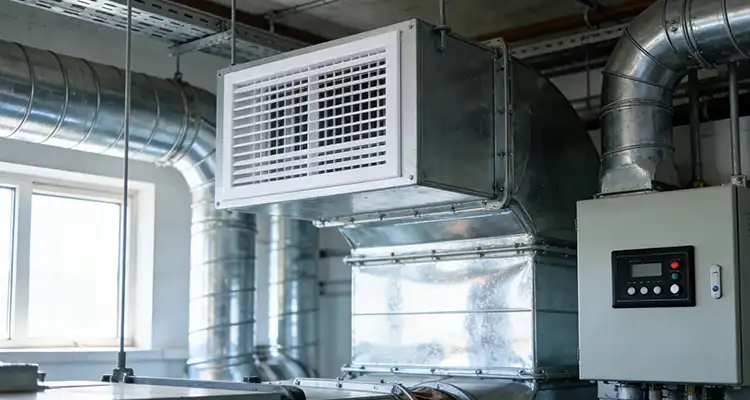
For climate control systems to work at their best, they need accurate pressure readings. When they are working normally, air handling units, refrigerator circuits, and steam delivery networks all have big changes in temperature. Compensated sensors stay accurate even when the outside conditions change throughout the day and throughout the year. This makes sure that energy is used efficiently and that rooms are warm. Stable sensor data helps building automation systems find small problems with performance that can be fixed by predictive maintenance algorithms.
Automotive and Transportation Applications
There are dozens of pressure sensors in modern cars that check the oil and fuel systems, the brake hydraulics, and the tire pressure. Under the hood, it can get hotter than 100°C, and in colder areas, it can get as cold as -40°C. Temperature compensation makes sure that readings are accurate across this wide range of temperatures, which helps engine control systems improve performance and reduce pollution. Automobile original equipment manufacturers (OEMs) require sensors that meet strict AEC-Q standards. These standards include hard temperature cycling and long-term drift testing.
Process Control in Manufacturing
To keep the quality and safety of the products being made, careful pressure control is needed in chemical processing, pharmaceutical production, and food making. Reactors, distillation columns, and sterile transfer systems all work at high temperatures where sensors that aren't compensated would move too far outside of what is allowed. In safe settings where both cleanliness and accuracy are important, compensated sensors with sanitary approvals are used. Process engineers choose sensors by doing estimates that take into account temperature changes as well as nonlinearity and feedback in pressure.
Calibration Protocols and Industry Standards
When sensors are calibrated correctly, their performance is confirmed and their connection to national standards is recorded. To make sure that temperature correction works, it needs to be checked across the whole working range, not just at room temperature. Multi-point pressure and temperature tests are done by accredited calibration labs, which issue certificates that show they meet ISO 17025 standards. Industrial users should set recalibration intervals based on how important the application is. These intervals should usually be between six months and two years, but they can be longer or shorter depending on working conditions and government rules.
Leading makers offer detailed technical paperwork that includes temperature performance standards. It should be clear on the datasheets what the accuracy is across the adjusted temperature range, thermal hysteresis, and the temperature coefficient of offset and spread are. When procurement professionals compare specs from different sources, they should look at more than just the top accuracy numbers. They should also look at long-term stable data and guarantee terms that show how confident the maker is in the temperature compensation system's ability to work.
How to Select the Right Temperature Compensated Pressure Sensor for Your Business?
When picking the best sensors, you have to weigh the technical performance needs against business factors like cost, shipping times, and the supplier's abilities. A structured method makes the decision process easier and lowers the risk of buying.
F-1 Criteria Screening Framework
The F-1 method sorts selection factors into two groups: basic and flexible. This helps decide which ones are most important. Fundamental criteria are requirements that sensors must meet without any exceptions. These include pressure range, accuracy class, temperature limits, process link type, and regulatory licenses. Flexible factors include things like output signal type, housing material, and name knowledge when other options might work just as well. Clearly splitting these groups keeps you from missing important needs and gives you a good selection of suppliers.
Application scenario analysis goes along with criteria screening because it connects sensor specs to real-world operations. Think about how well the fluid works with wet materials, whether it will be exposed to pressure spikes that need overpressure protection, and how much shaking might change the fitting requirements. Frequency of temperature changing is important—sensors with low thermal mass and fast response times are needed for situations where temperatures change quickly. Writing down these possible outcomes makes a selection profile that helps with technical conversations with possible providers.
Evaluating Supply Chain Options
There are several ways for business buyers to get pressure sensors, and each has its own benefits. Distributors keep goods in stock locally and make them available right away, which is helpful for replacing items quickly and placing small orders. OEM buyers who need customization, bulk price, and technical help during product development can benefit from direct maker relationships. Online business-to-business (B2B) platforms make global sourcing easier by connecting buyers with specialized makers who can offer reasonable prices and a range of customization choices.
When looking at suppliers, you should look at both their product specs and their technical help. Quick answers to questions about integration and application problems from responsive engineering help speed up project timelines. Full datasheets with thorough performance charts help make sure that the system is designed correctly, and installation guides and troubleshooting tools cut down on the time it takes to set up the system. When suppliers give advice that is specific to an application, like the best way to put something or how to filter electricity, they show knowledge that is good for long-term relationships.
Practical Procurement Tips
Before placing a large order, ask for samples of the sensor to try in your application. Real-world testing shows compatibility problems that specs alone might miss, like how sensitive something is to electromagnetic interference or how mounting vibrations affect it. Instead of just using data from a lab, testing also confirms how well temperature compensation works in real-world working situations.
Check the correctness of the wait time by asking about current production plans and the availability of parts. Problems in the global supply chain have made shipping times longer for many types of sensors. To meet project goals, it is important to plan purchases early on. Set up ties with backup suppliers to lower your risk in case your main sources can't meet your needs.
Take into account the total cost of ownership, which goes beyond the buying price. When sensors need to be re-calibrated often, they may have ongoing service costs that are higher than the saves from buying cheaper options. In the same way, early failures cause new costs and output delays that are much bigger than differences in the costs of the parts. Buying high-quality compensating sensors from reputable companies usually gives you better long-term value.
Future Trends and Innovations in Temperature Compensated Pressure Sensors
Pressure sensing technology continues to advance, driven by the demands of industrial robotics and modern connectivity solutions. Temperature compensated pressure sensors are a key innovation in this area, offering more accurate measurements across varying thermal conditions, influencing purchasing decisions and enabling new applications in automation, process control, and smart systems.
MEMS Technology Breakthroughs
Next-generation MEMS sensors combine different types of sensing on a single chip, so they can measure pressure as well as temperature, humidity, and motion. This fusion of multiple sensors allows for more complex analysis and condition tracking than just reading pressure. As manufacturing gets better, packages get smaller and use less power, which opens up more uses for wireless and battery-powered devices. Improvements in packing technology make MEMS sensors more resistant to harsh media and high temperatures. This lets them be used in situations where more expensive technologies were needed before.
Advanced Compensation Algorithms
Machine learning methods that are used for manufacturing calibration can now describe how sensors behave in more than two factors at the same time. These three-dimensional models are the most accurate way to account for cross-axis sensitivity, temperature effects, and age drift. Cloud-connected sensors can get software changes that make compensation algorithms better based on performance data from the whole fleet. This means that over time, accuracy should improve rather than decrease. Adaptive adjustment changes the correction factors based on the past of each sensor, taking into account how the features of parts change over time.
IoT Integration and Smart Sensors
Industrial Internet of Things (IoT) platforms turn pressure sensors from simple measuring tools into smart assets that give useful information. Edge computing, which uses embedded computers to look at local pressure trends, find outliers, and guess when repair is needed without using up too much network bandwidth, is made possible. LoRa, NB-IoT, and 4G wireless connection gets rid of the need for expensive signal cable installations and lets you place sensors in different places. Sensors that are driven by batteries and can work for years can be used in places where direct power is not possible.
Smart sensors communicate diagnostic information alongside measurement data, reporting self-test results, calibration state, and working conditions. This helps repair teams focus on the sensors that need service while making sure all the others are working properly. Integrating sensor data with enterprise asset management systems completes the circle between sensor data and maintenance workflows by creating work orders instantly when sensors suggest that something needs to be fixed.
These innovations reshape global supply chains by raising standards for sensor capabilities. Buyers want more than just temperature adjustment. They want full measurement systems with digital connection, diagnostic tools, and the ability to set up remotely. Because of these standards, manufacturers put a lot of money into developing software and making sure their products are secure. They know that sensor intelligence is just as important as sensor accuracy. As a result, procurement plans need to change to include judging providers on their software skills and support for updates, in addition to the usual hardware requirements.
Conclusion
Temperature compensated pressure sensor is an important trait for pressure sensors that work in real-world industrial settings where changes in temperature can make measurements less accurate. Understanding how mistakes caused by temperature happen and the technologies that can stop them lets you make smart purchasing choices that balance the need for performance with the need to stay within your budget. Different types of sensors—piezoresistive, capacitive, and MEMS—have different benefits that make them better for different uses, from harsh process settings to small OEM integration. This article gives customers a structured selection method to help them understand technical specs, assess the skills of potential suppliers, and find the best total cost of ownership. As sensor technology improves with the Internet of Things (IoT) and smart diagnosis, temperature correction is still a key part of measurement accuracy and helps meet the needs for precision and consistency in modern industrial automation.
FAQ
How often do temperature compensated pressure sensors require recalibration?
Recalibration times rely on how important the application is and how the machine is being used. Quality-adjusted sensors usually stay accurate for one to two years in normal work settings. Applications with high or low temperatures, sudden changes in pressure, or acidic media may need to be re-calibrated every year. Regulations in the aircraft and medicine industries often require sensors to be checked at certain times, even if they are not stable. Keeping records of calibrations and sensor drift patterns helps find the best plans that combine the need to comply with regulations with the cost of upkeep.
Can compensation fully eliminate temperature effects at extreme conditions?
Temperature compensation cuts down on thermal effects a lot, but it can't get rid of them entirely, especially when the temperature is too high or too low for the monitor. Most industrial sensors say that their correction works well in temperature ranges from -40°C to +125°C while keeping their accuracy within the ranges that are listed. When you go beyond these limits, your pay performance gets worse over time. High-temperature sensors are made with materials and compensation methods that work well over a wide range of temperatures. They are useful for applications that need to take readings at very high or very low temperatures.
What distinguishes piezoresistive from capacitive sensor technology?
As pressure changes the shape of a diaphragm, piezoresistive sensors measure how the resistance changes in strain gauges. These sensors can handle a wide range of pressures and are very durable. Capacitive sensors pick up changes in the space between wires. They are very stable and don't use much power. In industry, piezoresistive technology is used most often because it is reliable and cheap. On the other hand, capacitive sensors are best for precise tasks that need to be stable over time and run on batteries. Which one to use relies on the accuracy, stability, power needs, and environmental factors of the device.
Partner with GAMICOS for Precision Pressure Measurement Solutions
The temperature compensated pressure sensors that GAMICOS makes are the best on the market and are made to meet the strict needs of automation, process control, and OEM integration. Our wide range of products includes piezoresistive, ceramic, and thin-film etched sensors that can detect pressures from vacuum to 100 MPa and can work in temperatures from -40°C to +200°C with no problems. We back up our sensors with quick tech support that can help you choose the best options for your needs while still meeting tight project deadlines.
Our team can be reached at info@gamicos.com for full datasheets and mass prices. You can also look into customization options such as communication methods, power connections, and mounting setups. As a temperature compensated pressure sensor manufacturer with experience working with 98 countries, we know the problems that engineering managers and sourcing professionals face when they need to buy things. That's why we offer flexible OEM/ODM services with full certifications and reliable delivery schedules to support your global operations.
References
1. Barlian, A. A., Park, W. T., Mallon, J. R., Rastegar, A. J., & Pruitt, B. L. (2009). Review: Semiconductor Piezoresistance for Microsystems. Proceedings of the IEEE, 97(3), 513-552.
2. Bao, M. H. (2005). Analysis and Design Principles of MEMS Devices. Amsterdam: Elsevier Science.
3. Tian, B., Zhao, Y., Jiang, Z., Zhang, L., Liao, N., Liu, Y., & Meng, C. (2012). Fabrication and Structural Design of Micro Pressure Sensors for Tire Pressure Measurement Systems. Sensors, 12(8), 11510-11526.
4. Kohl, F., Fasching, R., Keplinger, F., & Chabicovsky, R. (2003). Development of Miniaturized Semiconductor Pressure Sensors with High Temperature Performance. Measurement Science and Technology, 14(1), 1-6.
5. Frank, R. (2000). Understanding Smart Sensors (2nd ed.). Boston: Artech House Publishers.
6. Chiou, J. A., & Chen, S. (2009). Thermal Hysteresis Analysis of MEMS Pressure Sensors. Journal of Microelectromechanical Systems, 18(5), 1082-1089.

Peter
Peter, Senior Sensor Technology Consultant, has 15-year industrial sensor R&D experience. He specializes in the end-to-end development of high-accuracy pressure and level sensors and he firmly believe, precision isn’t just a spec—it’s a promise.
We're here to help — submit your request anytime!
Let us know how we can help solve your pressure level measurement challenge.
_1757930850792.jpg)
Recommended Blog

4-20mA Signal Jumping or Unstable? Complete Diagnostic Flowchart
4-20mA Signal Jumping or Unstable? Complete Diagnostic Flowchart