No Signal After Pressure Sensor Installation? Troubleshooting
Understanding the No Signal Issue After Pressure Sensor Installation
- Understanding the No Signal Issue After Pressure Sensor Installation
- Systematic Approach to Troubleshooting No Signal After Installation
- Comparing Solutions: Troubleshooting vs. Replacement and Tool Selection
- Best Practices and Calibration Tips for Pressure Sensor Reliability
- Conclusion
- FAQ
- Partner with GAMICOS for Reliable Pressure Measurement Solutions
- References
When you add a new pressure sensor and get no signal output, it's usually because of bad wiring, a power source that isn't set up right, or a problem with how well the sensor works with your control system. Understanding the data flow from the sensor to the controller, checking the voltage levels at the connection points, and making sure the communication methods are compatible with your system's needs are the first steps in effective pressure sensor troubleshooting. In industrial settings, a thorough diagnostic approach that saves both time and practical costs is needed to figure out whether the problem is with the hardware, the electrical links, or the calibration of the sensors.
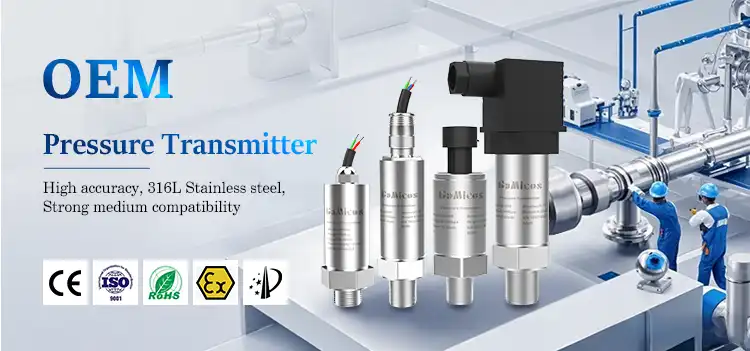
Understanding the No Signal Issue After Pressure Sensor Installation
One of the most frustrating things for engineers and project managers in charge of upgrading industrial automation is signal loss after adding a pressure sensor. This problem can stop production lines, push back plans for launching, and make it unclear how reliable the equipment is.
What Does "No Signal" Really Mean?
A "no signal" state means that the pressure sensor is not sending any electrical signals that can be read by your control system, data acquisition unit, or display device. Depending on the type of sensor, this could mean that an analog device isn't sending any power, that digital communication packets aren't being sent, or that numbers aren't being recorded consistently or within the allowed range. It is important to know the difference between these two types of sensors because digital sensors talk to each other using standards like Modbus, HART, or IO-Link, and analog sensors send out 4-20 mA current loops or 0-10V signals.
Common Scenarios Leading to Signal Loss
No signal conditions are often caused by a number of technology problems. The most common cause is bad wiring, especially when workers switch the polarity of DC-powered sensors or make short circuits by arranging cables incorrectly. Another common problem is that the sensors may not work with your system's intended output range or connection parameters if they are shipped with the wrong settings. Internal breakdowns of sensors happen less often with good devices, but they can happen because of electric discharge during installation or mechanical damage during handling. Signal problems can also be caused by things in the environment, such as electromagnetic interference in chemical plants or water getting into outdoor systems.
Why Swift Resolution Matters in Industrial Settings
Pressure measurement has a direct effect on safety systems and process quality in places like oil mills, chemical processing plants, and drug factories. A reactor vessel's pressure sensor that doesn't work can cause shutdowns that aren't needed or, even worse, fail to warn workers of dangerous overpressure conditions. Every hour that goes by without a diagnosis means lost work and possible safety risks. Procurement pros know that these problems can be kept to a minimum by choosing sensors with strong monitoring and working with suppliers who offer quick technical support for pressure sensor troubleshooting.
Systematic Approach to Troubleshooting No Signal After Installation
Methodical diagnostics separate engineers who do a good job from those who just replace parts without thinking about it. For signal problems, there is a reasonable order to the fixing steps that makes it easier to find the source of the problem.
Initial Visual and Wiring Inspection
As the first step in your troubleshooting process, carefully look over the placement of the sensor. Look for damage that can be seen on the body of the sensor, such as bent connection pins or holes in the wire insulation. Corrosion on terminal blocks is a sign of moisture exposure, which could cause links to drop out or the signal to go completely dead. Check that the shields on the cables link properly to ground points so that ground loops don't form and add noise to the analog data.
For wiring proof, you need to make sure that the conductors are still connected from the sensor terminals to the control system input terminals, going through junction boxes. Check the resistance of the data lines with a digital multimeter. For short cable runs, the resistance should be around a few ohms. If you see readings of infinite resistance, it means that there are broken wires inside the cable jackets. This is a problem that often happens in setups where the cables are bent sharply or shake. Check the colors of the wires against both the sensor wiring picture and the instructions for your control system to find polarity mistakes or wrongly assigned terminals.
Power Supply Verification and Voltage Checks
For pressure sensors to send out data, they need stable power within certain voltage bands. It is important to check the input voltage at both ends of the sensor, not just at the power source, since voltage drops along long wire runs can lower the power that is available below the minimum levels needed for operation. A sensor that is designed for 12–24 VDC might need at least 10 VDC to work right. If you measure 8 VDC at the sensor, you can see why there is no signal even though your power source is putting out 24 VDC.
Make sure that your power source can handle the right amount of electricity. In some places, power sources are shared by many sensors and field devices. When the total current draw is higher than the supply capacity, the voltage drops under load, and sensors either stop sending signs altogether or start acting strangely. To find out how much current you need, add up how much power each sensor uses and make sure your power source has at least a 20% margin above this number.
Sensor Integrity and Communication Protocol Testing
After making sure the power and wiring are correct, check the sensor's operation immediately. Use a movable calibration system that can both power the sensor and read its output, or connect the sensor to a test system that you know works well. This keeps the sensor from being affected by problems that might happen with the wires or control system setup for the final installation. If the sensor sends the right signals when tested, the problem with your original installation is likely with how it was set up or how well it works with other parts.
Diagnostic methods for digital sensors need to be protocol-specific. To try to talk to the sensor, use the setup program that came with the device. Make sure the baud rates, device IDs, and parity settings are correct for your network. At the ends of an RS-485 network, there must be the right termination resistors. If these are missing, communication fails will show up as a "no signal" situation. For digital communication to work, HART sensors that are placed on 4-20 mA signals need at least 250 ohms of loop resistance. If the resistance isn't there, digital communication won't work even if the analog output does.
Case Study: Resolving Signal Loss in a Chemical Processing Plant
During a building upgrade, a pharmaceutical company put pressure sensors on reactor vessels and had no signal problems. Initial tests showed that the wiring was right and that the power source was sufficient. The research team found that the new digital pressure sensors worked with the Modbus RTU protocol, but the old control system needed analog inputs from 4 to 20 mA.
Either new sensors with analog outputs had to be installed or protocol changers had to be set up. The person in charge of buying things picked protocol adapters so that the digital sensors could keep their advanced diagnostic features while still working with older control systems. This case shows how thorough troubleshooting can find root causes that aren't clear at first glance and help teams decide what to do to fix things during pressure sensor troubleshooting.
Comparing Solutions: Troubleshooting vs. Replacement and Tool Selection
To choose whether to spend time on more tests or repair the sensors right away, you need to know the costs and benefits and have the right diagnostic tools on hand.
When Troubleshooting Makes Economic Sense
When working with expensive high-accuracy sensors, custom-configured devices with long lead times, or cases where multiple sensors show similar symptoms that point to systematic installation errors rather than individual component failures, detailed troubleshooting is the most cost-effective way to fix the problem. When sensors cost more than $500, it's worth spending a few hours on troubleshooting to avoid having to pay for replacements that aren't needed. It could take weeks to get replacements for custom sensors set up for certain pressure ranges, output signals, or process links. This makes trying to fix them worth it even if the chances of success are low.
When Replacement Becomes the Practical Choice
Replacement is sometimes a better deal than longer tests. Sensors that are easy on the wallet (less than $100) and can be delivered quickly don't require a lot of fixing work at normal engineering hourly rates. It's not usually a good idea to try to fix sensors that have physical damage like cracked housings, rusted internals, or bent pressure ports. When you don't have the right diagnostic tools or manufacturer-provided technical help, replacement takes away any doubt about whether your repair conclusions are correct.
Analog vs. Digital Sensor Diagnostic Challenges
Basic multimeters can check output signals and find clear problems with analog sensors that have 4-20 mA or 0-10V outputs. This makes diagnostics easier. But testing equipment is needed to find small problems like sensor span drift or non-linearity. Digital sensors have a lot of built-in diagnostics that can be accessed through configuration software. These diagnostics include telling the internal temperature, error codes, and performance measures. When you have the right tools and training, this diagnostic complexity helps you quickly find problems. Without these tools, it's harder to fix problems with digital sensors than with traditional ones.
Essential Diagnostic Tools and Equipment
For professional sensor repair, you need more than just a basic voltmeter. Loop calibrators that can source and measure 4-20 mA signals let you fake sensor outputs to check the inputs to the control system and power the sensor circuits while testing. Modern switched-mode power sources and sensors with pulse-width modulated outputs can be read correctly by digital multimeters that can measure true RMS. Protocol monitors for RS-485, HART, or industrial Ethernet networks record data packets and show issues with setup, timing, or network problems.
Procurement teams should think about the total cost of ownership. Long-term support costs are lower for vendors who give away full diagnosis software for free. Suppliers that offer technical support over the phone from skilled application engineers can help your team solve problems quickly without having to have service engineers come to the site for pressure sensor troubleshooting.
Best Practices and Calibration Tips for Pressure Sensor Reliability
Avoiding signal problems is more effective than fixing them over and over again. Using the right installation and upkeep methods can make sensors last longer and prevent them from breaking down.
Addressing Sensor Drift and Output Stability
Pressure sensors slowly move away from their original settings because of changes in temperature, mechanical stress on the detecting elements, and exposure to process media. Drift shows up as slowly shifting output numbers, even when the real pressure stays the same, or as changes in the zero and span values when compared to standards. Setting up standard measures of performance right after installation creates points of reference that can be used to find drift during regular verification checks. For important uses, sensors should be calibrated every six to twelve months. For less important uses, readings might go up to once a year or twice a year.
Wiring Best Practices for Signal Integrity
Choosing the right cables and connecting them correctly can stop a lot of signal quality problems. To keep electromagnetic interference from motor drives, transformers, and radio frequency sources that are widespread in industrial buildings to a minimum, connect analog sensors to shielded twisted-pair cables. To keep sensor data from getting noise, only connect one end of the wire shield to ground. This end is usually the control system end. Make sure that sensor wires and high-voltage power lines are kept at least 12 inches apart or are run through separate conduits.
Manufacturer Support and Calibration Services
Leading pressure sensor makers offer debugging tools that make it easier to figure out what's wrong with their goods. Technical manuals, application notes, and video lessons from companies like Honeywell and Siemens go into great depth about common installation problems and how to fix them.
Some makers have phone lines staffed by applications experts who can walk you through the steps needed to diagnose problems with their specific sensor models. Along with product specs and price, the availability and quality of a supplier's expert help should be one of the main things you look at when choosing one. Building relationships with dependable calibration providers will keep you from having to scramble for services when audit dates are coming up or when critical sensors fail accuracy checks during pressure sensor troubleshooting.
Conclusion
It takes an organized approach to diagnosis, the right test tools, and knowledge of both sensor technology and industrial control systems to fix problems where there is no signal after installing a pressure sensor. Most problems can be quickly found by starting with simple visual checks and moving on to power source verification, wiring continuity checks, and protocol compatibility tests. Maintenance resources are best used when they know when replacing is cheaper than longer debugging.
Many signal problems can be avoided by following the right installation procedures, setting regular adjustment times, and making smart purchasing choices that focus on the support capabilities of the suppliers. Forming relationships with quick sensor makers that offer a wide range of technical support and high-quality goods helps keep operations running smoothly and ensures long-term dependability in important measurement tasks and pressure sensor troubleshooting.
FAQ
What causes a pressure sensor to show no signal immediately after installation?
The most common reasons are DC power connections that are the wrong way around, signal wires that aren't connected correctly to control system inputs, sensors that don't get enough power, or communication protocols that don't work with control networks. Physical installation mistakes, like failing to take off the shipping caps that protect the pressure ports, can also stop the sensor from working right.
How can I distinguish between a faulty sensor and wiring problems?
Connect the suspect sensor to a test circuit that you know is good and has a power source and the ability to read signals. If the sensor sends out the right signals in the test setting, there are problems with the wiring or design in the real installation. If the sensor doesn't send the right signs even when it's set up for testing, it probably has hardware problems and needs to be replaced.
What symptoms indicate a pressure sensor needs calibration service?
Calibration is needed if the readings change slowly over time, if the outputs don't go back to zero when the pressure is released, or if the sensor reading at full pressure doesn't match the calibration pressure. If the numbers change a lot all of a sudden without any changes to the process, it could mean that the sensor is broken inside, not just drifting out of range, which is key to pressure sensor troubleshooting.
Partner with GAMICOS for Reliable Pressure Measurement Solutions
Picking the right pressure sensor troubleshooting provider has a direct effect on how well your operations run and how efficiently you do maintenance. Our company, GAMICOS, makes precise pressure sensors for tough industry uses in the chemical, pharmaceutical, food processing, and oil exploration fields. Our goods go through strict quality control checks that are approved by qualified metrology institutions. This makes sure that they always work the same way, which means that you won't have to fix problems as often as they last.
In addition to high-quality gear, we offer full expert support to help your engineering teams choose the right products, install them correctly, and fix problems quickly. We can understand different application problems and suggest good answers because we've worked with customers in over 100 countries. We can customize our OEM and ODM services to meet your needs for sensor ranges, process links, output signals, and communication methods. Get in touch with our technical team at info@gamicos.com to talk about your pressure measurement needs and find out how working with an expert pressure sensor manufacturer can improve your purchasing strategy and give you real practical benefits.
References
1. Johnson, M.R. & Peters, K.L. (2021). Industrial Pressure Measurement: Installation and Troubleshooting Best Practices. Technical Publishing International.
2. Anderson, T.C. (2020). Electrical Signal Diagnostics in Process Instrumentation. Instrumentation Society of America.
3. Williams, H.D. & Chen, Y. (2022). Sensor Integration in Industrial Automation Systems. Control Engineering Press.
4. Roberts, S.J. (2019). Preventive Maintenance Strategies for Process Instrumentation. Industrial Press Incorporated.
5. Martinez, L.A. & Thompson, R.W. (2023). Field Calibration Techniques for Pressure Transmitters. Process Measurement Publications.
6. Edwards, P.M. (2021). Procurement Strategies for Industrial Measurement Equipment. Supply Chain Technical Journal.

Peter
Peter, Senior Sensor Technology Consultant, has 15-year industrial sensor R&D experience. He specializes in the end-to-end development of high-accuracy pressure and level sensors and he firmly believe, precision isn’t just a spec—it’s a promise.
We're here to help — submit your request anytime!
Let us know how we can help solve your pressure level measurement challenge.
_1757930850792.jpg)

Recommended Blog
Are Low-Cost Pressure Sensors Reliable? Price vs Performance
Are Low-Cost Pressure Sensors Reliable? Price vs Performance
Are Low-Cost Pressure Sensors Reliable? Price vs Performance
Are Low-Cost Pressure Sensors Reliable? Price vs Performance