Tank Level Signal Output Types Explained
Understanding Tank Level Signal Output Types
- Understanding Tank Level Signal Output Types
- Comparison of Popular Liquid Level Sensor Signal Outputs
- How to Choose the Right Tank Level Signal Output for Your Application?
- Industry Trends and Future Outlook for Tank Level Signal Outputs
- Conclusion
- Partner with GAMICOS: Leading Liquid Level Sensors Supplier
- References
In industrial settings, tank level signal outputs are the most important link between actual measurements and data that can be used. When liquid level sensors notice changes in the contents of a tank, like water, fuel, chemicals, or toxic substances, they have to turn these readings into electrical signs that control systems can understand. Knowing the different output types helps purchasing managers, tech teams, and automation experts choose sensors that work well and don't cause any problems with the infrastructure that's already in place.
Understanding Tank Level Signal Output Types
Signal outputs for tank levels are the electrical links that let measurement data get from the sensor to systems for tracking and controlling. Physical events like changes in capacitance, pressure, or sound reflections are turned into standard electrical signals that can be processed by programmable logic computers, remote control systems, and tracking tools.
Analog Signal Outputs: The Foundation of Continuous Measurement
Analog outputs give you constant measurement data over a certain range. This data is usually shown as voltage signals (0-10 V) or current loops (4–20 mA). The 4-20 mA current loop is now the standard in industry because it can handle a lot of noise over long wire runs and can tell when something is wrong when the signal drops below 4 mA. In chemical plants and oil factories, analog outputs let workers keep an eye on small changes in levels and spot patterns that could mean something is wrong with the process.
The best thing about analog communication is that it can stand for any number in the measurement range. Every millimeter of change in level can be represented by proportional signs sent by a tank that is 10 meters high. This detailed information helps with accurate inventory management and makes it possible for complex control systems to keep the right amount of filling while stopping spills.
Digital Signal Outputs: Precision Through Binary Communication
Structured systems like Modbus, HART, Profibus, or Foundation Fieldbus are used by digital outputs to send measurement data. These methods separate level information into separate data bits that contain the measurement value, as well as diagnostic data, the state of the sensor, and setup parameters. Digital communication has changed industrial measurement by letting field devices and control systems send and receive data in both directions.
Digital outputs are very helpful for modern facilities using Industry 4.0 strategies because they allow for improved monitoring and online setup. Without going to the placement point, engineering managers can change the settings of the liquid level sensors, check their calibration state, and fix problems. This feature lowers the cost of upkeep and limits the number of times a process has to be stopped in factories that run continuous production plans.
Wireless Signal Transmission: Freedom from Physical Constraints
By sending measurement data through radio frequency communication, wireless outputs get rid of the need for connection infrastructure. Technologies like LoRa, NB-IoT, 4G cellular, and industrial WiFi make it possible to put sensors in places where wires would be hard to do or too expensive. Wireless measurement is especially useful for tank farms that are far away, flexible equipment, and temporary sites.
The GLTV7 sensitive level sensor is a great example of wireless integration because it can work with GPS tracking systems in addition to its main measurement functions. This connection lets fleet managers and supply planners keep an eye on how much fuel multiple cars are using in real time. They can then connect this fuel use to working routes and find ways to make things more efficient. The sensor can measure with a precision of less than 1 mm and keep working well even when the voltage changes. This means that data transfer is reliable even in demanding mobile applications.
Comparison of Popular Liquid Level Sensor Signal Outputs
When choosing between different types of signal output, you need to carefully look at how well they work, how to place them, and how they will be used. Each output method has its own benefits that depend on the needs of the program and the framework of the building.
Analog Versus Digital: Evaluating Precision and Functionality
Analog ports are easy to use and work with all devices. 4-20 mA outputs can be read by almost any industrial control system; you don't need any special interface units or setup tools to do this. Because they can be used with any device, analog outputs are perfect for simple level measurement tasks where the main goal is to reliably show how much is in the tank. Food and drink processing plants often choose analog outputs for storage tanks when regulations need measurements to be able to be tracked without having to set up complicated digital systems.
Digital outputs are better at diagnosing problems and making measurements accurately than traditional ones. A 4–20 mA signal shows level by changing the current, but digital methods can send measurement values with a level of detail that depends only on the sensor's abilities and not on how well the signal was converted. Pharmaceutical companies that need to prove the accuracy of measurements often choose digital outputs because procedure paperwork gives full records of sensor performance and calibration history.
Choosing between these two methods is often a reflection of bigger decisions about the design of automation. To avoid expensive infrastructure updates, buildings with old control systems may favor analog compatibility. On the other hand, more and more new installations use digital communication to support predictive maintenance programs and centralized asset management platforms.
Wired Versus Wireless: Installation Flexibility and Reliability
When you connect things by wire, you can be sure that data will get delivered reliably and with little delay. Power and data pass through the same infrastructure. This means that you don't have to worry about managing batteries and the system will keep running even during long production runs. Wired sensors are often required by dangerous area classifications at chemical plants and refineries because inherently safe walls have been shown to protect against fire risks.
Wireless systems change upgrade situations by letting sensors be installed without having to make long runs of tubing or changes to wire trays. Water treatment plants that keep an eye on various clarifier tanks can set up portable sensors in days instead of weeks. This is because they don't have to coordinate building or wait for permits, which are both things that can take time. Wireless sensors that are driven by batteries now have operating lives of several years, which means they don't need to be serviced as often as wired sensors.
Strategies for wireless distribution are affected by how reliable the network is. In industrial environments, applications such as liquid level sensors rely heavily on stable and continuous data transmission. Industrial wireless methods use redundancy, frequency hopping, and response to make sure that data is sent reliably even in places with a lot of electromagnetic noise. When project managers look at wireless solutions, they should make sure that the suggested systems meet the dependability needs of the site by trying them in a sample setting with typical working conditions.
Capacitive and Ultrasonic Technologies: Matching Principles to Applications
Capacitive sensing works by checking the dielectric constant between the sensor electrodes. This constant changes as the amount of the liquid does. This idea works well with both conductive and non-conductive liquids, which makes capacitive sensors useful in a wide range of situations. The GLTV7 capacitive sensor shows how flexible it is by measuring fuel levels with a precision of less than a millimeter and letting the length be changed in the field to fit any tank depth. The installation follows SAE standards, which lets you use original equipment sensors instead of replacing them without having to change the mounting holes or electrical connections.
Ultrasonic sensors send out short bursts of high-frequency sound and time how long it takes for the sound to bounce back from the top of the liquid. This method doesn't involve touching the sensor, so it doesn't get dirty, and there are no worries about chemicals working with harsh process media. Ultrasonic technology works best in open tanks and air holding vessels with a lot of vapor space, which lets sound travel easily. But things like foam, noise, and temperature stratification can make measurements less accurate, so careful application engineering is needed to make sure they work well.
The needs for calibration are very different between these systems. To find the link between capacitance and height, capacitive sensors need to be calibrated against known liquid levels. External calibrators make this process easier by letting you change settings without taking the sensor off. Ultrasonic sensors need to be checked to make sure they are measuring sound speed at the right temperature and pressure. More advanced models have built-in automatic adjustment methods that keep the sensors accurate even when the process conditions change.
How to Choose the Right Tank Level Signal Output for Your Application?
The best way to choose sensors is to weigh scientific needs against practical ones, like funding, installation time, and needed help in the long run. An organized review method makes sure that the solutions picked meet performance needs and work well with current systems.
Defining Measurement Requirements and Environmental Conditions
The first step in measurement definition is to list the accuracy and precision that are needed. For example, when transferring ownership or making batches, accuracy within ±0.1% of span may be needed. For simple overflow protection, however, ±1% or more is fine. The GLTV7 sensor's sub-millimeter precision makes it suitable for challenging situations where accurate inventory tracking has a direct effect on prices and quality of products.
Environmental factors have a big effect on choosing sensors. Extreme temperatures, changes in pressure, and chemical interaction all limit the technologies that can be used. For corrosive chemicals, sensors need to be made of strong materials like PTFE, Hastelloy, or ceramic. For safe uses, sensors need to have smooth surfaces that allow for clean-in-place processes and don't allow germs to grow. Understanding these external demands stops liquid level sensors from failing too soon and lowers their lifecycle costs by making sure they are properly specified at the start.
Evaluating Integration Capabilities and System Compatibility
The choice of signal output must match the input powers of the control system. Even though digital methods are better, legacy systems that only allow a few ways to communicate may need analog outputs. Modern distributed control systems, on the other hand, get the most out of digital sensors that provide troubleshooting data that helps condition-based maintenance strategies.
Integration includes more than just electricity compatibility. It also includes mounting options, process links, and needs for getting to the installation site. The SAE standard fitting interface on the GLTV7 makes sure that it can be used with current car setups. This cuts down on the time needed for custom production and the amount of work needed for installation. This standardization is especially helpful when replacing sensors across big teams, since downtime has a direct effect on making money.
Supplier Evaluation: Balancing Capability and Support
Honeywell, Siemens, and VEGA are just a few of the top industrial sensor makers that offer wide range of products to meet a wide range of measurement needs. These well-known suppliers have a track record of dependability, backed up by a lot of application knowledge and help networks around the world. Their goods usually cost more because they put a lot of money into research, development, and quality control.
New sellers and specialized makers often offer options that are cheap and offer new features at good prices. When looking at these choices, you need to think about how well they offer professional help, how easy they are to customize, and how long they will be available. Procurement strategies that focus on lifetime value instead of original purchase price know that quick technical help and easy access to extra parts have a big effect on total ownership costs.
By negotiating with qualified sellers about buying in bulk, you can save a lot of money and build relationships that will give you priority support and good terms for future needs. When sourcing managers are looking to build long-term relationships with suppliers, they should check the quality management systems of those suppliers by looking at their certifications and calling previous customers who have used similar products.
Industry Trends and Future Outlook for Tank Level Signal Outputs
Digitalization, better connections, and efforts to be more environmentally friendly are all changing industrial measurement tools all the time. These trends change how buying decisions are made because new technologies offer chances for practical growth while possibly making old ways of doing things useless.
IoT Integration and Smart Diagnostics
Internet of Things platforms collect sensor data from multiple installs. This makes it possible to centrally watch and perform advanced analytics that weren't possible with separate measurement points. Cloud-based tools let you see what's going on in multiple locations at the same time, which helps with product optimization and preventative maintenance programs that work for the whole company. This trend is shown by the GLTV7's GPS integration, which measures fuel level and tracks the vehicle's position at the same time. This gives fleet managers full information that helps them plan routes better and find instances of illegal fuel use.
Digital sensors with built-in smart diagnostics constantly check performance factors like signal strength, noise levels, and the health of internal components. These algorithms find problems before they affect the accuracy of measurements. They do this by sending out maintenance alerts that stop unnecessary downtime. Facilities that use condition-based maintenance strategies save a lot of money because they only do repairs when sensor health signs show that they need to be done, instead of following strict plans.
Wireless Sensor Networks and Automation Compatibility
Wireless mesh networks let sensors be placed across large buildings without the restrictions that come with fixed infrastructure. Individual sensors send data to nearby devices, making self-healing networks that stay connected even if one point fails or there are temporary problems. This toughness comes in handy in difficult industrial settings where moving tools, changing structures, and bad weather make it hard to use normal ways of communicating.
Automation system makers are using standard communication methods more and more, which lets different manufacturers work together using the same interfaces. Open standards like OPC UA, MQTT, and others make collaboration easier while still letting you choose the best sensors from any maker. To make sure that setups will work with new automation systems and different vendors in the future, procurement teams should give priority to sensors that support these standards.
Regulatory Compliance and Sustainable Design
Environmental laws force sensor designers to use less material, build things that can be recycled, and make things that use less energy. Wireless sensors that are driven by batteries now have energy-harvesting features that make them last longer and waste less juice. Customers who care about the environment as well as professional ability are drawn to manufacturers who use sustainable practices.
Explosion-proof approvals are still needed for sensors that are used in dangerous places where flammable vapors or dusts pose an explosion risk. Certifying bodies all over the world have strict testing rules that make sure sensors can't become fire sources when something goes wrong. The GLTV7's wide voltage input range shows that it was designed to work safely in a variety of electrical situations, which is an important trait for mobile equipment that works in a variety of settings.
Conclusion
Tank level signal outputs are the main way that physical measurements and process control choices talk to each other. When picking the right output types, you have to think about the long-term support and upkeep needs as well as the accuracy standards, the setting, the ability to integrate, and your budget. Analog, digital, and wireless outputs all have their own benefits that make them better for different uses, and new technologies are always adding to what can be done.
The GLTV7 capacitive sensor is a great example of a modern measurement option because it combines high accuracy, placement freedom, and wireless integration to help with full fleet management. To choose the right sensor, you need to carefully look at both the technical specs and the skills of the provider, such as their ability to support customization, ensure quality, and provide fast service that keeps the sensor working well throughout its lifecycle.
Partner with GAMICOS: Leading Liquid Level Sensors Supplier
GAMICOS is ready to help you with your measurement technology needs with its proven knowledge, wide range of products, and customer-focused service. As a maker of liquid level sensors with a lot of experience, we offer solutions that are the best of both technical quality and real-world application knowledge that we've learned by working with thousands of customers every year in markets around the world.
Our engineering team works together with your technical staff to make sure that the chosen sensors work well with the infrastructure you already have in place and meet strict performance standards. We offer the adaptability and quickness that successful projects need, whether you need standard goods delivered right away or custom solutions that solve specific problems.
Get in touch with our expert sales team at info@gamicos.com to talk about your unique application needs and find out how GAMICOS products can help your business run better. We'd love the chance to show what we can do through in-depth technical talks, sample evaluations, and pilot setups that show how well they work before committing to a large-scale project. On our website, you can read detailed product instructions, application guides, and customer success stories that show how our solutions have helped people in a wide range of businesses.
References
1. Liptak, B.G. (2018). Instrument Engineers' Handbook: Process Measurement and Analysis, 5th Edition. CRC Press.
2. Webster, J.G. & Eren, H. (2014). Measurement, Instrumentation, and Sensors Handbook: Spatial, Mechanical, Thermal, and Radiation Measurement, 2nd Edition. CRC Press.
3. Hughes, T.A. (2002). Measurement and Control Basics, 3rd Edition. International Society of Automation.
4. Bentley, J.P. (2005). Principles of Measurement Systems, 4th Edition. Pearson Education Limited.
5. Noltingk, B.E. (Editor) (1994). Instrumentation Reference Book, 2nd Edition. Butterworth-Heinemann.
6. Morris, A.S. & Langari, R. (2012). Measurement and Instrumentation: Theory and Application. Academic Press.

Peter
Peter, Senior Sensor Technology Consultant, has 15-year industrial sensor R&D experience. He specializes in the end-to-end development of high-accuracy pressure and level sensors and he firmly believe, precision isn’t just a spec—it’s a promise.
We're here to help — submit your request anytime!
Let us know how we can help solve your pressure level measurement challenge.
_1757930850792.jpg)
Recommended Blog
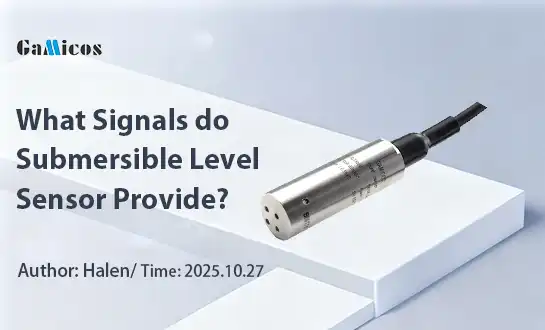
What output signals do submersible level sensors typically provide?
China vs. India: Submersible Level Transmitter Quality Comparison
Understanding Wireless Level Transmitters-A Complete Guide
Introduction to Wireless Level Measurement for Industrial Tank
Best Submersible Pressure Transducer from Xi'an for Europe
China vs. India: Submersible Level Transmitter Quality Comparison
Understanding Wireless Level Transmitters-A Complete Guide
Introduction to Wireless Level Measurement for Industrial Tank
Best Submersible Pressure Transducer from Xi'an for Europe
China vs. India: Submersible Level Transmitter Quality Comparison
Understanding Wireless Level Transmitters-A Complete Guide
Introduction to Wireless Level Measurement for Industrial Tank
Best Submersible Pressure Transducer from Xi'an for Europe
China vs. India: Submersible Level Transmitter Quality Comparison
Understanding Wireless Level Transmitters-A Complete Guide
Introduction to Wireless Level Measurement for Industrial Tank
Best Submersible Pressure Transducer from Xi'an for Europe
China vs. India: Submersible Level Transmitter Quality Comparison
Understanding Wireless Level Transmitters-A Complete Guide
Introduction to Wireless Level Measurement for Industrial Tank
Best Submersible Pressure Transducer from Xi'an for Europe
China vs. India: Submersible Level Transmitter Quality Comparison
Understanding Wireless Level Transmitters-A Complete Guide
Introduction to Wireless Level Measurement for Industrial Tank
Best Submersible Pressure Transducer from Xi'an for Europe
China vs. India: Submersible Level Transmitter Quality Comparison
Understanding Wireless Level Transmitters-A Complete Guide
Introduction to Wireless Level Measurement for Industrial Tank
Best Submersible Pressure Transducer from Xi'an for Europe
China vs. India: Submersible Level Transmitter Quality Comparison
Understanding Wireless Level Transmitters-A Complete Guide
Introduction to Wireless Level Measurement for Industrial Tank
Best Submersible Pressure Transducer from Xi'an for Europe
China vs. India: Submersible Level Transmitter Quality Comparison
Understanding Wireless Level Transmitters-A Complete Guide
Introduction to Wireless Level Measurement for Industrial Tank
Best Submersible Pressure Transducer from Xi'an for Europe
China vs. India: Submersible Level Transmitter Quality Comparison
Understanding Wireless Level Transmitters-A Complete Guide
Introduction to Wireless Level Measurement for Industrial Tank
Best Submersible Pressure Transducer from Xi'an for Europe