Nuclear-Grade Pressure Transmitters in Reactor Coolant Monitoring
Understanding Nuclear-Grade Pressure Transmitters and Their Role in Reactor Coolant Monitoring
- Understanding Nuclear-Grade Pressure Transmitters and Their Role in Reactor Coolant Monitoring
- Advantages and Performance Metrics of Nuclear Pressure Transmitters
- Comparison and Selection Criteria for Nuclear Pressure Transmitters
- Procurement Considerations for Nuclear-Grade Pressure Transmitters
- Conclusion
- FAQ
- Partner with GAMICOS for Your Radiation-Hardened Pressure Measurement Needs
- References
Nuclear-grade pressure sensors are important parts of systems that keep an eye on nuclear coolant, and how well they work has a direct effect on safety. These specialized gadgets constantly check for changes in the pressure in the coolant channels of reactors. This gives workers important information that helps them keep things running smoothly and avoid problems. A nuclear pressure transmitter is different from other industrial sensors because it can handle high levels of radiation, toxic coolants, and changes in temperature that would quickly break down other sensors. This guide is tailored to the needs of sourcing managers, engineering professionals, and OEM clients who are looking for trustworthy measurement solutions for nuclear uses.
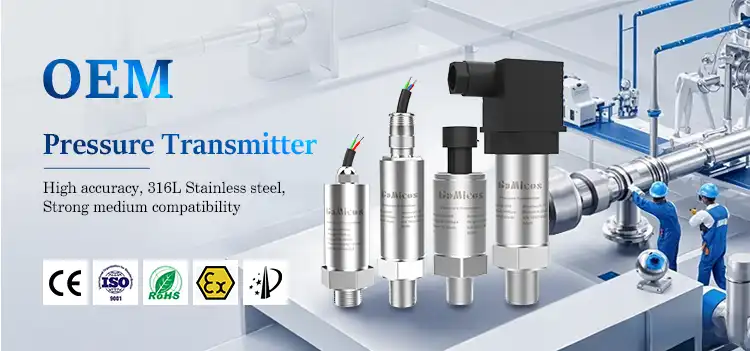
Understanding Nuclear-Grade Pressure Transmitters and Their Role in Reactor Coolant Monitoring
What Makes Nuclear Pressure Transmitters Different?
When subjected to nuclear radiation fields, normal commercial transmitters break down very quickly. Nuclear-qualified sensors use electronics that are resistant to radiation, special protective materials, and tried-and-true building methods that keep the accuracy of the measurements over long periods of time. Before they can be certified for nuclear service, these devices have to go through licensing tests that simulate decades of radiation exposure, temperature cycling, and earthquakes.
Core Operating Principles
Most of the time, the measuring device uses capacitive or strain gauge sensors that are covered by strong isolation diaphragms. When the coolant pressure changes, the diaphragm bends in a way that is related to the change. This creates an electrical signal that electronics can use to send data in a standard format. Within tightly sealed housings that are meant to keep out moisture and coolant contamination, the sensing system is housed.
Essential Features for Reactor Applications
Radiation resistance is the main thing that sets qualified receivers apart, even when they've been exposed to more than 100 Mrad of neutrons and gamma rays over time. In the temperature range from room temperature to 350°C, temperature adjustment methods make up for the effects of temperature. Hermetic sealing stops coolant from leaking, and special wire systems can handle damage from radiation. Seismic qualification makes sure that operations can continue during earthquakes, which is required by law for nuclear sites.
Applications Within Coolant Systems
For primary cooling loop tracking to work, pressure must be measured continuously in several places. This way, problems can be found before they become dangerous. Operators depend on these tools to make sure the pumps are working right, find blockages before they happen, and make sure the water is flowing at the right rate. Nuclear-qualified pressure measurements are also used by secondary devices that check the settings of the steam generator. Emergency core cooling systems have backup receivers that send important information in case of an accident, so they have to be completely reliable. The nuclear pressure transmitter is therefore a critical component of plant safety.
Advantages and Performance Metrics of Nuclear Pressure Transmitters
Superior Performance Characteristics
The accuracy of measurements is usually within ±0.25% of full scale across the working temperature range, and it stays that way between calibrations that happen every few years. Long-term drift performance is very good thanks to the strong building method. Many installations have shown measurement stability that is better than expected even after decades of continued service. Response times are still quick enough to pick up small changes in pressure during operating events, meeting the needs of both steady-state tracking and dynamic analysis.
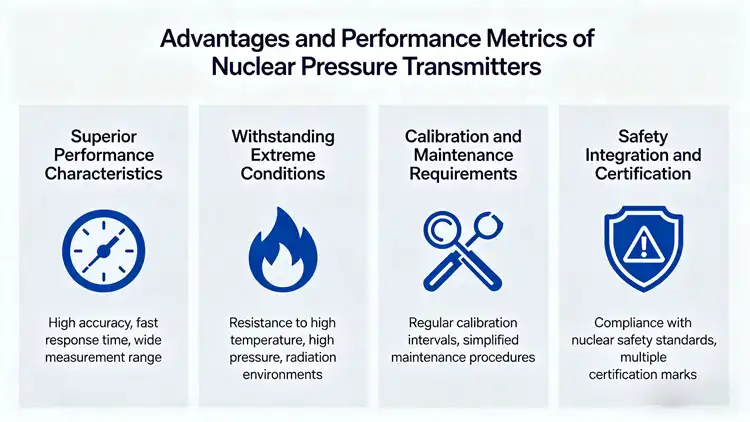
These improvements in speed directly lead to improvements in operations. Plant workers have more faith in measurement data, which means they don't have to do as much upkeep work and can find real problems as they arise. Regulatory compliance is easy to achieve when you use properly qualified instruments with performance records that can be checked.
Withstanding Extreme Conditions
Nuclear surroundings have problems that go far beyond those found in normal business settings. Radiation fields slowly break down organic materials and computer parts, so they need special methods to make them stronger. Extreme temperatures test how well two materials work together and how much they expand and contract when heated or cooled. Chemical reactions with cooling chemistry require materials and coats that don't rust.
Nuclear-qualified receivers deal with these problems by choosing the right materials, making the best designs, and following strict testing procedures. Electronics use parts that can handle radiation and circuit designs that break down slowly instead of completely. The materials used in housing don't rust and keep their structural integrity throughout the qualification range. Thermal management features stop hot spots from forming in certain areas, which could speed up the breakdown of parts.
Calibration and Maintenance Requirements
Regular testing, which is usually done during planned plant breaks every 18 to 24 months, makes sure that the measurements continue to be accurate. The process includes checking the output of the transmitter against pressure standards that can be tracked at several places within the operating range. Documentation needs to show that quality assurance programs are being followed and that the past of testing can be tracked.
As a result of the sturdy design mindset, maintenance tasks are kept to a minimum during normal operation. Visual inspections look for damage or wear that can be seen. Cable links are checked on a regular basis to make sure they stay electrically sound. As long as set qualification limits are met, replacements are usually based on the amount of radiation exposure rather than functional fails.
Safety Integration and Certification
A nuclear pressure transmitter is built into safety systems in power plants and protects them automatically from odd conditions. Voting logic with redundant measurement channels can keep working safely even if one or more emitters fails or needs repair. The qualification paperwork shows that the equipment is suitable by going through a lot of tests that cover normal operation, design-basis crashes, and situations that aren't covered by the design-basis.
Standards for qualifying nuclear technology are set by regulatory officials, certification bodies like IEEE and ASME, and other groups. Checking for compliance means looking over qualification test results, factory quality programs, and commercial grade dedication methods. With this set of rules, you can be sure that placed equipment will work successfully for as long as it's supposed to.
Comparison and Selection Criteria for Nuclear Pressure Transmitters
Nuclear-Grade vs. Standard Industrial Transmitters
Normal industrial antennas work well enough for everyday tasks, but they don't have the qualifications needed for nuclear service. The main differences are not just in how tough something is; they also show how well it works in accident situations. Even though industrial devices might be able to physically handle radiation at first, no one knows how their long-term dependability and accuracy will change, so they can't be used for safety purposes.
Nuclear-qualified options have performance that has been tested and proven to work throughout their qualification range. Instead of just being a high price, the extra cost is due to qualification costs, unique materials, and strict production controls. Facilities that are thinking about using a normal nuclear pressure transmitter instead of a standard one avoid the chance of not following the rules, which could have safety consequences.
Evaluating Available Options
Several well-known companies make nuclear-qualified pressure sensors that meet the standards of the business. Rosemount, Barton, and Reuter-Stokes are all well-known companies that have worked with nuclear uses for many years. Instead of just looking at the original buy price, evaluation criteria should focus on how thorough the approval paperwork is, the factory quality programs, and the performance history of the installed base.
Technical specs need to be carefully looked over to make sure they work with the needs of the application. The pressure range, accuracy class, temperature limits, and radiation tolerance must all match what will be used in the real world. When it comes to electrical links, mounting options, and signal conditioning needs, interface compatibility takes them all into account. When planning a project, it's important to keep an eye on delivery dates because making nuclear-qualified tools often takes longer than expected.
Key Selection Factors
Radiation tolerance standards must be higher than the expected total dose over the service life, with enough safety gaps built in. Accuracy standards weigh the need to measure against the cost of doing so, keeping in mind that stricter requirements mean higher costs for buying things. Temperature rates should take into account both normal working conditions and possible accident situations.
The qualifications of suppliers should be carefully looked at, including their quality control systems, manufacturing skills, and structures for providing help after the sale. Established nuclear sellers keep detailed records that make it possible to track down equipment throughout its entire lifetime. Having technical assistance available is helpful during the installation, commissioning, and operational stages.
Lead times affect project plans, especially when building something new or making big changes to an existing one. Standard store items may ship within a few weeks, but special designs may take six months or longer. Early interaction with suppliers helps find possible schedule problems and allows for proactive planning.
Procurement Considerations for Nuclear-Grade Pressure Transmitters
Sourcing Strategies
Direct connections with manufacturers are best for nuclear uses because they make it easy to get technical help and qualification paperwork. Authorized wholesalers offer different ways to get their products, and if they have any in stock, shipping times can be shortened. Global B2B platforms connect buyers with many suppliers, making it easier to compare prices and make sure that vendors meet requirements.
Bulk purchasing arrangements deliver cost advantages while ensuring consistent product specifications across multiple installations. Making a promise to a certain volume could lead to better price, faster production scheduling, and more helpful technical support. Project-specific buying brings together needs from different systems, which makes handling easier and cuts down on administrative work.
Cost Considerations
A nuclear pressure transmitter costs more because it has to go through more testing and special manufacturing steps. The price at first buy is usually three to five times that of similar industrial-grade machines. When considering options, the total cost of ownership study should include the costs of calibration, the number of spare parts that are kept on hand, and the expected service life.
The way prices are changing shows that manufacturers are merging, with smaller companies controlling most of the market. Long-term supply deals protect capacity sharing and make budgets more stable. Changes in currencies affect foreign buying, especially when buying from companies in different economic regions.
Logistics and Support Infrastructure
When you move goods internationally, you need to pay attention to export controls, customs paperwork, and rules for transport handling. Electronics that are easily damaged need to be packed in protective materials to keep them safe during shipping. Coordination of delivery makes sure that the supply of equipment matches the plan for installation.
For regulatory compliance, supplier certification paperwork like qualification test results, manufacturing processes, and quality assurance guides are very important. The warranty should cover problems with the way the product was made, but it should also take into account that nuclear service conditions may make it harder for standard warranties to apply. Technical support after the sale is very helpful during the setting up, fixing problems, and using the product.
Conclusion
Monitoring reactor water needs measuring tools that are very accurate, have been proven to work, and come with a lot of qualification paperwork. These features are only possible with nuclear pressure transmitter emitters because they are carefully designed, tested, and made in a controlled way. To do a good job of procurement, you need to know the technical standards, check out the supplier's skills, and think about practical issues that go beyond the initial purchase price. Investing in properly qualified instruments directly supports operating safety, regulatory compliance, and effective plant performance over many years of service. New technologies promise to make things more useful while still having the basic dependability features that are needed for nuclear uses.
FAQ
How Often Require Calibration for Nuclear Pressure Transmitters?
The time between calibrations is usually between 18 and 24 months, which lines up with planned plant shutdowns when it is possible to reach the equipment. The exact standards rely on what the government says, what the manufacturer suggests, and how the facility has been used in the past. Plants with good tracking systems may be able to lengthen gaps if measurement stability is shown to be high, as long as the government agrees.
What Distinguishes Nuclear-Grade from Standard Pressure Transmitters?
Nuclear-qualified devices go through a lot of tests to make sure they can keep working in a wide range of circumstances, such as radiation exposure, earthquakes, and accidents. Test results and analysis in documentation packages show that the equipment is suitable. Standard industry transmitters don't have this qualification history, even though they might look familiar. A proper nuclear pressure transmitter is essential for these environments.
Can Manufacturers Customize Transmitters for Specific Reactor Conditions?
Reliable nuclear sellers include application-specific needs in their qualification packages. These may include optimizing the pressure range, changing the way connections are made, and specifying the cables. It gets too expensive to do a lot of customization that needs to be requalified, so normal qualified setups are better when they meet the needs of the application.
Partner with GAMICOS for Your Radiation-Hardened Pressure Measurement Needs
Choosing the right measurement technology and provider partnership is the first step to reliable coolant tracking. Industrial-grade pressure sensors are what GAMICOS does best. They are used in tough situations that need long-lasting and accurate measurements. Our engineering team has a lot of experience dealing with tough weather conditions by using strong building methods and designing sensors that work better.
We know that B2B procurement managers like it when providers offer full help throughout the whole project lifecycle. We offer technical consulting services to help you find the best answers for your needs, and our OEM and ODM skills make it easy to make changes. We can be your reliable provider of nuclear pressure transmitter solutions because our factories are set up to make a lot of them at once and our global operations make sure that they get to you on time in North America, Europe, and other places. Get in touch with us at info@gamicos.com to talk about your reactor monitoring needs and find out how our measurement solutions improve the stability of operations.
References
1. IEEE Standard 323-2003, "IEEE Standard for Qualifying Class 1E Equipment for Nuclear Power Generating Stations," Institute of Electrical and Electronics Engineers.
2. Hashemian, H.M., "Maintenance of Process Instrumentation in Nuclear Power Plants," Springer-Verlag Berlin Heidelberg, 2006.
3. NUREG/CR-5560, "Aging Assessment of Essential HVAC Chillers Used in Nuclear Power Plants," U.S. Nuclear Regulatory Commission, 1990.
4. Electric Power Research Institute, "Guideline for the Utilization of Commercial Grade Item Dedication for the Procurement of Sensors and Transmitters," EPRI TR-107330, 1997.
5. International Atomic Energy Agency, "Instrumentation and Control Systems Important to Safety in Nuclear Power Plants," IAEA Safety Standards Series No. SSG-39, 2016.
6. Kerlin, T.W. and Shepard, R.L., "Industrial Temperature Measurement," Instrumentation, Systems, and Automation Society, 1982.

Spring
Spring, With 5 years of experience in sensor technology and product development, Mark specializes in helping clients identify the optimal pressure and level sensor solutions for demanding industrial environments。
We're here to help — submit your request anytime!
Let us know how we can help solve your pressure level measurement challenge.
_1757930850792.jpg)

Recommended Blog

Guide to Choosing a Hygienic Pressure Transmitter for Dairy Plants
Sanitary vs Industrial Pressure Transmitters: Key Differences Explained
Pressure Transmitter Uses in Water and Wastewater Treatment

Best Pressure Transmitter for HVAC and Energy Systems
Guide to Choosing a Hygienic Pressure Transmitter for Dairy Plants
Sanitary vs Industrial Pressure Transmitters: Key Differences Explained
Pressure Transmitter Uses in Water and Wastewater Treatment
Best Pressure Transmitter for HVAC and Energy Systems
Guide to Choosing a Hygienic Pressure Transmitter for Dairy Plants
Sanitary vs Industrial Pressure Transmitters: Key Differences Explained
Pressure Transmitter Uses in Water and Wastewater Treatment
Best Pressure Transmitter for HVAC and Energy Systems
Guide to Choosing a Hygienic Pressure Transmitter for Dairy Plants
Sanitary vs Industrial Pressure Transmitters: Key Differences Explained
Pressure Transmitter Uses in Water and Wastewater Treatment
Best Pressure Transmitter for HVAC and Energy Systems
Guide to Choosing a Hygienic Pressure Transmitter for Dairy Plants
Sanitary vs Industrial Pressure Transmitters: Key Differences Explained
Pressure Transmitter Uses in Water and Wastewater Treatment
Best Pressure Transmitter for HVAC and Energy Systems
Guide to Choosing a Hygienic Pressure Transmitter for Dairy Plants
Sanitary vs Industrial Pressure Transmitters: Key Differences Explained
Pressure Transmitter Uses in Water and Wastewater Treatment
Best Pressure Transmitter for HVAC and Energy Systems
Guide to Choosing a Hygienic Pressure Transmitter for Dairy Plants
Sanitary vs Industrial Pressure Transmitters: Key Differences Explained
Pressure Transmitter Uses in Water and Wastewater Treatment
Best Pressure Transmitter for HVAC and Energy Systems