Pressure Transmitter Uses in Water and Wastewater Treatment
Understanding Pressure Transmitters in Water and Wastewater Treatment
- Understanding Pressure Transmitters in Water and Wastewater Treatment
- Key Applications of Pressure Transmitters in Water and Wastewater Treatment
- Choosing the Right Pressure Transmitter for Water and Wastewater Applications
- Installation and Maintenance Best Practices for Pressure Transmitters
- Conclusion
- Partner with GAMICOS for Your Pressure Transmitter Procurement Needs
- References
Pressure transmitters are very important measuring tools in water and sewage treatment plants. They turn fluid pressure into standard electrical signs that can be used for control and tracking. By accurately tracking pressure in real time across pumps, pipelines, tanks, and filtration systems throughout the treatment process, these high-tech devices help workers keep the system running at its best, make sure it meets legal requirements, and avoid costly equipment breakdowns.

Understanding Pressure Transmitters in Water and Wastewater Treatment
Modern facilities that treat water and garbage depend on accurate pressure readings to keep their operations running smoothly and in line with regulations. A pressure transmitter is a smart sensor that changes mechanical pressure into standard electrical signals, usually 4-20mA or digital HART protocols. This makes it possible for control systems and tracking tools to work together without any problems.
Working Principles and Signal Processing
A pressure-sensitive part that changes shape in response to applied force is at the heart of pressure transmitters. More advanced models, like the GPT200, use spread silicon pressure sensors as sensitive parts. They come with processing circuits that turn millivolt data into standard voltage and current outputs. This design lets you connect directly to computers, control instruments, and display systems without the need for extra signal shaping gear.
Piezoresistive pressure sensor technology is used in current transmitters because it is very stable and reliable. High-performance specialized circuits makes sure that everything is safe and allows signals to be sent over long distances, which is very important in big treatment facilities where sensors may be hundreds of meters away from control rooms.
Types of Pressure Transmitters in Water Treatment
Different types of transmitters are used in water and wastewater treatment uses, with each type being best for a certain set of data needs. Differential pressure transmitters find the difference in pressure between two places. This makes them perfect for checking the flow through orifice plates and filters.
Gauge pressure transmitters are useful for tracking pumps and checking the pressure in tanks because they measure pressure in relation to the air pressure. Absolute pressure transmitters give readings compared to a perfect vacuum, which is important for treatment processes that need accurate adjustments for air pressure.
Water treatment plants are using wireless pressure transmitters more and more because they are easier to set up and don't need as much wiring. These devices can talk to each other through different protocols, such as LoRa, GPRS, NB-IoT, and 4G networks. This lets them be monitored from afar, which is very important for spread treatment systems.
Signal Standards and Communication Protocols
Modern Pressure Transmitter units work with a variety of transmission standards to ensure seamless connectivity with existing control systems. The traditional 4-20mA current loop provides robust analog signals that are highly immune to electrical noise, while the HART protocol adds a layer of digital communication for advanced diagnostics and remote configuration options.
Digital communication methods offer more features, such as the ability to calibrate devices remotely, get troubleshooting data, and measure more than one variable. These features make the system more reliable and easier to see how it's working while reducing the amount of upkeep that needs to be done.
Key Applications of Pressure Transmitters in Water and Wastewater Treatment
Pressure measurement is used in many important parts of water and wastewater treatment, and accurate tracking has a direct effect on how well the treatment works and how well it meets regulations.
Tank Level Monitoring Through Differential Pressure
One of the most common uses for pressure transmitters in treatment plants is to check the level of tanks. Hydrostatic level measurement uses the link between the depth of the liquid and the pressure to give clarifiers, storage tanks, and process vessels a constant reading of the level.
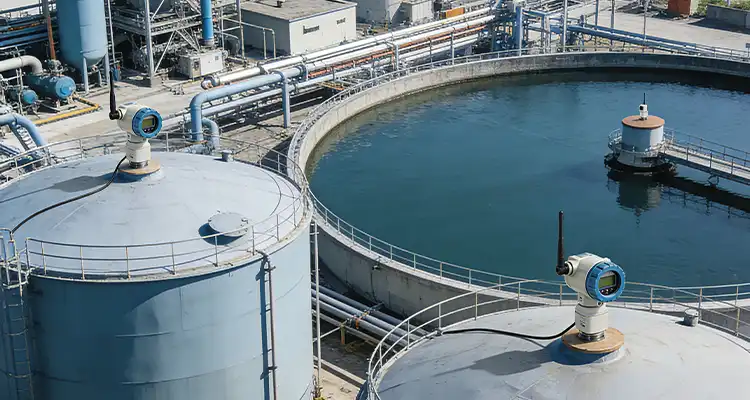
Differential pressure transmitters are put in the bottom of tanks to measure the difference in pressure between the air pressure and the hydrostatic pressure caused by the height of the liquid column. This method gives very exact level readings no matter how the tank is shaped or how it is installed.
The GPT200 pressure transmitter works great in these situations because it has a 316L stainless steel isolation diaphragm that doesn't rust when exposed to harsh chemicals used to clean water and keeps the readings stable over time. The full range covering of the device works with a wide range of tank sizes and liquid types that are popular in treatment facilities.
Pipeline Flow Measurement and Monitoring
To make sure that dosing and treatment work properly, pressure transmitters that can measure the difference in pressure across flow elements like orifice plates, venturi tubes, and flow nozzles are very exact. To figure out volumetric flow rates, differential pressure transmitters measure the drop in pressure across these flow limits.
Accurate flow measurement allows for accurate chemical dosing, which has a direct effect on how well the treatment works and how much it costs to run. Under-dosing can get you in trouble with the law, and over-dosing wastes expensive drugs and could make additional treatment harder.
Modern transmitters use micro amplifier technology to make voltage and current signals that are very stable, don't drift, and can block out a lot of other signals. These features make sure that the flow measurement is accurate even in treatment facilities, which are often electrically noisy places of business.
Pump and Filtration System Efficiency Monitoring
Monitoring pump performance by measuring pressure allows for planned repair strategies that cut down on unexpected downtime and increase the life of equipment. Installing pressure transmitters on the lines that bring in and send out fluid from the pump gives you constant performance indicators, such as trends in efficiency and the ability to spot cavitation.
Differential pressure measurements across filter elements are used for filtration system tracking to find out what needs to be cleaned and to see if the filters are wearing down. This treatment stops contaminants from getting through while improving backwash cycles to waste as little water as possible.
Treatment plants usually put many pressure transmitters in their pump and filtration systems to make big networks for tracking everything. Modern transmitters are small and light, which makes them easy to place in equipment areas with limited room.
Chemical Dosing Accuracy and Safety Systems
To make sure correct dosing rates and worker safety, chemical feed systems need to keep a close eye on the pressure. Pressure transmitters check the chemical feed pump output pressure to make sure it is working right and to find line blockages or pump failures.
For safety reasons, monitoring pressure in chemical storage tanks is critical, as it helps prevent overpressure events and can detect leaks by analyzing pressure decay over time. To ensure the reliability of these safety systems, the Pressure Transmitter selected for such applications must typically be explosion-proof and carry the necessary certifications for installation in hazardous areas.
Modern transmitters have a number of different electrical input choices that let them work with a wide range of control systems and safety stop equipment. Customization options let you get the best results for chemical compatibility and fitting needs.
Choosing the Right Pressure Transmitter for Water and Wastewater Applications
There are a lot of technical and practical factors that affect measurement accuracy, system dependability, and long-term operational costs that need to be carefully thought through when choosing the right pressure measurement instruments for water and wastewater uses.
Technical Specifications and Performance Requirements
Different treatment tasks have very different accuracy needs. For example, checking the level of a tank only needs to be accurate to within 0.5%, but measuring flow accurately needs to be accurate to within 0.1% or better. Process variables, such as ranges of temperature and pressure and media compatibility, must match the requirements of the transmitter.
When testing harsh chemicals or corrosive wastewater streams, material suitability is very important. The 316L stainless steel design is very resistant to most chemicals used in water treatment, and the structure stays strong even when the pressure changes.
The right IP grade and housing materials are needed because of environmental factors like high temperatures, humidity, and the possibility of submersion. Transmitters that can be installed outside and have a wider temperature range are useful for many water treatment uses.
Comparing Leading Pressure Transmitter Technologies
When choosing an industrial pressure transmitter, you need to look at products from well-known companies like Honeywell, Siemens, Emerson Rosemount, ABB, Yokogawa, and Endress+Hauser. For certain uses in water and wastewater cleaning, each maker has its own unique benefits.
The security and accuracy of silicon sensors are great for most general uses, while the chemical compatibility of ceramic sensors is better for harsh media. When used in low-pressure situations, like those found in gravity-fed systems, capacitive devices give very accurate results.
Different makers offer different digital communication features. Some focus on simple analog output signals, while others offer advanced diagnosis features and multivariable measurement. The choice is based on the powers of the control system and the needs of the operation for remote tracking and diagnosis.
Wireless versus Wired Installation Considerations
Wireless pressure transmitters get rid of the costs of installing signal cables and let you use measurement points in places that weren't possible before. Battery-powered wireless devices are easy to install, but they need to have their batteries replaced every so often and their power needs to be carefully managed.
Wired transmitters have a longer life and faster reaction times, but they need signal cables and conduit systems to be installed. Loop-powered 4-20mA transmitters get their power from the signal circuit, so they don't need a separate power source.
When it comes to communication, range and dependability are important in big treatment facilities because wireless signals have to get through building walls and industrial equipment to work. Site polls help people choose the best wireless technologies and figure out where to put their antennas.
Installation and Maintenance Best Practices for Pressure Transmitters
In tough water and wastewater treatment settings, the performance, measurement accuracy, and operating life of a pressure transmitter depend on how well it is installed and maintained.
Optimal Sensor Placement and Mounting Methods
To ensure optimal performance, careful consideration must be given to where the transmitter is mounted, as this has a significant effect on measurement accuracy and maintenance ease. Pressure measuring locations should be chosen to stay away from areas with turbulent flow, pump pulsations, and solids buildup, which could otherwise compromise the integrity of readings from the Pressure Transmitter.
Impulse lines that connect transmitters to process links need to be designed with the right slope to keep air from getting trapped in liquid systems or condensation from building up in gas systems. Isolation valves let you take out the transmitter for tuning without stopping the process.
Modern transmitters are small, which makes them easier to put in places with limited room while still being easy to get to for regular maintenance tasks. To keep measurements from drifting, mounting gear needs to be able to handle temperature expansion and vibration separation.
Calibration Protocols and Troubleshooting Procedures
Regular tuning makes sure that the measurements are always accurate for as long as the transmitter is in use. Depending on the process and the level of accuracy needed, calibration intervals can be anywhere from once a year for important applications to three years for general tracking applications.
In-situ testing is possible with portable pressure sources and field calibration methods that don't require taking transmitters out of service. Digital transmitters often have self-diagnostic features that automatically find drift situations and tuning needs.
Signal drift from changes in temperature, clogged impulse lines that slow down reaction time, and electrical interference that stops signal transfer are all common problems that need to be fixed. Systematic fixing methods help find the causes of problems and take the right steps to fix them.
Environmental Protection and Longevity Strategies
Environmental safety methods make transmitters last longer and require less upkeep in harsh treatment center conditions. If you choose the right container, it will protect you from wetness, chemical vapors, and changes in temperature.
A lot of tests are done on each transmitter, such as design verification, workpiece screening, process validation, cycle loading, aging tests, and outdoor modeling. This thorough testing method makes sure that the product is safe and reliable for use in tough industrial settings.
Regular checks of the electrical connections, impulse lines, and mounting tools as part of preventative maintenance programs help find problems before they affect the performance of measurements. Keeping records of maintenance tasks helps with planned upkeep and making sure warranties are followed.
Conclusion
Pressure transmitters are important measuring tools for modern wastewater and water treatment plants because they allow accurate tracking and control of many different tasks, such as checking the level of tanks, the flow of water, the performance of pumps, and chemical dosing systems. For adoption to go smoothly, technical details, the surroundings, and long-term operating needs must all be carefully thought through to ensure the best performance and compliance with regulations.
The use of advanced sensor technologies, digital transmission features, and strong building materials continues to make transmitters more reliable while lowering the need for upkeep. A strategic approach to buying things that balances the initial costs with the total costs of ownership, along with full expert help and service after the sale, will get you the best return on your investment and make sure that the equipment works well for as long as it's supposed to.
Partner with GAMICOS for Your Pressure Transmitter Procurement Needs
GAMICOS offers reliable options for water and wastewater cleaning by combining cutting-edge pressure measurement technology with full customer support. The company that makes our GPT200 pressure transmitter uses cutting-edge piezoresistive sensor technology and strong 316L stainless steel construction. This ensures great performance in harsh treatment environments and gives you the freedom to make changes that are needed for a wide range of industrial uses.
During the whole procurement process, our specialized engineering team offers expert advice to help you choose the best transmitter for your needs while also making sure you follow all industry rules and standards. GAMICOS has served customers in over 100 countries and is known for providing consistent quality and reliable supply chain performance that procurement workers need to finish projects successfully. Get in touch with our technical experts at info@gamicos.com to talk about your pressure measurement needs and find out how our custom solutions can help your water treatment plant run more efficiently and meet legal requirements.
References
1. Smith, J.A., & Johnson, M.R. (2023). Advanced Pressure Measurement Technologies in Municipal Water Treatment Systems. Journal of Water Treatment Engineering, 45(3), 123-145.
2. Chen, L., Williams, P.D., & Rodriguez, C.M. (2022). Differential Pressure Applications for Flow Monitoring in Wastewater Treatment Facilities. International Water & Wastewater Treatment Review, 38(7), 89-104.
3. Thompson, K.E., & Davis, R.H. (2023). Installation and Maintenance Best Practices for Industrial Pressure Transmitters. Process Instrumentation Quarterly, 29(2), 67-82.
4. Anderson, S.B., Lee, H.J., & Martinez, A.L. (2022). Wireless Sensor Networks in Water Treatment Infrastructure: Performance Analysis and Implementation Guidelines. Water Technology International, 51(4), 234-251.
5. Brown, D.C., & Wilson, T.G. (2023). Procurement Strategies for Pressure Measurement Equipment in Large-Scale Water Treatment Projects. Industrial Procurement Management, 17(6), 156-173.
6. Kumar, R.S., & Taylor, M.J. (2022). Regulatory Compliance and Accuracy Requirements for Pressure Measurement in Public Water Systems. Environmental Engineering Standards, 33(8), 445-462.

Halen
With over 12 years of experience in fluid sensing technology, Halen specializes in helping clients select and optimize oil level sensors for a wide range of industries—including automotive, marine, heavy machinery, and energy.
We're here to help — submit your request anytime!
Let us know how we can help solve your pressure level measurement challenge.
_1757930850792.jpg)
Recommended Blog
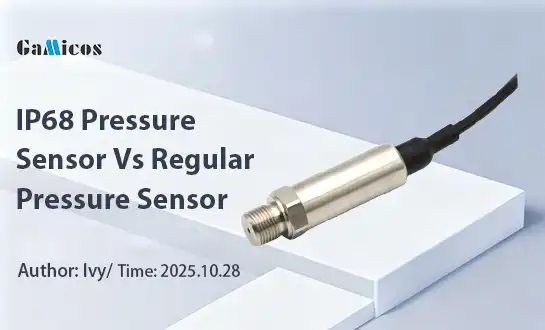
Waterproof Pressure Sensor vs Regular Pressure Sensor: How to Choose?
Waterproof Pressure Sensor vs Regular Pressure Sensor: How to Choose?
Waterproof Pressure Sensor vs Regular Pressure Sensor: How to Choose?