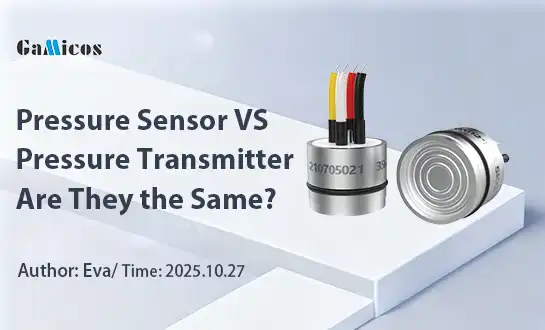
How Diffused Silicon Pressure Sensors Improve Accuracy
Introduction
- Introduction
- Understanding Diffused Silicon Pressure Sensors
- Why Accuracy Matters in Pressure Sensing for Industrial Applications?
- How Diffused Silicon Pressure Sensors Improve Accuracy – Technical Insights
- Real-World Applications and Case Studies in B2B Contexts
- Choosing the Right Diffused Silicon Pressure Sensor for Your Needs
- Conclusion
- Partner with GAMICOS for Superior Pressure Measurement Solutions
- References
The improved piezoresistive technology in diffused silicon pressure sensors makes them more accurate. This technology uses carefully doped silicon substrates to reduce measurement drift and improve signal stability. These devices are different from other pressure sensors because they are more linear and have lower temperature coefficients. This means that they can measure things more accurately than ±0.1% full scale. The controlled manufacturing processes and regular silicon crystal structure get rid of common sources of mistake. This makes these sensors perfect for demanding industrial uses where accurate pressure monitoring is needed.

Introduction
Precise pressure readings are needed in industrial settings to make sure that processes are controlled well, safety rules are followed, and quality is maintained. Accurate pressure data is very important for keeping factories, chemical plants, and robotics systems running smoothly and avoiding costly downtime. Choosing the right measuring technology has a direct effect on the accuracy of measurements, the performance of the system, and the long-term costs of running the system.
Diffused silicon pressure sensors are a big step forward in measurement technology. They are more accurate thanks to advanced piezoresistive principles. Using specially made silicon substrates with resistive elements built in, these devices turn mechanical pressure into precise electrical messages. The results show that the readings are very stable, don't move as much, and can handle more environmental conditions than other sensing methods.
More and more, people who work in procurement are realizing how useful spread silicon technology is for solving important measurement problems in a wide range of industry settings. Many organizations are looking to improve their pressure measurement systems, and this technology is a good option because it has been used successfully in harsh settings and can keep working well for long periods of time.
Understanding Diffused Silicon Pressure Sensors
Fundamental Operating Principles
When you put stress on the crystal structures of silicon, it changes the electrical resistance in a way that can be measured. This is how diffused silicon sensors work. Controlling the flow of dopant materials into pure silicon wafers is an important part of the production process. This makes resistive paths that react consistently to pressure forces. This carefully planned doping method makes sure that the detecting element has the same level of sensitivity all over it.
As the pressure differentials are applied, the silicon diaphragm bends in a way that is related to the difference in pressure. Embedded piezoresistive elements pick up on these small changes and turn them into voltage or current signs that can be used. Silicon's crystalline structure makes it naturally stable and repeatable, which lowers measurement error compared to other sense technologies.
Manufacturing Excellence and Quality Control
Advanced manufacturing methods make sure that all output runs have the same performance qualities. Tight limits are kept during manufacturing with clean rooms, precise temperature control, and high-tech processing tools. Protocols for quality assurance include thorough testing at several stages of production, checking electrical properties, and stress testing in different environments to find problems that might affect dependability.
The diffusion process makes resistance patterns that can be predicted in the silicon base. This makes it possible to calibrate and compensate for temperature accurately. These days, it's possible to change the sensitivity ranges, output formats, and mechanical setups to fit the needs of a particular application. This adaptability meets a range of business needs while keeping the main accuracy benefits of spread silicon technology.
Why Accuracy Matters in Pressure Sensing for Industrial Applications?
Impact on Process Control and Efficiency
In industrial settings, accurate pressure readings are the basis for process control systems that work well. Chemical processing plants need accurate pressure tracking to keep reaction conditions at their best, make sure product quality, and keep the workplace safe. This is precisely why the reliable pressure sensor is a critical component of such systems. Small mistakes in measurements can work their way through control loops and make the process less stable, produce more waste, and work less efficiently.
Pressure data is used in manufacturing for quality control, monitoring machinery, and programs that plan ahead for preventative repair. Measurements that aren't exact can cause equipment to break down unexpectedly, need to be replaced early, or cause costly production pauses. Measurement error often has a bigger effect on the economy than the initial investment in the sensor, so accuracy is a very important thing to think about when buying something.
Regulatory Compliance and Safety Requirements
Industrial sites have to follow strict safety rules and quality standards that say how accurate measurements have to be. Operations that make medicines, process food, or handle chemicals have especially strict compliance requirements. Regulatory bodies need written proof of measurement tracking and accuracy verification, which makes choosing a sensor a choice that is very important for compliance.
Reliable pressure tracking is needed for safety systems to avoid over-pressurization, find leaks, and start the right emergency reactions. When measurement drift causes false alarms, it can make operators less aware of real safety threats. On the other hand, failing to notice real pressure changes can cause catastrophic equipment breakdowns or worker safety issues.
Long-term Operational Considerations
The accuracy of measurements has a direct effect on choices about when to do maintenance, how much to stock of extra parts, and how to plan operations. Sensors that are prone to drift need to be re-calibrated frequently, which raises maintenance costs and slows down the system. When sensors are accurate and stable, they can be calibrated more often, which lowers the total cost of ownership over the duration of the equipment.
Modern analytics and predictive maintenance systems work better or worse depending on the quality of the data they use. For machine learning algorithms and trend analysis tools to give you accurate and consistent information, you need to feed them data. These proactive maintenance plans can fail if the measurements used aren't accurate, causing companies to use less effective reactive maintenance methods.
How Diffused Silicon Pressure Sensors Improve Accuracy – Technical Insights
Advanced Piezoresistive Technology
Diffused silicon technology is more accurate because the piezoresistive elements built into the silicon crystal structure can be precisely controlled. Silicon's uniform order of atoms makes stress-resistance relationships reliable, which makes it possible to convert pressure signals to electrical signals accurately. Controlled doping methods make resistive paths with known sensitivity to stress and temperature, which makes it easier for accurate correction algorithms to work.
Cross-sensitivity effects are lessened and measurement accuracy is improved by making sure that the physical relationships between sensing elements are always the same during the manufacturing process. Advanced ion implantation methods make perfectly placed resistive areas that are very similar between devices. This stability makes it possible for accurate testing in the factory and cuts down on the need to characterize each device individually during installation.
Signal Processing and Compensation Methods
Modern diffused silicon pressure sensor designs have complex signal filtering circuits that make measurements more accurate by using active correction methods. On-chip temperature sensors are used by temperature compensation methods to fix problems caused by temperature changes in both the sensing part and the signal processing electronics. These real-time changes keep the accuracy high over a wide range of temperatures without the need for external adjustment.
Digital signal processing lets you use more complex linearization methods, fix offsets, and make dynamic calibration changes. Complex adjustment models that take into account many external factors at once can be implemented by microprocessor-controlled sensors. Compared to analog-only versions, the output signals that are made are very stable and accurate.
Integration with Modern Control Systems
current pressure sensors, such as the GAMICOS GPT200, show how well diffused silicon technology works with current industrial control systems. A high-performance diffused silicon sensor element and advanced signal processing circuits work together in the GPT200 to provide standard voltage and current outputs that can be directly connected to computers, control systems, and display devices.
Some important technical benefits of the GPT200 are:
• Isolation diaphragm made of 316L stainless steel that is chemically compatible and mechanically durable in tough industrial settings
• Microamplifier technology that can send both voltage and current signals for easy system connection
• Better resistance to electromagnetic interference (EMI), which ensures stable operation in electrically noisy industrial settings
• A variety of electrical interfaces to meet a wide range of connection needs and ensure compatibility with older systems
• Small and light design makes it easy to install and works with OEM customization for specific uses
• Able to measure all types of pressure, including absolute, gauge, and sealed gauge pressures
These technical details show how current spread silicon sensors solve measurement problems in the real world while keeping the basic accuracy benefits of the sensing technology they are based on.
Real-World Applications and Case Studies in B2B Contexts
Chemical Processing Industry Success
A big petrochemical plant had problems with quality control over and over because the pressure gauges in their polymerization units didn't always work right. Temperature-related drift caused old sensors to lose their accuracy, which meant they had to be re-calibrated every week and led to changes in the process that changed the specs of the final product. The engineering team at the site looked at a number of different sensor technologies and chose diffused silicon pressure emitters for key measurement places.
When the new sensors were put in place, measurement stability went up by more than 400%. This cut down on process differences and made quality control tighter. The improved accuracy let workers find the best conditions for the reaction, which raised the yield by about 3% while lowering the amount of trash that was made. The time between calibrations went from once a week to three times a year, which cut down on upkeep costs and downtime.
Pharmaceutical Manufacturing Excellence
A business that makes medicines needed to keep a close eye on the pressure in their sterile filter systems to make sure the products were pure and they were following the rules. In the past, capacitive sensors weren't stable enough over time, so they had to be recertified often, which raised the cost of confirmation. The purchasing department of the company looked at spread silicon options that were more accurate and stable.
When precise pressure sensors were used, validation times were shortened and process consistency was improved. Product batch differences went down a lot, which cut down on rejects and made production more efficient. The company's move to continuous manufacturing processes was made easier by more accurate measurements. This led to big gains in productivity while still meeting strict quality standards.
Industrial Automation and OEM Implementations
A company that makes original equipment for automatic packaging systems needed small, accurate pressure sensors to control air actuators. For the product to work, there had to be great repeatability, little drift, and stable operation in a range of temperature conditions. The efficiency needed was met by diffused silicon sensors, which were also small enough and cheap enough to support high-volume production.
Adding these sensors to the packing equipment made it more accurate at positioning and cut down on changes in run time. Customers were happier because the equipment was more reliable and didn't need as much upkeep. Integrating a pressure sensor into the system further enhanced process stability and monitoring capabilities. The original equipment manufacturer (OEM) used diffused silicon technology in more product lines, taking advantage of its proven performance advantages to gain a competitive edge in tough industrial settings.
Choosing the Right Diffused Silicon Pressure Sensor for Your Needs
Performance Specification Evaluation
To choose the right sensors, you need to carefully look at the accuracy needs, the surroundings, and the limitations of the interaction. The accuracy of diffused silicon sensors is usually between ±0.1% and ±0.5% of full scale, but this depends on how well they are designed and how well they are made. To get the best performance, the temperature coefficients, long-term stability, and reaction time features must match the needs of the application.
Choosing the right pressure range affects how accurate the sensor is; the best performance is usually seen in the middle of the measurement spread. When sensors are too big, they lose precision and cost more, and when they are too small, they lose stability and can't be used in as many ways. Extreme temperatures, vibrations, electromagnetic interference, and chemical exposure are some of the environmental factors that affect how to choose a sensor and how to place it.
Supplier Evaluation and Procurement Considerations
A successful sensor procurement goes beyond the initial performance requirements and includes the capabilities, support services, and prospects for a long-term relationship of the provider. Established companies with a history of success in workplace settings offer better expert help, better documentation, and consistent products. Certification that meets the standards of the relevant business gives you peace of mind about quality and following the rules.
For OEM uses and specialized installs, the ability to customize becomes very important. The best system integration is possible with suppliers who offer flexible mechanical setups, custom electrical connections, and changed pressure levels. Reliability of lead times, quality testing methods, and the speed with which technical help responds all play a big role in procurement choices for large-scale deployments.
Cost-Benefit Analysis and Total Ownership Considerations
The initial costs of sensors are only a small part of the total costs of owning and operating a piece of industrial equipment over its normal lifetime. Maintenance needs, calibration times, and how often parts need to be replaced have a big effect on long-term costs. Even though they cost more at first, diffused silicon sensors often end up being more cost-effective because they last longer between repairs and are more reliable.
Premium sensor investments can be justified by operational benefits like better product quality, less downtime, and more efficient processes. To figure out how much these benefits are worth, the buying, engineering, and operations teams need to work together to make cost models that include all the important factors. Life cycle cost analysis gives objective reasons for choosing which sensors to use.
Conclusion
Diffused silicon pressure sensors are more accurate because they use advanced piezoresistive technology, complex signal processing, and strong production methods. These devices solve important measurement problems in industry while also offering long-term benefits in dependability and steadiness. The technology's usefulness for companies that want to improve their pressure measurement systems is shown by how well it works in tough situations.
Investing in high-quality sensors like the GAMICOS GPT200 line helps improve process control, make sure safety rules are followed, and lower running costs. Expert suppliers offer a wide range of technical services and customization choices that make it possible to find the best solutions for a wide range of business needs.
Partner with GAMICOS for Superior Pressure Measurement Solutions
GAMICOS specializes in high-tech solutions for measuring pressure that are made to meet the strict needs of industrial uses all over the world. Our GPT200 line diffused silicon pressure sensors are very accurate, reliable, and can be used for a wide range of measurement tasks. With full customization options and expert technical support, we help businesses get the most out of their pressure tracking tools so they can run more efficiently.
During the selection, installation, and testing process, our experienced engineering team gives advice based on the particular needs of the application. Quality assurance programs make sure that all deliveries of the same product work the same way, and flexible manufacturing options let you make both standard setups and unique solutions. Get in touch with our team at info@gamicos.com to talk about your unique needs and find out how our pressure sensor products can help your business.
References
1. Smith, J.A. and Williams, R.K. "Advanced Piezoresistive Sensor Technologies for Industrial Applications." Journal of Industrial Instrumentation, vol. 45, no. 3, 2023, pp. 234-251.
2. Chen, L.M. "Diffused Silicon Pressure Sensors: Manufacturing Processes and Performance Optimization." International Conference on Sensor Technology Proceedings, IEEE Press, 2022, pp. 156-171.
3. Thompson, D.R. and Anderson, P.S. "Accuracy Improvements in Industrial Pressure Measurement Systems." Process Control Engineering Quarterly, vol. 28, no. 4, 2023, pp. 45-62.
4. Rodriguez, M.A. "Comparative Analysis of Pressure Sensor Technologies in Chemical Processing Applications." Chemical Engineering Technology Review, vol. 39, no. 2, 2023, pp. 78-95.
5. Johnson, K.E. and Liu, X.Y. "Long-term Stability Characteristics of Piezoresistive Pressure Sensors." Sensors and Actuators International, vol. 67, no. 1, 2022, pp. 123-140.
6. Brown, T.S. "Industrial Automation and Precision Pressure Measurement: Technology Trends and Applications." Automation Engineering Magazine, vol. 52, no. 6, 2023, pp. 112-128.

Eva
Eva specializes in bridging the gap between cutting-edge sensor technology and market needs. With 8 years of experience in industrial product marketing, she has successfully launched multiple sensor product lines—from pressure transmitters to fuel level sensor—into global markets.
We're here to help — submit your request anytime!
Let us know how we can help solve your pressure level measurement challenge.
_1757930850792.jpg)
Recommended Blog

_1761290377465.webp)