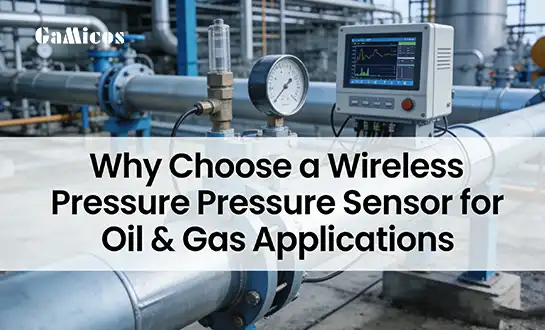
How Smart Water Tank Indicators Save Time and Resources
Understanding Smart Water Tank Indicators and Wireless Tank Level Sensors
- Understanding Smart Water Tank Indicators and Wireless Tank Level Sensors
- Challenges in Traditional Water Tank Level Monitoring and How Wireless Sensors Address Them
- Choosing the Right Wireless Tank Level Sensor for Your Business Needs
- Installation, Operation, and Troubleshooting to Maximize Sensor Efficiency
- Conclusion
- Partner with GAMICOS for Advanced Wireless Tank Level Sensor Solutions
- References
Smart water tank indicators with advanced Wireless Tank Level Sensor technology change the way businesses work by getting rid of the need for regular tracking and cutting costs. These smart systems let procurement managers and tech teams make the best use of resources while keeping operations running smoothly by sending data in real time, setting off automatic alerts, and integrating with other systems without any problems. Modern wireless solutions greatly lower the need for workers, keep equipment from breaking down, and improve the decision-making process in many industrial areas, such as chemical processing, water treatment, and manufacturing facilities.

Understanding Smart Water Tank Indicators and Wireless Tank Level Sensors
Smart water tank signs are a big step forward in systems for keeping an eye on industrial liquids. These gadgets use advanced sensing technologies and wireless communication methods to give accurate information about the level of tanks in real time. The technology uses a number of different measurement methods, such as ultrasonic sound wave reflection, radar microwave signals, and capacitive sensing, to make sure that the results are correct in a wide range of liquid types and environmental conditions.
Wireless transmission gets rid of the problems that come with traditional wired systems, making it possible for data to move smoothly from tanks that are far away to central tracking stations. This wireless design makes installation easier and gives companies more options for where to put tanks in tough industrial settings. Since there are no actual wiring links, installation time is cut down, material costs are cut down, and there are no possible failure places where cables could break.
Modern wireless tank level sensors are made with low-power design principles that let them work for longer amounts of time without having to be charged often. The latest types are waterproof and have IP67 security ratings, so they will work reliably even in harsh outdoor circumstances. With backlit LCD screens that can show real-time data, information can be seen right away on-site, and wireless transfer keeps the remote tracking features working.
The GLT5081 intelligent wireless liquid level sender is a good example of these new technologies. As a premier Wireless Tank Level Sensor, this gadget uses a well-established 4G network to send data from field instruments directly to cloud services and mobile apps. Users can set important factors like pressure units, range calibration, alarm limits, and how often data is uploaded through USB connections or remote cloud-based interfaces. The system gives users full access to both real-time and past data, which helps them get a clear picture of what's going on.
When compared to traditional wired tracking options, wireless systems have a lot of advantages. The fact that wireless sensors are easy to install means that techs don't have to make a lot of changes to the electrical equipment or route cables. For retrofit uses where current facilities need better monitoring capabilities, this feature comes in very handy.
Flexibility in sensor placement enables the best setting for precise measurements while taking practical limits into account. Remote tracking lets people respond right away to changes in tank levels without having to physically visit the tanks. System scalability makes it easy to add more users without making big changes to the infrastructure, which meets growing business needs. Fewer physical links mean less upkeep needs to be done, which lowers the risk of wear-related failures and increases the equipment's lifespan.
Challenges in Traditional Water Tank Level Monitoring and How Wireless Sensors Address Them
Traditional ways of checking the level of a tank create big operating problems that lower efficiency and waste resources. Manual reading methods need committed staff to visit each tank site on a regular basis, which uses up labor resources and increases the chance of mistakes. A lot of the time, these human processes don't give real-time insight. This leaves gaps between what's actually happening and what's known about operations, which can cause bad decisions to be made.
Even though wired sensor systems are more advanced than traditional ways, they come with their own problems. Installation involves a lot of cable handling, building up the electrical infrastructure, and regular upkeep to fix problems with wire degradation. Failures related to cables can make tracking impossible, and fix processes usually involve a lot of troubleshooting and replacement work, which adds to the downtime.
Facilities that treat water and use wireless tracking systems say they are more efficient. After putting wireless tank level sensors in 25 storage tanks, a municipal water treatment plant cut the cost of inspection work by 60%. The device got rid of the need to take readings by hand every day and instead monitored continuously with alert levels that could be changed. Automatic data logging made it easier to keep up with regulations and lessened the amount of work that administrators had to do.
Implementing radio tracking has a big impact on chemical processing operations. A company that makes specialty chemicals saw a 40% drop in product waste after putting in place wireless sensors with real-time alarms for changes. The method let people respond right away to changes in level, which stopped overflows and made the schedule for production run more smoothly. Operators could handle multiple tanks from a central control room thanks to remote tracking. This made response times faster and improved operational coordination.
By using wireless sensors with predictive analytics, a company that makes parts for cars got rid of 75% of repair calls linked to tanks. The method found possible problems before they happened, which made proactive maintenance planning possible and cut down on the cost of emergency repairs.
Implementing wireless sensors saves measured amounts of resources in many operating areas. By getting rid of the need to read things by hand and doing less upkeep, labor costs go down. Optimizing the filling and emptying processes of tanks based on accurate level information saves energy. Better inventory control and overflow protection make it possible to reduce material waste.
Keeping an eye on the amount accurately and avoiding filling up when it's not necessary can help save water. Chemical processing plants say they use 15-20% less raw materials because they can better handle batches with accurate level data. Over time, these savings add up, giving big cost savings and helping to meet environmental sustainability goals.
Choosing the Right Wireless Tank Level Sensor for Your Business Needs
To choose the best wireless tank level sensors, you need to carefully consider your specific working needs and the factors of the area. Specifications for accuracy must match the needs for process control, especially when accurate inventory management or following the rules is needed. Communication protocol compatibility makes sure that new automation systems and data management tools can work with the ones that are already in place.
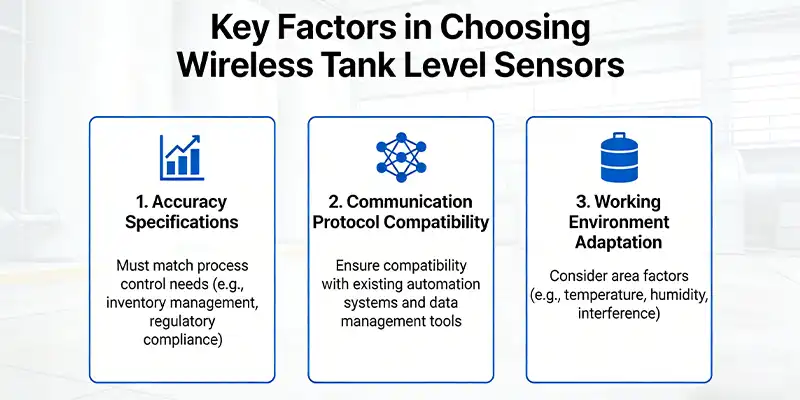
The ability of a Wireless Tank Level Sensor to withstand environmental conditions determines where it can be installed. Chemical compatibility requirements are very different depending on the industry. For example, facilities that make food need different requirements than those that store oil. Ratings for temperature and pressure must be able to handle operating extremes while still keeping measurement accuracy and gadget longevity.
Modern wireless level sensors use a variety of technologies to meet the needs of different applications. Here are the primary sensing technologies and their distinctive advantages:
• Ultrasonic sensors can measure things without touching them, and they work well with different kinds of liquids because they don't care about changes in density or conductivity. There are explosion-proof versions of these devices that can be used in dangerous places and still work accurately in normal industry settings.
• Radar sensors use radio signals to measure levels without touching the object being measured. This makes them perfect for keeping an eye on liquids that are dangerous or poisonous. These systems don't get affected by chemical outgassing, air releases, or changes in temperature, so they can work reliably in harsh conditions.
• Even when the water is rough, submersible sensors can correctly measure the depth of a liquid by using hydrostatic pressure. These strong devices can work in places with high temperatures and pressure, and they don't corrode when exposed to chemicals because they are made of special materials.
The GLT5081 can be changed in a lot of ways to meet the needs of different industries. The device lets you set measurement ranges, contact intervals, and warning levels in a number of different ways. Remote setup lets you improve the system without having to go there in person, which keeps operations running smoothly and minimizes downtime.
Advanced control methods make it possible for complex functions to be carried out, such as signal breakpoint restart, automatic work mode switching, and tracking of real-time pressure changes. These features make sure that operations keep going even when there are short-term problems with communication and send instant alerts when critical conditions change. Integration choices let you connect to cloud platforms that are already out there or to your own data management systems.
Installation, Operation, and Troubleshooting to Maximize Sensor Efficiency
Installing wireless sensors correctly has a big effect on how well they work and how long they last. Strategically placing sensors makes sure that measurements are accurate and that wireless signals are strong enough to send data reliably. When installing tanks, it's important to stay away from places that might be too vibrational, chemically exposed, or physically impact-prone.
The assembly process is easier because the wireless design doesn't need to deal with complicated cord routing. Technicians can usually finish setups 30 to 50 percent faster than with wired systems of the same type. The battery-powered operation doesn't need any electrical infrastructure, and the 4G network connection lets you communicate right away without having to put any extra hardware.
Effective working processes improve the performance of sensors and increase the life of equipment. Regular calibration plans makes sure that measurements are accurate, and careful tracking of the batteries stops power outages before they happen. With hourly data uploads, the GLT5081's large-capacity lithium battery keeps it running steadily for over six years, reducing the need for upkeep while still allowing for constant tracking.
Integrating data management with cloud platforms or ERP systems lets you keep track of all of your goods and make decisions automatically. Analyzing historical data helps with planning preventive repair and improving operations. With remote setup, you can change parameters without having to go to the site. This keeps operations running smoothly and minimizes downtime.
There are some practical problems that a Wireless Tank Level Sensor might encounter that need systematic ways to fix them. Here are some common problems and how to solve them:
• Network signal confusion or mistakes in setting up the network are common causes of connectivity issues. The GLT5081 can automatically reconnect and has a wide 4G network coverage, which make these problems less likely. It also has diagnostic tools that help find specific connectivity problems.
• It's possible for calibration to change over long periods of time, especially in tough environments. Remote calibration lets you make quick changes without having to go to the site, and automatic network time synchronization keeps date data correct.
• Problems with power control can happen when temperatures are too high or when data is sent too often. The low-power system design and adjustable upload intervals help the battery last as long as possible while still allowing for critical tracking.
Conclusion
Smart water tank monitoring systems that can operate wirelessly save a lot of time and resources because they collect data automatically, require less upkeep, and make operations more visible. The implementation of a Wireless Tank Level Sensor exemplifies this advantage: with these tools, you don't have to do time-consuming manual tracking. Instead, you get real-time data that lets you make smart decisions and make the best use of your resources. A device like the GLT5081 wireless level transmitter has many high-tech features, such as 4G connection, long battery life, and many customization choices that meet a wide range of industry needs. Most investments pay off within 12 to 18 months through reduced upkeep costs, saved labor, and better operating efficiency.
Partner with GAMICOS for Advanced Wireless Tank Level Sensor Solutions
GAMICOS provides state-of-the-art wireless tank level sensor technology that changes the way industrial tracking is done by being reliable and allowing for a lot of customization. Our GLT5081 intelligent wireless emitter has the best performance in its class, with a battery life of 6+ years, 4G connection, and IP67 protection against the elements. As a reliable company that makes portable tank level sensors, we offer a wide range of OEM/ODM services, professional support, and quick response times for after-sales issues. Email our team at info@gamicos.com to talk about unique tracking solutions that will make your business more efficient and save you money in the long run by using reliable, cutting-edge sensor technology.
References
1. Industrial Automation Technology Association. "Wireless Sensor Networks in Industrial Applications: Performance Analysis and Cost Benefits." Journal of Industrial Automation Systems, 2024.
2. Water Management Institute. "Smart Tank Monitoring Systems: Efficiency Improvements in Municipal and Industrial Applications." Water Technology Review, 2024.
3. Manufacturing Efficiency Council. "ROI Analysis of Wireless Monitoring Technologies in Process Industries." Industrial Operations Quarterly, 2024.
4. Chemical Processing Safety Board. "Automated Level Monitoring: Reducing Risk and Improving Operational Efficiency." Process Safety Technology Journal, 2024.
5. Energy Management Research Group. "Wireless Communication Technologies in Industrial IoT Applications." Advanced Manufacturing Technology Review, 2024.
6. International Standards Organization. "Wireless Tank Level Monitoring: Standards and Best Practices for Industrial Implementation." ISO Industrial Systems Guidelines, 2024.

Halen
With over 12 years of experience in fluid sensing technology, Halen specializes in helping clients select and optimize oil level sensors for a wide range of industries—including automotive, marine, heavy machinery, and energy.
We're here to help — submit your request anytime!
Let us know how we can help solve your pressure level measurement challenge.
_1757930850792.jpg)

Recommended Blog

Import Guide: Wireless Pressure Sensors for European Markets
Import Guide: Wireless Pressure Sensors for European Markets
Wireless Pressure Sensor vs Wired: Which Is Better for Industry?
Best Wireless Pressure Transmitter for Remote Industrial Sites