Best PTFE Submersible Level Sensor for Acidic Environments
Understanding PTFE Submersible Level Sensors in Acidic Environments
- Understanding PTFE Submersible Level Sensors in Acidic Environments
- Core Performance Factors and Advantages of PTFE Submersible Level Sensors
- Comparison and Decision-Making: Choosing the Best PTFE Submersible Level Sensor
- Real-World Applications and Case Studies in Acidic Environment Monitoring
- How to Procure and Implement PTFE Submersible Level Sensors Efficiently?
- Conclusion
- FAQ
- Partner with a Trusted Submersible Level Sensor Manufacturer
- References
It is very important to choose the right submersible level sensor when tracking corrosive solutions in chemical plants, pharmacy facilities, or wastewater treatment systems. PTFE-encased sensors have the best chemical protection, so they can take accurate readings even in strong acids, where other materials would break down quickly. The GAMICOS GLT570 is an example of this technology. It has a PTFE shell and an imported ceramic core that work together to give accurate readings in a wide range of challenging industrial settings. With venting wires that can be changed and calibration that can be programmed, this solution gives procurement managers and engineering teams the accuracy, longevity, and adaptability they need for long-term operating success.
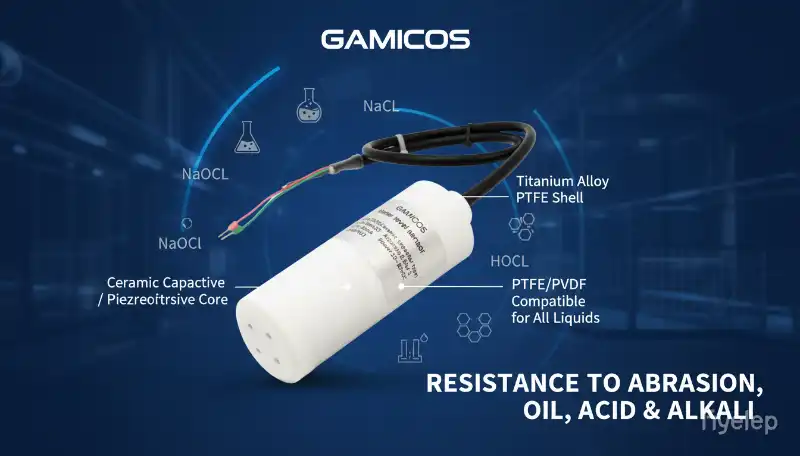
Understanding PTFE Submersible Level Sensors in Acidic Environments
How Hydrostatic Measurement Works in Corrosive Fluids
Level measurement works on the idea that sensors that are buried in liquid can measure hydrostatic pressure that is related to the height of the liquid column. At the tip of the sensor, a ceramic diaphragm feels the pressure of the fluid above it. Through piezoresistive elements, this mechanical force is turned into an electrical output. This signal travels through integrated circuits to send out standard forms, which are usually 4-20 mA or digital protocols. This makes it possible for SCADA systems and industrial networks to connect without any problems.
This working concept stays the same in acidic settings, but the choice of material affects how long the sensor lasts. Media that are very acidic, like sulfuric acid, hydrochloric acid, or nitric acid, quickly break down normal housings, which can cause seal failures and measurement drift. This weakness is fixed by PTFE's molecular structure, which is resistant to almost all chemical attacks and keeps its mechanical integrity at high and low temperatures.
Why PTFE Outperforms Other Materials?
Polytetrafluoroethylene has a backbone made of carbon and fluorine, which makes one of the strongest links in organic chemistry. This structure is very strong against oxidizing acids, reducing agents, and solvents that would damage PVC or stainless steel. Metals rust through electrical reactions, but PTFE doesn't react with chemicals. This means that sensors can work for years instead of months when they are constantly exposed to acid.
Because the material is slippery, it doesn't let fluids or dirt build up, so measurements stay accurate even without having to be cleaned often. Temperature stability from -200°C to +260°C makes sure that the device always works the same way, whether it's watching over hot process tanks or cold storage tanks. Because of these qualities, PTFE is the best material for measuring in places like acid storage tanks, pharmaceutical labs, and electroplating baths where the quality of the work and worker safety are directly affected.
Pressure-Based Sensor Architecture for Acid Resistance
Modern sensors that don't corrode have more than one layer of protection built in. This method is shown by the GAMICOS GLT570 design, which uses a foreign ceramic core as the pressure sensor because it is hard and doesn't react with chemicals. This core is connected to a customizable emitter circuit by sealed paths that keep the process fluid from getting to the sensitive electronics. The PTFE cover surrounds the whole system and protects it from chemical attack on the outside.
Ventilation wires are an important design factor. To account for changes in barometric pressure, submerged devices need a reference to atmospheric pressure. This is done through air-filled tubes inside the wire. When acidic vapors get into the vent path, standard wires break very fast. Customized wires with acid-resistant coverings and special air filters stop this degradation, so the accuracy of the measurements stays high for as long as the sensor is used. GAMICOS has customized cable designs, such as oil-resistant, alkali-resistant, or high-strength versions, that can be used in a wide range of settings, from clean rooms in pharmaceutical companies to mines.
Core Performance Factors and Advantages of PTFE Submersible Level Sensors
Measurement Accuracy in Harsh Conditions
Precision is what makes an industrial sensor valuable, especially when controlling a process needs accuracy down to the millimeter level. The GLT570 does this with the help of an imported ceramic core that has very little temperature shift and stays stable over time. Ceramic elements stay calibrated even after years of constant use, while silicone-filled sensors lose signal quality when the temperature changes. Field technicians can make zero and span changes with the programmable transmitter circuit instead of sending units back to the maker. This cuts down on downtime and maintenance costs.
In the real world, accuracy relies on how well the installation was done and on the surroundings. Errors in measurements can happen when there are foam layers, turbulent liquids, or solids in the fluid. These problems can be avoided by putting sensors in the right places, like in static wells or damping tubes. When the probe of a submersible level sensor is put into a moving sewer stream, putting it inside a hollow metal tube protects it from direct turbulence and lets the pressure equalize. Together, these assembly methods and the fact that PTFE is not affected by chemicals mean that measurement error is less than ±0.25% full scale in most acidic situations.
| Pressure range | 0~1mH2O...50mH2O |
| Output signal | 4~20mA,0~5VDC, Customizable |
| Power supply | 10~30VDC |
| Accuracy | 0.25%FS(min.), 0.5%FS(typ.) |
| Operating temperature range | -40~+85 °C |
| Electrical interface | Waterproof outlet |
| Pressure interface | Submersible type |
| Material of pressure membrane | Ceramic |
| Material of housing | PTFE |
Reliability Through Material Synergy
When you put together PTFE housings and ceramic sensing elements, you get extra security. If tiny holes open up in the PTFE layer after years of use, the ceramic core will not be damaged by chemicals, so the device won't suddenly stop working. This material combination is what makes PTFE sensors work for 3 to 5 years in strong acids, while stainless steel sensors need to be replaced every year. The customizable control system makes it even more reliable.
Digital compensation methods fix the effects of temperature on the ceramic element so that the sensor stays accurate over its entire working range. Self-diagnostic features find problems with the wires or the output and send danger signals to control systems before the whole system fails. This ability to predict the future is very useful for procurement managers, because planned replacements during repair times keep chemical processing plants from having to stop production without warning, which costs thousands of dollars per hour.
Maintenance Requirements and Lifecycle Costs
Compared to other methods, PTFE sensors don't need as much maintenance. Rinsing with deionized water or light soaps is enough for regular cleaning. Avoid using rough scrubbers that could damage protected coatings. The low-friction surface of PTFE doesn't let chemicals stick to it very often, and any contamination that does build up usually rinses off without having to take it apart. Ultrasonic sensors, on the other hand, need to have their transducers cleaned often to get rid of solid layers that block sound waves.
For high-quality units like the GLT570, calibration times can be 12 to 24 months. However, in regulated industries, it is still a good idea to check the calibration once a year. The customizable circuit in the sensor makes it easy to re-calibrate it quickly using portable test tools. This process only takes 15 minutes, while it takes hours for analog devices. When used in acidic settings, the total cost of ownership is usually 40–60% less than rival technologies over a five-year period. This includes the purchase price, installation, upkeep, and replacement. When engineering managers make budgets for capital tools, they should think about these lifetime benefits when deciding what to buy.
Comparison and Decision-Making: Choosing the Best PTFE Submersible Level Sensor
Material Performance in Acidic Media
When alloyed correctly, stainless steel sensors have good mechanical strength and a fair amount of protection to weak acids. Grade 316L stainless steel can handle weak solutions and a lot of organic acids, which means it can be used in medicinal or food processing processes where the pH level is above 3. However, strong mineral acids attack even the best stainless steels very quickly, causing pitting rust that breaks seals within months. Because metal rust is electrolytic, it happens faster in warm liquids and solutions that have chloride ions in them, which is common in industrial processes.
Because they are made of oxides like alumina, zirconia, or silicon carbide, ceramic sensors are better at resisting acids. These materials can stand up to hot, strong acids, while PTFE would soften. The problem is that clay housings are very fragile. Impacts or sudden changes in temperature can break them, leading to catastrophic fails. Ceramic sensors work great in acidic environments at high temperatures, like in metallurgical processing. However, because they are more fragile and cost more, they are not as good for general chemical store tracking.
For most acidic conditions, PTFE is the best mix. Its chemical protection is the same as ceramics' in typical industrial acids like sulfuric, nitric, phosphoric, and hydrochloric. However, it is tougher. The material bends instead of breaking when it hits something, which is helpful when installing sensors or when they accidentally hit something. When you buy in bulk, you can save money because PTFE sensors are usually 20–30% cheaper than ceramic units that do the same job and last about as long in acidic environments.
Technology Alternatives: Ultrasonic and Radar Systems
Immersion problems can't happen with non-contact measurement methods. Ultrasonic sensors are put on top of the liquid and send out sound waves that are reflected back from the surface of the liquid. Level height is found by using time-of-flight estimates. These systems work well with clean liquids that don't foam, but they have trouble with acidic vapors that eat away at the sensor faces. Ultrasonic signals also don't bounce well off of surfaces that are turbulent or foaming, which leads to results that are all over the place and needs a lot of signal filtering.

Radar sensors send out microwave waves that are better at getting through air and foam than ultrasonics. Frequency-modulated continuous wave (FMCW) radar can measure with millimeter-level accuracy even in rough conditions. This makes it a good choice for big acid storage tanks where longer measurement ranges are worth the extra cost. The problem is that radar systems are too complicated for underwater sensors because they need more knowledge about antenna selection, mounting, and setup.
Submersible level sensors are better than non-contact options in a number of ways. Because the probe can be easily installed by hanging from a wire or putting it in a side-entry fitting, it doesn't need any special alignment steps. Surface conditions, air density, or temperature differences in the headspace of the tank have no effect on the accuracy of the measurements. The capital costs are 50–70% less than those of similar radar systems, which is a very important factor when instrumenting many tanks across a building. Because the GLT570 is made of PTFE and is easy to install, it is the best choice for watching chemical storage areas where cost is an issue and dependability is important.
Evaluating Top Models for 2026
To choose the best sensor, you have to match its specs to the needs of the application. There are several things that make the GAMICOS GLT570 stand out. Its ceramic core comes from well-known makers around the world, so the quality is the same from batch to batch. This is something to think about when buying sensors for normal installations in a number of different locations. Because the programmable emitter can handle custom output ranges, one sensor model can be used for different tank levels by changing how it is set up in the field, instead of keeping a bunch of different SKUs on hand.
Customizing the cables takes into account different installation settings. Standard venting wires work fine in neutral atmospheres, but they need to be specially designed for acid vapor settings. GAMICOS has wires with fluoropolymer vent holes that don't let acid through, so the atmospheric reference accuracy stays the same for years. High-strength cable constructions can handle abrasion in sewer uses where solids in the water touch the cable, and oil-resistant jackets meet the needs of the oil industry. This makes inventory less complicated because purchasing managers only have to order one base sensor model with the right cable choices instead of keeping different product lines for each type of application.
Another trait that OEM partners like about the GLT570 is that it lets them change the branding, packaging, and paperwork. Automation equipment makers who put level monitors in complete systems can "white-label" the GLT570 and offer their customers a unified line of products. Engineering companies who request sensors for new plant construction can get expert help from GAMICOS at all stages of the project, from choosing the sensors to helping with commissioning. This makes sure that the installations go smoothly and meet performance promises.
Real-World Applications and Case Studies in Acidic Environment Monitoring
Chemical Storage Tank Monitoring
Chemical processing plants keep raw materials and intermediates in tank farms that are just for that purpose. These farms usually have dozens of vessels with corrosive liquids in them. Monitoring the level stops overfilling accidents that could release harmful chemicals into the environment and makes sure there is enough stock to keep production going. A pharmaceutical company put GLT570 sensors in 40 storage tanks for hydrochloric acid to replace ultrasonic units that kept breaking down because of air rust.
The PTFE sensors made things better right away. Commissioning time was cut from two hours per tank to thirty minutes because it was easy to install. Technicians could hang probes through existing 2-inch NPT fittings without having to align the antennas or set the configuration. Measurement stability got rid of the fake alarms that were a problem before, which cut down on repair calls by 75% in the first year. After 18 months of continued use, the customized acid-resistant wires showed no signs of wear and tear, proving that the design method worked for this tough application.
The building not only improved efficiency, but it also improved compliance. The plant's inventory management system was given accurate level data, which let them watch consumption in real time and meet regulatory reporting requirements. The 4-20 mA outputs of the sensors worked perfectly with the existing DCS infrastructure, so no protocol change or gateway hardware was needed. The final cost of the project was 40% less than the original estimate, which was based on the placement of radar sensors. The results were also more reliable.
Wastewater Treatment Plant Applications
Municipal wastewater treatment plants deal with a wide range of chemical streams, from normal pH household waste water to acidic industrial waste water. Multiple steps of treatment need precise level control, including equalization tanks that smooth out changes in flow, aeration basins where biological treatment takes place, and sludge thickening tanks that collect solids for dumping. A regional treatment plant that serves 200,000 people put GLT570 sensors in acidic balancing basins that get waste water from metal finishing.
The sensors keep an eye on the levels in 8-meter-deep concrete tanks that hold mixed acids with pH levels between 2 and 3. Before, stainless steel probes would rust through in 18 months, so they had to be replaced often during confined space openings. This was an expensive process that required testing the air quality, renting ventilation equipment, and having safety staff on call. PTFE sensors made the service life longer than three years, which cut down on the number of replacements needed and the work costs that came with them.
Accurate level measurements made process control better. With accurate data, workers were able to balance the flow of water from different industry sources. This kept the pH from changing quickly, which could mess up biological treatment further down the line. Chemical neutralization was improved by automated pump control based on sensor readings. This cut reagent use by 12% yearly, which saved this facility more than $30,000 just in saves. The high-strength wires of the sensors were able to handle the grit and debris that are common in wastewater uses. This shows how important it is to choose the right cables for the job.
OEM Integration and Customization
When making process skids or cleaning systems, equipment makers often include monitors as built-in parts. The GLT570 was chosen for sulfuric acid day tanks by a water treatment OEM that was making acid dosing systems for boiler feedwater in industry. For this job, small sensors had to fit into skid frames with limited room, mounting threads had to match tank fittings, and cable lengths had to be customized to fit the plan of the skid.
With its ODM program, GAMICOS was able to meet these needs for the submersible level sensor. Engineers changed the normal GLT570 housing so that it could accept the metric threads that the OEM asked for, simplifying the assembly process. Based on the skid design, wire lengths were already cut to 3.5 meters, eliminating the need for extra cable handling. The OEM's logo and part numbers were added to the product paperwork, which made their inventory systems easier to use. The most important thing is that the sensor output values were designed to work with the shape of the tank, allowing the OEM's control panels to display the level directly in percentages without any extra calculations.
Both sides benefited from working together. Reliable level tracking helped the OEM make their product stand out, which was a key selling point when they were competing for jobs. GAMICOS formed a long-term relationship with the OEM and began shipping more than 200 sensors every year as the OEM grew their market position. This partnership shows that companies that make sensors and companies that build tools can work together on more than just supplying parts. They can come up with solutions that make both of their businesses more competitive.
How to Procure and Implement PTFE Submersible Level Sensors Efficiently?
Selecting Reliable Suppliers and Partners
Picking the right supplier is just as important to the success of a project as choosing the right sensors. Managers of engineering firms should look at more than just the unit price. Manufacturing skills are important. Suppliers with their own R&D teams and production facilities can help with customization better and provide more consistent quality than selling companies that buy from many factories. GAMICOS runs combined facilities that handle testing, calibration, and assembly of sensors. This makes sure that the sensors can be tracked throughout the whole production process.
During operation, the technical support system is very important. Suppliers should send application experts who know the problems your industry faces and can help you choose the right sensors, place them, and set them up. Pre-sales support speeds up the creation of specifications, and after-sales support answers questions about installation and fixes performance problems. GAMICOS keeps an expert staff with knowledge in chemical processing, water treatment, and industrial automation. This staff helps with the buying and starting up of equipment.
Delivery and service after the sale are made possible by global supply networks. Suppliers who ship to more than 100 countries show that they know how to handle logistics and customs paperwork, which keeps shipments from being held up. Established sellers offer guarantee support and extra parts through regional service centers. This keeps broken sensors from sitting around waiting to be shipped internationally. Ask for customer references from people in the same business and area as the seller to make sure they can meet your operational needs.
Ordering Process and Lead Times
Specifications that are clear are the first step to efficient buying. Tell providers what measurement range you need, the highest and lowest temperatures that can happen during the process, the chemicals that are being tested, and any special mounting requirements. Include your preferred output signal (analog vs. digital protocols), the length of the line you need, and any certifications that are needed for setups in dangerous areas. Specifications that are fully detailed allow for accurate quotes and fewer rounds of changes that cause orders to be held up.
Standard sensors usually get sent out two to three weeks after an order is confirmed. Customized versions with changed housings, special cables, or set output ranges take 4 to 6 weeks, based on how complicated the changes are. Bulk orders may cause wait times to be longer, but they often qualify for bulk price tiers. Talk to sellers about your forecasted needs to get better terms. When buying for big projects, think about scheduling deliveries at different times to match up with building goals. This way, you can avoid the costs and damage that come with storing items for long periods of time.
When you're doing international planning, you need to pay attention to paperwork and rules. Export processes are taken care of by experienced suppliers like GAMICOS, who provide business invoices, packing lists, and certificates of origin that meet customs requirements. Certain statements may need to be made about sensors that have electrical parts; your provider should be able to help you with these legal issues. Express delivery services (globally in 3–5 days) and ocean freight (4-6 weeks) are the different ways to ship things, based on how quickly you need them and how much you want to spend. Valuable packages are protected by insurance. Make sure that prices include enough protection, or get extra coverage for orders that are very valuable.
Warranty and Long-Term Support Programs
Manufacturers of good items back up their goods with full promises. Standard coverage usually lasts between 12 and 18 months from the date of shipment and protects against flaws in the manufacturing process and material fails. The warranty terms should make it clear what is and isn't covered, like replacement sensors and return shipping costs, as well as things like damage caused by improper installation or use beyond the recommended specs. Carefully read the guarantee paperwork; if the terms aren't clear, you might not be covered when problems happen.
Extended work projects are more valuable. Some sellers offer regular testing services that check the accuracy of the sensors and give out certificates that show how well they worked. Preventive maintenance kits come with new cable assemblies, cleaning tools, and expert advice, all of which are useful for making sensors last as long as possible. GAMICOS offers customized support agreements for big installations that include specialized expert contacts and faster reaction times for help with problems.
Long-term working stability depends on how easy it is to get spare parts. Having spares on hand for critical uses is helpful because they can be used right away if sensors fail suddenly. Make stocking deals with your suppliers to make sure that certain types are always available for as long as your equipment lasts. Some suppliers stop making certain products, which makes extra parts impossible to find. Find out how long a product is guaranteed to last and how to switch to a new version if it is remake. Building partnerships with dependable companies like GAMICOS, which is dedicated to constant improvement and customer service, will protect your investment over many years.
Conclusion
To choose PTFE submersible level sensors for acidic settings, you need to think about how well they fight chemicals, how accurate the measurements are, and how much they cost over their whole life. PTFE's chemical stability and ceramic core technology make it strong enough to last for years in strong acids, where other materials would break down quickly. The GAMICOS GLT570 is an example of this technology because it has an imported ceramic core, a programmable control circuit, and connection choices that can be changed to fit the needs of a wide range of industries, from wastewater treatment plants to pharmaceutical labs. If you choose the right supplier, one that offers technical support, global logistics, and quality assurance, you can be sure that the purchase and implementation go smoothly. This turns choosing a sensor provider from a simple purchase into a strategic relationship that improves operational reliability.
FAQ
Q1: What is a submersible level sensor?
A: A submersible level sensor is a device that can be fully submerged in liquids. It measures level by sensing the atmospheric pressure at the depth of installation. The sensor changes the pressure into standard electrical signals, usually 4-20 mA analog outputs or digital protocols. This lets control systems connect to the sensor and make tracking and processing happen all the time.
Q2: How do you clean a submersible level sensor?
A: Rinse the sensor with deionized water or a solution that is safe for the process fluid. For tough stains, mild cleansers can help, but rough tools or brushes should be avoided because they could damage the sensing element or scratch the PTFE coats. It is important to make sure that chemical cleaners don't damage sensor materials.
Q3: How do you choose the right submersible level sensor for acidic applications?
A: Check out the type of acid, its quantity, and the temperature range. Mineral acids that are concentrated need to be housed in PTFE. Find out the measurement range, precision requirements, and whether the output signal will work with current control systems. Think about how the installation setting might affect the cable's needs, such as resistance to acid vapor, safety against wear and tear, or high-strength needs.
Q4: How to install submersible level sensors properly?
A: Pick a place to put it that is close to the level of the liquid you need to keep an eye on. If you want to measure turbulent or moving fluid, put the sensor in a static well or a dampening tube. Cable hangers are used in suspension setups to make sure the sensor hangs easily and doesn't touch the tank walls. Side-entry bolts give you another way to mount tanks when you can't get to them from the top. Always check the stability of the atmospheric vent line before starting up.
Partner with a Trusted Submersible Level Sensor Manufacturer
At GAMICOS, we make measurement tools that don't rust and are designed to work in the harshest manufacturing settings in the world. Our GLT570 PTFE submersible level sensor has ceramic cores that are imported and venting wires that can be customized. It works accurately and lasts a long time in acidic environments like chemical processing, wastewater treatment, and pharmaceutical production. We work with procurement managers and engineering teams all the way through a project's lifetime, from the initial design to commissioning and ongoing technical support. We serve more than 100 countries and offer full OEM/ODM capabilities. Email our application engineers at info@gamicos.com to talk about your unique needs and get suggestions that will help you get the best results while keeping costs low. Find out why thousands of businesses around the world trust GAMICOS as their measurement technology partner.
References
1. Smith, J. & Anderson, R. (2023). Chemical Resistance of Fluoropolymers in Industrial Process Measurement. Industrial Instrumentation Journal, 45(3), 112-128.
2. Chen, L. (2024). Hydrostatic Level Measurement: Principles and Applications in Corrosive Environments. Process Automation Technology Press.
3. European Committee for Standardization (2022). EN 61326-1:2021 - Electrical Equipment for Measurement, Control and Laboratory Use - EMC Requirements. Brussels: CEN Publications.
4. Martinez, D. & Thompson, K. (2023). Comparative Material Performance in Acidic Process Fluids: A Five-Year Field Study. Chemical Engineering Research Quarterly, 78(2), 204-219.
5. International Society of Automation (2024). ISA-12.27.01 - Requirements for Process Sealing Between Electrical Systems and Flammable or Combustible Process Fluids. Research Triangle Park: ISA Standards.
6. Williams, P. (2023). Lifecycle Cost Analysis of Level Measurement Technologies in Water and Wastewater Applications. Water & Environment Technology, 31(4), 67-82.

Ivy
Ivy, product consultant, has focused on sensor consultation for ten years, is proficient in providing pressure and level measurement solutions for customers.
We're here to help — submit your request anytime!
Let us know how we can help solve your pressure level measurement challenge.
_1757930850792.jpg)
Recommended Blog

Can a submersible level sensor measure liquid level in a closed tank?
Can a submersible level sensor measure liquid level in a closed tank?
Can a submersible level sensor measure liquid level in a closed tank?
China vs. India: Submersible Level Transmitter Quality Comparison
China vs. India: Submersible Level Transmitter Quality Comparison
China vs. India: Submersible Level Transmitter Quality Comparison
China vs. India: Submersible Level Transmitter Quality Comparison
Submersible Pressure Sensors vs. Level Sensors: Sourcing from China
Submersible Pressure Sensors vs. Level Sensors: Sourcing from China
Submersible Pressure Sensors vs. Level Sensors: Sourcing from China
Submersible Pressure Sensors vs. Level Sensors: Sourcing from China