GLT530 Pressure Sensor Accuracy: ±0.1% FS Explained
Understanding GLT530 Pressure Sensor Accuracy
- Understanding GLT530 Pressure Sensor Accuracy
- Well Level Transducers and Their Role in Groundwater Monitoring
- Comparing GLT530 with Other Well Level Sensors for Procurement Decisions
- Installation, Calibration, and Troubleshooting of GLT530 Sensors
- Maximizing Value from GLT530 Pressure Sensors – Procurement and After-Sales Support
- Conclusion
- FAQ
- Partner with a Trusted Well Level Transducer Supplier
- References
When specifying a well level transducer for deep well monitoring or industrial liquid management, accuracy becomes the deciding factor between reliable data and costly operational errors. The GLT530 pressure sensor's ±0.1% Full Scale (FS) accuracy specification means that across its entire measurement range—whether monitoring a 50-meter or 500-meter water column—the deviation remains within one-tenth of one percent of the maximum range. This precision level translates directly into actionable intelligence for water resource management, environmental protection systems, and industrial process control where even minor measurement discrepancies can trigger false alarms or misguided decisions.
Understanding GLT530 Pressure Sensor Accuracy
What ±0.1% FS Really Means in Practice?
Specifications for accuracy can be hard to understand for buying teams that don't know how to talk about pressure measurements. When a sensor is full scale accurate, the error margin is based on its highest rating capacity instead of the reading itself. It's possible for your GLT530 to be off by ±0.1 meters (±100mm) instead of ±0.05 meters if it reads 50 meters of water. This difference is important for figuring out system limits and picking the right measurement bands for different uses.
This high level of accuracy is made possible by the GLT530's built-in high-performance pressure sensor and advanced data processing hardware. Unlike other types of hydraulic level sensors, which can move over time, this one keeps its measurements even when it's buried in groundwater for long periods of time. The fully welded sealing structure keeps water and mineral deposits from getting into the internal parts, which can hurt sensor performance in underground settings.
Technical Factors Influencing Measurement Precision
How well the GLT530 meets its ±0.1% FS standard in real life depends on a number of factors. In lower-quality devices, changes in temperature in deep wells can cause sensors to move. But the GLT530's compensation methods take thermal effects into account throughout its working range. It correctly records changes in pressure caused by dynamic flow conditions or well pumping cycles, without the hysteresis mistakes that often happen with mechanical level measurement systems. Another important aspect of efficiency is calibration stability.
We've seen setups where competitors' sensors needed to be re-calibrated every six months, but GLT530 units stayed in specification for 24 months or more in the same conditions. This stability cuts down on maintenance costs and gets rid of data gaps during recalibration processes. This is especially helpful for tracking stations that are far away or dangerous industrial sites where entry is limited.
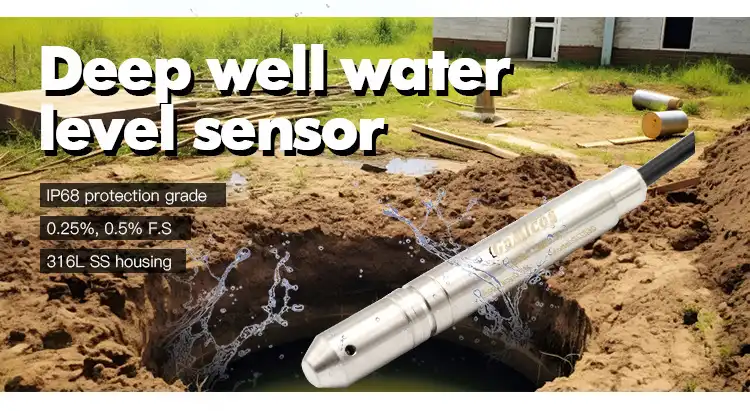
| Pressure range | 0~1m ... 200m H2O |
| Output signal | 4~20mA,0~5VDC, Customizable |
| Power supply | 10~30VDC |
| Accuracy | 0.25%FS(min.), 0.5%FS(typ.) |
| Operating temperature range | -20~+85 °C |
| Electrical interface | waterproof outlet |
| Pressure interface | submersible type |
| Material of pressure membrane | 316LSS |
| Material of housing | Stainless stee 304 |
| Protection | IP68 |
Comparing Accuracy Classes Across Industrial Standards
There are different levels of accuracy in the industrial automation field. For example, ±0.1% FS means performance that is very close to precision. This rating is much better than the ±0.25% FS accuracy that is typical of standard industrial pressure sensors and a lot better than the ±0.5% FS accuracy that is typical of general-purpose level measurement devices. When engineering managers look at their choices, knowing about these ranges makes it easier to match sensor skills to the needs of the application.
Pharmaceutical and food processing plants often need ±0.1% FS precision for records and to make sure that each batch is the same. This precision level is helpful for both chemical plants that keep an eye on reactor levels and oil plants that keep an eye on storage tank stocks because it allows for more accurate process control and inventory. The GLT530 has three levels of accuracy (±0.1%FS, ±0.25%FS, and ±0.5%FS), which let buying teams find the best specs and prices for a wide range of project needs.
Well Level Transducers and Their Role in Groundwater Monitoring
Pressure-Based vs. Ultrasonic Level Measurement Technologies
Two main types of sensors used in groundwater monitoring systems are well level transducers and non-contact ultrasonic devices. Pressure-based devices, like the GLT530, work by reading the weight of the water column above the sensor to figure out the level height. This direct measurement method is more accurate in wells with limited access or rough water where sound signals spread in unpredictable ways.
Ultrasound sensors send sound waves downhill and record how long it takes for the waves to travel to figure out how far away the object is from the water's surface. These devices work well in open tanks and air settings, but they don't work well in deep wells where temperature differences, foam, or gas make it hard for sound waves to travel. The GLT530's underwater design gets rid of these issues, so readings will always be accurate no matter what the air temperature or humidity is like above the water.
Critical Applications Demanding High-Accuracy Level Data
To keep track of groundwater decline, recharge rates, and contamination plume movement, water resource management agencies put well level transducers in monitoring well networks. The GLT530's small diameter (16mm or 19mm probe) makes it possible to place it in monitoring wells with a 2-inch diameter, which are popular in environmental site surveys. This small size lets smaller sensors go into places where bigger ones can't, so the tracking network can reach more places without having to make any changes to the wells.
In water treatment plants, chemical processing plants, and energy production facilities, accurate level measurement is needed for managing supplies, making sure processes are safe, and following the rules. Here's how high-precision devices make operations better:
- Enhanced Decision-Making: Real-time data with an accuracy of ±0.1% FS lets workers find the best pumping plans, chemical dosing rates, and storage allocations knowing that the measurements are accurate. This level of accuracy helps future maintenance plans and lowers the number of times emergency services have to be called.
- Reduced Maintenance Requirements: Stable, drift-resistant sensors reduce the number of times they need to be calibrated and get rid of the costs and downtime that come with regular testing processes. Total cost of ownership goes down a lot compared to devices that need to be serviced every three months when setups meet accuracy standards every 24 months.
- Operational Efficiency Gains: Accurate level measurement stops overfilling, finds leaks quickly, and makes process control loops work better. Accurate inventory has a direct effect on financial accounting in oil storage applications and helps avoid costly reconciliation errors.
These practical benefits can be turned into a measured return on investment (ROI) that procurement managers can use to support investments in precision-grade instruments. The performance rating of the GLT530 meets the needs of demanding industries while keeping prices low enough for deployments across multiple sites.
Installation Environments and Durability Considerations
Sensors used for tracking the water level in deep wells have to deal with tough conditions like constant hydrostatic pressure, water that is full of minerals, changes in temperature, and mechanical stress from the wires that hold the sensors in place. The GLT530 solves these problems with its fully welded covering and integrated design, which gives it IP68-level security for continuous submersion in water up to 500 meters deep. This longevity is very important for geotechnical tracking, where sensors are put in place and don't come back for years. The GLT530 is built to last and can handle harsh conditions that would damage sensors that don't have the same level of protection. It's useful for dewatering operations in mines, tracking programs for dam safety, and groundwater cleanup projects.
Comparing GLT530 with Other Well Level Sensors for Procurement Decisions
Accuracy and Reliability Benchmarks
When purchasing managers look at well level transducers, they see a lot of makers that say their sensors work precisely, but the specification sheets often hide important differences. When comparing the GLT530 to well-known names, there are a number of performance factors that need more than just top accuracy numbers to be carefully looked at.
- Measurement Range Flexibility: The GLT530 can be used for a variety of tasks, from small tracking points with a range of only 1 meter to deep observation wells with a range of up to 500 meters. This flexibility makes it easier for companies to manage a wide range of sites because most groundwater tracking needs can be met by a single product family. When competitors divide their product lines by depth range, buyers have to qualify more than one model and keep an inventory of different extra parts.
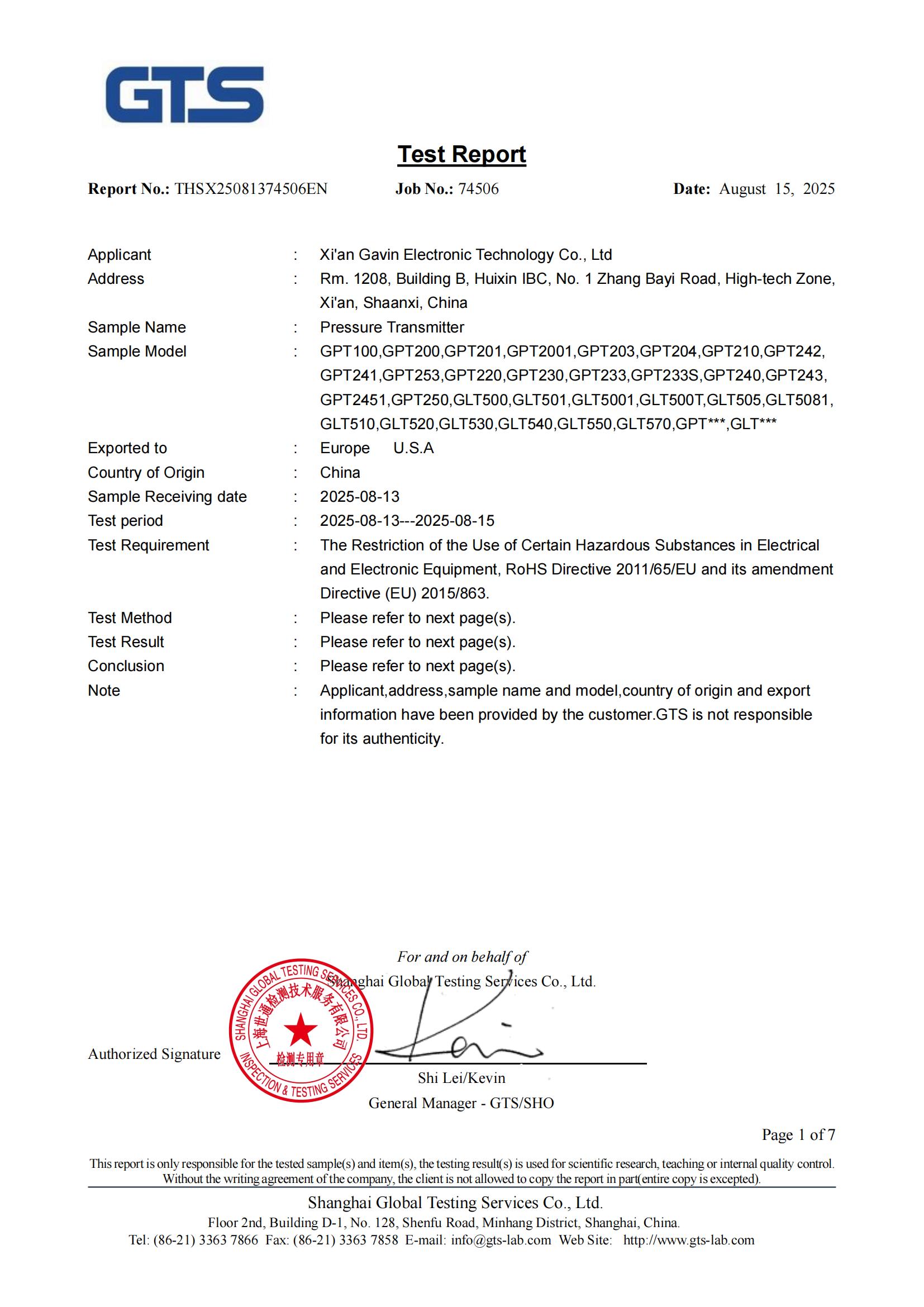
- Environmental Resistance: CE, RoHS, and ATEX approvals show that a product meets international safety and environmental standards, which are necessary for buying things all over the world. For projects in European markets, North American factories, or possibly explosive environments, recorded compliance is needed. The GLT530 offers this as standard, without charging extra for extras.
- Signal Output Configuration: The non-polar two-wire current output (4-20mA normal) makes installation easier because there are no worries about polarity when connecting in the field. This design choice cuts down on setup mistakes and lets you connect directly to industrial control systems, SCADA platforms, and data loggers without having to do the signal filtering that most voltage-output devices need.
Companies that want to build long-term relationships in the supply chain look at these technical benefits along with business concerns. Because the GLT530 is available to OEMs, equipment makers and system integrators can use proven sensor technology under their own brand name, complete with unique specs, packaging, and paperwork. This helps them stand out in competitive markets.
Total Cost of Ownership Analysis
The initial buying price is only one part of the costs of investing in sensors. Overall costs are affected by things like how often things need to be calibrated, how often they break, and how easy it is to get a new one. When we look at the total cost of ownership over a normal five-year deployment, the GLT530's steadiness and dependability often lead to a lower overall investment than options that are supposedly cheaper but need service more often. Warranty coverage and how quick a seller is are two more factors that affect buying choices.
When global wholesalers offer local technical help, projects that work in more than one area are less likely to fail. GAMICOS is present in over 100 countries and serves thousands of customers every year, which shows that the infrastructure is there to support GLT530 deployments. This is especially important for global companies that want to standardize sensor platforms across all of their international sites.
Evaluating Supplier Partnership Potential
Beyond specific product standards, sourcing managers are putting more and more emphasis on suppliers' abilities to meet the needs of difficult projects. Manufacturers that can grow with their customers are different from those that can only handle small amounts of business. Manufacturers that can grow with their customers have bulk supply capacity, reliable delivery timelines, and fast technical support. Customized methods, like changing pressure levels, using special cable materials, or integrating communication protocols, show that manufacturing is flexible enough to deal with specific application problems. Companies that want to upgrade their systems or start new automation projects can benefit from providers who offer engineering advice during the design development process. This makes sure that the sensors chosen work well with the overall architecture of the system.
Installation, Calibration, and Troubleshooting of GLT530 Sensors
Best Practices for Optimal Performance
The GLT530 can only reach its claimed ±0.1% FS accuracy in the field if it is installed correctly. Basic installation steps like placing the sensor at the right level, securing the cable so it doesn't move during well pumping cycles, and keeping moisture out of the vent tube (in vented models) are often forgotten during rushed project completion. We suggest putting the sensor below the lowest amount of water that you expect to see, plus a safety margin that accounts for yearly low water or emergency pumping situations. This keeps the sensor from coming into contact with air, which can hurt pressure diaphragms that are meant to be in liquid touch all the time. Cable strain relief stops mechanical stress from moving to the sensor body, which gets rid of a common way for systems that are subject to shaking or water turbulence to fail.
Calibration Protocols and Frequency
The GLT530 is factory-calibrated to meet national standards, but it is checked in the field after installation to make sure the measurements are accurate across the whole operating range. In this process of testing, sensor readings are compared to known reference values that were set by hand measuring or using reference standards. Baseline performance is recorded so that it can be compared in the future. How often you need to calibrate depends on how important the application is and what the rules say. Environmental tracking programs usually require checks once a year, while industrial process control may ask for checks every three months. The GLT530's calibration stability usually means that verification times are longer than with less stable sensors. This lowers the cost of lifetime maintenance without affecting the quality of the data.
Accuracy in testing is guaranteed by special tools and methods. Portable pressure calibrators that make accurate test pressures let you check things in the field without taking the sensors off, which cuts down on system downtime. By keeping track of calibration data, you can see how performance changes over time. This lets you plan predictive maintenance that replaces sensors based on measured drift patterns instead of just picking random replacement times.
Common Issues and Troubleshooting Strategies
Sensor drift, reading instability, or signal loss are usually caused by things in the surroundings or problems with the placement, not by problems with the sensors themselves. Systematic troubleshooting quickly finds the root causes, returning measurement accuracy without having to repair parts that aren't needed. Gradual reading drift is often a sign that the sensor membrane is getting clogged up with mineral deposits or living things growing in dirty water. This problem is generally fixed by retrieval and cleaning, but if it's very dirty, replacement may be needed. As a preventative step, monitors should be placed above areas where sediment builds up, and the right membrane materials should be chosen for each type of water.
Electrical interference, moisture in the wire links, or problems with grounding can all cause signals to become unstable or readings to change all the time. Most electrical problems can be fixed by checking the stability of the cables, looking for rust at the ends of the cables, and making sure the system is properly grounded. When fixing goes beyond what field service can do, maker technical support sets up ways for problems to be escalated, which keeps downtime to a minimum.
Maximizing Value from GLT530 Pressure Sensors – Procurement and After-Sales Support
Strategic Sourcing Considerations
Procurement strategies that work well balance the needs of the current project with the growth of long-term relationships with suppliers. Finding qualified well level transducer makers who have a history of shipping their products all over the world is important for making sure that all multinational companies can always get the products they need and get the same high-quality service. Expected lead times depend on the size of the order and how customized it needs to be. Standard setups can usually be shipped within business wait times that are fine for small projects. However, OEM customization or large orders may need longer manufacturing plans. Getting suppliers involved early on in the planning stages of a project keeps delays in buying from affecting the building schedule.
Pricing models take into account promises to buy in bulk, payment terms, and the level of customization needed. When organizations buy a lot of sensors for a number of different projects, they often arrange framework deals that set priority allocation and better prices when supplies are limited. These partnerships are good for everyone: buyers get good deals and a steady supply, and sellers can see how demand will change in the future, which helps them plan their production.
OEM Customization and Technical Collaboration
OEM partnerships help equipment makers and system integrators who use level sensors as part of full solutions by giving them personalized goods that meet the needs of the design. The OEM can customize the GLT530 by changing parameters, adapting the housing, and making changes to the documents that help the system's image stay consistent. Technical help during customization development makes sure that sensors that have been changed keep up with performance standards and regulations. Collaboration between engineers solves problems with integration, communication protocol compatibility, and installation methods. This lowers the risk of product development and speeds up the time it takes for whole systems to reach the market.
After-Sales Service and Long-Term Support
The level of help after installation has a big effect on operating continuity and the total cost of ownership. Quick technical support helps operations teams figure out what's wrong, make sensors work better, and plan repair tasks that don't stop output too much. Companies that work in dangerous or remote areas really appreciate providers that offer phone support, help with fixing problems, and fast delivery of new parts. Warranty coverage and repair services protect your finances against problems that happen early or because of mistakes in the making process. Clear warranty terms, easy-to-understand claim processes, and reasonable response times set sellers who care about their customers' success apart from those who care more about transaction volume than relationship quality. The GLT530 is well-built and has strict quality control measures, so warranty claims are usually not made. However, the fact that the guarantee covers everything shows that the maker is sure the product will work.
Conclusion
The GLT530 pressure sensor has an accuracy standard of ±0.1% FS, which means it works very precisely and is good for tracking groundwater and managing liquids in factories, where accurate measurements are important for both running the business and following the rules. As a well level transducer, its small size (16mm-19mm diameter), large measurement range (1m to 500m), and strong, fully-welded construction make it useful in tough industrial settings and deep wells. When purchasing professionals look at different sensor choices, it's helpful to know the accuracy standards, compare the total cost of ownership, and choose suppliers that can offer long-term technical support and customization services that fit the changing needs of the project.
FAQ
Q1: How does ±0.1% FS accuracy compare to percentage-of-reading specifications?
A: Full Scale accuracy figures out error based on the sensor's widest range, while percentage-of-reading specifications figure out error based on the numbers that were actually recorded. A 100-meter FS sensor with a ±0.1% reading specification shows an error of ±0.1m at any reading, but a 10-meter sensor with a ±0.1% reading specification shows an error of ±0.01m at 10m and ±0.1m at 100m. Full Scale specifications tend to be less accurate at low numbers but stay the same across the whole range. This makes them safer and more reliable for system design estimates.
Q2: What maintenance does the GLT530 require during continuous submersion?
A: The fully sealed design of the GLT530 reduces the amount of upkeep that needs to be done during ongoing deployment. We suggest that you get the membranes retrieved once a year for eye inspection, cleaning if fouling is visible, and performance proof against reference standards. Checking the state of the cables and connectors stops electricity problems before they happen. If sensors are put in water that is very dirty, they may need to be cleaned more often. On the other hand, if the groundwater is clean, repair times can usually be extended past 24 months without any loss of performance.
Q3: Can the GLT530 integrate with existing SCADA systems?
A: The normal current output of 4-20mA works with all industrial control systems, data loggers, and SCADA platforms. This format for analog signals doesn't need any special interface gear, and the signal doesn't get weak over long wire runs. Digital communication methods, such as Modbus RTU or other industry standards, can be built into custom setups for uses that need advanced diagnostic data or the ability to network multiple sensors.
Partner with a Trusted Well Level Transducer Supplier
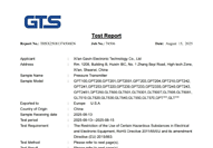
Choosing the right well level transducer maker affects the success of the project from the time it is first installed until it is no longer in use after years of service. GAMICOS combines precise sensor technology with a full support system to help companies that make industrial automation equipment, building contractors, and people who buy things in North America, Europe, and other places around the world. Our GLT530 pressure sensor is accurate to within 0.1% FS, which is what your important apps need. It also has CE, RoHS, and ATEX certifications that meet international standards.
We know that sourcing managers need more than just reasonable prices. They also need solid bulk supply capacity, OEM customization options, and quick technical help throughout the lifecycle of a product. Our engineering team works with clients to come up with custom solutions that solve their specific measurement problems. At the same time, our quality testing processes make sure that performance stays the same across all production levels. You can email GAMICOS at info@gamicos.com to talk about your unique needs, get technical specs, or set up product test samples that show how our well level transducer solutions improve your operations.
References
1. Morris, A.S. & Langari, R. (2021). Measurement and Instrumentation: Theory and Application (3rd ed.). Academic Press: Principles of pressure sensor accuracy specifications and industrial measurement standards.
2. Bera, S.C. & Mandal, H. (2022). "Hydrostatic Level Measurement Systems for Groundwater Monitoring: A Comprehensive Review." Journal of Environmental Monitoring and Assessment, 194(8), 562-589.
3. International Society of Automation (2020). ANSI/ISA-37.12.01-2020: Specifications and Tests for Strain Gage Pressure Transducers. ISA Standards and Practices Department.
4. Webster, J.G. & Eren, H. (2023). Measurement, Instrumentation, and Sensors Handbook: Electromagnetic, Optical, Radiation, Chemical, and Biomedical Measurement (2nd ed.). CRC Press.
5. Liptak, B.G. (2021). Instrument Engineers' Handbook, Volume One: Process Measurement and Analysis (5th ed.). CRC Press: Level and pressure measurement technology comparisons.
6. European Committee for Standardization (2019). EN 61326-1:2013 Electrical Equipment for Measurement, Control and Laboratory Use – EMC Requirements. CEN-CENELEC Management Centre: Industrial sensor compliance standards.
Spring
Spring, With 5 years of experience in sensor technology and product development, Mark specializes in helping clients identify the optimal pressure and level sensor solutions for demanding industrial environments。
We're here to help — submit your request anytime!
Let us know how we can help solve your pressure level measurement challenge.
_1757930850792.jpg)
Recommended Blog
What output signals do submersible level sensors typically provide?
What output signals do submersible level sensors typically provide?
What output signals do submersible level sensors typically provide?

How to Choose a Well Level Sensor for Deep-Bore Applications?
How to Choose a Well Level Sensor for Deep-Bore Applications?
How to Choose a Well Level Sensor for Deep-Bore Applications?