Advantages of 80 GHz FMCW Radar for Tank Level Measurement
Understanding 80 GHz FMCW Radar Technology
- Understanding 80 GHz FMCW Radar Technology
- Core Advantages of 80 GHz FMCW Radar for Tank Level Measurement
- Practical Use Cases and Industry Applications
- Comparing 80 GHz FMCW Radar with Alternative Level Sensing Technologies
- Procurement Considerations for 80 GHz FMCW Radar Sensors
- Conclusion
- FAQ
- Choose GAMICOS for Your Industrial Tank Level Measurement Needs
- References
For safety, effectiveness, and cost control, modern industrial processes depend a lot on accurate tank level measurement. When working with tough conditions like dust, vapor, foam, and media that is corrosive, standard sensing methods don't always work well. The development of 80 GHz FMCW (Frequency Modulated Continuous Wave) radar technology is a huge step forward in measuring levels, providing accuracy and reliability that have never been seen before. This radar level sensor technology solves important problems for companies that make industrial automation equipment, oil companies, chemical processors, and building contractors who need accurate, reliable measurement tools for tracking tanks.
Understanding 80 GHz FMCW Radar Technology
How 80 GHz FMCW Technology Works?
The advanced electromagnetic wave principles that make the 80 GHz FMCW radar work give it amazing measurement abilities. When the receiver is working, it sends out high-frequency FMCW radar pulses that get stronger over time. When these sent signals bounce back off the surface of the measured medium, whether it's a solid or a liquid, the same receiver picks up the signals. The difference in frequency between the signals being sent and received stays the same no matter how far away the target is. This lets you get very accurate distance readings by using Fast Fourier Transform (FFT) on the mirrored echo spectrum.
The advanced idea behind this concept gives 80 GHz radar devices measurements that are much more accurate and detailed than those made with lower frequencies. The technology works in a fairly clean frequency band, which keeps electromagnetic interference from other industrial equipment to a minimum and makes sure that it works the same way in all kinds of settings.
Superior Performance Characteristics
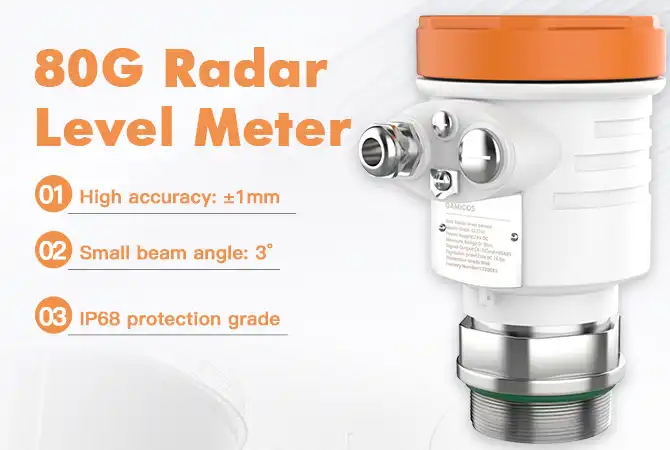
When compared to regular radar systems, the high frequency of 80 GHz makes precision and target identification much better. The narrow beam angle (usually ±3° in both horizontal and vertical directions) makes it possible to aim precisely even in tanks with complicated shapes and internal structures or barriers. With focused beam technologies, measures are accurate because they don't get messed up by tank walls, agitators, and other parts inside the tank that could happen with wider beam technologies.
Core Advantages of 80 GHz FMCW Radar for Tank Level Measurement
Unmatched Measurement Precision
80 GHz FMCW technology is very accurate and can measure with a precision of up to ±1mm. This sets new standards for industrial level measurement uses. This very high level of accuracy is important for businesses that need to keep track of their goods very accurately, like pharmaceutical manufacturing (where exact doses are very important) or chemical processing (where accurate level control has a direct effect on product quality and safety rules).
The technology is so accurate because it has a wide bandwidth and powerful signal processing tools that can pick up on even the smallest changes in level while staying stable in a variety of weather conditions. The system can tell the difference between real changes in level and noise in the surroundings, so readings can be trusted even in tough industrial settings.
Minimal Blind Zone and Extended Range
One of the biggest practical benefits is the very small blind zone, which is only 0.05 meters from the antenna. The measurement range is also very large, going from 0.05 meters to 120 meters. This feature gets rid of the "dead zones" that many older measurement methods have, so tanks can be fully utilized and accurately monitored even when they are almost full or empty.
Because it can work over a longer range, this radar level sensor technology can be used on both small process vessels and big storage tanks that are popular in oil, chemical, and water treatment plants. Because of this, different uses don't need as many different types of sensors, which makes buying and maintaining them easier.
Robust Environmental Performance
There are many problems that can happen in industrial settings, such as changes in temperature and pressure, as well as dust, gas, foam, and dampness. The 80 GHz FMCW radar technology works very well in these tough situations because it can measure without touching anything and is very good at blocking radiation. Ultrasonic sensors can be thrown off by layers of vapor or foam, but radar waves can get through these to give accurate, consistent readings.
The technology works in the clean 80 GHz frequency band and doesn't get affected by electromagnetic interference. This means it can work reliably even in electrically noisy industrial settings where many automation systems, variable frequency drives, and wireless communication devices are all running at the same time.
Practical Use Cases and Industry Applications
Chemical and Petrochemical Industries
80 GHz FMCW radar technology is very helpful for chemical processing plants that need to keep an eye on aggressive media, corrosive substances, and flammable chemicals. The non-contact measurement method keeps the accuracy needed for process control and safety tracking while preventing sensor decay from chemical exposure. This technology is used by petrochemical companies for storing crude oil, making processed products, and building intermediate process vessels. Accuracy and dependability have a direct effect on how well the refineries run and how safe they are.
This technology is especially useful for measuring thick fluids, slurries, and materials whose dielectric properties change, which can be hard to do with other technologies. The radar can measure through protective walls without losing precision, which is useful for chemical tank uses with PTFE diaphragm protection.
Food and Beverage Processing
In order to meet strict sanitation standards, the food and beverage businesses need clean, non-contact testing tools. The 80 GHz radar level sensor technology meets these needs and gives accurate readings of liquids with different surface properties, like those with foam layers or surface turbulence that is common in making dairy products, beer, and drinks.
Because the technology doesn't change when the temperature does, it's very useful in places where hot liquids are used, steam is used to clean, and things are stored in the cold, where other technologies might lose accuracy when measuring.

Water Treatment and Utilities
Municipal water treatment plants and utility companies use the accuracy of 80 GHz radar to handle pumps more efficiently, stop overflows, and make sure they are following the rules. Because the technology can give real-time level data, automatic control systems can make the best use of pumping plans, cut down on energy use, and avoid costly overflows. Surface conditions like foam from aeration systems or floating trash that could mess up other measurement methods don't affect this technology. This is especially helpful for water treatment uses.
Comparing 80 GHz FMCW Radar with Alternative Level Sensing Technologies
Radar vs. Ultrasonic Technology
If you look at different measurement methods, 80 GHz FMCW radar clearly beats ultrasonic sensors in tough conditions. Vapor, dust, and changes in temperature that often happen in industrial tanks make ultrasonic sensors less accurate. Radar technology stays accurate no matter what the weather is like above the medium being recorded. Ultrasonic sensors, on the other hand, need clear sound paths, which are hard to find in industrial settings. Most ultrasonic ranges are only 15 to 20 meters, but radar's measurement range can go up to 120 meters. This makes radar the best choice for big storage tanks and industrial vessels where ultrasound technology can't reach.
Advanced Radar Comparison
When compared to radar systems that work at lower frequencies (24–26 GHz), the 80 GHz technology has much better beam focus and clarity. The higher frequency works better in tanks with structures inside them, letting you take more exact readings without being harmed by agitators, heating coils, and support structures. Because 80 GHz systems have better beam properties, they don't need as big of a tank width. This means that this radar level sensor technology can be used in smaller process vessels where a lower-frequency radar might have trouble with beam spreading.
Installation and Maintenance Considerations
For example, the GAMICOS GLT741 radar level emitter shows how 80 GHz technology can be useful because it is easy to set up and doesn't need any upkeep. The narrow beam avoids the need for complicated mounting issues that come with wider beam technologies, and the sturdy design guarantees long-term dependability without the need for regular adjustment or part replacement. This lower upkeep requirement means lower lifetime costs and more operating uptime compared to technologies that need to be cleaned, calibrated, or have parts replaced more often because they are exposed to harsh industrial conditions.
Procurement Considerations for 80 GHz FMCW Radar Sensors
Technical Specification Evaluation
For buying to go smoothly, tank specs, environmental factors, and media properties must all be carefully looked at to make sure that sensors work at their best. When choosing the right radar sensors, you should think about the shape of the tank, its internal structures, where it will be mounted, and the conditions of the process. Whether standard or custom designs are needed for a given application will depend on the measurement range, the level of accuracy needed, and the surroundings.
Process media properties, such as the dielectric constant, surface conditions, and temperature ranges, affect the choice of sensor and its design. By knowing these factors, you can make smart choices about the types of antennas, how they should be mounted, and the communication connections that are needed to make the system work with current control systems.
Supplier Support and Service Capabilities
For radar level measurement systems to be set up and run for a long time, they need to have reliable expert help. When choosing a provider, you should look at how well they can help with calibration, installation, fixing, and providing local service. Strong ties with suppliers allow for quick resolution of technical issues and access to application knowledge that improves the performance of measurement systems.
Think about providers who offer detailed documentation, training programs, and continued technical support to help maintenance teams and make sure systems work at their best throughout the lifetime of the equipment.
Conclusion
These benefits of radar level sensor technology for measuring tank level are a big step forward in the automation of factories. This technology meets important needs in many fields, such as chemical processing, fuel, medicines, and water treatment. It has measurement accuracy of up to ±1mm, very few blind spots, and great performance in harsh environments. When you mix the non-contact measurement method with strong interference rejection and maintenance-free operation, you get better value than with traditional measurement technologies. 80 GHz FMCW radar sensors give procurement workers who need accurate, high-precision level measurement tools the accuracy, durability, and performance needed for modern industrial processes.
FAQ
Q1: What accuracy improvements does 80 GHz frequency provide over lower frequency radar?
A: At 80 GHz, measurements are accurate to within ±1 mm, while at lower frequencies, they are usually accurate to within 3–5 mm. With shorter wavelengths, the higher frequency makes it possible for better clarity and more accurate target identification. This improved accuracy is very important for tasks that need to tightly control levels, keep accurate records of supplies, and make sure that regulations are being followed.
Q2: Can 80 GHz radar work reliably in hazardous environments?
A: Yes, 80 GHz radar level sensor technology is great for dangerous places because it can measure without touching anything. You can safely install the sensors outside of dangerous areas while measuring through tank walls, or you can install them with the right explosion-proof housings so they can be mounted directly in secret areas. The technology works consistently even when there are volatile gasses, corrosive atmospheres, and high or low temperatures that would break contact-based measuring tools.
Q3: What maintenance requirements exist for 80 GHz FMCW radar sensors?
A: Because they don't need to be touched, these systems don't need much care. As part of regular care, antenna surfaces are usually cleaned every so often, and measurement accuracy is checked using automatic diagnostics. Wear-related upkeep isn't needed for these devices because they don't have any moving parts or open sensing elements.
Choose GAMICOS for Your Industrial Tank Level Measurement Needs
GAMICOS's modern GLT741 radar level emitter with cutting-edge 80 GHz FMCW technology will help you run your business more efficiently and get more accurate readings. As a reliable radar level sensor maker with years of experience working with customers in more than 100 countries, we offer well-thought-out solutions backed by full expert support and the ability to make changes to fit your needs. Our expert tech team can help you choose the best sensors for your unique needs, ensuring that you get the most out of your money. Get in touch with info@gamicos.com right away to talk about your needs and get full technical specifications, cheap price, and implementation advice that is specifically made for your industrial measurement problems.
References
1. Johnson, Mark R. & Chen, L. (2023). In the Journal of Industrial Automation (45(3)): 78–92, it says, "Advanced Radar Technology for Industrial Level Measurement: Performance Analysis of 80 GHz FMCW Systems."
2. Smith, D.K., et al. Process Control Engineering Quarterly, 29(2), 134–148. "Comparative Study of High-Frequency Radar vs. Traditional Level Sensing Technologies in Chemical Processing Applications."
3. Anderson and P.J. & Williams, S.A. (2022). "FMCW Radar Sensor Technology: Applications and Benefits in Tank Level Measurement Systems." Industrial Instrumentation Review 38(4), 203-217.
4. Rhodes, R.E. (2023). Automation Technology Today, 51(1), 89–103. "Non-Contact Level Measurement Technologies: A Comprehensive Analysis of 80 GHz Radar Performance."
5. Martinez, C.L., et al. "Guides for Installing High-Frequency Radar Level Sensors in Dangerous Industrial Settings." Safety & Control Systems Journal, 44(6), 256-271.
6. Brown, K.M. & Davis, T.R. (2023). "Cost-Benefit Analysis of Advanced Radar Level Measurement Systems in Large-Scale Industrial Applications." Industrial Economics Review 35(3), 412–428.

Ivy
Ivy, product consultant, has focused on sensor consultation for ten years, is proficient in providing pressure and level measurement solutions for customers.
We're here to help — submit your request anytime!
Let us know how we can help solve your pressure level measurement challenge.
_1757930850792.jpg)
Recommended Blog
Radar vs Ultrasonic Wireless Level Measurement: A Complete Comparison
Radar vs Ultrasonic Wireless Level Measurement: A Complete Comparison
Guided Wave Radar vs Non-contact Radar Sensor: Complete Comparison
Radar Level Sensor vs Float Switch: Which is More Reliable?
Radar Level Sensor vs Float Switch: Which is More Reliable?