Ultrasonic Depth Sensor Accuracy: Factors That Matter
Introduction
- Introduction
- Understanding Ultrasonic Depth Sensor Accuracy
- Key Factors Affecting Ultrasonic Depth Sensor Accuracy
- Comparing Ultrasonic Depth Sensors with Other Technologies
- Procurement Considerations for Ultrasonic Depth Sensors
- GAMICOS: Your Trusted Partner for Precision Ultrasonic Level Measurement Solutions
- Conclusion
- Partner with GAMICOS for Superior Ultrasonic Measurement Solutions
- References
Accuracy is more than simply a feature when choosing an ultrasonic depth sensor for industrial applications; it is the cornerstone of dependable operations. By producing high-frequency sound pulses and timing how long it takes for the waves to return after reflecting off target surfaces, these non-contact measuring tools determine distances. Whether your automated process maintains constant quality requirements or your liquid level monitoring system stops overflow in a chemical tank depends on how accurate this time-of-flight measurement is. Procurement managers, engineering teams, and R&D experts may make confident choices that safeguard operational efficiency and safety requirements in the petroleum, pharmaceutical, food and beverage, and energy sectors by knowing what affects measurement accuracy.
Introduction
Because they provide accurate distance and level measurements that support vital activities, ultrasonic depth sensors have emerged as essential measuring equipment in both the commercial and industrial sectors. These sensors' accuracy guarantees consistent performance that immediately affects workplace safety, process control, and quality assurance in B2B applications, from automated manufacturing lines to storage tank monitoring. We developed this in-depth manual to provide OEM customers, engineering specialists, and procurement managers a clear understanding of the variables affecting the accuracy of ultrasonic sensors.
Whether you're in charge of upgrading a petroleum refinery, creating automation systems for food processing facilities, or finding trustworthy measurement solutions for pharmaceutical manufacturing, this knowledge allows for well-informed selection choices and optimal integration within a variety of industrial environments. The knowledge presented here is derived from years of real-world experience working with thousands of clients in over 100 countries, tackling issues that have a direct impact on operational results and measurement dependability.
Understanding Ultrasonic Depth Sensor Accuracy
Ultrasonic depth sensor accuracy encompasses several interconnected parameters that collectively determine measurement reliability in demanding industrial environments. Resolution defines the smallest distance change a sensor can detect, while repeatability indicates how consistently the device produces identical readings under unchanged conditions. Measurement precision reflects the degree to which repeated measurements cluster around the true value. These parameters are vital in meeting stringent industrial requirements where even minor deviations can trigger production delays, safety incidents, or quality failures.
How Ultrasonic Sensors Calculate Distance?
Time-of-flight calculations are the foundation of the measuring principle. An ultrasonic air transducer, which transforms electrical energy into mechanical vibrations and produces a sound wave, is stimulated by a pulse transmitter. This wave travels through the atmosphere in the direction of the liquid, solid, or slurry target surface before reflecting back to the sensor. In receiver mode, the reflected wave is received by the same transducer, which then transforms it back into an electrical signal.
The sensor records the time difference between emitted and received signals after amplification and processing to detect the reflected echo. The formula for calculating distance is simple: Distance is equal to Time times the speed of sound, then divided by two. The measurement's round-trip character is explained by dividing by two. The computed distance is then converted linearly to conventional outputs, such as digital communication using RS485 protocols or 4–20mA current signals.
Why Precision Matters in Industrial Applications?
Applications such as liquid level monitoring in chemical storage tanks, where overfill circumstances present significant risks, depend on precise depth readings. Precise level control in pharmaceutical production guarantees regulatory compliance and batch uniformity. Reliable distance measurements are essential for surveying and navigation in underwater mapping applications in marine settings. Deviations from precise measurements may result in expensive mistakes.
These situations show why accuracy is essential in business-to-business (B2B) settings. Sound waves propagate at a speed of around 343 meters per second at 20°C and are mechanical waves that need a medium to move. Ultrasonic waves are reflected by materials that have different densities and sound speeds than air. The quality of the reflection depends on the density of the substance; high-density materials, like water, create great reflections, while low-density materials, like foam, absorb more energy and produce poor reflections.
Key Factors Affecting Ultrasonic Depth Sensor Accuracy
Sensor performance is influenced by a variety of aspects, and engineering teams may design devices that are suitable for their particular operating settings by identifying these characteristics. Measurement fidelity is influenced differently by environmental factors, sensor characteristics, and maintenance procedures.
Environmental Conditions and Their Impact
Because the speed of sound through air varies with temperature, temperature variations have a substantial impact on ultrasonic measurements. Temperature is still the most important component in sound transmission, although humidity and air pressure also have an impact. Surface reflectivity is important; whereas turbulent or foamy surfaces scatter ultrasonic energy and decrease return signals, smooth liquid surfaces return loud echoes.
Ultrasonic sensors are less appropriate for situations with high concentrations of heavy gases because dust, moisture, and gases such as CO2, CO, H2S, or H2 may obstruct wave propagation. Measurement accuracy may be compromised by interference caused by ambient noise from industry or other ultrasonic sources. These issues have been seen in a variety of sectors, from chemical facilities with intricate atmospheric conditions to loud production floors.
Sensor Specifications That Determine Performance
Resolution and measurement range are also impacted by operational frequency. Although they have lower effective ranges and are more vulnerable to atmospheric absorption, higher frequencies provide superior resolution for identifying minute changes. Signal clarity is strongly impacted by transducer quality; superior transducers produce cleaner pulses and are better at picking up weaker echoes. The sensor's capacity to target certain surfaces while rejecting false echoes from tank walls or other structural features is determined by beam geometry, which includes beam angle and focusing characteristics.
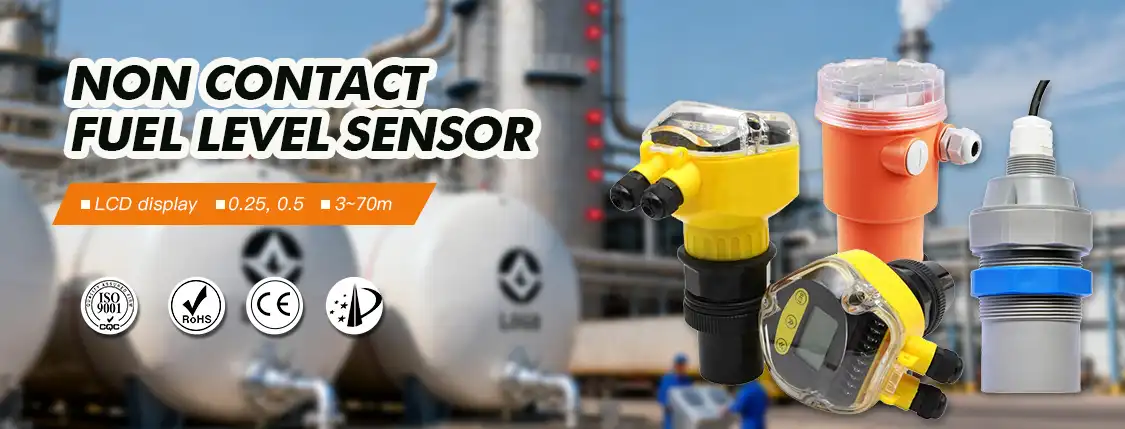
With exceptional directivity and robust penetration that allow concentrated ultrasonic energy transmission over extended distances, the GUT series ultrasonic level meter is a prime example of modern engineering in these domains. This non-contact measuring tool is easy to use, requiring little training, and offers excellent dependability at a reasonable cost.
Calibration and Maintenance Requirements
By avoiding measurement drift, which progressively reduces system dependability, consistent calibration maintains accuracy over time. The harshness of the application should be taken into consideration in routine calibration schedules; difficult situations with high temperatures or corrosive atmospheres need more frequent calibration than benign circumstances. Error troubleshooting is methodically determining if disparities are caused by installation problems, environmental changes, or sensor deterioration.
Cleaning transducer faces to get rid of accumulated dust or debris that might impede signal transmission is part of preventive maintenance. The GUT series reduces user involvement while preserving measurement integrity by including automated temperature correction, gain control, and power adjustment. These clever features show how cutting-edge sensing technology maximizes dependability while reducing maintenance costs in a variety of difficult contexts.
Comparing Ultrasonic Depth Sensors with Other Technologies
Selecting the optimal measurement technology requires understanding how different approaches compare in accuracy, range, cost, and application suitability. Ultrasonic sensors, such as the Ultrasonic Depth Sensor, compete with laser-based distance measurement and pressure-based level sensing, each offering distinct advantages.
Ultrasonic Versus Laser Sensors
Laser sensors are perfect for taking very accurate measurements over long distances since they have a greater range and resolution than ultrasonic instruments. However, laser technology is usually more expensive and may not work well in surroundings that are dusty or foggy because particles may deflect light beams. In applications involving liquid levels and small areas where non-contact measurement offers substantial benefits, ultrasonic instruments perform very well.
They function dependably in situations where optical devices would be defeated by mist, dust, or foam. We have assisted clients in the food and beverage sector in selecting ultrasonic systems for liquid level measurements in storage silos, where the dusty environment would impair laser accuracy but presents no issue for sound-wave-based measurement.
Ultrasonic Versus Pressure Sensors
Another method for determining liquid level is provided by pressure sensors, which measure fluid depth by sensing hydrostatic pressure at the bottom of tanks. Although this contact-based approach provides accurate readings, corrosion, fouling, and maintenance accessibility are issues since the sensor must always be in touch with the process medium. Changes in fluid density may have an impact on pressure readings, necessitating compensating computations.
By operating without making contact, ultrasonic sensors circumvent these issues, removing worries about chemical compatibility or sensor fouling. This benefit is shown by the GUT series, which can measure liquids and slurries without direct contact thanks to its IP67 protection ratings and optional die-cast aluminum enclosure. This design concept increases operating longevity while lowering maintenance needs.
Benchmarking Against Leading Brands
Procurement specialists should concentrate on important datasheet factors that show actual performance capabilities when assessing ultrasonic systems from reputable manufacturers like Honeywell, MaxBotix, Siemens, and Bosch. The greatest and minimum distances that the sensor can accurately detect are indicated by the measurement range requirements. Application applicability is closely correlated with accuracy criteria, which are often stated as a % of range or absolute distance.
Integration compatibility is determined by output options; the GUT series provides versatility for a variety of control systems with programmable relay output, high-precision 4-20mA current output, and RS485 digital communication, among other output possibilities. Response time, which is important for dynamic operations, influences how fast the sensor responds to level changes. Suitability for difficult environments is indicated by environmental classifications such as IP67. Comparing these factors makes it easier to match investment to performance requirements, guaranteeing that the chosen solution satisfies both present and future scalability requirements.
Procurement Considerations for Ultrasonic Depth Sensors
Purchasing sensors effectively strikes a compromise between long-term operating expenses, supply schedules, budgetary restrictions, and accuracy standards. Strategic sourcing choices understand when low-cost solutions are enough vs when high-precision capabilities are required.
Balancing Cost and Performance
Not all applications need the greatest level of precision possible. For non-critical bulk storage, tank level monitoring may work flawlessly with moderately precise equipment, but pharmaceutical batch processing need extraordinary accuracy to ensure regulatory compliance. We advise carrying out application analysis that measures the real effects of measurement errors. Setting a 0.1% sensor costs money that may be used for other priorities if a 1% inaccuracy causes no operational issues.
On the other hand, in safety-critical applications, underspecifying precision results in unacceptable hazards. This balance is addressed by the GUT series, which offers cutting-edge functionality generally seen in high-end devices at affordable price ranges that facilitate purchase by those on a tight budget without sacrificing dependability.
Selecting Reliable Suppliers and Partners
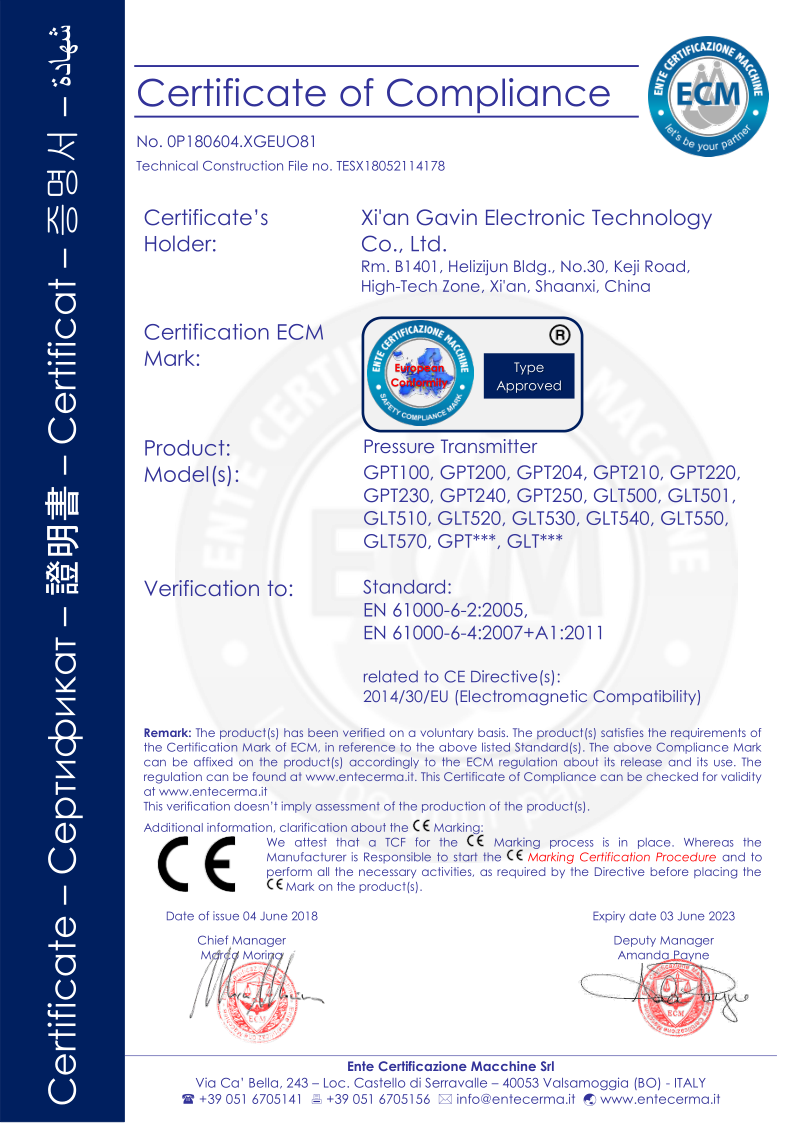
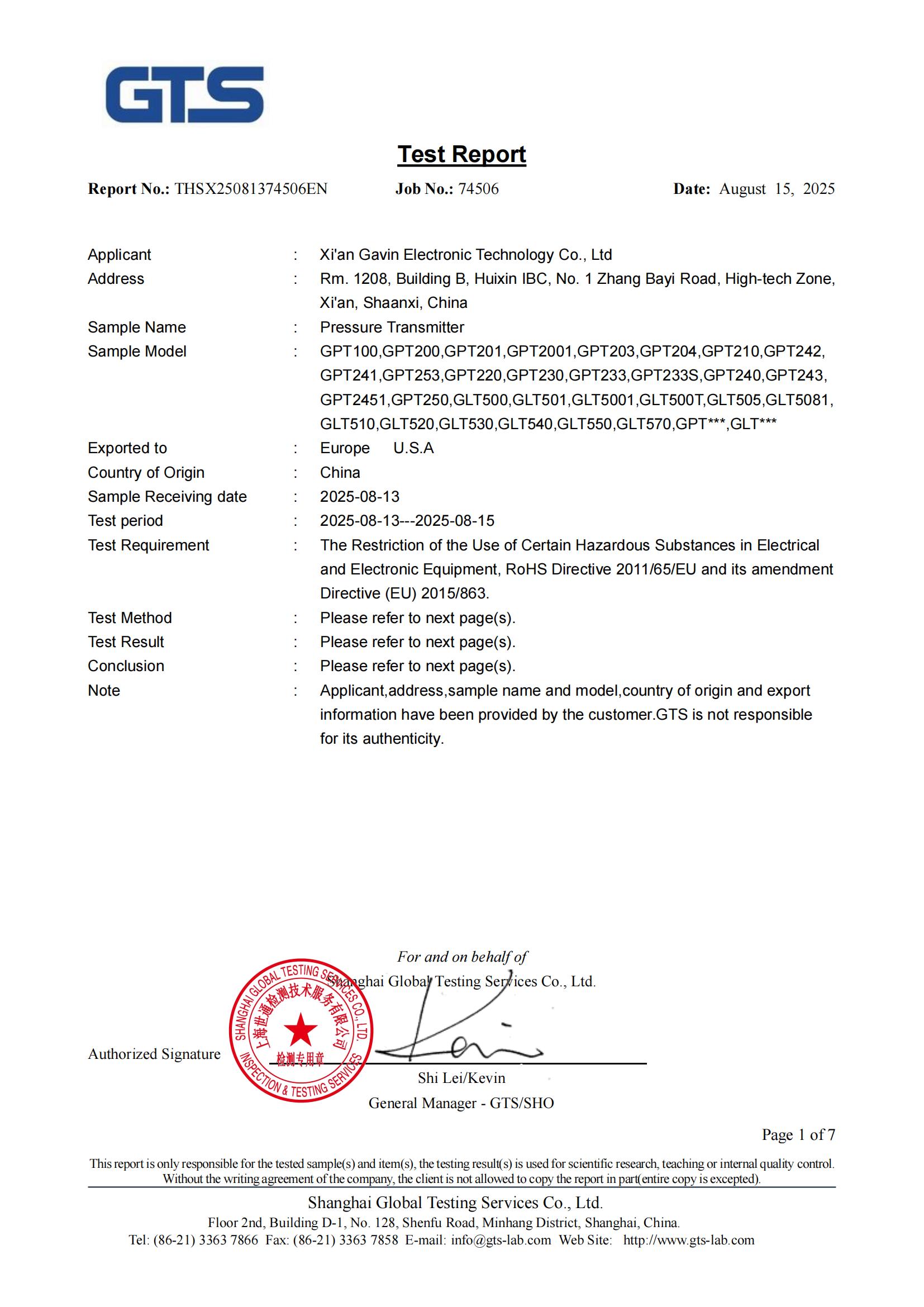
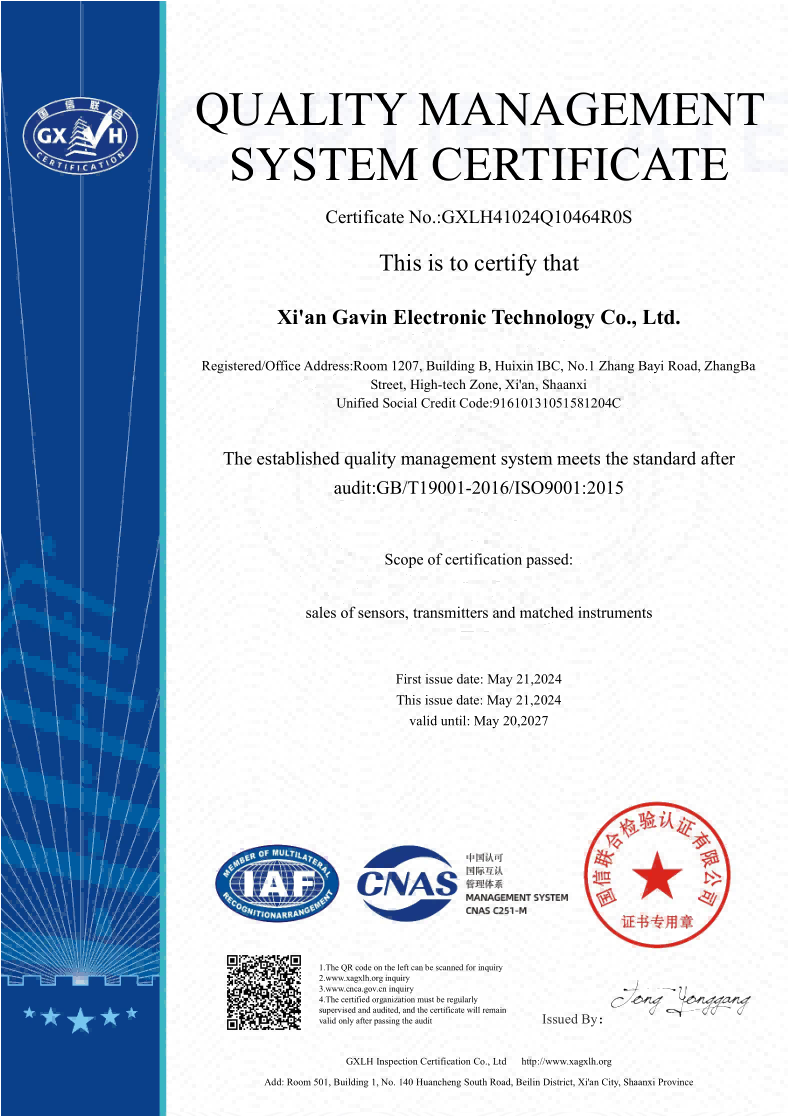
Beyond only ultrasonic depth sensor specifications, supplier selection has a big impact on procurement performance. Product legitimacy and adherence to global standards including CE, RoHS, and ISO certifications are ensured via partnerships with authorized dealers or OEM manufacturers. With goods shipped to more than 100 countries, GAMICOS has developed a solid reputation in this area, servicing clients in North America, Europe, the Middle East, Southeast Asia, and Australia.
Both conventional product delivery and extensive OEM/ODM customization, including sensor type alterations, interface adaptations, communication protocol requirements, and dimensional adjustments, are supported by our production capabilities. Accessibility to logistics is especially important for international procurement; delays and complexities are reduced by dependable shipment, precise paperwork, and attentive customer service. Understanding that operational continuity relies on consistent supply chain performance, we maintain optimized procedures that guarantee on-time delivery to US and EU markets.
Bulk Purchasing and Total Cost of Ownership
The benefits of buying in bulk go beyond lower unit costs. Priority production scheduling is often secured by volume commitments, guaranteeing availability when project schedules need quick deployment. As fleet numbers increase, warranty periods become more crucial because full coverage guards against early failures and lowers unforeseen replacement costs. With stringent inspection procedures and certificates from metrology organizations supporting quality assurance, our robust bulk supply capabilities supports extensive industrial projects and distributor stocking plans.
Installation complexity, calibration needs, maintenance schedules, and anticipated operating lifetime should all be taken into account when calculating total cost of ownership. The GUT series is a prime example of low total cost since it is simple to install, requires less maintenance thanks to non-contact measurement, and has comprehensive software features that adjust to changing circumstances without requiring hardware changes. All of these elements work together to decide if a purchase price that seems appealing at first offers true long-term value.
GAMICOS: Your Trusted Partner for Precision Ultrasonic Level Measurement Solutions
GAMICOS has established itself as a trusted leader in supplying high-precision ultrasonic measurement instruments tailored specifically for global B2B clients across demanding industrial sectors. Our extensive product portfolio addresses diverse measurement challenges, with the GUT series ultrasonic level meter representing our commitment to combining advanced technology with practical reliability. This non-contact measurement device delivers exceptional performance across applications measuring liquids and slurries, from chemical storage tanks to wastewater treatment facilities.
Our engineering team designed the GUT series around core principles that matter most to procurement managers and engineering professionals. Here are the distinguishing capabilities that set this device apart:
- Non-contact continuous measurement eliminates sensor fouling and corrosion concerns while dramatically reducing maintenance requirements compared to contact-based alternatives, lowering total cost of ownership across the device lifecycle.
- Automatic power adjustment, gain control, and temperature compensation ensure consistent accuracy despite environmental variations, adapting intelligently to changing conditions without manual intervention or recalibration.
- Advanced detection technology with rich software functions accommodates various complex environments including applications with turbulent surfaces, temperature extremes, or challenging atmospheric conditions that defeat lesser sensors.
- Multiple output options including programmable relay output, high-precision 4-20mA current output, and RS485 digital communication output provide integration flexibility across diverse control systems and automation platforms.
- Excellent directivity and strong penetration enable focused ultrasonic energy transmission over long distances, maintaining signal strength and measurement accuracy in challenging installations where other sensors lose reliability.
These capabilities translate into practical advantages that solve real production problems our customers face daily. Chemical manufacturers appreciate the corrosion resistance and safety benefits of non-contact measurement. Food and beverage processors value the hygienic design and easy cleaning. Energy sector clients depend on the rugged construction and environmental adaptability for reliable performance in harsh conditions. The optional die-cast aluminum housing with IP67 protection rating provides confidence in demanding applications where exposure to moisture, dust, or mechanical stress threatens lesser devices.
Beyond hardware excellence, GAMICOS distinguishes itself through comprehensive support services that accompany our products throughout their operational lives. Our customer-oriented approach focuses on understanding specific application needs and challenges, enabling us to recommend personalized solutions rather than forcing generic products into unsuitable applications.
Our professional technical support team assists with product selection, installation guidance, commissioning procedures, and ongoing usage optimization to maximize sensor performance and return on investment. Comprehensive after-sales service including timely response to inquiries, maintenance support, repair services, and technical consultation ensures long-term stable operation that protects your operational continuity.
Conclusion
Understanding the factors that determine ultrasonic depth sensor accuracy empowers B2B buyers to make informed decisions that enhance operational efficiency while reducing procurement risks. Environmental conditions, sensor specifications, and maintenance practices all influence measurement reliability in ways that directly impact your bottom line. The comparison between ultrasonic technology and alternatives like laser or pressure sensors reveals distinct advantages for liquid level and distance measurement applications where non-contact operation provides crucial benefits.
Procurement considerations balancing cost against performance, supplier reliability, and total ownership costs guide strategic sourcing decisions that deliver long-term value. Implementation best practices covering installation, troubleshooting, and continuous improvement ensure sustained accuracy throughout operational lifecycles. By applying these insights, procurement managers, engineering teams, and R&D specialists can confidently specify measurement solutions that meet stringent industrial requirements across petroleum, chemical, pharmaceutical, food and beverage, and energy sectors.
Partner with GAMICOS for Superior Ultrasonic Measurement Solutions
GAMICOS stands ready to support your ultrasonic level measurement requirements with expert guidance, premium products, and comprehensive service that extends throughout your procurement lifecycle and beyond. We invite sourcing managers, engineering professionals, project managers, and R&D teams to contact us for personalized consultations addressing your specific measurement challenges. Our application engineers analyze your operational requirements, environmental conditions, and integration needs to recommend optimal solutions from our extensive product portfolio.
Explore bulk purchasing options that deliver competitive pricing, priority production scheduling, and favorable warranty terms for large-scale projects or distributor inventory programs. Our OEM/ODM customization capabilities address unique requirements including modified sensor configurations, specialized interfaces, custom communication protocols, and tailored packaging with your branding. Request demo units to evaluate the GUT series performance firsthand in your actual application environment before committing to volume orders—we're confident that hands-on experience will demonstrate the reliability, accuracy, and ease of use that distinguish our products.
Access our comprehensive product catalog at blog.gamicos.com for detailed specifications, application examples, and technical resources supporting informed selection decisions. Contact our team directly at info@gamicos.com to discuss your requirements with experienced professionals who understand industrial measurement challenges across petroleum, chemical, pharmaceutical, food and beverage, and energy sectors. As a leading ultrasonic depth sensor supplier with proven expertise serving customers in over 100 countries, GAMICOS delivers precision measurement solutions that drive operational success, enhance safety, and reduce total cost of ownership.
References
1. Webster, J.G. (2018). The Measurement, Instrumentation and Sensors Handbook: Spatial, Mechanical, Thermal, and Radiation Measurement. CRC Press, Boca Raton, Florida.
2. Brassard, M. and Tavener, S.J. (2020). "Accuracy Analysis of Non-Contact Ultrasonic Level Sensors in Industrial Applications." Journal of Process Control, Vol. 94, pp. 45-58.
3. Hauptmann, P., Hoppe, N., and Püttmer, A. (2012). "Application of Ultrasonic Sensors in the Process Industry." Measurement Science and Technology, Vol. 23, No. 1, Article 012001.
4. International Society of Automation (2019). Industrial Measurement System Standards and Best Practices: ISA-TR50.02.02. Research Triangle Park, North Carolina.
5. Kirianaki, N.V., Yurish, S.Y., Shpak, N.O., and Deynega, V.P. (2016). Data Acquisition and Signal Processing for Smart Sensors. John Wiley & Sons, Chichester, West Sussex.
6. Zhang, H., Chen, W., and Liu, Y. (2021). "Temperature Compensation Methods for Ultrasonic Distance Measurement in Industrial Environments." IEEE Transactions on Instrumentation and Measurement, Vol. 70, pp. 1-12.

Eva
Eva specializes in bridging the gap between cutting-edge sensor technology and market needs. With 8 years of experience in industrial product marketing, she has successfully launched multiple sensor product lines—from pressure transmitters to fuel level sensor—into global markets.
We're here to help — submit your request anytime!
Let us know how we can help solve your pressure level measurement challenge.
_1757930850792.jpg)
Recommended Blog
Ultrasonic Liquid Level Sensor for Food & Beverage Industry
Ultrasonic Liquid Level Sensor for Food & Beverage Industry