The 4-20mA Current Loop in Industrial Pressure Transmitters
What is the 4-20mA Current Loop and How Does It Work?
- What is the 4-20mA Current Loop and How Does It Work?
- Comparison of 4-20mA Current Loop with Other Signal and Communication Protocols
- Applications and Benefits of 4-20mA Current Loop in Industry
- Troubleshooting, Maintenance, and Calibration of 4-20mA Current Loop Systems
- Procuring 4-20mA Current Loop Components: A Buyer's Guide
- Conclusion
- FAQ
- Partner with a Trusted 4-20mA Current Loop Manufacturer
- References
The 4-20mA current loop is still the most accurate way to measure pressure in commercial settings. This standard way sends pressure information as a proportional current output that ranges from 4 to 20 milliamperes. The lowest pressure measured is 4mA, and the highest pressure measured is 20mA. It is widely used because it is very good at blocking noise, has built-in fail-safe features (a broken wire reads as zero current, quickly warning operators), and works with existing control systems. When engineering managers and buying professionals look at pressure sensor specs, knowing about this tried-and-true technology helps them make smart choices about improving systems or starting new automation projects.
What is the 4-20mA Current Loop and How Does It Work?
Fundamental Principles of Current Loop Signaling
4-20mA current loop communication is based on a very simple idea: a two-wire circuit sends power and measurement data at the same time. The pressure sensor changes the mechanical pressure into an electric current that is equal to the number being recorded. Voltage signs weaken over distance because of wire resistance, but current stays the same throughout the loop. This makes this method perfect for long cable runs that are common in factories, water treatment plants, and refineries.
Signal Conversion Process in Pressure Transmitters
Piezoresistive or capacitive sensing elements inside industrial pressure sensors pick up changes in pressure and send out small electrical messages. Before being turned into the normal 4-20mA current loop output, these signals are amplified and linearized by advanced signal conditioning circuits. The lower limit of 4mA does two things: it powers the electronics in the emitter and sets a "live zero" that tells the difference between a real low reading and a circuit fault.
Typical Wiring Configurations and System Integration
Two-wire setups are used in standard installations. This means that the same pair of wires sends power and receives the measurement data. A programmable logic controller (PLC), distributed control system (DCS), or chart recorder is one example of a receiving device that is connected in series with the speaker. The power source is usually 24VDC. This simple structure lowers the cost of placement while keeping the signal strong over lengths of more than 1,000 meters.
Core Advantages for Industrial Applications
Automation experts keep selecting 4-20mA current loop technology even though digital options are available for a number of strong reasons. Compared to voltage-based systems, electrical noise from motors, changing frequency drives, and welding tools doesn't have as much of an effect on current signs. Installers like how easy it is to find problems—measuring current at any point in the loop proves that everything is working right. There is still no better system compatibility because almost every industrial processor made in the last 40 years can accept these signals without the need for protocol adapters or bridges.
Comparison of 4-20mA Current Loop with Other Signal and Communication Protocols
Current Loop versus Voltage Signal Transmission
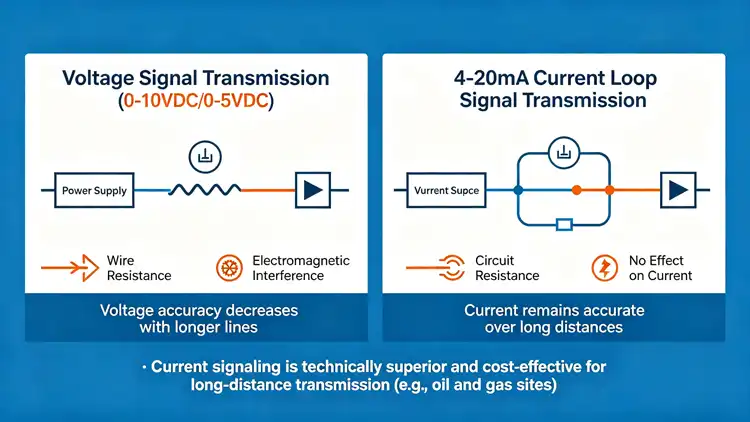
Another way to send analog data is through voltage signs, which are usually 0-10VDC or 0-5VDC. But as the length of the line grows, wire resistance and electromagnetic interference make the voltage less accurate. 4-20mA current loop signals, on the other hand, stay accurate no matter how far apart the cables are because circuit resistance has no effect on current flow. Signaling with current is better technically and cheaper than signaling with voltage when transmitters are far away from control rooms, which is common in oil and gas sites.
Integration with HART Protocol Technology
With the Highway Addressable Remote Transducer (HART) system, digital communication is added on top of normal 4-20mA current loop signals so that the analog measurement is not affected. This mixed method lets workers use small communications to get to diagnostic data, set settings, and check measurements while still being able to use existing analog infrastructure. HART-enabled receivers are a little more expensive than analog-only units, but they are worth the extra money because they can predict repair needs and avoid unplanned downtime.
Selecting Between Analog and Digital Communication
The best communication methods are chosen based on the needs of the project. Pure 4-20mA current loop options work best in situations where simplicity, proven dependability, and low cost are important. Digital protocols like Modbus, PROFIBUS, or Foundation Fieldbus work well with complicated setups that need a lot of troubleshooting data, the ability to connect many sensors, or complex control methods. As a company that works with clients in over 100 countries, we've seen that hybrid HART receivers are often the best compromise between analog and digital readings.
Industry-Leading Manufacturers and Product Selection
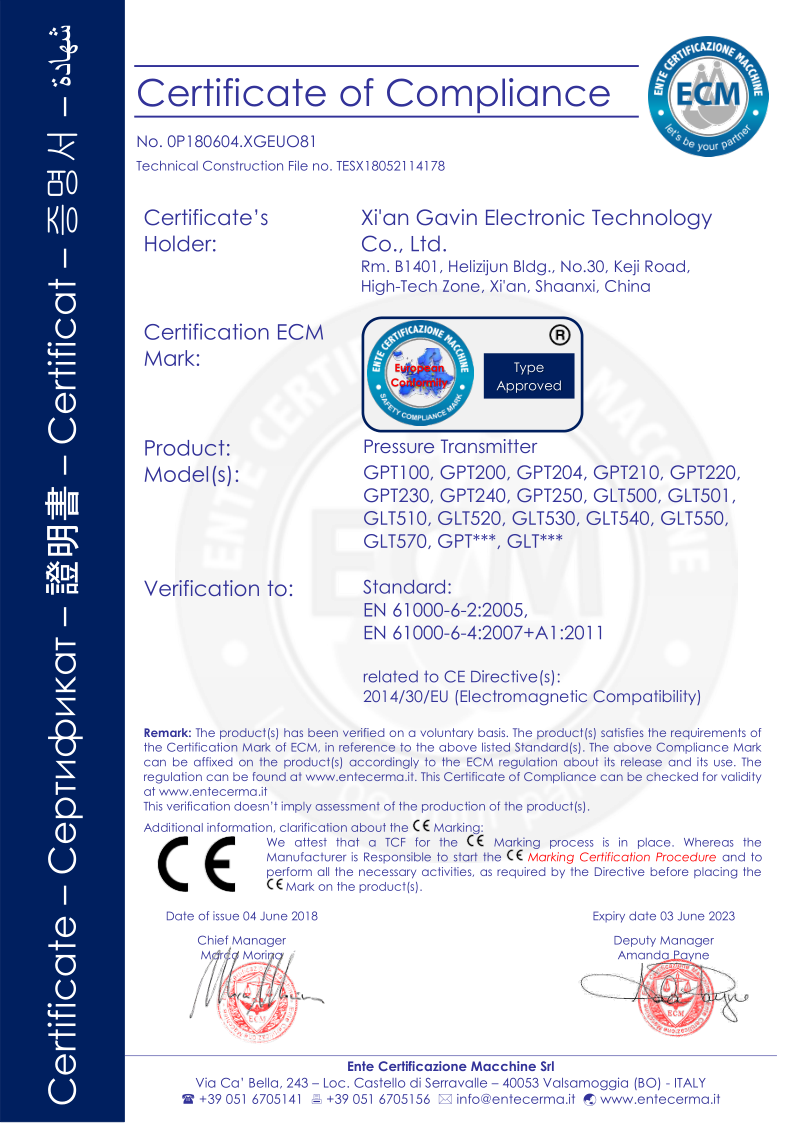
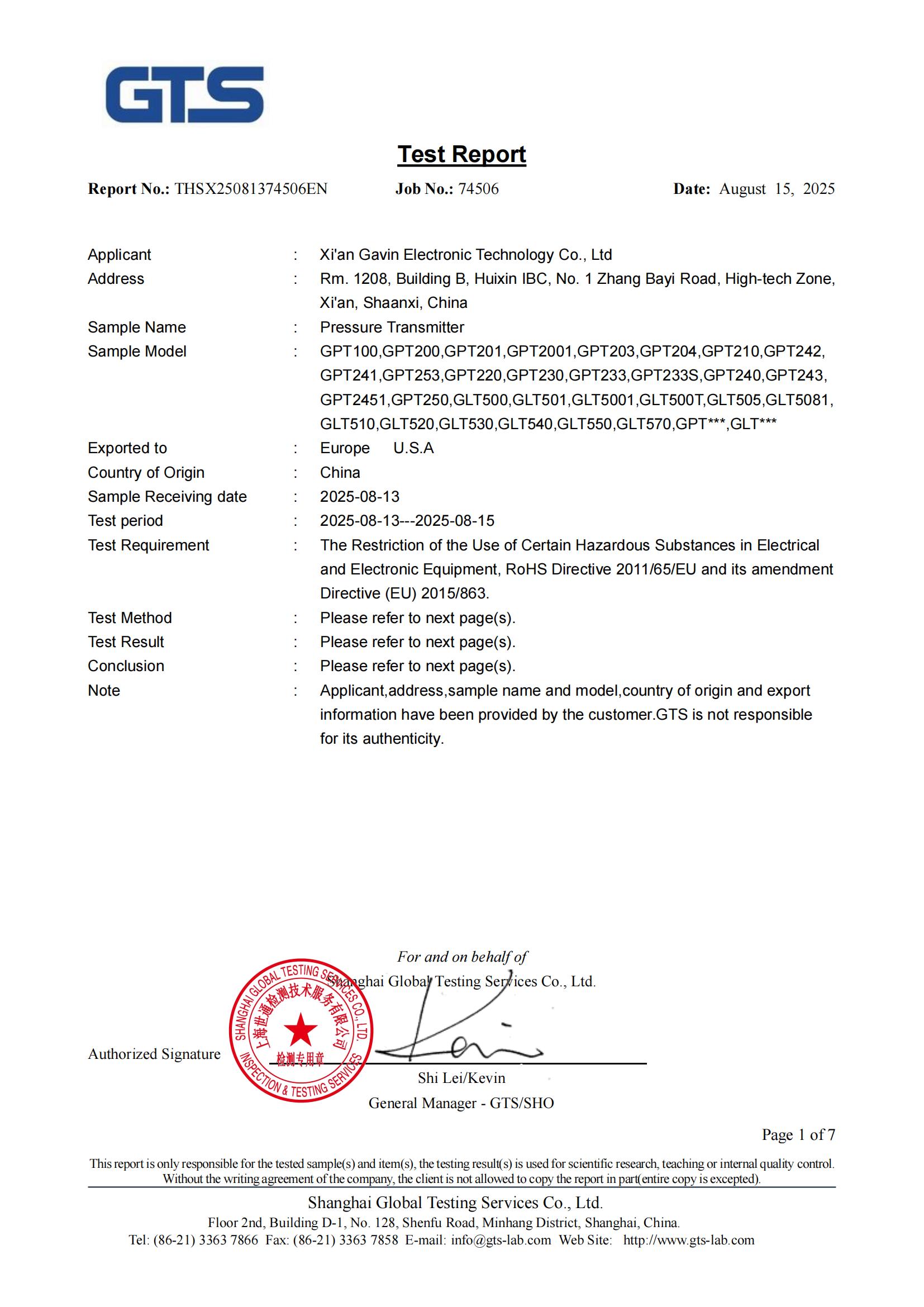
Global names like Emerson Rosemount, Siemens SITRANS, ABB, Honeywell, and Yokogawa have built their profiles over many years of performance in the field. These companies make a wide range of products that meet the needs of different pressure levels, dangerous area certifications, and material suitability standards. When buying managers look at different sources, they should make sure that they follow international standards like CE, RoHS, and ISO 9001. They should also check the guarantee terms and see if there is local expert help available.
Applications and Benefits of 4-20mA Current Loop in Industry
Process Control and Chemical Manufacturing
Reactor tanks, distillation columns, and piping networks in chemical processing plants need to have accurate pressure tracking in order to work. 4-20mA current loop receivers can work in environments that are toxic and still provide the accurate measurements needed to keep product quality and process safety high. Sanitary pressure sensors with 3-A approval are used to make medicines because they can measure pressure in a way that is safe for the environment and meets FDA standards for clean-in-place systems.
Oil and Gas Production and Transportation
Upstream oil production platforms use pressure sensors that can't explode to keep an eye on wellhead pressures, separation vessels, and pumping systems in Zone 0 and Zone 1 areas that are considered dangerous. Midstream pipeline owners put hundreds of receivers along gathering lines and trunk pipelines. They like how easy two-wire setups are because they make field wiring less complicated. In downstream plants, these parts are used in separation towers, catalytic crackers, and tank farms, all of which are places where stability has a direct effect on the ability to keep running.
Water Treatment and Municipal Infrastructure
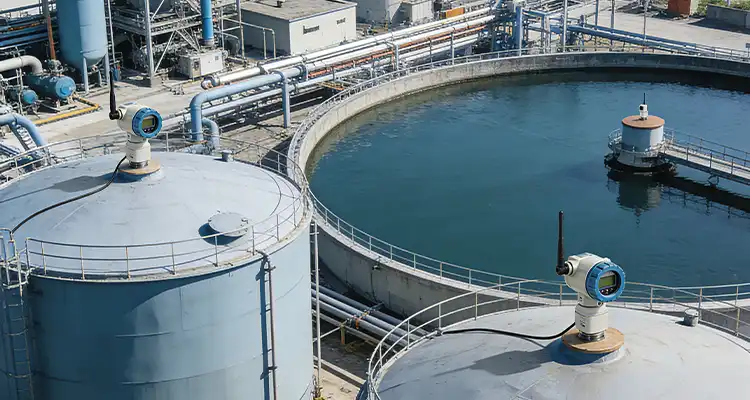
Submersible pressure sensors are used by municipal water systems to check the levels of reservoirs, the pressures in the distribution network, and the operations of pump stations. Wastewater treatment plants use receivers that can withstand being outside for a long time to keep an eye on filtering systems, digester pressures, and chemical doses. The standard 4-20mA current loop output works well with SCADA systems, which lets equipment that is spread out physically be monitored from one place.
HVAC and Building Automation Systems
Pressure sensors are used by commercial building management systems to keep ventilation systems running smoothly, make sure chillers work at their best, and keep an eye on how full filters are. The 4-20mA current loop link joins straight to building automation controls, which makes integration easier and speeds up the setup process. It's easy to fix up older buildings with 4-20mA current loop technology because it doesn't need any protocol setup or network naming.
These different uses show why B2B customers around the world keep asking for 4-20mA current loop technology. International standards makes sure that everyone knows what kind of performance to expect, and the stable technology base gives people peace of mind that products will be available and services will be available for a long time. Facility managers like simple upgrading features that let them make system changes over time without having to update the whole infrastructure.
Troubleshooting, Maintenance, and Calibration of 4-20mA Current Loop Systems
Common Fault Conditions and Diagnostic Methods
Signal problems usually show up as readings that are off, outputs that come and go, or no signal at all. Using a clamp meter or voltmeter connected in series with the circuit to measure 4-20mA current loop current is the first step in systematic debugging. Readings below 3.8mA usually mean that there are problems with the wires, the power source voltage is not enough, or the emitter has failed. Values above 20.5mA indicate that the emitter isn't working right or that there is too much pressure, which needs to be looked into right away.
Installations close to high-power equipment can sometimes be harmed by electromagnetic radiation. Symptoms include numbers that are all over the place or noise on top of the signal. To fix the problem, signal lines need to be moved away from power cords, ferrite suppressors need to be installed, or proper insulation and grounding needs to be checked.
Calibration Procedures and Equipment Requirements
To keep measurements accurate, they need to be calibrated on a regular basis, as specified by the maker and required by law. Known standard pressures are applied with deadweight testers or precision pressure calibrators, and the 4-20mA current loop outputs that match are checked. As a way to keep track of testing information, paperwork should keep track of as-found readings, changes made, and as-left values.
Most process control applications only need to be calibrated once a year, but data for important safety systems or property transfers may need to be checked every three months. Extreme temperatures, vibrations, and the properties of the process media can all affect the security of the measurements and should be used to plan upkeep.
Preventive Maintenance Best Practices
Regular checks keep transmitters working longer and stop them from breaking down without warning. Technicians should check the connections between cables for rust, make sure the fixing is solid, and look for leaks or material buildup at the process connections. Measurement mistakes caused by blocks or trapped condensate can be avoided by keeping impulse lines clear.
Having extra transmitters on hand cuts down on downtime when something goes wrong. Standardizing on suitable models can help organizations that are in charge of multiple setups reduce the number of different extra parts they need to buy while still allowing them to choose from a number of approved providers.
Procuring 4-20mA Current Loop Components: A Buyer's Guide
Product Categories and Typical Specifications
Industrial pressure sensors can measure pressures from zero to 100,000 psi, so they can be used for a lot of different things, from checking the air pressure to controlling a hydraulic press. For measuring draft, the standard pressure range is 0–100 mbar. For general industrial use, the range is 0–10 bar, and for hydraulic systems, it is 0–400 bar. Most standards for accuracy fall between ±0.25% and ±0.075% of span, and units with better precision cost more.
Process connections are different depending on the region and the need of the application. Common choices include 1/4′′ and 1/2′′ NPT threads, G1/2′′ and M20x1.5 metric threads, and flanged connections for pipes with a big diameter. You can connect electrical parts with cable ports, pipe openings, DIN 43650 connectors, and M12 quick-disconnect fittings, among other things.
Evaluating Supplier Capabilities and Certifications
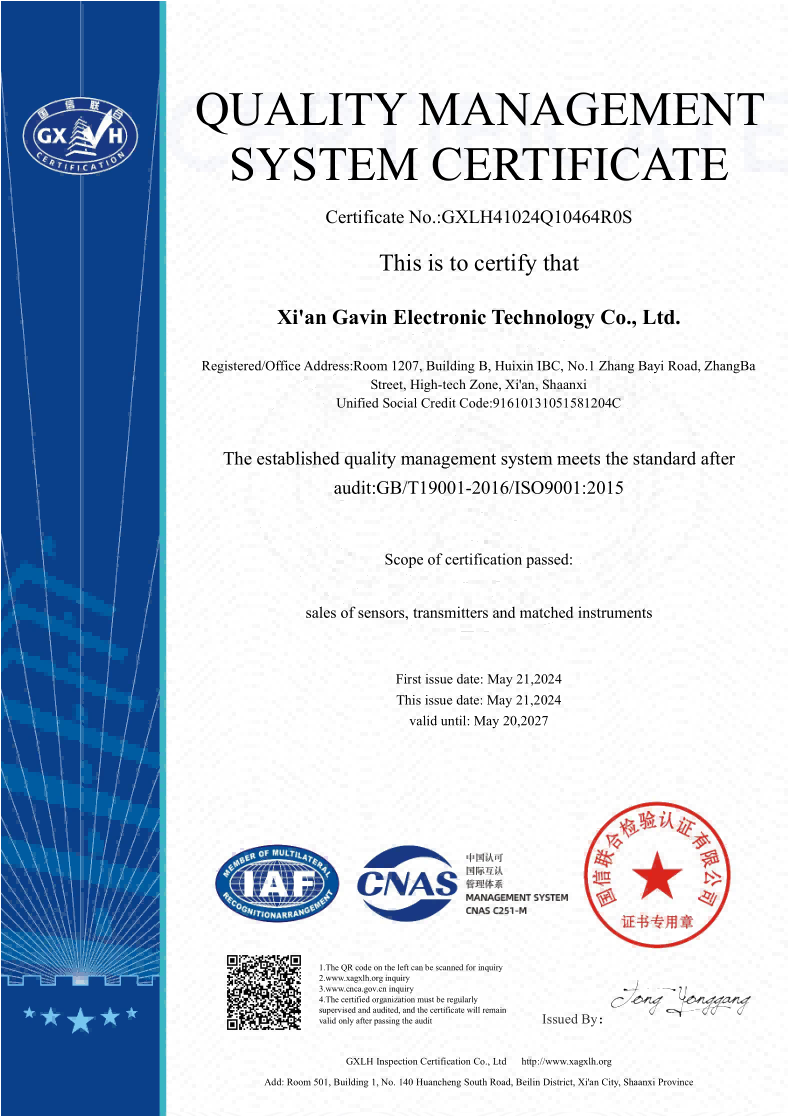
Internationally known certificates show that a seller is committed to quality. ISO 9001 certification confirms that quality management systems are in place, and ISO 14001 certification shows that a company cares about the environment. Product-specific approvals like ATEX, IECEx, FM, and CSA permission show that the product can be used in dangerous areas with explosive atmospheres.
Warranty terms show that the company that made the product is confident in its longevity. Standard covering lasts between 18 and 36 months, but some high-end makers offer guarantees that last up to five years. Access to after-sales help is very important. Check with providers to see if they offer English-language expert support during business hours and keep enough extra parts on hand.
Customization Options and OEM Partnership Opportunities
For many projects, the receivers need to be customized to fit the installation space or meet branding needs. Customization services include choosing the sensor elements, changing the output signals (like 4-20mA current loop or split-range outputs), changing the housing, and painting the customer's brand. OEM partners like providers that have flexible minimum order amounts, can private label products, and can customize paperwork like branded instructions and calibration certificates.
GAMICOS Pressure Transmitter Product Range
Our line of 4-20mA current loop pressure transmitters meets a wide range of industrial measurement needs, from general-purpose uses to more specific needs. Our range of sensors includes:
- Compact Industrial Transmitters: These are made for setups with limited room. They can handle pressures from -1 to 600 bar and are made of stainless steel. They also have IP67 weather protection. Manufacturers of robotic tools can use these machines to add pressure measuring to pre-packaged systems.
- Sanitary Process Transmitters: Housings made of electropolished stainless steel and flush diaphragm designs meet the hygiene needs of food, drink, and drug uses. Connections with tri-clamps and DIN 11851 make installation and cleaning confirmation easier without tools.
- Submersible Level Transmitters: Specialized pressure monitors measure the depth of liquid in tanks, wells, and containers with submersible level transmitters. Polyurethane-jacketed wires can handle being submerged in water for a long time without losing their signal. It comes with either ceramic or stainless steel sensing elements, based on the needs for chemical compatibility.

- High-Temperature Transmitters: Electrics that are capillary-mounted are safe from process temperatures of up to 400°C, making them good for steam systems, thermal oil circuits, and industrial ovens. Configurations for remote seals can handle media that is thick or crystallizing.
- Wireless IoT Pressure Sensors: LoRa, NB-IoT, or 4G devices that are driven by batteries allow for distant monitoring in places where wire isn't possible or is too expensive. Cloud-based tools let you see and hear alarms for spread assets in real time.
Conclusion
4-20mA current loop technology has been used for a long time to measure pressure in factories because it has many useful engineering features, such as the ability to send and receive signals without any problems over long distances and being compatible with all kinds of control systems. If you understand these principles, you can make smart choices about what to buy that are in line with your budget and technical needs.
This is true whether you are selecting transmitters for a new building, upgrading an existing installation, or finding OEM parts. Choosing the right tools and working with providers who are dedicated to product quality, expert help, and long-term dependability are both important for a successful adoption. This article gives engineering managers, project managers, and buying workers all the information they need to successfully choose, buy, and keep strong pressure measurement infrastructure.
FAQ
Why do current loops provide better reliability than voltage signals?
Because wire resistance only changes voltage drop and not current flow, 4-20mA current loop communication stays accurate over long cable lengths. In a 0-10V system, a 100-meter cable run could add a few volts of mistake. On the other hand, the same wire has almost no effect on 4-20mA current loop data. In addition, the live-zero design finds circuit problems right away—a broken wire reads as zero current instead of a real low reading.
Can 4-20mA transmitters work with digital protocols?
The HART system adds digital transmission to the analog 4-20mA current loop input and is supported by many modern emitters. This mixed method keeps the compatibility with current analog infrastructure while letting digital tools be used for setup, troubleshooting, and asset management. For uses that need advanced networking features, separate digital-only receivers that use Modbus, PROFIBUS, or Foundation Fieldbus protocols are available.
How often should pressure transmitters be calibrated?
How often you need to calibrate depends on how important the application is, what the rules say, and how the machine is being used. Most industrial process control applications only need to be calibrated once a year. However, safety instrumented systems or custody transfer data may need to be checked every three months. Extreme temperature changes, vibrations, or toxic media in harsh settings make calibration shift faster and require more frequent confirmation.
Partner with a Trusted 4-20mA Current Loop Manufacturer
Choosing the right pressure measurement source has a big effect on the success of the project and on how well it works in the long run. GAMICOS has been making sensors for decades and can customize them in a wide range of ways. They work with building workers, automation equipment makers, and industry end-users all over the world. Our pressure transmitters are used in a wide range of places, from clean rooms for pharmaceuticals to oil rigs in the ocean.
They are backed by international licenses and strict quality control. Sourcing managers and engineering teams looking for reliable 4-20mA current loop providers who can offer both standard stock goods and custom solutions are welcome to contact us. You can email our technical team at info@gamicos.com to talk about your pressure measurement needs, get technical specs, or get quotes from other companies for your future projects.
References
1. Liptak, B. G. (2018). Instrument Engineers' Handbook: Process Measurement and Analysis. CRC Press, Fifth Edition.
2. Johnson, C. D. (2016). Process Control Instrumentation Technology. Pearson Education, Eighth Edition.
3. Hughes, T. A. (2015). Measurement and Control Basics. International Society of Automation, Fourth Edition.
4. Dunn, W. C. (2017). Introduction to Instrumentation, Sensors, and Process Control. Artech House Publishers.
5. Bolton, W. (2015). Instrumentation and Control Systems. Newnes Publishing, Second Edition.
6. Considine, D. M. (2019). Process Industrial Instruments and Controls Handbook. McGraw-Hill Education, Sixth Edition.

Ivy
Ivy, product consultant, has focused on sensor consultation for ten years, is proficient in providing pressure and level measurement solutions for customers.
We're here to help — submit your request anytime!
Let us know how we can help solve your pressure level measurement challenge.
_1757930850792.jpg)
Recommended Blog

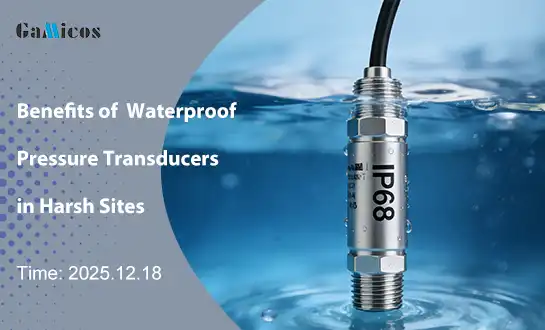
Benefits of Waterproof Pressure Transducers in Harsh Sites
Benefits of Waterproof Pressure Transducers in Harsh Sites