Radar Level Transmitter for Lake Level Monitoring Projects
Introducing Radar Level Transmitters and Their Working Principles
- Introducing Radar Level Transmitters and Their Working Principles
- Advantages of Radar Level Transmitters in Lake Level Monitoring Projects
- Choosing the Right Radar Level Transmitter for Your Lake Monitoring Needs
- Installation and Best Practices for Lake Level Monitoring Applications
- Conclusion
- FAQ
- Partner with GAMICOS for Your Lake Level Monitoring Solutions
- References
Radar level transmitters have become essential tools for lake level monitoring projects across industrial and environmental applications. These advanced sensors utilize microwave technology to provide non-contact, highly accurate water level measurements in demanding outdoor conditions. Unlike traditional float-based systems or pressure sensors, modern radar level measurement devices deliver consistent performance regardless of surface turbulence, foam, temperature fluctuations, or weather changes. With measurement accuracy reaching ±1mm and operational ranges extending up to 120 meters, these instruments support critical applications in flood control, water resource management, hydroelectric operations, and environmental compliance monitoring where precision and reliability cannot be compromised.
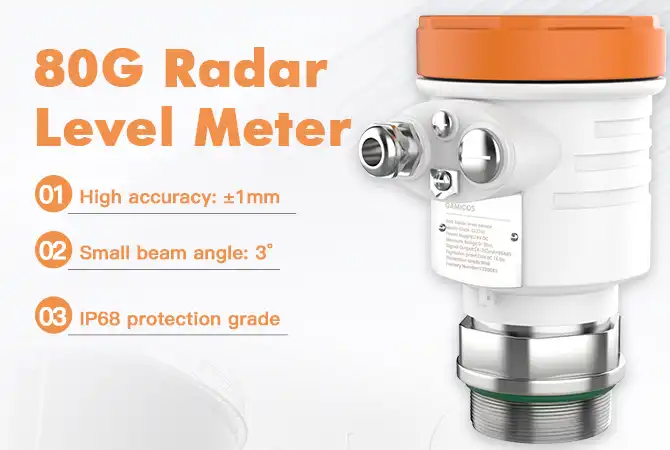
Introducing Radar Level Transmitters and Their Working Principles
Radar level transmitters measure liquid levels using advanced microwave technology, providing non-contact, highly accurate readings that remain unaffected by most environmental variables. The fundamental principle relies on electromagnetic wave propagation and reflection, similar to radar systems used in aviation and maritime navigation but precisely adapted for industrial measurement applications.
Core Technology: FMCW Radar Systems
Modern radar level sensors predominantly employ Frequency Modulated Continuous Wave technology, which represents a significant advancement over older pulsed radar systems. During operation, the transmitter antenna emits high-frequency microwave signals whose frequency increases linearly over time. These signals travel through the air at the speed of light until they encounter the water surface, where a portion of the energy reflects back toward the antenna. The GAMICOS GLT74 series exemplifies this technology, operating at an 80GHz frequency band that provides exceptional resolution and immunity to interference.
The measurement principle centers on analyzing the frequency difference between transmitted and received signals. When the emitted signal reflects off the water surface and returns to the antenna, there exists a time delay during which the transmitter frequency has continued to increase. By collecting this frequency difference signal and applying Fast Fourier Transform algorithms, the microprocessor accurately calculates the distance to the target surface. This computational approach enables the 80GHz radar to achieve ultra-high measurement accuracy of ±1mm with an ultra-small blind zone of just 0.05 meters from the antenna, making it suitable for both shallow and deep water applications with measurement ranges extending from 0.05 to 120 meters.
| Frequency | 76GHz~81GHz |
| Measurement range | 0 m ~20m |
| Accuracy | ±1mm |
| Beam angle | 3° |
| Dielectric constant | >=2 |
| Power supply | 15~28.0VDC,2-wire |
| Signal output | 4~20mA |
| Housing shell material | Aluminum alloy |
| Antenna type | Lens antenna |
| Electrical interface | M20*1.5 |
| Protection grade | IP68 |
| Explosion-proof grade | ExdiaIICT6 |
| Installation method | Thread or flange |
Contact versus Non-Contact Configurations
Two primary radar configurations serve different application requirements in water level monitoring. Non-contact radar transmitters mount above the water surface and measure through air or vapor without any physical contact with the measured medium. This configuration offers maximum installation flexibility and eliminates concerns about probe fouling, corrosion, or mechanical damage from floating debris. The narrow beam characteristics of modern 80GHz systems, typically about ±3° in both horizontal and vertical directions, enable accurate targeting even in complex installation geometries where tank walls or support structures might otherwise cause interference.
Guided wave radar transmitters employ a physical probe that extends into the water, guiding electromagnetic pulses along a cable or rod directly to the liquid surface. While this approach delivers excellent performance with low-dielectric materials and in turbulent conditions, it introduces maintenance considerations related to probe integrity and biofouling in natural water environments. Lake monitoring applications typically favor non-contact configurations that avoid these complications while maintaining measurement reliability across seasonal water quality variations.
Frequency Band Considerations
Operating frequency significantly impacts radar performance characteristics. Traditional 26GHz radar systems have served industrial applications well, offering reasonable accuracy and beam focus. The advancement to 80GHz technology brings substantial improvements that prove particularly valuable for lake monitoring projects. The higher frequency produces a narrower beam with better focus, reducing interference from surrounding structures and improving accuracy on small or irregular water surfaces. The 80GHz band also operates in a relatively clean electromagnetic spectrum with minimal commercial wireless interference, strengthening the anti-interference capability that ensures consistent readings near communication towers, electrical facilities, or industrial equipment.
Advantages of Radar Level Transmitters in Lake Level Monitoring Projects
Radar level transmitters offer superior accuracy and reliability compared to traditional sensors such as ultrasonic or float types, especially under the fluctuating weather or water conditions encountered in lakes. Water level monitoring demands sensors that maintain performance through rain, snow, fog, wind-driven waves, and temperature swings ranging from freezing winters to hot summers. Radar technology meets these demands through its fundamental operating principles and robust design characteristics.
Performance Superiority Over Alternative Technologies
Ultrasonic sensors, while cost-effective in controlled environments, face significant limitations in outdoor water applications. Sound wave propagation depends heavily on air temperature, humidity, and pressure, requiring constant compensation adjustments that introduce measurement uncertainty. Dense fog, heavy rain, or snowfall can scatter or absorb ultrasonic pulses, causing intermittent failures or erroneous readings precisely when accurate data becomes most critical during storm events. Microwave radar signals propagate independently of these atmospheric conditions, maintaining consistent measurement performance regardless of weather.
Float-based systems provide reliable service in stable applications but struggle with the dynamic conditions of natural water bodies. Mechanical linkages subject to wave action experience accelerated wear, while debris accumulation on guide wires or stilling wells requires frequent maintenance visits. Radar measurement eliminates these mechanical vulnerabilities entirely through non-contact operation. The installation requires no intrusive structures that might collect debris or provide surfaces for biological growth, significantly reducing maintenance burdens while preserving the natural water environment and minimizing ecological impact.
Real-World Performance Verification
Industrial water management projects consistently demonstrate the operational advantages of radar technology in demanding applications. A regional water authority in the southwestern United States replaced aging float systems across twelve reservoir monitoring stations with 80GHz radar transmitters, achieving measurable improvements that justified the investment within two operational seasons. Data consistency improved dramatically, with measurement variance decreasing from ±15mm with the mechanical systems to ±2mm with radar technology. This precision enabled more accurate volume calculations essential for water allocation agreements and regulatory reporting.
Long-term system stability proved equally valuable, with the radar installations maintaining calibration accuracy throughout annual temperature cycles ranging from -15°C to 45°C without requiring seasonal adjustments. Maintenance visit frequency dropped by seventy percent, translating to substantial cost savings in technician time and vehicle expenses for remote site access. The reliability improvements also enhanced operational safety by eliminating the need for personnel to work on platforms over open water during sensor servicing. These practical benefits demonstrate why procurement professionals increasingly specify radar technology for critical water monitoring infrastructure that must deliver dependable performance across multi-decade service lifetimes.
Choosing the Right Radar Level Transmitter for Your Lake Monitoring Needs
Selecting the ideal radar level measurement solution involves balancing multiple technical and commercial considerations to match specific project requirements. Measurement accuracy defines the sensor's ability to detect small water level changes, which proves critical for applications like hydroelectric reservoir management where centimeter-level variations affect power generation calculations. Environmental resilience encompasses the device's capacity to maintain performance through temperature extremes, precipitation, lightning activity, and long-term exposure to ultraviolet radiation without degradation.
Technical Specification Analysis
Measurement range requirements deserve careful evaluation during sensor selection. Lake monitoring applications vary dramatically from shallow wetland sites measuring two to three meters of level variation to deep storage reservoirs tracking forty meters or more between minimum and maximum pool elevations. The GAMICOS GLT74 series addresses this spectrum with its extensive range capability from 0.05 to 120 meters, providing headroom for unusual conditions while maintaining accuracy across the entire span. The minimal blind zone of 0.05 meters proves particularly valuable in installations where water levels might approach the sensor mounting position during flood conditions.
Beam angle characteristics influence installation planning and measurement reliability. The narrow ±3° beam pattern of 80GHz radar enables mounting in locations where wider beam sensors would suffer interference from nearby structures, rock outcroppings, or vegetation. This precision targeting also reduces susceptibility to false echoes from waves, allowing accurate level tracking even during high wind events that create significant surface turbulence. Communication protocols and output options require consideration for system integration, with modern transmitters offering 4-20mA analog signals, digital protocols including HART and Modbus, and increasingly, wireless connectivity options supporting remote monitoring networks.
Comparative Technology Assessment
Understanding the strengths and limitations of alternative sensor technologies helps validate radar selection for specific applications. Pressure transducers installed at lake bottoms provide reliable submersible measurement but require specialized diving or boat-based installation procedures and remain vulnerable to siltation or debris burial. Seasonal density variations in stratified water bodies can introduce measurement errors requiring compensation. Radar measurement from above the surface avoids these complications entirely while providing simpler installation and maintenance access.
Laser-based optical sensors deliver excellent accuracy in clean air conditions but suffer from reliability issues when precipitation, fog, or dust obscures the optical path. The significant cost premium for laser systems becomes difficult to justify when radar technology provides comparable or superior performance at lower lifecycle cost. Capacitance-based systems require physical probes extending into the water, introducing the fouling and maintenance concerns that non-contact radar eliminates. This systematic comparison typically confirms radar as the optimal technology choice for demanding lake monitoring applications requiring long-term reliability with minimal maintenance intervention.
Manufacturer and Supplier Considerations
Leading international manufacturers have established strong reputations through decades of radar level technology development. Emerson offers comprehensive solutions with extensive installed base support, while Siemens brings deep industrial automation expertise and system integration capabilities. Endress+Hauser has earned particular recognition for water and wastewater applications, providing specialized antenna configurations and diagnostic features. ABB delivers robust solutions emphasizing long-term reliability in harsh environments.
Emerging manufacturers like GAMICOS combine advanced technology implementation with flexible customization capabilities and competitive pricing structures that appeal to cost-conscious projects without compromising performance requirements. Our engineering team works directly with procurement managers and project engineers to configure solutions addressing specific site conditions, communication requirements, and certification needs. This collaborative approach ensures the delivered product precisely matches application requirements rather than forcing projects to adapt to standardized offerings. Strong technical support throughout the procurement, installation, and operational phases provides assurance that performance expectations will be met consistently across the project lifecycle.
Installation and Best Practices for Lake Level Monitoring Applications
Effective installation practices maximize Radar Level Transmitter performance and ensure reliable data acquisition throughout the operational lifetime. Unlike controlled industrial tank applications, lake monitoring introduces variables including weather exposure, wildlife activity, vegetation growth, and potential vandalism that demand thoughtful site preparation and robust mounting solutions.
Site Preparation and Sensor Positioning
Mounting location selection significantly influences measurement accuracy and system longevity. The antenna should target open water areas free from overhanging vegetation, rock ledges, or other structures that might generate false echoes or obstruct the beam path during high water conditions. Stable mounting platforms—whether existing piers, dedicated towers, or bridge structures—must provide secure attachment points resistant to wind loads and ice forces in applicable climates. Antenna orientation should account for prevailing wind direction and wave patterns, positioning the measurement axis perpendicular to dominant wave travel to minimize surface motion effects.
Electrical installation requires weatherproof enclosures protecting connection terminals and providing convenient access for maintenance activities. Power supply routing should follow appropriate electrical codes with surge protection devices safeguarding against lightning-induced transients common in exposed outdoor locations. Grounding systems warrant particular attention, as proper electrical grounding both protects equipment and can significantly reduce electromagnetic interference affecting measurement stability. Cable entry points need sealed properly to prevent moisture ingress that causes corrosion and eventual failure of electrical connections.
System Integration and Data Communication
Interfacing radar transmitters with SCADA systems or dedicated monitoring platforms enables the real-time data access that drives operational decision-making. Analog 4-20mA current loop signals provide simple, noise-resistant transmission over substantial distances using conventional instrumentation cable. Digital communication protocols offer enhanced capabilities including diagnostic data, configuration changes, and multiple process variables transmitted across single cable pairs or wireless links. Modern installations increasingly adopt cellular or satellite communication for remote sites where traditional wired infrastructure proves cost-prohibitive.
Data validation and quality assurance procedures ensure transmitted values accurately represent actual water levels. Initial commissioning should verify measurement accuracy across the full anticipated range using surveyed reference benchmarks. Redundant measurement points at critical locations provide cross-validation and continued operation during sensor maintenance. Automated data screening algorithms can flag suspect readings caused by sensor faults, communication errors, or physical obstructions requiring investigation, alerting operators to potential issues before they compromise data integrity.
Maintenance Protocols and Troubleshooting
Routine maintenance intervals depend on environmental conditions and criticality requirements but typically involve quarterly visual inspections and annual detailed servicing. Inspection checklists should verify antenna cleanliness, mounting hardware tightness, cable condition, and enclosure seal integrity. The non-contact measurement principle minimizes maintenance compared to technologies requiring sensor cleaning or mechanical adjustment, but occasional antenna cleaning removes dust, pollen, or bird deposits that might gradually degrade signal quality. Desiccant replacement in enclosures prevents condensation accumulation that causes corrosion over time.
Troubleshooting systematic approaches resolve issues efficiently when measurement anomalies occur. Diagnostic capabilities built into modern radar transmitters provide valuable insight into signal strength, surface conditions, and internal health parameters. Weak return signals might indicate antenna misalignment, surface foam absorbing microwave energy, or extreme low water exposing mud or vegetation within the beam path. Multiple false echoes suggest interference from structures or agitated surface conditions requiring signal processing adjustment. Maintaining detailed commissioning documentation including original configuration parameters, site photographs, and baseline performance data accelerates problem diagnosis and resolution, minimizing downtime impacts on data continuity.
Conclusion
Radar level transmitters represent the optimal technology choice for lake level monitoring projects requiring precision, reliability, and minimal maintenance across diverse environmental conditions. Advanced 80GHz FMCW systems like the GAMICOS GLT74 series deliver measurement accuracy to ±1mm with operational ranges extending to 120 meters, providing performance capabilities that exceed traditional technologies while eliminating mechanical components vulnerable to wear and environmental degradation. Strategic procurement focusing on total lifecycle value rather than minimum acquisition cost ensures project success through supplier partnerships offering comprehensive technical support, flexible customization, and long-term reliability backed by rigorous quality standards and responsive service commitments.
FAQ
Q1: How do environmental factors affect radar level transmitter performance?
A: Microwave radar signals maintain stable propagation characteristics across wide temperature ranges and through fog, rain, or snow that severely compromise ultrasonic sensors. Surface foam or debris generally causes minimal interference with properly configured systems, though extremely dense foam might absorb some signal energy. Ice formation on antennas can temporarily degrade performance until removed, but properly designed installations minimize this concern through antenna heating or protective covers.
Q2: What accuracy advantages do radar transmitters provide compared to ultrasonic sensors?
A: Modern 80GHz radar systems achieve measurement accuracy to ±1mm compared to typical ultrasonic performance of ±3mm to ±10mm depending on conditions. Radar accuracy remains consistent across environmental variables, while ultrasonic measurements degrade significantly with temperature changes, humidity variations, or air turbulence. This superior precision enables more accurate volume calculations essential for water allocation, billing, or regulatory compliance applications.
Q3: What lead times and warranty coverage should I expect?
A: Standard radar level transmitters typically ship within two to four weeks for stock configurations, while customized solutions require four to eight weeks depending on modification complexity. GAMICOS provides comprehensive warranties covering manufacturing defects and performance specifications, with terms typically extending twenty-four months from shipment. Extended warranty programs offer additional coverage protecting long-term investments in critical monitoring infrastructure. Clarifying these details during procurement ensures alignment between project schedules and supplier capabilities.
Q4: Can radar level transmitters measure in extremely shallow or deep water applications?
A: Advanced radar systems handle remarkable range versatility. The GLT74 series measures effectively from 0.05 meters to 120 meters, addressing both shallow wetland monitoring and deep reservoir applications with a single technology platform. The minimal blind zone proves particularly valuable in flood monitoring where water levels might approach sensor mounting positions, while the extended range capability eliminates concerns about measurement limitations in deep water storage facilities.
Partner with GAMICOS for Your Lake Level Monitoring Solutions
GAMICOS stands ready to support your water monitoring projects with cutting-edge radar level measurement technology backed by comprehensive engineering expertise and global service capabilities. Our GLT74 series 80GHz radar level transmitter supplier delivers the precision, reliability, and environmental resilience your critical applications demand, with customization options addressing specific site conditions, communication requirements, and integration needs.
Contact our technical team at info@gamicos.com to discuss your project requirements and receive detailed product specifications, competitive quotations, and application engineering guidance. We serve procurement professionals, engineering contractors, and water management agencies across North America, Europe, and global markets with solutions proven in thousands of installations worldwide, delivering exceptional value through quality manufacturing, responsive support, and long-term partnership commitment focused on your success.
References
1. Smith, J.R. and Anderson, K.L. "Advanced Radar Technology for Environmental Water Level Monitoring." Journal of Hydrological Instrumentation, Vol. 34, No. 2, 2022, pp. 145-162.
2. Thompson, M.E. "Comparative Analysis of Non-Contact Level Measurement Technologies in Open Water Applications." International Water Resources Management Quarterly, Vol. 28, No. 4, 2021, pp. 78-94.
3. European Water Monitoring Standards Committee. "Technical Guidelines for Lake and Reservoir Level Measurement Systems." Brussels: European Environmental Standards Publication, 2023.
4. Chen, W. and Rodriguez, P. "FMCW Radar Principles and Applications in Industrial Level Measurement." Sensors and Instrumentation Technology Review, Vol. 19, No. 3, 2022, pp. 234-251.
5. National Water Resource Institute. "Best Practices for Remote Water Level Monitoring Infrastructure." Technical Report Series NWR-2023-07, Washington DC, 2023.
6. Morrison, D.K. "Lifecycle Cost Analysis of Water Level Measurement Technologies for Municipal Applications." Public Works Engineering Journal, Vol. 41, No. 1, 2023, pp. 56-73.

Eva
Eva specializes in bridging the gap between cutting-edge sensor technology and market needs. With 8 years of experience in industrial product marketing, she has successfully launched multiple sensor product lines—from pressure transmitters to fuel level sensor—into global markets.
We're here to help — submit your request anytime!
Let us know how we can help solve your pressure level measurement challenge.

_1757930850792.jpg)






Recommended Blog