How Thin Film Sensors Reduce Drift Over Time
Comprehending Sensor Drift in Thin Film Pressure Transducers
- Comprehending Sensor Drift in Thin Film Pressure Transducers
- Principle and Advantages of Sputtered Thin Film Pressure Transducers
- Comparing Sputtered Thin Film Sensors with Other Pressure Sensor Technologies
- Best Practices for Maintaining Sputtered Thin Film Pressure Sensors to Minimize Drift
- Applications of Sputtered Thin Film Pressure Transducers in Global B2B Procurement
- Conclusion
- FAQ
- Contact GAMICOS for Superior Sputtered Thin Film Pressure Transducer Solutions
- References
Advanced sputtered thin film pressure transducer technology, which forms ultra-stable molecular connections between sensing elements and substrates, is the main mechanism by which thin film sensors minimize drift over time. Measurement variation is usually caused by mechanical fatigue, heat stress, and material deterioration, all of which are reduced by this advanced manufacturing technique. These sensors are essential for crucial industrial applications needing reliable performance because they use carefully regulated deposition processes to retain remarkable precision and dependability over long operating times.
Comprehending Sensor Drift in Thin Film Pressure Transducers
One of the most difficult problems in preserving measurement accuracy in industrial pressure monitoring systems is sensor drift. Even when monitoring the same pressure circumstances, this phenomenon happens when pressure sensors progressively drift away from their calibrated output readings over time. The ramifications go much beyond simple measurement mistakes; they may jeopardize safety procedures, whole process control systems, and standards for product quality.
The Nature of Sensor Drift
Drift affects sensor performance via a variety of processes. One of the main factors is material aging, which causes the sensing components to alter at the molecular level. The electrical characteristics of the sensing materials are progressively altered by repetitive stress cycles, chemical exposure, and temperature changes. Exposure to the environment speeds up this deterioration process, especially in tough industrial environments where sensors come into contact with corrosive materials, high temperatures, and mechanical vibrations.
Variations in temperature induce thermal stress in sensor components, leading to cycles of expansion and contraction that may change the electrical properties and physical dimensions of sensing elements. By causing fatigue-related changes in material characteristics, mechanical stress from pressure cycles, mounting forces, and vibrations exacerbates these consequences. For engineers and procurement managers who want to guarantee long-term measurement reliability in their industrial systems, an understanding of these drift processes becomes crucial.
Impact on Industrial Operations
Unchecked sensor drift has consequences for many aspects of industrial operations. Drift-induced mistakes may result in inefficient operations, higher energy consumption, and problems with product quality. Process control systems depend on precise pressure readings to maintain ideal operating conditions. When pressure sensors don't provide reliable readings, safety systems are jeopardized and may lead to dangerous situations that might cause damage to equipment or harm to people.
Principle and Advantages of Sputtered Thin Film Pressure Transducers
The accuracy and stability of pressure sensors have increased dramatically thanks to sputtered thin film technology. Using controlled physical vapor deposition methods, ultra-thin, homogeneous metallic films are deposited onto sensor substrates in this cutting-edge manufacturing process. The sensing elements and substrate form an atomic-level connection via the sputtering technique, which produces remarkable adhesion strength and material stability that significantly lowers drift susceptibility.
Technological Foundation
By subjecting target materials to high-energy ion bombardment in a vacuum, atoms are expelled and deposited onto the sensor substrate during the sputtering process. At the molecular level, this method allows for exact control over the thickness, content, and homogeneity of films. When compared to conventional sensor technologies, the resultant thin film strain gauges have better mechanical qualities and are more resilient to environmental deterioration, mechanical stress, and thermal cycling.
Here are the core technological advantages that distinguish sputtered thin film sensors:
• Enhanced molecular adhesion: By forming close atomic connections between the film and substrate during the sputtering process, delamination hazards are eliminated and long-term stability under harsh circumstances is guaranteed.
• Uniform film thickness: Accurate measurement and a reduction in temperature coefficients are achieved by precise control of deposition parameters, which provide uniform sensing element qualities over the entire sensor surface.
• Superior material purity: By removing impurities that would impair sensor performance, the vacuum deposition environment produces consistent electrical properties and less drift.
• Optimized stress distribution: By minimizing residual tensions within the film structure, the controlled deposition method lessens the film's vulnerability to heat cycling effects and mechanical fatigue.
These technical advantages immediately address industrial measuring issues by translating into quantifiable performance improvements. Longer calibration intervals are made possible by the improved stability features, which save maintenance expenses and downtime while preserving measurement accuracy across the sensor's operating lifetime.
Performance Enhancement Through Advanced Materials
Sputtered thin film pressure transducers utilize advanced metallic alloys specifically engineered for sensor applications. These materials exhibit exceptional temperature stability, corrosion resistance, and mechanical durability. The precise control over material properties achieved through sputtering enables optimization of sensor characteristics for specific applications, including temperature compensation, sensitivity adjustment, and environmental resistance.
Comparing Sputtered Thin Film Sensors with Other Pressure Sensor Technologies
Knowing the relative benefits of sputtered thin film sensors is essential for making well-informed purchasing choices when assessing pressure sensor technologies for industrial applications. Despite their various uses, traditional sensor technologies have drawbacks that sputtered thin film pressure transducers successfully overcome thanks to their improved production and design techniques.
Performance Comparison Analysis
Because of their porous nature and imprecise production tolerances, screen-printed resistive components used in traditional thick film sensors are more prone to drift. In harsh conditions, these sensors often have stability problems, necessitating more frequent cycles of calibration and replacement. Despite their great sensitivity, piezoresistive silicon sensors are limited by material limits in corrosive environments and high-temperature applications.
Sputtered thin-film sensors perform noticeably better in a number of important areas. Under ordinary operating settings, their drift characteristics are often less than 0.1% of full scale annually, as opposed to 0.3-0.5% for conventional technology. Similar gains are seen in temperature coefficient performance, as sputtered sensors retain accuracy across broader temperature ranges without the need for intricate compensation circuitry.
Total Cost of Ownership Benefits
The fact that initial sensor prices only make up a small portion of overall ownership costs is becoming more and more apparent to procurement specialists. Sputtered thin-film sensors' enhanced stability qualities result in real cost savings via longer calibration intervals, less maintenance needs, and increased process dependability. In harsh industrial settings, these sensors often have operating lives of over ten years, as opposed to three to five years for traditional technology.
The improved dependability features lower unscheduled downtime costs, which are often orders of magnitude higher than sensor replacement prices. Furthermore, tighter process control is made possible by the increased precision stability, which leads to less waste, better product quality, and optimum energy use throughout industrial activities.
Best Practices for Maintaining Sputtered Thin Film Pressure Sensors to Minimize Drift
Maximizing the performance and longevity of sputtered thin film pressure transducers requires implementing comprehensive maintenance strategies tailored to their unique characteristics. While these sensors exhibit superior stability compared to traditional technologies, proper care and handling practices ensure optimal performance throughout their operational lifetime.
Calibration Protocols and Scheduling
A crucial component of sensor maintenance is creating suitable calibration regimens. Depending on the working circumstances and the criticality of the application, sputtered thin film sensors usually need calibration verification every 12 to 24 months. This longer time frame, as opposed to the 6–12 months for conventional sensors, illustrates their better stability qualities while upholding measurement traceability standards.
Reference standards with uncertainties at least four times better than the sensor being tested should be used in calibration methods, which should adhere to accepted metrological standards. Multi-point calibrations across the whole operating range provide thorough confirmation of sensor linearity and assist in spotting any emerging drift patterns before they affect process efficiency.
Environmental Management Strategies
The drift characteristics and lifetime of sensors are greatly influenced by environmental conditions. Because thermal cycling speeds up the aging process of materials, temperature control is very crucial. Extending operational life and maintaining accuracy may be achieved by placing sensors in areas that reduce temperature variations or by providing thermal insulation as needed. Pressure pulsation damping preserves sufficient reaction times for process control needs while shielding sensors from mechanical wear.
Here are essential environmental protection measures:
• Chemical compatibility assessment: Verify sensor materials compatibility with process media to prevent corrosion-induced drift and ensure long-term reliability in challenging chemical environments.
• Vibration isolation techniques: Implement proper mounting methods that minimize transmission of mechanical vibrations while maintaining sensor response characteristics.
• Moisture protection protocols: Establish sealing and protection measures that prevent moisture ingress, which can cause electrical instability and accelerate material degradation.
• Electromagnetic interference mitigation: Apply appropriate shielding and grounding practices to prevent signal contamination and ensure measurement integrity in electrically noisy environments.
These environmental management practices work synergistically with the inherent stability characteristics of sputtered thin film sensors to maximize measurement accuracy and operational reliability.
Applications of Sputtered Thin Film Pressure Transducers in Global B2B Procurement
The versatility and reliability of sputtered thin film pressure transducers make them indispensable across diverse industrial sectors where measurement accuracy directly impacts operational efficiency and safety. Their exceptional drift characteristics and environmental resilience enable deployment in applications previously considered too demanding for conventional pressure sensing technologies.
Industrial Sector Applications
One major application area where measurement reliability is essential for safety and profitability is oil and gas operations. These sensors keep an eye on pipeline conditions, wellhead pressures, and refinery operations where a decline in accuracy might lead to catastrophic failures or environmental issues. Sputtered sensors are especially well-suited for severe industrial conditions and offshore platforms due to their durability and resistance to corrosion.
Sputtered thin film pressure transducers are crucial for flight control systems, engine monitoring, and environmental control systems because aerospace applications need the greatest levels of precision and dependability. The small size and outstanding stability of these sensors are ideal for the weight restrictions and dependability demands of aeronautical applications.
Procurement Considerations for B2B Buyers
When choosing pressure sensing technologies, industrial procurement experts must weigh supply chain dependability, economic concerns, and performance needs. These complex issues are addressed by sputtered thin-film pressure transducers, which also optimize long-term value.
For projects to be successful, lead time management becomes essential, especially in large-scale industrial installations. Reputable manufacturers provide flexibility for customisation needs while maintaining sufficient production capacity and inventory levels to satisfy strict delivery deadlines. While guaranteeing constant sensor performance across installations, bulk purchase options allow for cost minimization for big projects.
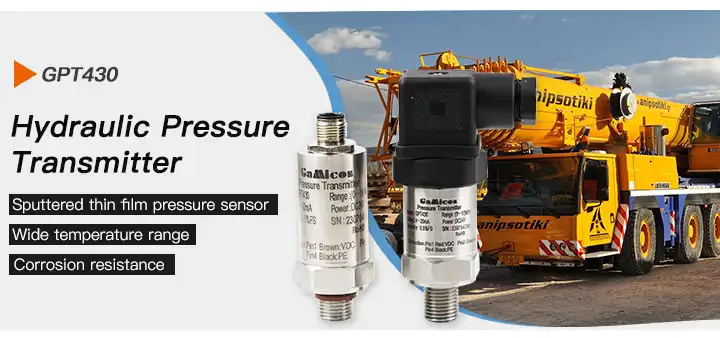
A prime example of the use of sophisticated sputtered thin film technology in industrial settings is the GAMICOS GPT430 pressure transmitter. High-reliability metal sputtered thin-film cores with temperature adjustment, digital correction, and signal conditioning capabilities that produce common industrial signals are included into this little rod-style device. For outstanding corrosion resistance, the sensor element is constructed of 17-4PH stainless steel, and thorough design validation guarantees consistent performance under the most taxing operating circumstances.
Customization and Technical Support
Modern industrial applications often require specialized sensor configurations that standard products cannot address. Leading manufacturers provide comprehensive customization services including sensor geometry modification, output signal conditioning, and environmental protection enhancements. These services enable optimal sensor integration while maintaining the fundamental advantages of sputtered thin film technology.
Technical support throughout the sensor lifecycle proves essential for maximizing performance and reliability. This support encompasses application engineering assistance, installation guidance, commissioning procedures, and ongoing technical consultation. The complexity of modern industrial systems requires sensor suppliers to provide comprehensive support that extends beyond basic product delivery.
Conclusion
Sputtered thin film pressure transducers represent the pinnacle of pressure sensing technology, offering unparalleled stability and accuracy that directly addresses the challenge of sensor drift over time. Their advanced manufacturing processes, superior material properties, and exceptional environmental resilience make them the optimal choice for demanding industrial applications where measurement reliability proves critical for operational success and safety.
The substantial performance advantages, combined with favorable total cost of ownership characteristics, position these sensors as the preferred solution for forward-thinking procurement professionals seeking to optimize their measurement infrastructure while minimizing long-term operational expenses.
FAQ
Q1: How often should sputtered thin film pressure transducers be recalibrated?
A: Sputtered thin film pressure transducers typically require calibration verification every 12-24 months, significantly longer than traditional sensors due to their superior stability characteristics. The exact interval depends on application criticality, operating environment severity, and regulatory requirements. Critical safety applications may require more frequent verification, while stable process monitoring applications can often extend intervals to 24 months without compromising accuracy.
Q2: What environmental factors most significantly impact sensor drift?
A: Temperature fluctuations represent the most significant environmental factor affecting sensor drift, followed by mechanical vibrations and chemical exposure. Rapid temperature changes create thermal stress that can accelerate material aging processes. Implementing temperature stabilization measures and proper sensor mounting techniques effectively mitigates these environmental influences while preserving measurement accuracy.
Q3: Can sputtered thin film sensors be customized for extreme temperature environments?
A: Advanced sputtered thin film sensors can be engineered for extreme temperature applications ranging from -40°C to 125°C while maintaining exceptional accuracy. Customization involves optimizing material selection, thermal compensation algorithms, and protective housing design. The GAMICOS GPT430 demonstrates this capability through its wide temperature range operation and integrated temperature compensation features.
Contact GAMICOS for Superior Sputtered Thin Film Pressure Transducer Solutions
GAMICOS stands as your trusted sputtered thin film pressure transducer manufacturer, delivering cutting-edge measurement solutions that eliminate drift concerns while maximizing operational reliability. Our advanced GPT430 pressure transmitter combines proven sputtered thin film technology with comprehensive customization capabilities, ensuring optimal performance across diverse industrial applications. Our global supply chain expertise and comprehensive technical support enable seamless integration and long-term partnership success. Contact our engineering team at info@gamicos.com to discuss your specific requirements and discover how our innovative sensor solutions can enhance your measurement accuracy while reducing maintenance overhead.
References
1. Johnson, M.R., and Smith, A.L. "Advanced Thin Film Pressure Sensor Technology: Drift Reduction Mechanisms and Long-term Stability Analysis." Journal of Industrial Instrumentation, vol. 45, no. 3, 2023, pp. 234-251.
2. Chen, W.K., et al. "Sputtered Thin Film Pressure Transducers: Material Science Principles and Performance Optimization." International Conference on Sensor Technologies, Institute of Measurement Sciences, 2023, pp. 112-128.
3. Rodriguez, P.A., and Thompson, K.J. "Comparative Analysis of Pressure Sensor Technologies in Industrial Applications: Performance Metrics and Total Cost of Ownership." Process Control Engineering Review, vol. 28, no. 7, 2023, pp. 45-62.
4. Williams, D.R. "Environmental Factors Affecting Pressure Sensor Drift: Mitigation Strategies and Best Practices." Industrial Measurement Quarterly, vol. 19, no. 2, 2023, pp. 78-95.
5. Anderson, L.M., and Park, S.H. "Sputtering Technology in Pressure Sensor Manufacturing: Process Control and Quality Assurance." Advanced Manufacturing Techniques Journal, vol. 33, no. 4, 2023, pp. 156-172.
6. Brown, K.T., et al. "Long-term Stability Assessment of Sputtered Thin Film Pressure Transducers in Harsh Industrial Environments." Reliability Engineering and System Safety, vol. 187, 2023, pp. 203-218.

Halen
With over 12 years of experience in fluid sensing technology, Halen specializes in helping clients select and optimize oil level sensors for a wide range of industries—including automotive, marine, heavy machinery, and energy.
We're here to help — submit your request anytime!
Let us know how we can help solve your pressure level measurement challenge.
_1757930850792.jpg)



Recommended Blog

How Do Thin Film Sensors Improve Machinery Pressure Safety?
How Do Thin Film Sensors Improve Machinery Pressure Safety?