Pressure Transmitter Calibration: Field vs Bench Procedures
Understanding Pressure Transmitter Calibration
- Understanding Pressure Transmitter Calibration
- Field Calibration of Pressure Transmitters
- Bench Calibration of Pressure Transmitters
- Comparing Field vs Bench Calibration Methods
- Ensuring Calibration Quality and Compliance
- Conclusion
- FAQ
- Partner with GAMICOS for Professional Pressure Transmitter Calibration Solutions
- References
Calibration of pressure transmitters is an important step for keeping measurements accurate and making sure they work reliably in commercial settings. There are pros and cons to both field and bench testing methods. Field methods are more convenient because they can be used on-site, while bench methods give more accurate results in a lab. When procurement managers, engineers, and other technical professionals know how to use each pressure transmitter calibration technique correctly, they can improve measurement accuracy, make sure they're following the rules, and keep operations running smoothly while maintaining the highest standards of safety and accuracy.
Understanding Pressure Transmitter Calibration
Making sure that pressure measurements are correct is essential for keeping factories safe and running smoothly. Calibration makes sure that pressure transmitters give accurate numbers for as long as they are working. This protects both the equipment and the people using it and improves process control.
The Science Behind Pressure Measurement Accuracy
Over time, many things can affect how well a transmitter works, such as sensor drift, exposure to the environment, and mechanical wear. Changes in temperature, vibration, and chemical exposure can slowly move measurement baselines, which can cause wrong readings that risk safety and process control. As a corrective step, regular pressure transmitter calibration compares the device's output to known reference standards to keep the measurement's accuracy.
Essential Calibration Concepts and Standards
Calibration methods include a number of important changes. When no pressure is applied, zero calibration sets the baseline number. Span calibration checks the accuracy across the whole measurement range. Differential pressure calibration is used when there are differences in pressure between two places that need to be tracked.
Calibration methods are based on industry standards in all fields. The principles of ISO 9001 quality management stress the importance of being able to track measurements, while ANSI/ISA standards spell out exact steps for calibrating instruments. These frameworks make sure that calibration procedures are always the same and that measurements are always accurate across all applications and businesses.
Maintenance Schedules and Operational Challenges
How often you need to calibrate relies on how important the application is, the environment, and government rules. For critical uses, process industries usually need to calibrate once a year. Less demanding environments may be able to go longer between calibrations, every three or five years. Extreme temperature changes, corrosive atmospheres, and mechanical vibrations may mean that proof needs to happen more often.
Zero drift, span errors, and environmental influence are all common problems that come up during calibration. To fix these problems, you need to use organized ways to solve and lots of written records to see how performance changes over time.
Field Calibration of Pressure Transmitters
Field calibration is a useful way to keep transmitters accurate without taking them out of systems that are already running. This method cuts down on downtime while letting you check measurement success right away.
Equipment and Safety Requirements
For field calibration, you need portable tools made for work settings. Handheld pressure calibrators, test leads, pressure hoses, and reference gauges that are confirmed to be accurate are all important tools. When working in possibly dangerous places, safety gear is very important. This includes wearing the right personal protective equipment and following the safety rules for that site.
Portable calibrators can both measure and create pressure, and they come in ruggedized cases that are good for use in the field. Most of the time, these devices offer pressure ranges that cover common industrial uses while still keeping accuracy levels high enough for most calibration needs.
Step-by-Step Field Calibration Process
The process of field tuning starts with making sure everyone is safe and getting the tools ready. Technicians must make sure that calibration equipment is up-to-date on its certifications and works within the limits of its surroundings. Calibration conditions are safe as long as the transmitter is properly separated from the process pressure.
The first step in calibration is the zero change. If you open both pressure ports to the air, the transmitter output should be the same as the zero point of its set range. Most electronic transmitters can be adjusted digitally, while some analog devices may need actual screws to be adjusted.
After zero adjustment, known pressure values are used across the transmitter's range for span calibration. There may not be enough test places in the field, but checking at 25%, 50%, 75%, and 100% of range is enough to see how linear and accurate the device is. To get correct readings, each test point needs enough time to stabilize.
Advantages and Limitations of Field Methods
Calibration in the field has big benefits for operations. During most of the process, the equipment stays in use, which keeps production from stopping and eliminates the handling risks that come with taking it apart and putting it back together. Technicians can fix accuracy problems quickly when they get immediate results, which makes maintenance scheduling easier.
However, the conditions in the field mean that there are some limits. Temperature, shaking, and electromagnetic interference are some of the environmental factors that can change how accurate a calibration is. If you can't get to precise reference tools as easily as you could in a lab, the quality of your calibration may suffer. Field calibration methods may not be as thorough as they could be because of changes in process pressure and safety concerns.
Bench Calibration of Pressure Transmitters
With bench calibration, you can create a controlled lab environment that gives you more accurate results and more testing options. This method works well for important tasks that need very accurate measurements and thorough checks of performance.
Laboratory Environment and Precision Equipment
Many of the factors that can affect the accuracy of field testing are taken care of in controlled laboratory settings. The best places to do calibrations are those with steady temperatures, no vibrations, and no electromagnetic radiation. Most pressure transmitter calibration labs keep the temperature within ±1°C and offer stable mounting surfaces so that readings are accurate.
Precision deadweight testers are the best way to calibrate pressures because they use traceable masses to make reference pressures that are very exact. Repeatability is improved even more by automated calibration devices, which also cut down on human error. It is possible for these systems to do multi-point calibrations and keep records that meet the needs of quality control.
Comprehensive Testing Procedures
Bench calibration lets you do more than just check the quality of a device's performance. Under controlled settings, technicians can look at how temperature affects things, how stable they are over time, and how they respond. To find hysteresis effects, full calibration cycles have both rising and falling pressure patterns.
Documentation choices in the lab are better than those in the field when it comes to calibration. Automated data collection, statistical analysis, and document generation keep detailed records that help quality management and regulatory compliance systems work. These records make it possible to look at trends and plan ahead for upkeep.
Benefits and Logistical Considerations
With controlled settings and precise tools, laboratory calibration gives you the highest level of accuracy. When transmitters are taken out of service, they can be fixed and adjusted in more complex ways. This could extend their useful life and make them more reliable in the long run.
Some logistical problems are the steps needed to remove, carry, and reinstall equipment. The time the system is down goes beyond the testing period and includes the time it takes to remove and reinstall. Handling risks during shipping and installation could affect how well the device works, so it's important to be careful to avoid damage as much as possible.
Comparing Field vs Bench Calibration Methods
To choose the right calibration methods, you need to carefully think about how accurate you need to be, how much it will cost, and what your working limits are. Each method has its own benefits that make it better for certain tasks and situations.
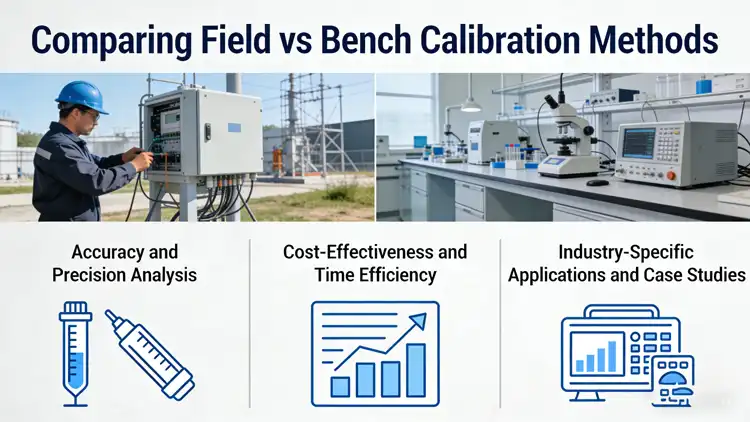
Accuracy and Precision Analysis
Most of the time, controlled conditions and precise reference tools help bench calibration achieve higher accuracy. In a lab, environmental factors aren't a problem, and precision deadweight testers give results that are often more accurate than what field tools can do. Field accuracy is usually ±0.1% of reading, but studies show that bench pressure transmitter calibration can get as low as ±0.025% of reading errors.
The accuracy of field calibration rests a lot on the conditions and quality of the equipment. Modern portable calibrators can be very accurate when used correctly, but changes in temperature, vibration, and electromagnetic interference can all mess up the readings. Field methods, on the other hand, check performance in real-world operating conditions, which could show problems that lab tests might miss.
Cost-Effectiveness and Time Efficiency
When figuring out costs, you have to look at both direct calibration costs and operational effects. Field calibration cuts down on the cost of downtime, but for complicated systems, it may need more than one visit from a technician. Bench calibration has higher direct costs, such as removal, shipping, and lab services, but it can work on more than one device at the same time.
Time efficiency varies a lot from one way to the next. Field calibration can usually be done in a few hours, but bench calibration could take days or weeks, based on how busy the lab is and how easy it is to get the equipment there. Bench methods, on the other hand, can work with many devices at once, which could make large-scale testing programs more efficient overall.
Industry-Specific Applications and Case Studies
Based on their operational needs, different businesses prefer different ways of calibrating. Because of government rules and the need for accuracy, the pharmaceutical and food processing businesses often need bench calibration for important tasks. These areas value the detailed records and higher accuracy that come from using scientific methods.
Field calibration is often used for routine repair at petrochemical plants, while bench methods are saved for important safety systems. For many process uses, the ability to keep making things while the calibration is being done in the field is more important than the accuracy issues. Due to their remote locations and need to run all the time, oil and gas pipeline operations gain the most from field methods.
Power plants use both field calibration and bench calibration in a planned way. Field calibration helps with regular maintenance, and bench calibration makes sure that important data for safety and efficiency are accurate. For safety-related tasks, nuclear power plants often require bench calibration, but they let field methods be used for non-critical process readings.
Ensuring Calibration Quality and Compliance
Quality control and following the rules are important parts of calibration plans that work well. Pressure transmitter calibration activities must be carried out in accordance with established processes, documentation, and oversight.
International Standards and Documentation Requirements
Controlling measurement systems and being able to track their accuracy are important parts of the ISO 9001 quality management standards. Documented processes, qualified staff, and traceable reference standards are all required by these rules. Calibration certificates must show that they can be traced back to national measurement standards through accredited calibration labs without any breaks.
The ANSI/ISA-51.1 standard gives clear instructions on how to calibrate pressure measuring instruments, including steps, paperwork, and quality standards. These rules talk about how often to calibrate, what conditions are acceptable, and what to do when conditions are out of tolerance. Compliance shows that you care about the quality of your measurements and helps the government accept them.
Calibration Intervals and Risk Assessment
The right calibration intervals combine the dependability of measurements with the cost of running the system. Risk-based approaches look at how important the program is, the operating environment, and performance data from the past. For safety-related uses, calibration is usually needed once a year. For non-critical processes, measurements may be done more often, up to several years at a time, depending on the stable history.
Environmental factors have a big effect on the frequency needs for calibration. Corrosive atmospheres, high temperatures, and mechanical vibrations all speed up drift rates, which means that intervals have to be cut shorter. Using statistics to look at the past of calibrations lets you find the best intervals based on data, which keeps things reliable while cutting costs.
Third-Party Calibration Services and Quality Assurance
Professional calibration services offer specialized knowledge and tools that many businesses can't afford to buy on their own. Accredited labs offer traceable calibration with lots of paperwork to show they are following the rules. Service providers usually keep a wider range of tools and specialized knowledge for handling difficult tasks.
Some of the things that are used to judge calibration service providers are their accreditation status, technical skills, response times, and quality management systems. Getting ISO/IEC 17025 certification shows that you know a lot about technology and how to handle quality. Service level agreements should include guarantees for performance, emergency reaction, and scheduling to make sure that operational needs are met reliably.
Conclusion
Pressure transmitter calibration is an important part of maintenance that has a direct effect on operating safety, efficiency, and compliance with regulations. Field and bench testing have their own benefits that make them better for different situations and levels of accuracy. Field calibration is easier to use and gives results right away, while bench calibration is more accurate because it is done in a controlled environment. Calibration tools that work well use both methods together, depending on how important the application is, how accurate it needs to be, and the limitations of the operation. By spending money on the right calibration methods and quality management systems, you can be sure that the pressure readings you get will help keep your business safe and running smoothly.
FAQ
Q1: How often should pressure transmitters be calibrated?
A: How often calibration is done relies on how important the application is and the conditions outside. For critical safety uses, calibration should be done once a year. In stable process environments, the time between calibrations may be extended to three to five years. Regulatory requirements and manufacturer suggestions give more information about how to do certain things.
Q2: Can pressure transmitters be calibrated without removal from the system?
A: Yes, field calibration lets you check and change the device while it's still in place, without having to take it off. Installed transmitters can be directly connected to portable calibrators, which lets calibration happen during normal operation or short process stops. For safety and accuracy reasons, though, total isolation from process pressure is still needed.
Q3: What is the difference between zero and span calibration?
A: When no pressure is applied, zero calibration sets the standard output, and span calibration checks the accuracy across the whole measurement range. Adjusting to zero changes the whole range in the same way, while adjusting to span changes the slope of the input-output link. Both changes work together to make sure that the range of operation is accurate.
Q4: What equipment is needed for bench calibration?
A: For bench calibration, you need accurate pressure sources like deadweight testers or automated calibrators, stable mounting fixtures, controls for the surroundings, and ways to keep track of your work. When compared to portable field calibrators, laboratory-grade equipment is more accurate, which means that it can be used for more exact calibration and testing.
Q5: How do environmental factors affect calibration accuracy?
A: Changes in temperature, shaking, and electromagnetic interference can all have a big effect on the results of a calibration. Errors can happen in the field that wouldn't happen in a lab because of the controlled settings there. However, field calibration checks how well something works in real-world situations, which could show effects on the environment that testing in a lab can't.
Partner with GAMICOS for Professional Pressure Transmitter Calibration Solutions
GAMICOS offers complete methods for measuring pressure, backed by a lot of experience with calibration and the best technology in the business. Our engineering team can help you choose the best calibration methods, and our high-precision instruments make sure that measurements are accurate in a wide range of industrial settings. We know what procurement managers and technical professionals going through when they need reliable pressure transmitter calibration solutions because we've worked with clients in over 100 countries before.
GAMICOS has customized solutions that improve accuracy, compliance, and operational efficiency, no matter if your business needs easy field calibration or precise laboratory calibration. Our dedication to quality goes beyond just delivering products; it also includes full technical help and calibration services. Get in touch with our team at info@gamicos.com to talk about your unique calibration needs and find out how our knowledge can help you improve the accuracy of your measurements and the reliability of your operations.
References
1. Johnson, R.M. and Patterson, K.L. "Industrial Pressure Measurement: Calibration Methods and Best Practices." Journal of Process Control Engineering, vol. 45, no. 3, 2023, pp. 112-128.
2. International Organization for Standardization. "Quality Management Systems - Requirements for Pressure Measurement Device Calibration." ISO 9001:2015 Amendment, Geneva, Switzerland, 2022.
3. Williams, D.A. "Field vs Laboratory Calibration: A Comparative Analysis of Accuracy and Cost-Effectiveness." Instrumentation Technology Quarterly, vol. 28, no. 2, 2023, pp. 67-84.
4. American National Standards Institute. "Process Instrumentation Terminology - Pressure and Differential Pressure Instruments." ANSI/ISA-51.1-2022, Research Triangle Park, NC, 2022.
5. Thompson, S.R., Chen, L.M., and Rodriguez, M.A. "Environmental Effects on Pressure Transmitter Calibration Accuracy." Industrial Measurement Science Review, vol. 19, no. 4, 2023, pp. 203-219.
6. Martinez, C.P. "Risk-Based Calibration Interval Optimization for Critical Process Applications." Maintenance and Reliability Engineering, vol. 31, no. 1, 2023, pp. 45-62.

Spring
Spring, With 5 years of experience in sensor technology and product development, Mark specializes in helping clients identify the optimal pressure and level sensor solutions for demanding industrial environments。
We're here to help — submit your request anytime!
Let us know how we can help solve your pressure level measurement challenge.
_1757930850792.jpg)


Recommended Blog

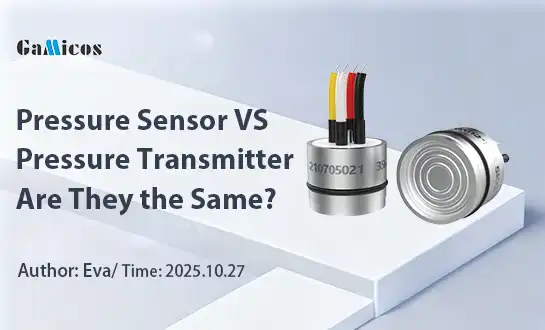
Pressure Sensor VS Pressure Transmitter: Are They the Same Thing?