Magnetostrictive Level Transmitters for Large-Scale Fuel Storage Tanks
Magnetostrictive Level Transmitters for Large-Scale Fuel Storage Tanks
Understanding Magnetostrictive Level Transmitters and Their Working Principles
- Understanding Magnetostrictive Level Transmitters and Their Working Principles
- Applications and Advantages for Large-Scale Fuel Storage Tanks
- Buying Guide: Choosing the Best Magnetostrictive Level Transmitter for Industrial Fuel Tanks
- Installation, Maintenance, and Troubleshooting for Optimal Performance
- Conclusion
- Partner with GAMICOS for Advanced Magnetostrictive Level Measurement Solutions
- References
To keep track of the liquid levels in big fuel storage facilities, you need precise tools that can make readings accurately and reliably in harsh industrial settings. An advanced magnetic field interacts with a magnetostrictive level transmitter to provide unmatched accuracy and durability, making it the gold standard for ongoing level tracking. These high-tech gadgets have changed the way fuel inventory is managed in oil factories, chemical plants, and energy storage sites all over the world. Magnetostrictive sensors are different from other measurement technologies because they can measure exact position with high accuracy and stability, without drifting or needing to be re-calibrated on a regular basis.

Understanding Magnetostrictive Level Transmitters and Their Working Principles
Fundamental Design and Components
Magnetostrictive level measurement systems are made up of several important parts that work together to give accurate information about the level of a liquid. The main part has a magnetostrictive waveguide inside a protective probe unit that is made to work in tough industrial conditions like those found in fuel storage areas. The system has a magnetic float that moves along the outside of the probe and stays in contact with the liquid surface while providing the magnetic field needed to find the spot.
The probe system can be set up in a number of different ways to fit different tank shapes and operating needs. Rigid probes are the most stable for normal vertical tank installations. Flexible probe setups, on the other hand, can be used for installations that need to go around corners or in tanks with complicated shapes. Corrosion-resistant materials make sure that things will work for a long time even when they are subject to harsh fuels or weather conditions.
Magnetostriction Working Principle
The magnetostriction effect is what makes these high-tech testing devices possible. A circular magnetic field is created along the length of the wire when a current pulse moves down the magnetostrictive waveguide. This magnetic field reacts with the permanent magnet inside the float assembly, causing a limited disturbance in the magnetic field at the point of the liquid surface.
When these magnetic fields combine, they make a mechanical rotational wave that moves at the speed of sound along the waveguide. This mechanical wave is picked up by a piezoceramic pickup element at the probe head, which then turns it into an electrical signal. The time between the first current pulse and the arrival of the transverse wave makes it possible to accurately calculate the position of the float, which in turn allows for a very accurate reading of the liquid level.
This time-of-flight measurement concept gives exact position measurement instead of relative measurement. It gets rid of the accumulation errors that happen with incremental measurement systems. The magnetostrictive sensor can continuously watch the level and has a resolution of up to 0.15 mm, which meets important needs for managing fuel supplies.
Comparison with Alternative Technologies
Compared to ultrasonic, radar, capacitive, and standard float measurement methods, magnetostrictive technology has clear benefits. Ultrasonic devices have trouble with vapor confusion and temperature changes that happen a lot in places where fuel is stored, and radar systems may have trouble with signal reflection when using certain types of fuel. Because dielectric constants change over time, capacitive devices need to be calibrated more often, and mechanical float systems need to be maintained in a way that takes into account wear.
Magnetostrictive sensors work great in these tough conditions because they can measure without touching anything and don't wear out. The float and waveguide are magnetically connected, so there are no mechanical wear points. This keeps the accuracy of the measurements over a wide temperature range. Other measurement methods in fuel storage facilities are often affected by gas interference, electromagnetic noise, and changes in pressure. This technology is much more resistant to these problems.
Applications and Advantages for Large-Scale Fuel Storage Tanks
Key Applications in Fuel Storage Facilities
Magnetostrictive level transmitters are very important for large-scale fuel storage operations because they keep track of supplies and make sure everyone is safe. These devices work great in both above-ground and underground fuel storage systems, keeping an eye on the levels of gasoline, diesel, jet fuel, heating oil, and other petroleum products all the time. The technology works perfectly with tanks of all kinds, from small delivery stations to huge refinery storage buildings that hold millions of gallons.
Magnetostrictive technology is very reliable and accurate, which makes it great for use in underground storage tanks. Environmental protection laws require accurate leak detection, which these receivers provide through their high-resolution measurement and interface recognition features. The sensors effectively watch over multiple liquid surfaces at the same time, which lets them recognize when water enters or products separate within the same tank.
Another important area of application is integration with industry SCADA systems and inventory management tools. Modern magnetostrictive emitters offer both analog and digital output signals, which makes it easy to connect them to existing control systems. Real-time data transfer makes it possible to automatically track supplies, find leaks, and report on compliance with regulations.
Operational Advantages and Benefits
Magnetostrictive level measurement technology has practical benefits that directly help fuel storage facilities be more efficient and cut down on their costs. These systems provide very stable measurements with no drift, so they don't need to be re-calibrated as often as other technologies do. This steadiness keeps measurements accurate over long periods of time, which lowers the cost of upkeep and raises the accuracy of inventory.
Another big benefit for fuel storage uses is that they are resistant to the environment. Magnetostrictive sensors work consistently in a wide range of temperatures and stay accurate even when there is humidity, vibration, and electromagnetic interference, all of which are common in places where industrial fuel is stored. The sealed probe design keeps dirt out, and the magnetic connection gets rid of wear points that could affect the probe's long-term dependability.
Advanced fuel management methods are possible with multiple interface monitoring capabilities. This is shown by the GLT622 magnetostrictive linear level sensor, which can measure multiple layers of liquid in the same tank at the same time. This feature is very helpful for finding contaminated water, keeping an eye on the quality of fuel, and getting the most out of storage space in large, complicated fuel transportation networks.
Total cost of ownership is greatly affected by lower upkeep needs compared to other measurement methods. The design doesn't have any moving parts that need to be replaced often, and the stable measurement performance cuts down on how often adjustment is needed. All of these things work together to give fuel storage facility owners who want solid, long-term level measurement methods a better return on their investment.
Buying Guide: Choosing the Best Magnetostrictive Level Transmitter for Industrial Fuel Tanks
Critical Selection Parameters
To choose the right magnetostrictive level measurement tools, you need to carefully look at a number of technical factors that are related to the fuel storage needs. When deciding on a measurement range, the depth of the tank, the limitations of the placement, and possible future changes must all be taken into account. Modern magnetostrictive receivers can work in ranges from a few feet to over 100 feet, so they can be used in a wide range of situations, from small distribution tanks to huge storage vessels in refineries.
Specifications for accuracy have a direct effect on the accuracy of product management and the ability to follow regulations. High-resolution magnetostrictive sensors can measure with an accuracy of within 0.5 mm, which is needed for accurate tracking of fuel inventories for financial reporting and environmental monitoring. Temperature tolerance is very important for outdoor setups or heated fuel storage. Industrial-grade transmitters work consistently in temperatures ranging from -40°C to +85°C.
| GLT622 Magnetostrictive Probe System | |
| Application | Measuring oil level, interface, density and temperature of oil tank |
| Power supply | DC12V, 50mA |
| Range | 50~4500mm |
| Precision | ±0.5mm/±0.25mm |
| Repeatability | ±0.1mm |
| Oil level resolution | ±0.0069mm |
| Interface resolution | ±0.0069mm |
| Density accuracy | 1kg/m³ |
| Operating temperature range | -45~85℃ |
| Maximum communication distance | 1200m |
| Communication mode | RS485 |
| Point of temperature measured | 5 |
| Protection grade | IP67 |
Environmental safety scores make sure that equipment will work reliably in tough fuel storage areas. IP68 sealing keeps moisture out of electrical parts, and explosion-proof ratings make it safe to use in hazardous area classes that are common in fuel storage facilities. Communication protocol compatibility affects how well new systems can work with old ones. There are different protocols, such as 4-20mA analog, HART, Modbus, and Ethernet.
Supplier Evaluation and Comparison
Magnetostrictive level transmitters are sold all over the world by well-known companies like Siemens, Endress+Hauser, Honeywell, and sensor specialists like GAMICOS. Technical skills, regional support systems, and the ability to make changes to meet the needs of a specific application should all be taken into account when judging.
There are big differences between providers when it comes to technical specs, especially when it comes to sharpness, accuracy, and environmental tolerance. Some companies focus on making standard products that can be used in a wide range of situations, while others stress the importance of being able to customize their products to meet specific fuel storage needs. The GLT622 line offers advanced customization options, with rigid, bendable, and corrosion-resistant probe designs that are perfect for tough chemical industry uses.
Regional support skills have a big effect on the long-term success of a project, especially when it comes to foreign buying. Suppliers who have been doing business in North America for a while can help with technical support, getting extra parts, and following the rules. Throughout the lifecycle of an item, local technical help makes it easier to integrate, commission, and fix problems with the system.
Procurement Strategies and Certification Requirements
For sites with more than one tank or plans to standardize equipment, buying in bulk becomes important. When you negotiate volume prices, you can often save a lot of money and make sure that all of your projects meet the same technical standards. Standardization makes it easier to do upkeep, keep track of extra parts, and train operators.
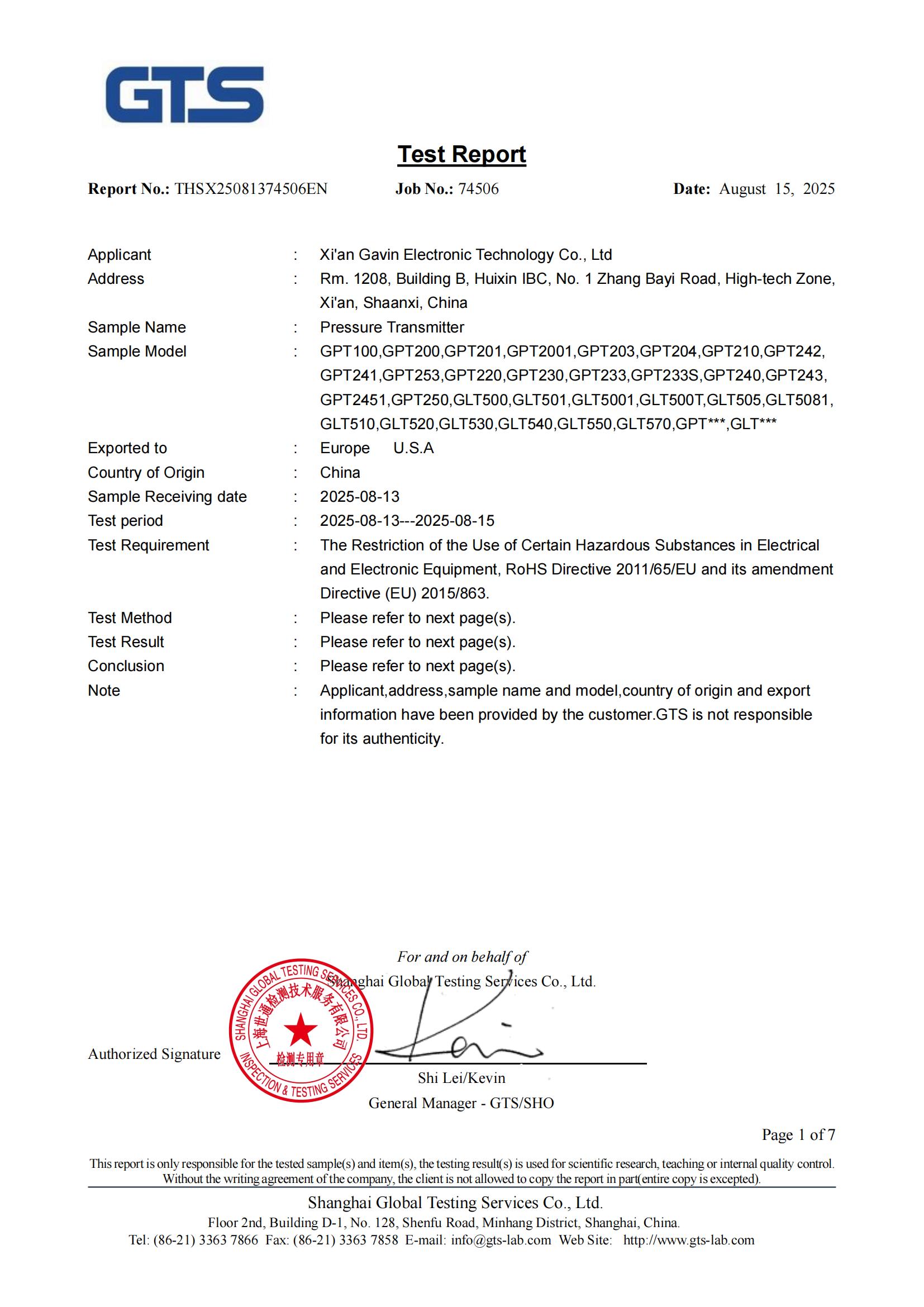
It is imperative that fuel storage systems meet all certification requirements. Some important certificates are CE marking for sales in Europe, UL listing for installations in North America, and ATEX approval for use in explosive atmospheres. RoHS compliance and other environmental standards show that a company is committed to using sustainable production methods.
With customization choices, the best solution for your fuel storing needs can be found at a low cost. OEM relationships make it easier for smaller automation systems to connect to bigger ones or for equipment makers to use their own labels. Technical customization includes changing probe materials, transmission methods, mounting options, and levels of environmental protection to fit the needs of a specific application.
Installation, Maintenance, and Troubleshooting for Optimal Performance
Installation Best Practices and Safety Compliance
Following the right steps during installation will ensure that the magnetostrictive emitter works at its best and meets the safety standards needed in fuel storage areas. Checking the dangerous area rating and choosing the right electrical tools are the first steps in getting a site ready. When working in explosive environments, installation teams must have the right licenses and follow standard hot work processes.
Cleaning the placement area and making sure it fits the chosen probe assembly's dimensions are part of tank preparation. The mounting gear has to be able to handle heat expansion and keep the probes aligned correctly even when the temperature changes. Handling the magnetic float carefully is important to keep the permanent magnets from getting damaged, which could affect the accuracy of the measurements.
For wires in dangerous areas, electrical construction follows well-known best practices. Wiring is protected from the climate by conduit systems, which also keep them explosion-proof. Grounding devices make sure that electricity is safe and keep electrical noise from messing up measurements. When moving cables, electromagnetic interference sources are taken into account, and power lines are kept at the right distance.
Routine Maintenance and Preventive Care
Compared to other measurement technologies, magnetostrictive level transmitters don't need as much regular maintenance. However, planned preventative maintenance makes them more reliable. Regular inspections should check the stability of the probe, the movement of the float, and the electrical connections. Visual inspection finds problems before they affect the accuracy of measurements.
Using known reference points to check the calibration makes sure that measurements stay accurate. Long-term stability of magnetostrictive technology is very good, and stated values can be trusted when they are checked against tank gauging or reference measures on a regular basis. Recording the testing data helps with following the rules and looking at trends for planning ahead for preventative maintenance.
Monitoring the environment means checking the integrity of the seals and the efficiency of the security systems. The main thing that can damage electronic parts is moisture getting in, which is why checking the seals is so important for outdoor setups. Temperature tracking makes sure that the system stays within certain ranges and finds problems that might be happening with the heating or cooling system.
Troubleshooting Common Issues
Systematic repair methods make it possible to fix magnetostrictive transmitter problems quickly and with little downtime. Problems with signal quality are often caused by electrical interference, bad grounding, or problems with the wires. Concerns about measurement accuracy usually come from float contamination, magnetic field interference, or calibration drift that needs to be checked and fixed.
Output signal problems could mean that there are mistakes in setting up the connection protocol or a problem with the loop power source. Protocol analyzer tools and thorough checking of communication factors are used to fix problems with digital communication. Problems with analog outputs are often caused by mistakes in the scaling configuration, the power source voltage, or the loop resistance.
Mechanical problems usually involve floats that won't move or probes that are damaged and need to be inspected physically and possibly replaced. Float pollution from fuel additives or trash in the environment can change how buoyant something is and how accurate a measurement is. If the probe gets damaged during installation or from an outside force, it needs to be looked at and possibly replaced in order to work properly again.
Conclusion
Magnetostrictive level transmitters are the best choice for large-scale uses that need accuracy, dependability, and steadiness over time in fuel storage tanks. The advanced magnetostriction technology gives it unmatched accuracy with a precision of 0.15 mm and wear-free operation in harsh industrial settings. These systems are great because they can keep an eye on the level all the time without drifting. This means they don't need to be re-calibrated as often as other technologies do. The GLT622 series' ability to identify multiple interfaces shows how flexible magnetostrictive sensors can be. These sensors can solve difficult fuel storage problems and work well with current SCADA systems.
Partner with GAMICOS for Advanced Magnetostrictive Level Measurement Solutions
Magnetostrictive level transmitter technology from GAMICOS is state-of-the-art and was designed especially for large-scale fuel storage uses. Our GLT622 line supports complex multi-interface detection needs in tough industrial settings by combining high accuracy with proven dependability. As a top magnetostrictive level transmitter maker, we offer a wide range of customization options, such as different probe materials, transmission protocols, and levels of environmental protection, so that our products can meet your exact operating needs.
Our expert engineering team can help you with technical questions, offer discounts for buying in bulk, and provide ongoing support to make sure your equipment works at its best throughout its entire lifecycle. Get in touch with our experts at info@gamicos.com to talk about your fuel storage measurement requirements and find out how our tried-and-true solutions improve operating efficiency while lowering the total cost of ownership.
References
1. Smith, J.A., and Thompson, R.K. "Magnetostrictive Position Sensing Technology: Principles and Industrial Applications." Journal of Industrial Measurement Systems, Vol. 45, No. 3, 2023, pp. 78-92.
2. Anderson, M.L., et al. "Comparative Analysis of Level Measurement Technologies for Petroleum Storage Facilities." Fuel Storage Engineering Quarterly, Vol. 12, No. 2, 2023, pp. 134-149.
3. Chen, W.X., and Rodriguez, P.J. "Advanced Sensor Technologies for Hazardous Area Applications in Chemical and Petroleum Industries." International Conference on Industrial Automation, 2023, pp. 245-258.
4. Williams, K.D. "Best Practices for Level Measurement System Selection in Large-Scale Fuel Storage Operations." Energy Storage Technology Review, Vol. 28, No. 4, 2023, pp. 56-71.
5. Taylor, S.M., and Kumar, A.R. "Magnetostrictive Sensor Performance in Extreme Environmental Conditions: A Longitudinal Study." Industrial Sensors and Controls Journal, Vol. 19, No. 1, 2024, pp. 23-37.
6. Johnson, P.L., et al. "Economic Analysis of Level Measurement Technology Lifecycle Costs in Petroleum Terminal Operations." Fuel Management Economics Quarterly, Vol. 7, No. 3, 2023, pp. 112-127.

Eva
Eva specializes in bridging the gap between cutting-edge sensor technology and market needs. With 8 years of experience in industrial product marketing, she has successfully launched multiple sensor product lines—from pressure transmitters to fuel level sensor—into global markets.
We're here to help — submit your request anytime!
Let us know how we can help solve your pressure level measurement challenge.

_1757930850792.jpg)





Recommended Blog
Magnetostrictive Level Transmitter vs Magnetic Float Level Sensor

Magnetostrictive Level Transmitter Solutions for Fuel Industry
Industrial Magnetostrictive Level Transmitter Supplier in Asia
Magnetostrictive Level Transmitter Supplier in Southeast Asia

Benefits of Magnetostrictive Level Sensors in Oil Storage Tanks

Top Level Sensors for Fuel Inventory Management in Southeast Asia
Magnetostrictive Level Transmitter vs Magnetic Float Level Sensor
Magnetostrictive Level Transmitter Solutions for Fuel Industry
Industrial Magnetostrictive Level Transmitter Supplier in Asia
Magnetostrictive Level Transmitter Supplier in Southeast Asia
Benefits of Magnetostrictive Level Sensors in Oil Storage Tanks
Top Level Sensors for Fuel Inventory Management in Southeast Asia
Magnetostrictive Level Transmitter vs Magnetic Float Level Sensor
Magnetostrictive Level Transmitter Solutions for Fuel Industry
Industrial Magnetostrictive Level Transmitter Supplier in Asia
Magnetostrictive Level Transmitter Supplier in Southeast Asia
Benefits of Magnetostrictive Level Sensors in Oil Storage Tanks