Incorrect Mounting Position Causes Measurement Errors
Understanding the Problem: How Incorrect Mounting Impacts Pressure Sensor Accuracy
- Understanding the Problem: How Incorrect Mounting Impacts Pressure Sensor Accuracy
- Best Practices for Correct Pressure Sensor Installation to Avoid Errors
- Comparing Installation Methods and Choosing the Right Approach for Industrial Use
- Procurement Considerations: Sourcing Professional Pressure Sensor Installation Services and Reliable Suppliers
- Real-World Cases: How Proper Installation Prevented Measurement Errors and Improved System Performance
- Conclusion
- FAQ
- Partner with GAMICOS for Precision Pressure Sensor Solutions and Expert Installation Support
- References
In industrial pressure sensing systems, measurement mistakes are most often caused by putting parts in the wrong place. Even the best pressure sensors can give inaccurate results that put process control, safety, and business efficiency at risk if pressure sensor installation is not done according to the right procedures. Signal integrity is directly affected by misalignment, wrong orientation, vibration, or extreme temperatures during installation. This can lead to drift, noise, and delayed response times that make it hard to make important decisions in the automation, chemical, pharmaceutical, and petroleum industries.

Understanding the Problem: How Incorrect Mounting Impacts Pressure Sensor Accuracy
How sensors are physically placed and fixed in a system has a big impact on how accurately they measure pressure. Mistakes in mounting cause mechanical stress, changes in temperature, and influence from the surroundings, all of which mess up sensor outputs and make them less reliable.
Common Mounting Faults and Their Impact on Signal Integrity
One of the most common startup mistakes is not aligning things correctly. If the sensor axis isn't lined up with the direction of applied pressure, the force on the diaphragm is spread out unevenly, which causes results to be off. Machines or pumps nearby can send mechanical noise into the sensor case. This makes signs that change all the time, hiding the real process conditions. Bad weather conditions like water getting inside, acidic air, or big changes in temperature also damage the electronics and sense parts inside. These conditions speed up calibration drift and shorten the life of sensors, which raises the cost of upkeep and causes unplanned downtime.
Typical Error Manifestations: Signal Drift, Noise, and Delayed Response
Signal drift happens when stress from placement moves the sensor's standard output slowly over time. Engineering managers often see small but constant changes that need to be re-calibrated often, which throws off production plans. Electrical noise shows up as random spikes or changes in output signals.
This makes it hard for control systems to tell the difference between real changes in pressure and interference. When placing something incorrectly blocks pressure ports or creates dead zones that slow the flow of process changes to the sensing element, the sensor responds later than expected. Even millisecond delays can cause safety problems or poor quality in fast-moving situations like watching a cable or controlling a reactor.
Real-World Industrial Examples of Mounting-Related Measurement Failures
A chemical processing plant had a lot of batch rejects because the reactor pressure numbers weren't always accurate. It was found that sensors that weren't properly isolated from shaking were picking up pump pulses, which led the control system to get the wrong idea about how stable the process was. When the sensors were reinstalled with the right silencing gear and in the right place, the accuracy of the measurements went up by 12%, which stopped expensive product losses.
In another case, regulators looked closely at a pharmaceutical company when pressure sensors in clean processing lines drifted for no clear reason. A root cause study showed that the wrong amount of force was used during fitting, which distorted the sensor case and made the seal less reliable. Corrective construction practices brought back compliance and stopped the risk of exposure.
Best Practices for Correct Pressure Sensor Installation to Avoid Errors
When sensors are installed correctly, they work within the parameters of their design and provide accurate, consistent data for the entire time they are in use.
Essential Tools and Equipment for Precise Mounting
For effective pressure sensor installation, you need torque tools that are measured so that you can use the manufacturer-recommended tightening forces without putting too much stress on the threads or housings. Digitized angle gauges make sure that the sensors are positioned correctly in relation to gravity and the direction of the process flow. Chemically compatible thread sealer materials stop leaks without getting into the detecting element.
Vibration isolation mounts take in mechanical energy from equipment around them, which protects sensitive parts inside. Installation kits from reputable sensor makers often come with these parts, which makes sure that everything works together and makes work easier for engineering workers and maintenance teams in the field.
Step-by-Step Installation Guide: Surface Preparation, Orientation, and Torque Specifications
Cleaning threaded ports to get rid of dirt, old sealant, or rust that might stop them from fitting properly is the first step in getting the mounting surface ready. Check the threads for harm and make sure the port size fits the sensor's requirements. Don't use too much thread glue so that extra material doesn't get into the pressure port. Orient the sensor according to the manual provided by the maker.
For example, many devices need to be mounted vertically with the diaphragm looking downward to keep air from getting trapped or sediment from building up. Tighten the sensor by hand until you feel resistance. Then, use a torque wrench to apply the required torque value, which is usually between 20 and 40 Newton-meters, but this depends on the thread size. When you over-tighten, the housing deforms, and when you under-tighten, leaks and vibration-induced loosening can happen.
Here are some more startup tips that will make it more reliable in the long run:
- Environmental protection: Use weatherproof covers or pipe fittings to keep dust and water out of electrical connections, especially in places that are outside or that are often washed down, like food and beverage processing.
- Cable routing: Keep sensor cords away from moving parts and high-voltage lines to avoid electromagnetic interference and mechanical damage. This will help the signal stay strong over long transmission distances.
- Accessibility planning: Put sensors in a place where techs can safely reach them to do regular maintenance and calibration checks without having to shut down the process or climb up and down a ladder, which will cut down on working interruptions.
All of these things make sure that sensors stay stable and easy to access throughout their entire useful life. This helps with planned upkeep and increases uptime.
Common Installation Pitfalls to Avoid
Thermal cycle speeds up drift and breaks down covering materials, so don't put sensors in places that get full sunshine or heat from stoves. Never put sensors at the bottom of a straight pipe run, where particles or condensation can gather and block pressure ports. Don't solder near sensors that are already installed because the spark heat and shaking can damage the electronics inside.
Do not use throwaway closing screws or gaskets more than once. After the first use, they lose their ability to compress, which can cause leaks and contamination. If you don't follow the manufacturer's instructions for direction, you could end up with gas bubbles in liquid systems or particles settling on the diaphragms, both of which mess up your measures.
Post-Installation Calibration: Why It's Critical for Accuracy
Calibration after installation makes sure that the fitting steps did not cause any stress or mismatch that would have changed the output of the sensor. Compare the sensor values to a standard that can be tracked across the whole working range. Write down any differences or non-linearities that you find. To account for small differences, change the zero and range settings as needed.
Write down the results of the testing, and then check again after 24 hours to make sure everything is stable. Before putting the sensor to use in production, this step of proof gives you peace of mind that the pressure sensor installation meets the accuracy standards. When purchasing managers buy sensors from companies like GAMICOS, the devices are already tuned to ISO standards, which makes setting them up easier and faster.
Comparing Installation Methods and Choosing the Right Approach for Industrial Use
To choose the best fitting method for an industry application, you have to weigh the installation's difficulty, cost, and long-term performance needs.
Installation Versus Replacement: Cost-Efficiency and Downtime Considerations
When engineering managers want to upgrade old systems, they have to decide whether to use old fixing points to add new sensors or to completely rethink the installation. Retrofitting cuts down on downtime and capital costs, but performance may be affected if the old bolts don't isolate vibrations or aren't positioned correctly.
Complete replacement lets you improve the placement of sensors and add more modern connection options, such as wireless IoT modules, but it shuts down the process and costs more up front. A cost-benefit study should compare the short-term costs of fixing problems with the longer-term benefits of higher accuracy, fewer calibrations, and less work that needs to be done on repair equipment.
Evaluating Mounting Techniques: Threaded, Flanged, and Welded Options
Threaded connections are easy to use and can be reused, so they are good for situations where sensors need to be taken out and cleaned or re-calibrated on a regular basis. But thread wear from repeated installs can lower the quality of the seal, and overtightening can damage the case. Flanged plates offer strong mechanical support and even pressure spread across the sensor contact, making them perfect for places with a lot of pressure or shaking, such as compressor stations and industrial pipes.
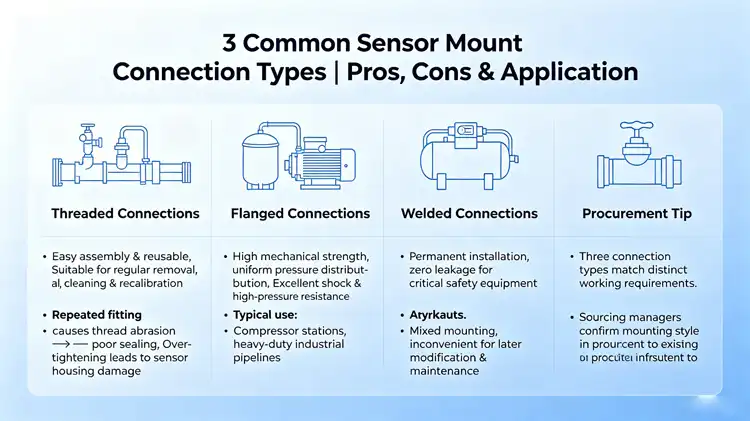
Welded connections make sure that important safety systems are permanently and leak-proof connected, but they make it harder to make changes in the future. Each method is best for a certain set of practical needs. Sourcing managers should define the mounting style during the buying process to make sure it works with the infrastructure that is already in place.
Installation Tools: Impact Wrenches, Manual Torque Devices, and Alignment Equipment
If your impact wrench doesn't have a changeable clutch, you could over-torque it, which slows down installation on big jobs. Manual torque tools give you exact control and clear proof of the goal torque, which cuts down on mistakes during installation and warranty claims. Laser alignment tools make sure that sensors are mounted accurately when they are in complicated pipe networks or tank farms.
This reduces the amount of measurement error caused by misalignment. Specialized supports keep the sensor in place while welding or soldering, so heat doesn't cause it to move. When project managers are in charge of upgrading industrial automation, they should make sure that contractors have the right tools for the job so that the installation is done well and the system works well.
Procurement Considerations: Sourcing Professional Pressure Sensor Installation Services and Reliable Suppliers
Using good buying methods makes sure that the quality, safety, and performance standards for installation services and sensor hardware are met, which is important in industries that are controlled.
Identifying Credible Service Providers: OEM Authorization and Industry Certifications
Installation service providers with a good reputation have certifications from sensor makers that show they've been trained on certain product lines and installation procedures. OEM-authorized techs can get expert help, insurance coverage, and original new parts that third-party freelancers can't get. ISA Certified Automation Professional or NACE Corrosion Specialist badges show that you know how to build measurement systems and make sure that materials work well together. Before hiring someone to do repair work, sourcing managers should check their qualifications to lower the risk of doing things wrong, which could cancel contracts or put people's safety at risk.
Evaluating Installation Kits: Quality Standards and Compatibility
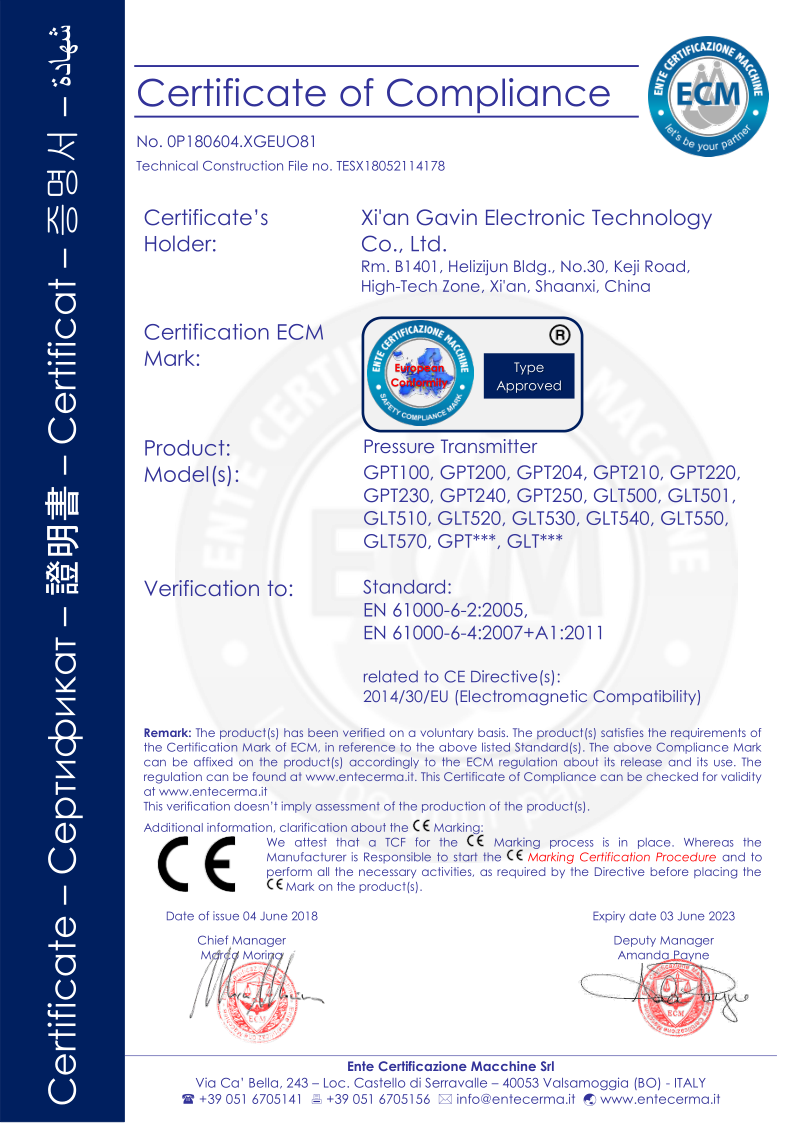
High-quality installation kits come with gear that has been measured, chemically resistant seals, and thorough directions that are made to fit each sensor model. Kits from well-known providers are put through a lot of tests to make sure they can work in tough process conditions like high temperatures, acidic media, and settings with a lot of shaking. When you're looking to send to North America and Europe, where rules are very strict, make sure the kits you buy meet ISO, CE, and RoHS safety standards. For big projects or OEM production lines, grouped kits make the supply chain less complicated by making transportation easier and making sure that parts can be tracked.
Cost-Benefit Analysis: Professional Installation Versus DIY Methods
Professional installation services cost more, but they promise accuracy, protect you with a warranty, and give you the proof of compliance you need for regulatory exams. Doing the work yourself can save you money at first, but it also raises the chance of making mistakes that could damage sensors, cause measurements to be off, or cause unplanned downtime.
When things are at stake, like in pharmaceutical clean rooms or underwater fishing platforms, skilled service protects against failures that cost a lot of money. For regular setups in non-critical systems, it's cheaper and easier to have trained in-house techs with the right tools and know-how do the job. When making a choice, you should think about how important the application is, how much professional help is available, and the total cost of ownership, which includes upkeep and tuning over the sensor's lifetime.
Contracting Best Practices: Warranty Safeguards and Maintenance Agreements
Service contracts should include pressure sensor installation standards, ways to make sure the sensors are calibrated, and guarantee terms that cover both the gear and the work that was done during installation. Include plans for regular recalibration, preventative maintenance checks, and what to do in case a sensor fails in an emergency.
Maintenance deals from sensor providers like GAMICOS give fixed costs and priority technical help, which keeps the system running smoothly and cuts down on unplanned delays as much as possible. Make it clear who is responsible for installation mistakes and set due dates for fixing them to keep project plans and operating uptime safe.
Real-World Cases: How Proper Installation Prevented Measurement Errors and Improved System Performance
Correct construction practices have a real effect on the accuracy of measurements and the speed of the process, as shown by real-life examples.
Industrial Automation Case: Resolving Measurement Challenges Through Corrective Installation
A company that makes robotic equipment had problems with the accuracy of pressure sensors that were built into hydraulic control systems for mobile equipment. When the system was first set up, vibration separation wasn't done, so sensors picked up fake pressure spikes that set off annoying alarms and stopped operations. The engineering team worked with a sensor source that had experience with mobile equipment to rethink mounting clamps with rubber dampers and move sensors away from hydraulic pump systems.
After the changes were made, tests showed that the noise level dropped by more than 85%, which got rid of fake alarms and made the control loop more stable. The production yield went up because the machines worked reliably without any help from the user. This proved that the money spent on proper installation methods was worth it.
OEM Client Success: Tailored Installation Solutions for Long-Term Performance
A medical device OEM needed very small pressure sensors for intravenous pumps. They needed sensors that were very accurate, stable over time, and could fit in small spaces. Standard fitting methods could damage sensitive sensor parts while they were being put together. The OEM worked with a sensor maker that could make special assembly tools and glue gluing methods that would work best in cleanrooms.
The custom solution had sensor units that were already measured and had strain relief and moisture barriers built in. This made the final assembly easier and cut down on quality losses. Over three years of production, field failure rates stayed below 0.2%, which was much better than the standard in the business and made customers happier. This case shows how important it is for engineers and installers to work together to meet strict performance goals.
Conclusion
Incorrect fixing places are still the main reason for measurement mistakes that hurt safety, efficiency, and process control in all kinds of industries. When engineers and procurement workers know how imbalance, shaking, and exposure to the environment can hurt the performance of sensors, they can use best practices that guarantee accurate readings, such as proper pressure sensor installation. Common mistakes can be avoided and sensor life can be extended by using the right tools, applying the right amount of force, and calibrating the sensor after installation.
System efficiency and total cost of ownership are improved by comparing mounting methods and finding reliable installation services that can be adjusted to specific operating needs. Real-life success stories show that spending money on the right installation methods leads to measured changes in data quality, uptime, and legal compliance. This shows how important it is to have professionals install pressure measurement systems.
FAQ
What are the most frequent mounting errors that cause pressure sensor inaccuracies?
Common mistakes include misaligning the sensor axis with the direction of the applied pressure, not isolating vibrations well enough, applying torque incorrectly, which deforms the housing, and placing sensors in places that are open to high or low temperatures or moisture. Measurement drift and signal noise can also be caused by not following the manufacturer's direction instructions and using throwaway closing parts more than once.
How often should pressure sensors be recalibrated after installation?
Recalibration times depend on the seriousness of the application and the rules set by the government. Every six to twelve months, tuning is usually needed in harsh settings with high vibrations, extreme temperatures, or media that eats away at metal. Periods can be extended to 24 months for applications that don't need as much work. Do the first check 24 hours after installation to make sure everything is stable. Then, for process validation, follow the manufacturer's instructions and industry standards like ISO 9001 or FDA guidelines.
Can improper installation permanently damage a pressure sensor?
Yes, too much pressure can break sensor housings or diaphragms, and welding heat can damage electronics inside. Pressure ports can get clogged and sensing elements can corrode if sensors are mounted in ways that catch particles or fluids. When sealants and process media don't react chemically, seals can break down and measurement surfaces can become dirty. These losses usually cancel guarantees and require full sensor replacement, which shows how important it is to follow best practices for fitting.
Partner with GAMICOS for Precision Pressure Sensor Solutions and Expert Installation Support
Getting accurate and reliable pressure readings starts with picking the right sensor and making sure it is installed perfectly. GAMICOS makes high-precision pressure sensors, liquid level sensors, and IoT-enabled wireless tracking tools that customers in more than 100 countries trust. Our engineering team offers full technical support, helping procurement managers and project engineers choose the right sensors, come up with custom OEM/ODM solutions, and follow the best fitting methods for your unique industrial application.
We offer measurement solutions that improve system performance and operating safety. Our quality control is ISO-certified, and we have a lot of experience working with clients in the oil, chemical, pharmaceutical, and automation industries. Get in touch with us at info@gamicos.com to talk about your pressure sensor needs and find out how our experience as a top provider of pressure sensor installation can help your next project run more smoothly.
References
1. Johnson, R. M., & Peterson, L. K. (2021). Precision Measurement in Industrial Process Control: Installation Techniques and Error Mitigation. Industrial Instrumentation Press.
2. Chen, H., & Rodriguez, A. (2020). Sensor Mounting Best Practices for Harsh Environments. Journal of Process Automation Engineering, 34(2), 112-128.
3. International Society of Automation. (2022). ISA-5.1: Instrumentation Symbols and Identification Standards. ISA Publications.
4. Williams, D. T. (2019). Pressure Transmitter Installation and Maintenance: A Practical Guide for Engineers. Technical Publishing Group.
5. European Committee for Standardization. (2021). EN 61326-1: Electrical Equipment for Measurement, Control and Laboratory Use - EMC Requirements. CEN Standards.
6. Anderson, M. J., & Kumar, S. (2023). Troubleshooting Common Pressure Sensor Failures in Industrial Systems. Automation Technology Review, 41(4), 203-219.

Ivy
Ivy, product consultant, has focused on sensor consultation for ten years, is proficient in providing pressure and level measurement solutions for customers.
We're here to help — submit your request anytime!
Let us know how we can help solve your pressure level measurement challenge.
_1757930850792.jpg)
Recommended Blog
Pressure Sensors for Wastewater Treatment Plants