Where to Buy Industrial Wireless Pressure Sensors Globally
Understanding Industrial Wireless Pressure Sensors: Core Concepts and Market Needs
- Understanding Industrial Wireless Pressure Sensors: Core Concepts and Market Needs
- Where to Find Reliable Industrial Wireless Pressure Sensors Globally?
- Criteria for Choosing the Best Industrial Wireless Pressure Sensor Supplier
- Comparing Industrial Wireless vs Wired Pressure Sensors for Smart Procurement
- Initiating Procurement Inquiry and Vendor Engagement
- Conclusion
- FAQ
- Partner with GAMICOS for Advanced Industrial Wireless Pressure Sensor Solutions
- References
When sourcing industrial wireless pressure sensors globally, procurement managers have multiple channels available including direct manufacturer contact, authorized distributors, B2B platforms, and specialized industrial equipment suppliers. Leading global suppliers such as GAMICOS, Emerson, Siemens, and Honeywell offer comprehensive solutions across North America, Europe, Asia-Pacific, and emerging markets. The key to successful procurement lies in identifying suppliers who provide certified products, technical support, customization capabilities, and reliable delivery schedules to meet specific industrial automation requirements.
Understanding Industrial Wireless Pressure Sensors: Core Concepts and Market Needs
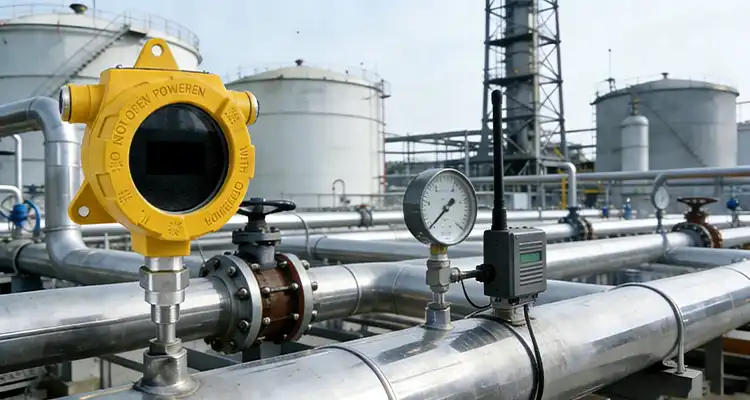
Industrial wireless pressure sensors represent a revolutionary advancement in process monitoring technology, fundamentally changing how industries approach pressure measurement and data collection. These sophisticated devices operate by converting mechanical pressure into electrical signals, then transmitting this data wirelessly to control systems, eliminating the traditional dependency on physical wiring infrastructure.
The Technology Behind Wireless Pressure Measurement
Modern wireless pressure devices use advanced sensing parts and strong communication methods to send correct pressure data in real time. This technology is shown by the GAMICOS GPT2451 portable pressure emitter, which has a high-stability pressure monitor with temperature adjustment built in. This tool accurately measures pressure in a wide range of media, such as liquids, gases, and steam, which makes it useful in many commercial settings.
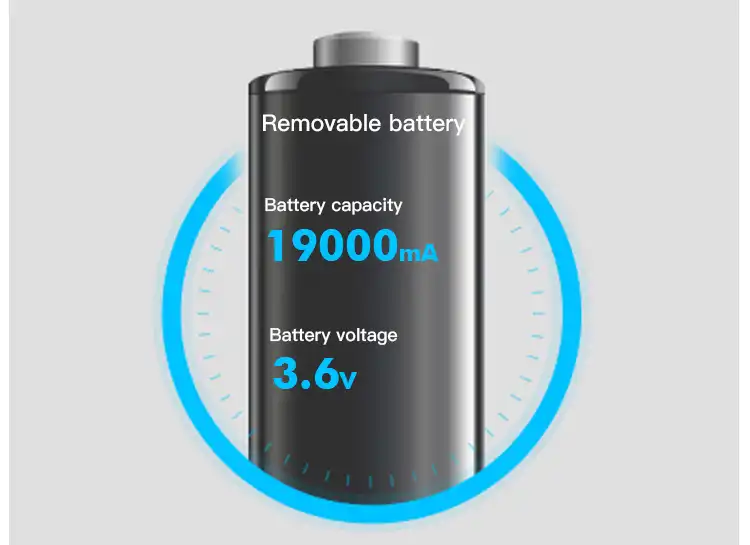
The battery-powered design of the sensor means that it can work without any external power sources and supports a number of different wireless transfer methods. These include the SWSN efficient technique for using very little power, the LORA spread spectrum technology for communicating over longer distances, and the 4G network connection for strong signal penetration in tough industrial settings.
Market Demand Drivers and Industry Applications
The rapid growth of portable pressure sensors is due to several strong practical benefits. Oil, chemical processes, medicines, food and beverage production, and energy creation are just a few of the industries that need real-time tracking capabilities without the installation problems that come with traditional wired systems.
Modern industrial automation methods need to be able to keep an eye on pressure levels all the time while keeping working freedom. Procurement managers know that wireless solutions cut down on installation costs, downtime during system updates, and overall safety in the workplace by getting rid of long cable runs that could be dangerous. This technology is especially useful for tracking tasks that need to be done in rural areas, with moving parts, or in places that are dangerous or hard to get to.
Where to Find Reliable Industrial Wireless Pressure Sensors Globally?
The global marketplace for wireless pressure monitoring solutions encompasses a diverse ecosystem of manufacturers, distributors, and specialized suppliers, each offering unique advantages for different procurement scenarios and regional requirements.
Direct Manufacturer Engagement
Established makers like GAMICOS offer complete solutions through direct involvement, which is a big plus for projects that need to buy a lot of things. GAMICOS is a specialized company that only makes products for measuring liquid level and pressure. It does research, development, production, and sales all in one. They sell a wide range of products, such as pressure sensors, liquid level sensors, fuel and water level meters, ultrasound and radar level meters, and wireless measuring tools that use LORA, GPRS, NB-IoT, and 4G technologies.
When you work directly with a maker, you can get customization services, expert advice, and lower prices when you buy in bulk. GAMICOS is a good example of this method because it has users in more than 100 countries and regions, such as the US, India, Germany, Australia, Brazil, and South Africa. This shows that the company is good at managing global supply chains.
Regional Distribution Networks
Regional wholesalers play a critical role in supplying industrial wireless pressure sensors, providing local support, faster shipping times, and ensuring compliance with regional licensing and regulatory standards. When local expert help and quick reaction times are important for medium-sized buying projects, these relationships really pay off. Distributors often keep extra stock on hand, which cuts down on wait times and makes quick replacements possible.
On European markets, strict adherence to CE licensing, ATEX approval for dangerous environments, and RoHS environmental standards is usually a big deal. UL lists, FM approvals, and CSA certificates are often needed for purchases in North America. In the Asia-Pacific region, markets are becoming more standardized toward foreign standards while keeping prices low.
B2B Platform Advantages
Digital B2B platforms provide transparent pricing, supplier verification, and streamlined procurement processes. These platforms enable efficient supplier comparison, technical specification analysis, and bulk purchasing negotiations. However, buyers must carefully verify supplier credentials, product authenticity, and after-sales support capabilities when utilizing these channels.
Criteria for Choosing the Best Industrial Wireless Pressure Sensor Supplier
To find the best provider, you need to look at them from a lot of different angles and balance their professional skills, business terms, and the chance of a long-term relationship. This will ensure that the purchase goes smoothly and operations run smoothly.
Technical Certification and Quality Assurance
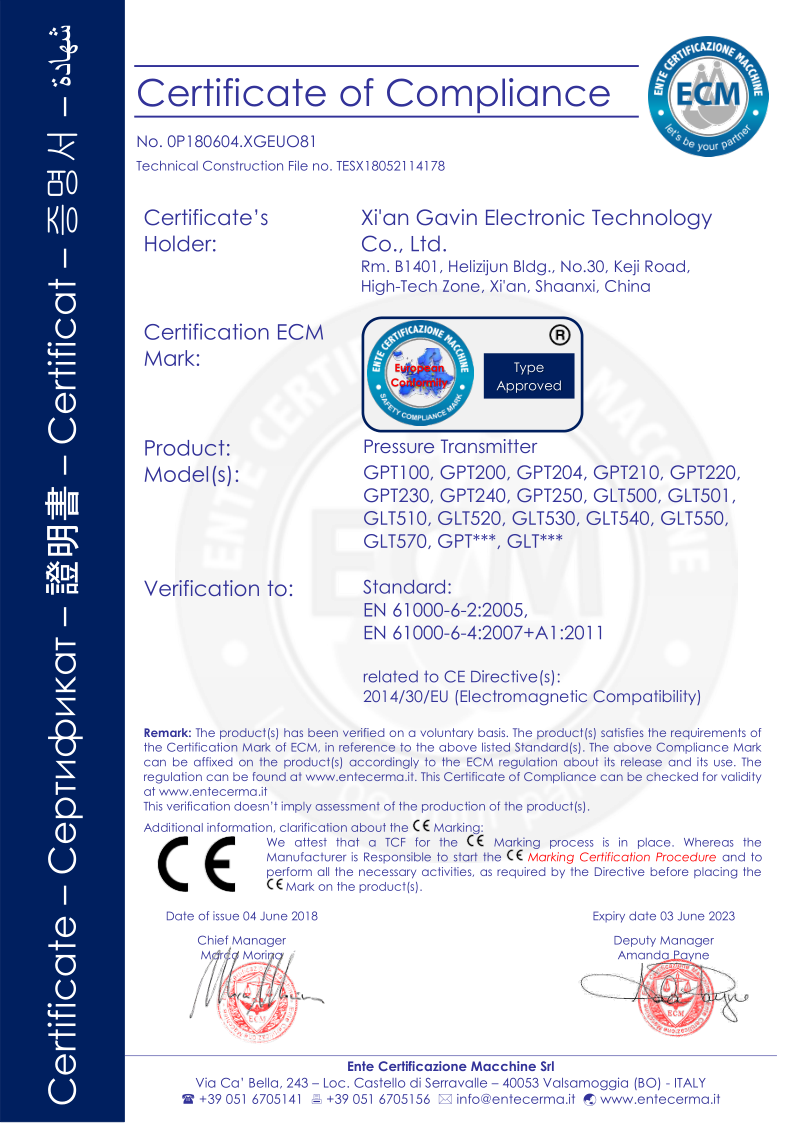
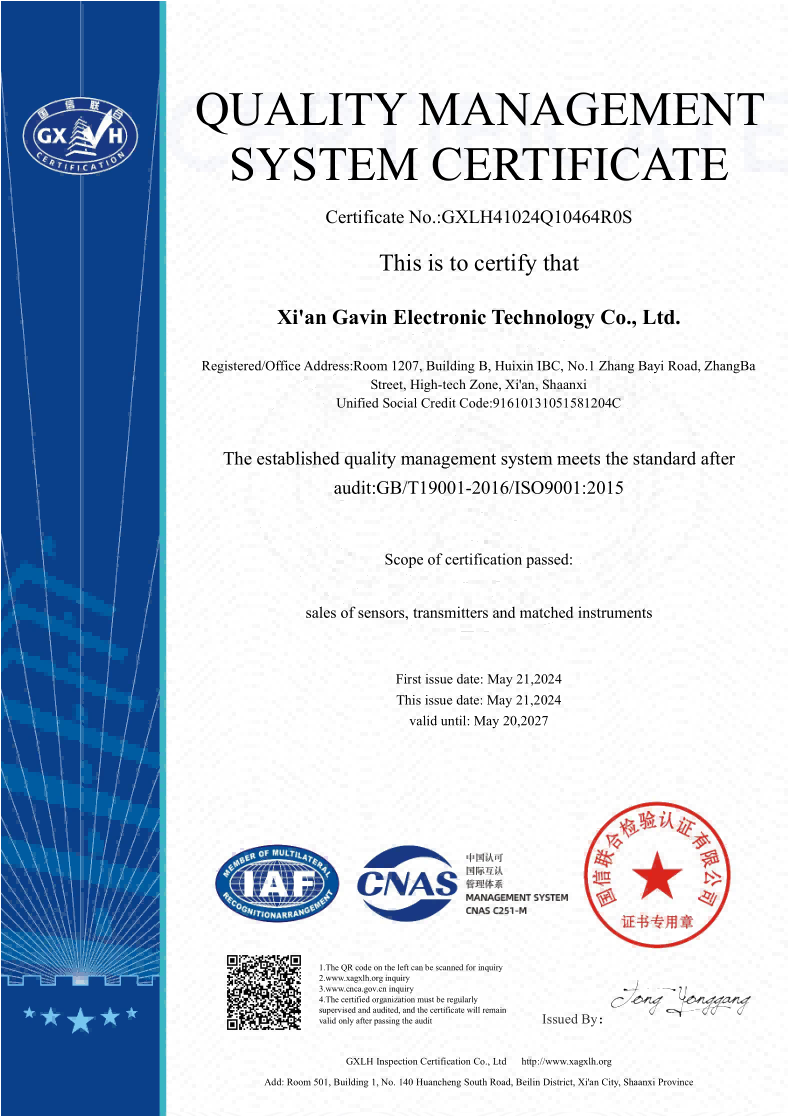
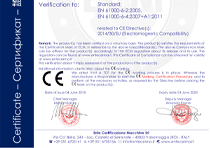
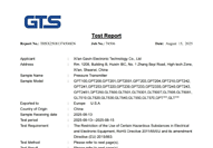
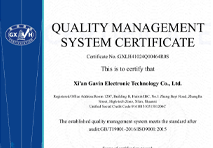
International approvals are important signs of quality because they show that a product meets the high standards for safety and efficiency needed in industry settings. Some important certificates are ISO 9001 for quality management systems, ATEX for possibly dangerous atmospheres, IECEx for foreign certification, and SIL scores for safety-critical uses.
GAMICOS has thorough certification programs that are backed up by strict testing systems and validations from well-known measurement organizations. This method to quality assurance builds trust with customers and makes sure that different foreign standards are met in all global markets. Quality control is important to the company at every step of the production process, from choosing the parts to checking and calibrating the finished product.
Customization Capabilities and Technical Support
Leading providers set themselves apart by offering a wide range of customization services that meet the needs of each application. These services include choosing the type of sensor, changing the interface, adapting the communication protocol, and changing the actual size to fit the placement requirements. GAMICOS provides skilled OEM and ODM services that let you make changes to models, settings, packing, and paperwork. Their specialized research and development (R&D) department is made up of highly skilled engineers who work with customers to create unique solutions that solve problems in specific industries. This technical knowledge is very helpful for complicated tasks that need unique sensor setups or the ability to work with current control systems.
Commercial Terms and Service Excellence
A full business review looks at more than just the original purchase price. It also looks at the total cost of ownership, which includes things like repairs, testing services, and access to expert support. Top-tier sellers have clear price systems, cheap terms for buying in bulk, and warranties that cover both new products and expert support. Service excellence includes quick expert advice, help with installation, help with starting, and continued upkeep support. GAMICOS shows their dedication by offering a full after-sales service program that includes quick response times, maintenance help, repair services, and ongoing technical support to guarantee stable long-term operation in a wide range of industry settings.
Comparing Industrial Wireless vs Wired Pressure Sensors for Smart Procurement
Understanding the fundamental differences between wireless and wired pressure sensing technologies enables informed procurement decisions that align with operational requirements, budget constraints, and long-term strategic objectives.
Operational Advantages of Wireless Technology
There are significant practical benefits to using an industrial wireless pressure sensor, including reduced installation and maintenance costs as well as improved overall system performance. Because it uses very little power, the GAMICOS GPT2451 is a great example of these benefits. It can run continuously for up to three years on a single battery when set to measure every second. Another big benefit is that installation is easier because you don't have to do as much wire handling, pipe installation, or other costs that come with building electrical infrastructure. Because the device is plug-and-play, it can be quickly set up at multiple tracking places without any special electricity work or system downtime.
The LORA connection feature allows transmissions over lengths of up to 5 kilometers, which makes it possible to keep an eye on faraway machines or processes that would be too expensive to connect using standard wire. Features for remote connection, such as syncing with mobile apps and warning notice, improve the speed with which operations can be carried out. When there are changes in pressure, maintenance teams are immediately notified. This lets them take action before small problems become big ones that cost a lot to fix or stop the process.
Economic Considerations and ROI Analysis
The initial cost of wireless sensors may be higher than the initial cost of basic wired sensors, but the total cost of ownership study usually favors wireless options. Lower installation costs, better upkeep efficiency, and better tracking options all work together to give a strong return on investment. Wired systems need constant upkeep, like checking the cables and the junction boxes, and there may be problems with signal loss. These problems are taken care of by wireless solutions, which also make data easier to reach and work with current IoT platforms and predictive repair systems.
Strategic Implementation Considerations
Successful wireless sensor deployment requires careful planning regarding communication infrastructure, battery management protocols, and integration with existing control systems. Leading suppliers provide comprehensive implementation guidance, ensuring optimal system performance and seamless integration with established operational procedures.
Initiating Procurement Inquiry and Vendor Engagement
Effective procurement begins with thorough preparation and strategic supplier engagement, establishing clear communication channels and performance expectations that support successful project outcomes.
Crafting Comprehensive Technical Requirements
Detailed requirement specifications enable accurate supplier responses and meaningful proposal comparisons. Essential elements include operating pressure ranges, temperature specifications, accuracy requirements, communication protocol preferences, certification needs, and installation environment characteristics.
Procurement managers should clearly communicate application context, including process media, environmental conditions, safety requirements, and integration constraints. This information enables suppliers to recommend optimal sensor configurations and identify potential implementation challenges early in the evaluation process.
Supplier Evaluation and Selection Process
Structured supplier evaluation for industrial wireless pressure sensors includes assessing technical capabilities, analyzing commercial terms, and verifying service quality. Request detailed technical documentation, certification copies, and reference customer information to validate supplier claims and track record.
Pilot testing or small-scale trial installations provide valuable insights into product performance, supplier responsiveness, and integration compatibility before committing to large-scale procurement. This approach minimizes technical risks and validates supplier service capabilities under actual operating conditions.
GAMICOS supports this evaluation approach through their comprehensive technical documentation, customer references spanning 98 countries, and willingness to provide demonstration units for performance validation. Their extensive industry experience enables effective consultation regarding application-specific requirements and implementation best practices.
Conclusion
Sourcing industrial wireless pressure sensors globally requires careful evaluation of technical requirements, supplier capabilities, and long-term partnership potential. Success depends on selecting suppliers who combine proven product quality, comprehensive technical support, and reliable service delivery. Wireless technology offers compelling advantages over traditional wired solutions, including installation flexibility, reduced maintenance requirements, and enhanced monitoring capabilities that support modern industrial automation strategies.
FAQ
How long do wireless pressure sensor batteries typically last?
Battery life varies significantly based on transmission frequency, communication protocol, and environmental conditions. The GAMICOS GPT2451 achieves up to three years of operation with one-second measurement intervals using ultra-low power SWSN protocol. LORA and 4G modes consume more power but offer extended range and enhanced connectivity options. Proper battery management planning ensures uninterrupted operation.
Can wireless pressure sensors integrate with existing wired control systems?
Modern wireless pressure sensors feature multiple output options and communication protocols enabling seamless integration with established control systems. Gateway devices and protocol converters facilitate data translation between wireless sensors and traditional wired PLC systems, ensuring compatibility without requiring extensive system modifications.
What wireless range can be expected in industrial environments?
Transmission range depends on communication protocol, environmental obstacles, and interference sources. LORA technology provides exceptional range capability, with the GPT2451 achieving up to 5 kilometers in optimal conditions. Industrial environments with metal structures and electromagnetic interference may reduce effective range, requiring careful site surveys and potential relay installations.
How do wireless sensors maintain accuracy over time?
High-quality wireless pressure sensors incorporate temperature compensation, drift correction algorithms, and stable sensing elements to maintain long-term accuracy. Regular calibration verification ensures continued precision, with leading manufacturers providing calibration services and guidance for field verification procedures.
Partner with GAMICOS for Advanced Industrial Wireless Pressure Sensor Solutions
GAMICOS stands ready to transform your pressure monitoring capabilities through cutting-edge wireless sensor technology and comprehensive technical support. Our GPT2451 wireless pressure transmitter delivers unmatched reliability, featuring ultra-low power consumption, extended transmission range, and seamless mobile connectivity. As a trusted industrial wireless pressure sensor manufacturer serving customers across 100+ countries, we provide complete customization services, rigorous quality assurance, and responsive technical consultation. Contact our engineering team at info@gamicos.com to discuss your specific requirements and discover how our innovative solutions can optimize your industrial processes while reducing operational complexity and costs.
References
1. Industrial Wireless Technology Association. "Wireless Pressure Measurement Standards and Best Practices." Industrial Automation Quarterly, 2023.
2. Martinez, C. and Johnson, R. "Comparative Analysis of Wireless vs. Wired Industrial Sensor Networks." Journal of Industrial Electronics, Vol. 45, 2023.
3. European Commission. "Industrial IoT Sensor Certification Requirements for Process Industries." EU Industrial Standards Publication, 2023.
4. Smith, D.A. "Total Cost of Ownership Analysis for Industrial Wireless Sensor Deployments." Process Engineering Management Review, 2023.
5. International Society of Automation. "Wireless Communication Protocols for Industrial Pressure Measurement Applications." ISA Technical Standards, 2023.
6. Thompson, L.K. "Global Market Analysis: Industrial Wireless Pressure Sensors 2023-2028." Industrial Technology Research Institute, 2023.

Peter
Peter, Senior Sensor Technology Consultant, has 15-year industrial sensor R&D experience. He specializes in the end-to-end development of high-accuracy pressure and level sensors and he firmly believe, precision isn’t just a spec—it’s a promise.
We're here to help — submit your request anytime!
Let us know how we can help solve your pressure level measurement challenge.
_1757930850792.jpg)


Recommended Blog

Troubleshooting Wireless Level Transmitters Connectivity Issues
Troubleshooting Wireless Level Transmitters Connectivity Issues
Understanding Wireless Level Transmitters-A Complete Guide
Introduction to Wireless Level Measurement for Industrial Tank
Understanding Wireless Level Transmitters-A Complete Guide
Introduction to Wireless Level Measurement for Industrial Tank
Understanding Wireless Level Transmitters-A Complete Guide
Introduction to Wireless Level Measurement for Industrial Tank