Best Diesel Level Sensor for Fuel Storage Tanks in 2026
Understanding Diesel Level Sensors: Function and Types
- Understanding Diesel Level Sensors: Function and Types
- Criteria for Choosing the Best Diesel Level Sensor in 2026
- Top-Rated Diesel Level Sensors for Fuel Storage Tanks in 2026
- Installation, Calibration, and Maintenance Guide for Diesel Level Sensors
- Procurement Insights: Buying Diesel Level Sensors for Fuel Storage Tanks
- Conclusion
- FAQ
- Partner with a Trusted Diesel Level Sensor Manufacturer
- References
Choosing the right diesel level sensor is a key part of handling fuel storage tanks in industrial sites, factories, and maritime operations. It has a direct effect on how well operations run, how much they cost, and how well they follow the rules. The best diesel level sensor for 2026 has advanced technologies like silicon piezoresistive pressure reading, automatic temperature adjustments, and digital signal conditioning. It also has high-precision measurements and a strong build. These devices give accurate real-time data and can work in difficult conditions. This helps procurement managers improve fuel store management, stop costly spills, and keep operations running smoothly in the energy, chemical, and petroleum sectors.

Understanding Diesel Level Sensors: Function and Types
Core Working Principles
Diesel level sensors work by using a few basic measurement rules that are designed to work in places where fuel is stored. Pressure sensors find the atmospheric pressure that the fuel column is putting out and use advanced silicon piezoresistive technology to turn this pressure into a precise level reading. This method works especially well for diesel uses because it takes into account changes in fuel density that happen when the temperature changes. Ultrasonic sensors send out high-frequency sound waves that bounce off the fuel surface and are used to figure out the distance by measuring the time of flight. As the amount of fuel between the sensor poles changes, capacitive sensors pick up on the changes in electrical capacitance.
Each technology meets a different set of operating needs. Pressure-based underwater sensors work great in situations where accurate measurements need to be taken all the time, no matter how the tank is shaped or how rough the surface is. These sensors have temperature adjustment circuits built in that change readings automatically as diesel expands and shrinks due to changes in the temperature of the air around them. The silicon piezoresistive core at the heart of modern pressure sensors is very stable across temperature ranges from -40°C to 125°C. This makes them perfect for harsh settings like marine environments and outdoor storage facilities.
Common Sensor Technologies
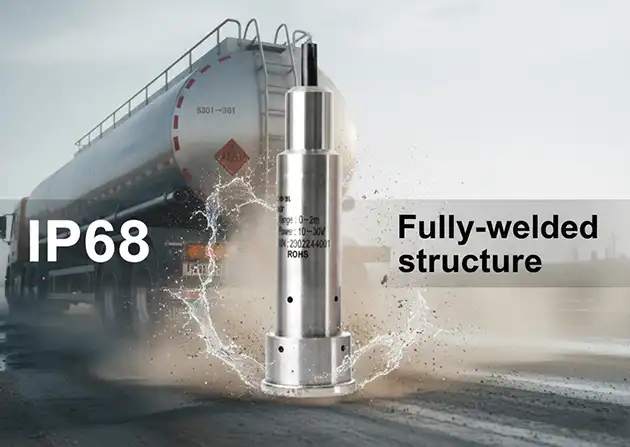
Submersible Pressure Sensors: These sensors are put right into the fuel and use hydraulic pressure to measure the amount. Their fully welded design and IP68 grade make sure they work reliably even when they are buried in water. The technology can be used for both stationary tanks and movable ones with magnetic suction base types that make setting them up and moving them around easy.
- Ultrasonic Sensors: These are non-contact ultrasound devices that are mounted above the fuel surface. They are perfect for uses with volatile fuels or where contamination worries make soaking unsafe. They work best in tanks with vents so that foam and gas don't get in the way.
- Float-Based Sensors: Old-fashioned floats that are linked to resistive or magnetic elements are cheap ways to show the amount of fuel, but they aren't accurate enough or durable enough for modern fuel management systems.
- Radar Sensors: These use FMCW or pulse radar technology and are very accurate for big holding tanks. They also don't get affected by changes in temperature, pressure, or vapor composition.
Digital vs. Analog Signal Outputs
Modern diesel level sensors have flexible output setups that let them work with a wide range of control systems. Traditional SCADA systems and PLCs work well with analog outputs, which are usually 4-20mA current loops or 0-5V/0-10V voltage signals. Because they can handle electrical noise and voltage drops better than voltage signals, current loop signals work best with long cable runs that are typical in large fuel storage sites.
Digital output choices include Modbus RTU/TCP, the HART protocol, and wireless connections through LoRa, GPRS, NB-IoT, or 4G networks. Digital methods allow for more complex diagnostics, distant setup, and transmission of more than just level data. Programmable digital circuit correction in advanced sensors lets you change measurement ranges, damping characteristics, and warning levels directly through the communication interface. This cuts down on the time needed to set up the system and lets you improve it from afar.
Criteria for Choosing the Best Diesel Level Sensor in 2026
Measurement Accuracy and Reliability
When choosing diesel level sensors, accuracy is still the most important thing. Most industrial uses need accuracy within ±0.25% to ±0.5% of full scale, which means that in a 10-meter tank, measurement mistakes of only 25 to 50 mm are acceptable. This level of accuracy has a direct effect on the value of an inventory, especially in places that handle millions of liters of fuel. In addition to basic accuracy requirements, buying teams must also look at long-term stability, which means how well the sensor can stay calibrated over years of constant use without drifting.
Because diesel has large thermal expansion rates, temperature correction is very important. Good sensors have built-in temperature adjustment systems that change pressure readings based on real-time temperature readings. This keeps the accuracy even when temperatures change with the seasons. This function is especially useful for marine uses and outdoor storage tanks where the weather changes a lot.
Environmental Compatibility
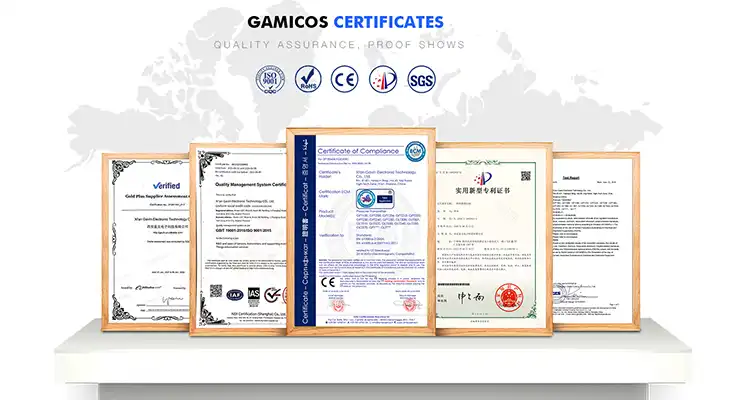
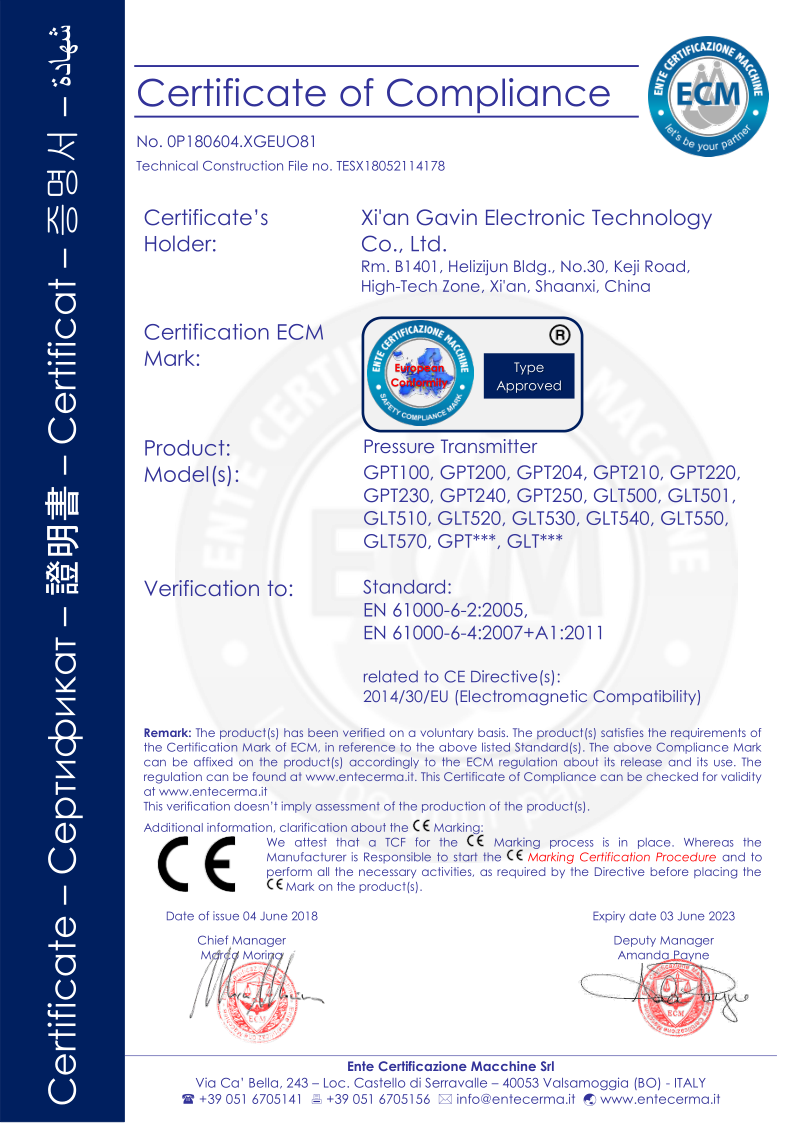
Important sensor properties are set by the working world. Diesel storage sites have to deal with high and low temperatures, high and low humidity, vibrations, and atmospheres that could explode. For sites in Europe, sensors must have the ATEX certification, and for projects around the world, they must have the IECEx certification. These certifications show that the sensors can safely work in Zone 1 or Zone 2 restricted areas. IP68 grades for entry protection make sure that sensor electronics are safe even when they are completely submerged or when they are washed with high-pressure water.
Vibration resistance is important for mobile uses on trucks, boats, and other industrial vehicles where mechanical shock and constant movement can stress sensing parts. Anti-vibration designs with flexible wire openings and mounting systems that absorb shock keep things from breaking down too soon. Chemical compatibility with diesel fuel, biodiesel mixes, and typical tank covering materials makes sure that the material will last a long time without rusting or breaking down.
Integration and Communication Capabilities
IoT systems are being used more and more in modern fuel management for centralized tracking, predictive repair, and automatic reordering. Wireless sensors get rid of the need for expensive wiring in repair situations and let you keep an eye on tanks that are far away or moving around. LoRa technology is good for rural areas because it allows for long-range, low-power communication. 4G/NB-IoT connectivity, on the other hand, ensures effective data transfer in areas with cell service.
Software support is part of integration, not just communication methods. When sensors offer RESTful APIs, MQTT publish/subscribe features, or compatibility with big industrial IoT platforms like Microsoft Azure IoT or AWS IoT Core, they make adoption faster and lower the cost of custom integration. Sensors that are linked to the cloud allow for complex analytics, finding of irregularities, and cross-facility benchmarking. These functions turn raw level data into operational information that can be used.
Supplier Reputation and Support
Total cost of ownership is affected by a supplier's track record, standards like ISO 9001 or AS9100, and the ability to provide help after the sale. Manufacturers that have been around for a long time and have locations all over the world have many benefits, such as replacement parts that are easy to find, local expert help, and standard product roadmaps that keep products from becoming obsolete. A warranty that lasts between 12 and 36 months shows that the company that made the product is confident in its reliability.
Customization is important, especially for OEM uses and one-of-a-kind installs. Flexible mounting options, custom wire lengths, specialized process connections, and private marking from suppliers make it possible to tailor solutions to specific operating needs. Large-scale operations and ongoing maintenance inventory needs can both be met by bulk supply capabilities and regular shipping schedules.
Top-Rated Diesel Level Sensors for Fuel Storage Tanks in 2026
GAMICOS GLT5001 Series
The GLT5001 is a custom-made solution that solves the problems that come up when measuring diesel level sensors in marine and commercial settings. This device has a very reliable silicon piezoresistive pressure sensor and also has automatic temperature adjustment and customizable digital circuit correction to make measurements very stable. The design is based on a lot of market research and direct customer feedback. It comes in two different versions: a normal model for traditional tank setups and a magnetic suction base version that lets it be quickly set up and moved in mobile tank monitoring situations.
Here are the core advantages distinguishing this sensor in demanding diesel storage applications:
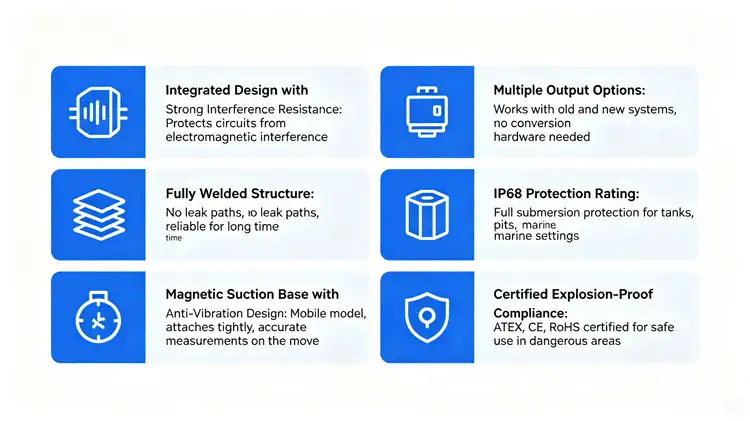
- Integrated Design with Strong Interference Resistance: The fully integrated electronics package protects delicate measurement circuits from electromagnetic interference that is common in factories. This keeps the signal strong even when it's close to motor drives, wireless transmitters, and high-voltage equipment.
- Multiple Output Options: The flexible analog and digital output options work with both old control systems and new IoT devices, so you don't need any signal conversion hardware and the system design is easier to understand.
- Fully Welded Structure: The welded structure doesn't have any possible leak paths through brazed or threaded joints. It also can handle pressure cycling, aging, and environmental stress tests while it's being made, so it will be reliable for a long time.
- IP68 Protection Rating: Full submersion protection lets it be installed in secure tanks, outdoor pits, or marine settings where flooding might happen temporarily during storms or fires.
- Magnetic Suction Base with Anti-Vibration Design: The mobile model attaches tightly to tank walls without being permanently mounted. This lets fleet workers keep an eye on portable fuel containers while keeping measurements accurate even when the containers are being moved around.
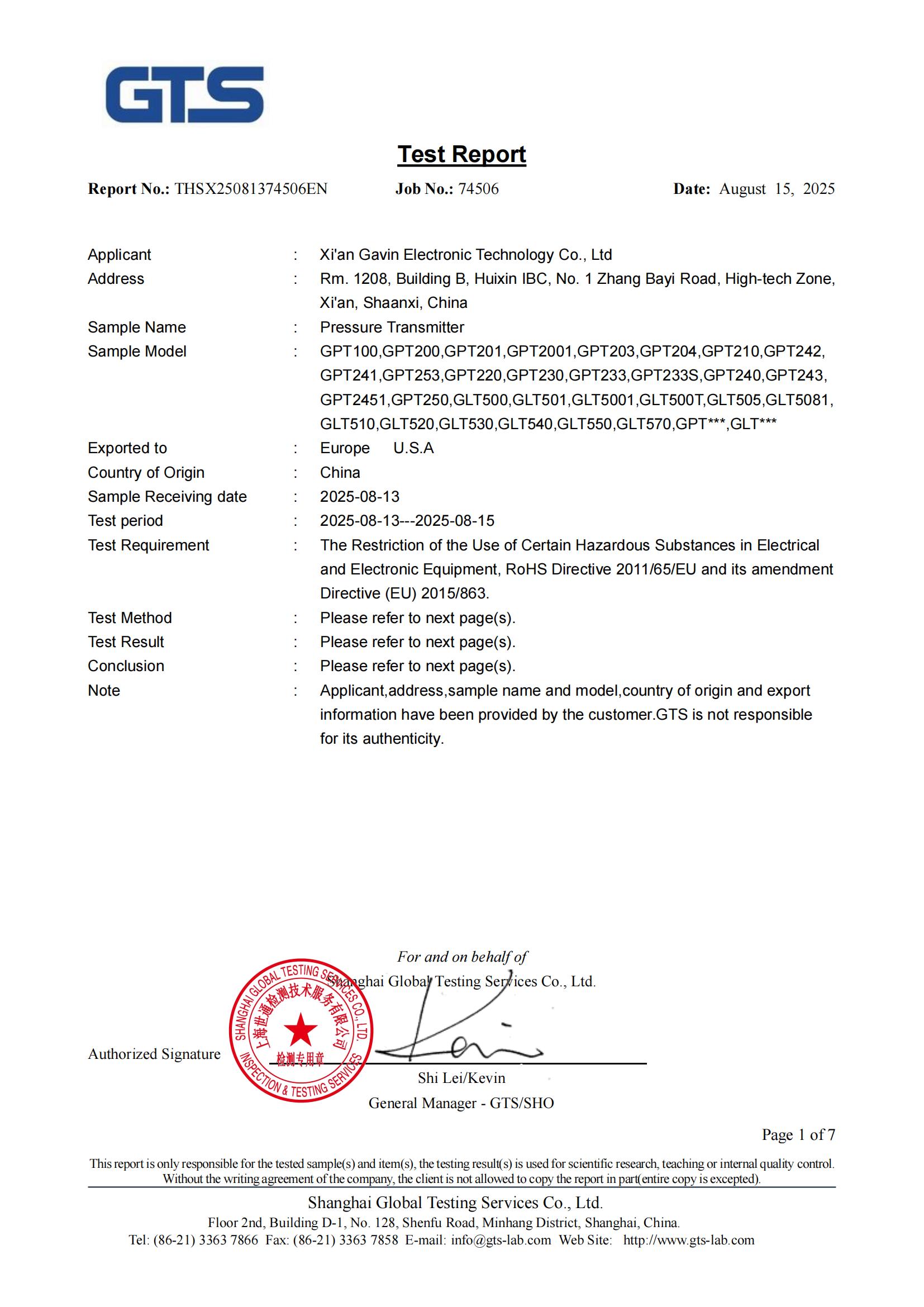
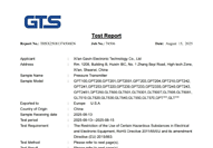
- Certified Explosion-Proof Compliance: ATEX, CE, and RoHS certifications show that the product is safe for use in dangerous areas and meets environmental standards. This makes it easier for international projects to keep track of compliance paperwork.
These benefits directly address common problems that fuel storage owners have, such as measurements that aren't accurate because of changes in temperature, installations that are hard to do and take too long, and sensors that fail too soon because of harsh weather conditions. Before shipping, the GLT5001 is put through pressure cycling, temperature aging, and environmental simulation tests to make sure it is reliable in the field.
Application Suitability
Marine Level Monitoring: Maritime operations need sensors that are very reliable because a broken sensor could put people's safety at sea or the environment at risk. The GLT5001 is used in important areas like fuel bunker tanks, balancing systems, rainwater storage, and sewage holding tanks. The corrosion-resistant materials and protected construction can handle being exposed to saltwater, and the anti-vibration design keeps the accuracy even when the vessel and engine are moving all the time.
Fuel Storage Tank Monitoring: The GLT5001 provides accurate, constant level readings at gas stations, bulk fuel tanks, airline refueling facilities, and marine fueling stations, all of which are part of the infrastructure used to distribute gasoline. The explosion-proof design meets strict safety standards for storing volatile fuels, and temperature adjustment makes sure that inventory is managed correctly as diesel density changes with daily and yearly temperature changes. Real-time tracking lets you set up automatic inventory systems, find thieves by looking for sudden drops in stock levels, and reorder goods before they run out based on patterns of consumption.
Comparative Market Context
While established brands like Siemens, Honeywell, and Endress+Hauser offer proven fuel level solutions, procurement managers increasingly recognize that application-specific designs often outperform general-purpose industrial sensors. Diesel sensors that are custom-made have features that directly address fuel management problems. These include temperature compensation that is set for diesel's thermal properties, materials that are best for long-term fuel contact, and output ranges that fit the shape of most tanks. The key assessment factors should focus on total cost of ownership rather than original purchase price, considering installation difficulty, calibration frequency, spare parts availability, and expected service life.
Installation, Calibration, and Maintenance Guide for Diesel Level Sensors
Pre-Installation Planning
A thorough site evaluation is the first step to a successful diesel level sensor placement. The best place to put sensors depends on the shape of the tank, the materials used, and any holes that are already there. Submersible pressure sensors should be put in place where the fuel pool is the lowest. They shouldn't be put near fill pipes, where the flow of fuel during delivery could mess up the readings. There is space around the sensor so that it doesn't touch the bottom of the tank when the temperature rises or falls.
Electrical infrastructure planning includes things like how to get power, where to run signal cables, and how to connect new systems to control systems that are already in place. Shielded cable that is rated for the installation environment—outdoor-rated for runs that will be open to the elements, and intrinsically safe wiring for areas that could be dangerous—keeps the signal strong and makes sure that the code is followed. High-temperature areas, mechanical stress points, and sources of electromagnetic radiation should be avoided by conduit paths.
Installation Procedures
Mounting submersible sensors requires attention to orientation and cable management. To keep the pressure port from being loaded from the side, sensors should hang upright with their weight spread out evenly. Supporting the wire every one to two meters keeps the sensor cable entry from being overworked, which is a frequent place where things go wrong. For magnetic suction base models to stick properly, the mounting surface needs to be clean and smooth. Rust, paint, or coats need to be removed from the surface before it can be used.
Electrical connections must meet applicable standards for hazardous areas. Junction boxes have the right certifications, the right ferrules or ring ends are used to connect the wires, and grounding links protect against lightning and noise. When you carefully follow the manufacturer's wiring designs, you can avoid output signal mistakes and keep sensitive electronics safe from reverse polarity or overvoltage situations.
Calibration Methods and Frequency
These days, digital sensors usually come factory-calibrated and with certificates that can be tracked back to national standards. Most of the time, field testing is enough instead of full calibration. To verify, the tank level must be measured with a verified reference method, like a calibrated dip stick or ultrasound measurement, and then compared to the sensor output. If there are deviations outside the acceptable ranges, recalibration processes are initiated. For analog sensors, zero and span changes need to be made in a controlled environment.
For zero calibration, the sensor is in air (or an empty tank), and for span calibration, you need to know how much fuel is in the tank or apply measured pressure. Digital sensors that can be programmed to make corrections let field adjustments be made through software interfaces. This makes recalibration easier because no physical adjustments need to be made. Most industrial applications only need to be checked once a year, but important property transfer or regulatory reporting tasks may need to be checked more often.
Maintenance Best Practices
Regular repair stops common failure types and makes sensors last longer. During building walkthroughs, visual inspection finds physical damage, rust, or worn cables that need to be fixed. Cleaning the sensor surfaces on a regular basis gets rid of sludge that builds up and could affect the accuracy of the measurements. However, the fully sealed design of good sensors reduces the effect of contamination. Checking electrical connections for weak leads, water getting in, or insulation wearing down stops problems before they happen.
Proactive debugging fixes speed problems before they become totally broken. Signal drift that is too high may mean that the sensor is getting old and needs to be re-calibrated or replaced. Unreliable readings could mean that connections are loose, wires are broken, or there is electrical interference that needs to be systematically diagnosed. Recording how well sensors work over time lets you plan ahead for maintenance, so when they're getting close to the end of their useful life, they can be replaced during planned downtimes instead of emergencies that stop operations.
Procurement Insights: Buying Diesel Level Sensors for Fuel Storage Tanks
Sourcing Strategies for B2B Buyers
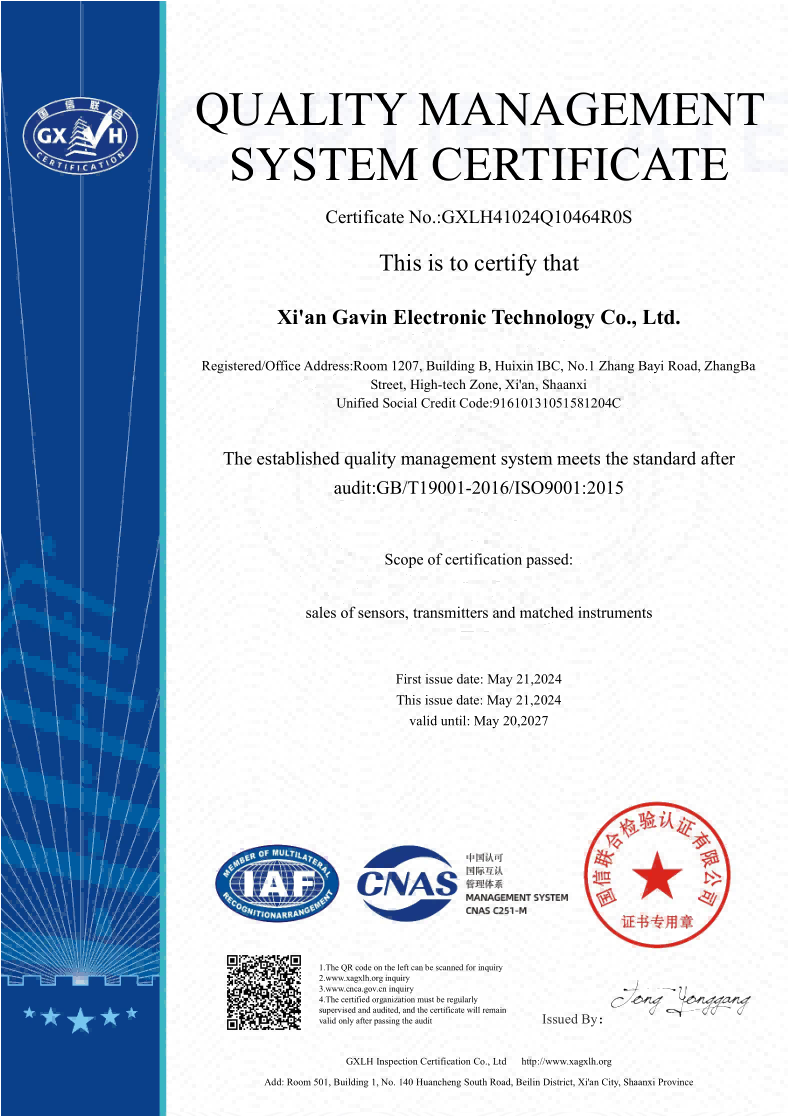
To find trusted diesel level sensor suppliers, you need to look at more than just the product specs. Manufacturers with ISO 9001 quality certifications show that they handle quality in a planned way, and certifications specific to the industry, like ATEX or SIL grades, show that they are technically competent. Direct relationships with manufacturers often have benefits over relationships with distributors. For example, you can get access to expert help, make changes to the product, and get better prices when you buy in bulk.
When global sourcing, things to think about are wait times, shipping processes, and the paperwork needed to bring goods into a country. Manufacturers that sell to foreign markets keep stock in regional stores. This cuts delivery times from months to weeks. Understanding Incoterms makes it clear who is responsible for sending costs, security, and clearing customs, which keeps you from having to pay extra fees you didn't plan. Suppliers who know how to make export documents make the process easier by giving business invoices, certificates of origin, and technical documents that are made to meet the needs of the target country.
Bulk Pricing and Volume Agreements
Negotiating bulk price deals makes sense for large-scale deployments or ongoing repair inventory needs. When you buy 50, 100, or 500 units, you get a discount. This is because of economies of scale in making and lower per-unit sales costs. Framework deals that set prices, shipping terms, and quality standards for long-term purchasing relationships are good for both parties because they make orders more predictable and make administration easier.
Companies that add sensors to systems or tools should give OEM agreements extra thought. In addition to reasonable pricing, good OEM relationships offer customization services like changing the length of cables, making custom process connections, and private labels. These services turn standard products into unique solutions. Technical cooperation during the design process makes sure that the sensor's specs match the needs of the application, which saves money by avoiding expensive redesigns after the product has been committed to production.
Warranty and After-Sales Support
Total ownership costs are affected by warranty coverage in a big way because it protects against early breakdowns. Standard guarantees cover flaws in the way the product was made and problems with the materials for 12 to 24 months. Options for longer warranties offer more protection, but weighing cost against value requires knowing how often things break down and how much they cost to repair. The warranty terms should make it clear what is covered, how to file a claim, and who is responsible for testing, shipping, and installation.
Post-warranty help is important for the whole span of a product. When manufacturers keep making new parts and offer repair services, equipment has a longer useful life, which protects the investment. How quickly working problems are fixed depends on the quality of technical help, such as reaction time, depth of knowledge, and ability to speak more than one language. Online tools like startup guides, repair instructions, and video lessons let people fix problems on their own, which cuts down on downtime.
GAMICOS Partnership Advantages
GAMICOS has a lot of experience measuring liquid level and pressure, and they use that knowledge in fuel storage uses all over the world. Our engineering team works directly with B2B procurement professionals to understand the unique challenges of each application and suggest solutions that meet both business needs and price limits. Every year, our goods are used by thousands of people in over 100 countries, and we make sure that our production capacity and supply chain resilience are strong enough to support both initial launches and ongoing operating needs.
Because we can customize them, we can turn common sensors into options that are just right for you. OEM and ODM services include changes to the mechanical parts, changes to the electrical specifications, custom calibration ranges, and private marking. These services let customers make their products stand out while using our manufacturing knowledge. Quality control measures like pressure cycles, aging tests, and outdoor simulations make sure that each batch performs the same way. This is backed up by certifications that meet international standards for use in dangerous areas and electromagnetic compatibility.
Conclusion
In 2026, choosing the best diesel level sensor for fuel storage tanks means finding a balance between technical performance, environmental suitability, the ability to integrate, and the stability of the source. Pressure-based submersible sensors with silicon piezoresistive technology, automatic temperature adjustment, and multiple output choices provide the accuracy and longevity needed in oil, chemical, marine, and energy industries. Diesel-specific measurement problems can be solved by designs like the GAMICOS GLT5001, which has features like explosion-proof construction, IP68 sealing, and anti-vibration mounting choices. A successful buying process includes more than just the original purchase. It also includes planning the installation, following the calibration procedures, doing preventative maintenance, and building long-term relationships with suppliers that support operational excellence throughout the sensor's lifetime.
FAQ
Q1: How does diesel level sensor accuracy compare to traditional fuel gauges?
A: Modern pressure-based diesel level sensors are very accurate, within ±0.25% to ±0.5% full scale. This is much better than standard float gauges, which are only accurate within ±1% to ±2%. This level of accuracy means that measurements will be off by less than 50 mm in a 10-meter tank, while regular measures will be off by 200 mm. Temperature correction in modern sensors keeps them accurate even when temperatures change with the seasons, which can cause big changes in the density of diesel fuel. This makes sure that the inventory value is accurate.
Q2: Are diesel fuel level sensors compatible with existing fuel management systems?
A: Good sensors have adjustable output setups that make them work with almost any control system. Traditional PLCs and SCADA systems can talk to analog 4-20mA current loop outputs directly. Digital standards, such as Modbus RTU/TCP, let modern control systems talk to analog outputs. Wireless devices send data to cloud-based fuel management platforms over LoRa, GPRS, NB-IoT, or 4G networks. This lets for both local and central tracking without changing the control system.
Q3: What causes diesel level sensor measurement errors and how can they be prevented?
A: Changes in density caused by temperature, tank deformation under load, sensor mounting direction mistakes, and electrical interference are all common sources of errors. Automatic temperature adjustment evens out changes in density, and the right way to place the sensor makes sure it is vertical and prevents mechanical stress. Electrical noise can be stopped with shielded wires and good grounding. Regular checking of the calibration catches sensor drift before it affects operations. This keeps measurement confidence high throughout the duration of the sensor.
Partner with a Trusted Diesel Level Sensor Manufacturer
GAMICOS is an expert at making diesel level sensor solutions that are precisely designed to meet the specific needs of industrial fuel storage uses. Our GLT5001 line uses cutting-edge silicon piezoresistive sensing technology and is built to last in harsh environments like oil and gas. Its accurate measurements lower operations risk and make managing fuel inventory easier. With our full OEM/ODM customization options, we can turn standard sensors into application-optimized solutions that meet all of your exact requirements for weather certifications, mounting setup, and output signals.
We've worked with customers in North America, Europe, and emerging markets, so we know how to deal with different regulatory requirements, installation problems, and business objectives. Whether you need to select sensors for a single facility upgrade or set up supply chain partnerships for ongoing international projects, our expert team is here to help you from the initial specification stage through commissioning and beyond. Get in touch with our experts at info@gamicos.com to talk about your diesel fuel level measurement needs and get personalized advice based on decades of experience making sensors.
References
1. Bera, S. C., & Mandal, H. (2022). Advanced Sensor Technologies for Industrial Automation and Process Control. Institute of Electrical and Electronics Engineers Press.
2. Chen, L., & Morrison, R. (2023). "Comparative Analysis of Fuel Level Measurement Technologies in Petroleum Storage Facilities." Journal of Industrial Instrumentation and Control Systems, 47(3), 215-234.
3. International Society of Automation. (2024). ISA-12.27.01: Requirements for Process Sealing Between Electrical Systems and Flammable or Combustible Process Fluids. Research Triangle Park: ISA Publications.
4. Liptak, B. G. (Ed.). (2023). Instrument Engineers' Handbook, Volume One: Process Measurement and Analysis (6th ed.). CRC Press.
5. Thompson, J. R., & Anderson, M. K. (2025). "Silicon Piezoresistive Pressure Sensors: Advances in Temperature Compensation and Long-Term Stability." Sensors and Actuators A: Physical, 412, 114567-114583.
6. Webster, J. G., & Eren, H. (Eds.). (2024). Measurement, Instrumentation, and Sensors Handbook: Spatial, Mechanical, Thermal, and Radiation Measurement (3rd ed.). CRC Press.

Halen
With over 12 years of experience in fluid sensing technology, Halen specializes in helping clients select and optimize oil level sensors for a wide range of industries—including automotive, marine, heavy machinery, and energy.
We're here to help — submit your request anytime!
Let us know how we can help solve your pressure level measurement challenge.
_1757930850792.jpg)
Recommended Blog
OEM Wireless Level Sensors: Custom Solutions for Your Needs
OEM Wireless Level Sensors: Custom Solutions for Your Needs
OEM Wireless Level Sensors: Custom Solutions for Your Needs
OEM Wireless Level Sensors: Custom Solutions for Your Needs