Top Features to Look for in a Water Level Depth Sensor
Understanding Water Level Depth Sensors and Their Core Features
- Understanding Water Level Depth Sensors and Their Core Features
- Top 5 Features to Prioritize When Choosing a Water Level Depth Sensor
- Comparing Popular Water Level Depth Sensor Models and Brands
- Practical Procurement Considerations for Bulk and Custom Orders
- Ensuring Long-Term Performance: Calibration and Maintenance Best Practices
- Conclusion
- FAQ
- Partner with a Trusted Water Level Depth Sensor Manufacturer
- References
When purchasing a water level depth sensor for industrial use, purchasing managers need to look at a number of important factors that have a direct effect on measurement accuracy, operating efficiency, and long-term value. For the best monitor, it should be able to measure things accurately, be built to last, work well with other systems, and need little upkeep. By knowing these things, engineering teams can match sensor technology to the needs of each application, such as controlling industrial process tanks, keeping an eye on systems that feed water at a steady pressure, or managing swimming pool operations. This detailed guide looks at the main differences between high-performance sensors and basic measuring tools. It does this to help B2B buyers make smart choices that meet the needs of both their current projects and their future needs for expansion.

Understanding Water Level Depth Sensors and Their Core Features
The Operating Principle Behind Hydrostatic Pressure Measurement
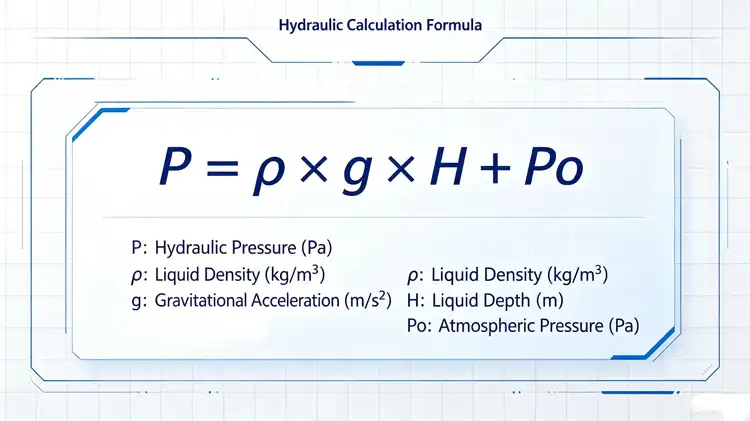
The basic idea behind water level depth sensors is that atmospheric pressure rises in direct proportion to the depth of the liquid. When you put an underwater probe at a certain depth, the pressure on its sensing element gives you a clear reading of the level. The formula for the calculation is P = ρ × g × H + Po, where P is the pressure at the sensor's surface, ρ is the density of the liquid, g is the speed of gravity, H is the depth below the surface of the liquid, and Po is the pressure of the air above the liquid. Because of this connection, sensors can provide millimeter-level accuracy for a wide range of liquids and tank designs.
Pressure-Based vs. Ultrasonic Sensor Technologies
There are two main types of sensor systems on the market, and each works in a different way. Pressure-based underwater sensors work great with corrosive, thick, or dirty liquids because the sensing element stays in direct touch with the medium being measured thanks to strong protective housings. These gadgets have very high dependability scores because their structures are simple and don't have any moving parts. Ultrasonic sensors, on the other hand, measure without touching the liquid because they send out sound waves from above it. This makes them useful in situations where soaking is not possible. However, foam, vapor, or big changes in temperature can mess up ultrasonic technology. On the other hand, underwater pressure monitors stay accurate in harsh conditions like high-pressure, high-temperature, and chemically aggressive environments.
Why Measurement Accuracy Matters for B2B Operations?
Precision of measurements has a direct effect on operating safety, process efficiency, and following the rules in all industry sectors. Accurate level data is needed for constant-pressure water supply systems that serve business complexes and high-rise buildings so that exit pressure stays stable even when demand changes. This keeps equipment from breaking and service quality high. To get the best chemical treatment, lower the risk of overflow, and save water, swimming pool management needs to be very precise, down to the millimeter level.
Pharmaceutical and food processing plants have strict rules about how to record things, and if measurements aren't accurate, they can break those rules. Advanced devices have silicon piezoresistive sensor cores that provide the needed accuracy by automatically adjusting to changes in temperature, using customizable digital correction, and signal conditioning that keeps accuracy over a wide range of working temperatures.
Top 5 Features to Prioritize When Choosing a Water Level Depth Sensor
To choose the best sensor, you need to carefully look at its performance traits that have a direct effect on its dependability, ability to be integrated, and overall cost of ownership. The following features are very important for buying teams that are in charge of factory automation projects, OEM customization needs, or equipment replacement projects.
Measurement Accuracy and Resolution Specifications
High-precision measurements are the basis for good safety management and process control. Industrial-grade sensors should be accurate within ±0.25% to ±0.5% of full scale and have a precision fine enough to pick up on small changes in level that are important for the job. This is exactly what the water level depth sensor does with its silicon piezoresistive pressure core, which keeps its preset accuracy across a wide range of pressures.
Automatic temperature correction stops thermal drift, which can make measurements less stable in places where the temperature changes often. To make sure the device meets the precise needs of a particular application, procurement managers should ask for detailed specification sheets that show how accurate the device is across the intended temperature range, pressure span, and media compatibility.
Material Durability and Environmental Protection Ratings
When sensors are used in industrial settings, they are constantly put under mechanical stress, chemical attack, temperature changes, and water entry. All-stainless steel construction using types like 316L protects against corrosion in chlorinated water, acidic solutions, and alkaline compounds that are found in chemical processing, marine uses, and wastewater treatment. Structures with multiple layers of safety keep sensitive gadgets from getting damaged while they are being installed or used.
A very important thing to think about when it comes to durability is the venting cable design. High-quality sensors use cable materials that are resistant to wear, oil, and acid-alkali, and they have high-strength pressure vent channels that keep moisture from building up while keeping the atmospheric reference accuracy. IP68 protection ratings confirm that the submersible can be used continuously underwater, and fully waterproof sealed circuit technology guarantees long-term dependability even when fully submerged and under pressure.
Output Signal Options and System Integration Compatibility
Sensors in modern factories need to work well with SCADA systems, PLCs, and Internet of Things (IoT) tracking tools that are already in place. Standard industrial signal outputs, such as 0-5V or 0-10V voltage signals, 4-20mA current loops, and RS485 digital communication protocols, let you connect directly to control systems without having to use extra hardware to convert the signals. Multiple signal output options within a single sensor family make it easier for resellers and OEM makers to keep track of their inventory.
Protocols like LoRa, GPRS, NB-IoT, and 4G allow wireless contact, which makes it possible to watch installations that are spread out in different places. These include water conservation projects, oil field tank farms, and environmental monitoring networks. When engineering teams look at integration needs, they should make sure that the protocols will work together, think about how the system will grow in the future, and decide whether wireless or wired connection is better for the application environment.
Power Supply Flexibility and Energy Efficiency
Power needs change a lot depending on the deployment situation, which affects how hard the installation is and how much it costs to run on a regular basis. Traditional wired monitors that get their power from control systems work best in places with established electricity infrastructure. On the other hand, battery- or solar-powered devices make tracking possible in remote areas that don't have access to the grid. Low power usage increases upkeep intervals by lowering the number of times batteries need to be replaced.
This is especially important for installations in dangerous or hard-to-reach places. Some more modern sensors can collect energy or go into ultra-low-power sleep modes that only start measuring cycles when the host system asks them to. Specifications for purchases should include the maximum amount of power that can be used, the voltages that can be used, and any certifications that are needed to make the equipment safe to use in dangerous environments like those found in petroleum and fuel storage uses.
Maintenance Accessibility and Calibration Support
For operations to keep going, repair processes must be easy to understand and calibration services must be easy to get to so that downtime is kept to a minimum. High-quality sensors have liquid entry designs that don't get clogged and pressure vent holes that work at their best. These features increase the service life of the sensor by keeping dirt and biological fouling from building up. The surface of the transducer should be easy to clean without taking it apart, and the links between the cables should have a safe strain relief that keeps water out during repeated maintenance processes.
Manufacturers should give clear calibration plans based on how hard the job is, offer approved third-party calibration services that can be traced back to national metrology standards, and provide field-serviceable calibration tools or thorough methods for in-house maintenance teams. Fine-tuning is possible with sensors that can make digital corrections that can be programmed without having to change the hardware. This lowers the total cost of ownership over the span of the device. When handling big projects, procurement teams should choose suppliers who offer full technical support, such as help with installation, debugging, and quick availability of new parts.
All together, these five factors show if a water level depth sensor will work reliably, be easy to keep, and be cost-effective over its entire life. The GLT500 submersible sensor has these important features: accurate measurements, long-lasting construction, flexible signal outputs, and an easy-to-maintain design. These features make it suitable for demanding uses in the shipping, oil fields, petrochemicals, wastewater treatment, and water conservation industries.
Comparing Popular Water Level Depth Sensor Models and Brands
In the market for industrial water level depth sensors, there are both well-known foreign names and smaller, more specialized companies that offer competitive options and the freedom to make changes as needed. When procurement teams know how different suppliers fit into the market, they can better balance performance needs, price limits, and support standards.
Established Industry Leaders and Their Market Positioning
Big industrial companies like Honeywell, Siemens, and ABB keep their good names by offering a wide range of products, having service networks around the world, and offering full warranty plans. These names usually have higher prices, but they are reliable in mission-critical situations, have large certification files that cover foreign safety standards, and promise long-term availability, which is important for managing spare parts. Their sensor products work well with their own computer systems, which makes adoption easier for places that already use these platforms. But customization choices might only be standard catalog variations, and large projects or OEM uses that need custom specs might not be able to meet the minimum order amounts.
Technology Selection for Specific Application Requirements
Choosing between ultrasonic measurement technology and pressure-based submersible devices relies on the type of liquid, the limitations of the installation, and the level of accuracy that is needed. When testing thick waters, chemically aggressive media, or situations where foam on the top would block ultrasonic waves, submersible devices work best. Their touch measurement method gives the same level of accuracy no matter how the temperatures change or if there is air on top of the liquid.
Submersible sensors are stable and work well in systems that feed water at a constant pressure. They are also useful for swimming pool level sensing because they can measure with millimeter accuracy even when exposed to chlorine and temperature changes. When measuring clean liquids without touching them in open tanks, ultrasonic sensors are used because they don't get fouled easily and aren't affected by external noise. To help choose the right technology, procurement specs should make the media properties, installation environment, and accuracy standards very clear.
Wireless vs. Wired Connectivity Trade-offs
Communication design has a big effect on how hard it is to install, how scalable the system is, and how much upkeep it needs on a regular basis. When it comes to electrically noisy industrial settings, wired sensors offer reliable, interference-free data transfer that works with a wide range of control platforms thanks to well-established protocols. Routing cables can require a lot of installation work, especially for retrofit projects or spread tracking uses. Wireless sensors don't need cables, so they can be quickly set up at multiple measurement points. They can also be used in places without electricity because they run on batteries.
The trade-off includes regular battery upkeep, the chance of signal interference in crowded radio areas, and data transfer security concerns. For big facilities, hybrid methods that mix local wired networks with wireless gateway connections keep these things in check. Engineering teams should look at the site-specific limitations, such as the distance between sensors and control rooms, the number of conduit routes that are available, the amount of electromagnetic interference, and the security rules that guide the use of wireless devices.
Practical Procurement Considerations for Bulk and Custom Orders
A successful buying process includes more than just technical requirements. It also includes evaluating suppliers, lowering costs, and coordinating logistics to make sure the project is finished on time.
Cost-Benefit Analysis and Volume Pricing Strategies
The budget for the original buy price is affected by the total cost of ownership, which includes the work needed for installation, the frequency of calibration, the upkeep that needs to be done, the expected service life, and the availability of replacement parts. Some sensors may be more valuable in the long run because they last longer between calibrations, are built more solidly so they don't need to be replaced as often, and come with better technical help that cuts down on the time it takes to figure out what's wrong.
When multiple sensors are needed for a project or when measurement devices need to be built into made equipment, volume price comes into play. For predictable needs, procurement managers should ask for tiered price plans, look into annual buy agreements, and arrange package deals that include spare units, calibration services, and technical training. When comparing quotes, it's important to make sure that the specs are the same so that the performance levels are the same. For example, cheap sensors that aren't as accurate or can't handle changes in temperature may end up costing more in the long run because they need more upkeep and calibration.
Supplier Evaluation Criteria Beyond Product Specifications
Reliable source partnerships offer more than just the physical monitor. They also offer technical knowledge, quick support, and business security that guarantees parts will always be available. Key things that are looked at are manufacturing certifications like ISO 9001 for quality management and ISO 14001 for environmental standards, product certifications like CE, RoHS, and application-specific safety approvals, customer references from similar industries and application scales, and technical support skills like language skills for international buying.
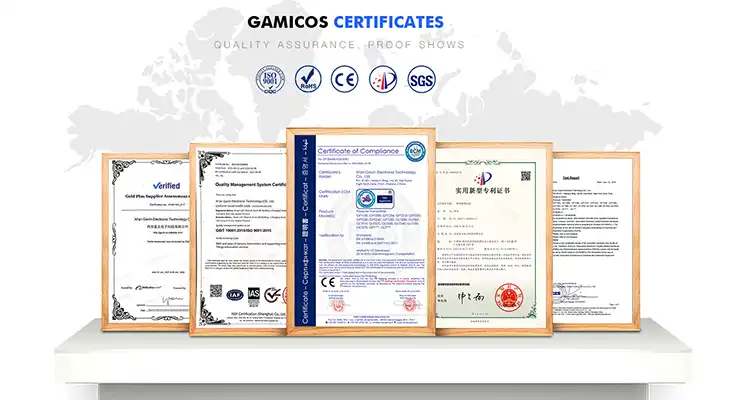
Manufacturer paperwork should show that a distributor is an approved dealer, and sample submissions and process openness should show that an OEM supplier can customize the product. Financial stability signs help you figure out if a company can keep their end of multi-year contracts and guarantee promises. GAMICOS is a good example of a seller that meets these requirements because their factories are approved to international standards, they send their products to more than 100 countries, and they have specialized research and development (R&D) teams that can help with custom needs.
Customization Options and Lead Time Management
While standard catalog water level depth sensors can meet most measurement needs, many industrial uses need custom specs, such as non-standard pressure ranges, cable lengths, electrical connections, or housing materials that aren't found in other products. Suppliers that offer full OEM and ODM services can change the features of sensors, the messages they send out, how they are mounted, and even the package to fit the needs of each customer.
The GLT500 product line shows this flexibility by offering both standard designs and custom versions with wires that don't wear out, special sealing for harsh locations, and programmable signal outputs. When setting deadlines for purchases, it's important to remember that customization development times can be anywhere from two to six weeks, depending on how complicated the change is. Also, manufacturing lead times depend on the number of orders and when they are made. If you place an order quickly, you might have to pay more, but if you plan ahead, you can get normal wait times and maybe even better prices. When project plans, design completion dates, and delivery requirements are made clear, it's easier for providers to figure out how much to make and commit to reliable delivery dates that help meet building goals.
Ensuring Long-Term Performance: Calibration and Maintenance Best Practices
Even the best sensors need to be checked on a regular basis to keep their measurements accurate and to make them last longer. Structured repair programs keep measurement infrastructure's investment worth high and stop it from breaking down too soon.
Recommended Calibration Intervals and Procedures
How often you need to calibrate depends on how important the application is, how bad the surroundings is, and what the rules say. For more demanding tracking jobs, once a year calibration rounds are fine, but for more important process control jobs, they may need to be checked every three months. Industries that are regulated, like medicines and food processing, have to show that their calibrations are traceable to well-known standards.
Some useful ways to calibrate sensors are to compare their results to calibrated reference gauges at different points along the measurement range, to use deadweight testers for pressure-based sensors, or to use modeling tools provided by the maker. Field calibration steps should be written down in standard operating procedures, carried out by trained staff, and tracked in systems for managing repair. Some sensors can be calibrated while they are in place by making changes to the software, while others need to be taken out and checked in a lab. This affects how much downtime is planned for during calibration rounds.
Common Maintenance Challenges and Practical Solutions
The most common problems with underwater sensors are biofouling and sediment buildup, which makes them less accurate over time because the deposits change how pressure is transmitted to the detecting element. Regular inspections should include looking at the sensor body and wire visually, cleaning the transducer face gently with the right solvents that won't damage the protected coatings, and making sure that the vent tubes don't get clogged up. Quality sensors like the GLT500 have an anti-clogging design that reduces these problems by optimizing the inlet geometry. However, upkeep is still needed.
Electromagnetic noise, physical barriers, or network congestion can all cause signal interference that affects wireless devices. To fix the problem, interference sources must be carefully separated and wireless gateways may need to be moved. To keep cables from getting damaged by wear and tear, chemicals, or mechanical stress, they need to be carefully routed during installation and high-wear areas need to be checked on a regular basis. Keeping extra sensors for important measurement points on hand lets you change them right away if one fails, so the process doesn't stop while the failed unit is being fixed or replaced.
Conclusion
To choose the right water level depth sensor, you have to weigh the costs and deadlines of the project against the accuracy of the measurements, the sensor's ability to work with other systems, and its ability to be supported in the long term. Underwater devices that work with pressure have been shown to be reliable in harsh settings with harsh chemicals, thick liquids, or high pressure. They also last a very long time because they are simple and don't have any moving parts.
The important factors listed, including accuracy requirements, material building, signal compatibility, power flexibility, and ease of upkeep, make it possible to compare different choices in a structured way. Successful buying goes beyond the initial purchase and includes building relationships with suppliers that provide technical support, the ability to make changes, and quick service that protects investments in measurement systems throughout their useful lives.
FAQ
Q1: How often should water level depth sensors be calibrated?
A: The length of time between calibrations depends on how important the application is and how it is being used. Regulatory compliance settings, such as those that handle pharmaceuticals or food, usually need to be checked every three to six months and have clear records of all the steps taken. For industrial process control, calibration rounds are usually done once a year, but for non-critical tracking, they may be done every two years. More regular checks are needed in harsh settings with high particulate loads, extreme temperatures, or chemicals that are harmful.
Q2: Are modern sensors compatible with existing control systems?
A: Modern industrial sensors work with a wide range of SCADA platforms, PLCs, and remote control systems because they support standard communication methods. Most control gear can join directly to the analog outputs, which include 4-20mA current loops and 0-10V voltage signals, without having to go through an interface converter. Digital protocols like RS485 with Modbus RTU make it possible to connect to modern devices that allow fieldbus transmission. Gateways connect radio protocols to Ethernet or serial links that work with current infrastructure so that wireless sensors can talk to each other.
Q3: What distinguishes pressure sensors from ultrasonic measurement devices?
A: Pressure-based underwater sensors measure hydrostatic force directly through submerged sensing elements. They provide accurate readings in a wide range of liquids, such as those that are thick, corrosive, or contaminated. Their touch measurement method works the same way every time, even when there is foam, mist, or different temperatures on the surface. Sound waves are sent out by ultrasonic sensors from above the liquid's surface. The echo return time is used to figure out the level without touching the medium being monitored. This non-contact method works well for clean liquids when soaking is not an option, but it can't handle foam, air, or big differences in temperature.
Partner with a Trusted Water Level Depth Sensor Manufacturer
GAMICOS makes precise solutions for measuring liquid level and pressure that are made for tough industrial uses all over the world. Our GLT500 submersible water level depth sensor is accurate to the millimeter level thanks to its advanced silicon piezoresistive technology, all-stainless steel construction, and fully waterproof sealed circuits. It was made to last for a long time in applications like chemical processing, oil field operations, water supply management, and wastewater treatment.
We help you buy in bulk by offering reasonable volume prices, full OEM/ODM customization, including wire specs and signal outputs, and quick technical support throughout the entire project lifecycle. Our engineering teams can draw on our many years of experience working with clients in 98 countries on applications. This is backed up by strict quality standards and specialized research and development (R&D) resources. Get in touch with our team at info@gamicos.com to talk about your exact measurement needs and get full details on water level depth sensor options that will help your business run more smoothly and your project succeed.
References
1. Zhang, L., & Wang, H. (2021). Industrial Pressure Sensors: Technology and Applications. Instrumentation Press.
2. Martinez, R. (2020). "Hydrostatic Level Measurement in Process Industries." Journal of Industrial Automation, 45(3), 178-195.
3. Thompson, J., & Kumar, S. (2022). Sensor Selection Guide for Liquid Level Monitoring. Engineering Publications International.
4. European Committee for Standardization. (2019). EN 61326-1:2013 – Measurement and Control Equipment EMC Requirements. CEN Publications.
5. Anderson, M. (2021). "Comparative Analysis of Submersible and Ultrasonic Level Sensors." Process Measurement and Control Quarterly, 38(2), 67-82.
6. International Society of Automation. (2020). ISA-51.1-1979 (R2020) – Process Instrumentation Terminology. ISA Standards and Practices Department.
Spring
Spring, With 5 years of experience in sensor technology and product development, Mark specializes in helping clients identify the optimal pressure and level sensor solutions for demanding industrial environments。
We're here to help — submit your request anytime!
Let us know how we can help solve your pressure level measurement challenge.

_1757930850792.jpg)






Recommended Blog
What output signals do submersible level sensors typically provide?
What output signals do submersible level sensors typically provide?

How to Choose a Well Level Sensor for Deep-Bore Applications?
