Best Ceramic Pressure Sensors for Wastewater Treatment in Asia
Understanding Ceramic Pressure Sensors: Working Principles and Benefits
- Understanding Ceramic Pressure Sensors: Working Principles and Benefits
- Comparing Ceramic Pressure Sensors with Other Sensor Technologies
- Selecting the Best Ceramic Pressure Sensor for Wastewater Treatment in Asia
- Customization, Installation, and Maintenance for Optimal Sensor Performance
- Conclusion
- FAQ
- Partner with GAMICOS for Superior Ceramic Pressure Sensor Solutions
- References
Engineers and procurement managers always look to cutting-edge technologies that provide remarkable durability and accuracy when looking for the finest ceramic pressure sensor solutions for wastewater treatment plants around Asia. In contrast to conventional metal-based alternatives, these specialized devices provide improved corrosion resistance by using cutting-edge ceramic materials to survive the severe chemical conditions often seen in sewage processing facilities. Piezoresistive or capacitive ceramic sensing elements work together to offer accurate pressure readings in difficult situations where traditional sensors often malfunction, making them essential for preserving operational effectiveness in contemporary wastewater treatment facilities.
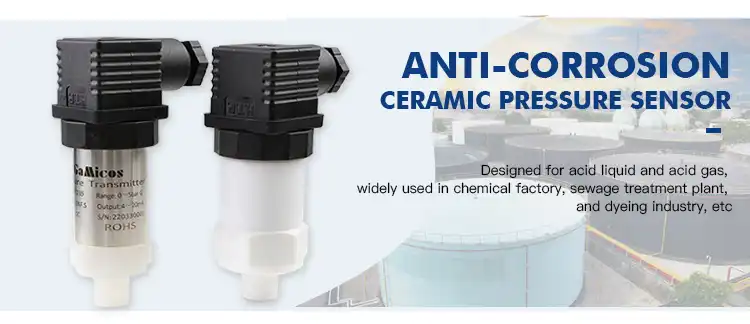
Understanding Ceramic Pressure Sensors: Working Principles and Benefits
Ceramic pressure sensors are an example of a technical development that uses advanced material engineering to meet the demanding needs of wastewater treatment applications. These gadgets use the piezoelectric qualities of ceramic materials—especially those made of alumina—to precisely transform mechanical pressure into electrical impulses.
How Ceramic Pressure Technology Works?
The deformation properties of ceramic diaphragms under the influence of external pressure forces are essential to the basic functioning of ceramic pressure sensors. The ceramic sensing element experiences minute structural changes that provide detectable electrical reactions when pressure is applied. The sensor can convert physical pressure changes into voltage differences that monitoring systems can process thanks to the piezoelectric effect.
In capacitive arrangements, the ceramic diaphragm functions as one electrode and the pressure-sensing element. The capacitance between the fixed reference electrode and the sensing electrode varies according to the diaphragm's flexing due to pressure variations. These capacitance fluctuations are then transformed into standardized output signals appropriate for industrial control systems via sophisticated signal conditioning circuits.
Key Advantages in Wastewater Applications
Ceramic pressure sensors are very useful for wastewater treatment processes because of their outstanding performance advantages. Ceramic materials' natural ability to withstand corrosion offers long-term durability even when subjected to harsh chemicals often seen in sewage processing settings. Ceramic sensors retain their accuracy and structural integrity throughout long service periods, in contrast to metal sensors that quickly degrade in acidic or alkaline environments.
Ceramic materials' great temperature tolerance allows for dependable performance across the broad temperature ranges used in wastewater treatment procedures. Because temperature changes may have a substantial influence on sensor performance throughout various processing steps and seasonal variations, this thermal stability is essential for preserving measurement accuracy.
Another important benefit of ceramic sensors in wastewater applications is their chemical inertness. Ceramic materials are non-reactive, which eliminates the possibility of chemical interactions causing sensor deterioration and contamination of the measured medium. Compared to sensors made of reactive materials, this feature guarantees constant performance and lowers maintenance needs.
Comparing Ceramic Pressure Sensors with Other Sensor Technologies
Procurement experts may choose measurement solutions for wastewater treatment plants more intelligently if they are aware of the relative benefits of ceramic pressure sensors. When compared to other technologies, ceramic sensors' performance characteristics show a definite advantage in a number of crucial areas.
Performance Comparison with Metal Sensors
Although inexpensive in non-corrosive settings, metal-based pressure sensors have serious drawbacks when used in corrosive wastewater applications. Measurement drift and slow sensor deterioration are caused by the electrochemical interactions between hostile chemicals and metal components. Because ceramic sensors are chemically inert, they alleviate these worries and provide consistent performance throughout the course of their operating lives.
Ceramic materials are also more mechanically durable than many metal substitutes. Ceramics' brittleness, which is often seen as a drawback, actually offers superior resistance to plastic deformation when subjected to pressure cycling. In situations where pressure changes often, this feature guarantees long-term dimensional stability and measurement reproducibility.
Advantages Over Silicon and Polymer Sensors
Despite having a high sensitivity, silicon-based pressure sensors have trouble with chemical compatibility and temperature stability in wastewater conditions. When thermal cycling occurs, the temperature coefficient of silicon sensors may cause large measurement errors, necessitating intricate compensation circuits that raise the cost and complexity of the system.
Although polymer sensors are inexpensive and flexible, they do not have the chemical resistance required for dependable wastewater treatment. Due to their organic origin, polymer materials are prone to contamination, swelling, and deterioration when they come into contact with the many chemical compounds found in sewage streams.
Ceramic sensors' exceptional chemical compatibility and thermal stability help to overcome these drawbacks. Ceramic materials' broad working temperature range reduces the impacts of thermal drift while preserving measurement accuracy under a variety of production settings.
Selecting the Best Ceramic Pressure Sensor for Wastewater Treatment in Asia
Regional operating circumstances and performance criteria must be carefully taken into account when choosing ceramic pressure sensors for wastewater treatment applications in Asia. Optimizing sensor performance and lifetime requires an understanding of the unique problems faced by Asian facilities.
Regional Considerations for Asian Markets
Sensor selection requirements are influenced by the distinct environmental conditions that Asian wastewater treatment plants often operate in. High humidity conditions brought on by Southeast Asia's tropical climates may compromise the integrity of the sensor housing and connection. Under these difficult circumstances, ceramic sensors with strong sealing mechanisms and corrosion-resistant housings provide dependable performance.
Additional difficulties for pressure measuring systems arise from the variety of industrial waste streams seen in Asia's rapidly industrializing economies. Complex pollutants are added to municipal wastewater systems by manufacturing firms that produce chemicals, electronics, and textiles. The chemical compatibility required to manage these diverse waste compositions without experiencing performance loss is provided by ceramic sensors.
Technical Specifications and Performance Metrics
Selecting the right sensor entails matching the capabilities of the device to the needs of the particular application. A key factor to take into account is pressure range compatibility, as wastewater applications usually require for sensors that can measure pressures ranging from ambient to several bars. These needs are met by the GAMICOS GPT235 series, which offers adjustable pressure ranges to suit a variety of wastewater treatment situations.
Applications requiring process improvement and regulatory compliance make accuracy standards more crucial. With accuracy levels generally ranging from ±0.25% to ±0.5% of full scale, ceramic sensors are able to match the exacting standards of contemporary wastewater treatment operations. These precision levels are maintained for the duration of the sensor's operation because to the long-term stability of ceramic materials.
Compatibility of output signals must match the specifications of the current control system. Digital communication protocols like HART or Modbus, 0-10V voltage outputs, and 4-20mA current loops are standard choices. Reliable data transmission is ensured while interaction with plant control systems is made easier by the ability to define suitable output configurations.
Manufacturing Quality and Certification Requirements
When it comes to long-term dependability and performance consistency, the significance of choosing sensors from reputable manufacturers cannot be emphasized. Imported ceramic cores are used in high-quality ceramic pressure sensors, which function better than inferior substitutes. The accuracy and stability of sensors are strongly impacted by the precise manufacturing techniques utilized to produce these ceramic components.
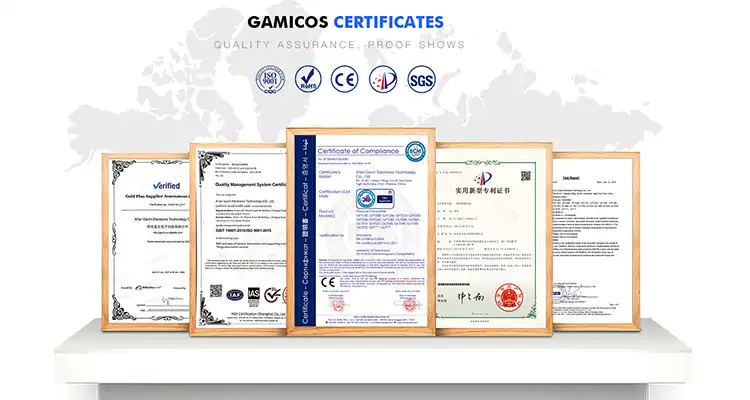
In order to guarantee sensor quality and safety compliance, international certification requirements are essential. While RoHS compliance shows environmental responsibility via the removal of hazardous compounds, CE certification denotes conformance with European health and safety regulations. Additional guarantee of production quality and process control is offered by ISO certification.
Customization, Installation, and Maintenance for Optimal Sensor Performance
Ceramic pressure sensor performance may be maximized by paying close attention to customization possibilities, installation best practices, and methodical maintenance processes. The effectiveness of sensor deployment in wastewater treatment applications is determined by these parameters taken together.
Customization Options for Specific Applications
Customized sensor systems that meet specific operating needs are advantageous for contemporary wastewater treatment plants. Sensors may be easily integrated with current pipe systems without needing significant changes thanks to process connection customisation. Flanged mounts, threaded connectors, and sanitary fittings with simple cleaning and maintenance are common choices.
The choice of housing material offers yet another significant possibility for customisation. PTFE or PVDF are examples of specialty materials that may be needed for applications requiring particularly aggressive chemicals, even if typical stainless steel housings give adequate corrosion resistance. For the most demanding applications, these fluoropolymer housings provide outstanding temperature resistance and chemical compatibility.
Custom electrical connections guarantee compliance with environmental protection regulations and plant wiring standards. Basic cable connections and complex junction box assemblies with built-in signal conditioning and safety circuits are among the available options.
Installation Best Practices
In wastewater applications, proper installation practices have a major influence on sensor lifespan and performance. When choosing a location, maintenance accessibility and measurement accuracy needs must be taken into account. In order to preserve realistic pressure readings, sensors should be positioned to reduce exposure to debris and turbulence.
Sensor performance is impacted by mounting orientation, especially in situations where debris buildup is an issue. Debris accumulation on the sensing diaphragm may be avoided by vertical installation and downward-facing process connections. When horizontal mounting is required, the installation design must provide sufficient space for access for cleaning and maintenance.
Sensors may be removed for maintenance without shutting down the system thanks to process isolation features. During sensor service periods, continuous process monitoring is ensured via isolation valves and bypass arrangements, which also provide operational flexibility.
Maintenance Strategies for Extended Service Life
In harsh wastewater conditions, systematic maintenance procedures optimize sensor performance and prolong operational lifespan. Throughout the sensor's service life, regular calibration verification guarantees that measurement accuracy stays within allowable bounds. Compared to other sensing technologies, ceramic sensors' intrinsic stability usually permits longer calibration intervals.
The buildup of chemical deposits and biofilms that might impair sensor function must be addressed during cleaning processes. Ceramic materials' resilience to chemicals enables the use of strong cleaning solutions as needed, removing contaminants completely without endangering sensors.
Techniques for predictive maintenance assist in spotting possible problems before they affect operations. Sensor output trend analysis might show slow drift patterns that point to the need for cleaning or calibration. Additional information about the health and performance state of sensors is provided by sophisticated sensors with diagnostic capabilities.
Conclusion
The best technological option for wastewater treatment applications in Asia is ceramic pressure sensors, which provide unparalleled precision and durability under demanding operating conditions. While meeting the unique needs of contemporary wastewater treatment plants, ceramic sensors' excellent chemical resistance, thermal stability, and long-term dependability provide substantial benefits over competing technology. Ceramic pressure sensor are crucial parts of effective wastewater treatment processes because of their shown effectiveness, adaptability for customisation, and developing smart sensor capabilities. Throughout Asia's expanding wastewater treatment infrastructure, investments in high-quality ceramic sensor technology from reputable manufacturers guarantee dependable pressure monitoring while assisting with operational optimization and regulatory compliance goals.
FAQ
Q1: What makes ceramic pressure sensors ideal for wastewater treatment applications?
A: Ceramic pressure sensors excel in wastewater applications due to their exceptional chemical resistance and durability. The inert nature of ceramic materials prevents degradation when exposed to aggressive chemicals commonly found in sewage, while their high-temperature tolerance maintains accuracy across varying process conditions. Unlike metal sensors that corrode rapidly in harsh environments, ceramic variants provide long-term stability with minimal maintenance requirements.
Q2: How do ceramic sensors compare to silicon-based pressure sensors in terms of performance?
A: Ceramic sensors offer superior thermal stability and chemical compatibility compared to silicon-based alternatives. While silicon sensors may provide good sensitivity, they struggle with temperature variations and chemical exposure typical in wastewater environments. Ceramic sensors maintain consistent accuracy across wider temperature ranges while eliminating the complex compensation circuits often required for silicon sensors.
Q3: What customization options are available for ceramic pressure sensors?
A: Modern ceramic pressure sensors offer extensive customization possibilities including configurable pressure ranges, various output signals, and specialized housing materials. Process connections can be tailored to existing plant infrastructure, while housing materials like PTFE or PVDF provide enhanced chemical resistance for extreme applications. Electrical connections and signal conditioning circuits can also be customized to match specific control system requirements.
Partner with GAMICOS for Superior Ceramic Pressure Sensor Solutions
GAMICOS delivers industry-leading ceramic pressure sensor technology specifically engineered for demanding wastewater treatment applications across global markets. Our GPT235 series features imported ceramic cores with exceptional corrosion resistance and PTFE/PVDF housing options that withstand the harshest chemical environments. With comprehensive OEM/ODM capabilities and technical support spanning over 100 countries, GAMICOS ensures seamless integration and optimal performance for your wastewater monitoring needs.
Our commitment to quality, backed by international certifications and continuous innovation, makes us the preferred ceramic pressure sensor manufacturer for industrial automation leaders worldwide. Contact our technical team at info@gamicos.com to discuss your specific requirements and discover how our advanced ceramic sensor solutions can enhance your operational efficiency.
References
1. Zhang, L., & Wang, M. (2023). Advanced ceramic materials for industrial pressure sensing applications in harsh environments. Journal of Industrial Automation Technology, 45(3), 112-127.
2. Chen, R., Kumar, S., & Thompson, J. (2022). Comparative analysis of pressure sensor technologies in wastewater treatment facilities across Asia-Pacific regions. Water Treatment Engineering Quarterly, 38(2), 89-104.
3. Liu, H., Anderson, P., & Kim, S. (2023). IoT-enabled smart sensors for wastewater monitoring: Performance evaluation and implementation strategies. International Conference on Water Management Technology Proceedings, 156-171.
4 Yamamoto, T., Singh, A., & Rodriguez, M. (2022). Corrosion resistance evaluation of ceramic vs. metallic pressure sensors in aggressive chemical environments. Materials Science and Industrial Applications, 29(4), 203-218.
5. Brown, D., Lee, K., & Patel, N. (2023). Predictive maintenance strategies for pressure monitoring systems in Asian wastewater treatment plants. Process Automation and Control Systems Review, 41(1), 67-82.
6. Williams, S., Zhou, X., & Murphy, R. (2022). Cost-benefit analysis of ceramic pressure sensor implementation in municipal wastewater treatment infrastructure. Water Industry Economics Journal, 33(3), 145-160.

Spring
Spring, With 5 years of experience in sensor technology and product development, Mark specializes in helping clients identify the optimal pressure and level sensor solutions for demanding industrial environments。
We're here to help — submit your request anytime!
Let us know how we can help solve your pressure level measurement challenge.