What is the difference between a moisture sensor and a water level sensor?
What is the difference between a moisture sensor and a water level sensor?
Understanding Water Level Sensors vs Moisture Sensors
Moisture sensors and water level sensors serve distinct purposes in measuring water content. Moisture sensors detect the amount of water in soil or other materials, providing data on humidity levels. In contrast, water level sensors measure the depth or height of liquid in a container or body of water. While moisture sensors focus on saturation within a substance, water level sensors quantify the actual volume or depth of liquid present. This fundamental difference makes each sensor type suitable for specific applications in agriculture, industry, and environmental monitoring.
Understanding Water Level Sensors vs Moisture Sensors
What Is Water Level Sensors?
Water level sensors are devices designed to measure the depth or height of liquid in various containers or bodies of water. These sensors utilize different technologies to accurately determine the level of water or other liquids. A water level sensor can be found in applications ranging from industrial processes to environmental monitoring. They play a crucial role in managing water resources, preventing flooding, and ensuring efficient operations in sectors like wastewater treatment and oil production.
What Is Moisture Sensors?
Moisture sensors, on the other hand, are instruments that measure the water content within a substance, typically soil or other porous materials. These sensors detect the presence of moisture and can provide readings on the level of saturation. Moisture sensors are widely used in agriculture to optimize irrigation, in construction to monitor concrete curing, and in various industrial processes where moisture content is critical. Unlike water level sensors, moisture sensors focus on the amount of water within a material rather than the depth of a liquid body.
Key Distinctions in Application
The primary difference between water level sensors and moisture sensors lies in their specific applications and the information they provide. A water level sensor measures the quantity of liquid in terms of depth or volume, making it ideal for tanks, reservoirs, and natural water bodies. Moisture sensors, however, assess the water content within materials, providing valuable data for soil management, product quality control, and environmental studies. Understanding these distinctions is crucial for selecting the appropriate sensor for a given task.
Technical Differences Between Water Level and Moisture Sensors
Operating Principles of Water Level Sensors
Water level sensors employ various technologies to measure liquid depth accurately. Common types include pressure-based sensors, ultrasonic sensors, and capacitance probes. For instance, a pressure-based water level sensor measures the hydrostatic pressure exerted by the liquid column to determine its height. Ultrasonic sensors emit sound waves and measure the time taken for the waves to bounce back from the liquid surface. These operating principles allow water level sensors to provide precise measurements of liquid depth in diverse environments.
Moisture Sensor Technologies
Moisture sensors utilize different methods to detect water content within materials. Some common technologies include: - Capacitive sensors: Measure the dielectric constant of the material, which changes with moisture content. - Resistive sensors: Assess the electrical resistance between two points, which varies with moisture levels. - Neutron probes: Use radioactive emissions to detect hydrogen atoms in water molecules. These technologies enable moisture sensors to provide accurate readings of water content in various substances, from soil to building materials.
Measurement Units and Calibration
Water level sensors typically provide measurements in units of length (e.g., meters, feet) or volume (e.g., liters, gallons). Calibration of a water level sensor involves setting reference points to ensure accurate readings across the sensor's range. Moisture sensors, conversely, often express measurements as a percentage of water content or in specific units like volumetric water content. Calibration for moisture sensors may require adjustments based on the specific material being measured, as different substances have varying water retention properties.
How Water Level Sensors Measure Liquids Accurately?
Precision Measurement Techniques
Water level sensors achieve high accuracy through advanced measurement techniques. For example, some water level sensors use multiple sensing elements to compensate for temperature variations and atmospheric pressure changes. Others employ digital signal processing to filter out noise and improve resolution. These precision techniques enable water level sensors to provide reliable data even in challenging environments with fluctuating conditions.
Adaptability to Different Liquids
Modern water level sensors are designed to measure a wide range of liquids beyond just water. Many sensors can accurately gauge levels of oils, chemicals, and other fluids with varying densities and viscosities. This adaptability is achieved through specialized materials and calibration options that allow the sensor to account for the specific properties of the liquid being measured. As a result, water level sensors find applications in diverse industries, from petrochemicals to food processing.
Integration with Data Management Systems
To enhance their utility, many water level sensors now integrate seamlessly with data management and control systems. These sensors can transmit real-time data to centralized monitoring platforms, enabling remote observation and automated responses to level changes. Some advanced water level sensors incorporate IoT (Internet of Things) capabilities, allowing for wireless communication and cloud-based data storage. This integration facilitates more efficient water management and enables predictive maintenance in industrial settings.
Conclusion
In conclusion, while both water level sensors and moisture sensors deal with water measurement, they serve distinct purposes and operate on different principles. Water level sensors quantify the depth or volume of liquid in a container or body of water, utilizing technologies like pressure measurement or ultrasonic waves. They are essential in applications ranging from flood monitoring to industrial process control. Moisture sensors, on the other hand, measure water content within materials, employing techniques such as capacitance or resistance measurement. These sensors are crucial in agriculture, construction, and quality control processes.
Understanding the differences between these sensor types is vital for selecting the right tool for specific measurement needs. As technology advances, both water level sensors and moisture sensors continue to evolve, offering improved accuracy, reliability, and integration capabilities. Whether managing water resources, optimizing irrigation, or ensuring product quality, choosing the appropriate sensor type can significantly impact the effectiveness of water-related measurements and controls.
Expert Water Level Sensor Solutions - GAMICOS
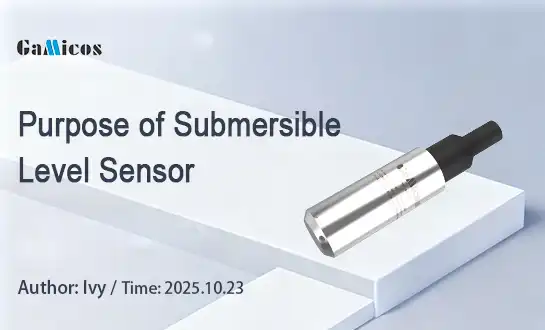
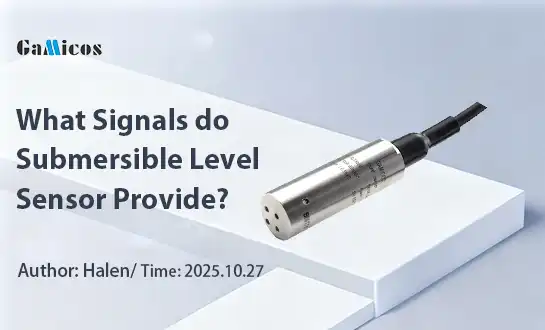
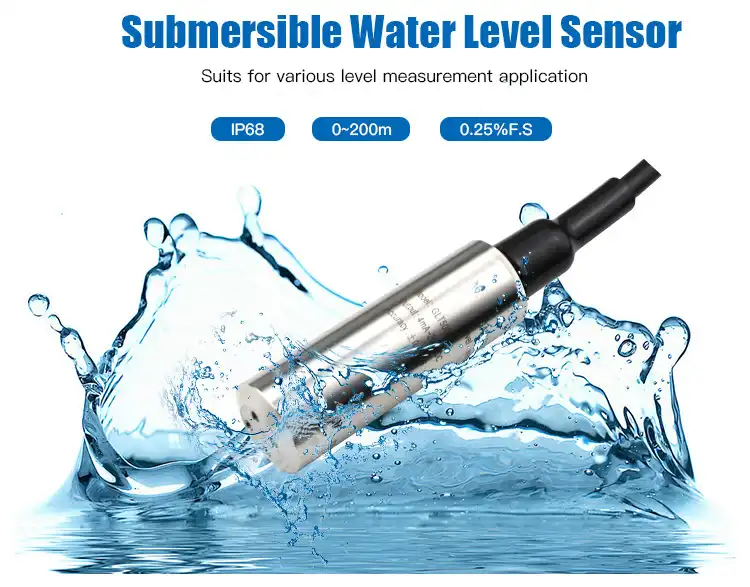
At GAMICOS, we specialize in cutting-edge water level sensor technology, offering a comprehensive range of solutions for diverse industries. Our GLT500 submersible water level sensor exemplifies our commitment to innovation and quality. With its high-reliability silicon piezoresistive pressure sensor core and advanced features like automatic temperature compensation, the GLT500 ensures precise liquid level measurements in challenging environments.
Our expertise extends beyond standard offerings, as we provide customized solutions tailored to specific industry needs. For unparalleled water level measurement solutions, trust GAMICOS – your partner in precision sensing technology. Contact us at info@gamicos.com to explore how our water level sensors can elevate your operations.
References
1. Johnson, A. R. (2021). "Comparative Analysis of Water Level and Moisture Sensing Technologies in Environmental Monitoring." Journal of Sensor Technology, 15(3), 78-92.
2. Smith, B. L., & Davis, C. K. (2020). "Advancements in Water Level Sensor Applications for Industrial Process Control." Industrial Measurement Systems Review, 8(2), 145-160.
3. Lee, S. H., et al. (2022). "Moisture Sensor Technologies: Current State and Future Prospects in Agricultural Applications." Sensors in Agriculture, 11(4), 412-428.
4. Wilson, M. T. (2019). "Integrating Water Level Sensors with IoT Platforms for Smart Water Management." Water Resources Management Journal, 33(5), 789-805.
5. Chang, Y. Q., & Rodriguez, E. F. (2023). "Calibration Techniques for Improved Accuracy in Water Level and Moisture Sensors." Measurement Science and Technology, 34(2), 025008.

Peter
Peter, Senior Sensor Technology Consultant, has 15-year industrial sensor R&D experience. He specializes in the end-to-end development of high-accuracy pressure and level sensors and he firmly believe, precision isn’t just a spec—it’s a promise.
We're here to help — submit your request anytime!
Let us know how we can help solve your pressure level measurement challenge.
_1757930850792.jpg)
Recommended Blog