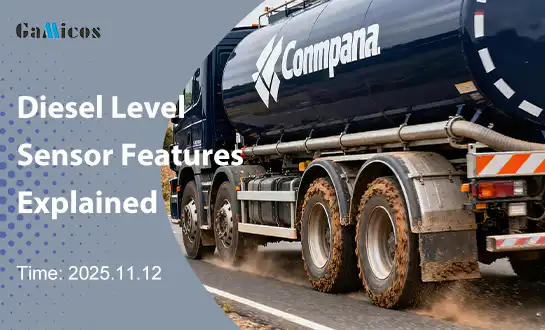
Industrial Fuel Tank Sensor for Global Buyers
Understanding Industrial Fuel Tank Sensors: Fundamentals and Types
- Understanding Industrial Fuel Tank Sensors: Fundamentals and Types
- Top Solutions and Innovations in Fuel Tank Sensors for Industrial Use
- How to Choose the Best Industrial Fuel Tank Sensor: A Buying Guide
- Installation, Maintenance, and Troubleshooting of Fuel Tank Sensors
- GAMICOS: Advanced Industrial Fuel Tank Sensor Solutions
- Conclusion
- FAQ
- Partner with GAMICOS for Superior Fuel Tank Sensor Solutions
- References
A vital part of contemporary industrial automation systems, industrial fuel tank sensors provide for accurate fuel level monitoring and measurement in a variety of applications. These cutting-edge sensing devices are the foundation of effective fuel management systems in the global energy, chemical, pharmaceutical, and petroleum sectors. The technology for gasoline tank sensors has advanced dramatically, providing improved precision, dependability, and integration capabilities that satisfy demanding industrial needs. The significance of choosing top-notch liquid level measuring systems that provide reliable performance in demanding operating conditions while guaranteeing adherence to international safety requirements is becoming more and more apparent to purchasers worldwide.
Understanding Industrial Fuel Tank Sensors: Fundamentals and Types
Sophisticated measuring concepts are used by industrial fuel monitoring systems to provide precise liquid level data instantly. These systems make use of a variety of sensing technologies, such as the fuel tank sensor, each of which has unique benefits based on the demands of the application and the surrounding environment.
Core Sensing Technologies and Their Applications
To provide accurate readings, modern industrial fuel level sensors use a variety of technical techniques. Ultrasonic sensors are perfect for corrosive or dangerous settings because they use sound wave propagation to measure fuel levels without coming into close contact with the liquid. Capacitive sensors provide remarkable sensitivity for applications needing high accuracy by measuring changes in electrical capacitance when fuel levels vary. Despite being conventional, resistive sensors nevertheless provide dependable performance in typical industrial applications where cost-effectiveness is still a top concern.
System integration capabilities are greatly impacted by the difference between digital and analog sensor outputs. Modern industrial control systems easily combine digital sensors' improved signal processing, noise immunity, and communication protocols. Analog sensors are versatile across a range of industrial settings because they provide simple signal interpretation and are still compatible with existing systems.
Environmental Influences and Calibration Techniques
The accuracy of measurements and sensor performance are significantly impacted by environmental conditions. Fuel density and sensor component performance are impacted by temperature variations, necessitating complex compensation algorithms to preserve accuracy. Modern sensors use sophisticated design characteristics and signal conditioning methods to overcome new problems such pressure changes, vibration, and electromagnetic interference.
For sensors to remain reliable over time, calibration techniques are essential. Accurate reference points are established across the measurement range using multi-point calibration techniques, and measurements are adjusted by automated temperature compensation in response to current environmental circumstances. By using these calibration techniques, procurement specialists may design sensors that retain accuracy throughout the course of their useful lives, lowering maintenance needs and operating expenses.
Top Solutions and Innovations in Fuel Tank Sensors for Industrial Use
The advent of smart sensing technology and IoT integration capabilities has significantly changed the landscape of industrial fuel monitoring. Modern digital alternatives successfully overcome the maintenance issues, mechanical wear, and limited precision that plagued traditional mechanical gauge systems.
IoT-Enabled Smart Sensing Solutions
Modern gasoline level measuring devices transform fuel management strategies with their wireless communication protocols, cloud connection, and predictive analytics features. These intelligent sensors improve fuel consumption patterns and maintenance schedules by enabling remote monitoring, automatic alarms, and thorough data analysis. Real-time insight into gasoline inventories across many sites is made possible by integration with industrial IoT systems, which facilitates strategic decision-making and increases operational efficiency.
An important development in industrial fuel monitoring is the shift from reactive to predictive maintenance. By continually analyzing performance metrics, smart sensors may spot any problems before they affect operations. This proactive strategy guarantees continuous measurement accuracy while lowering maintenance costs, extending equipment lifetime, and reducing unplanned downtime.
Comparative Analysis: Ultrasonic vs. Capacitive Technologies
It becomes crucial to comprehend the performance characteristics of various techniques when assessing sensor technology for certain applications. Ultrasonic sensors provide outstanding accuracy without exposure to fuel contamination, making them ideal for applications requiring non-contact measurement. When accurate level monitoring over long ranges is needed in huge tanks, these sensors work very well.
For applications that need to monitor the interface between several liquids or detect minute level changes, capacitive sensors provide exceptional sensitivity. They are especially well-suited for demanding industrial settings where dependability and endurance are crucial factors because of their sturdy design and fouling resistance.
The difficulty of installation varies depending on the technology; capacitive sensors need appropriate grounding and electrical isolation, while ultrasonic sensors usually require careful placement and acoustic considerations. The total cost of ownership often favors sensors that provide dependable long-term performance with low maintenance needs, according to cost-efficiency analysis, even if the initial outlay may deferment may vary, the total cost of ownership often favors sensors that provide reliable long-term performance with minimal maintenance requirements.
How to Choose the Best Industrial Fuel Tank Sensor: A Buying Guide
Selecting the optimal fuel tank sensor requires careful evaluation of multiple factors that influence performance, compatibility, and long-term operational success. When choosing sensors, procurement managers and engineers must take particular application requirements, environmental factors, and integration capabilities into account.
Critical Selection Criteria and Compatibility Factors
When choosing sensors, fuel type compatibility is a crucial factor. Different fuels have different density characteristics, corrosiveness, and chemical qualities that affect the choice of sensor material and measurement precision. Each of these fuels—diesel, gasoline, heating oil, and specialty industrial fuels—presents particular difficulties that need for the right sensor design and building materials.
Temperature ranges, pressure levels, humidity levels, and possible exposure to corrosive compounds are all included in the operational environment evaluation. Specialized materials, improved sealing, and temperature correction features are all included in sensors made for harsh environments to guarantee dependable operation under difficult circumstances.
Applications differ greatly in their requirements for accuracy; certain industrial processes need precision down to fractions of a percent, while others may tolerate wider tolerance ranges. Buyers may choose sensors that satisfy application needs without over-specification that needlessly raises prices by being aware of accuracy parameters, such as linearity, repeatability, and long-term stability.
Market Overview and Procurement Considerations
Established producers with a wide range of product offerings at different price points and capabilities may be found in the worldwide industrial sensor market. While specialist measurement firms concentrate on high-precision solutions for tough industrial conditions, well-known manufacturers like Bosch, Denso, and Caterpillar provide sensors built for particular purposes.
Large-scale installations or continuing procurement operations can benefit greatly from bulk purchase agreements. Bulk procurement is a desirable choice for industrial automation projects since many manufacturers provide volume savings, longer warranty periods, and committed technical assistance for large orders.
The whole ownership experience is greatly impacted by post-sale support services, such as technical advice, installation help, and maintenance. In many procurement circumstances, manufacturers with extensive support networks and attentive customer service provide extra value that justifies premium cost.
Installation, Maintenance, and Troubleshooting of Fuel Tank Sensors
Long-term operational success and dependable sensor performance are based on proper installation practices. Technical teams may enhance sensor efficacy while reducing operating interruptions by having a thorough understanding of installation requirements, maintenance procedures, and troubleshooting techniques.
Installation Procedures and Safety Protocols
Thorough safety evaluations and preparatory steps are the first steps in a professional installation. Proper grounding, atmospheric testing, and tank isolation provide safe working conditions while safeguarding people and equipment. Before starting sensor installation, installation teams must confirm electrical connection requirements, mounting surface preparation, and tank compatibility.
After installation, calibration and testing methods confirm sensor accuracy and system integration. While communication testing confirms correct signal transmission and data integrity, multi-point calibration utilizing established reference levels creates precise measurement baselines. From initial setup to continuous operations, these validation procedures guarantee optimum sensor performance.
Maintenance Strategies and Troubleshooting Methodologies
Programs for preventive maintenance greatly increase the lifetime of sensors and preserve measurement accuracy over time. Frequent cleaning processes eliminate impurities that can impair sensor function, and recurring calibration checks guarantee accuracy. Proactive maintenance interventions are made possible by environmental monitoring, which detects any problems that can affect sensor performance.
Erratic readings, signal drift, and communication failures are common sensor problems that are often brought on by exposure to the environment, electrical interference, or component age. By using component testing, environmental evaluation, and signal analysis, systematic troubleshooting techniques find the underlying problems. Maintenance personnel can swiftly address problems and put preventative measures in place by having a thorough understanding of prevalent failure mechanisms.
Advanced sensor-based diagnostic methods provide comprehensive performance data that facilitates efficient troubleshooting. In order to notify operators of any problems before they affect operations, modern sensors include self-diagnostic functions that track internal component state, signal quality, and ambient conditions.
GAMICOS: Advanced Industrial Fuel Tank Sensor Solutions
With a focus on complete liquid level and pressure sensing systems that cater to international markets, GAMICOS is a prominent inventor in industrial measurement technology. We are a trusted partner for procurement managers, engineers, and OEMs looking for dependable measurement solutions because of our vast expertise creating fuel tank sensors for a variety of industrial applications.
GLT5001 Liquid Diesel Level Sensor: Precision Engineering for Industrial Applications
Our flagship liquid diesel level sensor, the GLT5001, is a prime example of cutting-edge technical concepts applied to industrial fuel measurement problems. The primary measuring element of this advanced gadget is a highly dependable silicon piezoresistive pressure sensor, which guarantees outstanding precision and long-term stability in a variety of difficult operating situations.
In spite of ambient temperature variations, the GLT5001's automated temperature correction features preserve measurement accuracy. Advanced signal conditioning guarantees the best possible output signal quality, and programmable digital circuit correction allows for accurate calibration for particular applications. Together, these characteristics provide exceptional performance that satisfies demanding industrial standards.
Here are the core technical advantages of the GLT5001 sensor system:
• Integrated Design Excellence: The fully integrated architecture provides strong interference resistance, ensuring reliable operation in electrically noisy industrial environments while maintaining signal integrity across extended cable runs.
• Versatile Output Options: Multiple output configurations including analog and digital signals accommodate diverse system integration requirements, supporting both legacy installations and modern digital control systems.
• Robust Construction: The fully welded structure with IP68 protection rating ensures reliable operation in harsh environments, while the magnetic suction base model offers anti-vibration design for mobile applications.
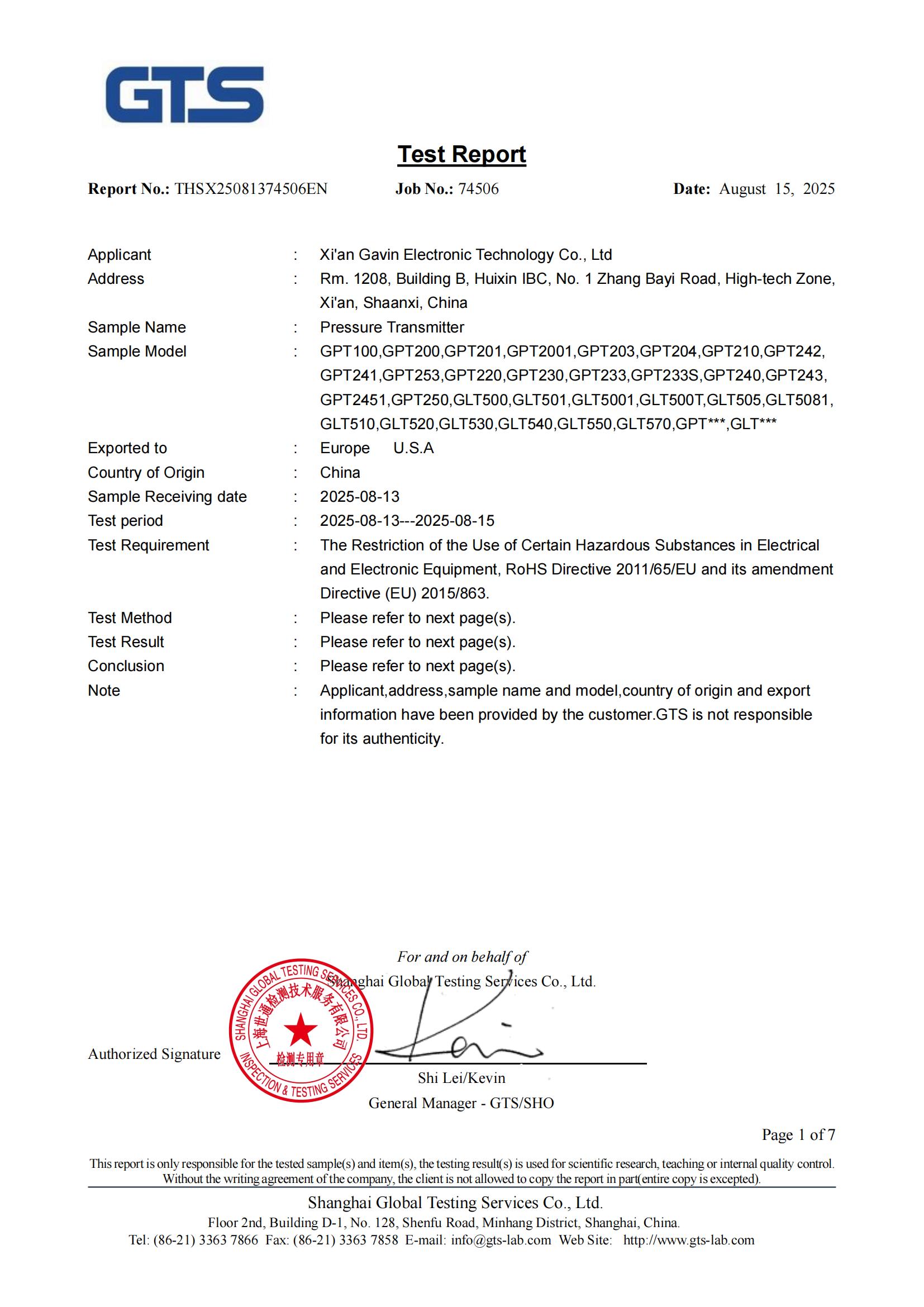
• International Compliance: Certified explosion-proof (ATEX), CE, and RoHS compliance ensures global market acceptance and regulatory compliance across diverse international markets.
These technical advantages enable the GLT5001 to address complex fuel measurement challenges while providing the reliability and accuracy that industrial operations demand.
Comprehensive Product Portfolio and Customization Capabilities
Our extensive product range encompasses pressure sensors, liquid level sensors, fuel and water level meters, ultrasonic and radar level meters, plus advanced wireless measuring instruments utilizing Lora, GPRS, NB-IoT, and 4G communication technologies. This diverse portfolio enables us to provide complete measurement solutions tailored to specific industrial requirements.
Professional OEM and ODM services support custom sensor development with full customization of models, parameters, packaging, and documentation. Our engineering team collaborates closely with clients to develop specialized solutions that address unique application challenges while maintaining our stringent quality standards.
Quality assurance programs incorporate comprehensive testing protocols including pressure cycling, aging tests, and environmental simulation studies that validate sensor performance under real-world conditions. These rigorous testing procedures ensure consistent product quality and reliability across all manufacturing batches.
Conclusion
Industrial fuel tank sensors continue evolving to meet increasingly sophisticated measurement requirements across global industries. Modern sensing technologies offer unprecedented accuracy, reliability, and integration capabilities that transform traditional fuel management approaches. Successful sensor selection requires careful consideration of application-specific requirements, environmental conditions, and long-term operational objectives. Professional installation, comprehensive maintenance programs, and effective troubleshooting methodologies maximize sensor performance while minimizing operational costs. The investment in high-quality fuel level measurement solutions delivers substantial returns through improved operational efficiency, reduced maintenance requirements, and enhanced safety compliance across diverse industrial applications.
FAQ
Q1: What sensor type works best for diesel fuel applications?
A: Capacitive and pressure-based sensors typically perform excellently for diesel fuel measurement. The GLT5001 utilizes silicon piezoresistive technology specifically optimized for diesel applications, providing accurate measurements while resisting fuel contamination and environmental challenges common in diesel storage systems.
Q2: How do wireless fuel sensors integrate with existing fleet management systems?
A: Modern wireless sensors support multiple communication protocols including Lora, GPRS, NB-IoT, and 4G technologies that integrate seamlessly with fleet management platforms. These sensors transmit real-time fuel data, enabling automated inventory tracking, theft detection, and consumption analysis through standard API connections.
Q3: What warranty terms are standard for industrial fuel sensors?
A: Industrial fuel sensors typically include comprehensive warranties covering manufacturing defects, performance specifications, and environmental compliance. Premium manufacturers offer extended warranty terms, technical support, and replacement guarantees that provide additional protection for critical applications requiring maximum reliability.
Q4: Can fuel tank sensors be customized for specific industrial requirements?
A: Professional sensor manufacturers provide extensive customization capabilities including sensor dimensions, output signals, communication protocols, and mounting configurations. Custom calibration, specialized materials, and application-specific features ensure optimal performance for unique industrial applications while maintaining quality standards.
Partner with GAMICOS for Superior Fuel Tank Sensor Solutions
GAMICOS delivers cutting-edge fuel tank sensor technology that transforms industrial fuel management operations worldwide. Our comprehensive product portfolio, including the advanced GLT5001 diesel level sensor, provides reliable measurement solutions backed by extensive engineering expertise and global support capabilities. As a trusted fuel tank sensor manufacturer, we offer complete customization services, technical consultation, and responsive customer support that ensures optimal sensor performance across diverse industrial applications. Contact our experienced engineering team at info@gamicos.com to discuss your specific fuel measurement requirements and discover how our innovative sensor solutions can enhance your operational efficiency.
References
1. Industrial Automation Handbook: Fuel Level Measurement Technologies and Applications. Society of Manufacturing Engineers, 2023.
2. Peterson, Mark R., and Sarah Chen. "Advances in Industrial Liquid Level Sensing: A Comprehensive Analysis." Journal of Industrial Instrumentation, vol. 45, no. 3, 2023, pp. 78-95.
3. Global Fuel Management Systems Market Report: Technology Trends and Procurement Strategies. Industrial Research Institute, 2024.
4. Thompson, Robert K. "Pressure-Based Fuel Sensing in Industrial Applications: Performance Evaluation and Best Practices." International Conference on Industrial Measurement Technologies Proceedings, 2023.
5. European Industrial Sensor Standards and Compliance Guidelines for Fuel Tank Applications. European Committee for Standardization, 2024.
6. Williams, Jennifer A., et al. "IoT Integration in Industrial Fuel Monitoring: Implementation Strategies and ROI Analysis." Industrial IoT Quarterly, vol. 12, no. 2, 2024, pp. 34-48.

Spring
Spring, With 5 years of experience in sensor technology and product development, Mark specializes in helping clients identify the optimal pressure and level sensor solutions for demanding industrial environments。
We're here to help — submit your request anytime!
Let us know how we can help solve your pressure level measurement challenge.

_1757930850792.jpg)



Recommended Blog